THIS OBJECT WAS SOLD
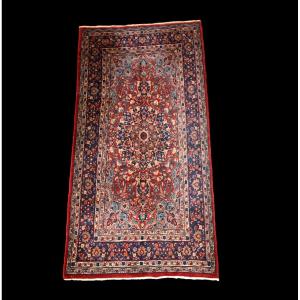
Tabriz Iran Rug 119 X 98 Cm


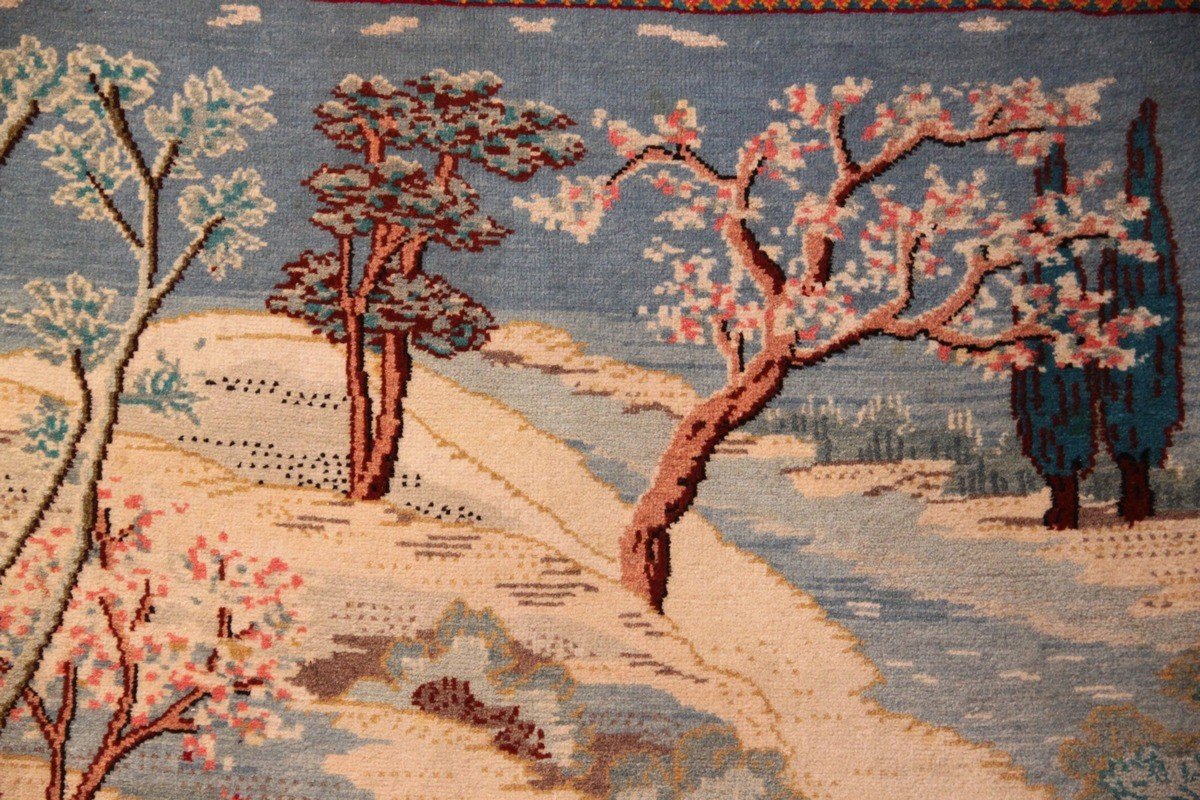


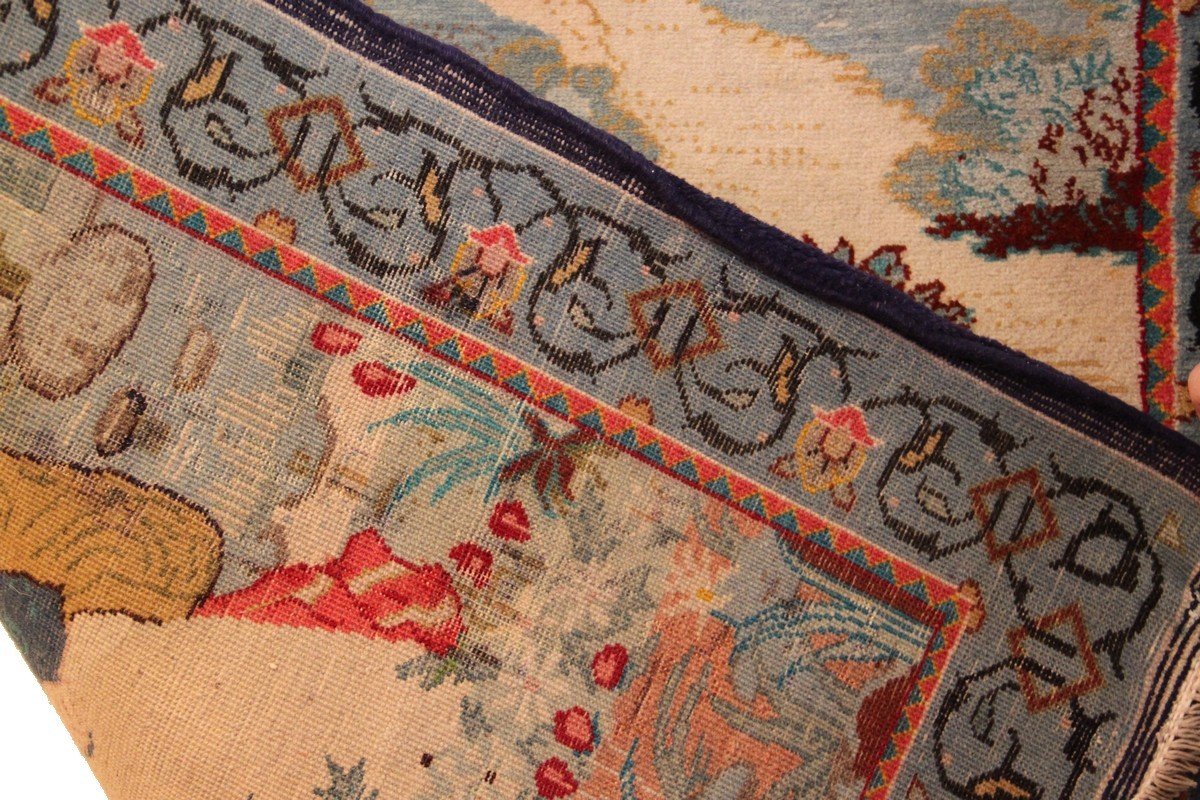
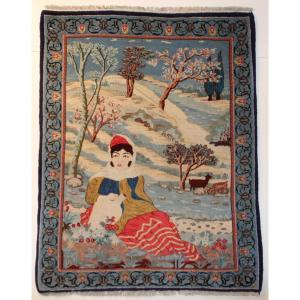


Iranian Kurk wool rug, circa 1970. Very good condition. Two small restorations on the back of the carpet, not serious. (Note: trapezoidal carpet: top width 0.92 m, bottom width 0.98). Great achievement.
Located in Iranian Azerbaijan, northwest Iran, the city of Tabriz dates back to 791 AD. It gained importance from the 10th century because of its climate and its strategic position. Main seat of the Seljuks (tribe of present-day eastern Turkey) in the 11th century, the Mongols later chose it as their capital. Art and culture developed in Tabriz: library, painting school... In 1392, Tamerlane conquered Tabriz. Over the decades and with many changes, the city of Tabriz became a splendid city. In 1502, Ishmael I, founder of the Safavid dynasty (1502-1736), made Tabriz his capital. The art of carpeting in Tabriz dates back to ancient times and developed over the centuries. The finest academic and major achievements date back to the reign of Shah Abbas (1588-1629) and were carried out in the cities of Kashan, Kerman, Meched, Isfahan and Tabriz. From the end of the 19th century until the 1930s, European companies settled in Tabriz attracted by the skill and reputation of the weavers of Tabriz.
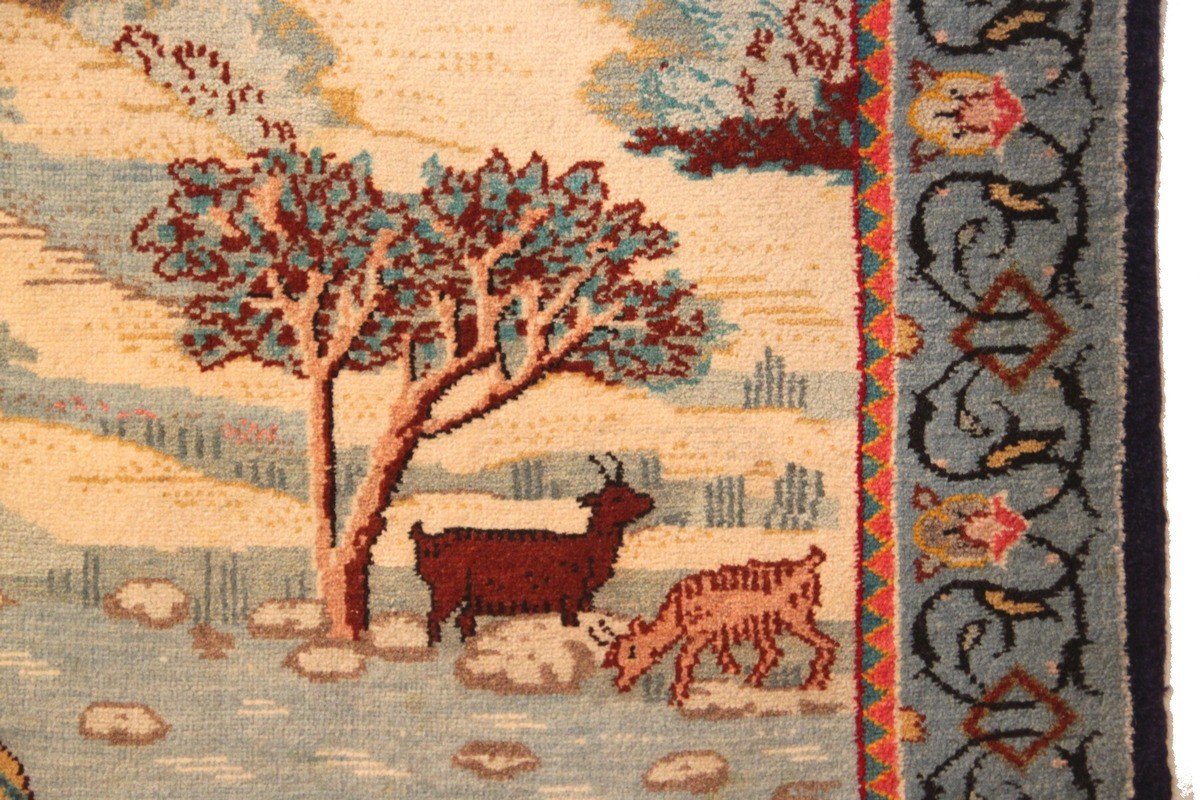
This painting rug represents a young woman (shepherdess) sitting on the edge of a stream. Two goats come to drink. The scene takes place in spring, the trees are in flower. At the top right, two Zoroastrian cypresses are represented. The cypress refers to Zoroaster, an Iranian prophet (6th century BC) who is said to have planted two cypresses in the Khorasan desert in order to fight against the ogres. A legend has it that, upon his death, Zoroaster was reincarnated as a cypress, or as a tree, as a palm, or as drops of water (boteh). A clean border frames this scene. Lots of freshness in the colors used and great mastery in the production. Painting rugs are mainly made in the cities of Tabriz, Kerman and Kashan. At the end of the 19th century and especially the beginning of the 20th, in the city of Isfahan, on the initiative of traders from Tabriz and Kashan. Later, from the 30s-40s, in the town of Ghoum.
Free Chronopost delivery for France and Europe. Do not hesitate to contact us by phone or email. (We ship our rugs and kilims by Chronopost or Colissimo, at our expense (up to 30 kg) in mainland France and Europe).
Located in Iranian Azerbaijan, northwest Iran, the city of Tabriz dates back to 791 AD. It gained importance from the 10th century because of its climate and its strategic position. Main seat of the Seljuks (tribe of present-day eastern Turkey) in the 11th century, the Mongols later chose it as their capital. Art and culture developed in Tabriz: library, painting school... In 1392, Tamerlane conquered Tabriz. Over the decades and with many changes, the city of Tabriz became a splendid city. In 1502, Ishmael I, founder of the Safavid dynasty (1502-1736), made Tabriz his capital. The art of carpeting in Tabriz dates back to ancient times and developed over the centuries. The finest academic and major achievements date back to the reign of Shah Abbas (1588-1629) and were carried out in the cities of Kashan, Kerman, Meched, Isfahan and Tabriz. From the end of the 19th century until the 1930s, European companies settled in Tabriz attracted by the skill and reputation of the weavers of Tabriz.
This painting rug represents a young woman (shepherdess) sitting on the edge of a stream. Two goats come to drink. The scene takes place in spring, the trees are in flower. At the top right, two Zoroastrian cypresses are represented. The cypress refers to Zoroaster, an Iranian prophet (6th century BC) who is said to have planted two cypresses in the Khorasan desert in order to fight against the ogres. A legend has it that, upon his death, Zoroaster was reincarnated as a cypress, or as a tree, as a palm, or as drops of water (boteh). A clean border frames this scene. Lots of freshness in the colors used and great mastery in the production. Painting rugs are mainly made in the cities of Tabriz, Kerman and Kashan. At the end of the 19th century and especially the beginning of the 20th, in the city of Isfahan, on the initiative of traders from Tabriz and Kashan. Later, from the 30s-40s, in the town of Ghoum.
Free Chronopost delivery for France and Europe. Do not hesitate to contact us by phone or email. (We ship our rugs and kilims by Chronopost or Colissimo, at our expense (up to 30 kg) in mainland France and Europe).
Explore similar pieces and discover your ideal find:
Rugs, Carpets