THIS OBJECT WAS SOLD
Large Art Nouveau Flamed Sandstone Office Inkwell Attributed To Gentil & Bourdet, Circa 1900
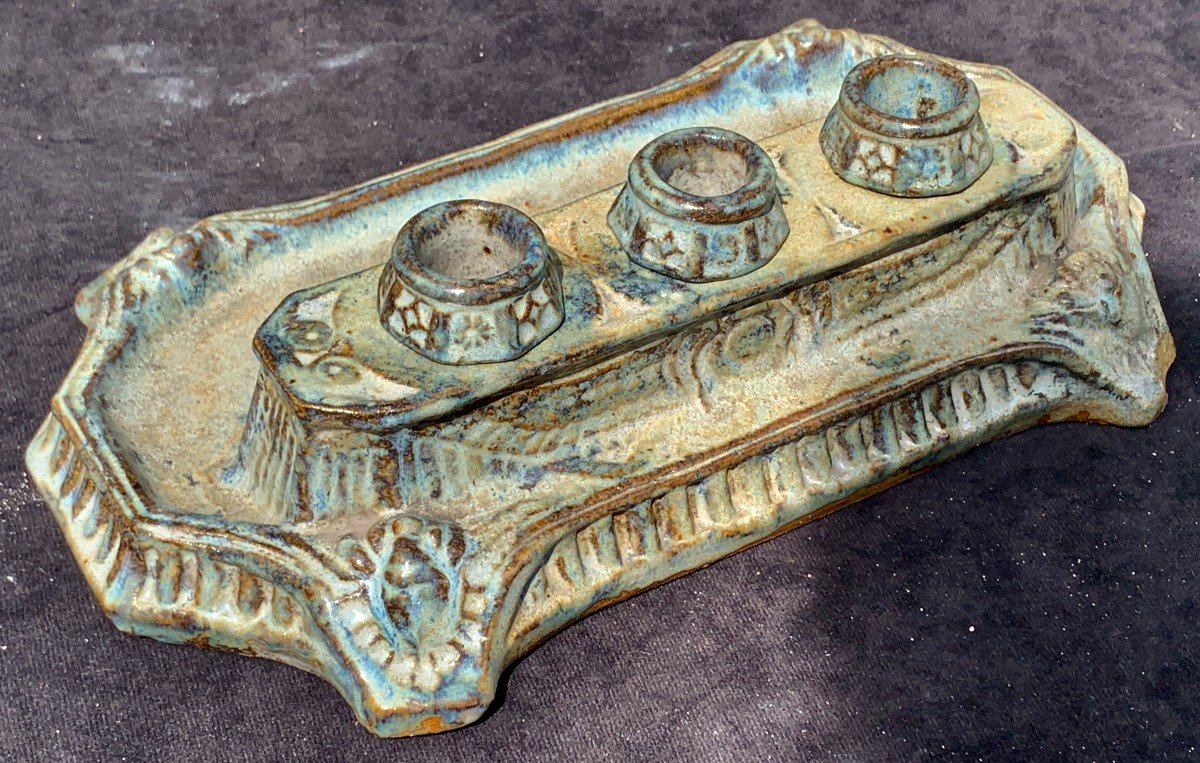
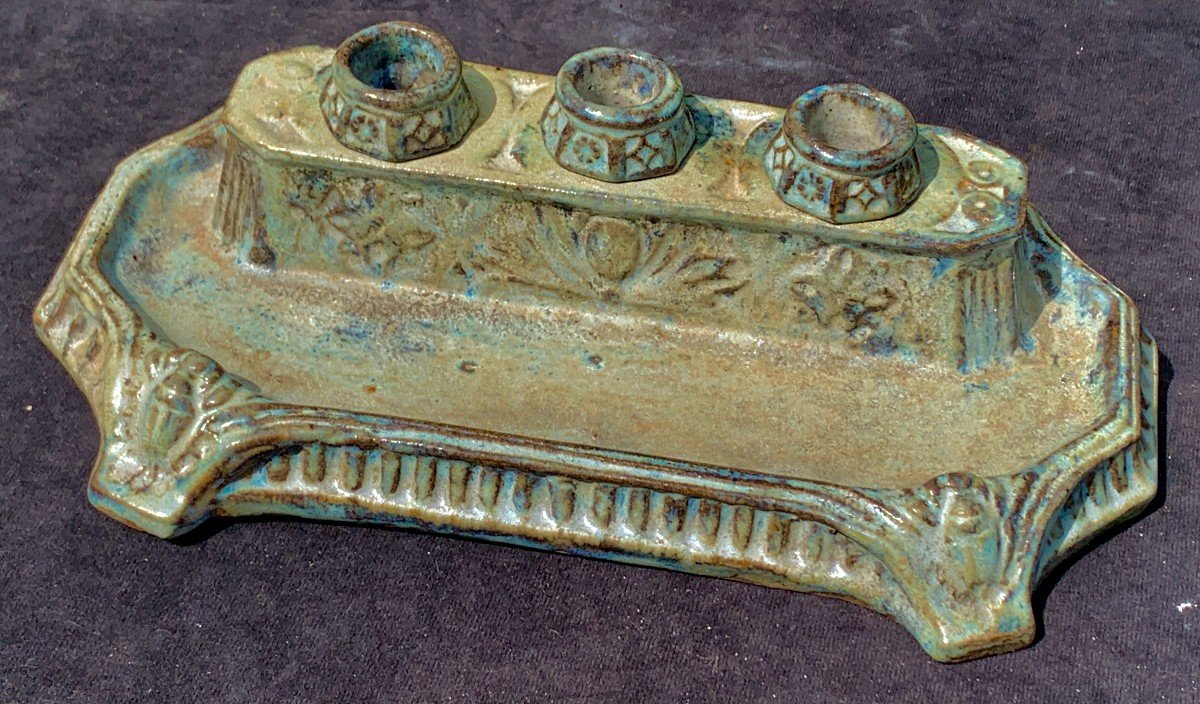
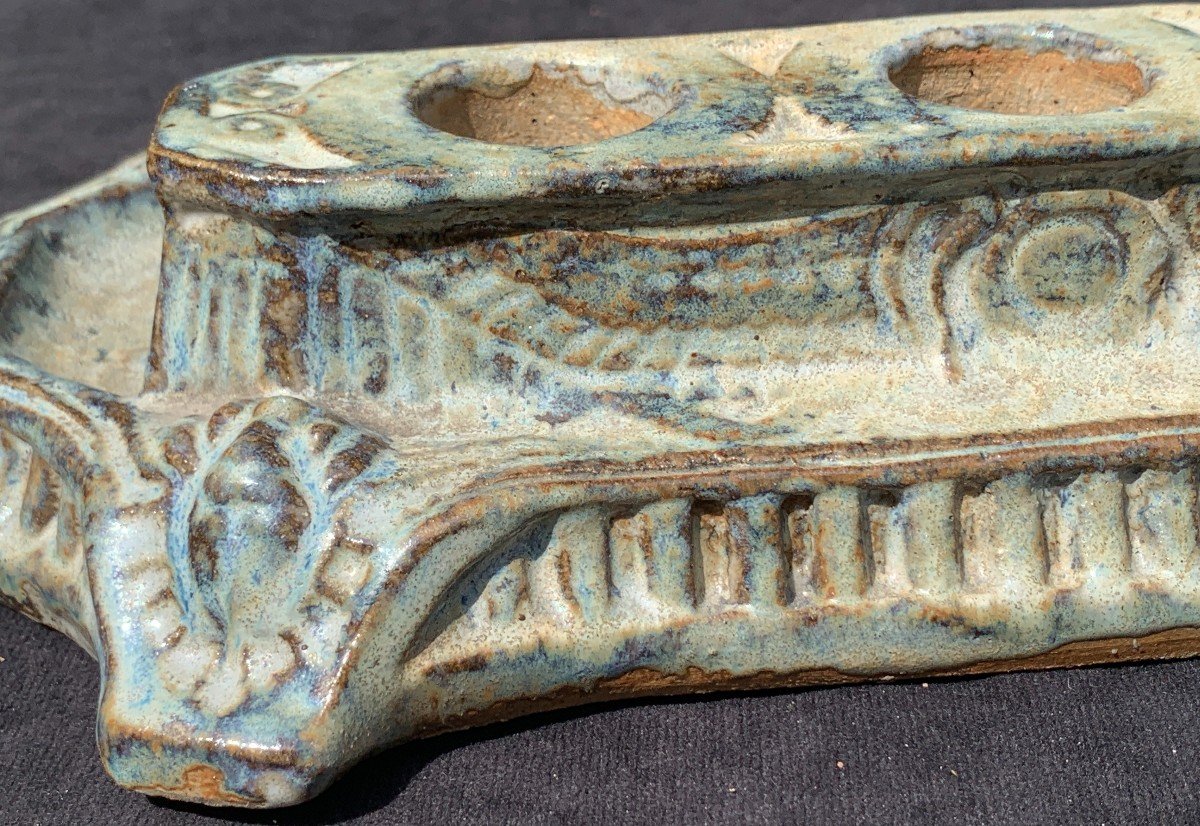

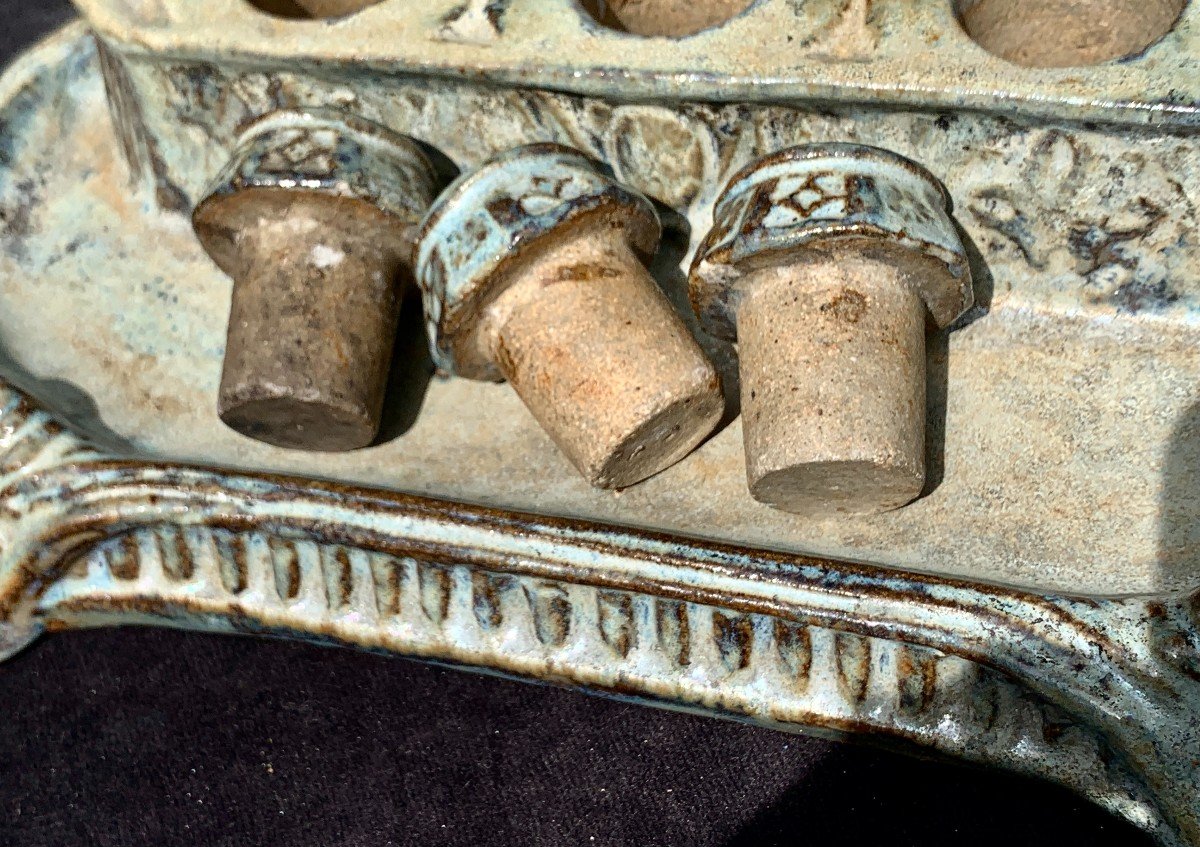
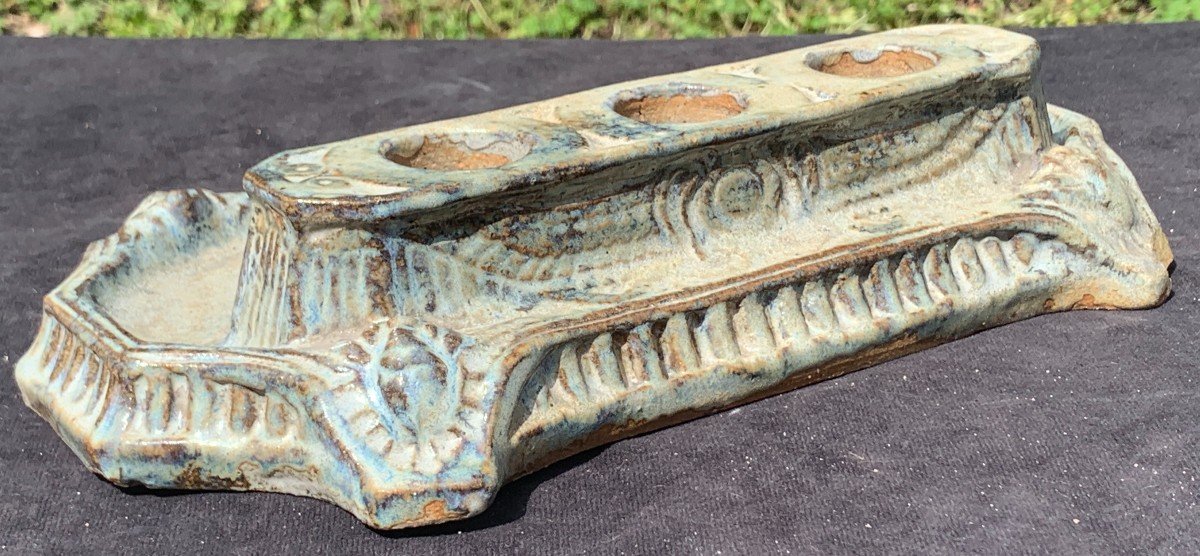
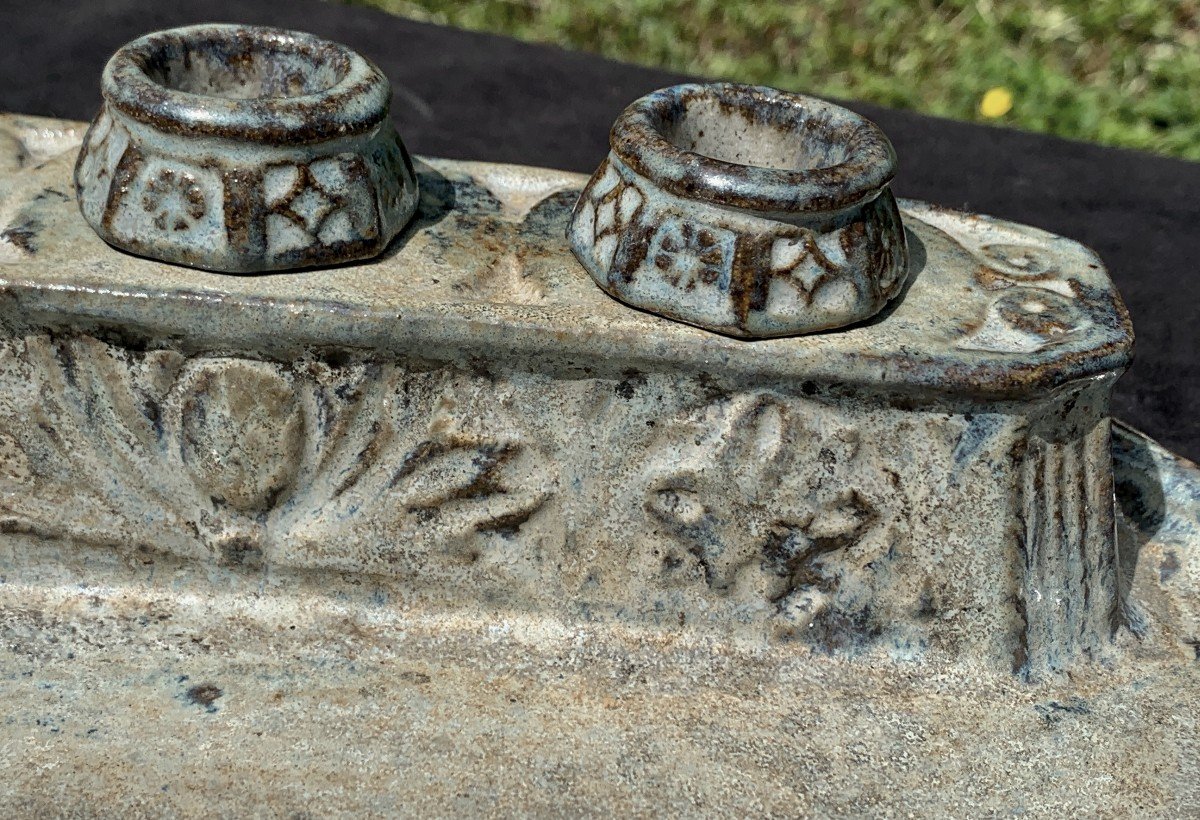
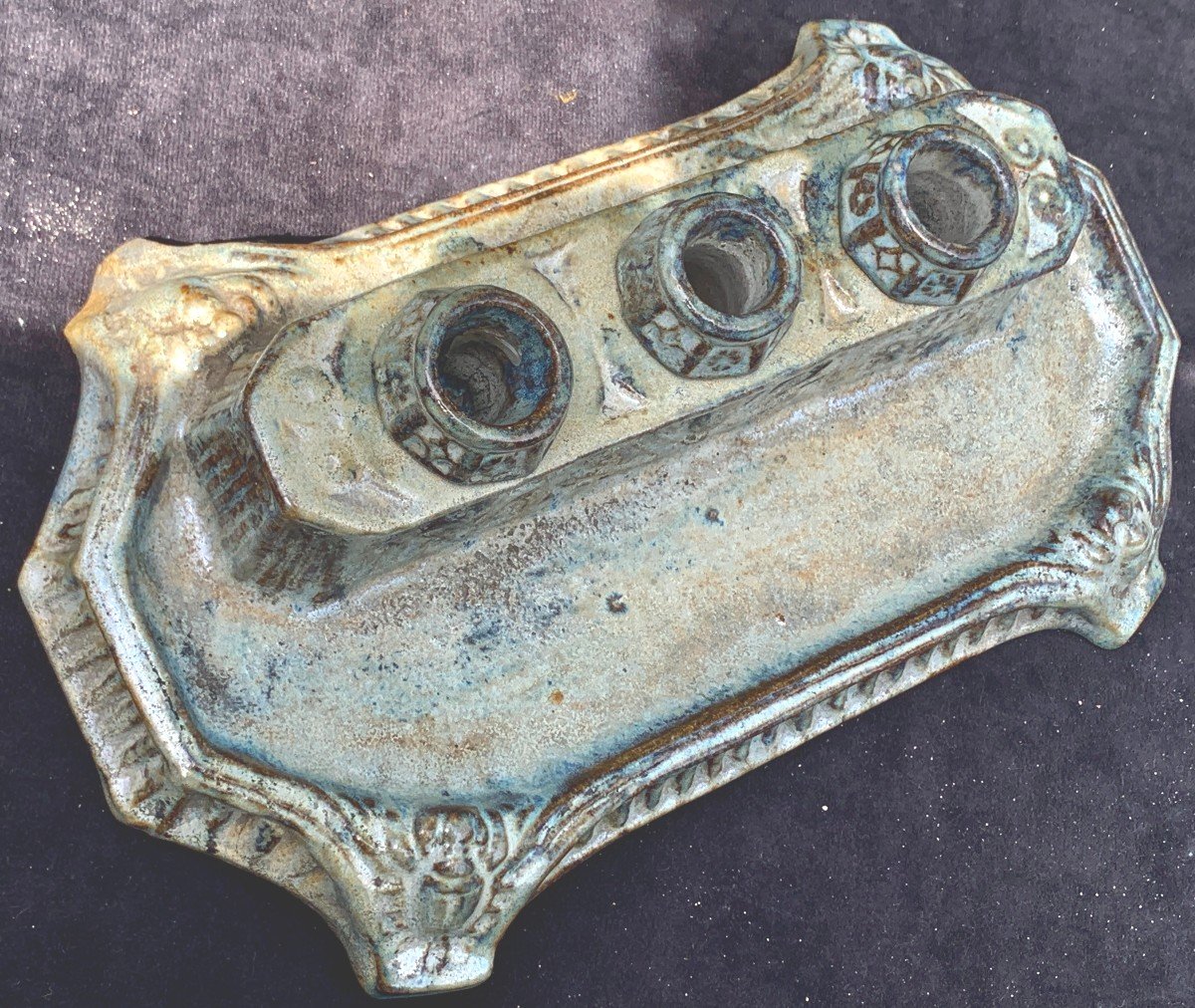
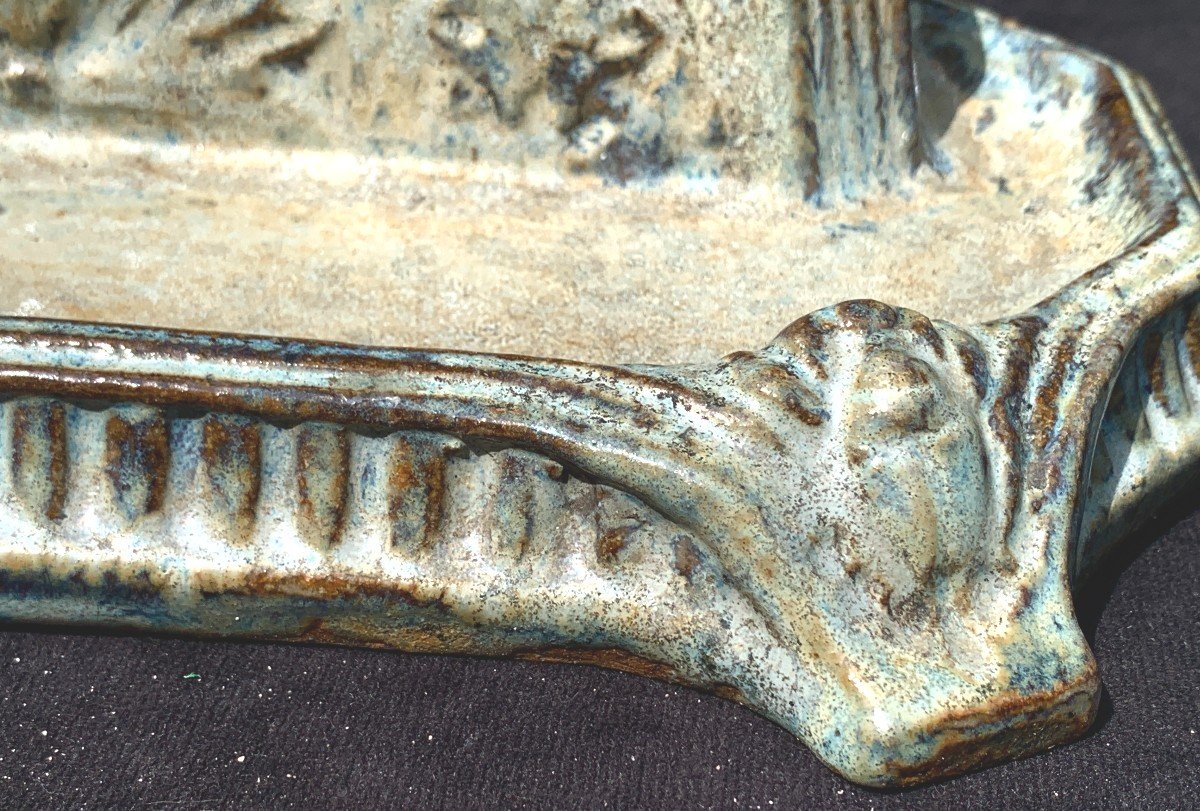
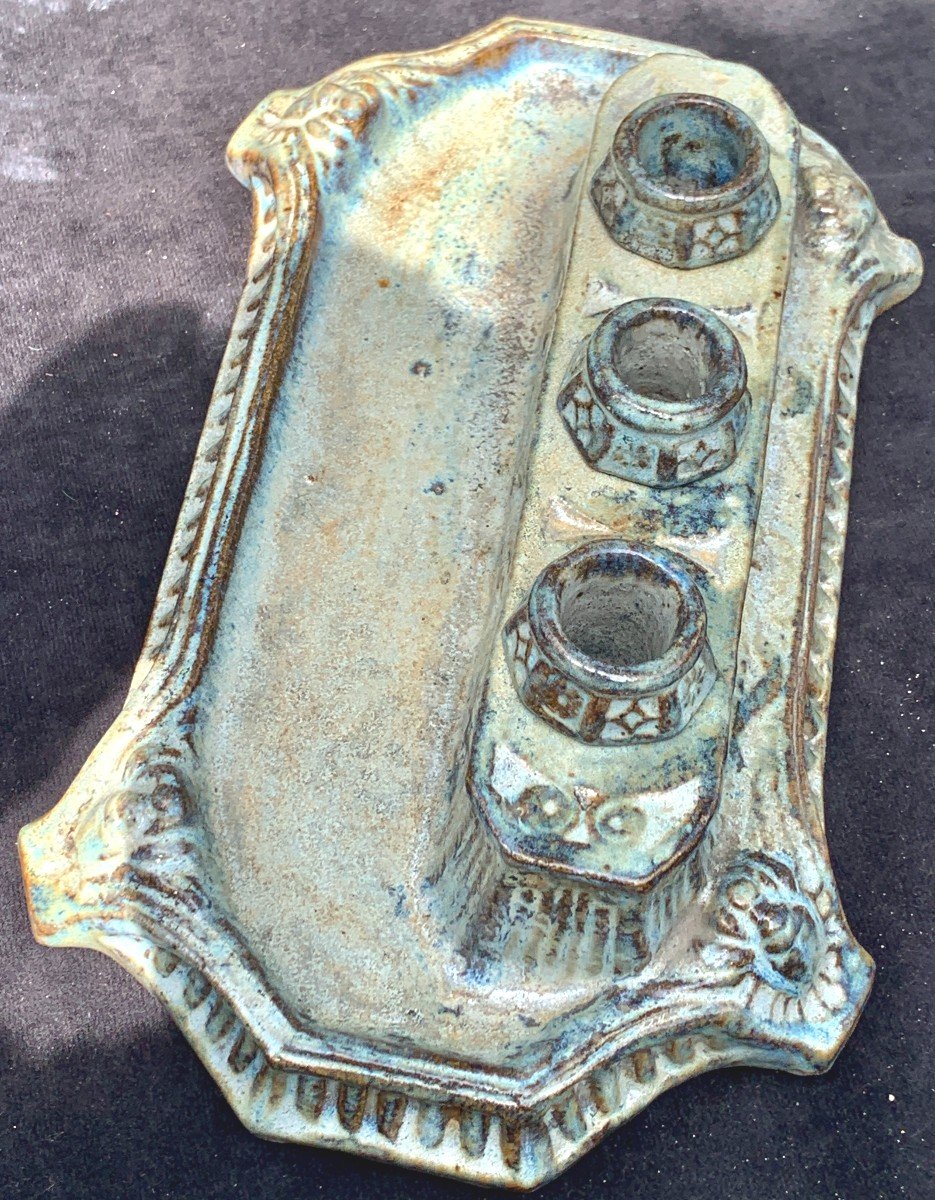


Stunning, rare and important Art Nouveau flamed sandstone office inkwell, around 1900 - 1905 attributed to the frenchceramists GENTIL & BOURDET.
Gentil et Bourdet (usually written Gentil & Bourdet) is a flamed sandstone factory founded in 1900-1905 by two ceramic architects, Alphonse Gentil (Algiers, 1872 - Paris 16°, 1933) and François Eugène Bourdet (Nancy, 1874 - Fontainebleau, 1952).
The 2 ceramist will specialize in architectural and urban planning flamed sandstone factory (luxuous Art Nouveau buildings facing, especially in Paris or Nancy,...)
"Former students of the architect Victor Laloux, at the Paris Beaux-Arts school, they joined forces and founded the company "Gentil, Bourdet et Cie, sandstone, ceramic for building, furnishing" in Billancourt.
They participate in the "Art Nouveau" movement in Nancy with many flamed sandstone creations (staircase of the Villa Luc).
In their pre-1914 production, there are several sandstone cladding or mosaics for Parisian villas, buildings and metro stations, as well as for spas.vAfter the first World War, they continued their production of mosaics and sandstone by adapting to the new "Art Deco" style taste (Luxor cinema in Paris, Frugès hotel in Bordeaux).
They successfully participated in the Modern Decorative and Industrial Arts International Exhibition in 1925, where they exhibited alongside marble makers (Galerie des Invalides, hotel of a collector, Pavilion of the city of Paris).
They then diversified their production by adding to their traditional production of mosaics (thermal baths of Plombières, Palace of the Golden Gate), ceramic facing adapted to modern purism (Henri Sauvage Studio Building in Paris, Hennequet building rue Franklin in Paris).
For many years they worked in close collaboration with the greatest architects: Jacques Hermant, Joseph Hornecker, William Bouwens van der Boijen, Joachim Richard, Charles Mewès, Henri Sauvage, Henri Deneux, Charles Plumet, André Arfvidson, Albert Laprade, Tony Garnier, Léon Jaussely, etc.
Many creations are listed in french Register of Historic Monuments".
Gentil & Bourdet, like famous American Art Nouveau glassmaker Louis Confort Tiffany, diversifying its production related to lamps and luminaires, also had a production of decorative objects for house decoration and furnishing, and in particular here the luxurious office items: vases, clipboards, inkwells, ashtrays, tobacco pots, ...
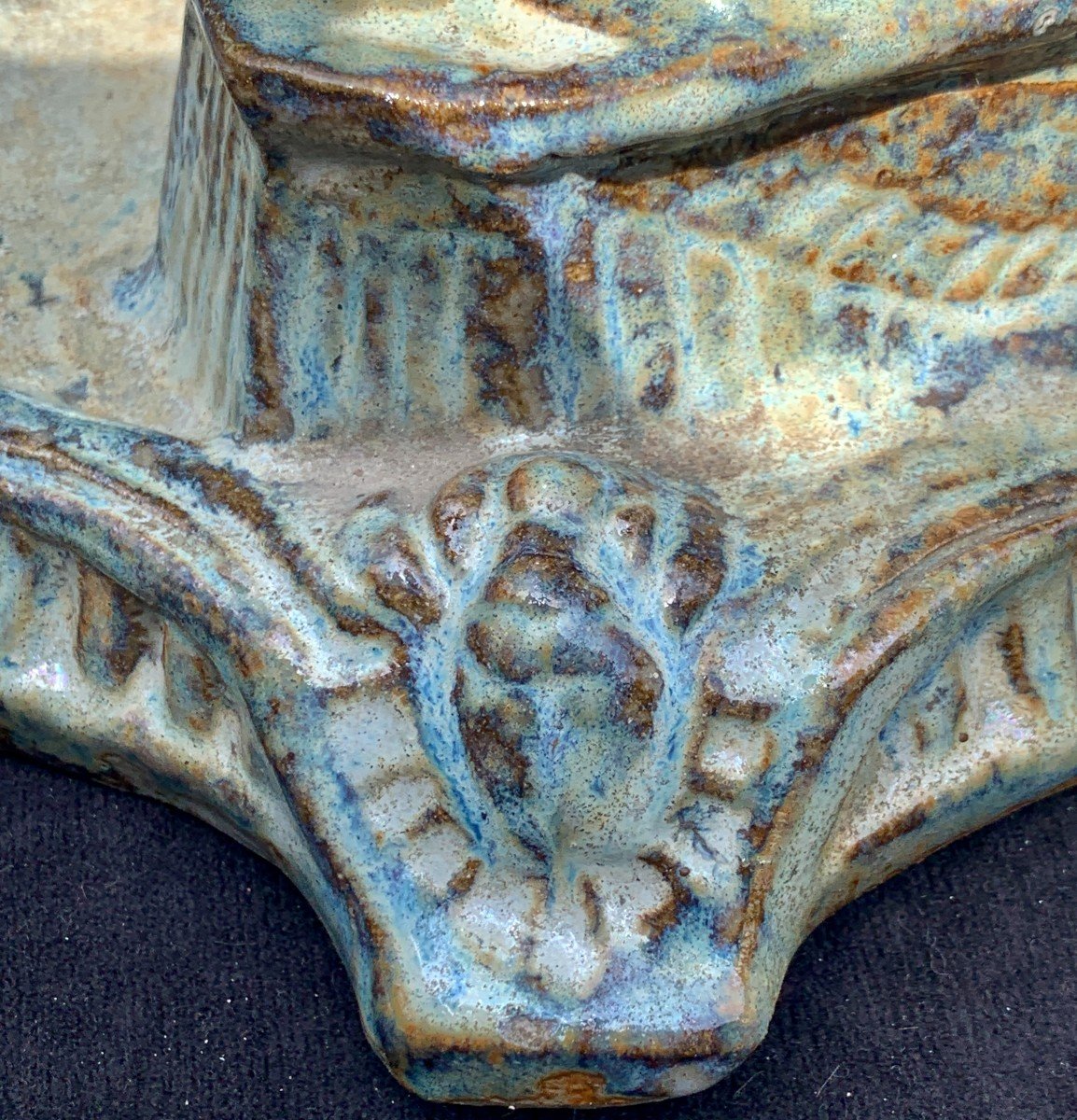
Design takes up the typical windings of this artistic movement but also the theme of beetles, placed in spandrels at the protruding corners of the inkwell. This naturalistic theme is obviously inspired by the fashion related to the great Egyptian archaeological discoveries, including the most famous leader Jean-François CHAMPOLLION, at the origin of the 1st scientific system of hieroglyphics translation.
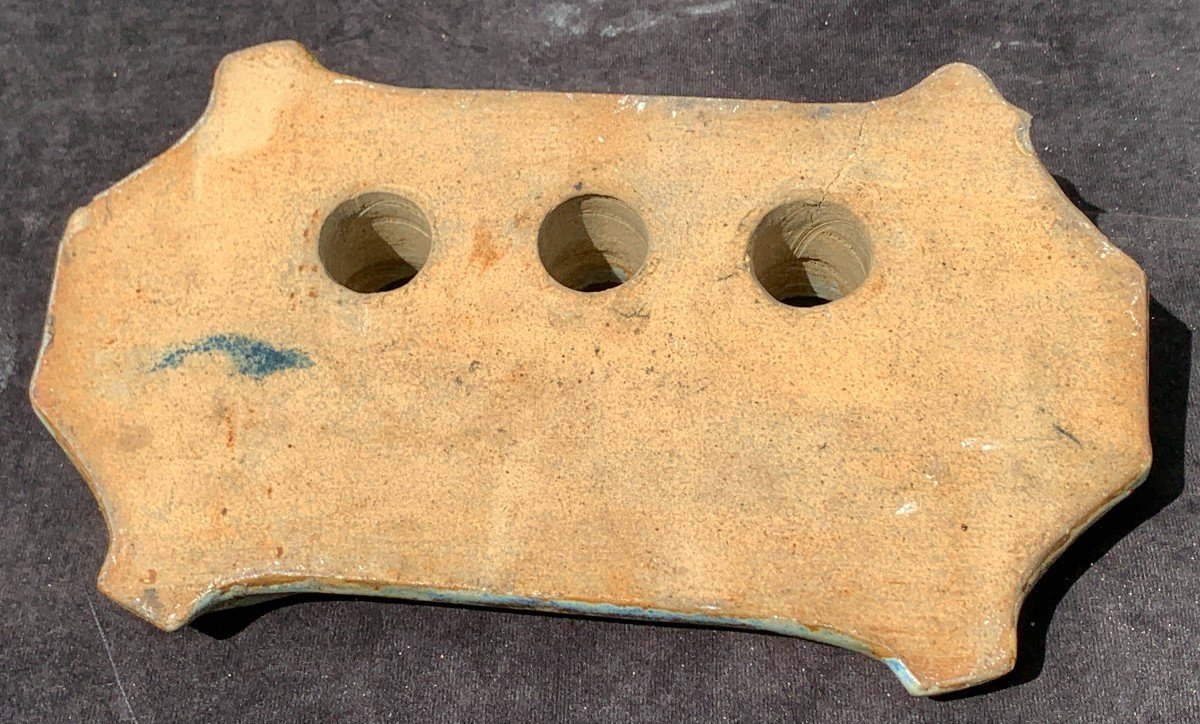
The piece is not signed but this attribution is more than likely. The sandstone is full instead of being hollowed out underneath and weighs not far from 2.5kg ! We always find this very heavy and thick raw material characteristic on the pavement and facing tiles of art nouveau buildings. Sanstone used here, both in terms of its texture and its colour, is exactly same I have seen on their architectural pieces by the past.
Sizes: 32 length* 20cm width *7cm height
Gentil et Bourdet (usually written Gentil & Bourdet) is a flamed sandstone factory founded in 1900-1905 by two ceramic architects, Alphonse Gentil (Algiers, 1872 - Paris 16°, 1933) and François Eugène Bourdet (Nancy, 1874 - Fontainebleau, 1952).
The 2 ceramist will specialize in architectural and urban planning flamed sandstone factory (luxuous Art Nouveau buildings facing, especially in Paris or Nancy,...)
"Former students of the architect Victor Laloux, at the Paris Beaux-Arts school, they joined forces and founded the company "Gentil, Bourdet et Cie, sandstone, ceramic for building, furnishing" in Billancourt.
They participate in the "Art Nouveau" movement in Nancy with many flamed sandstone creations (staircase of the Villa Luc).
In their pre-1914 production, there are several sandstone cladding or mosaics for Parisian villas, buildings and metro stations, as well as for spas.vAfter the first World War, they continued their production of mosaics and sandstone by adapting to the new "Art Deco" style taste (Luxor cinema in Paris, Frugès hotel in Bordeaux).
They successfully participated in the Modern Decorative and Industrial Arts International Exhibition in 1925, where they exhibited alongside marble makers (Galerie des Invalides, hotel of a collector, Pavilion of the city of Paris).
They then diversified their production by adding to their traditional production of mosaics (thermal baths of Plombières, Palace of the Golden Gate), ceramic facing adapted to modern purism (Henri Sauvage Studio Building in Paris, Hennequet building rue Franklin in Paris).
For many years they worked in close collaboration with the greatest architects: Jacques Hermant, Joseph Hornecker, William Bouwens van der Boijen, Joachim Richard, Charles Mewès, Henri Sauvage, Henri Deneux, Charles Plumet, André Arfvidson, Albert Laprade, Tony Garnier, Léon Jaussely, etc.
Many creations are listed in french Register of Historic Monuments".
Gentil & Bourdet, like famous American Art Nouveau glassmaker Louis Confort Tiffany, diversifying its production related to lamps and luminaires, also had a production of decorative objects for house decoration and furnishing, and in particular here the luxurious office items: vases, clipboards, inkwells, ashtrays, tobacco pots, ...
Design takes up the typical windings of this artistic movement but also the theme of beetles, placed in spandrels at the protruding corners of the inkwell. This naturalistic theme is obviously inspired by the fashion related to the great Egyptian archaeological discoveries, including the most famous leader Jean-François CHAMPOLLION, at the origin of the 1st scientific system of hieroglyphics translation.
The piece is not signed but this attribution is more than likely. The sandstone is full instead of being hollowed out underneath and weighs not far from 2.5kg ! We always find this very heavy and thick raw material characteristic on the pavement and facing tiles of art nouveau buildings. Sanstone used here, both in terms of its texture and its colour, is exactly same I have seen on their architectural pieces by the past.
Sizes: 32 length* 20cm width *7cm height
Explore similar pieces and discover your ideal find:
Inkwells, Desks Accessories