THIS OBJECT WAS SOLD
Manufacture De Robert- Body Of Oval Sugar Bowl In Marseille Porcelain - Eighteenth Century
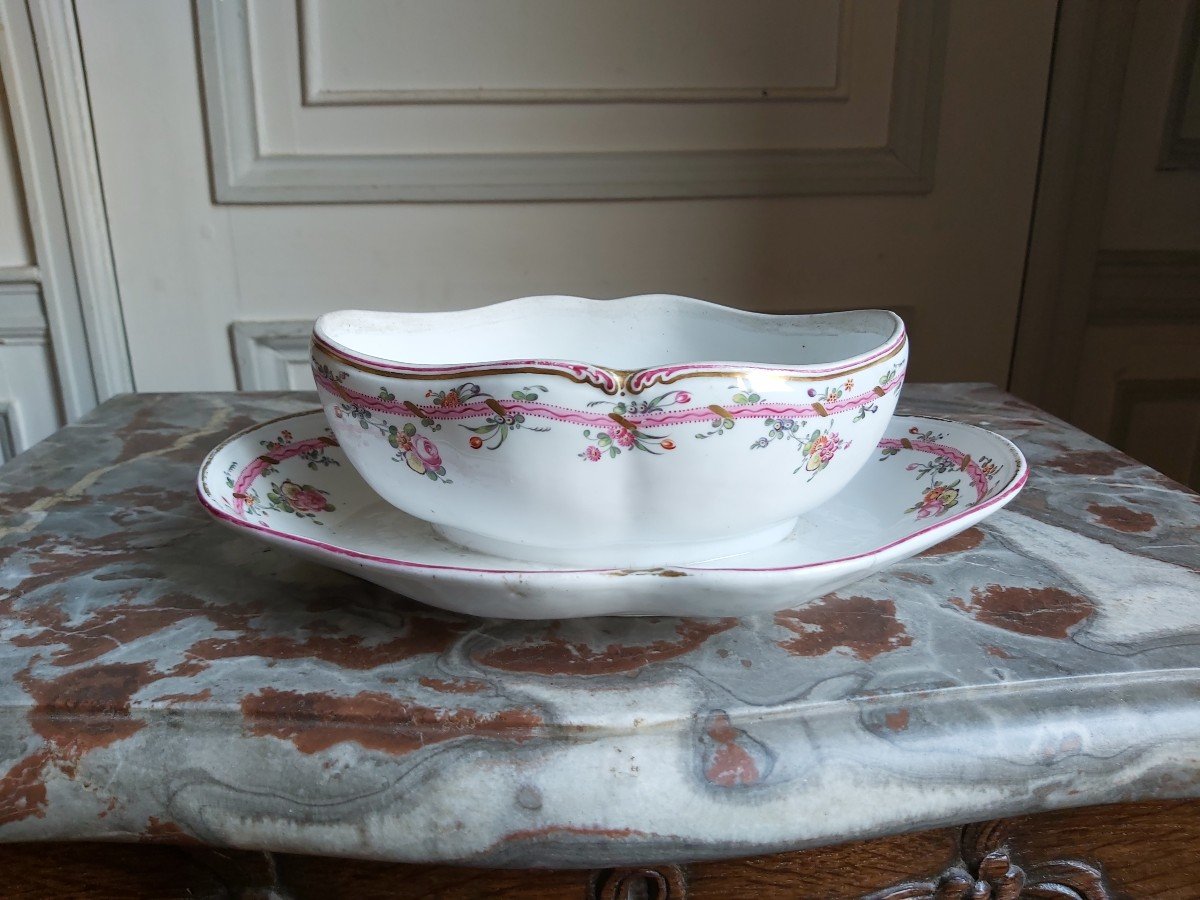
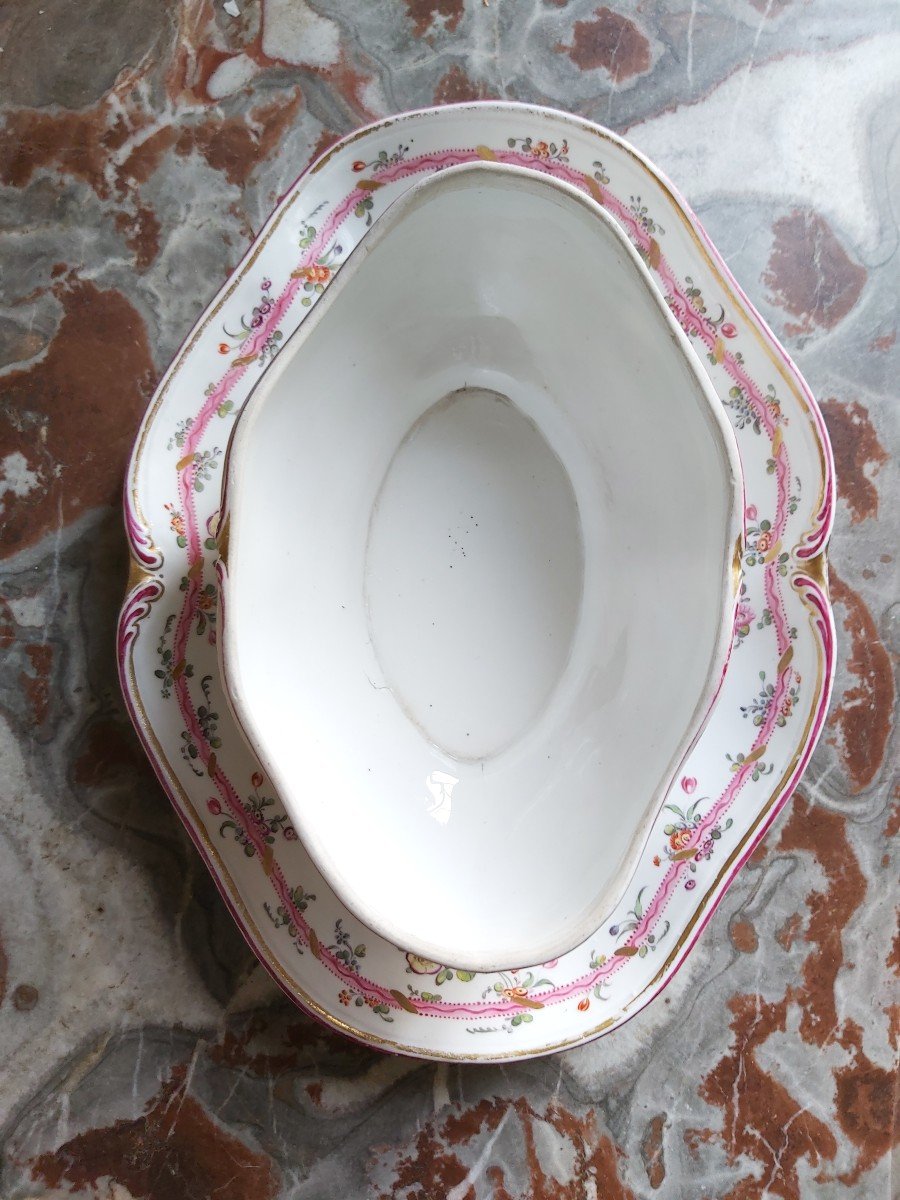
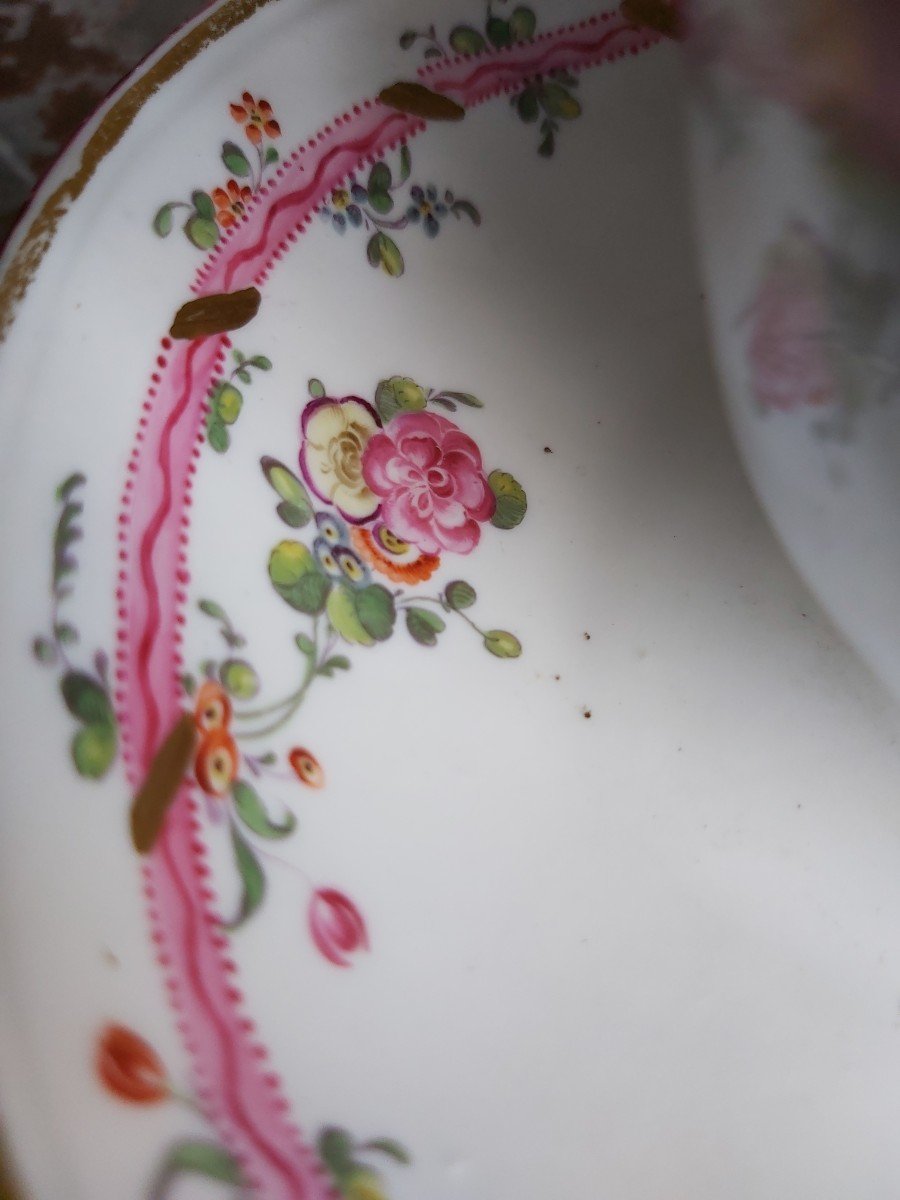
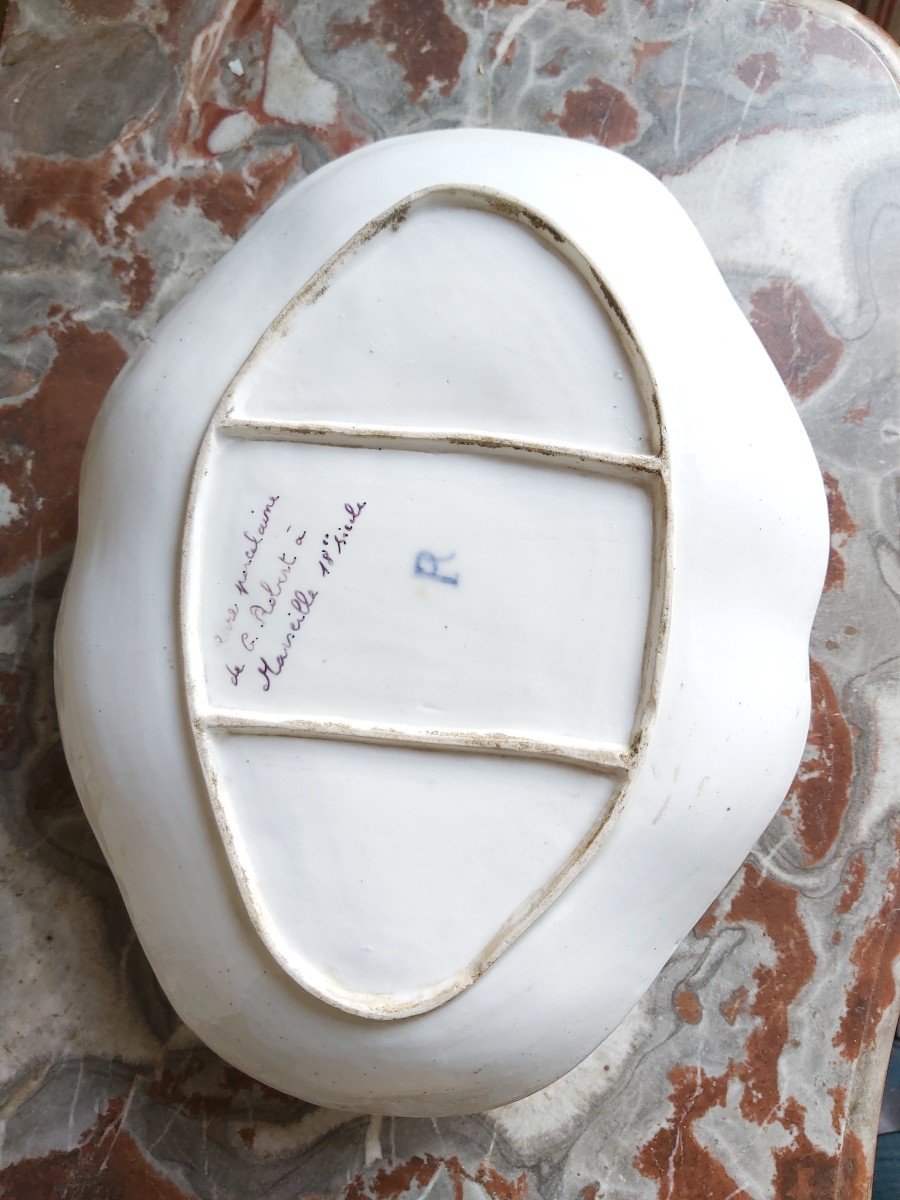
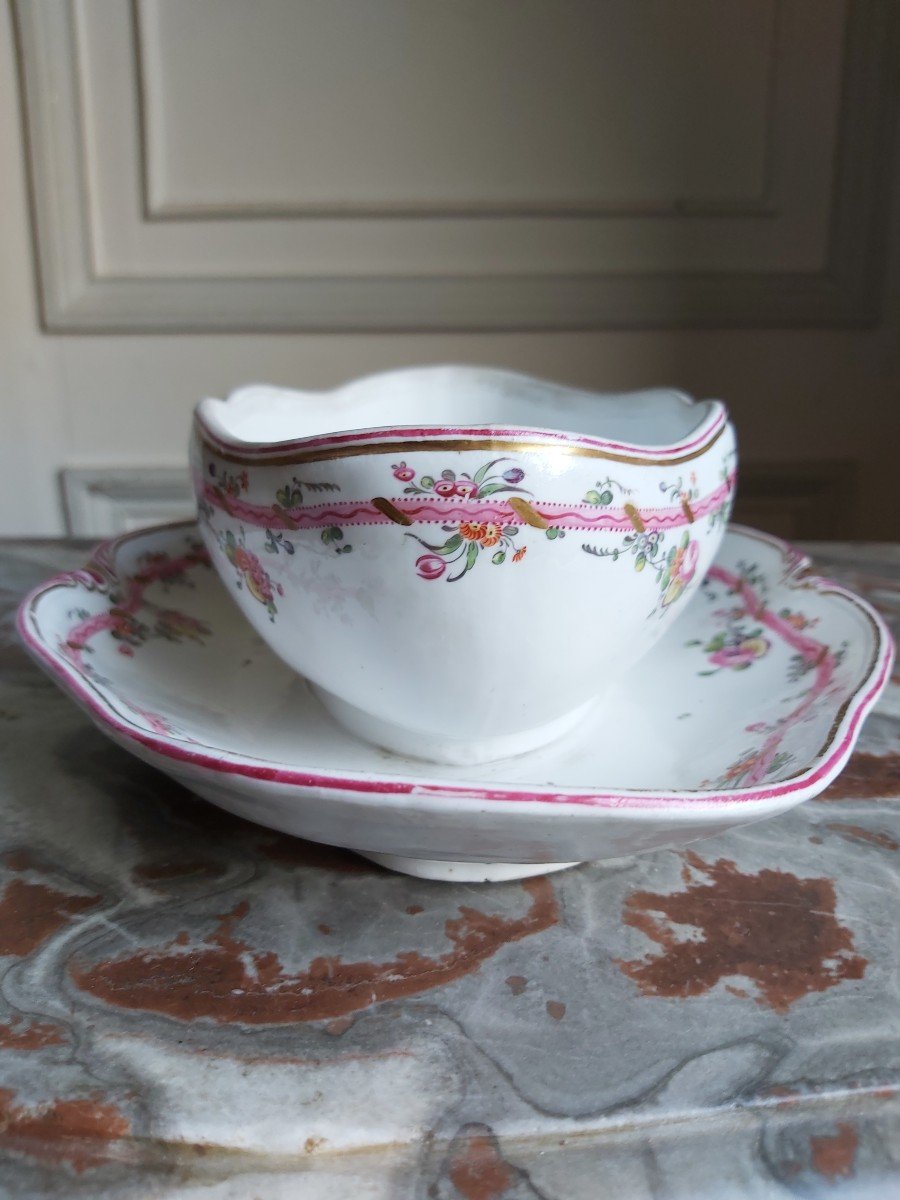
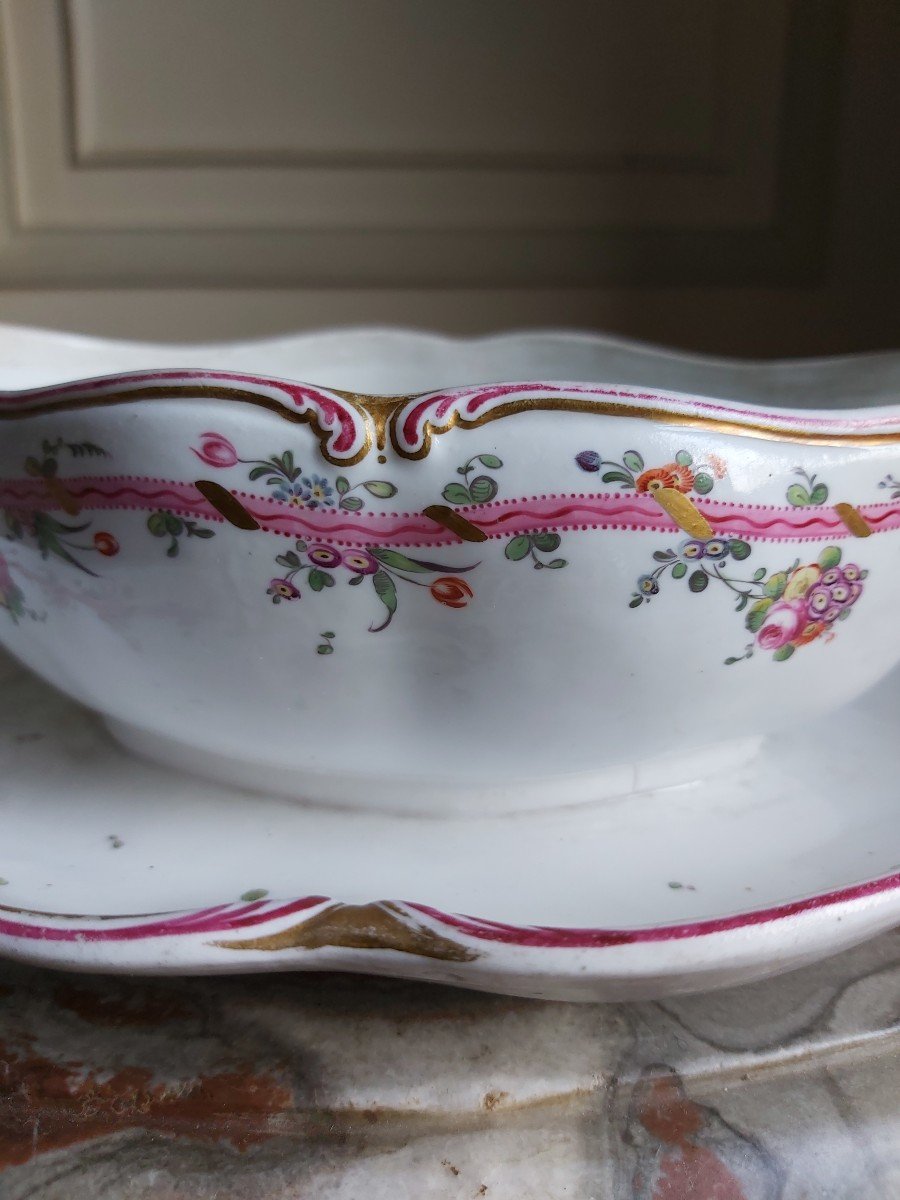
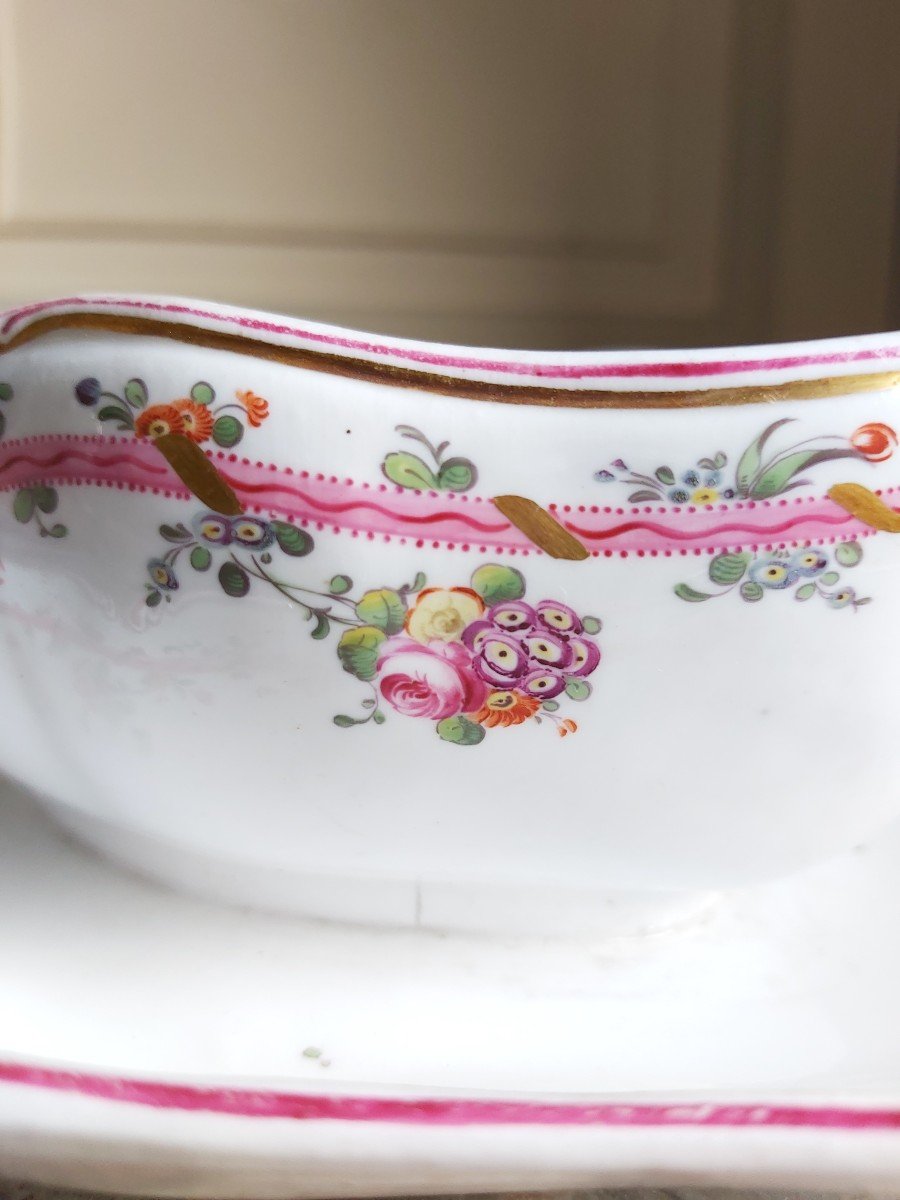
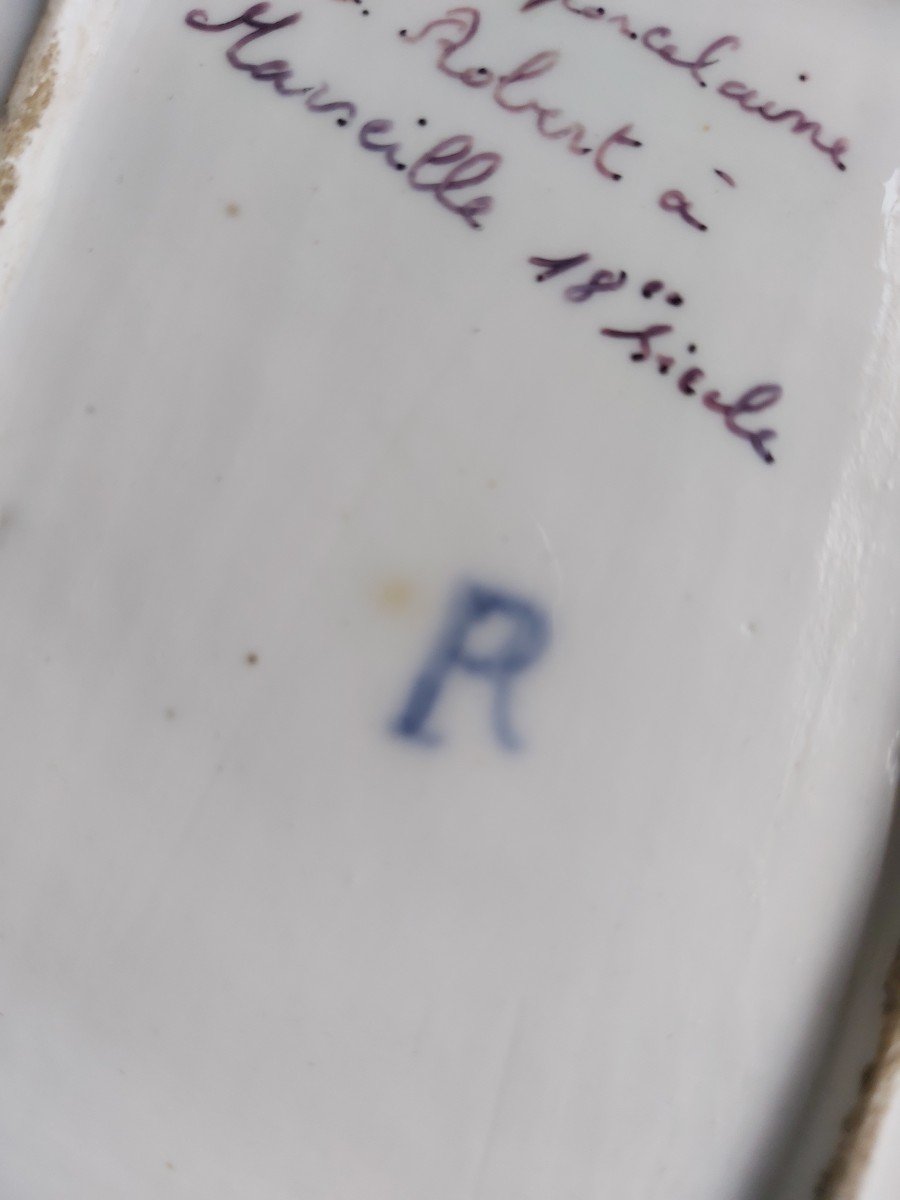
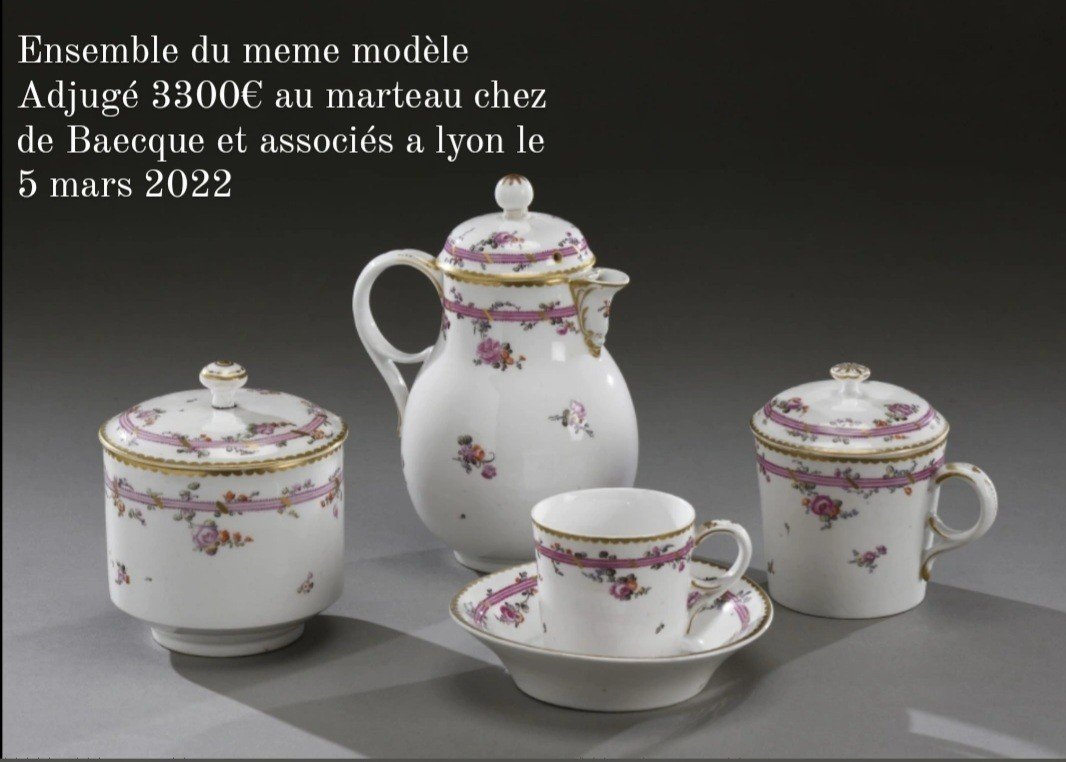


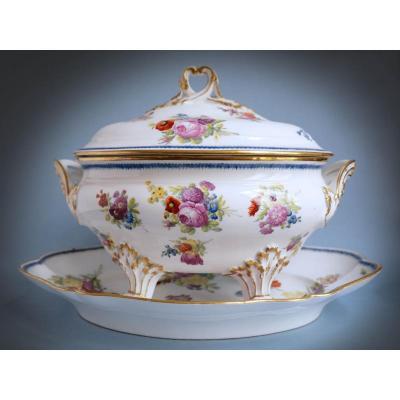
MARSEILLE, Manufacture of Robert. Body of oval porcelain sugar bowl with polychrome decoration of a seedling of flowers. On the upper edge a pink ribbon is punctuated with gold thread and surrounded by garlands of roses. Pink and gold threads on the edges. 18th century, marked in underglaze blue R.
Faïencerie Gaspard Robert:
Gaspard Robert born around 1722 is the son of Jean-Baptiste Robert and Anne-Françoise Goujon, granddaughter of Joseph Clérissy. Anne-Françoise, who was widowed shortly after the birth of her son Gaspard, remarried master potter André Estieu. From an early age Gaspard worked in his father-in-law's workshop. In 1753 he created a pottery near the Porte de Rome, close to those of his father-in-law and Widow Perrin. Thanks to the relations of his wife Marguerite de Fléchy from a family of notables from Riez and Marseille, he quickly developed his production of earthenware. It employs a large number of apprentices constituting a cheap but quality workforce because they were often students of the Academy of Fine Arts. Having obtained in 1767 the authorization to manufacture porcelain, he created for this production a specialized workshop which will be visited on July 2, 1777 by Monsieur, Count of Provence, future Louis XVIII. In 1789 he was elected deputy of the Third Estate to represent the potters, but nevertheless suffered the repercussions of the revolutionary turmoil. His production experienced a marked slowdown, but Gaspard Robert continued his activity until his death on April 8, 1799. In many respects the production of Gaspard Robert is close to that of the Veuve Perrin of which it is practically contemporary, but probably less abundant. The main types of decoration used are sepia, green or pink shades, plants and polychrome landscapes. More than any other ceramist from Marseille, Gaspard Robert makes frequent use of gold applications: his superiority in this matter is indisputable. It happily combines polychromy and gilding.
Faïencerie Gaspard Robert:
Gaspard Robert born around 1722 is the son of Jean-Baptiste Robert and Anne-Françoise Goujon, granddaughter of Joseph Clérissy. Anne-Françoise, who was widowed shortly after the birth of her son Gaspard, remarried master potter André Estieu. From an early age Gaspard worked in his father-in-law's workshop. In 1753 he created a pottery near the Porte de Rome, close to those of his father-in-law and Widow Perrin. Thanks to the relations of his wife Marguerite de Fléchy from a family of notables from Riez and Marseille, he quickly developed his production of earthenware. It employs a large number of apprentices constituting a cheap but quality workforce because they were often students of the Academy of Fine Arts. Having obtained in 1767 the authorization to manufacture porcelain, he created for this production a specialized workshop which will be visited on July 2, 1777 by Monsieur, Count of Provence, future Louis XVIII. In 1789 he was elected deputy of the Third Estate to represent the potters, but nevertheless suffered the repercussions of the revolutionary turmoil. His production experienced a marked slowdown, but Gaspard Robert continued his activity until his death on April 8, 1799. In many respects the production of Gaspard Robert is close to that of the Veuve Perrin of which it is practically contemporary, but probably less abundant. The main types of decoration used are sepia, green or pink shades, plants and polychrome landscapes. More than any other ceramist from Marseille, Gaspard Robert makes frequent use of gold applications: his superiority in this matter is indisputable. It happily combines polychromy and gilding.
Explore similar pieces and discover your ideal find:
Porcelain Serveware