THIS OBJECT WAS SOLD
Stunning XVIIth Greek Painted & Gilt Triptych Travel Icon






Second part of 17th century
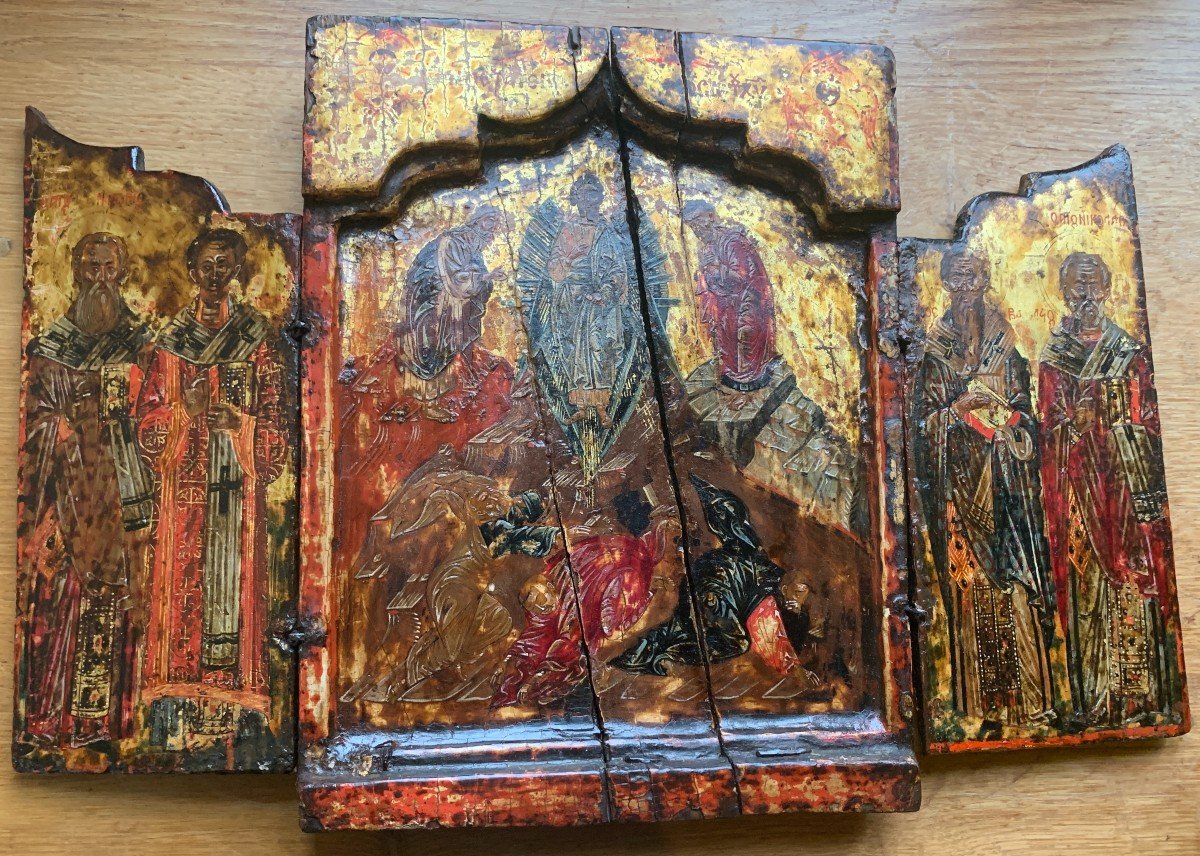
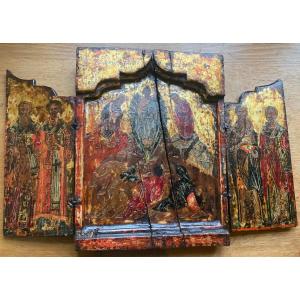
Superb and complete painted triptych travel icon (with 2 panels painted on both sides) on gold background.
Greece, end of the Cretan period (2nd part of the 17th century);
Meta byzantine style, either after Constantinople conquest by Turks
- we find Ottoman influence par example with holy figures clothes transparency holy, also with gilding and a rather heavy style, again by the upper part icon shutters sophisticated cutting.
Painting and gilding on oak panels (the main panel is reinforced by thick horizontal rails, fixed by original hand forged nails, and other screws brought back to 18th or 19th century to consolidate the whole)
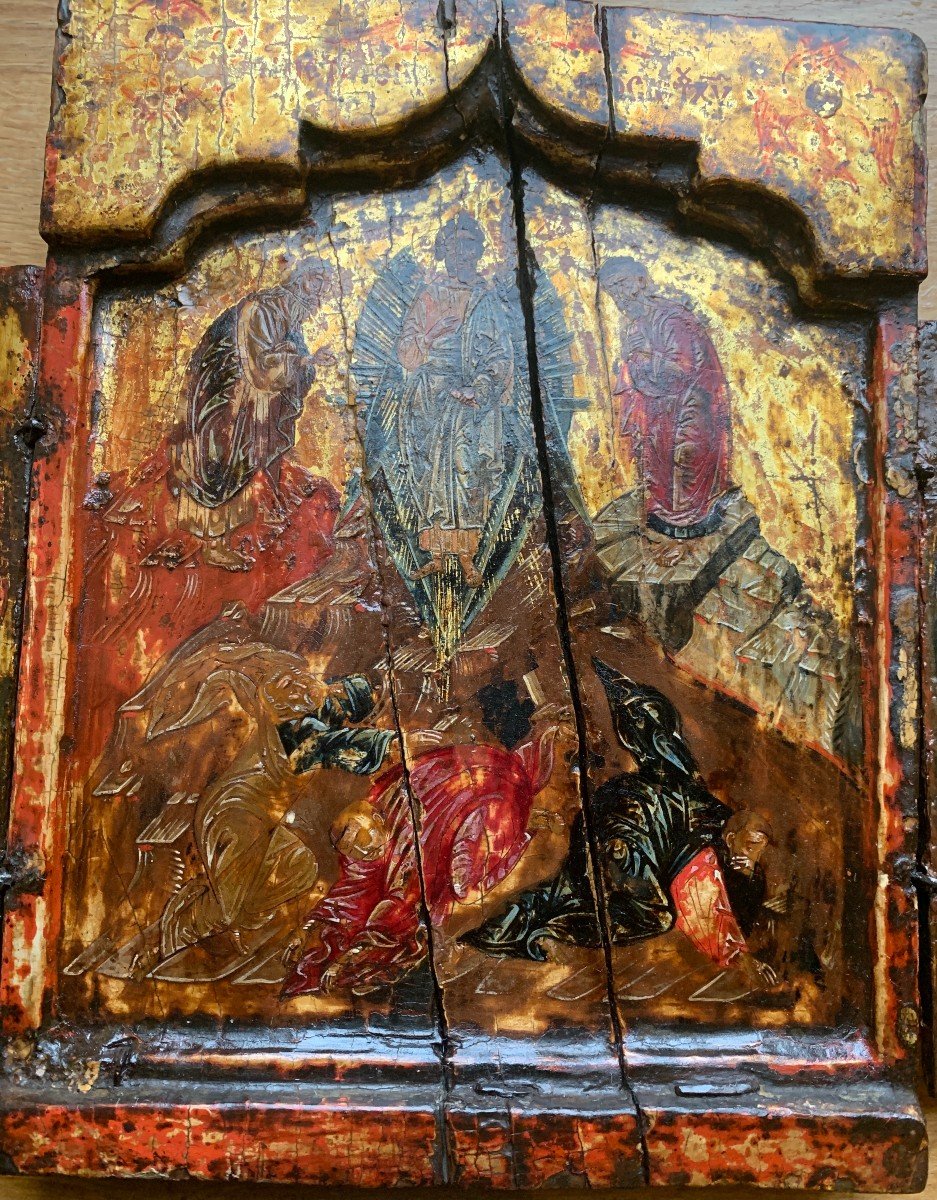
* The central panel represents the Transfiguration, with Christ in glory in the center, surrounded by the 2 prophets,
Moses beardless on the right,
and Elijah wearing a white beard on the left.
On the lower register, 3 of the apostles, St Jacques, St Jean and St Pierre are dazzled by Christ in glory Appearance, as if struck down by the Light of Christ.
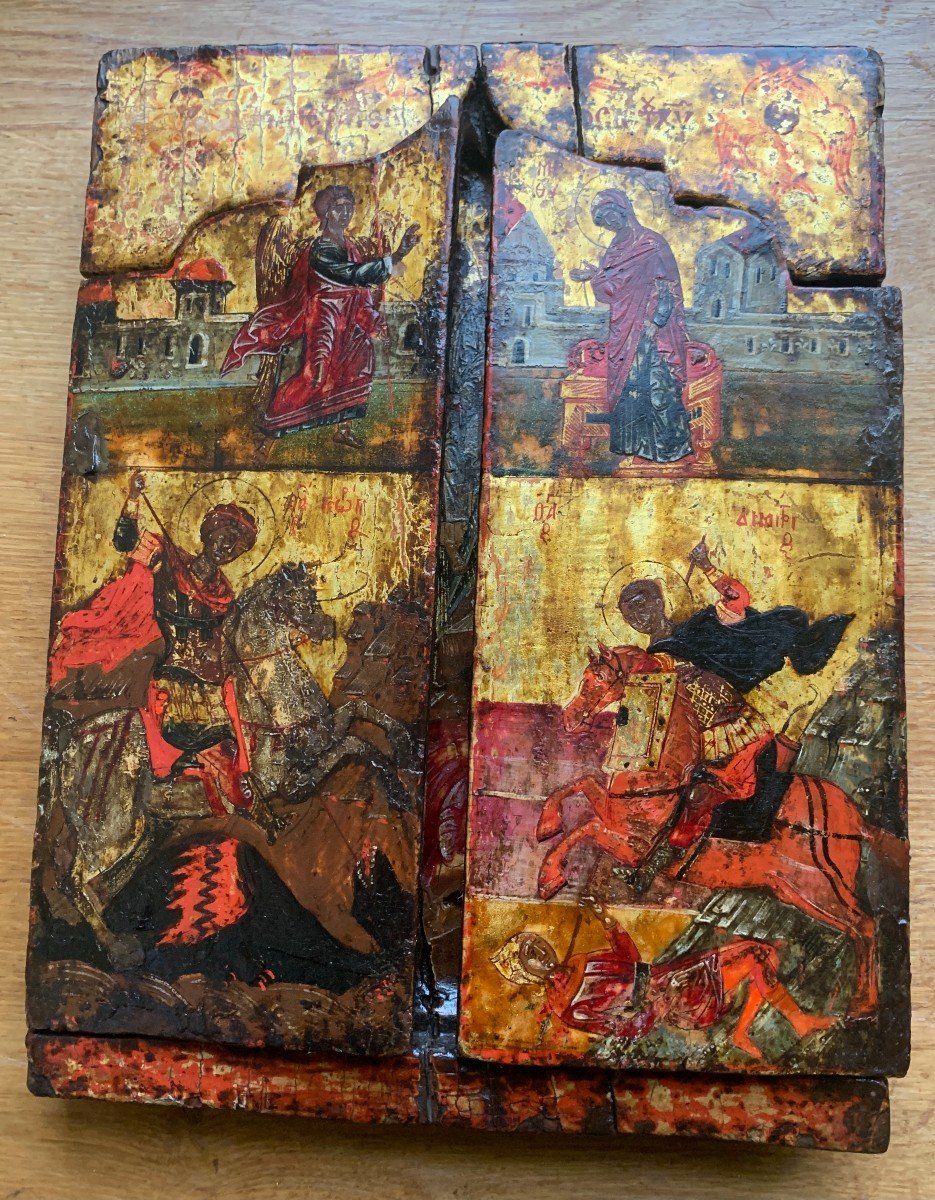
* The outer faces of the closed triptych represent
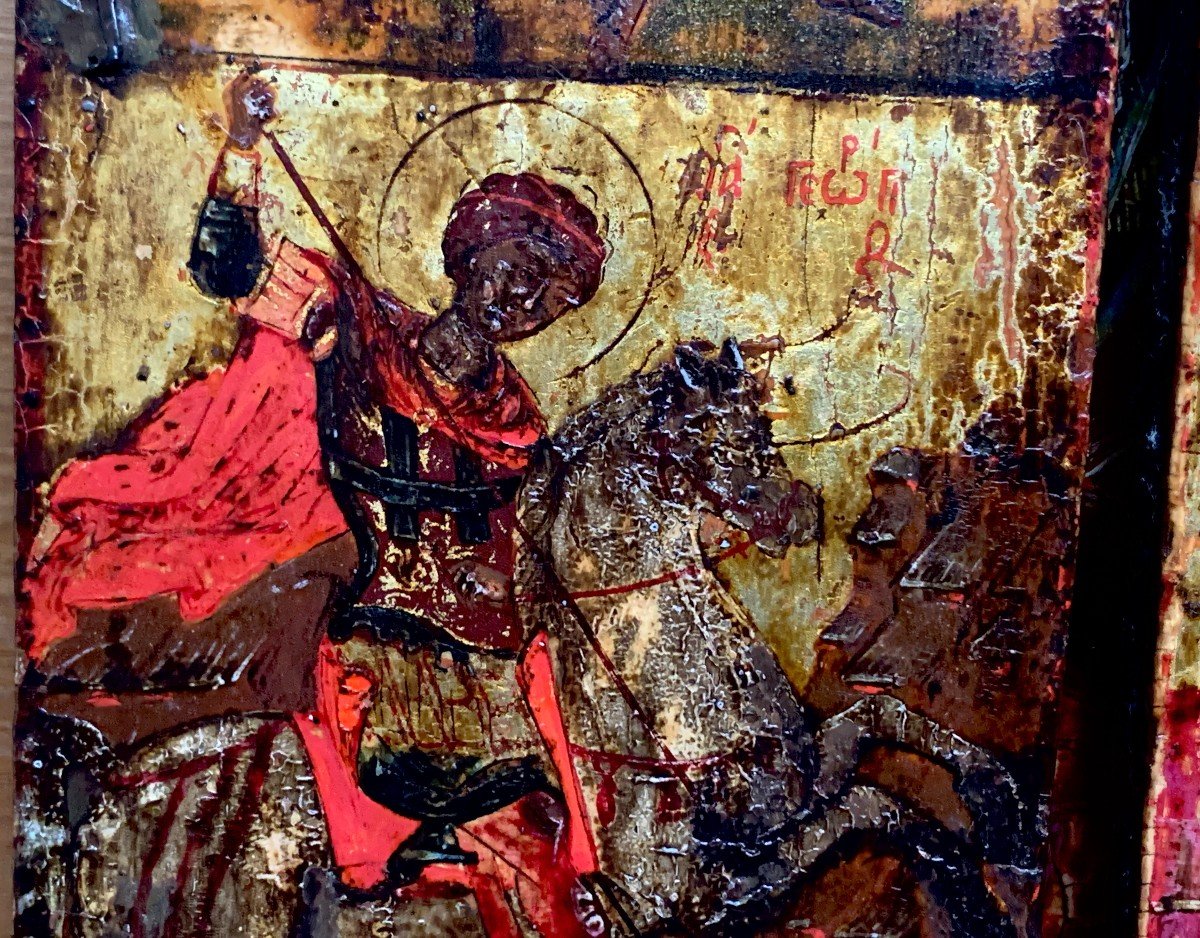
on the left St Georges slaying a dragon
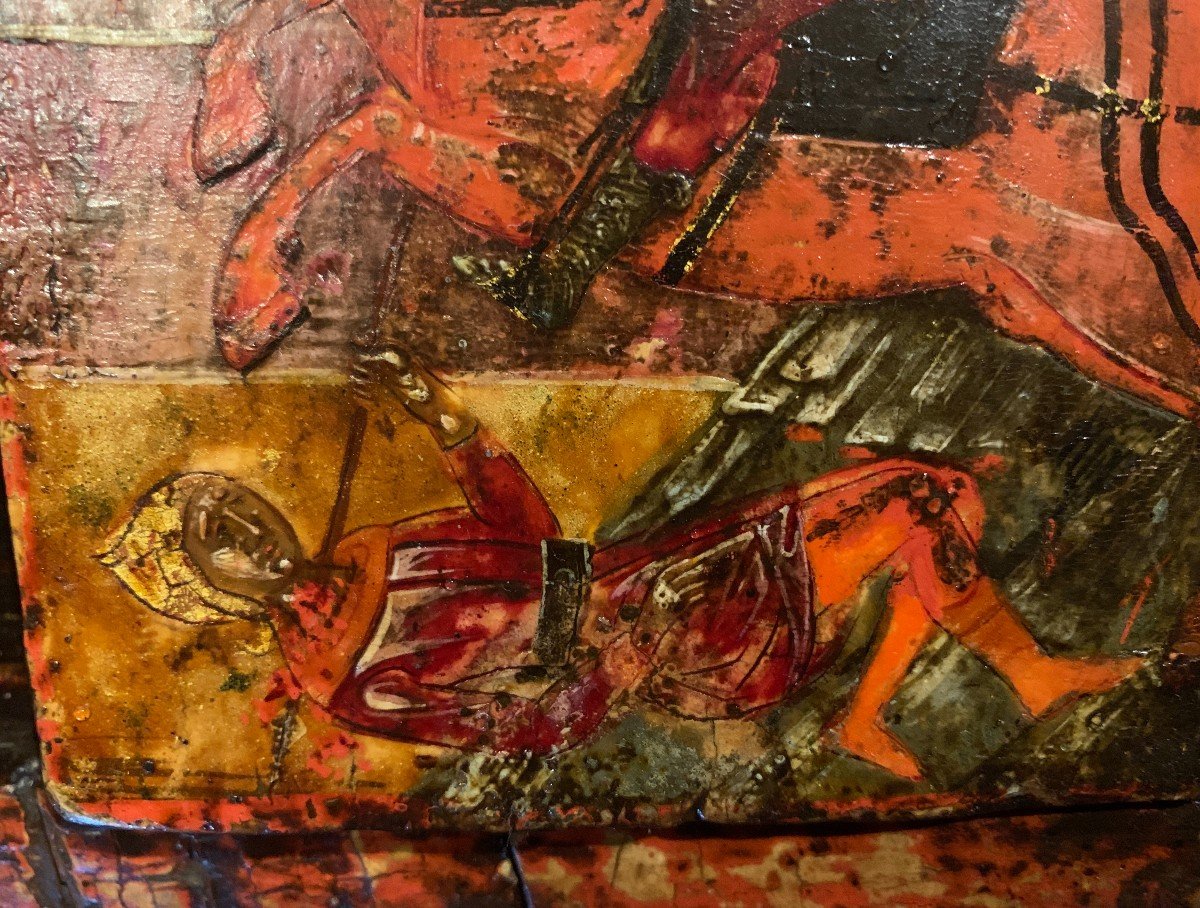
and on the right St Dimitrios *, appearing on the ramparts of the city, and slaying a Bulgarian soldier while protecting the City of Théssaloniki (represented in military dress on his horse, slaying Lyaeos, a gladiator who allegedly killed several Christians).
Great Christian martyr who accomplished his martyrdom in Thessaloniki at the beginning of 4th century, around the year 306.
Megalomartyr Saint Demetrios is revered as one of the most important Orthodox military patrons, often associated with Saint George).
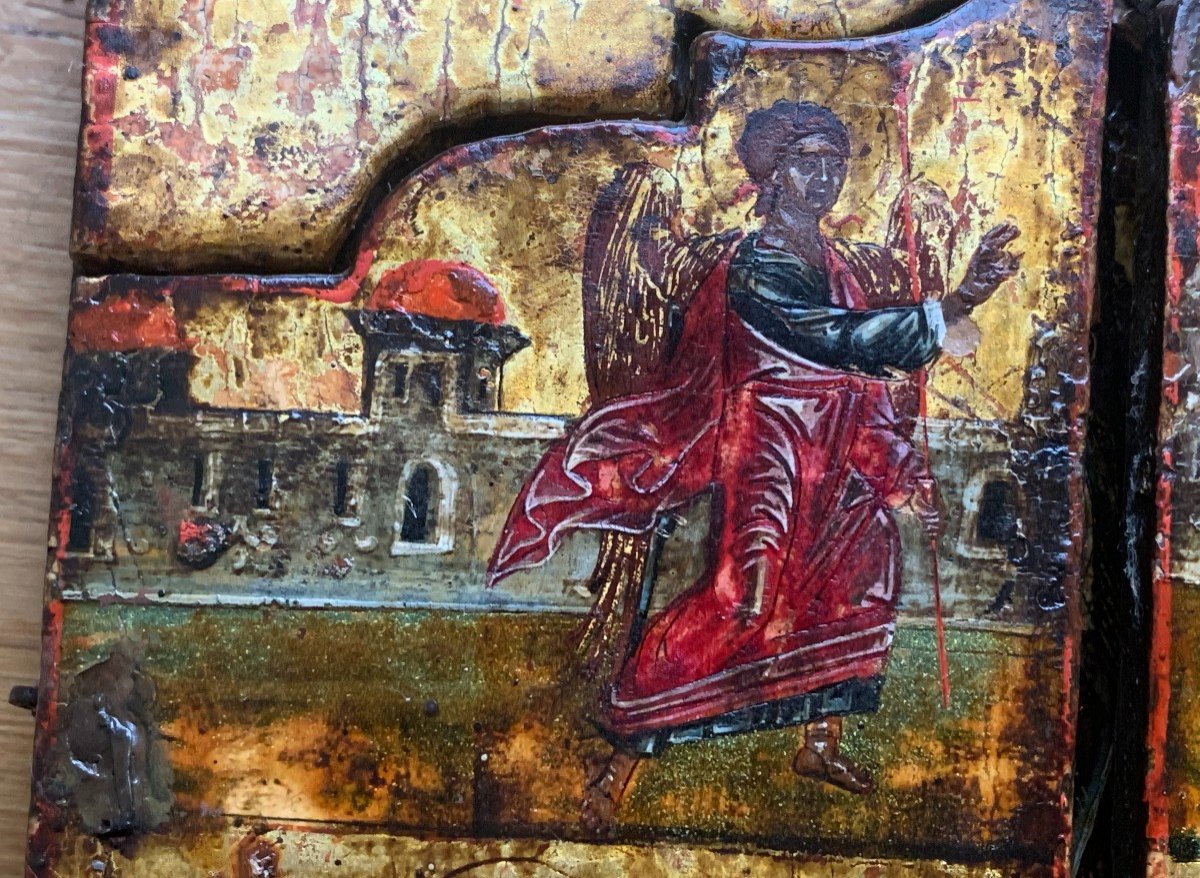
On the upper register, the Annunciation thema is represented with the angel stretching out his hand towards the Mother of God.
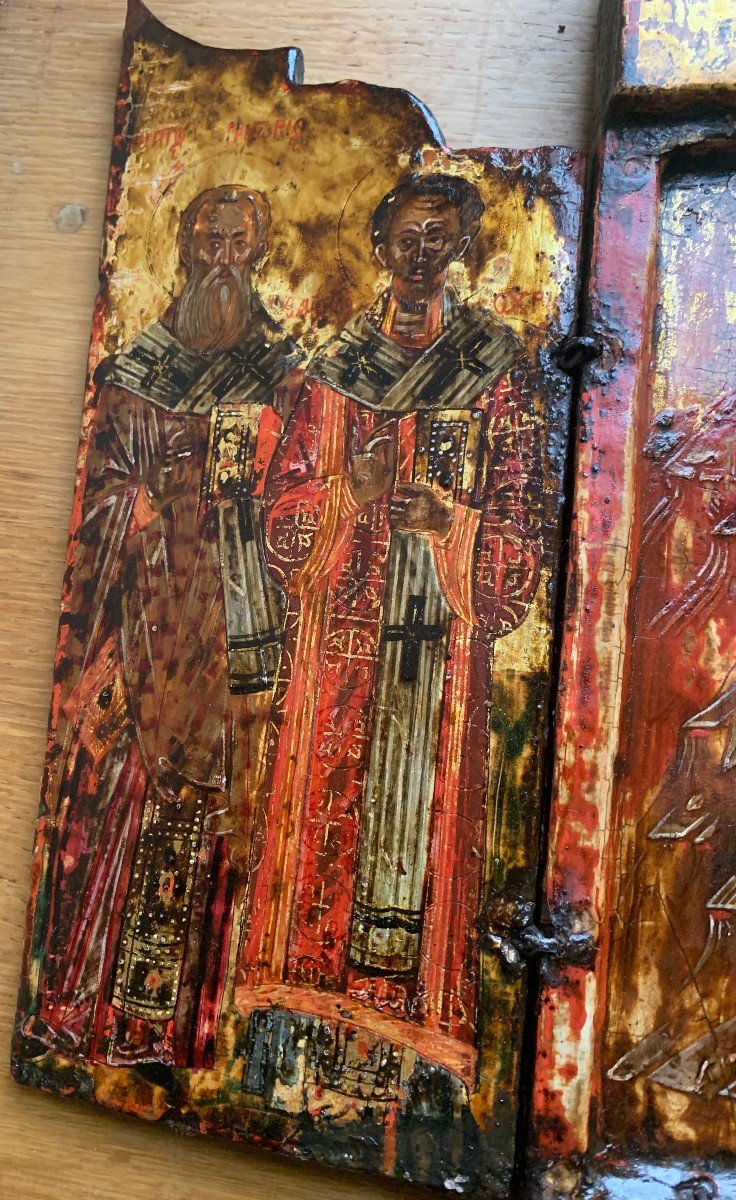
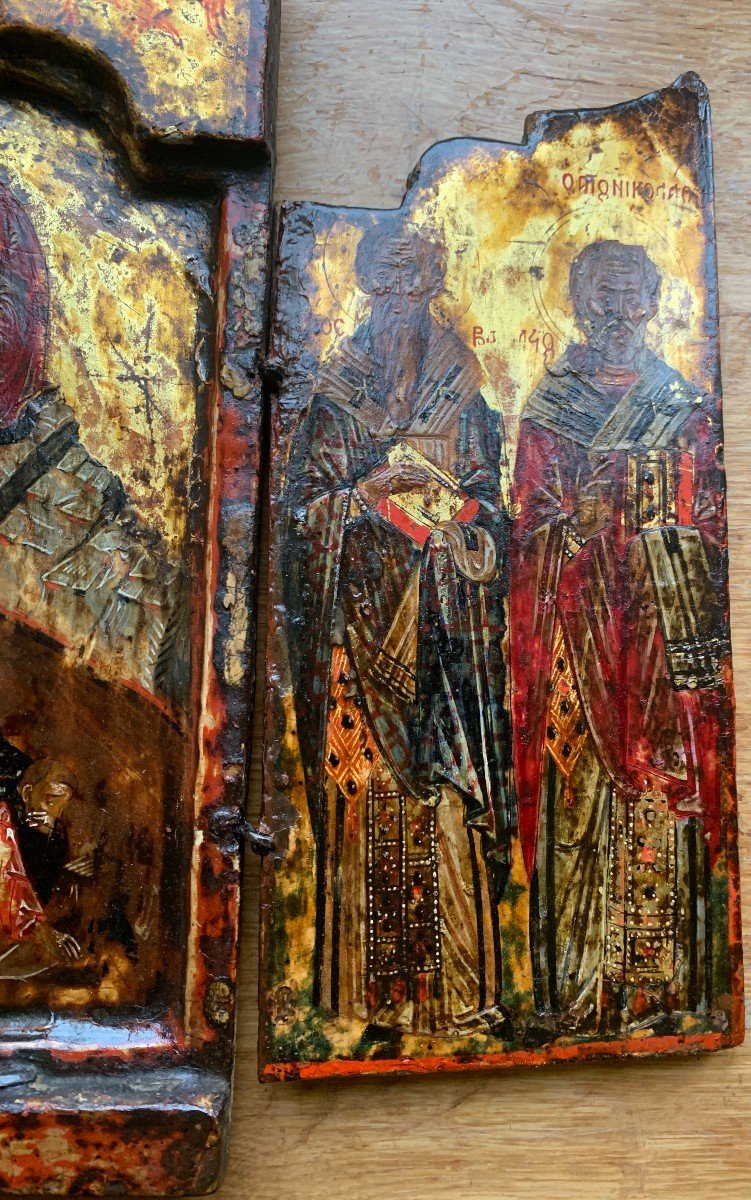
*The main scene is framed inside the shutters,
-on the left by St John Chrysostom *
(archbishop and patriarch of the city of Constantinople, born in Turkey between 344 and 349, and died in 407, considered as one of Church Fathers)
and St Gregory the Theologian or Gregory of Nazianze *
Born in 329 in Cappadocia and died in 390, is a theologian and Doctor of the Church. He is part of the "Cappadocian Fathers" with Basil of Caesarea and Gregory of Nyssa. Model of the pastors and one of the theologians who knew by his sermons and works to transfigure the culture Hellenic in a Christian culture.
-on the right St Nicolas (black beard)
and St Basil of Caesarea or St Basil the Great (with a pointed beard)
Born in 329 and died in 379 in Caesarea in Cappadocia, he is also one of the main Fathers of the Church.
Roman martyr and Bishop of Constantinople, 4th cty.
Different Cyrillic white inscriptions accompanying religious scenes
Good condition. Old diagonal slits in the wood on the main panel and some light pictorial wear, which does not interfere with icon understanding;
cleaning of old varnish (which had largely blackened) was carried out by our professional workshop in order to make the icon perfectly legible.
Dimensions of the icon: height 33cm, width 26cm (closed) and 51cm (open, with the shutters) Width of each shutter approx 13cm
Possible many detailed photos (Greek inscriptions, details, ...) emailing on simple request to fabien.siegfried@yahoo.com
Thanks to Orthodox priest Theotokis from Solan Monastery for his precious and precise iconographic analysis of this icon.
Explore similar pieces and discover your ideal find:
religious paintings