THIS OBJECT WAS SOLD
Archaeologist Etruscan Kyathios Bucchero Nero, Circa Vith Bc
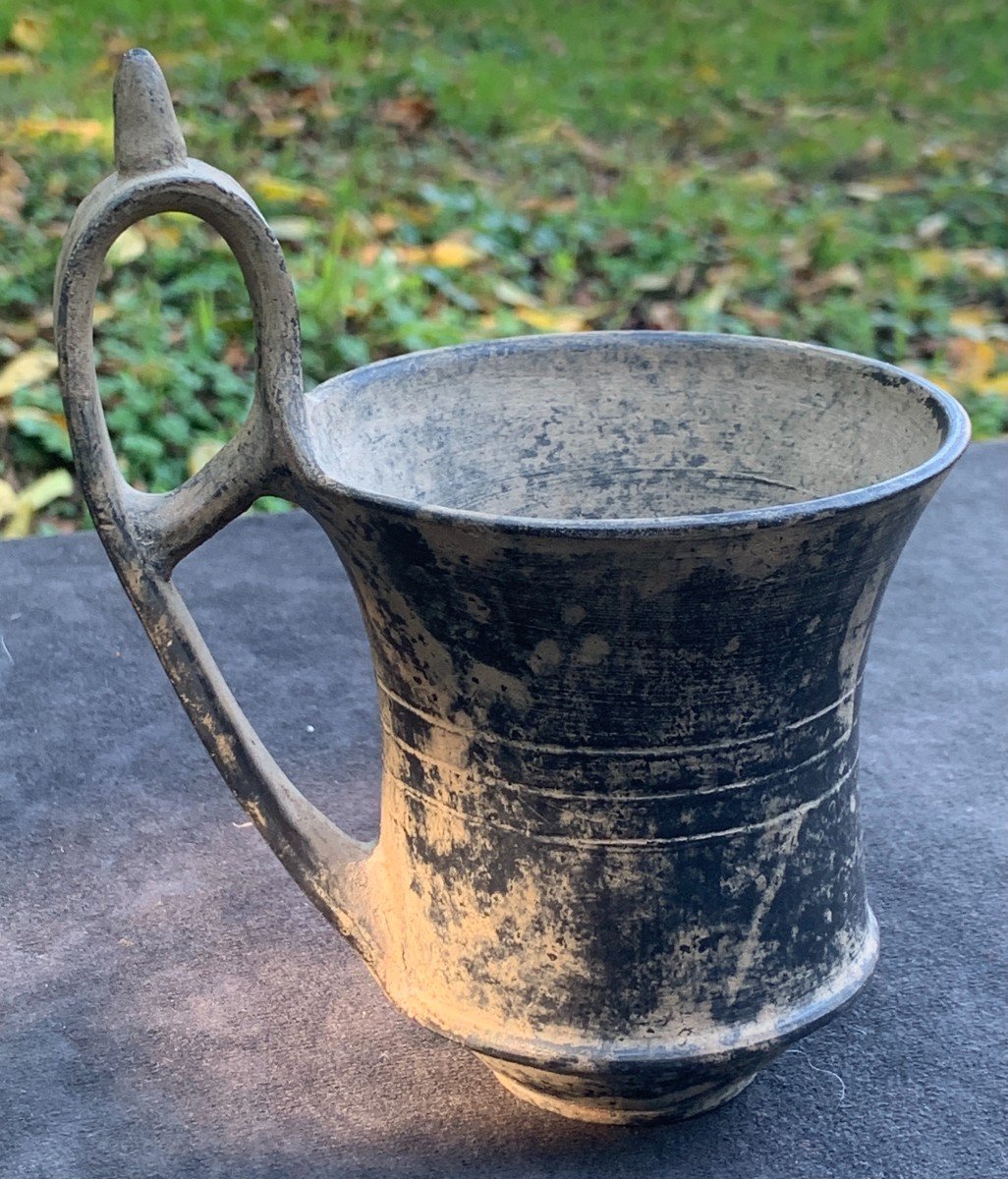
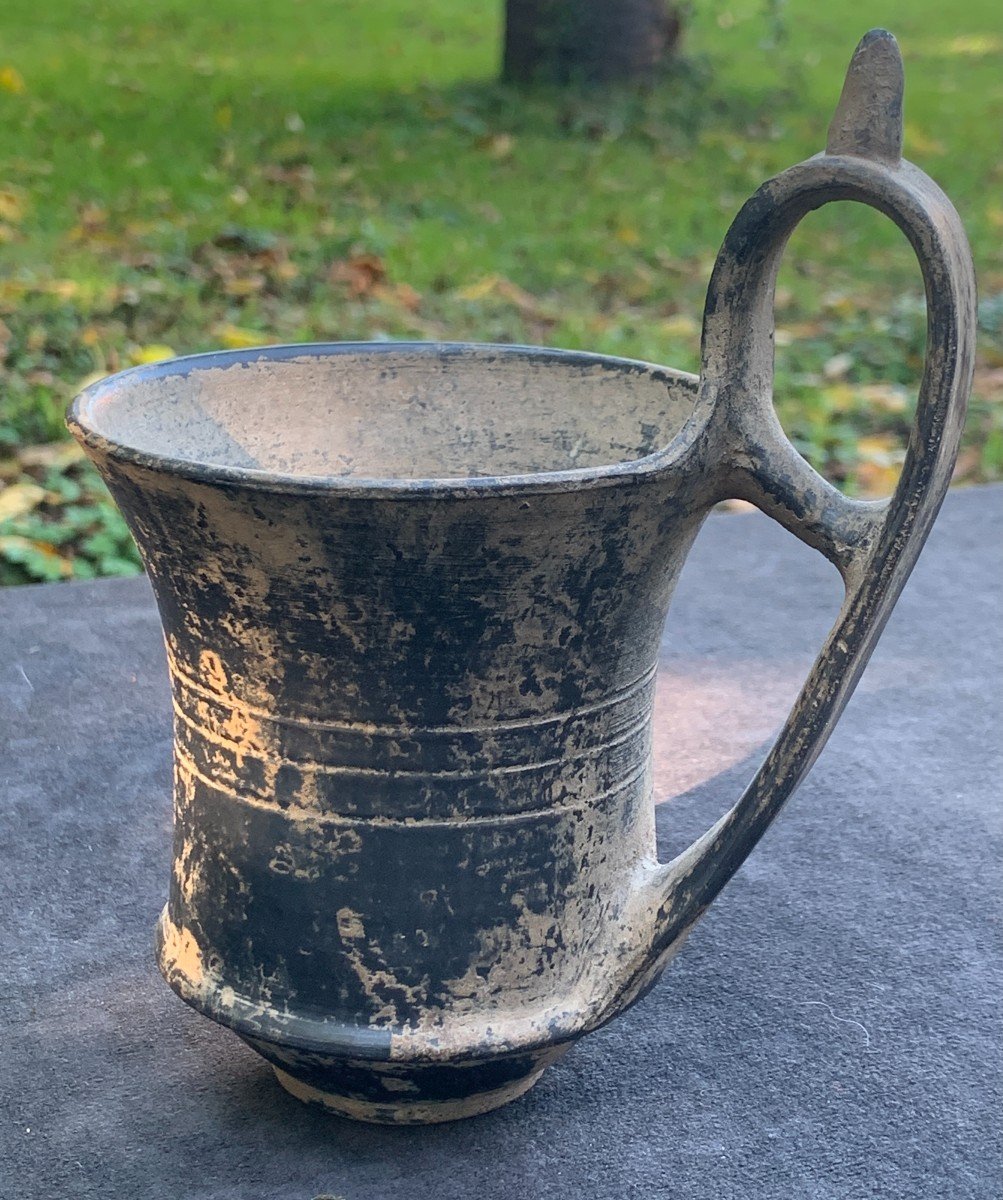
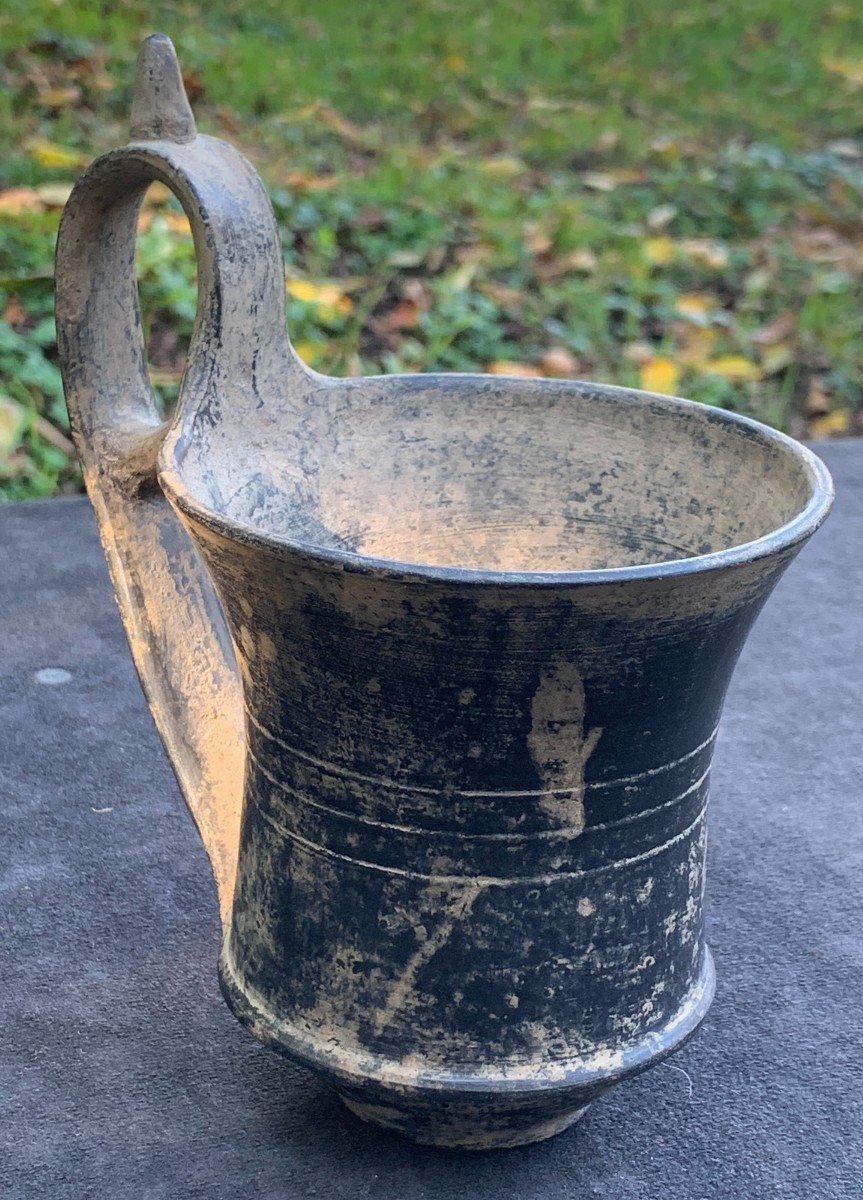

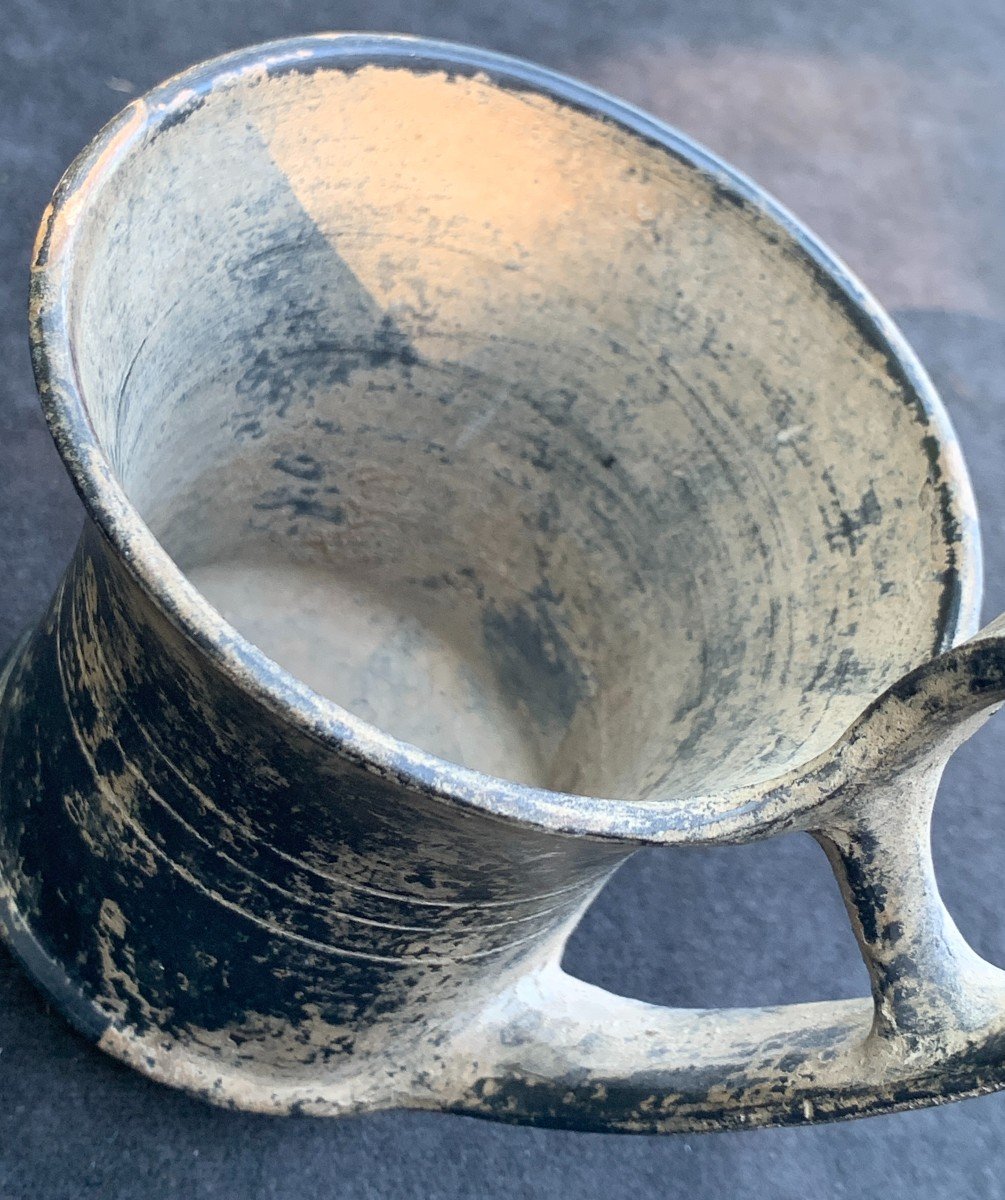
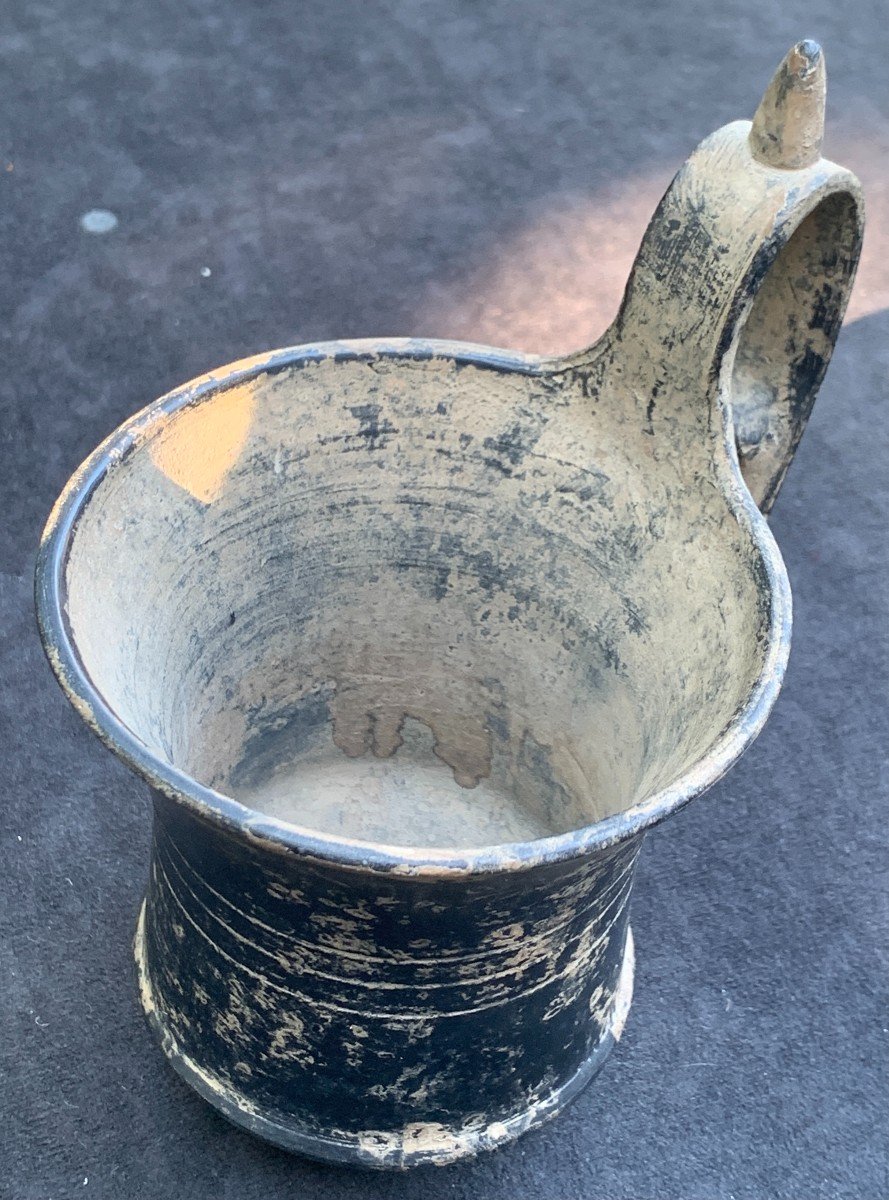




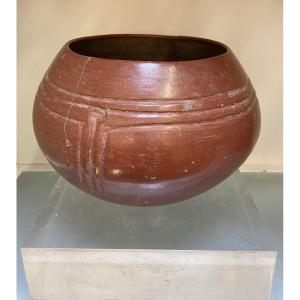
Cup or wine cup in black terracotta, used to draw water with a single handle
Gde Greece, Etrusque circa -600 BC
6th / 5th century BC Typical table vessel of Etruscan culture.
Perfect condition with ghreat excavation patina, calcareous and clayey deposits (I intentionally did not touch the patina which is very beautiful !)
Etruscan Kyathos known as "Bucchero Nero"
"It differs from other types of ceramics (impasto) by a method of particular firing giving it that unusual color of classical rather brown pottery, in order to imitate blackened metal. Its clay was blackened in the mass by fumigation during a complete reduction firing, the firing being carried out at low temperature ( below 500 ° C)
Buccheri were produced in very specific places of Etruscan civilization whose centers are Cerveteri, Tarquinia and Chuisi. " (Tuscany / Lazio, Italy)
"The ancient Greek kyathos -ladle, is the name given in modern terminology to an antique painted vase with a tall, round, slightly tapered cavity and a long, flat ring handle.
The kyathos was used to draw wine from a crater and pour it into cups.
The earliest known examples were made around 530 BC in the workshop of Nikosthenes. It was copied from original models in metal, possibly in silver or in bronze like the one presented in the Ferrara Museum. It is still found in the first half of the fifth century BC and it becomes very rare in the following period.
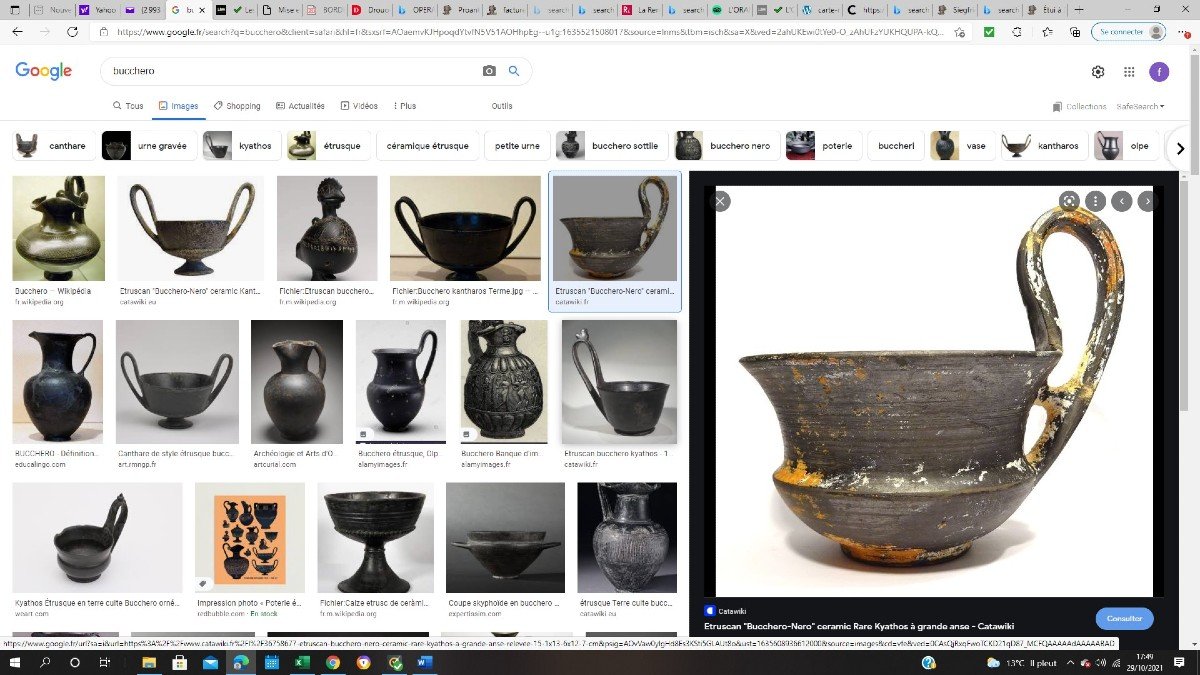
"Other similar pieces found in documentation (Cf last photos) are scattered in Museums around the world. This interesting piece, having preserved its patina of excavation-limestone and clay deposits, incredibly perfectly preserved, would obviously and timely fit into the framework of any archaeological collection.
http://www.maquetland.com/article-phototheque/14847-etrurie-ceramique-cyathe-kyathos-bucchero-nero-rome-scv
Gde Greece, Etrusque circa -600 BC
6th / 5th century BC Typical table vessel of Etruscan culture.
Perfect condition with ghreat excavation patina, calcareous and clayey deposits (I intentionally did not touch the patina which is very beautiful !)
Etruscan Kyathos known as "Bucchero Nero"
"It differs from other types of ceramics (impasto) by a method of particular firing giving it that unusual color of classical rather brown pottery, in order to imitate blackened metal. Its clay was blackened in the mass by fumigation during a complete reduction firing, the firing being carried out at low temperature ( below 500 ° C)
Buccheri were produced in very specific places of Etruscan civilization whose centers are Cerveteri, Tarquinia and Chuisi. " (Tuscany / Lazio, Italy)
"The ancient Greek kyathos -ladle, is the name given in modern terminology to an antique painted vase with a tall, round, slightly tapered cavity and a long, flat ring handle.
The kyathos was used to draw wine from a crater and pour it into cups.
The earliest known examples were made around 530 BC in the workshop of Nikosthenes. It was copied from original models in metal, possibly in silver or in bronze like the one presented in the Ferrara Museum. It is still found in the first half of the fifth century BC and it becomes very rare in the following period.
"Other similar pieces found in documentation (Cf last photos) are scattered in Museums around the world. This interesting piece, having preserved its patina of excavation-limestone and clay deposits, incredibly perfectly preserved, would obviously and timely fit into the framework of any archaeological collection.
http://www.maquetland.com/article-phototheque/14847-etrurie-ceramique-cyathe-kyathos-bucchero-nero-rome-scv
Explore similar pieces and discover your ideal find:
archeology