





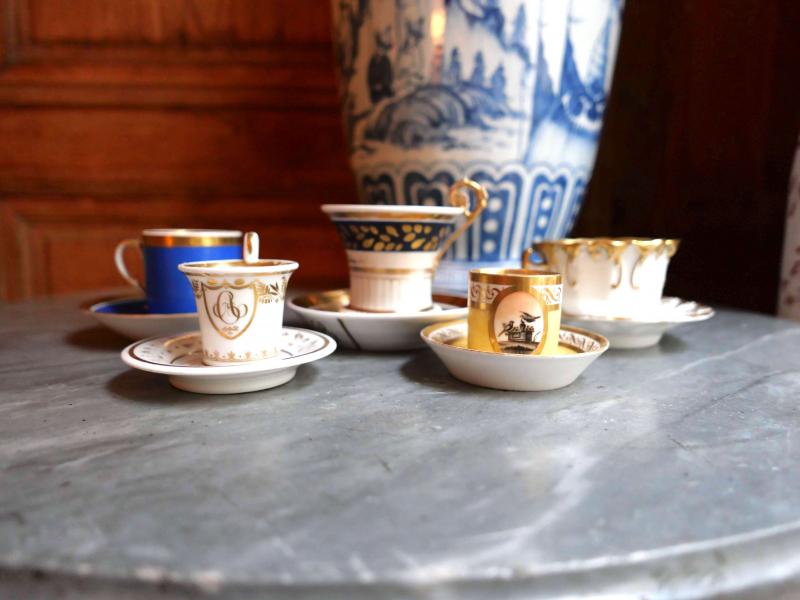
Porcelaine De Paris - A Mignonnette Cup With White And Gold Decor Encrypted Ga - Nineteenth Century
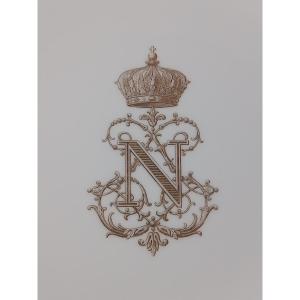
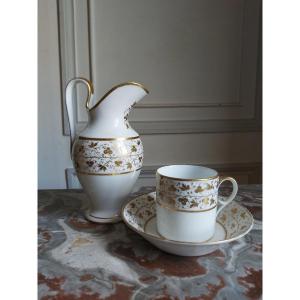
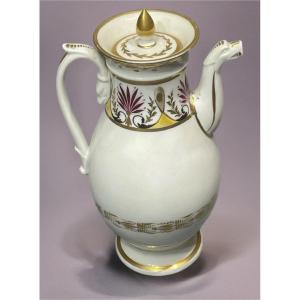
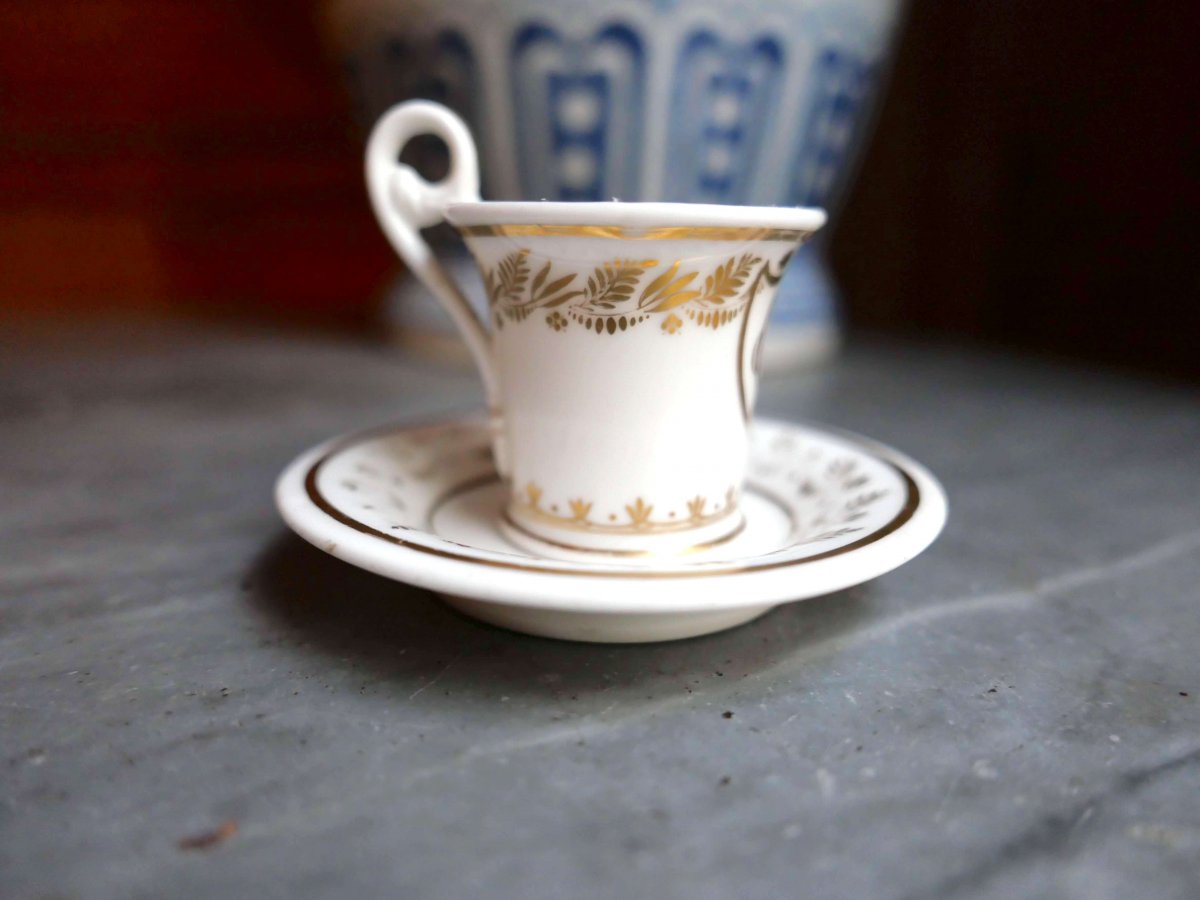
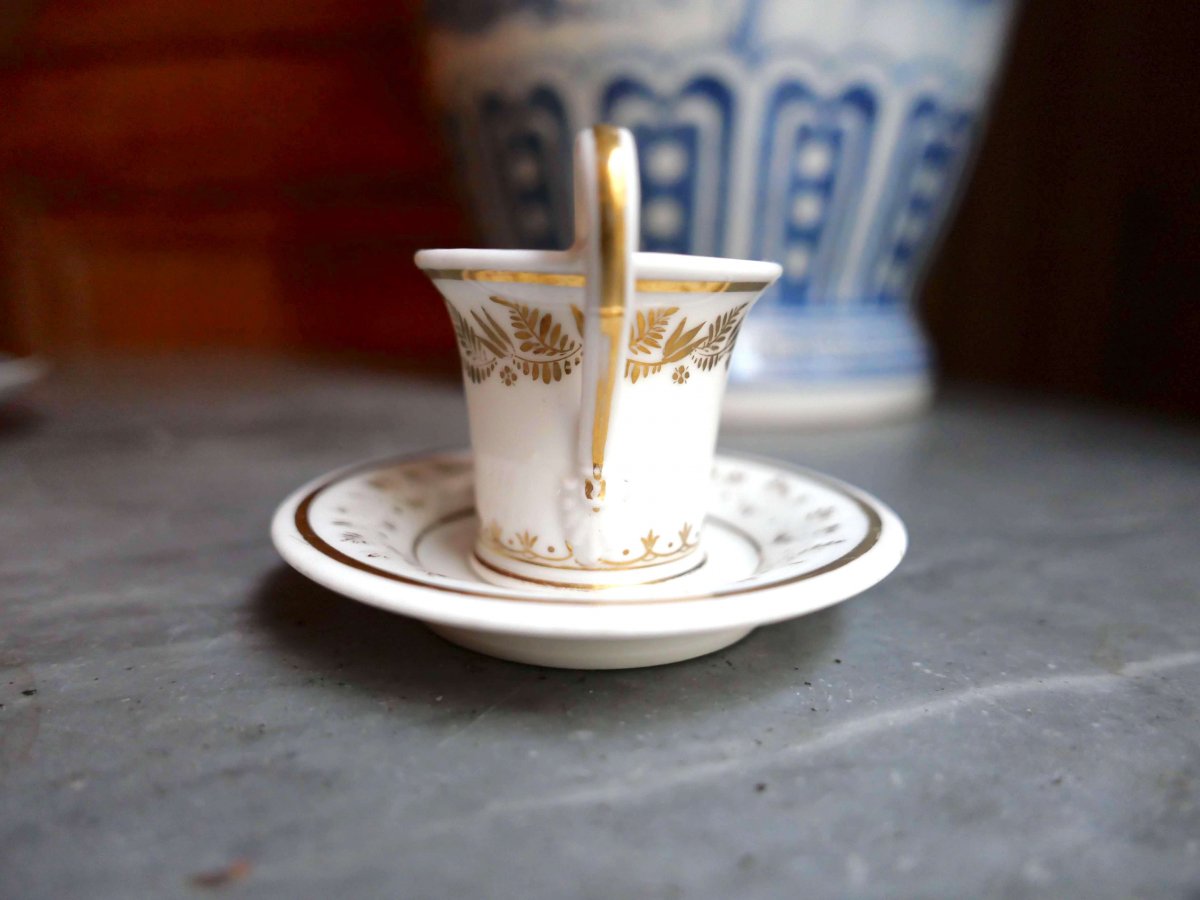
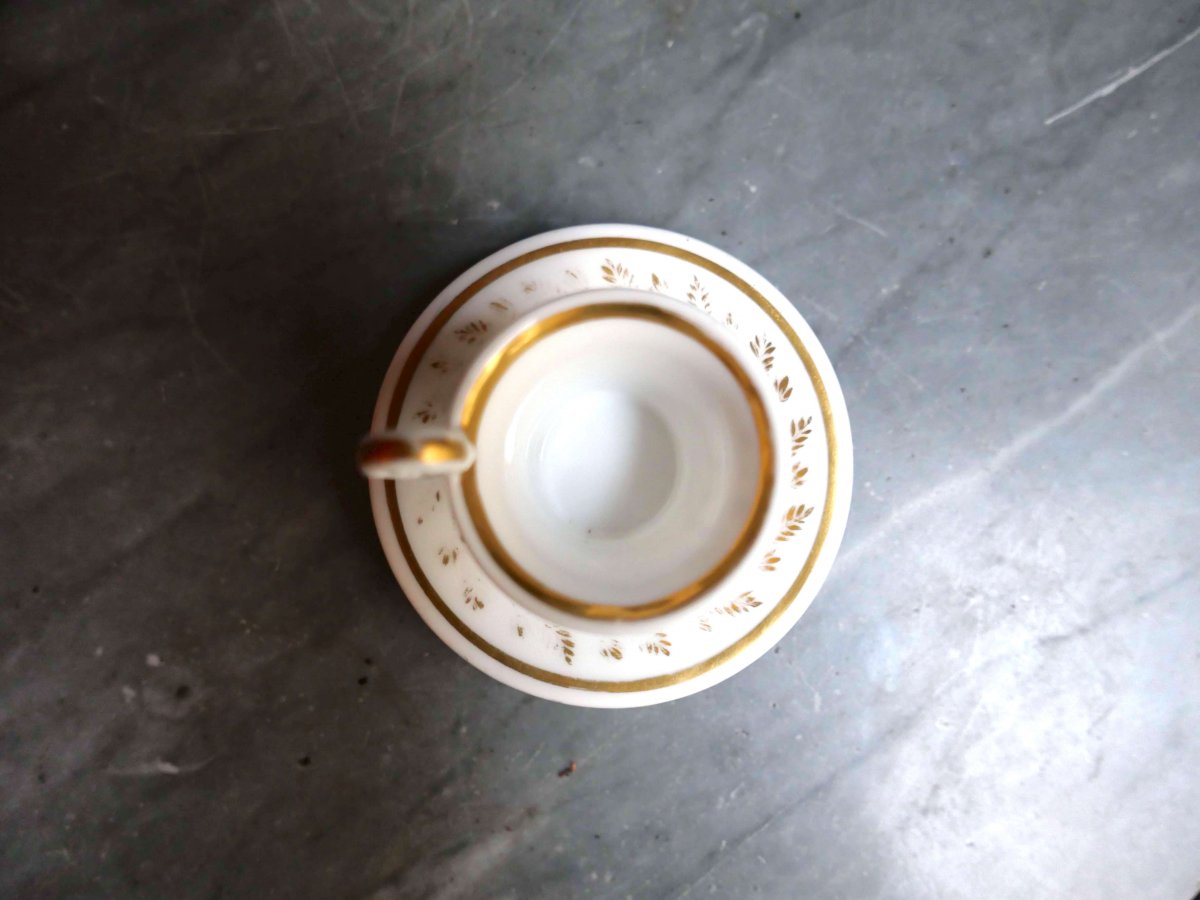
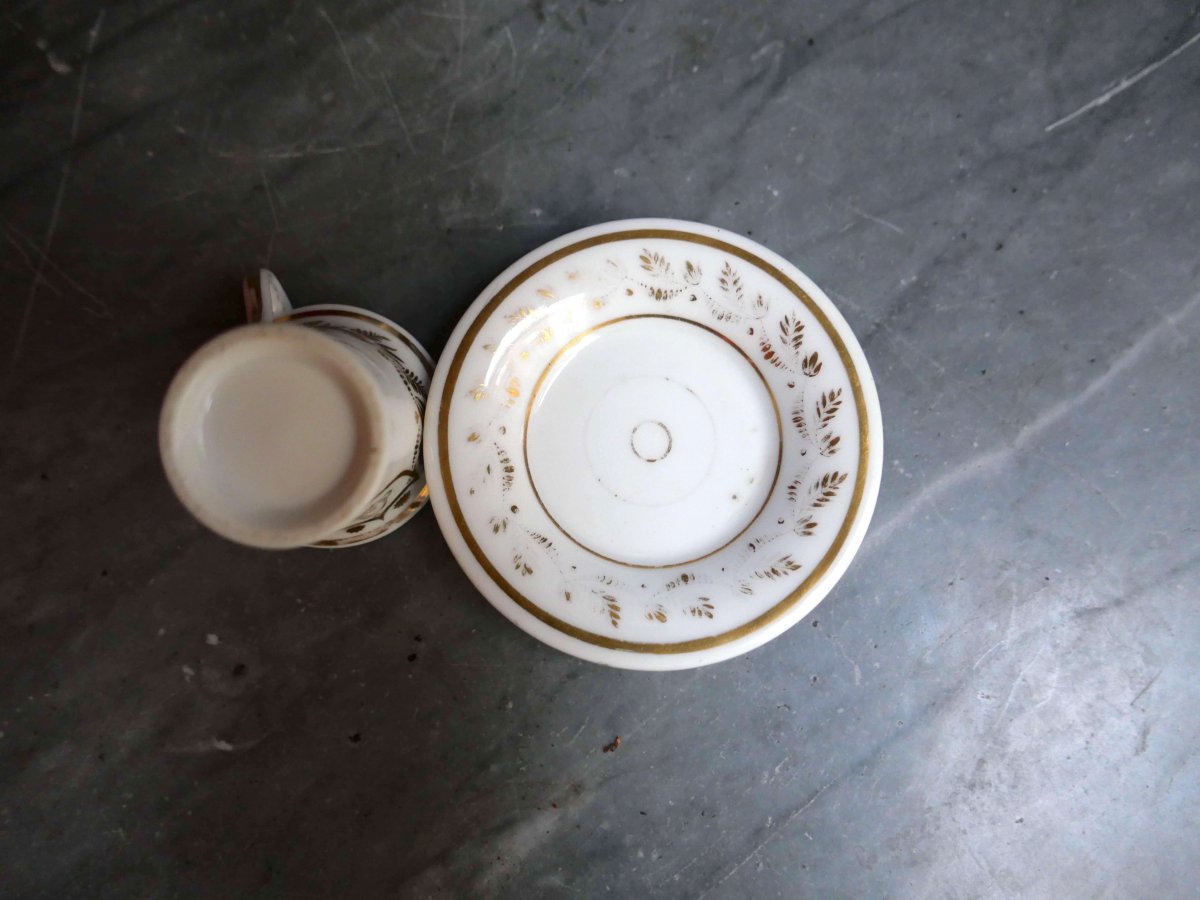
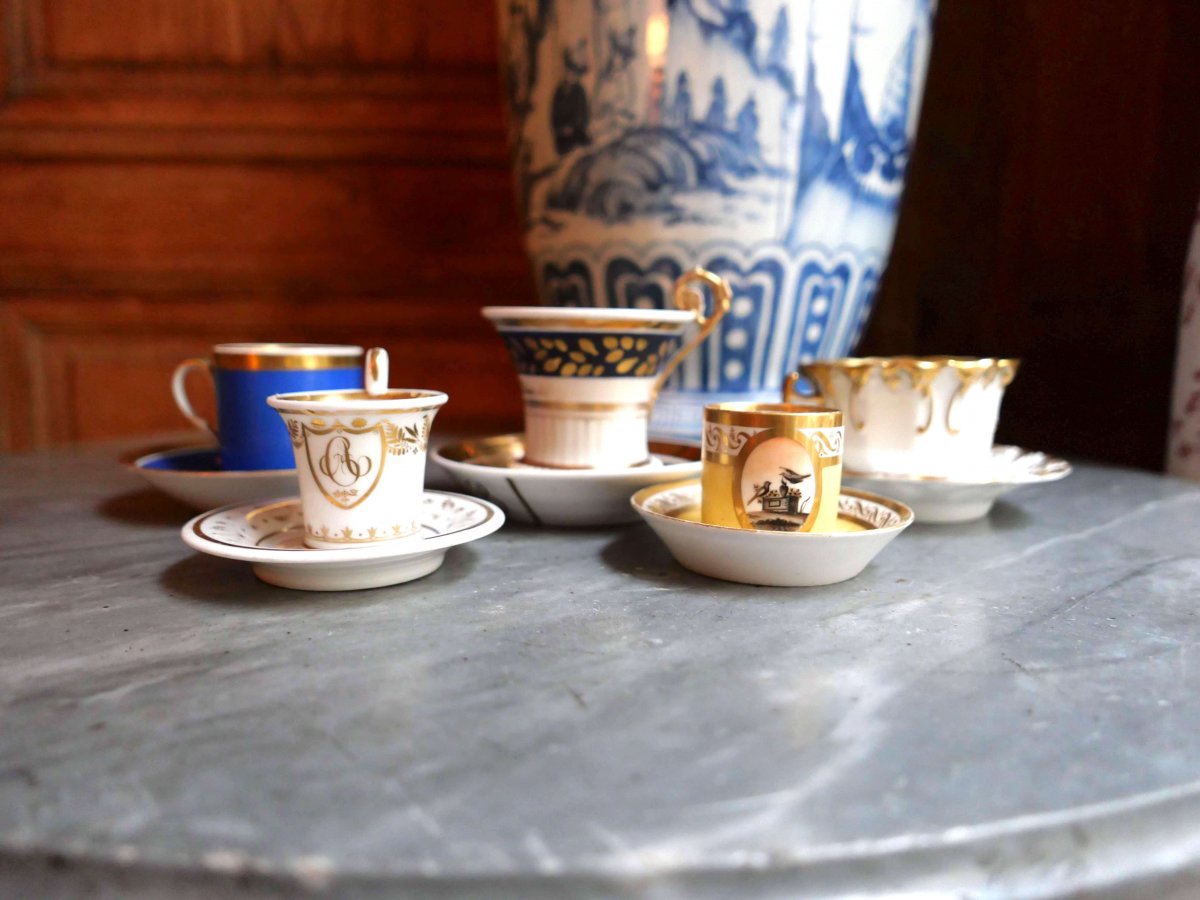
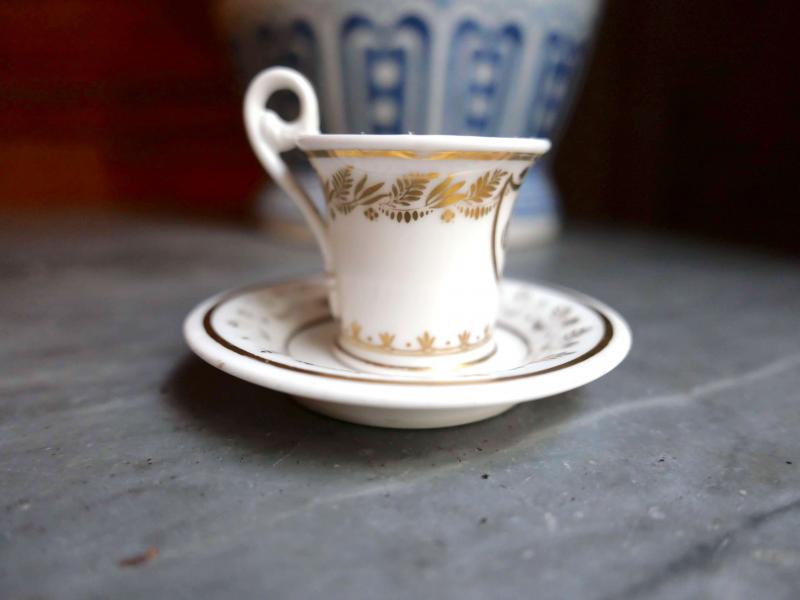
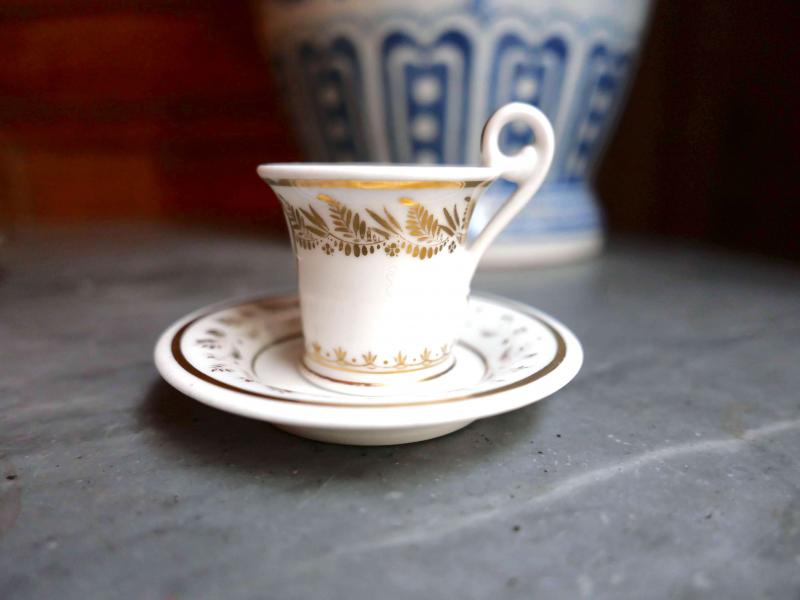
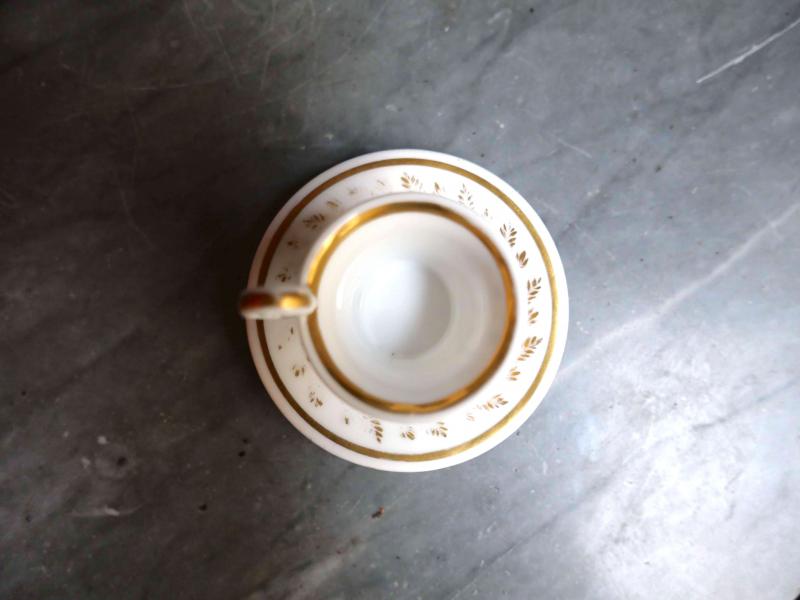
A small cup called "Mignonnette" and its saucer decorated with friezes of white and gold foliage monogrammed GA or CA in a cartouche in the shape of a shield - Paris porcelain from the Empire period - 19th Century
Paris porcelain must above all be fame for the hard porcelain factories which multiplied there from 1771, when it became possible to obtain the kaolin of Saint-Yrieix la-Perche near Limoges and to compete with Sèvres whose exclusive privilege was relaxed. In Paris and the surrounding area, new factories were established, escaping all prosecution, thanks to the patronage of royal princes. They were in turn, that of the Comte de Provence in Clignancourt named Manufacture de Monsieur (1771), those of Marie-Antoinette, rue Thiroux called the Queen's factory (1776), that of the Duke of Angoulême, rue de Bondy, founded by Dihl and Guerhard (1780), or the Duke of Orleans (1784). At the end of the 18th century, there were more than twenty hard porcelain factories in Paris. Among the main factories are those with the signs of the rue de la Fontaine-au-Roi, also known as the Courtille factory, directed by Locré (1771), the rue Popincourt, founded by Jean Nast (1782), the rue du Petit Carrousel ( 1774), the Faubourg Saint-Denis or Faubourg Saint-Lazare established by Pierre Hannong (1771). Their production always aimed to imitate the works of Sèvres, whose processes they strove to appropriate and to attract workers. They were prohibited from using gold and colored backgrounds reserved for the sole manufacture of the king, but these ordinances were not always respected and, in 1784 and 1787, new decrees were issued granting them complete freedom.
Paris porcelain must above all be fame for the hard porcelain factories which multiplied there from 1771, when it became possible to obtain the kaolin of Saint-Yrieix la-Perche near Limoges and to compete with Sèvres whose exclusive privilege was relaxed. In Paris and the surrounding area, new factories were established, escaping all prosecution, thanks to the patronage of royal princes. They were in turn, that of the Comte de Provence in Clignancourt named Manufacture de Monsieur (1771), those of Marie-Antoinette, rue Thiroux called the Queen's factory (1776), that of the Duke of Angoulême, rue de Bondy, founded by Dihl and Guerhard (1780), or the Duke of Orleans (1784). At the end of the 18th century, there were more than twenty hard porcelain factories in Paris. Among the main factories are those with the signs of the rue de la Fontaine-au-Roi, also known as the Courtille factory, directed by Locré (1771), the rue Popincourt, founded by Jean Nast (1782), the rue du Petit Carrousel ( 1774), the Faubourg Saint-Denis or Faubourg Saint-Lazare established by Pierre Hannong (1771). Their production always aimed to imitate the works of Sèvres, whose processes they strove to appropriate and to attract workers. They were prohibited from using gold and colored backgrounds reserved for the sole manufacture of the king, but these ordinances were not always respected and, in 1784 and 1787, new decrees were issued granting them complete freedom.
250 €
Period: 19th century
Style: Consulat, Empire
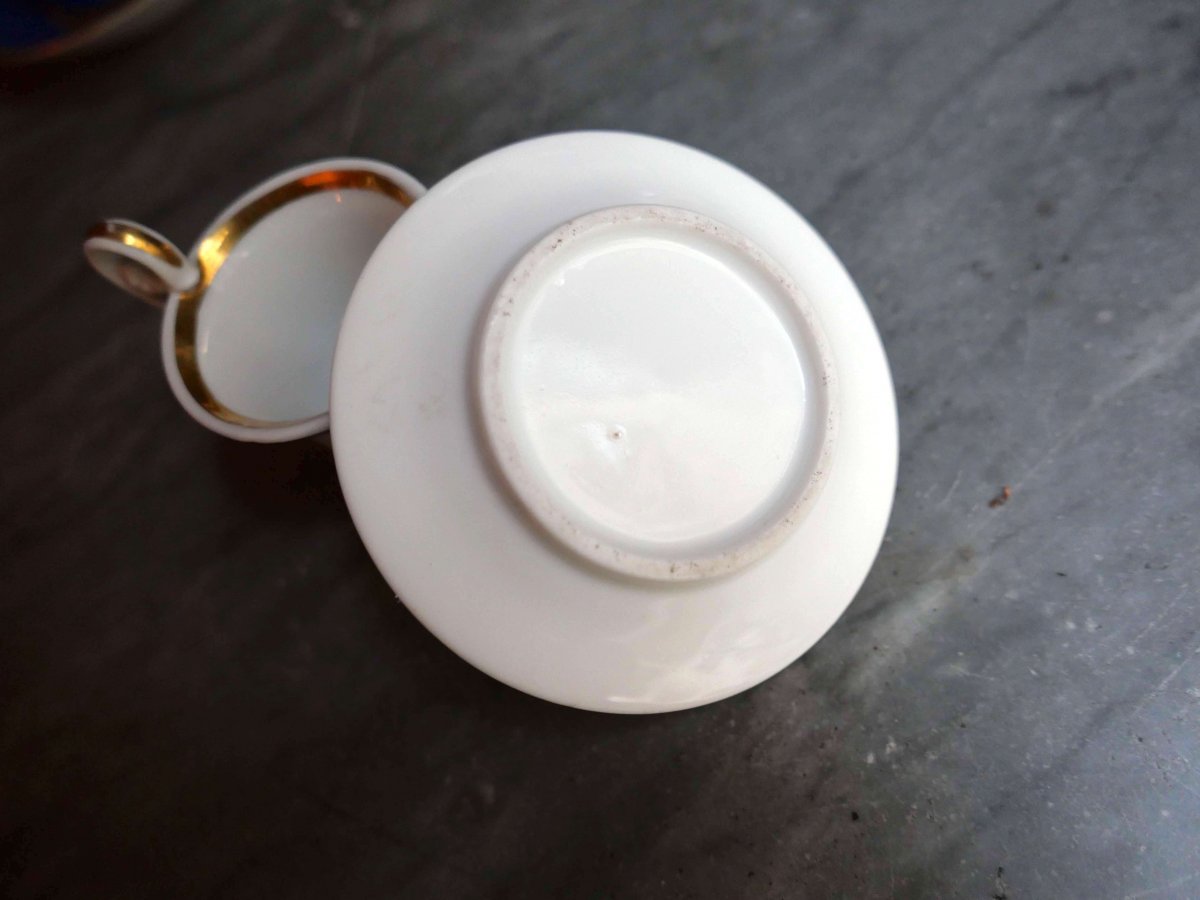
Condition: Très bon état, quelques usures a l'or
Diameter: 10 cm
Height: 7 cm
Reference (ID): 660618
Availability: In stock
Print