THIS OBJECT WAS SOLD
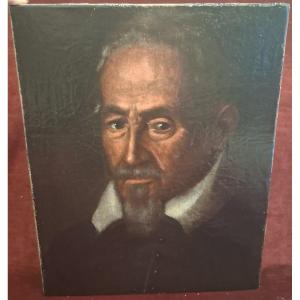
Portrait Of A Gentleman C.1635; Circle Of George Geldorp (c.1590-1665)
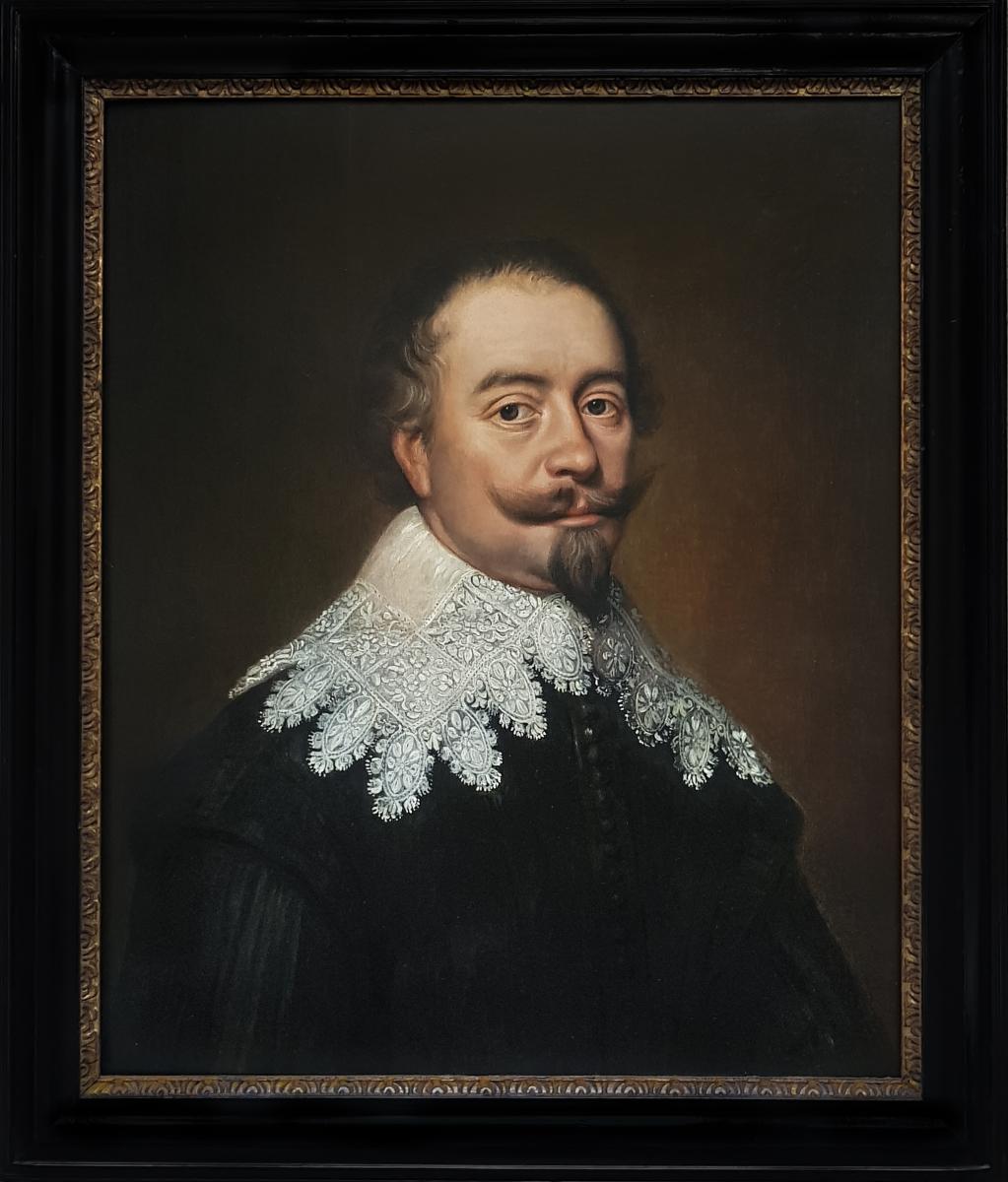
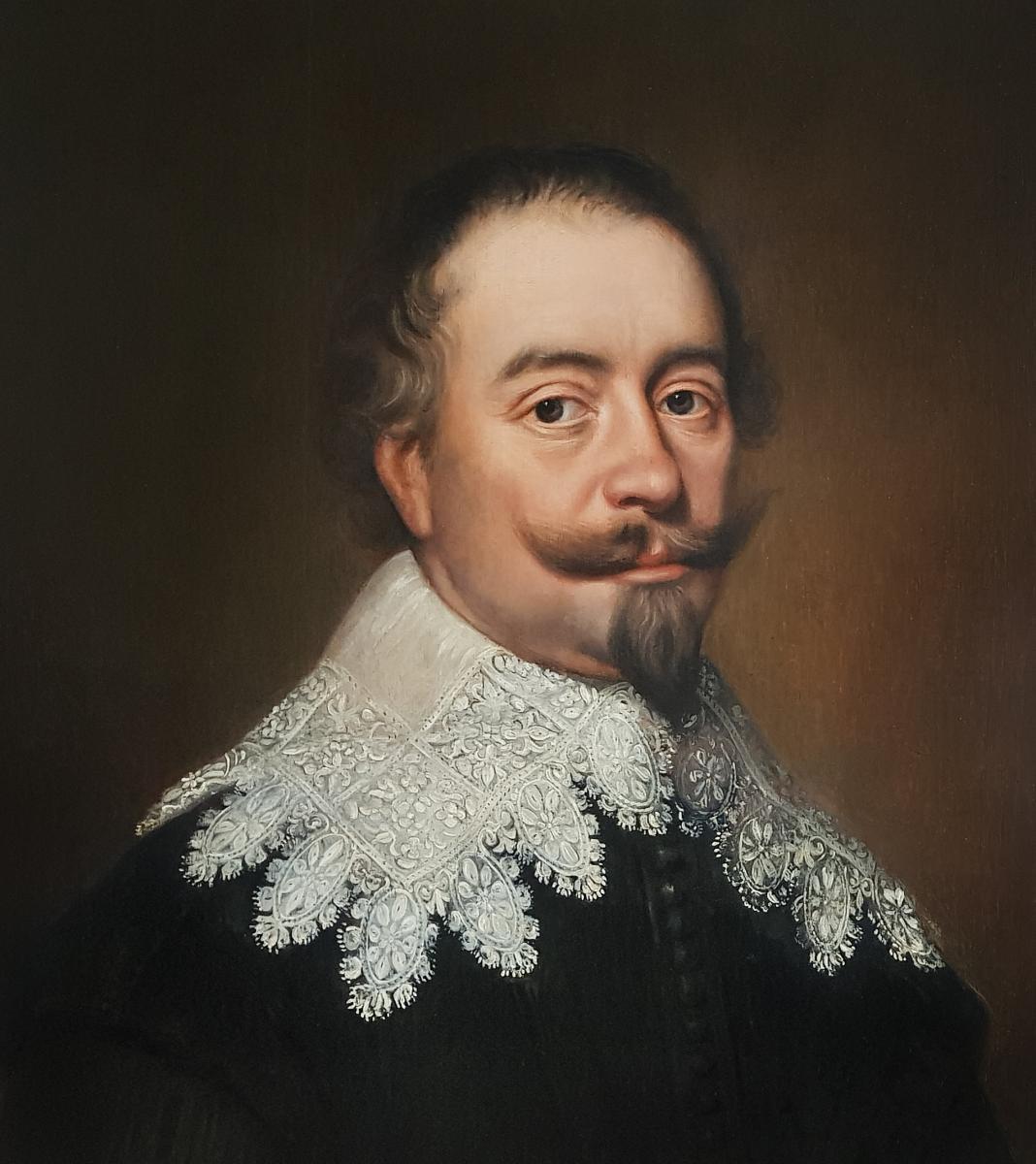
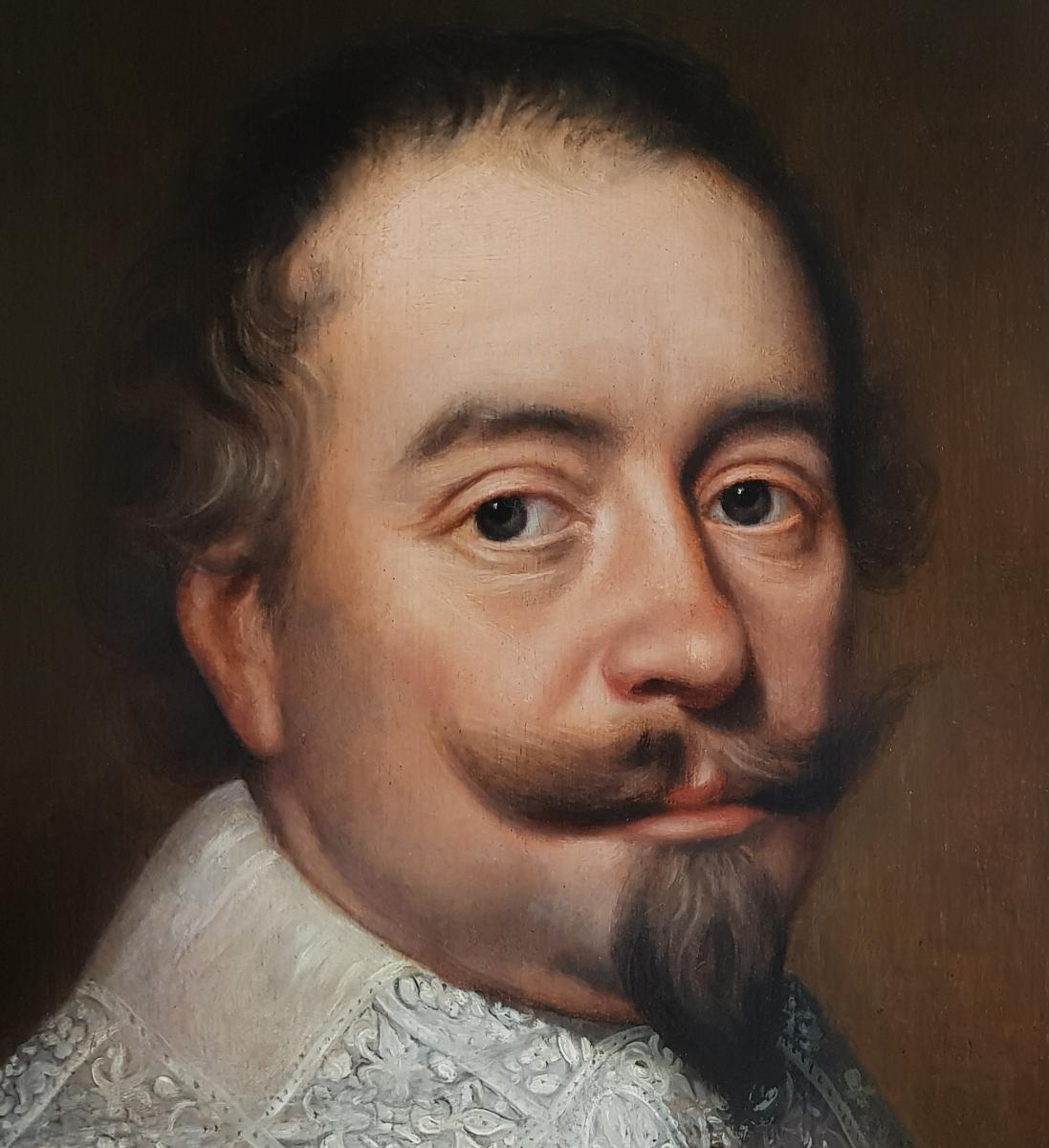
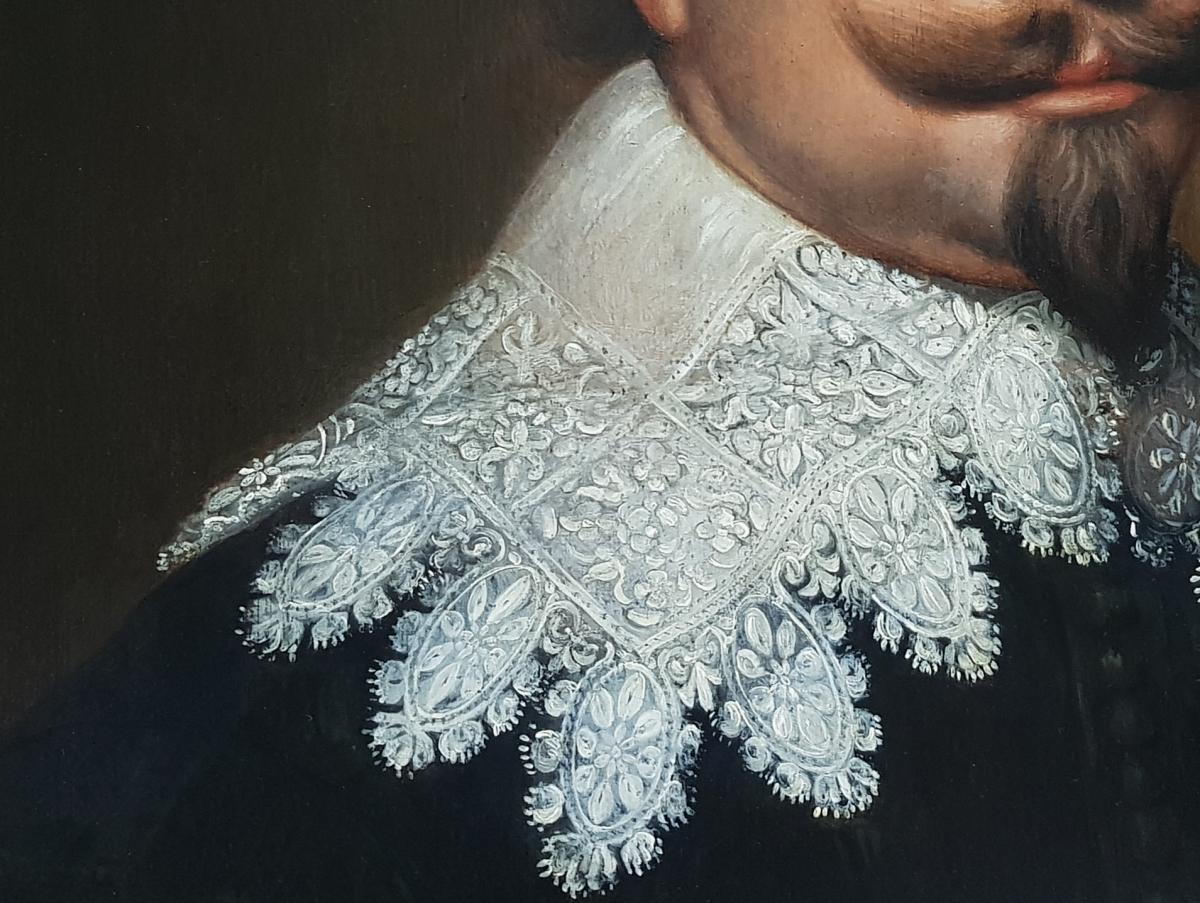
In this oil on panel portrait a gentleman has been presented wearing usual high quality and costly Dutch dress of the period. The overall impression is one of understated luxury. Black die was very expensive and producing black fabric was difficult as it faded quickly. It was therefore reserved only for the most formal occasions. Black may have been common but it was far from boring and was often intricately detailed and had various sumptuous fabrics often contrasting against each other and with all manner of designs and patterns. Artists strove to depict the subtle nuances of the colour and how it reflected light.
The gentleman’s broad lace collar was at the height of fashion. Most of the early lace was linear and geometric, however around 1630 there was an abrupt change in style when soft falling bands replaced the stiff standing collars and the lace changed to feature areas of dense cloth stitch. By this date there was much greater differentiation between male and female dress. The men still wore closely fitting doublets with the high necks that provided a base from which a wide linen band (collar) could fall, while the ladies favoured an open neckline, often edged with a
similar lace to that on the men's bands. In addition, they might wear a triangle or folded square of fine linen edged with wide lace that gave an effect very similar to that of a falling band. Whereas earlier styles created a fashionable silhouette with a small torso and broad padded hips, in the 1630s men’s fashion brought a more natural shape to the figure.
Until recently this portrait was obscured by years of dirt and discoloured varnish which has now been removed to reveal the correct colour and fine details (which brings to light an excellent sense of character).
George Geldorp (c.1590-1665) was a Flemish portrait painter, dealer, and restorer. His works are close in style to contemporary works by Mytens and Cornelius Jonson. He was the son of the well-known painter Geldorp Gortzius. He worked in Cologne in 1609 and then in Antwerp from 1610 to 1623 where he was a member of the guild of St. Luke. He married Anna, daughter of Willem de Vos, the painter. He came to England c.1623 where he worked right up to his death there in 1665. He was a close friend of Anthony Van Dyck and he played a part in his coming to England. He became Keeper of the King’s pictures and it is believed that a number of works were stored at his premises. Lely worked for Geldorp when he first came to England. The portraits that bear his name are by no means discreditable, and he made numerous copies of portraits by Van Dyck, which are now no doubt often taken for originals.
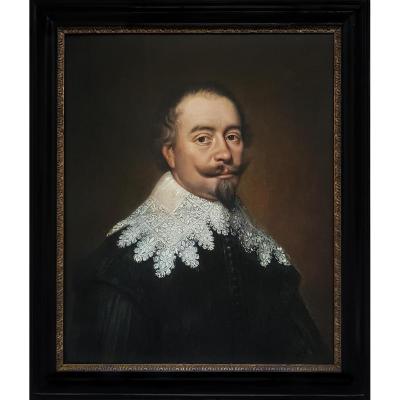
Held in an ebonised 17th century frame.
Measurements: Height 79cm, Width 67cm framed (Height 31”, Width 26.5” framed)
Explore similar pieces and discover your ideal find:
Portraits