THIS OBJECT WAS SOLD
Portrait Of Heinrich Francken Sierstorpff, C.1625-1650, Oil On Panel
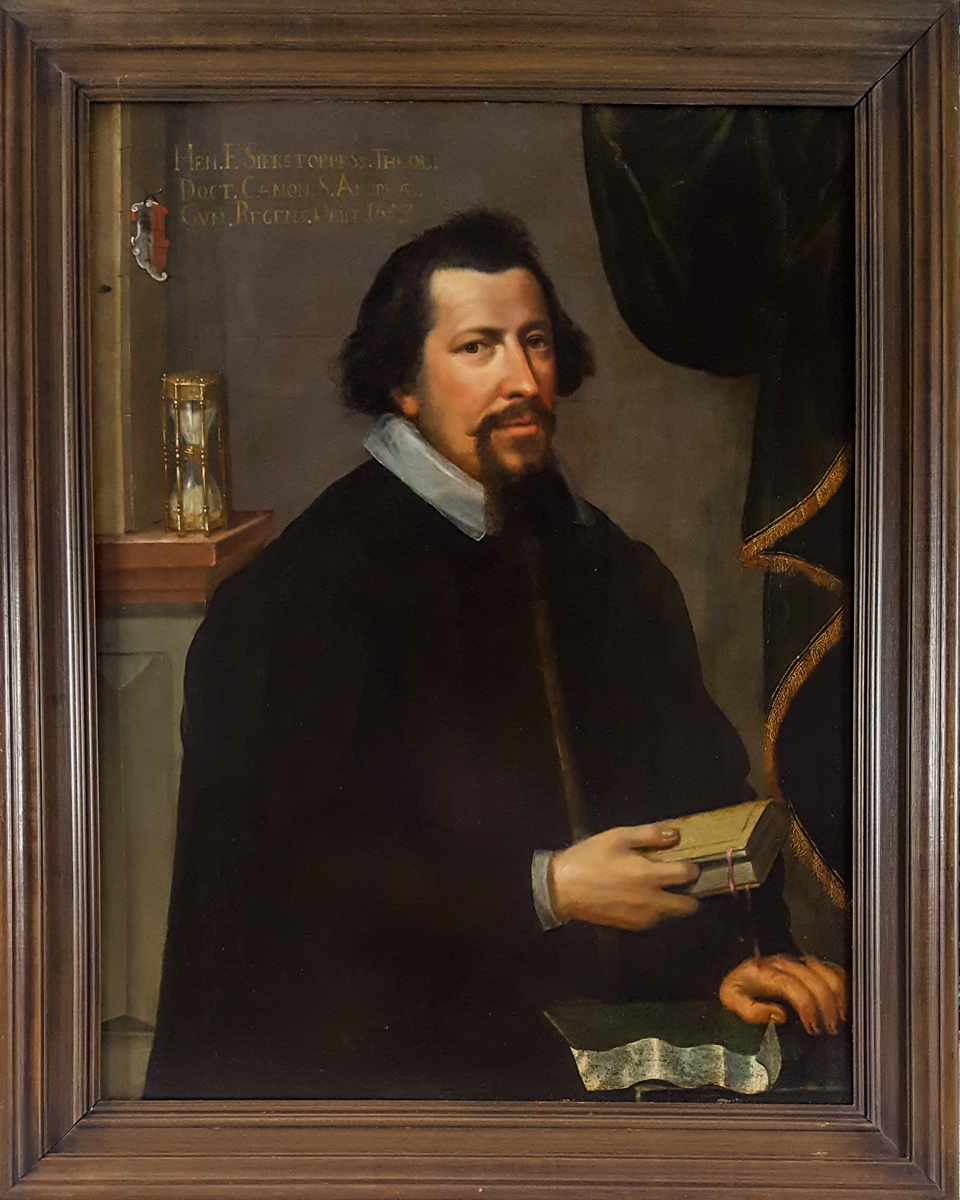

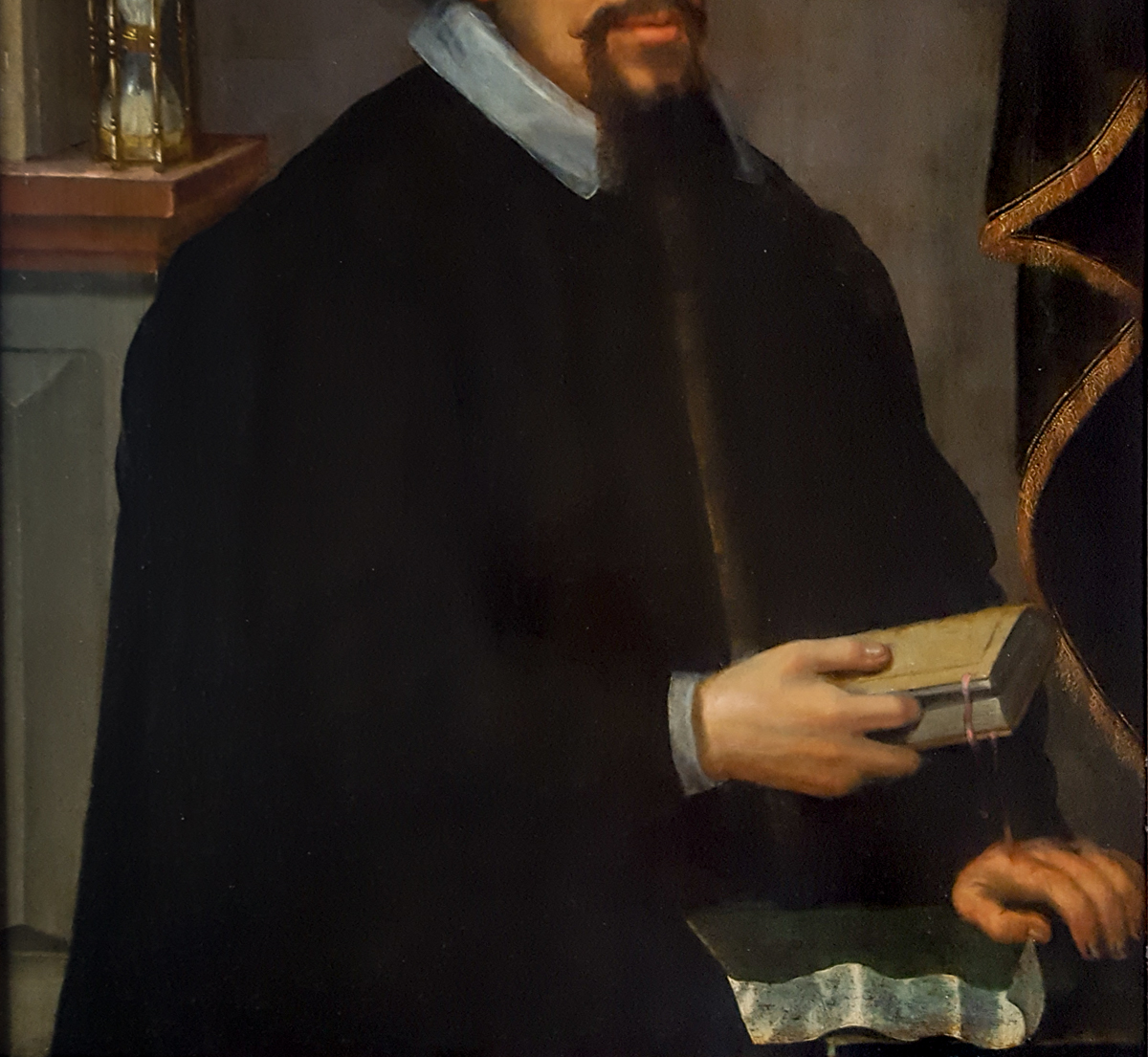
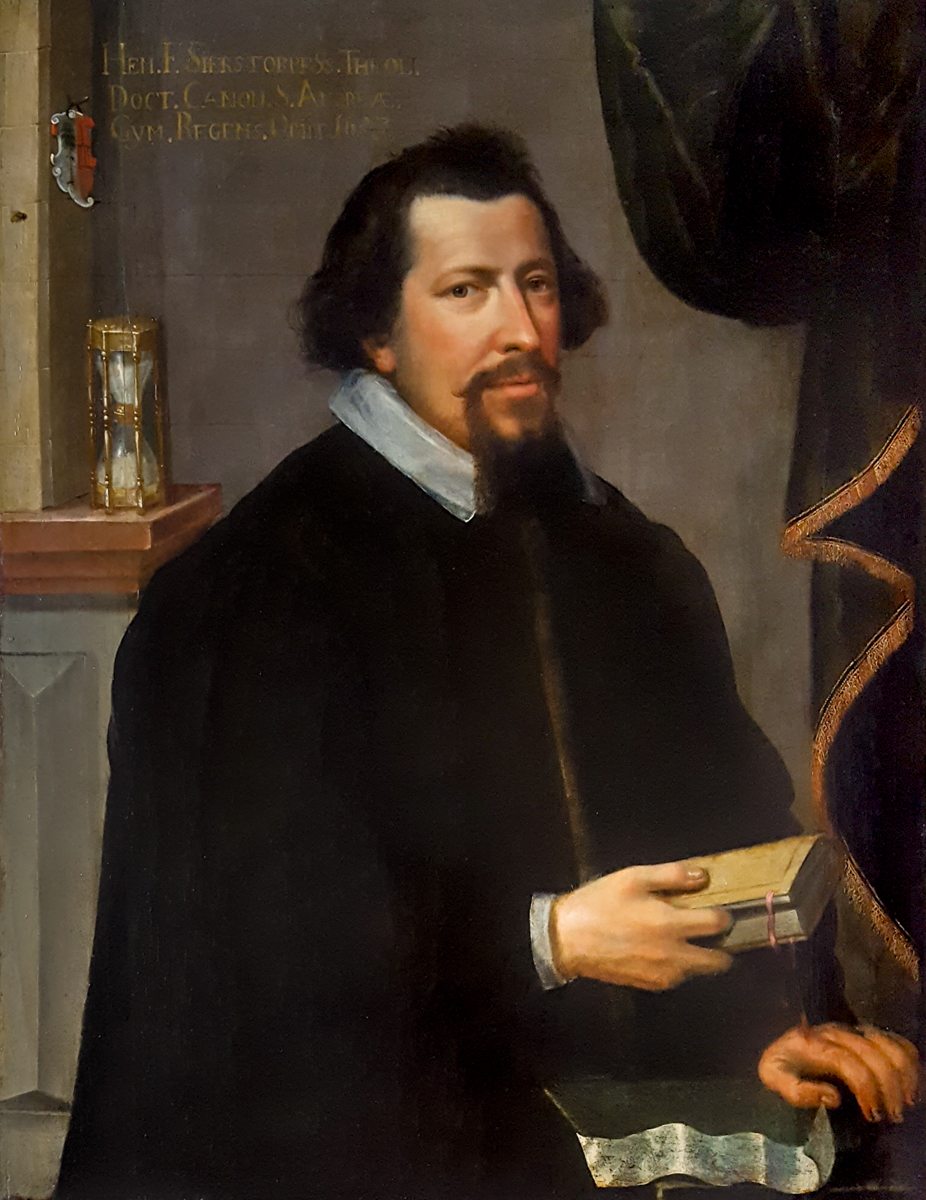
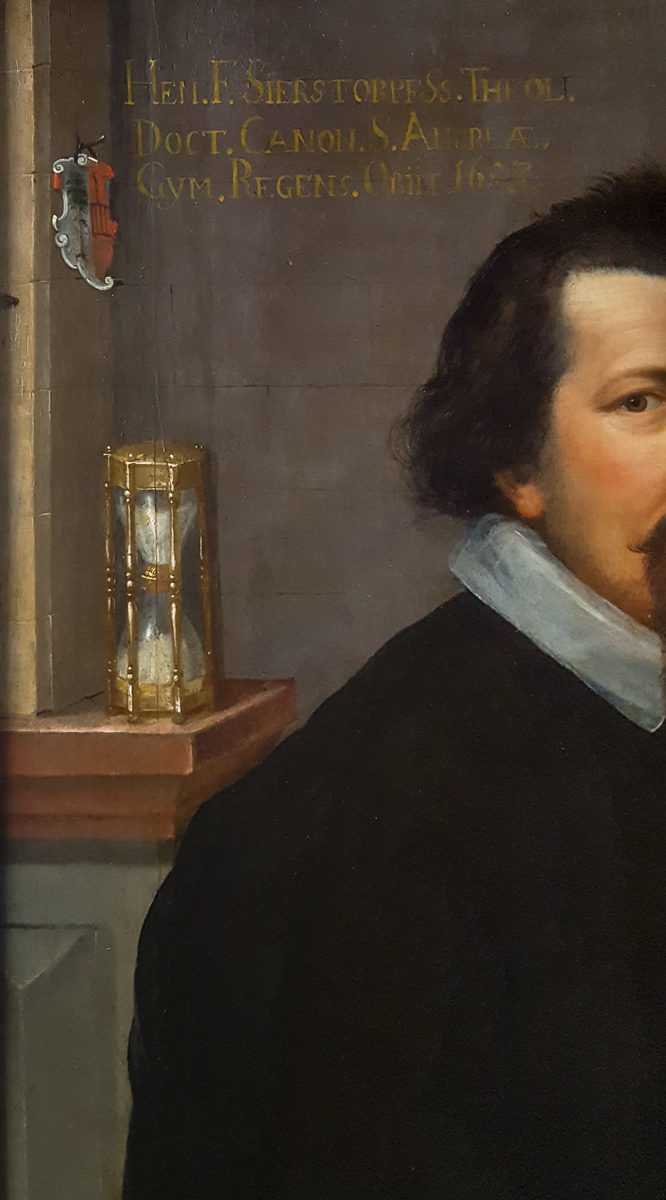
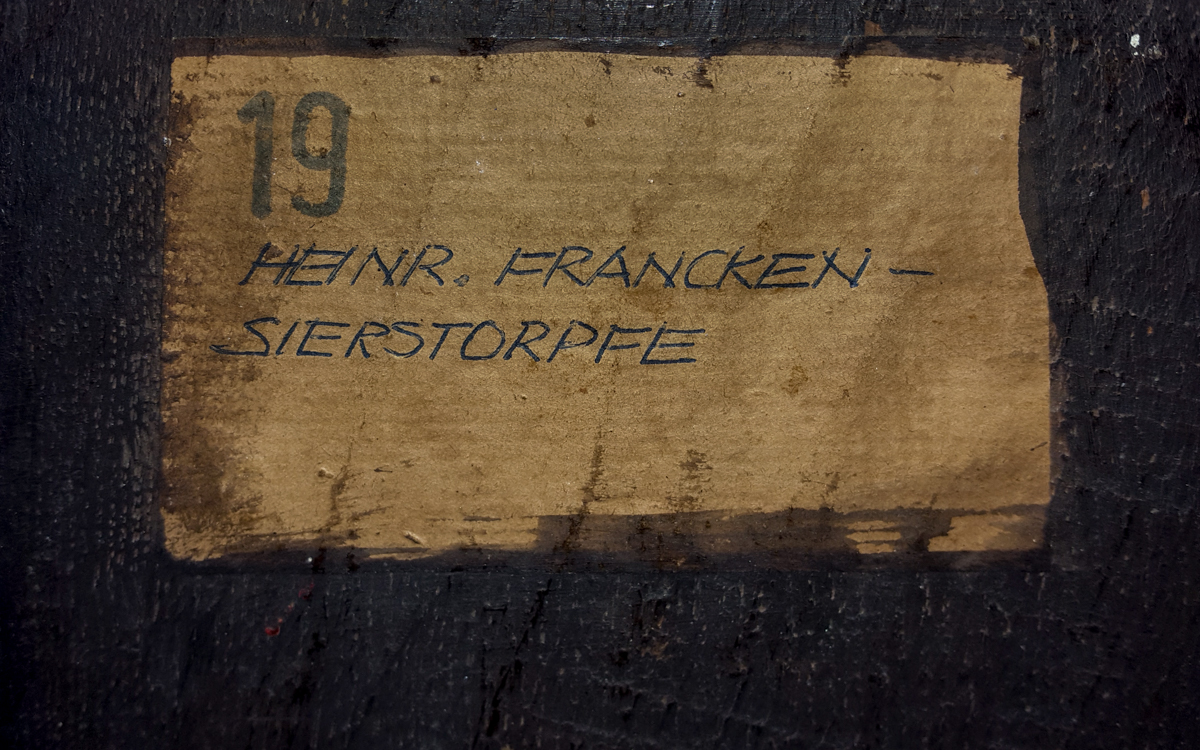
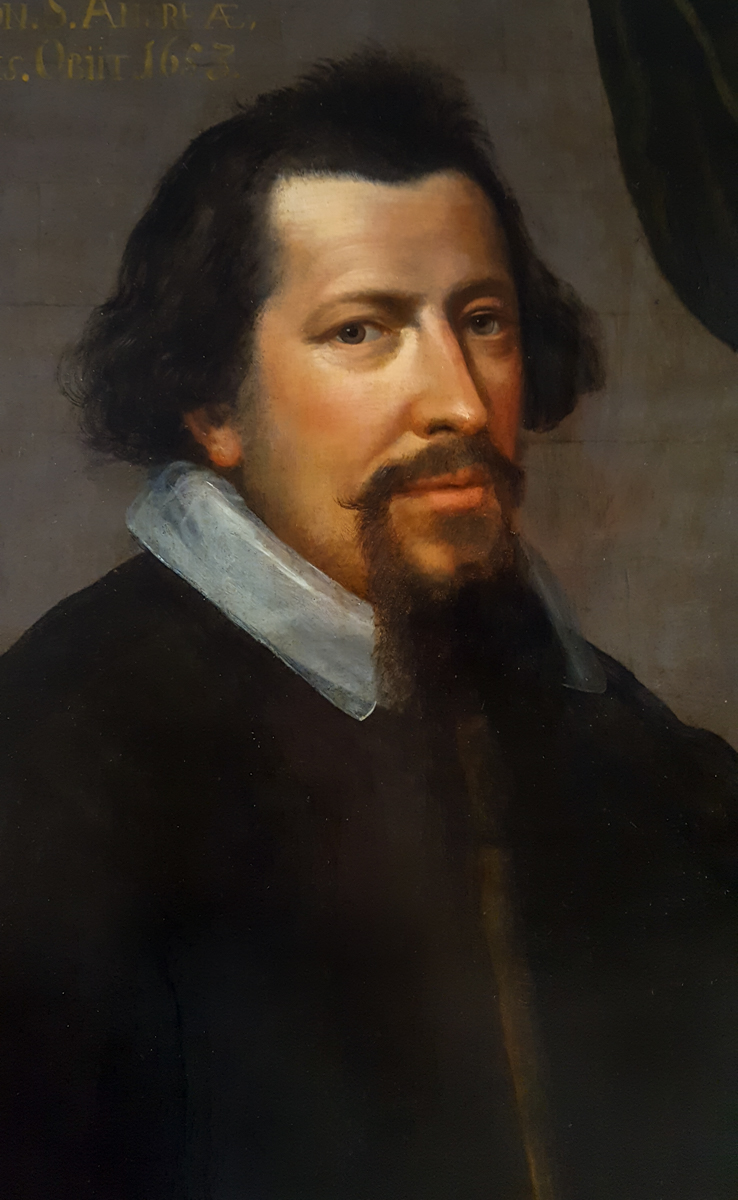
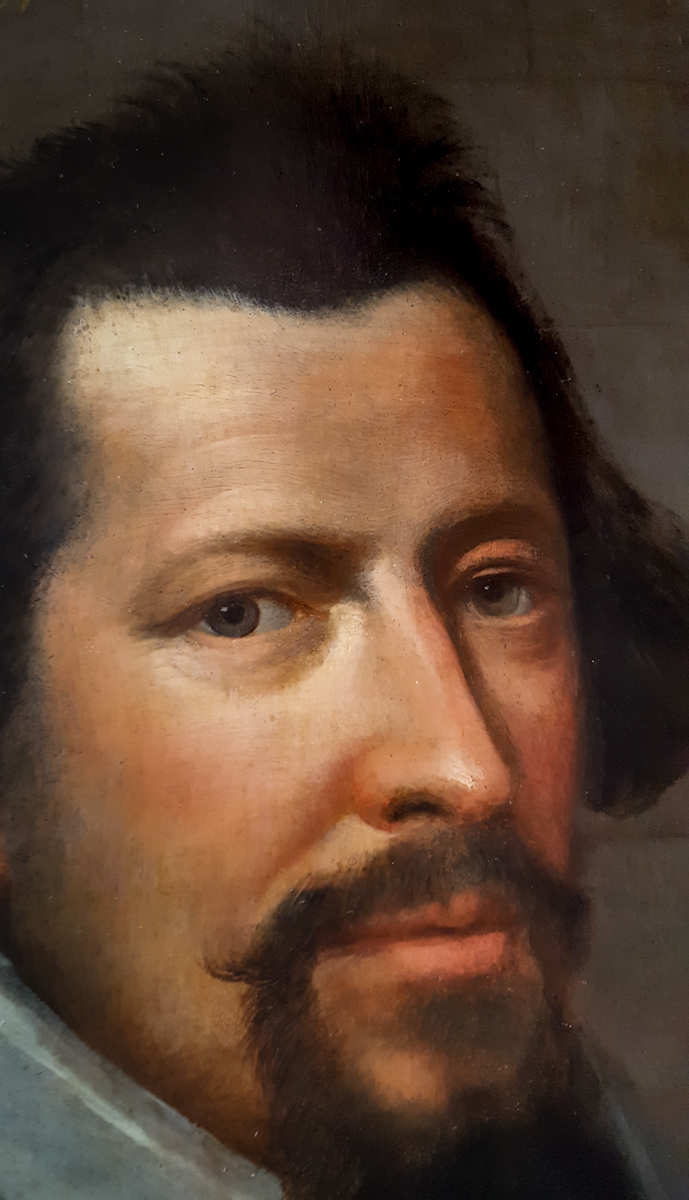
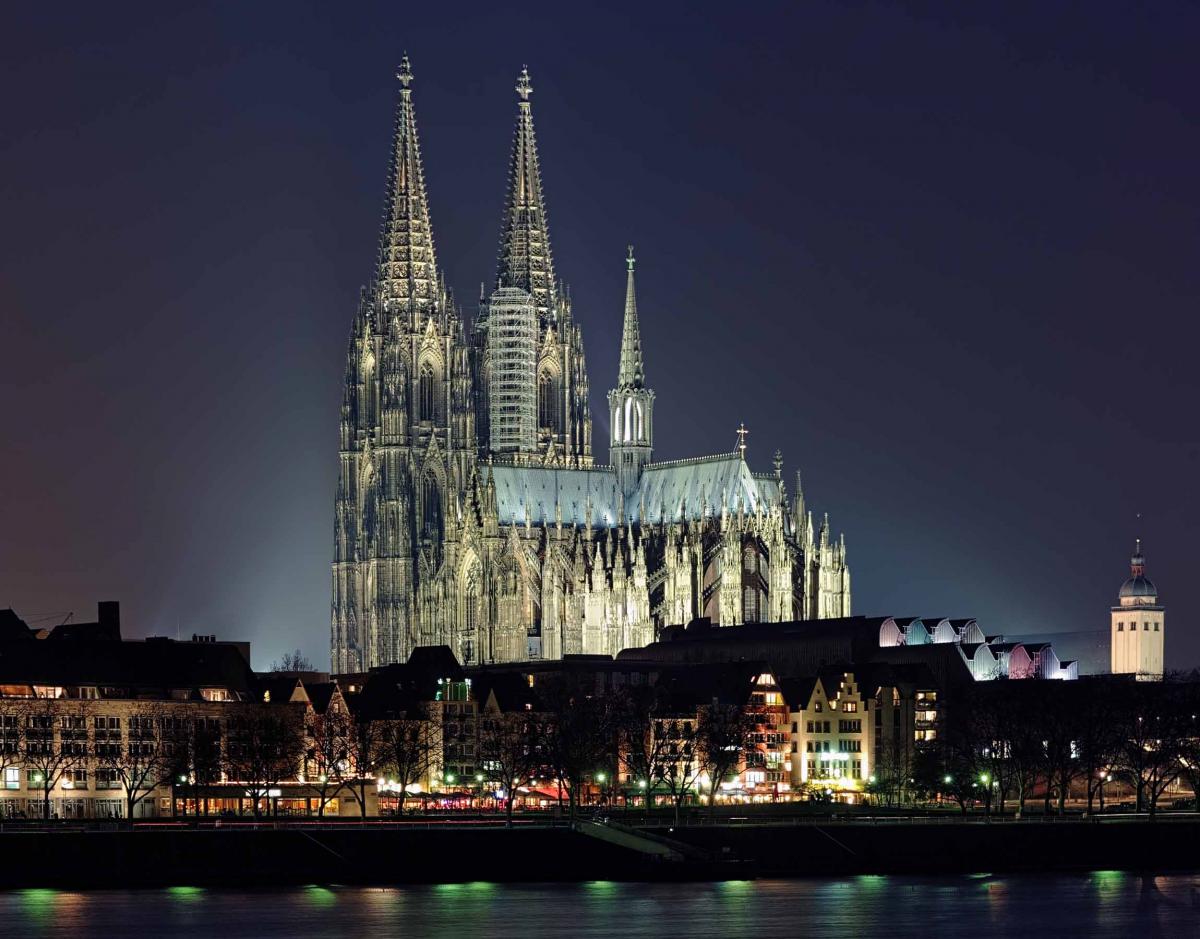


n this methodically composed and executed portrait the sitter has been depicted standing beside a plinth in an interior with a draped curtain. On the wall hangs a family crest from a peg and upon a ledge there is a hourglass. The Latin inscription identifies the sitter as Heinrich Francken Sierstorpff (1579-c.1653), who was a German Catholic theologian and an important ecclesiastical individual. The book he is holding alludes to his profession as a Rector of Cologne University and ‘censor librorum ordinaries’ which was someone in the Catholic Church who approved books for the church authorities. Sierstorpff was in 1624 priest at Cologne Cathedral (see photo), which today is Germany's most visited landmark attracting 20,000 people a day.
The period in which the sitter lived was a period of great uncertainty. By 1617 Germany was bitterly divided amongst religions. This era saw The Thirty Years' War which was fought between 1618 and 1648 on principally the territory of today's Germany and it involved most of the major European powers. It began as a religious conflict between Protestants and Catholics and gradually developed into a general war involving much of Europe.
These early portraits infused with hidden meanings, were popular and some very famous, such as the works of Hans Holbein who was another German subject. The composition abounds with symbolism where the intention was to convey a message to the viewer through the still life. The hexagonal hourglass signifies the passage of time, the transience of life and the certainty of death. Time stands still for no one... The glass can be viewed as half full or half empty. The fly on the wall, a symbol of death and melancholia, has been meticulously painted and is a very charming touch.
The pentimenti, or changes that the artist made during the painting, are visible in the collar and hands. These imbue a sense of movement and are charming elements in themselves.
A large, interesting and early oil on panel that has been well executed. Ready to hang.
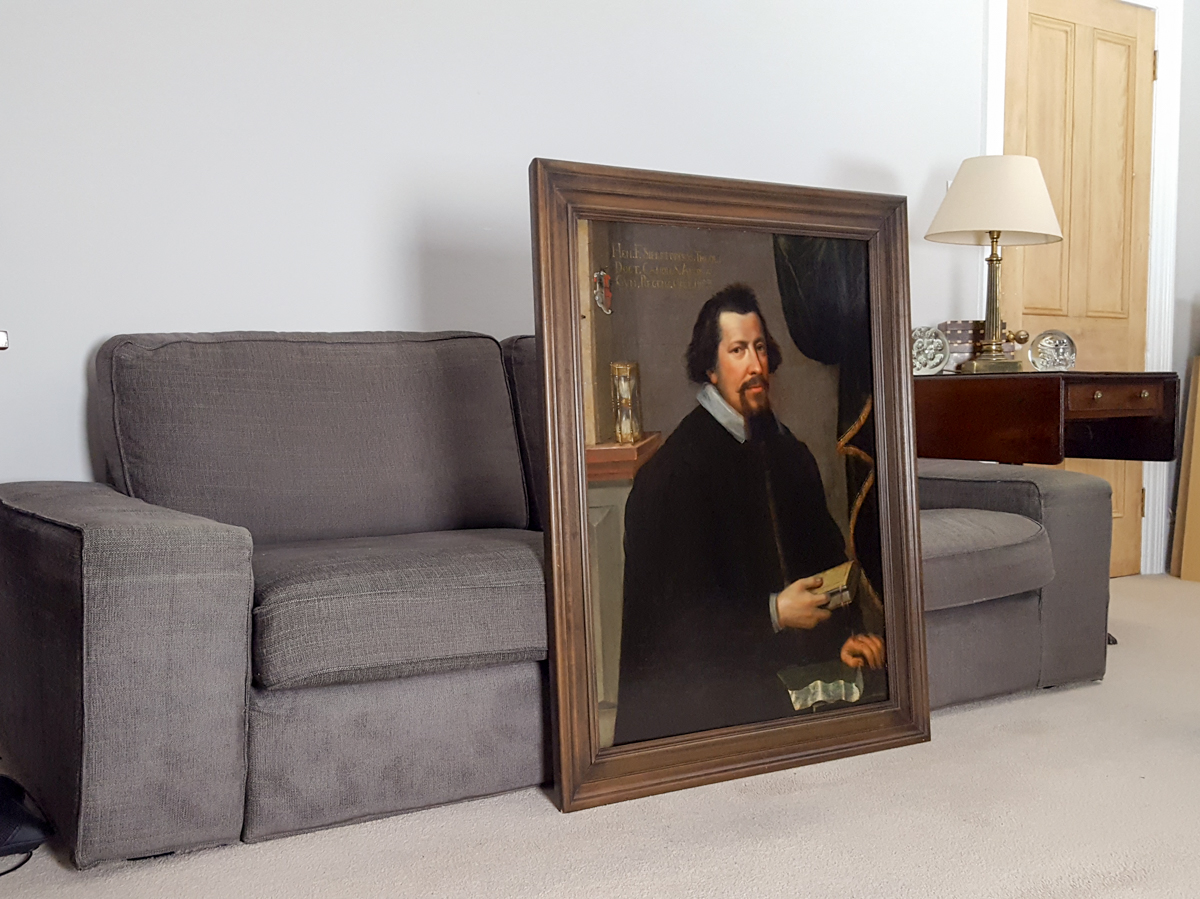
Measurements: Height 106cm, Width 85cm framed (Height 41.75”, Width 33.5” framed)
Explore similar pieces and discover your ideal find:
Portraits