

Optat Milet In Sèvres – émile Diffloth – 19th-century Earthenware Plate With Japanese-style Bindweed Design
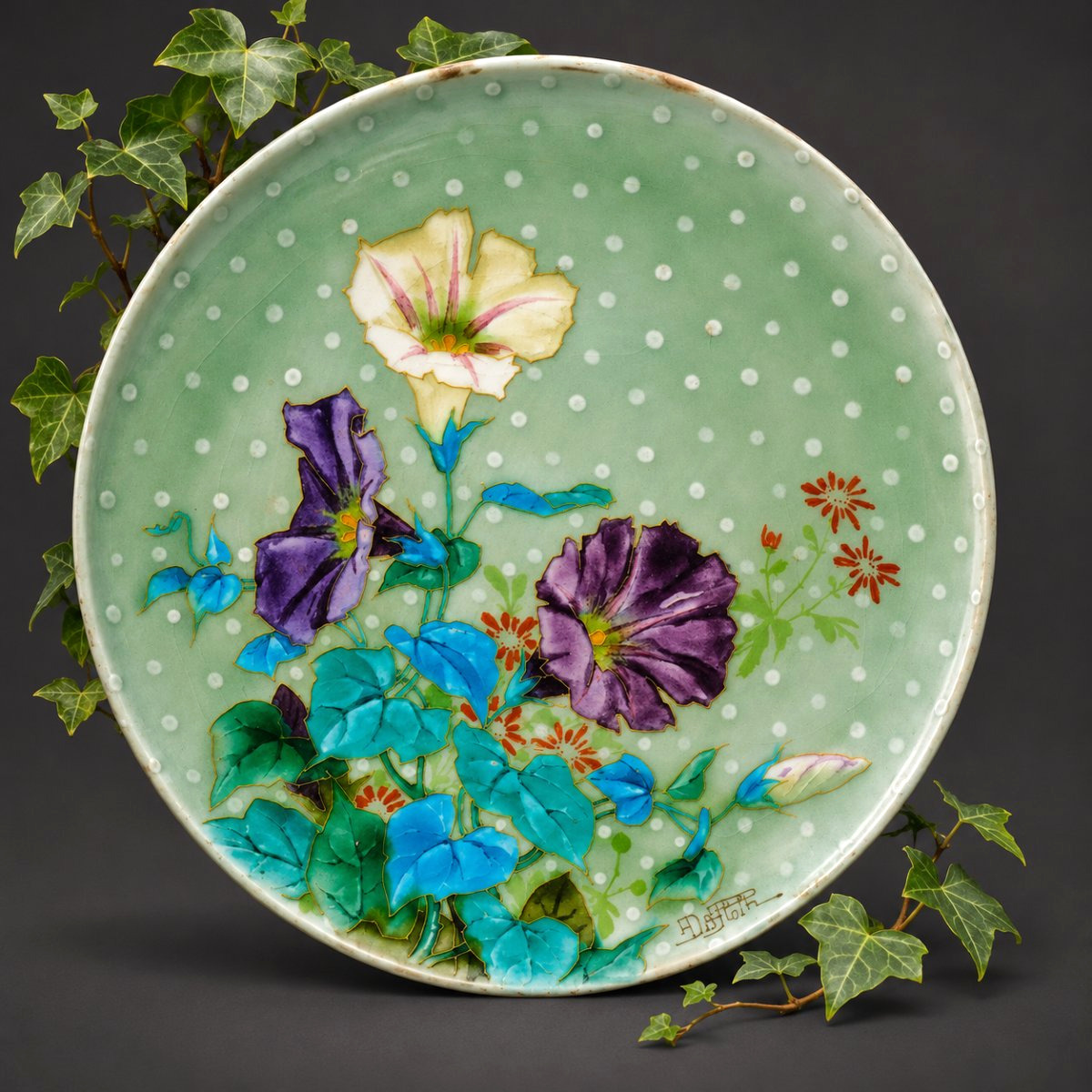
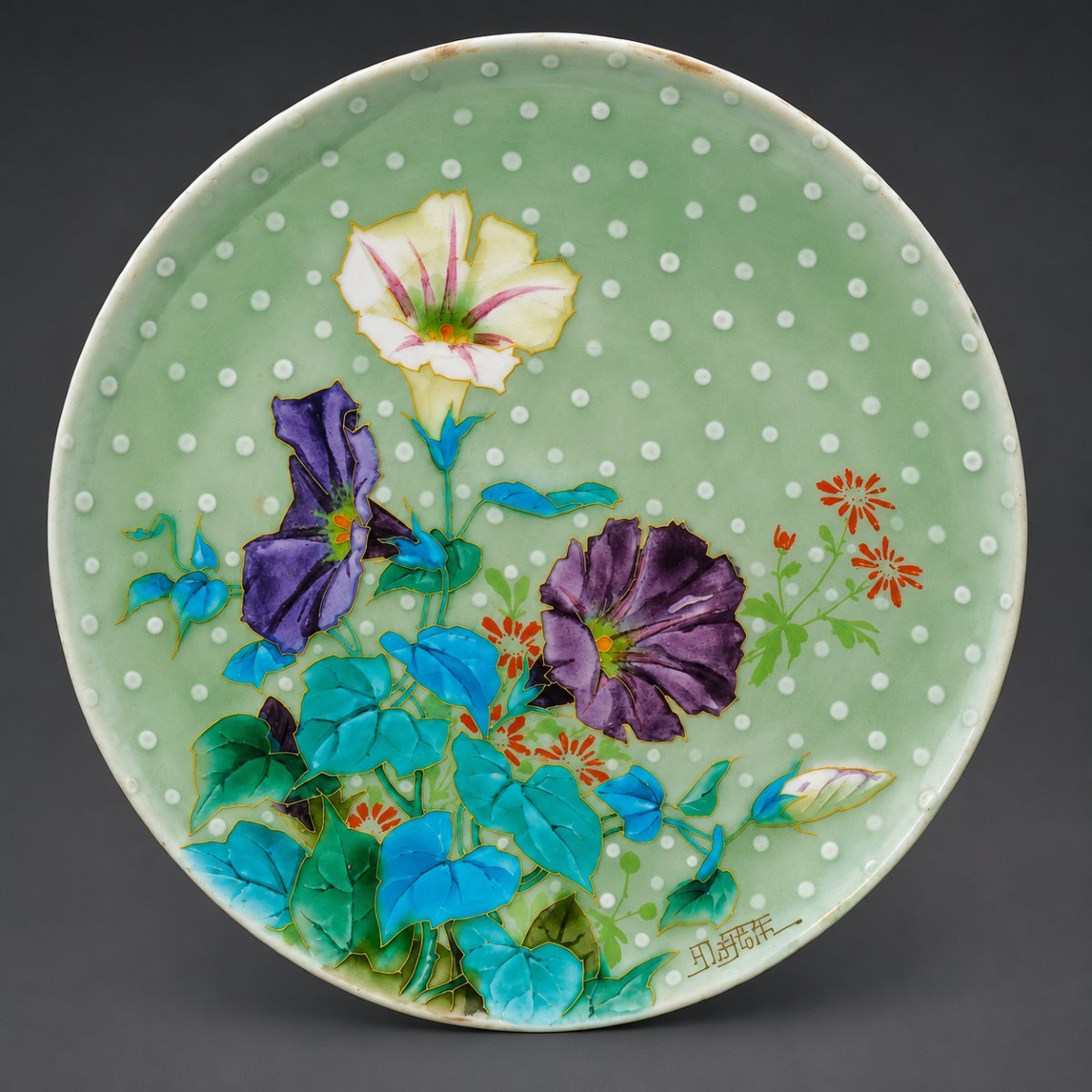
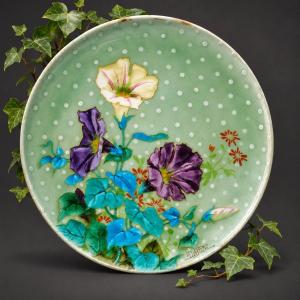
Antique decorative plate in polychrome glazed earthenware by Félix Optat Milet in Sèvres, with a design signed by Émile Diffloth.
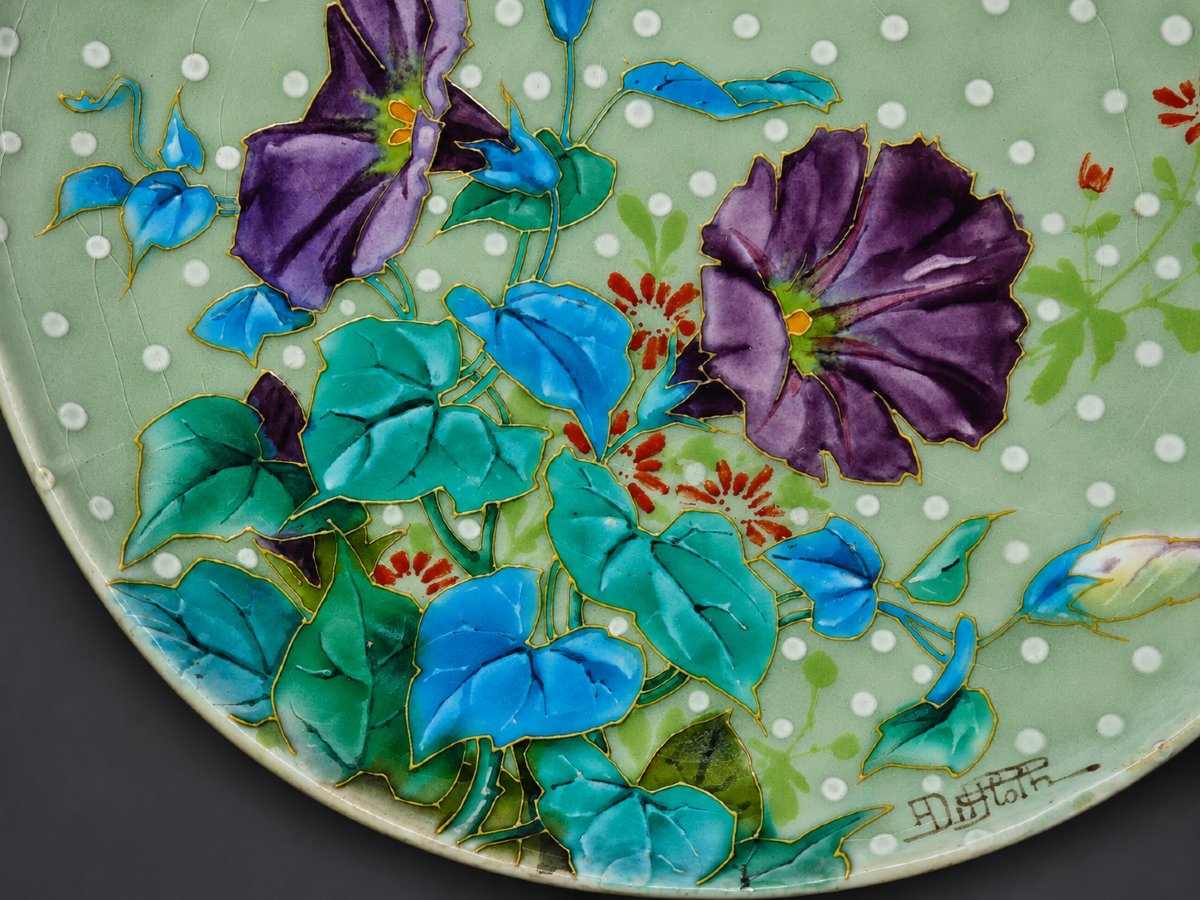
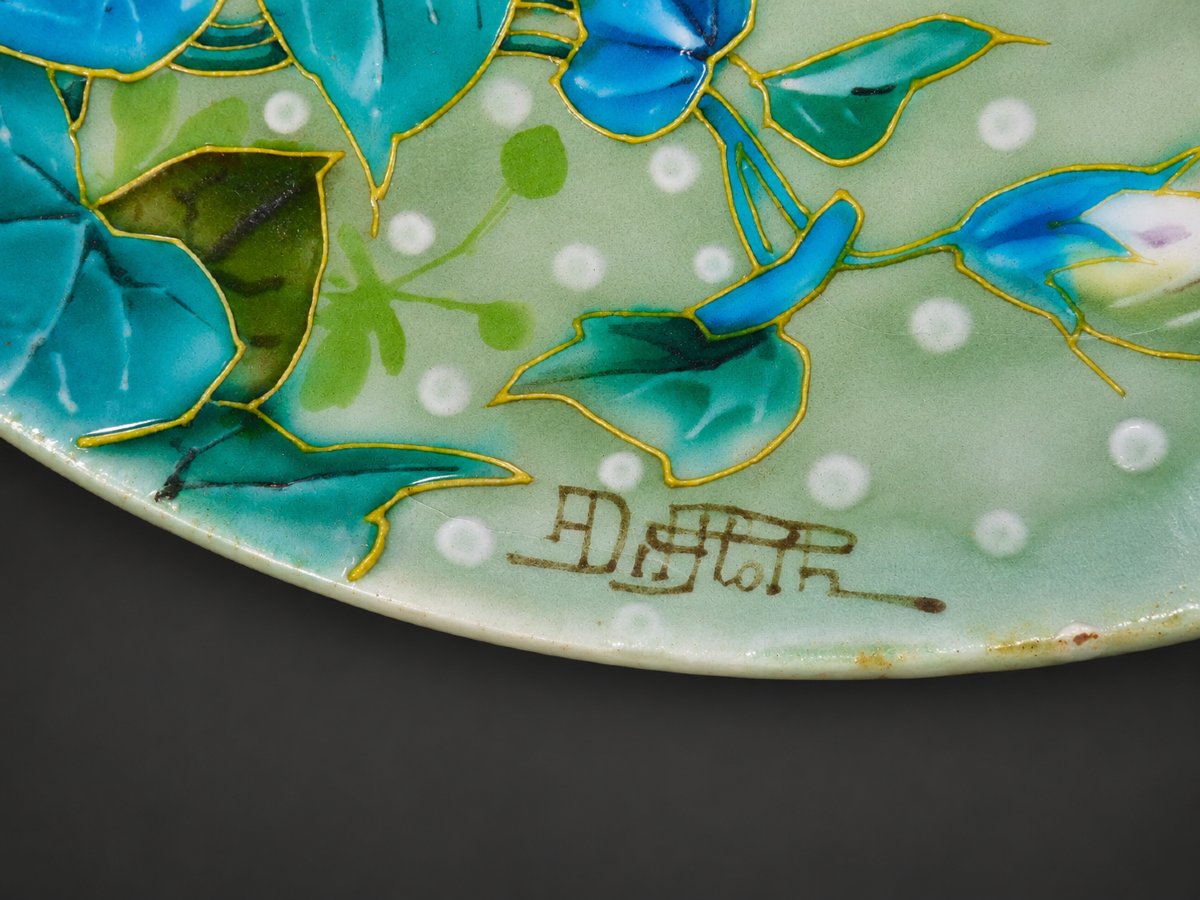
Against a celadon-green background dotted with small raised white enamel beads, an asymmetrical composition of bindweed stands out, accompanied by foliage in shades of turquoise blue and emerald green.
The composition, the rendering of the plants, and the color palette reflect the influence of Japonism on French artistic ceramics in the last quarter of the 19th century.
Félix Optat Milet (1838–1911)
Born into a family of ceramicists, Félix Optat Milet joined the Manufacture nationale de Sèvres in 1862, where he worked as a modeler and then as a decorator. In 1866, he founded his own studio on Rue Troyon in Sèvres. His experiments focused in particular on colored glazes, relief decorations, and new glazing techniques. He surrounded himself with talented decorators and participated in several World’s Fairs, notably winning a gold medal at the 1889 Paris World’s Fair.
Émile Diffloth (1856–1933)
French ceramist and decorator, a student of the sculptor Albert-Ernest Carrier-Belleuse, Émile Diffloth distinguished himself through his mastery of polychrome glazes and Japanese-inspired floral designs. He collaborated with Félix Optat Milet in Sèvres before joining, in 1889, the Boch Frères factory in La Louvière, Belgium. He then continued his career in the United States, where he helped spread the techniques of artistic ceramics.
This plate illustrates the collaboration between these two artists and the decorative experiments that foreshadowed the emergence of Art Nouveau.
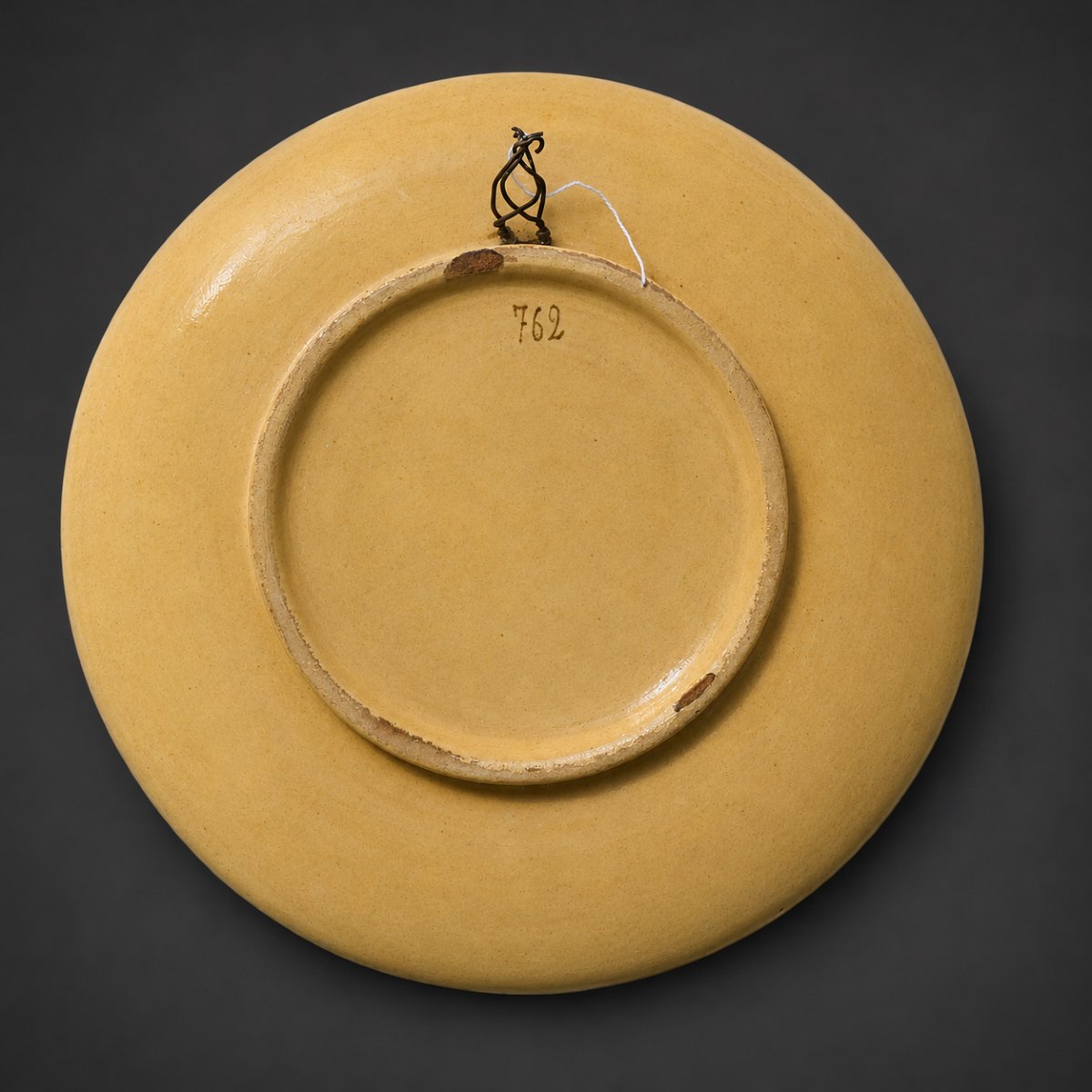
Stylized signature of Émile Diffloth at the bottom of the design. Number 762 on the reverse.
Diameter: 23 cm.
Good condition
Period: 19th century
Style: Art Nouveau
Condition: Excellent condition
Material: Earthenware
Reference (ID): 1865013
Availability: In stock