

Bruges, 1814–1831, Solid Silver Teapot, Philippe Meys
Solid Silver Teapot – Philippus Mys – Bruges, 1814–1831
Empire period – First third of the 19th century
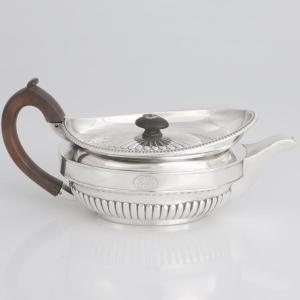
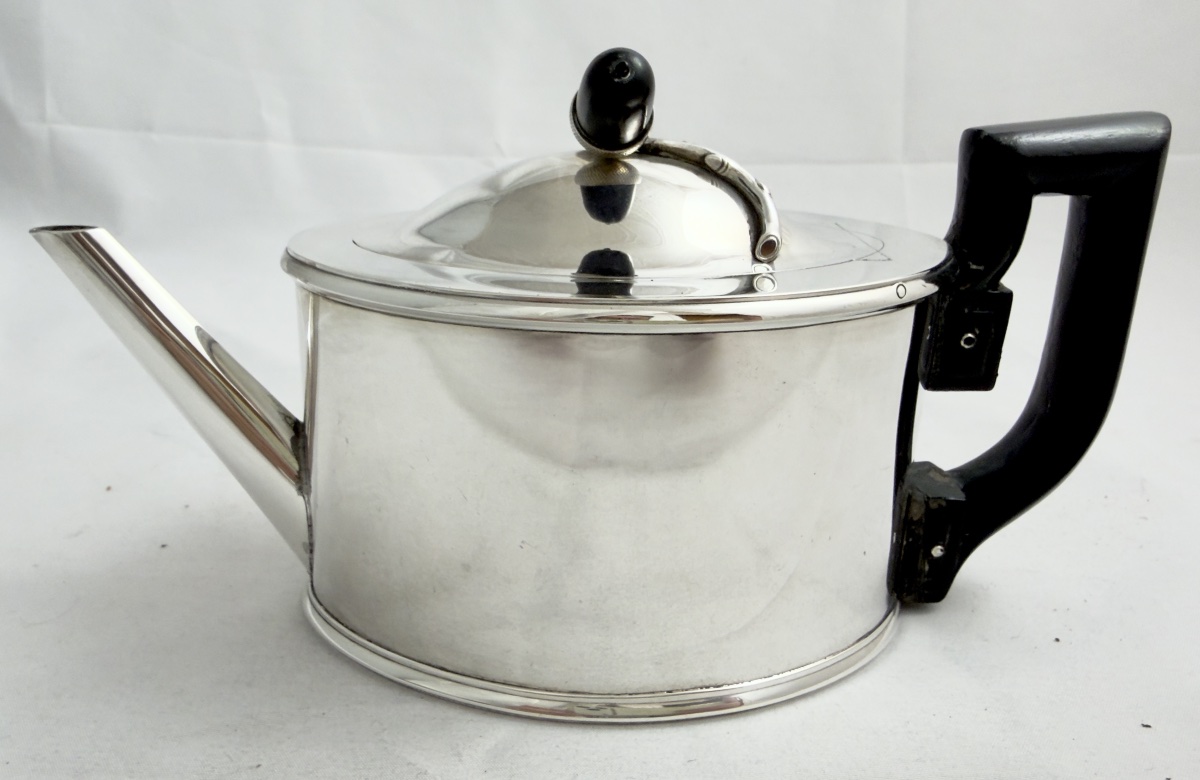
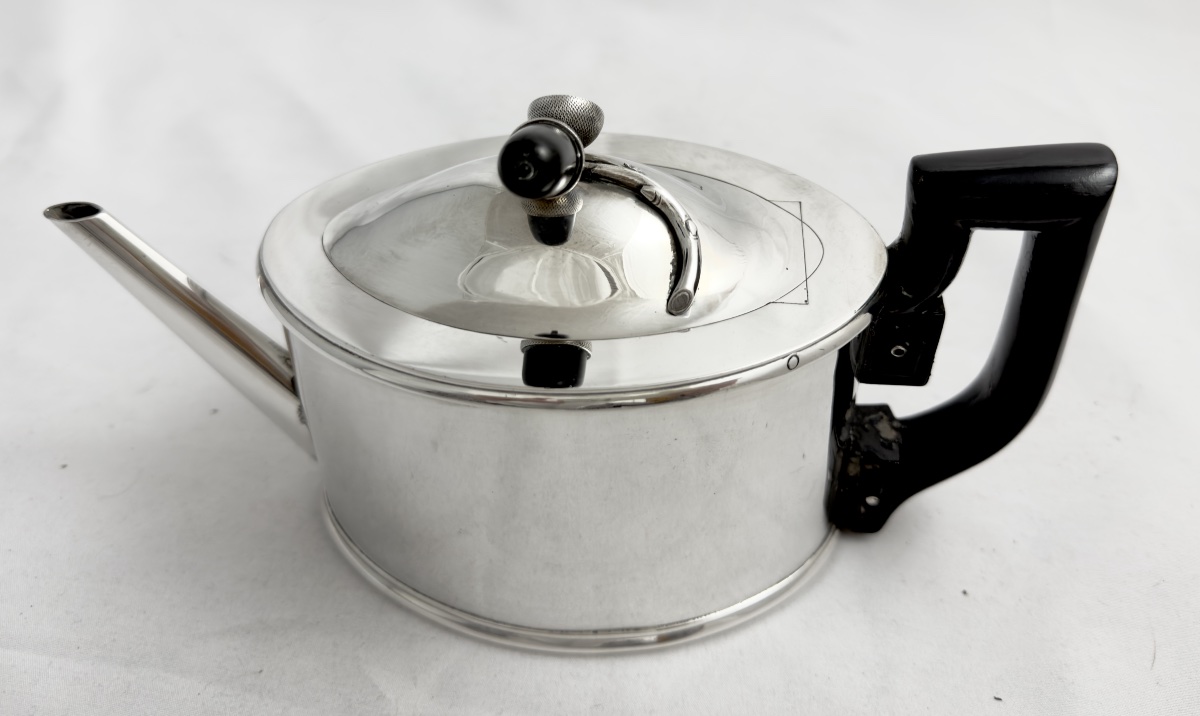
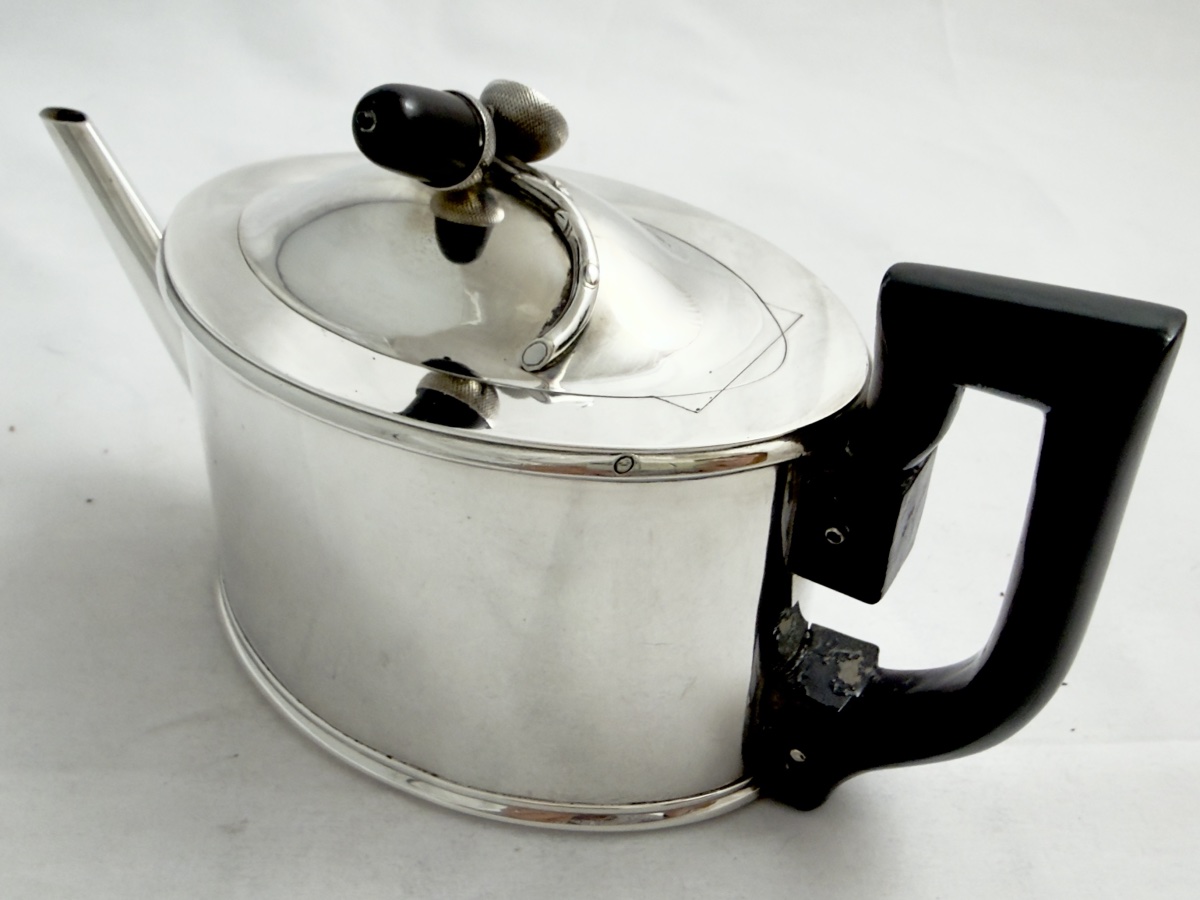
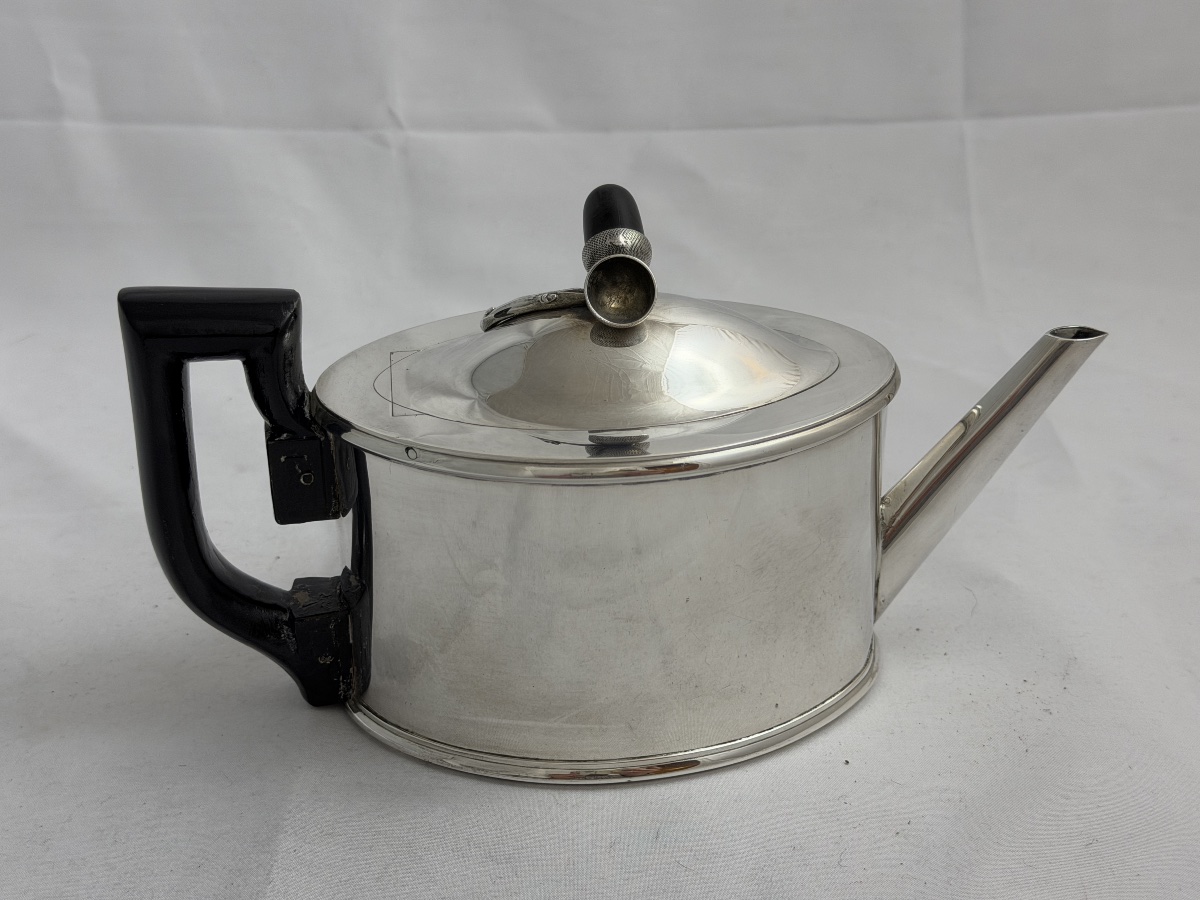
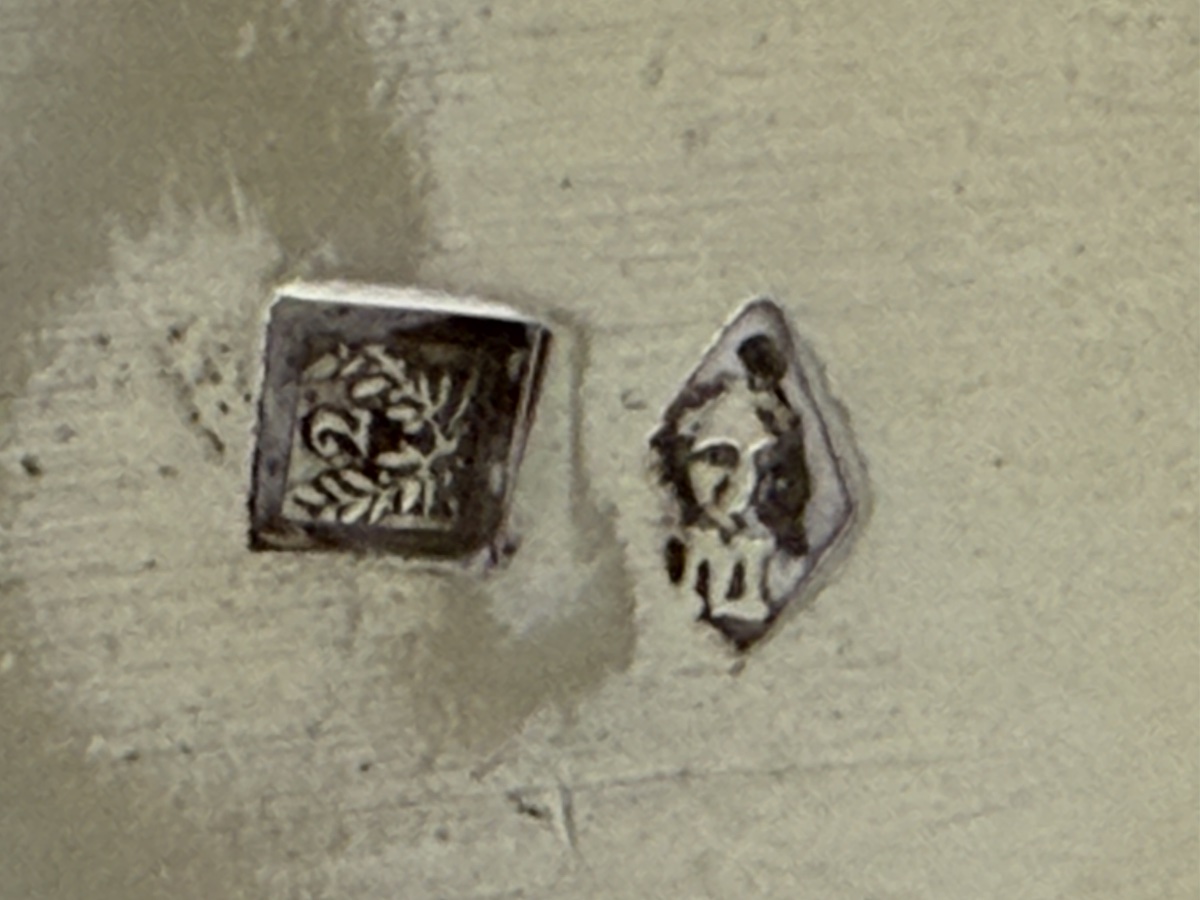
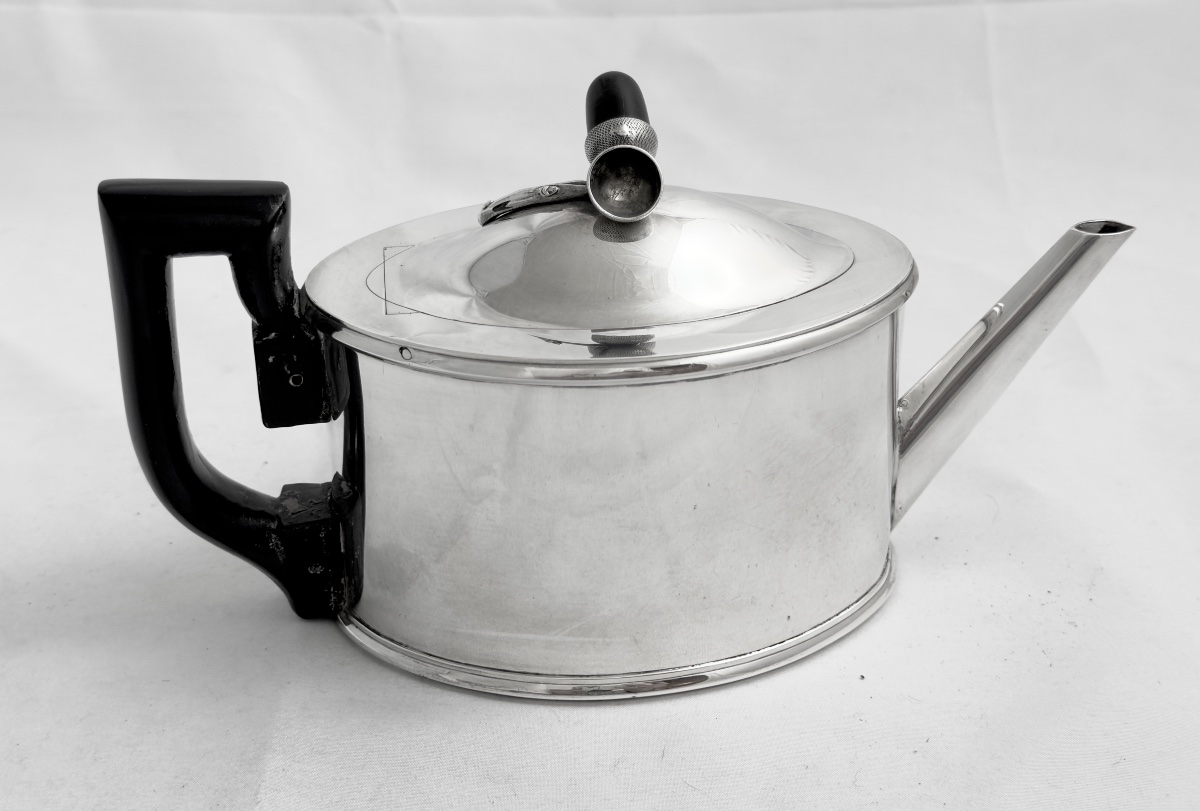
Solid silver teapot bearing the maker’s mark of Philippus Mys and the hallmark of the Bruges Assay Office, in use between 1814 and 1831.
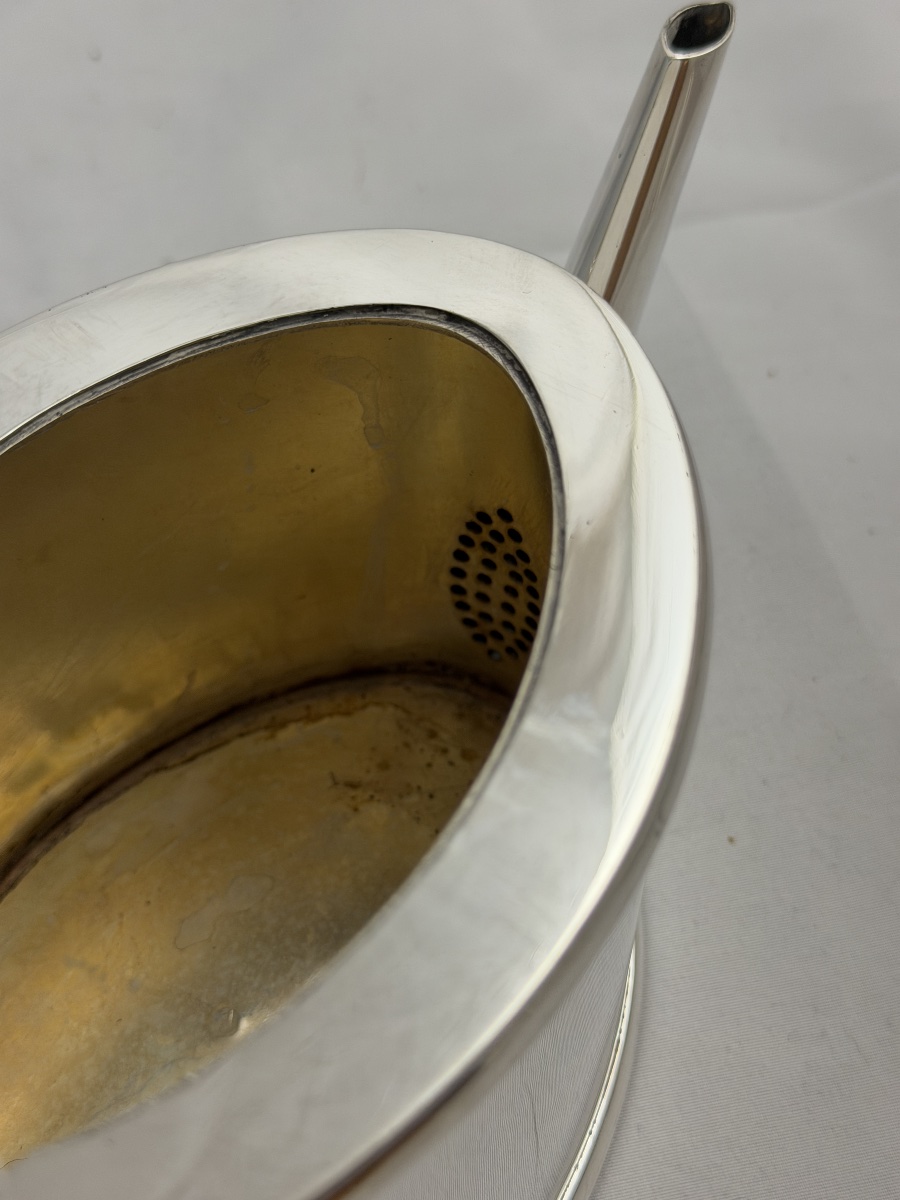
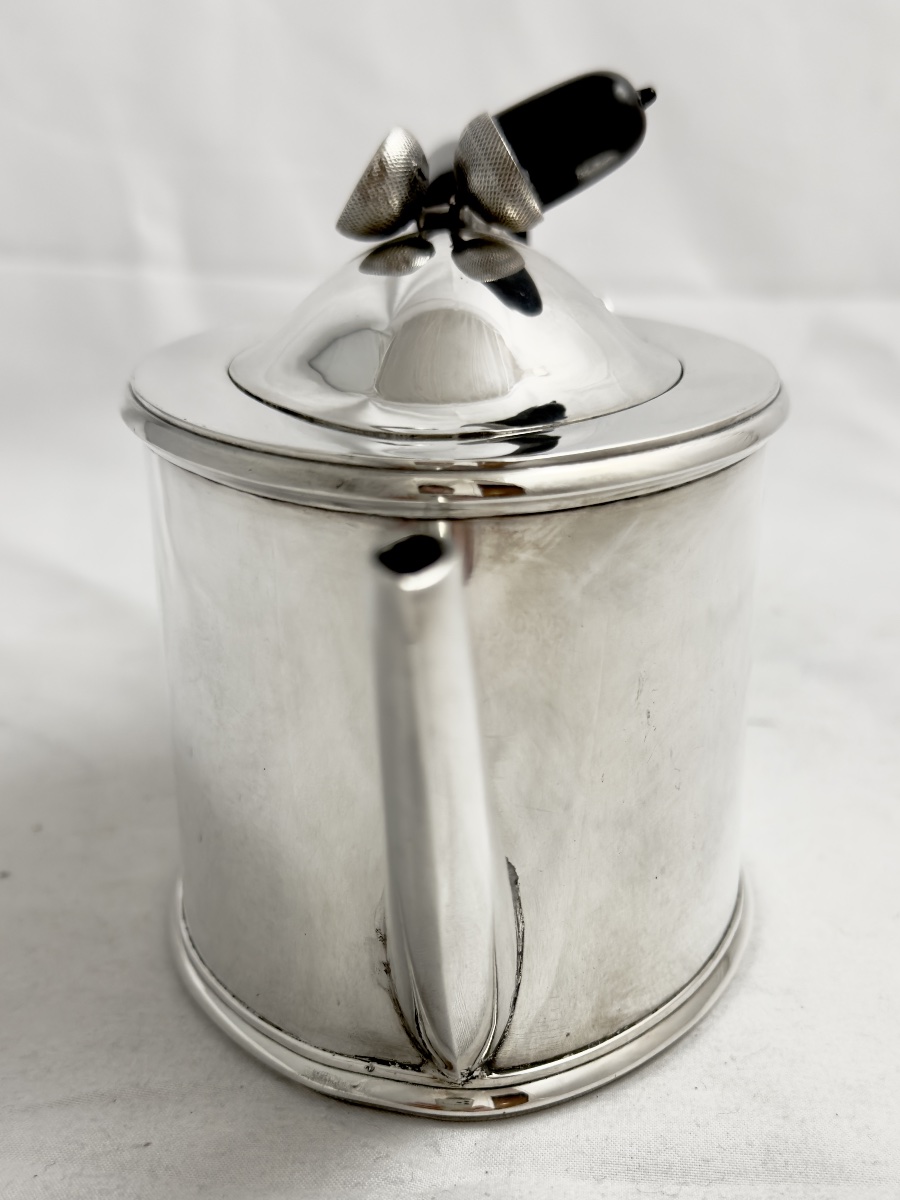
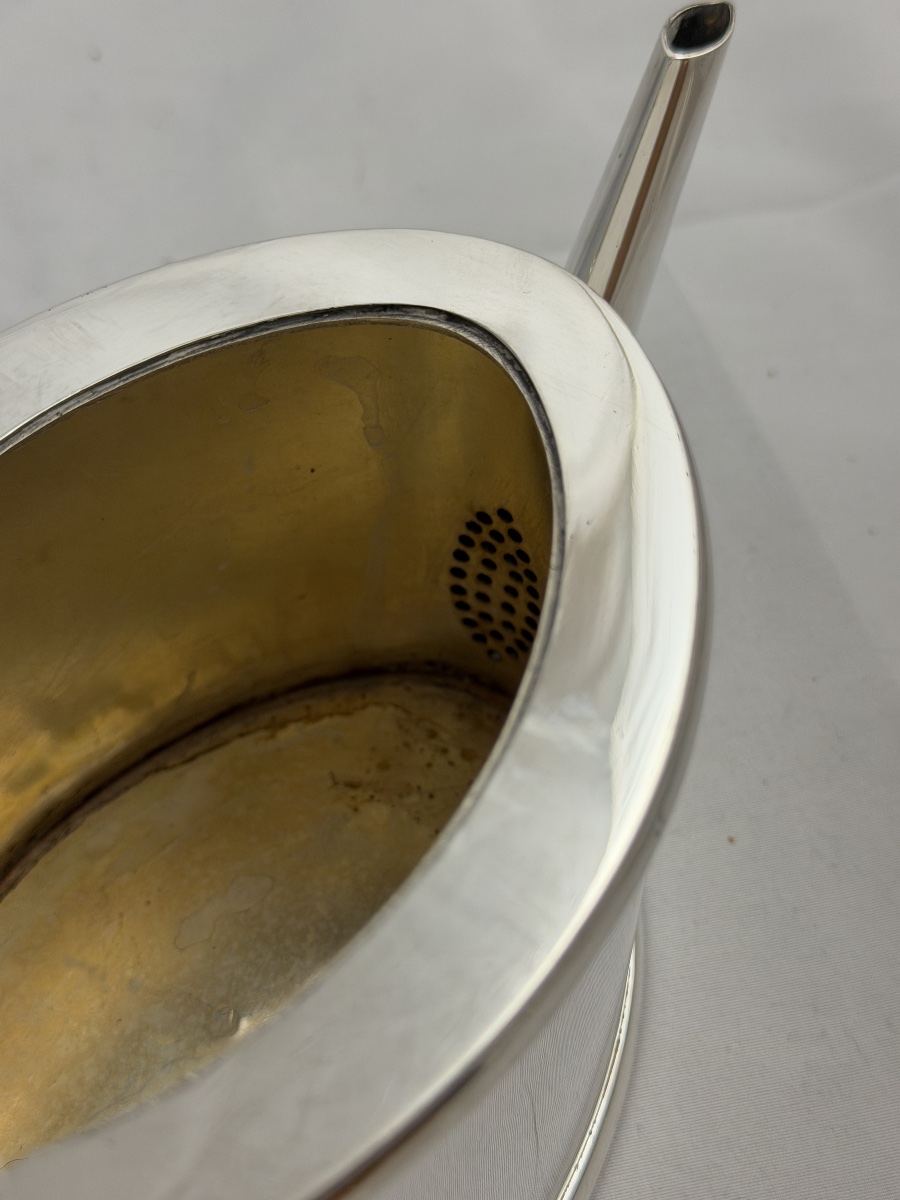
The cylindrical, slightly flattened body features smooth sides accented by fine moldings. The long, slanted spout and the angular, blackened wooden handle give the teapot a silhouette characteristic of the Neoclassical style.
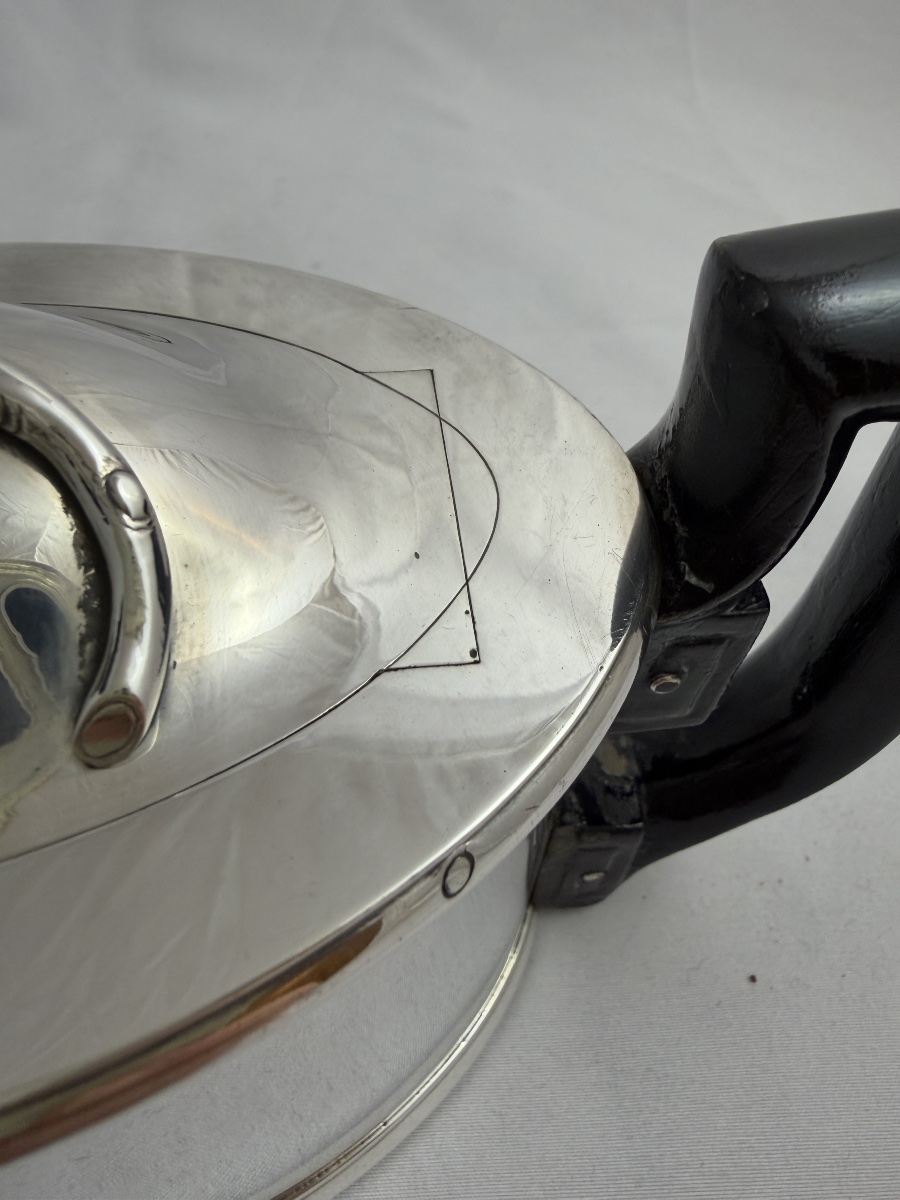
The slightly domed lid is distinguished by a hinge ingeniously integrated into its construction, virtually invisible when closed, thus preserving the purity of the design.
Its handle, inspired by nature, depicts an acorn still nestled in its cupule, accompanied by a second empty cupule, as if the acorn had just fallen from it. The delicate engraving replicates the scaly texture of the cupules, while the acorn, crafted from a dark material, contrasts with the silver.
The Symbolism of the Oak and the Acorn
In ancient tradition, the oak—dedicated to Zeus and Jupiter—symbolized strength, power, and longevity. The acorn, for its part, evoked fertility, growth, and prosperity. This symbolic repertoire experienced a resurgence of interest during the Neoclassical period and under the Empire, when the decorative arts drew heavily on Greco-Roman antiquity.
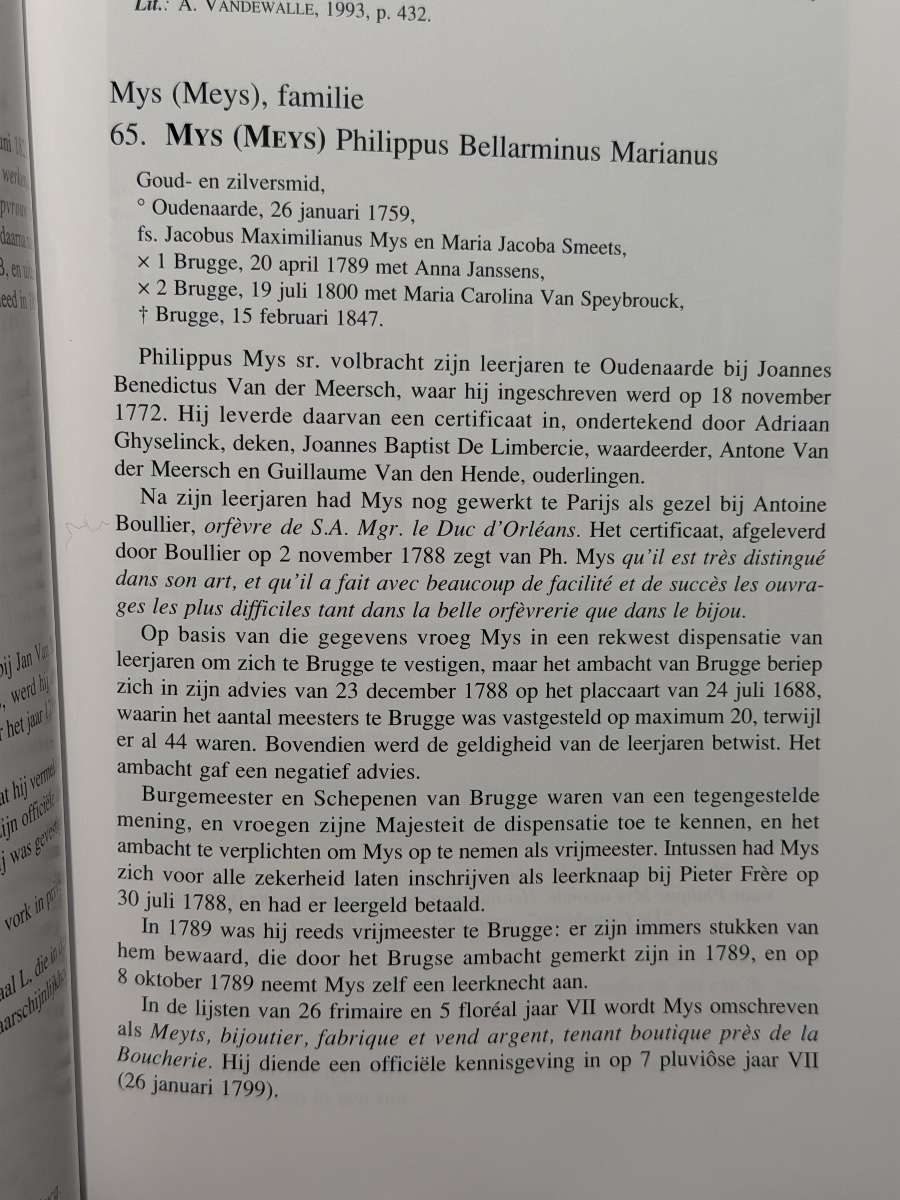
The goldsmith Philippus Mys
Philippus Bellarminus Mys belonged to a family of goldsmiths based in Bruges, whose workshop was located on Steenstraat, in a house called “Amsterdam.”
His son, Philippus Petrus Mys (1801–1881), continued the family business and remained at this address until 1868. Their work reflects the continuity of the Bruges tradition and its adaptation to neoclassical tastes.
Characteristics
Origin: Bruges, Belgium
Silversmith: Philippus Mys, family workshop
Date: 1814–1831
Material: solid silver, handle and grip element in dark metal
Hallmarks: master’s mark of Philippus Mys and hallmark of the Bruges office
Weight: 540 g
Capacity: approximately 610 ml
Period: 19th century
Style: Consulat, Empire
Condition: Excellent condition
Material: Sterling silver
Length: 24 cm
Width: 9,5 cm
Height: 12 cm
Reference (ID): 1851128
Availability: In stock