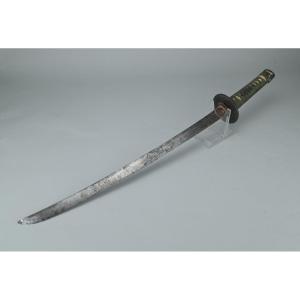


Japanese Wakizashi With An Openwork Iron Tsuba And A Green Braided Handle – Edo-period Mountings
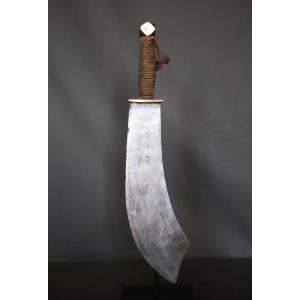
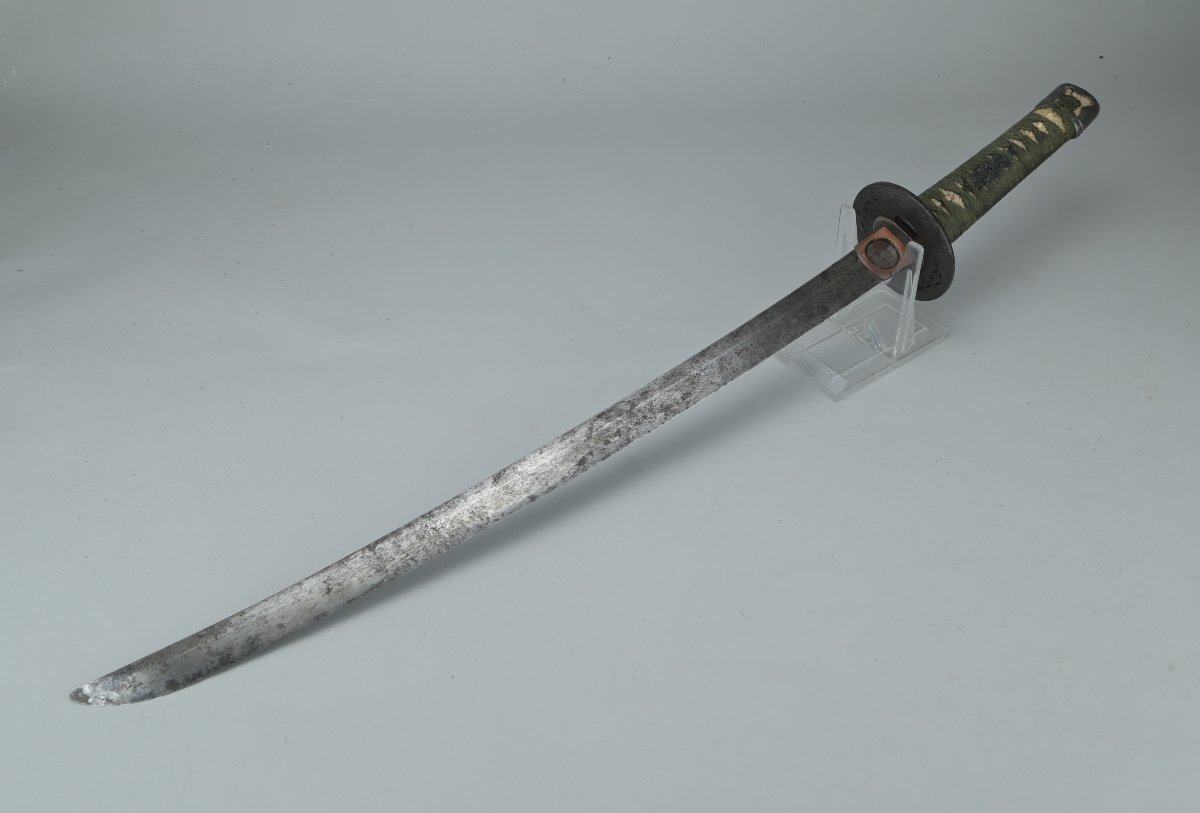
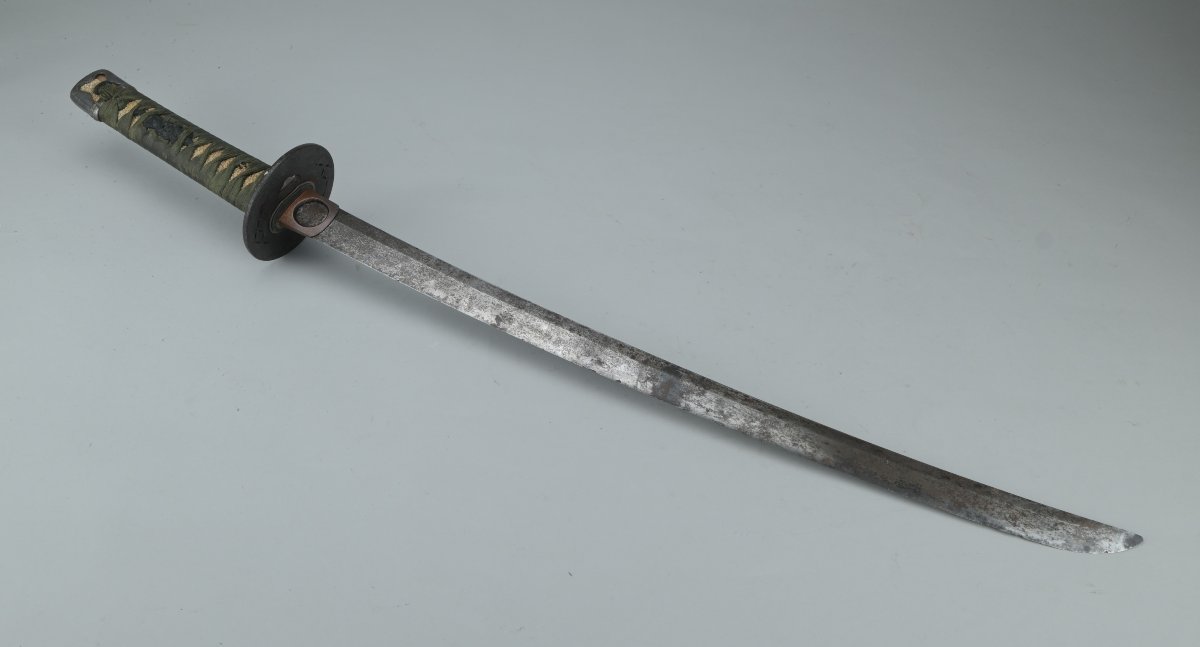
A Japanese wakizashi featuring a slightly curved, single-edged blade and a traditional mount. Its slender silhouette is accentuated by a circular iron guard and a handle wrapped in olive-green braiding.
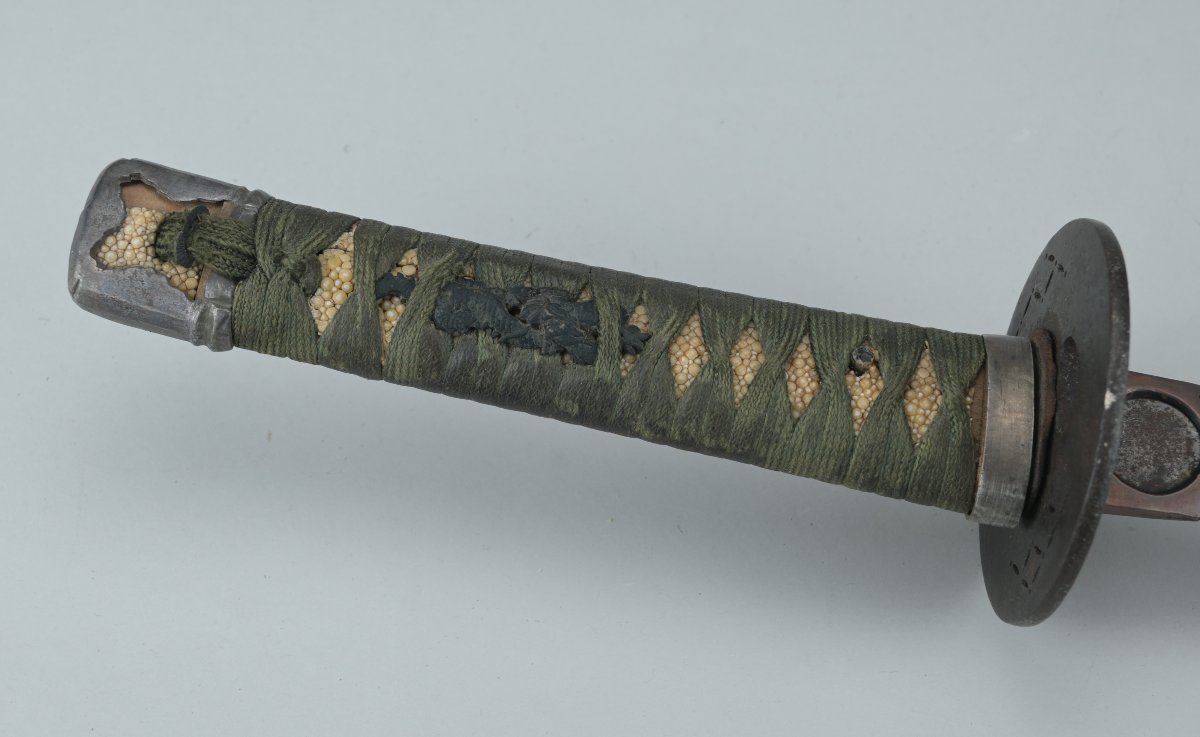
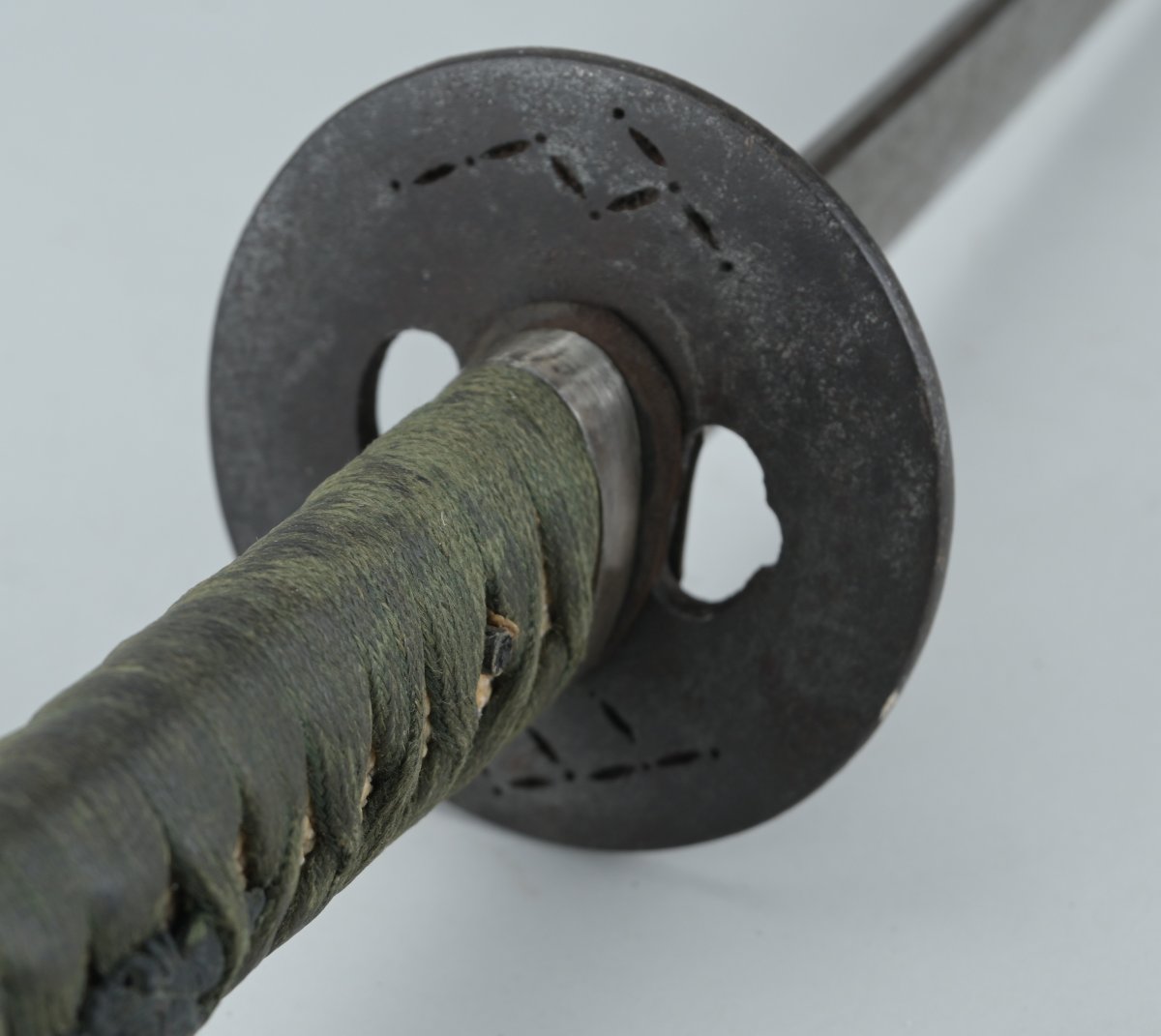
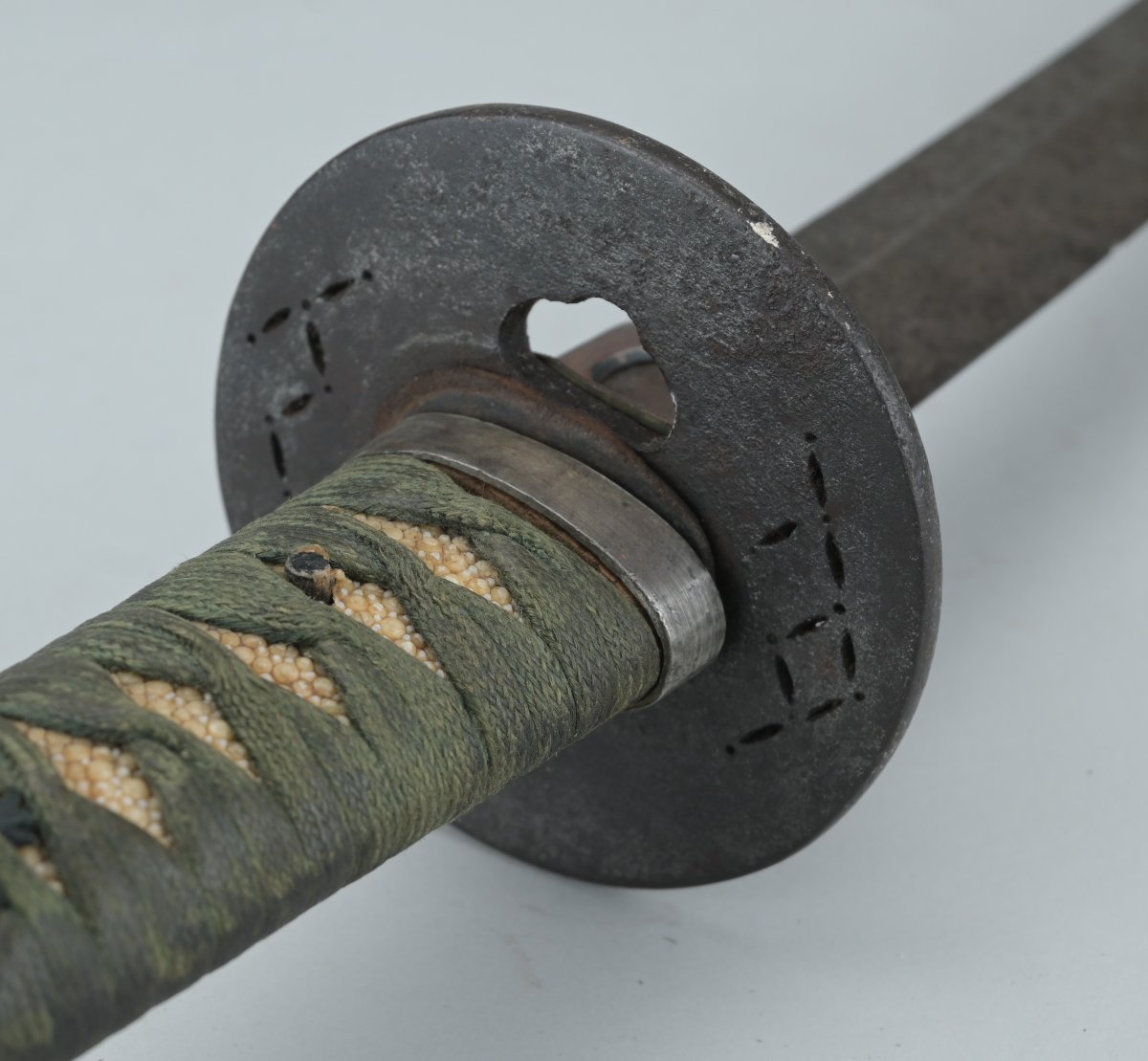
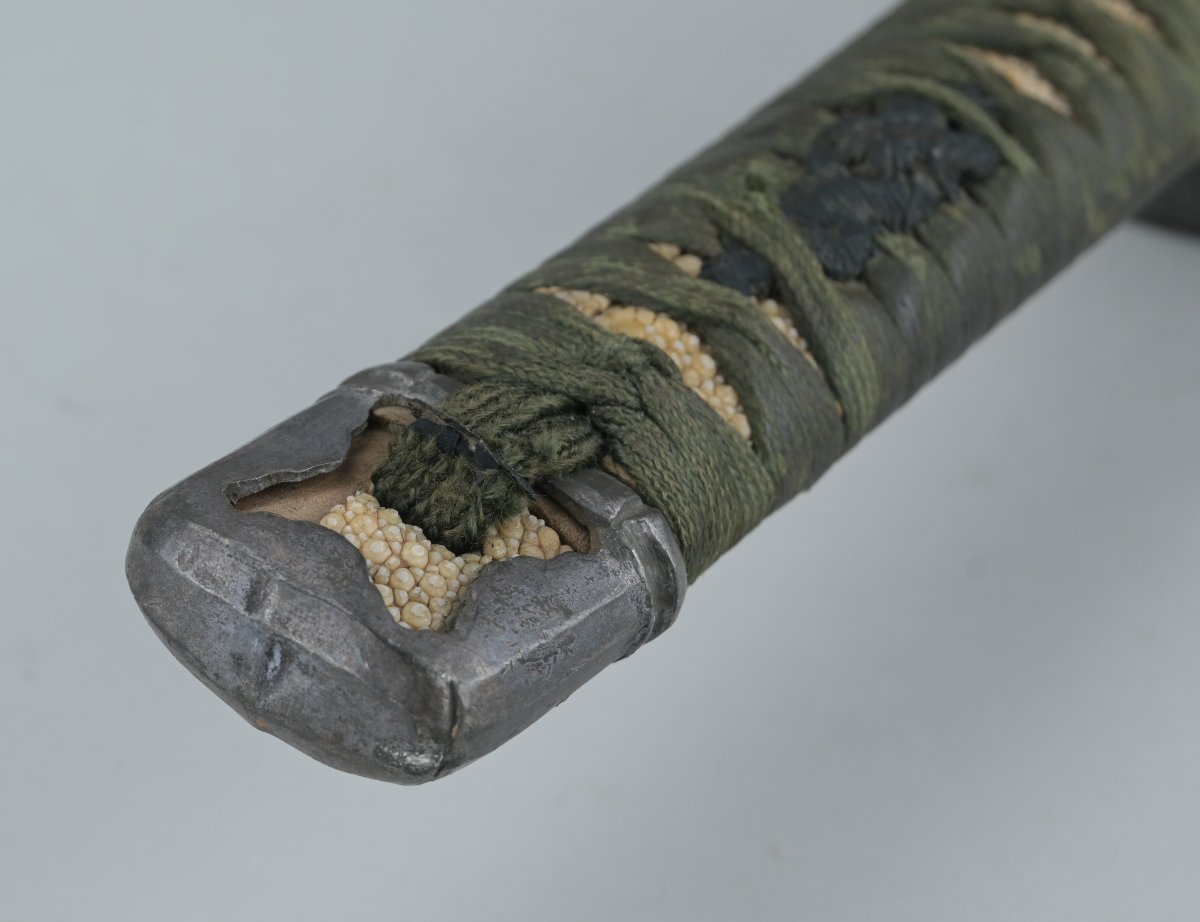
The handle, or tsuka, is covered with grainy-textured stingray skin, visible through the diamond-shaped openings in the wrapping. Embossed metal ornaments, known as menuki, are set beneath the intersections of the wrapping. A metal ferrule marks the base of the handle, while its tip is protected by an openwork pommel that reveals the underlying covering.
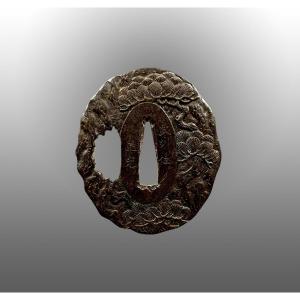
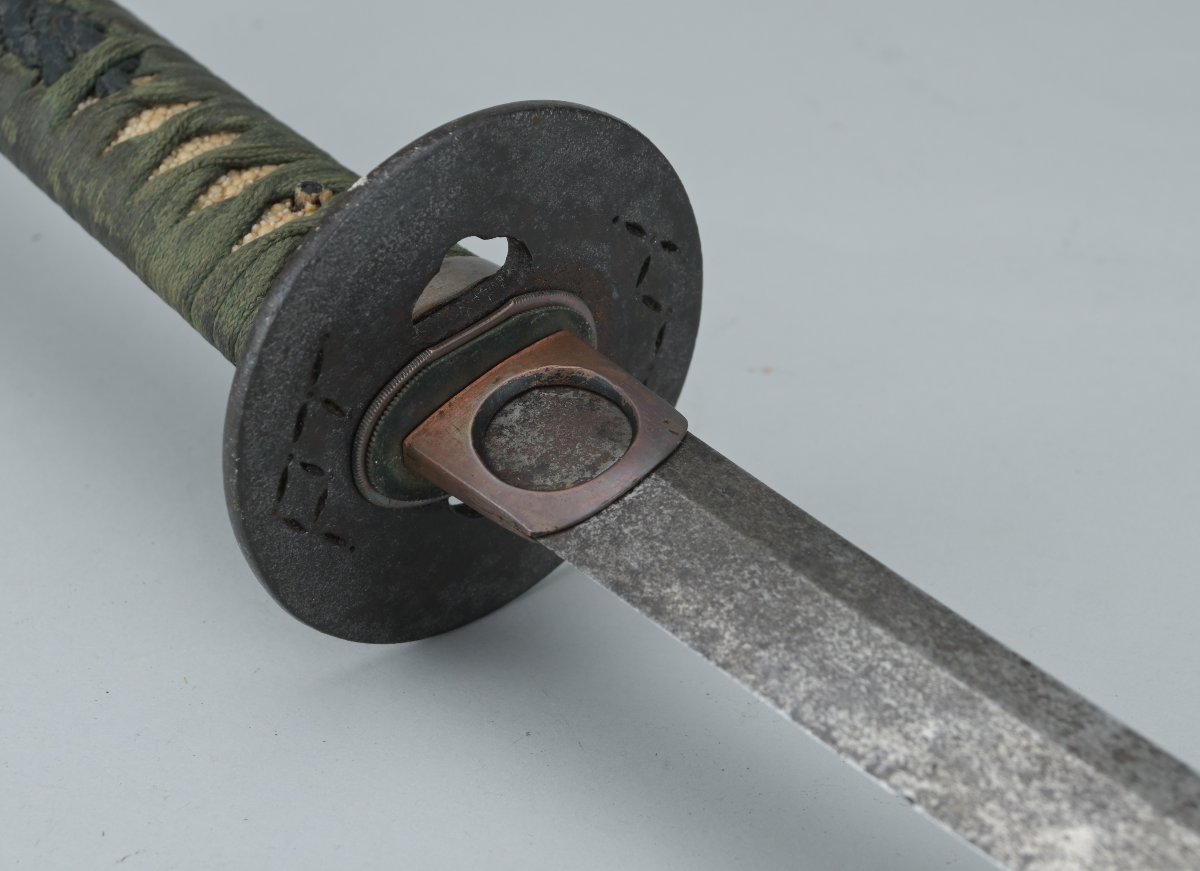
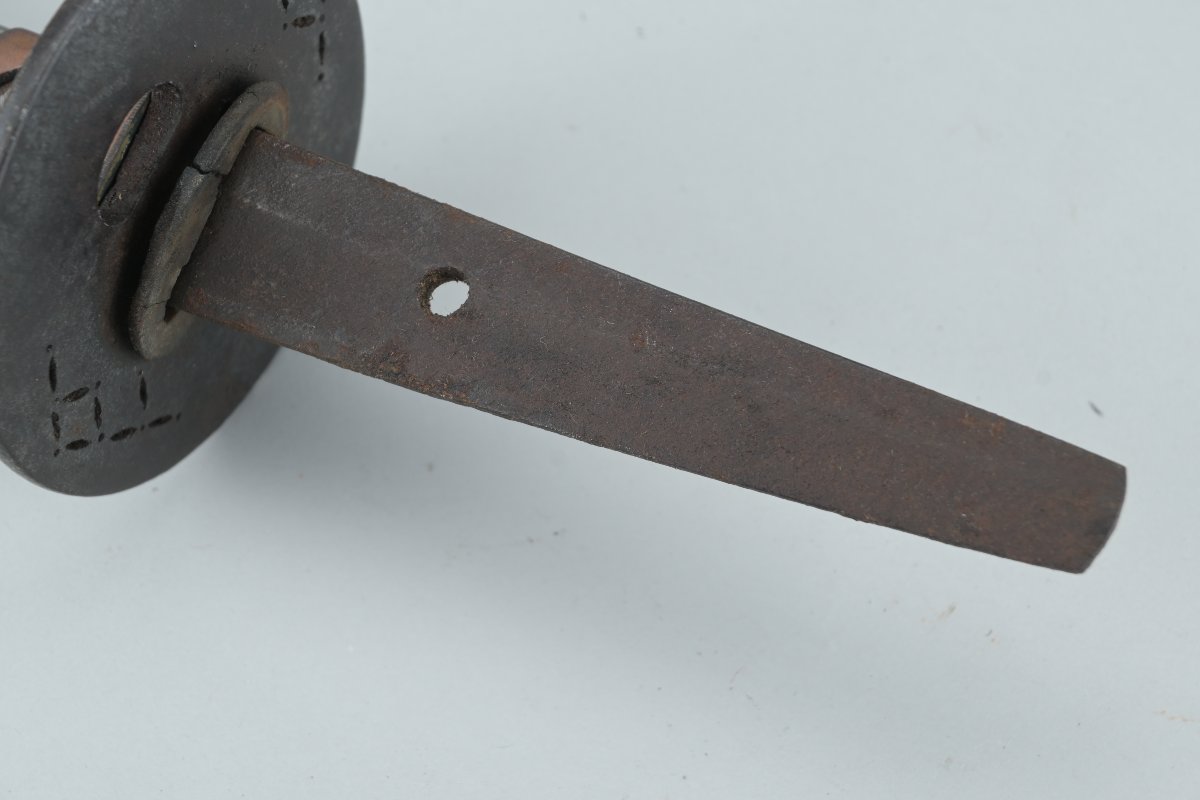
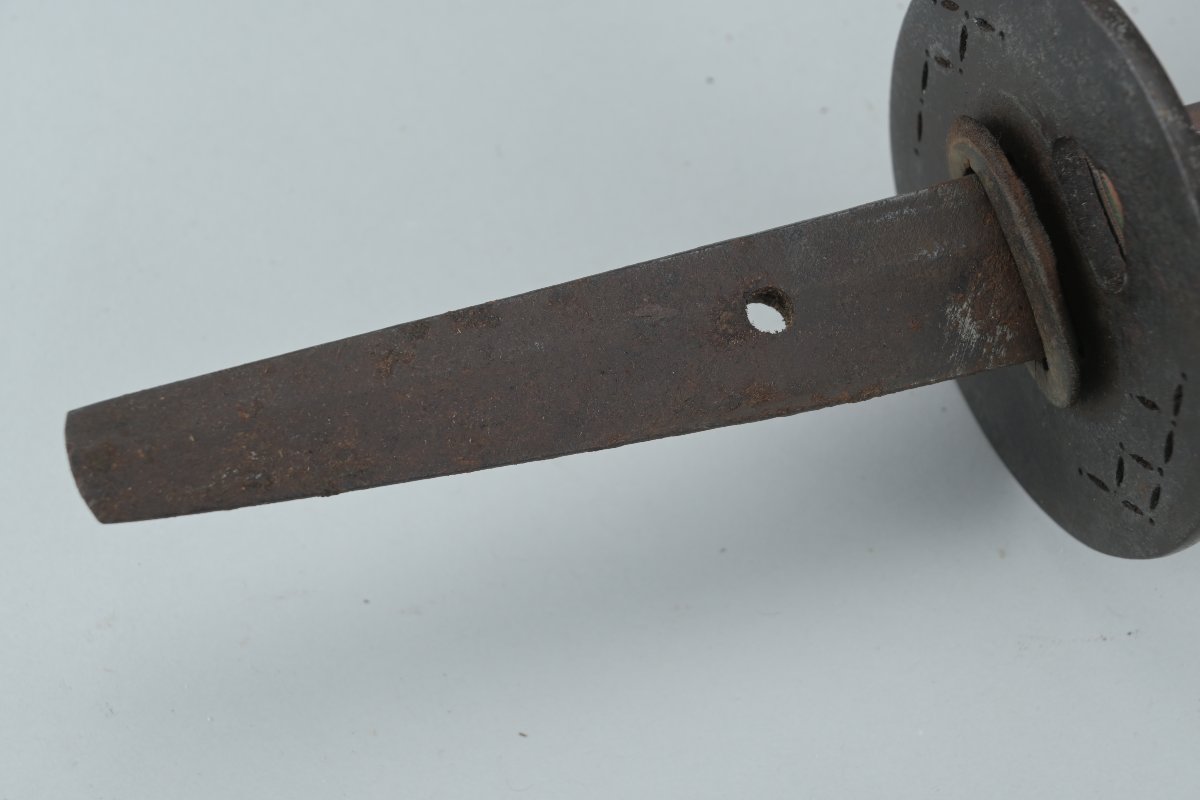
The guard, or tsuba, has a dark, patinated surface. Its openwork design combines small, elongated and dot-like openings arranged in geometric patterns. Two larger openings frame the central passage of the blade. Metal washers, known as seppa, complete the assembly on either side of the guard.
At the base of the blade, a copper habaki features a large circular opening on its side, a distinctive detail of this mount. The tang, examined outside the handle, is unsigned (mumei) and has a single mounting hole.
The sword retains a distinctly antique appearance, with a contrast between the patina of the iron, the coppery hues of the habaki, and the muted green of the cord wrapping.
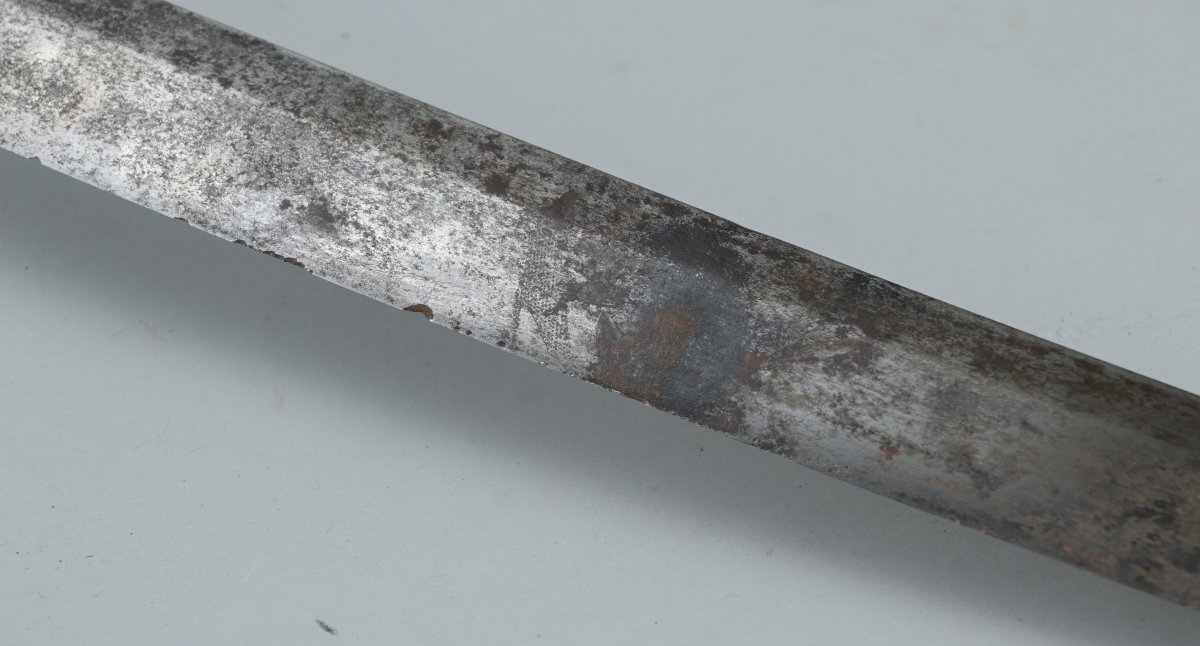
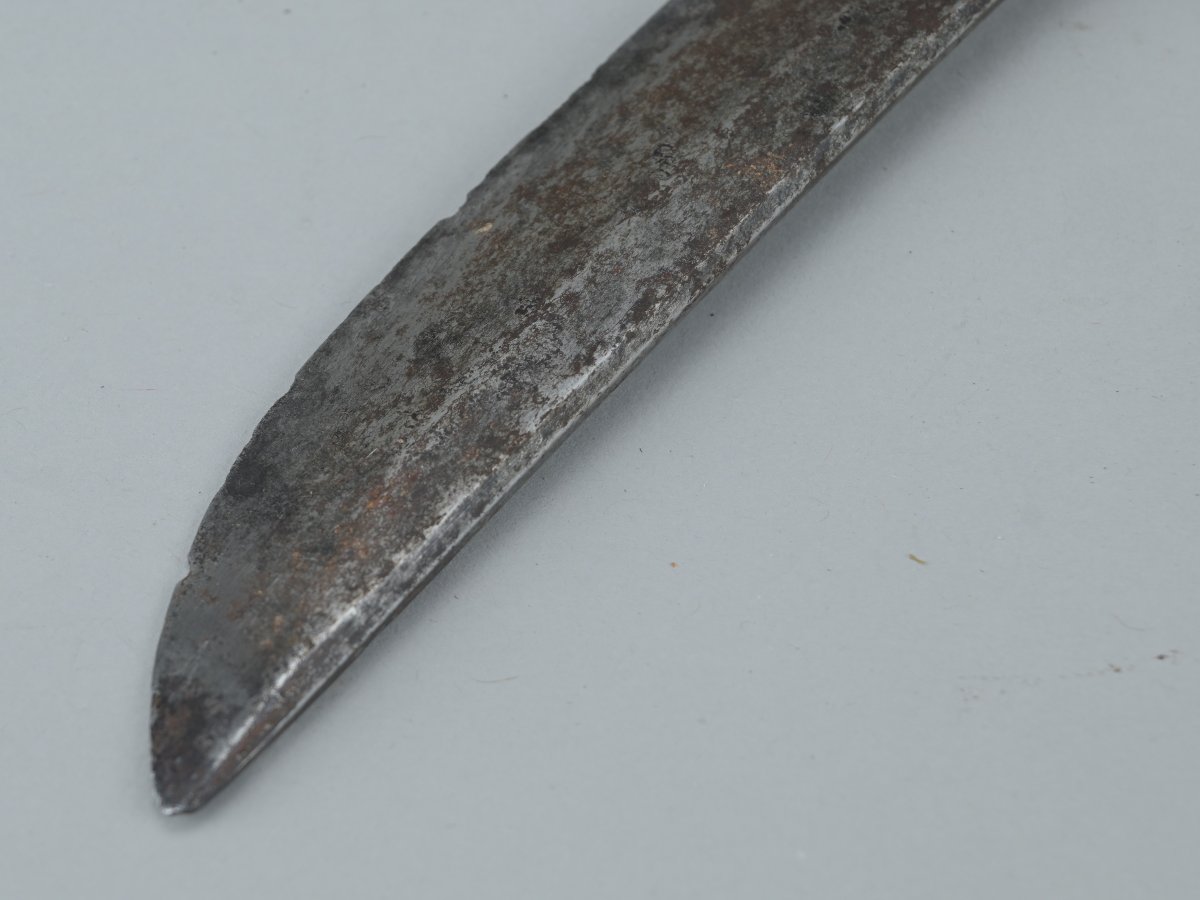
Condition: The blade is heavily oxidized and pitted, with several chips along the cutting edge and wear on the tip. Handle shows wear and fraying of the braiding; metal fittings are patinated and oxidized. Presented without a scabbard. See photographs for conservation details.
Origin: Japan.
Date of the mount: Edo period, 18th–19th century. (but likely older)
Blade: antique, unsigned; precise date not established.
Total length: 65 cm.
Distance from the tsuba to the tip: 47 cm.
Blade width: 2.5 cm.
Blade thickness: slightly more than 5 mm.
Period: 18th century
Style: Asian art
Condition: Good condition
Material: Wrought iron
Length: 65 cm
Reference (ID): 1849807
Availability: In stock