




Important Meiji-period (1868–1912) Okimono Depicting A Peasant Holding A Rooster
JAPAN – MEIJI PERIOD (1868–1912)
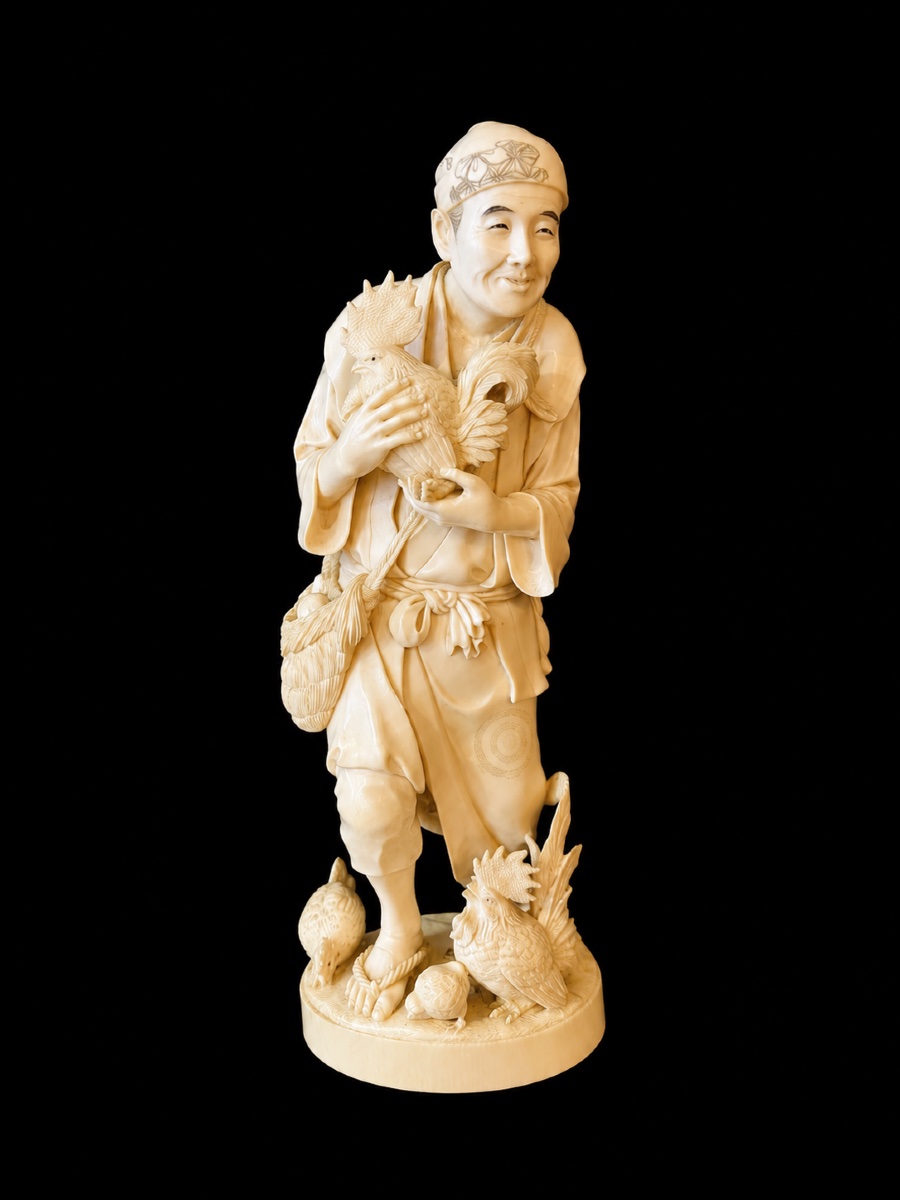
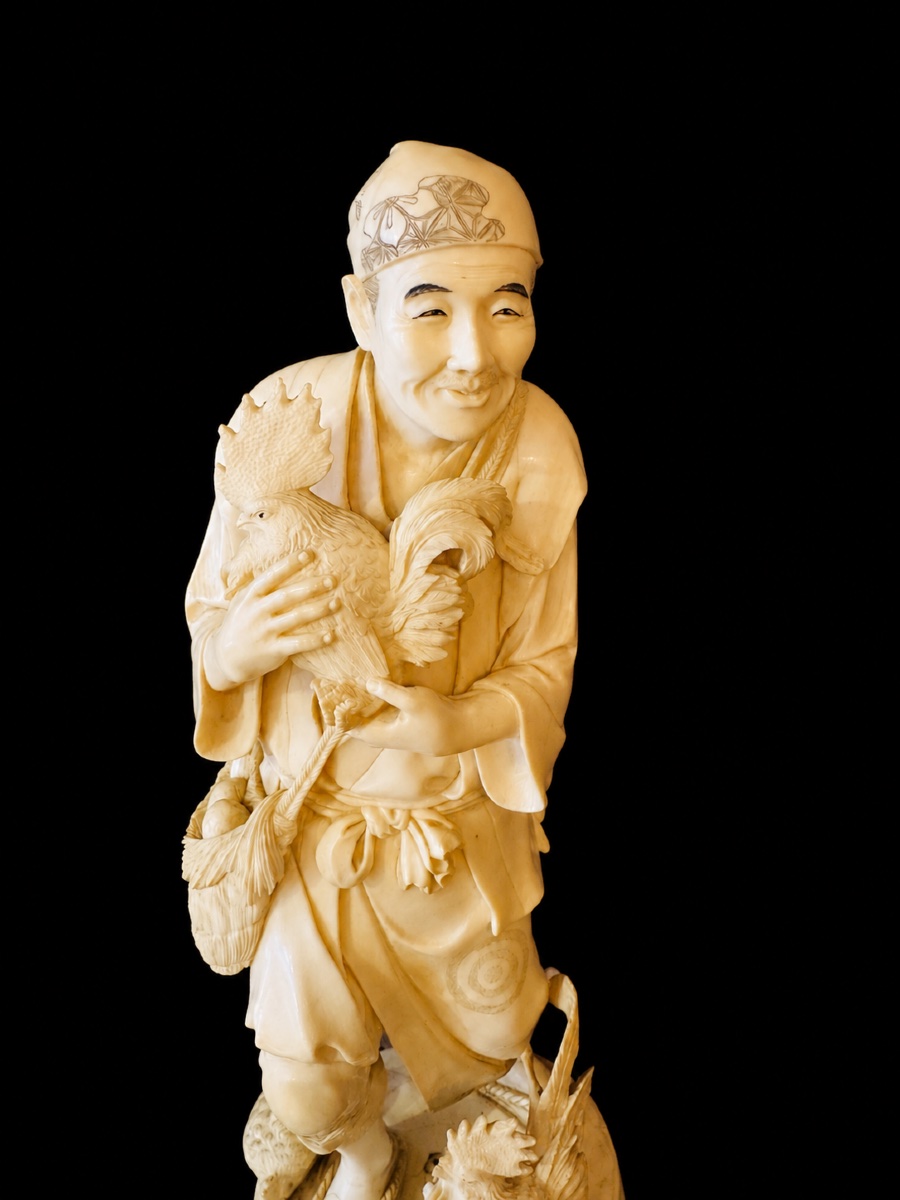
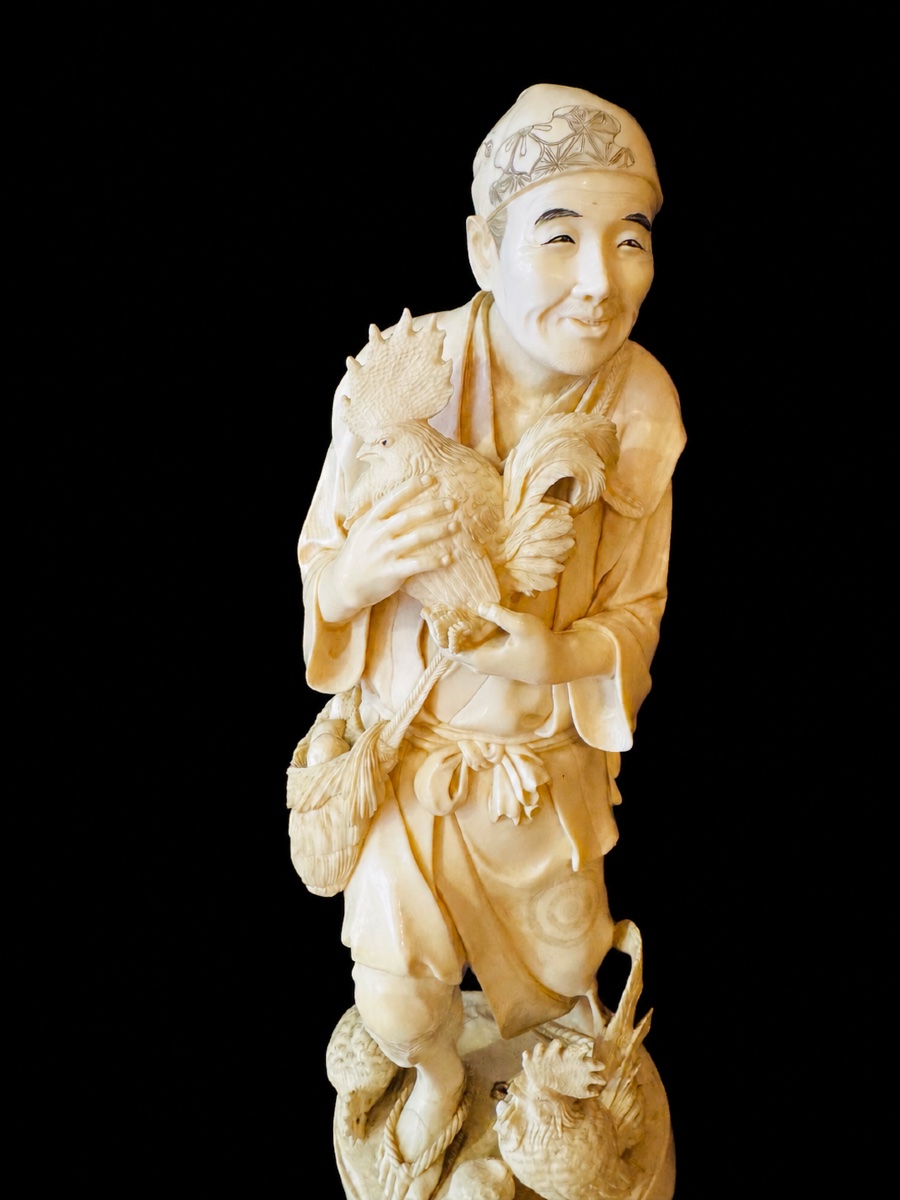
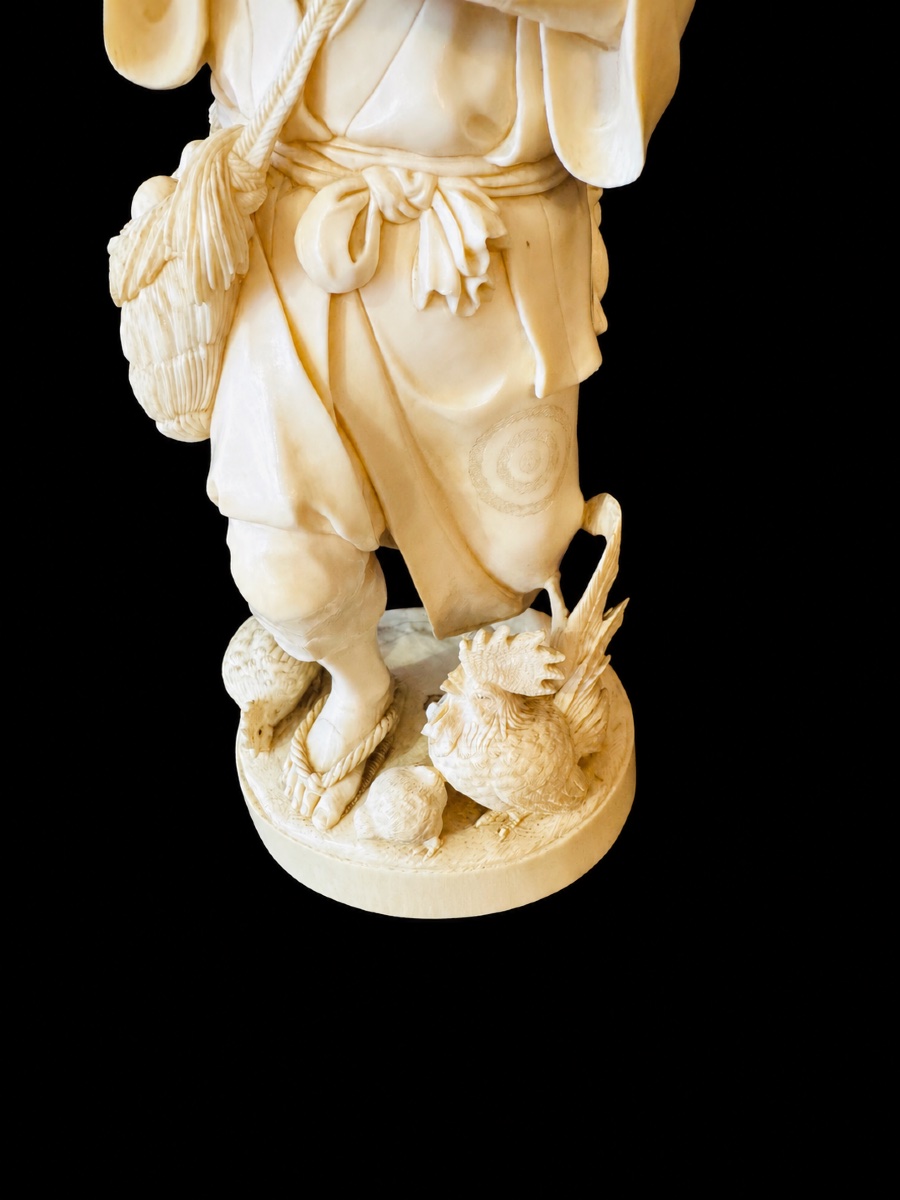
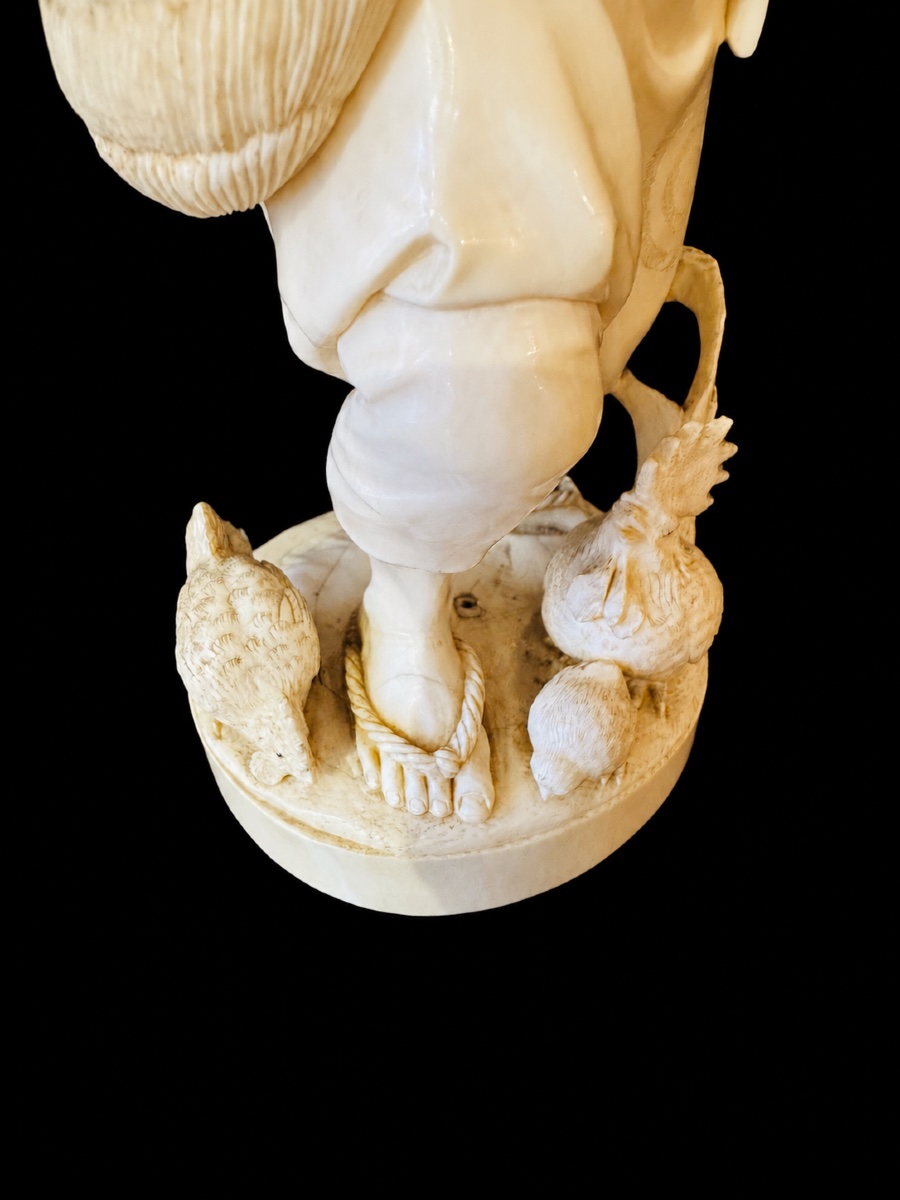
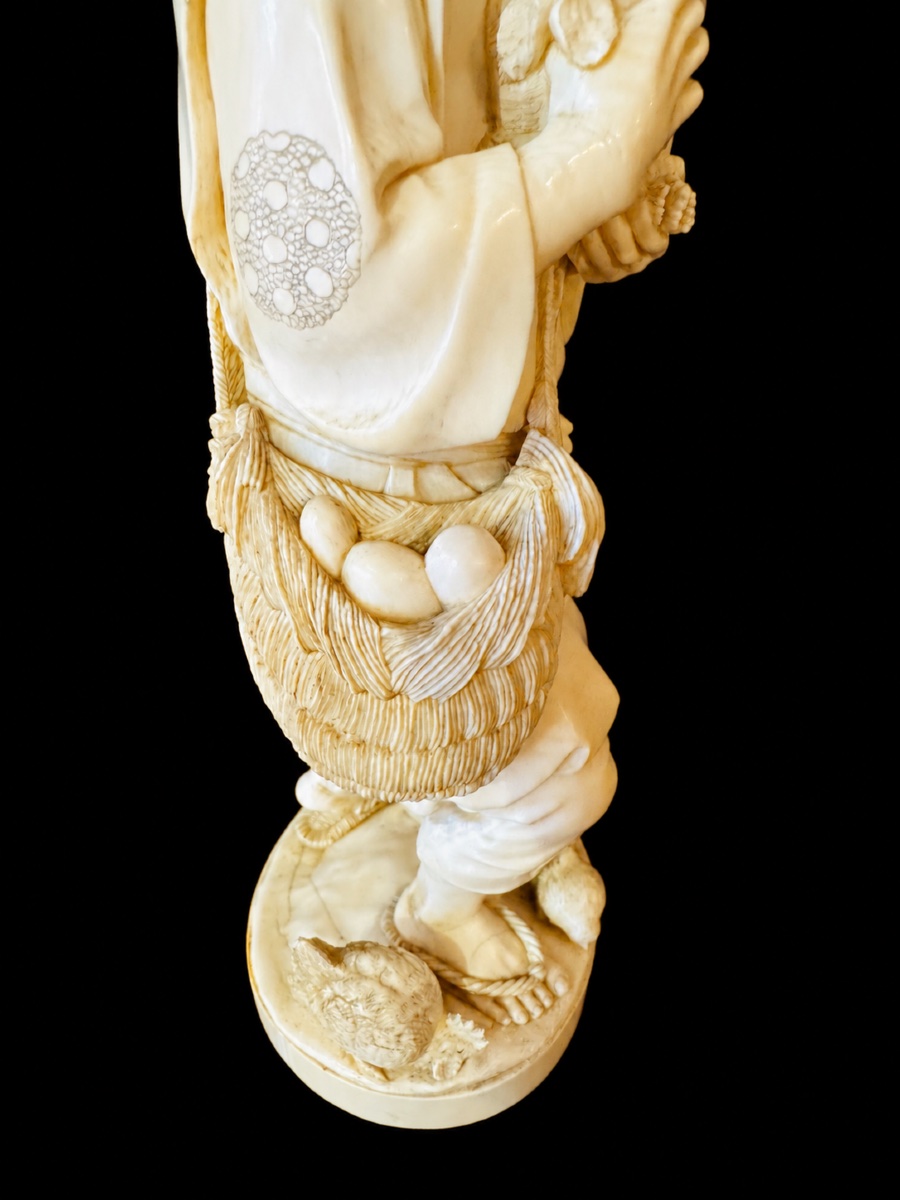
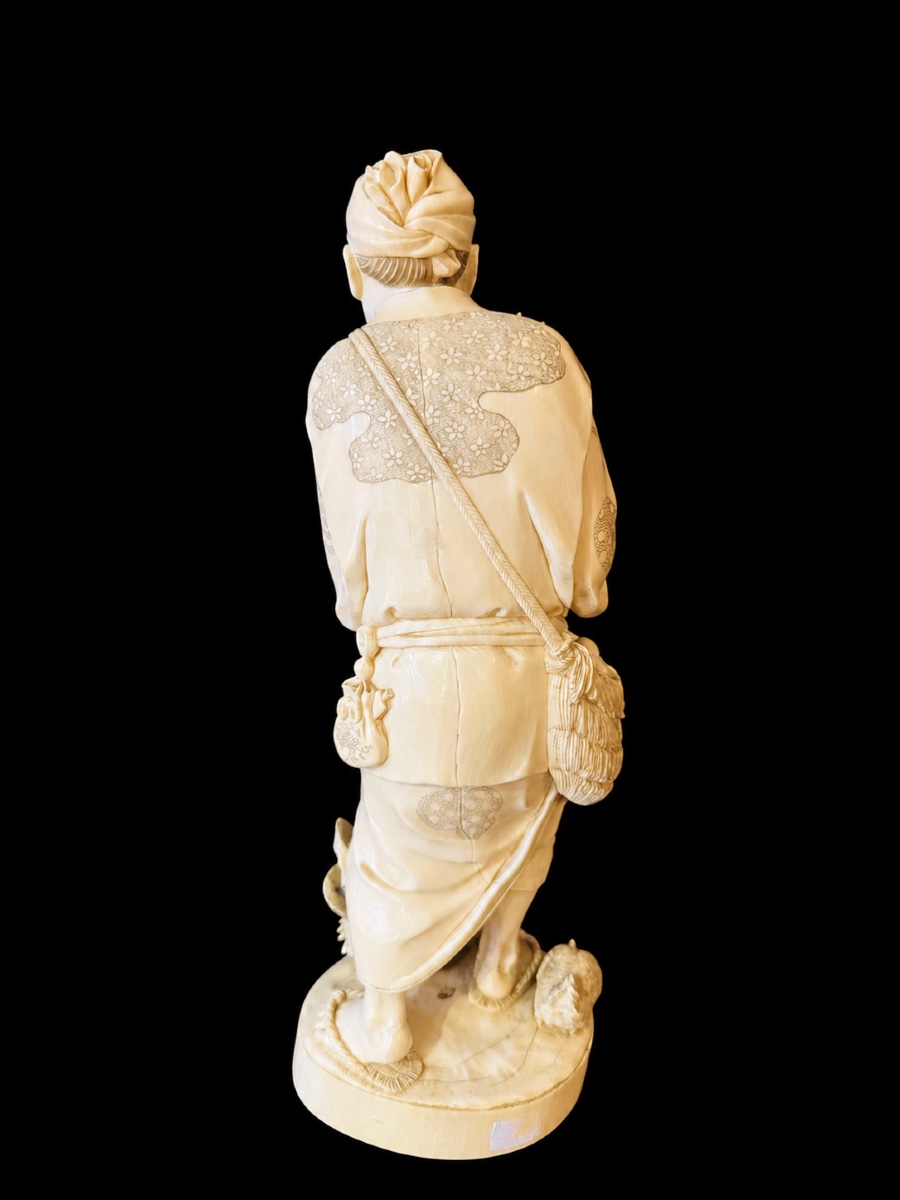
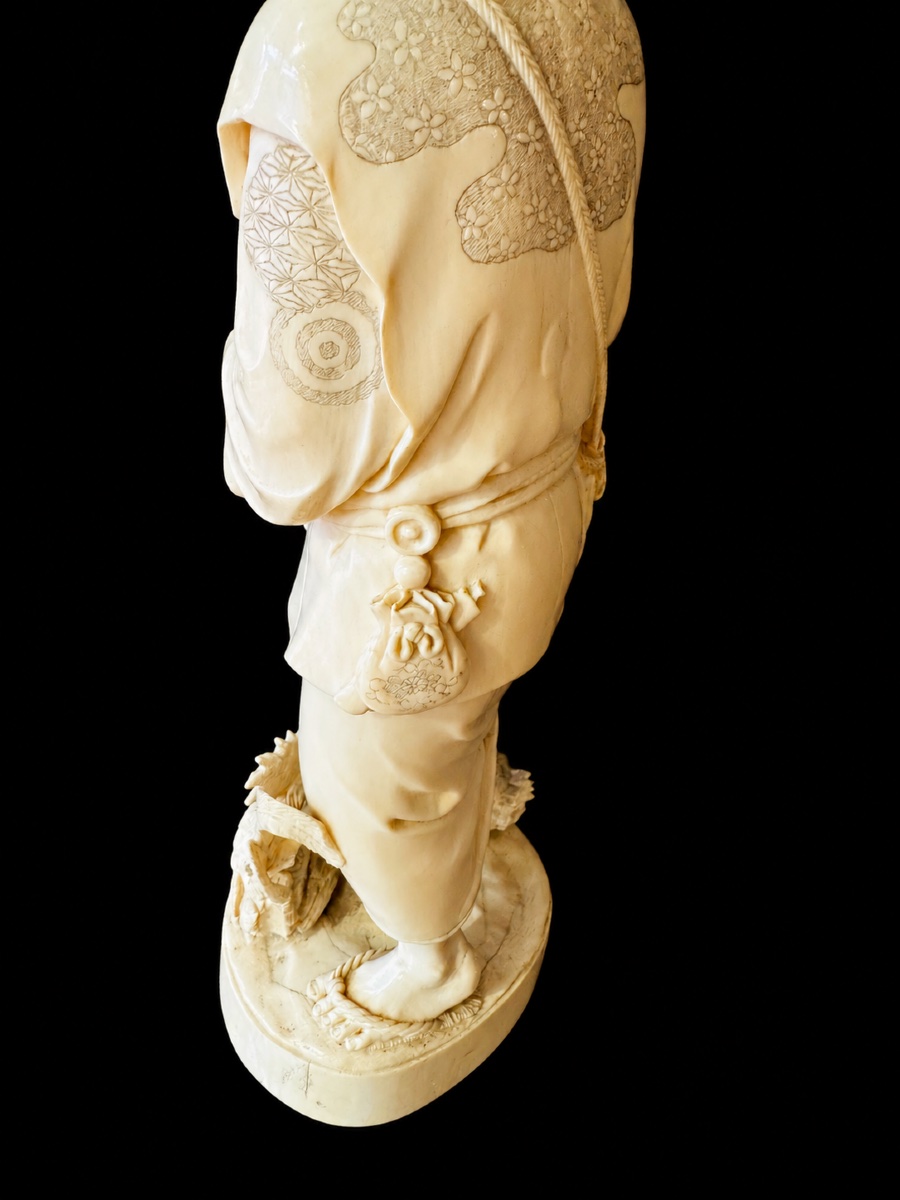
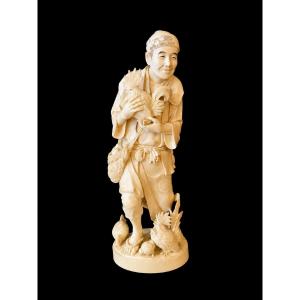
Large carved ivory okimono (Elephantidae spp.), depicting a peasant holding a rooster, with a rooster, a hen, and a chick at his feet. Signed Seikō.
H.: 29 cm
This significant ivory okimono, depicting a peasant holding a rooster while another rooster, a hen, and a chick are depicted at his feet, is a prime example of the refined craftsmanship of the Meiji era (1868–1912). Large pieces—such as this one—were often created for a wealthy European clientele eager to acquire spectacular works showcasing Japanese craftsmanship.
The scene depicted is typical of themes popular in the late 19th century: rural life, rendered with a naturalism and sensitivity characteristic of Meiji workshops. The attention paid to the peasant’s posture, the birds’ plumage, and the details of their clothing reveals the fine, precise carving characteristic of the Meiji era.
The signature “Seikō” reinforces the attribution to a renowned workshop of the period, known for the quality of its carved ivory and the precision of its figurative work.
*Pre-Convention ivory specimen (I/A), dating from before July 1, 1947, and therefore compliant with EC Regulation 338/97 of December 9, 1996, Art. 2-Wmc, and predating July 1, 1975, and therefore compliant with the French decrees of May 4, 2017, and January 2022.
To leave the European Union, a CITES re-export permit will be required.
CIC No. FR2609504077-K
Period: 19th century
Style: Asian art
Condition: Perfect condition
Height: 29 cm
Reference (ID): 1844896
Availability: In stock