THIS OBJECT WAS SOLD
Large Cenotaph Chest, Carved Wood, Gothic Revival Style, Featuring A Grotesque Dragon By Sambin, 19th Century
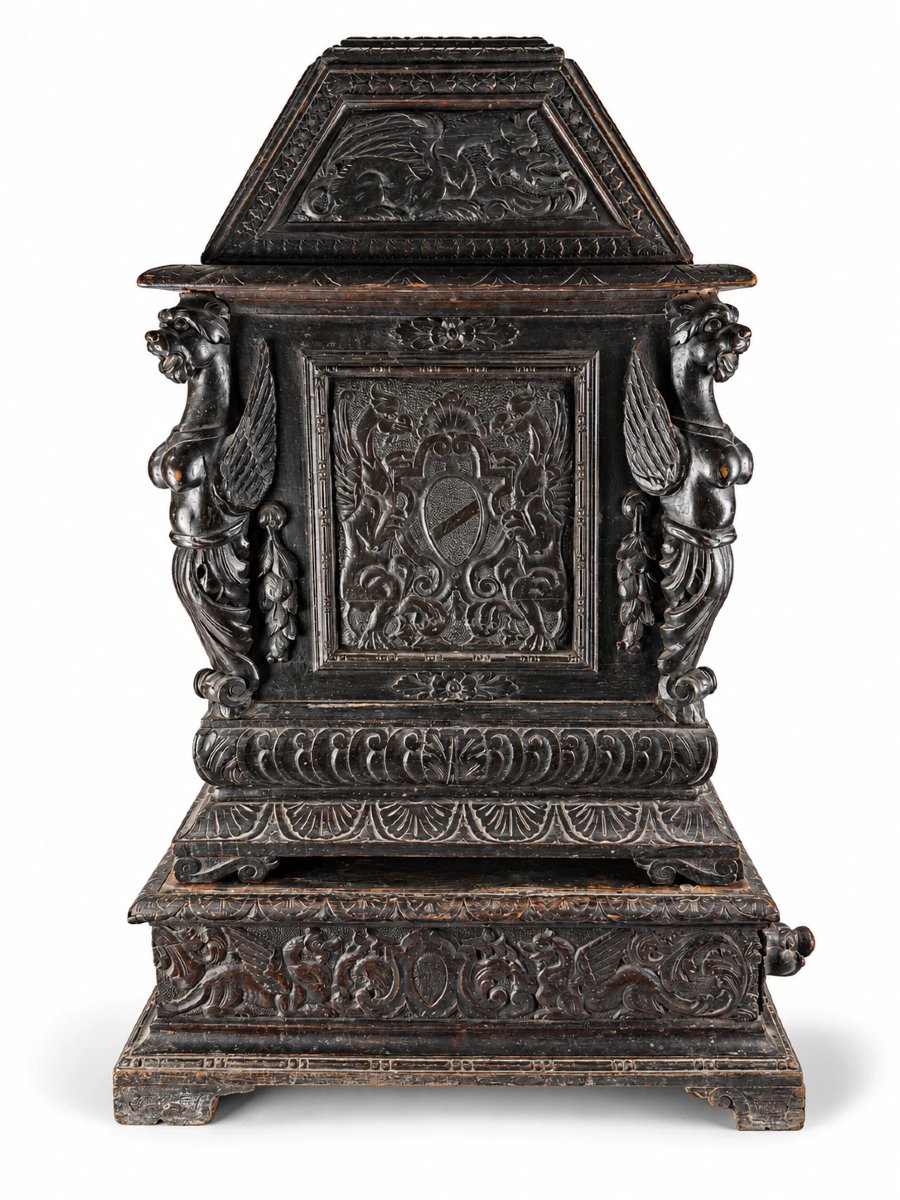






Important ceremonial cabinet-chest made of carved, blackened wood, featuring dragons, chimeras, and winged figures, in the Neo-Renaissance style, circa 1900
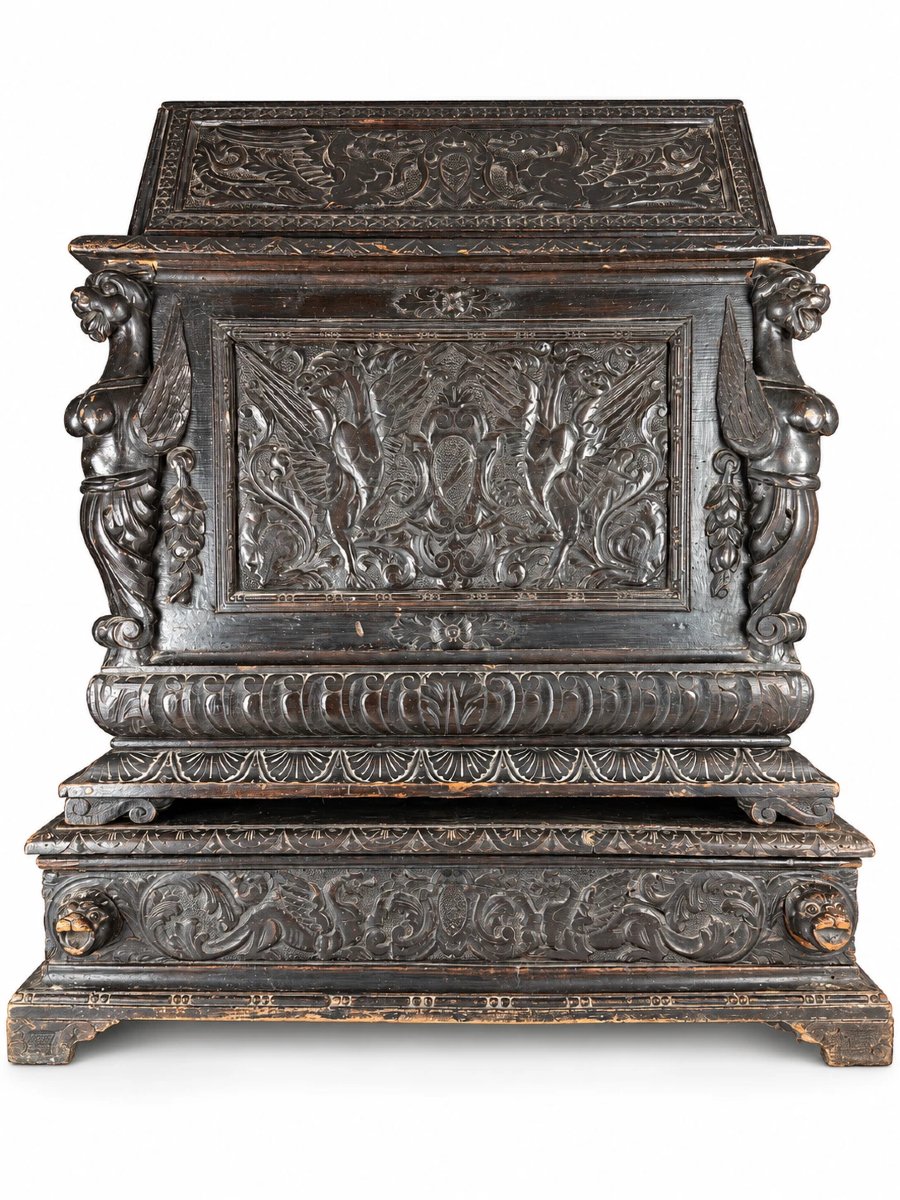
An impressive ceremonial chest made of carved and blackened wood, consisting of two stacked sections, opening from the top and resting on a wide, architecturally designed base. The piece has an unusual silhouette, at once like a piece of furniture and monumental, evoking, on a smaller scale, the architecture of a Renaissance tomb, cenotaph, or funerary monument, with a base, a central body punctuated by framed panels, corner figures in high relief, and a crowning section with sloping sides.
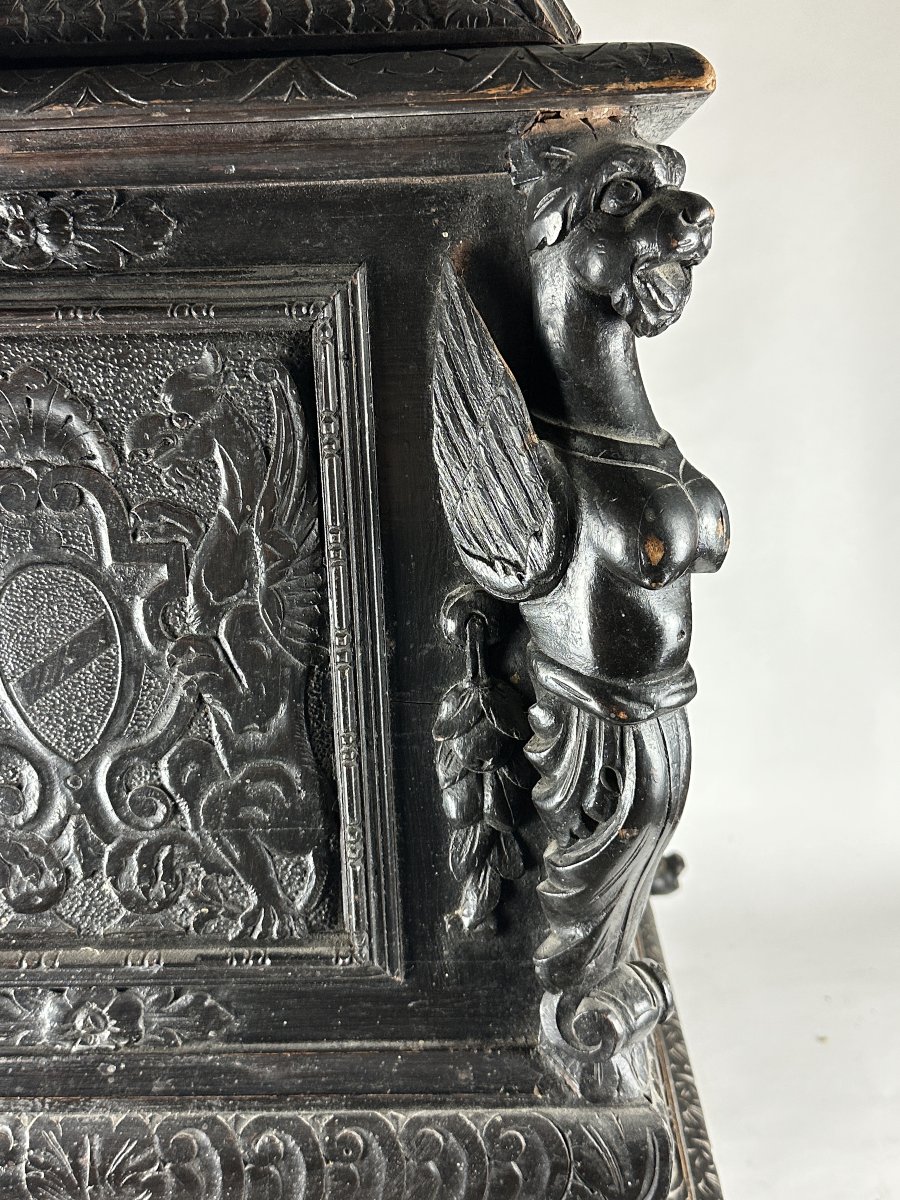
This piece is not limited to the traditional form of a chest. Its design is based on a true architectural organization: a powerful, molded, and sculpted base supports a cubic body, structured like a façade, which is itself surmounted by a lid with sloping sides resembling a small roof or a monumental crown. This compact, vertical construction lends it an almost funerary presence, as if a Renaissance stone monument had been scaled down to the size of a piece of furniture. The fantastical figures placed at the corners visually serve as end pieces or caryatids, supporting the main body and accentuating this impression of miniature architecture. The ensemble creates a beautiful, whimsical design.
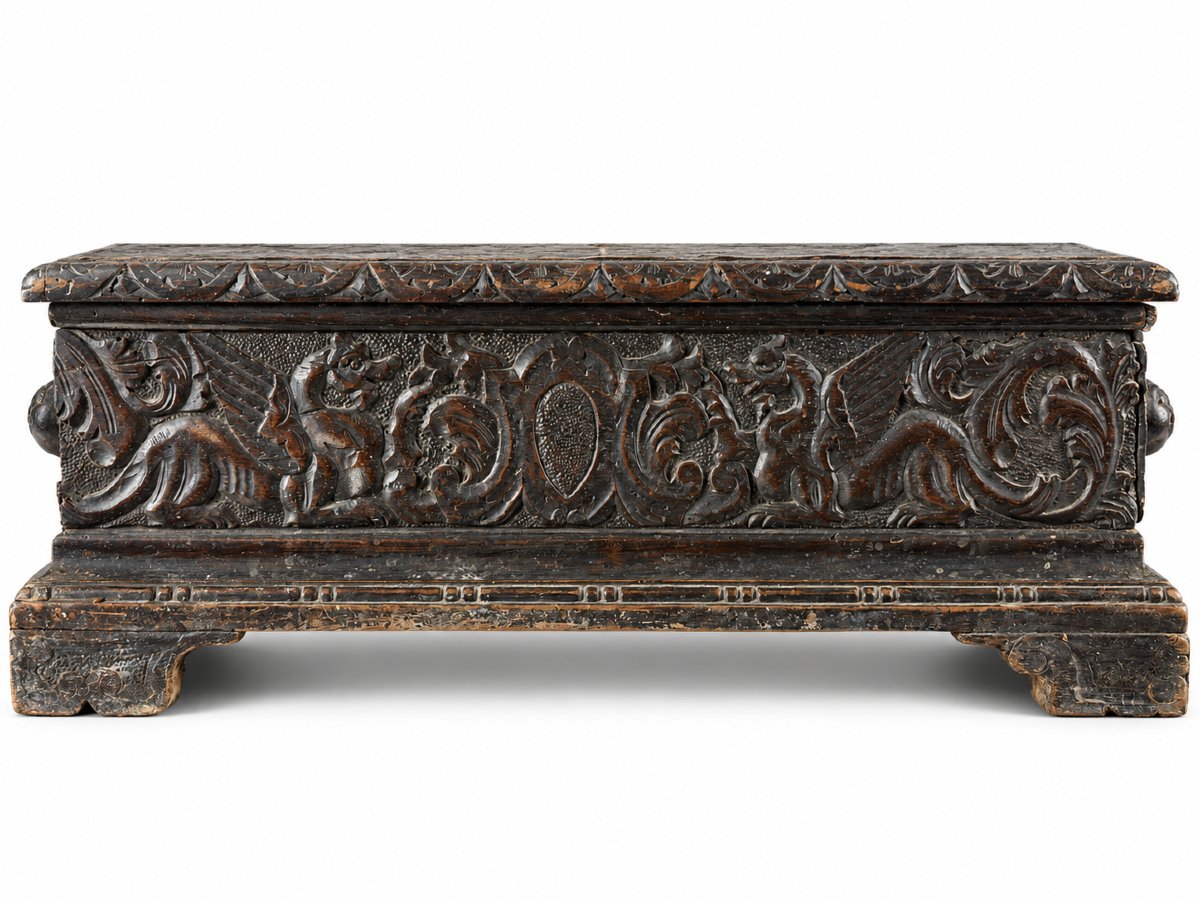
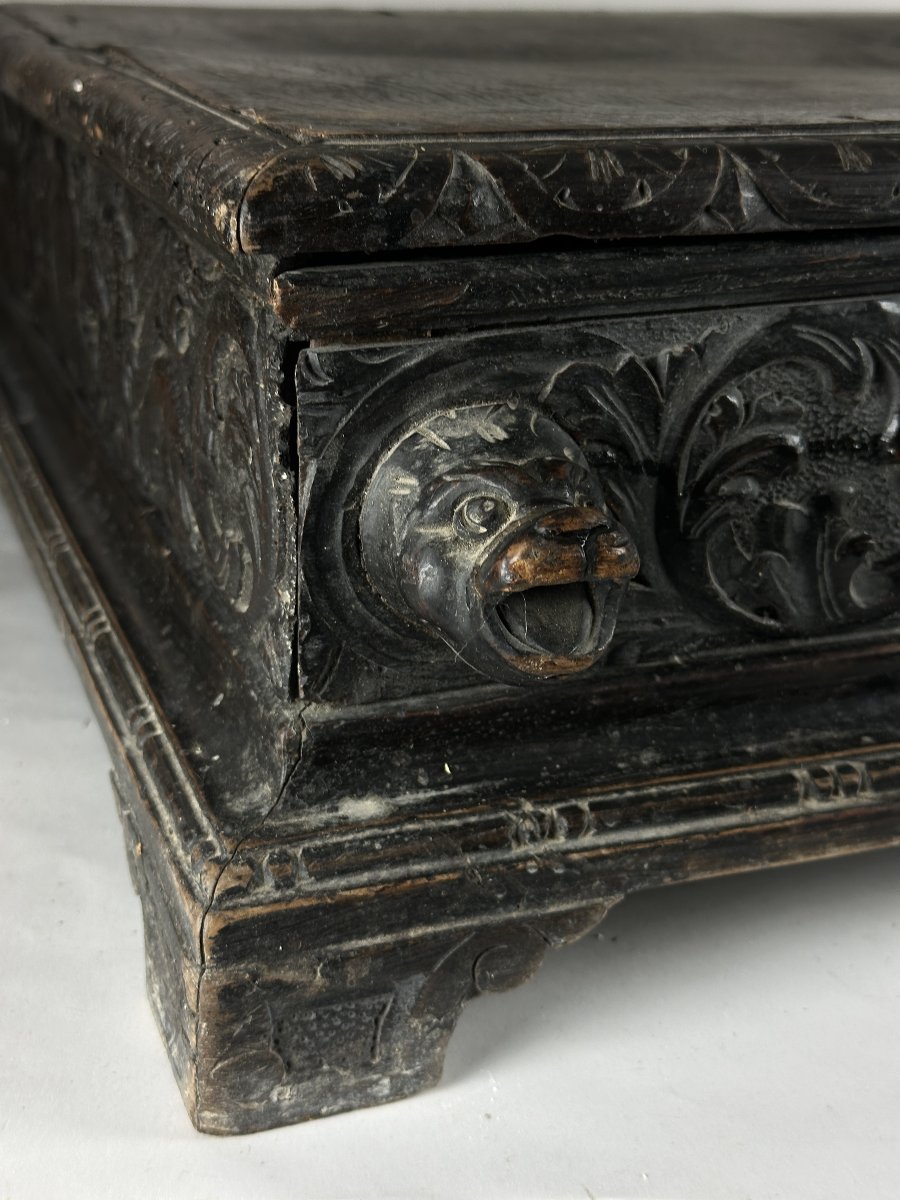
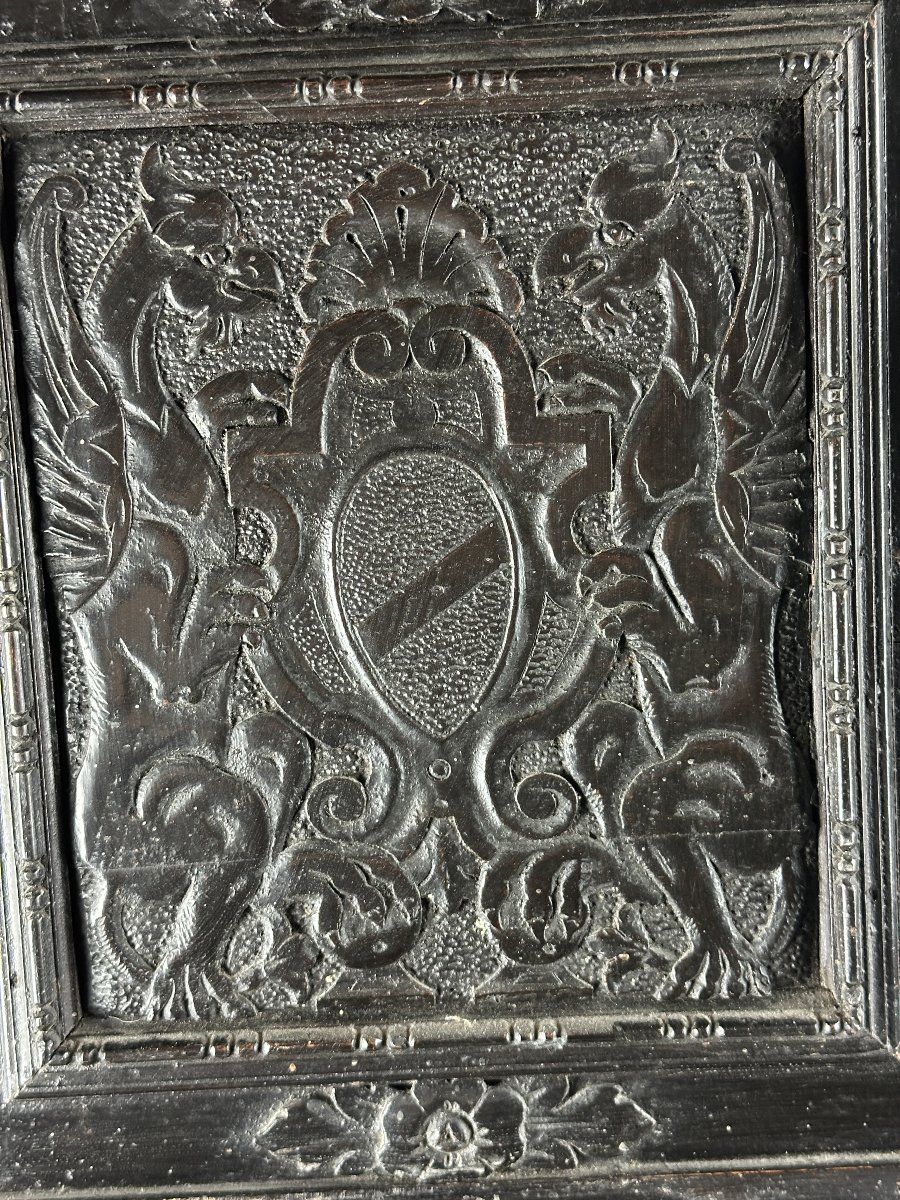
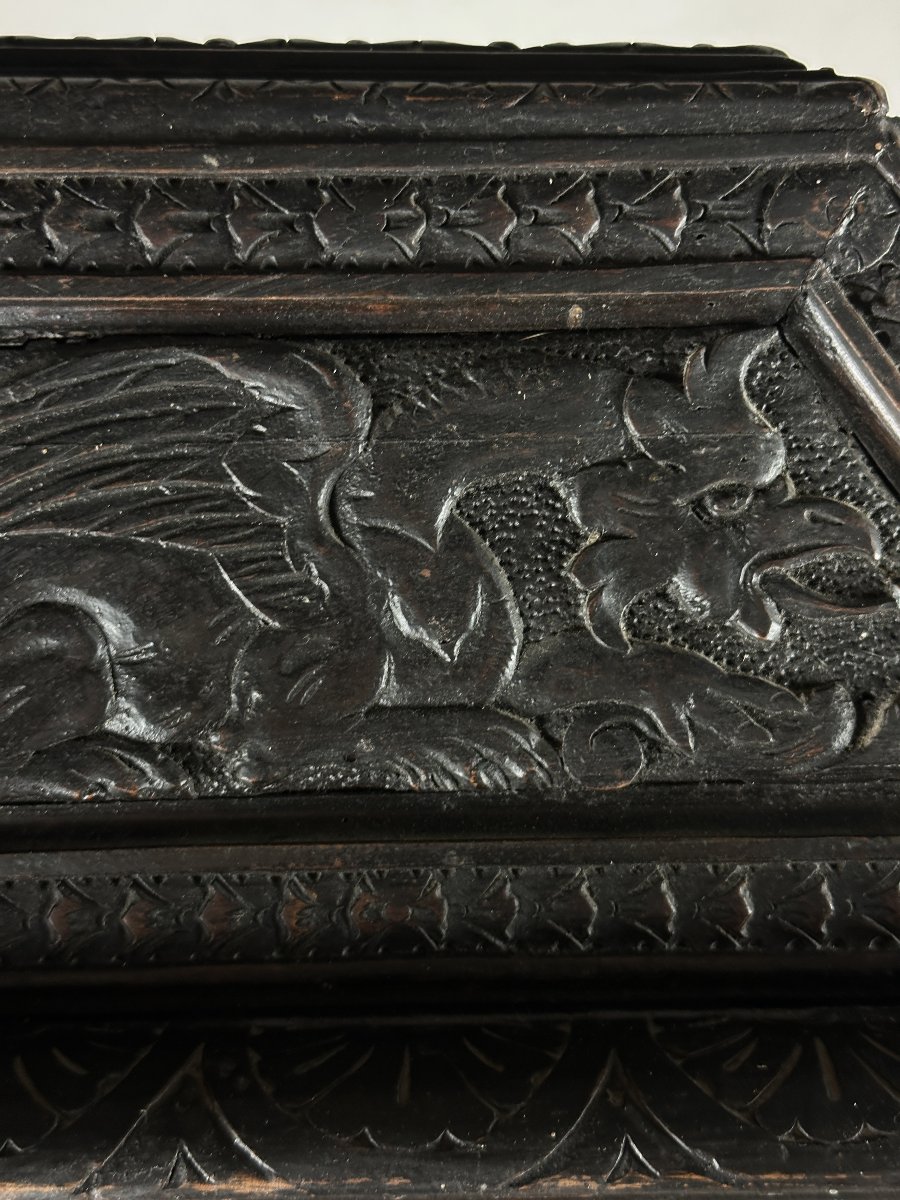
The decoration is highly free-form. Dragons, griffins, chimeras, fantastical birds, sphinxes, grotesques, scrollwork, foliage, and mascarons adorn every surface. The animals interact in opposing compositions arranged around heraldic shields and cartouches, creating a veritable imaginary bestiary. The large winged figures on the legs—with feminine bodies and fantastical heads—extend into plant scrolls and hanging foliage. The animal heads protruding from the base, with their wide-open mouths, further enhance the piece’s theatrical and fantastical character.
The structure and decorative vocabulary directly evoke the furniture of the Second French and Burgundian Renaissance, particularly the world of Hugues Sambin, an architect, sculptor, and furniture designer active in the 16th century. In his furniture, Sambin developed a language in which architecture, sculpture, and ornamentation merge: caryatids, architectural orders, fantastical figures, chimeras, and grotesques themselves become the supporting elements of the piece. This chest embodies the same desire to transform furniture into sculpted architecture, but with a decorative freedom characteristic of late-19th-century historicist taste. It is therefore not a slavish copy of an identified Renaissance piece of furniture, but rather a skillful reinterpretation drawing on the repertoire of Sambin, the Burgundian Renaissance, ceremonial cabinets, and monumental 16th-century furniture.
The silhouette’s almost funerary appearance is worth noting. The wide base, the superimposed sections, the truncated gable crown, and the frontal arrangement of the panels are reminiscent, in their composition, of certain Renaissance tombs, cenotaphs, commemorative monuments, or scaled-down funerary architecture. The piece thus appears to be halfway between a chest, a ceremonial cabinet, and an architectural model, which gives it a very distinctive presence.
Western Europe, France, or Italy, within the context of late 19th-century Neo-Renaissance historicist furniture. The combination of architectural construction, corner figures, fantastical beasts, and heraldic decoration strongly evokes the French taste for the Burgundian Renaissance and the furniture of Fontainebleau.
Dimensions: approximately 100 × 70 × 50 cm.
Period: late 19th century–early 20th century, circa 1880–1900.
Explore similar pieces and discover your ideal find:
Trunks, Chests