

Marcel “nino” Pajot - The Day After Carnival In Venice
Marcel “Nino” PAJOT
(Vergt, 1945)
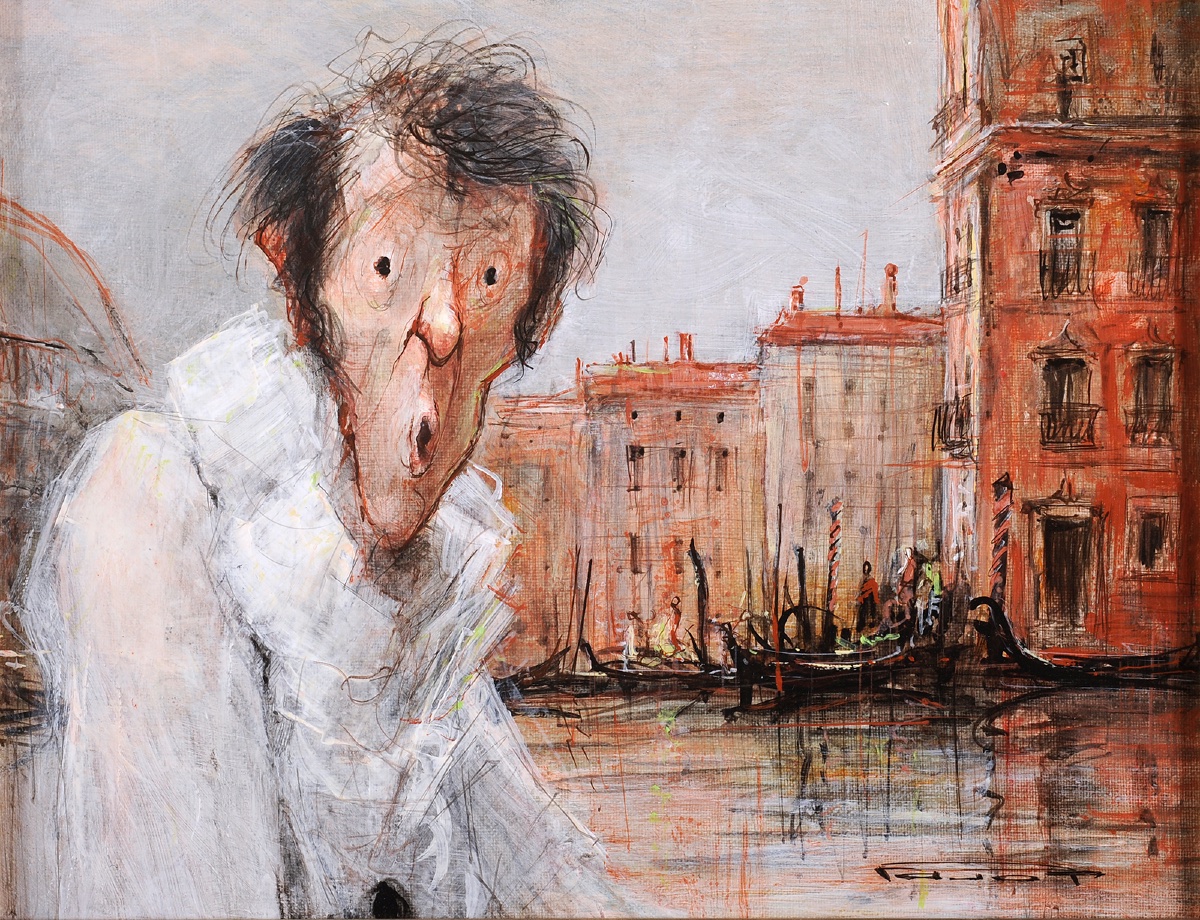
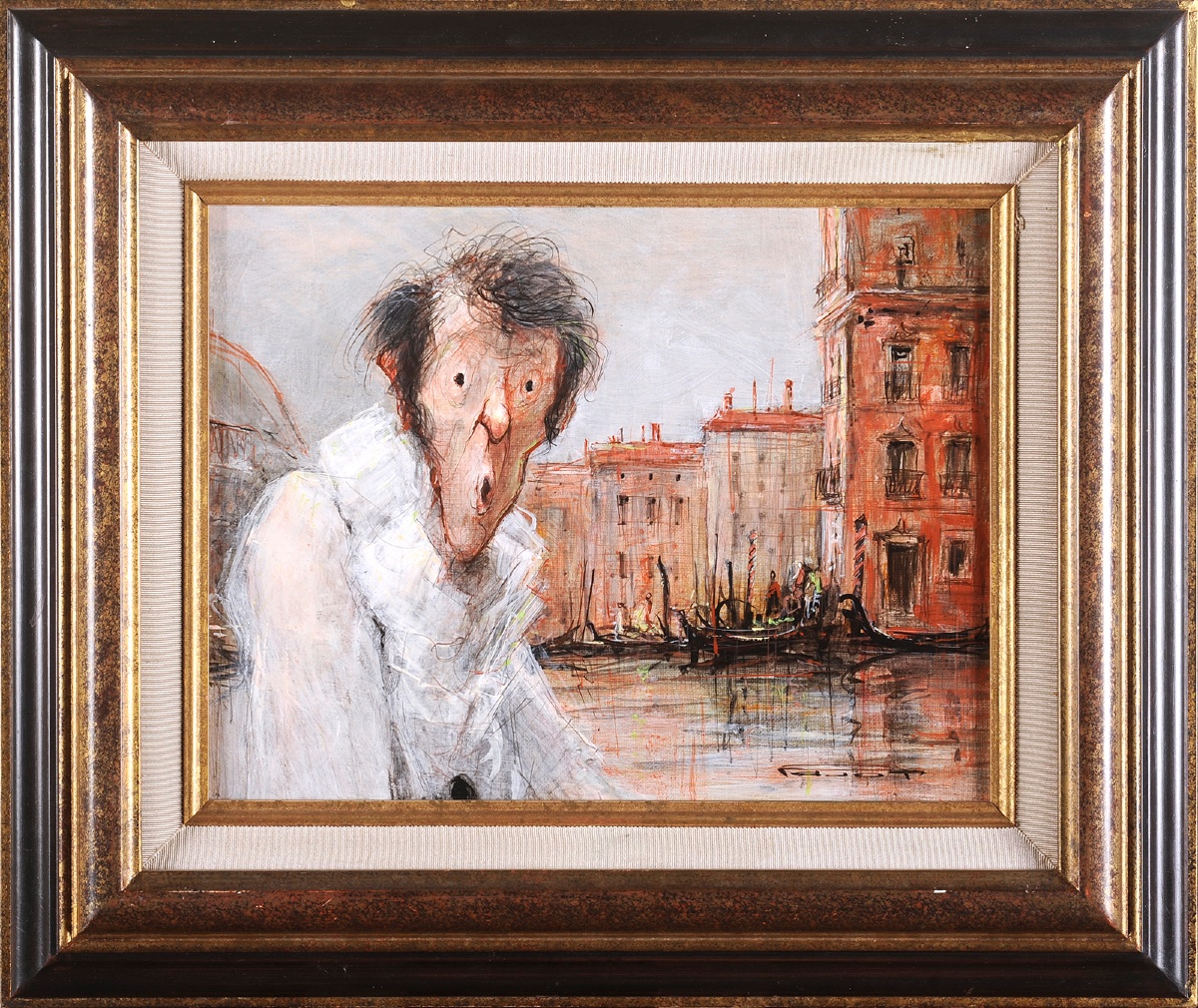
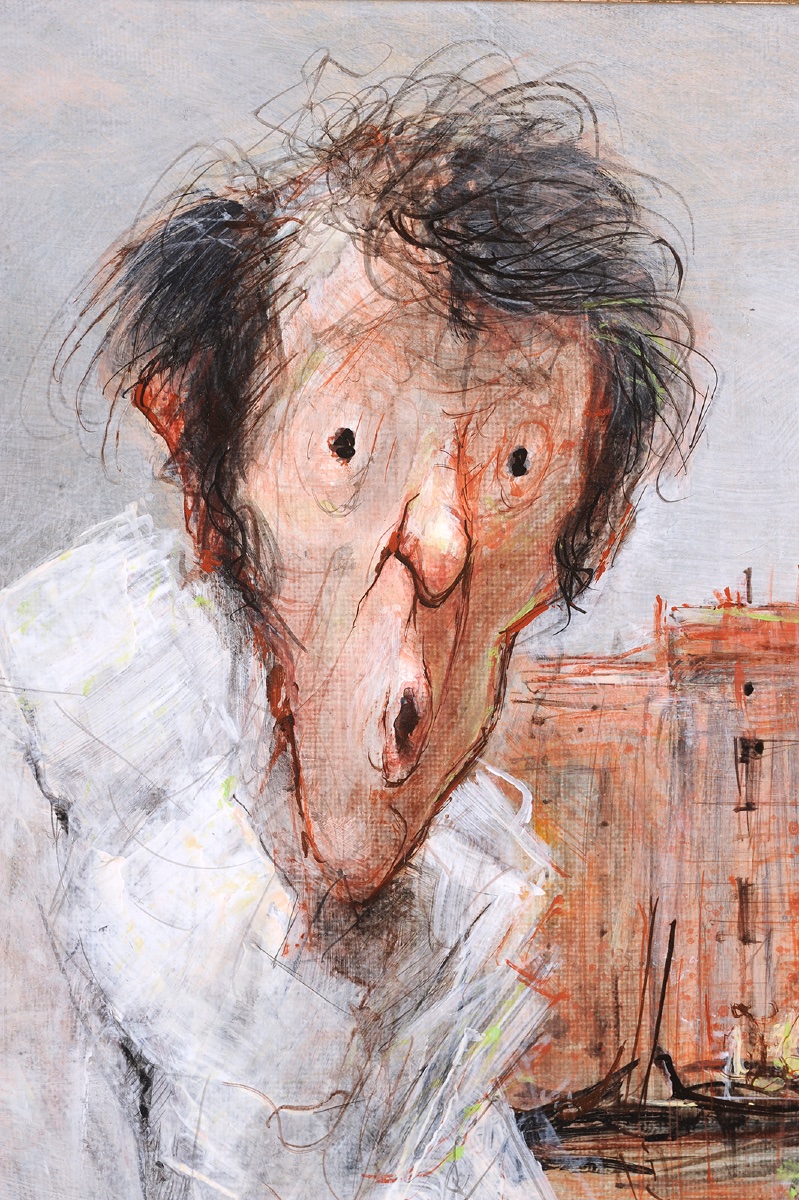
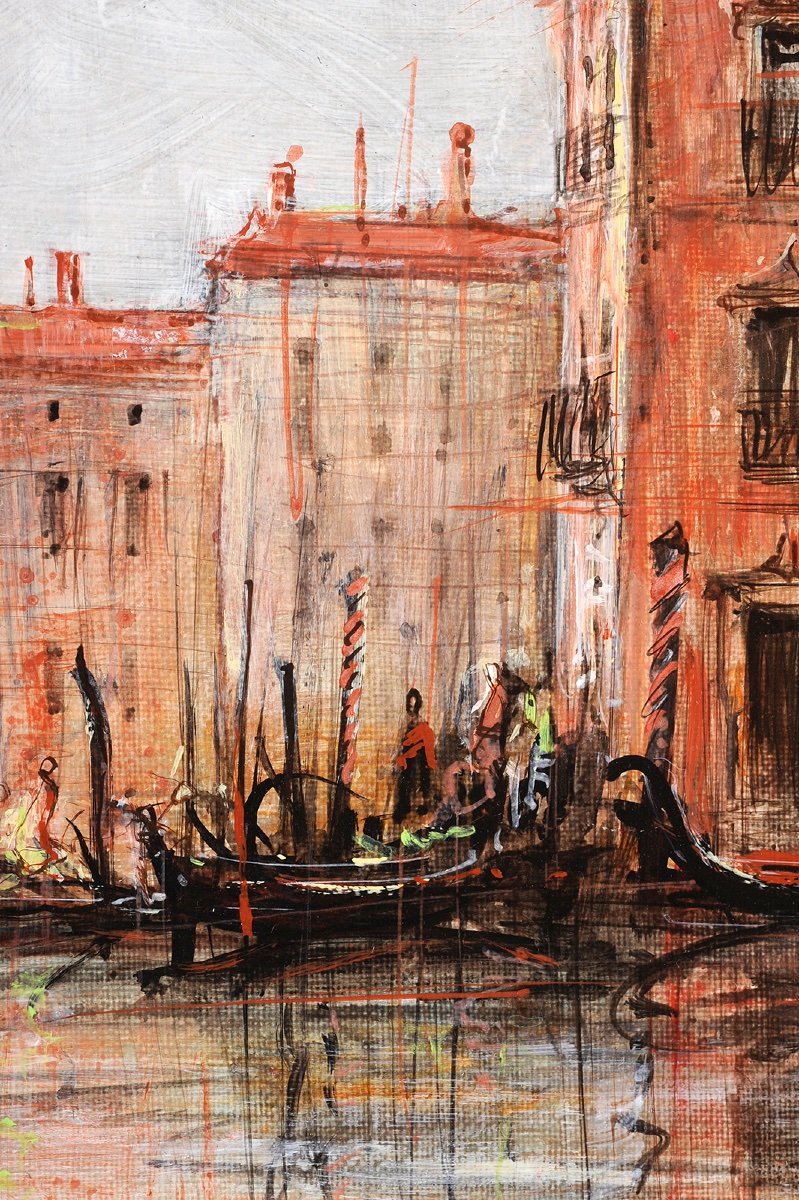
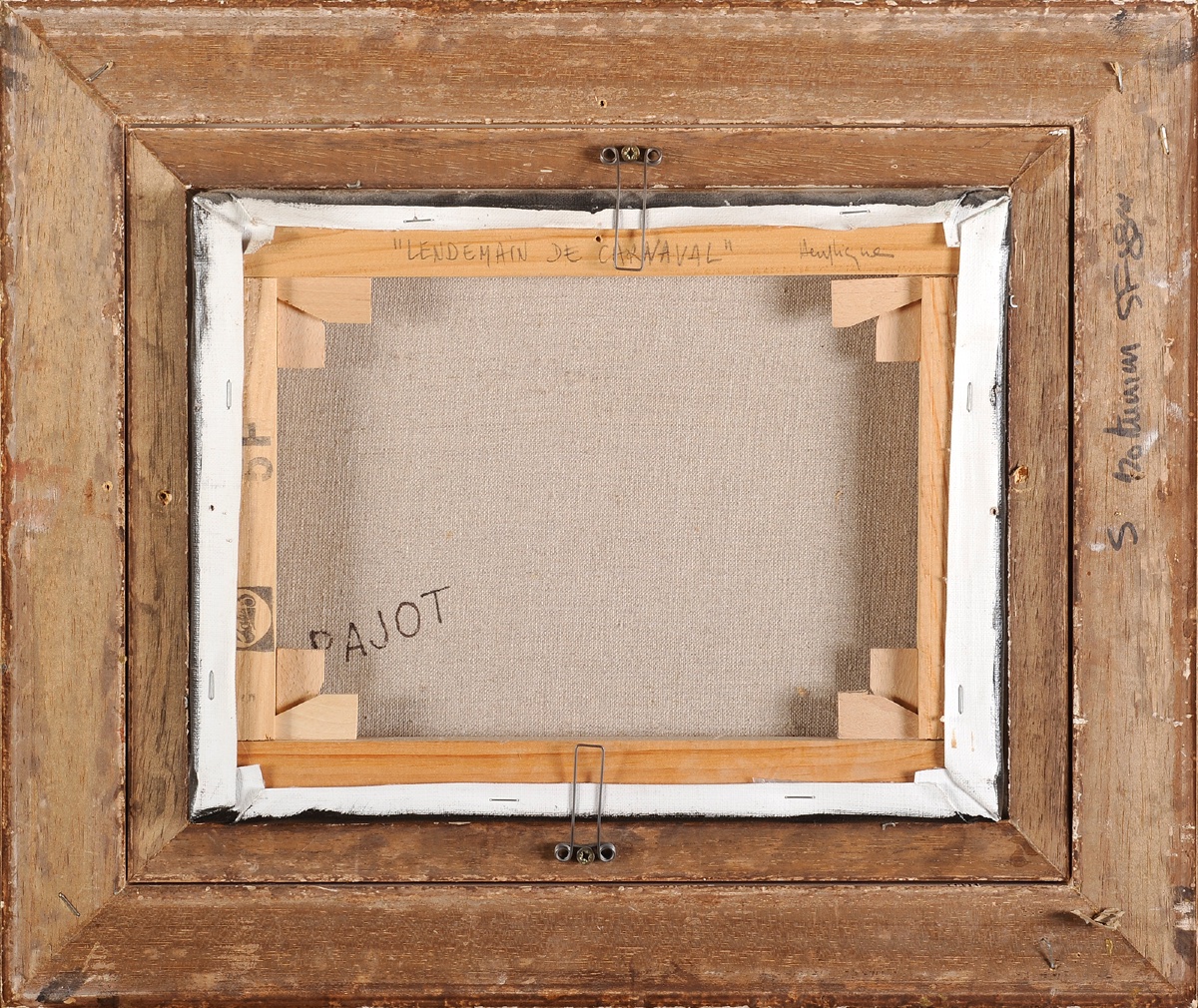
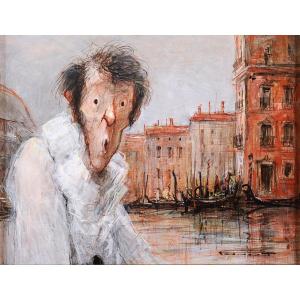
The Day After Carnival
Mixed media on canvas
H. 25 cm; W. 33.5 cm
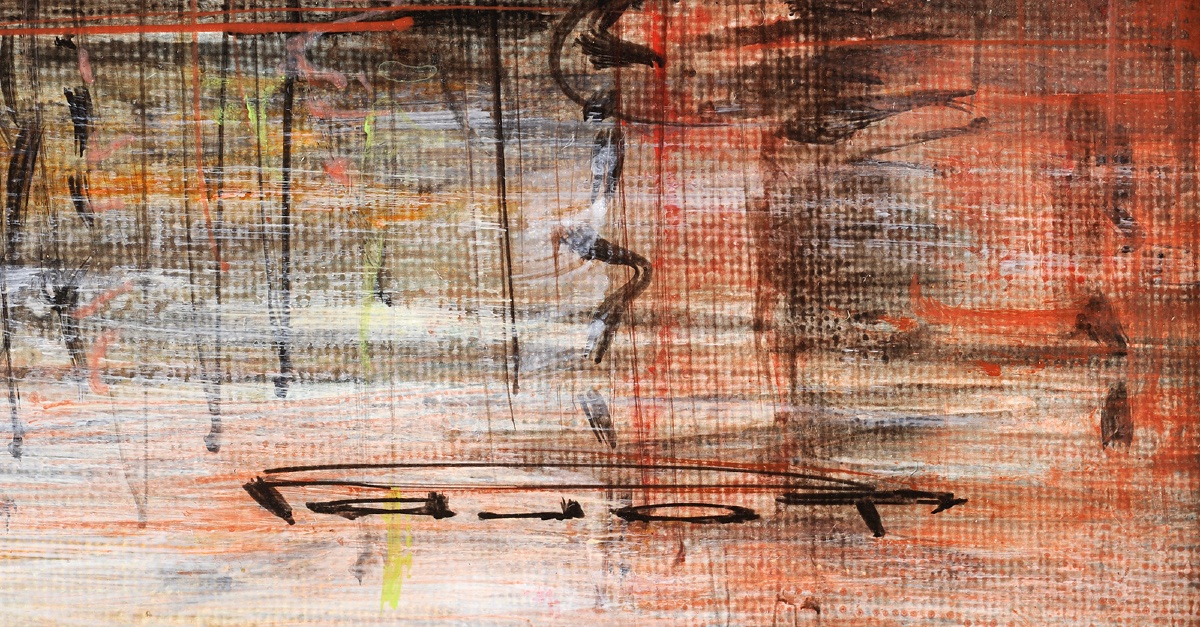
Signed lower right
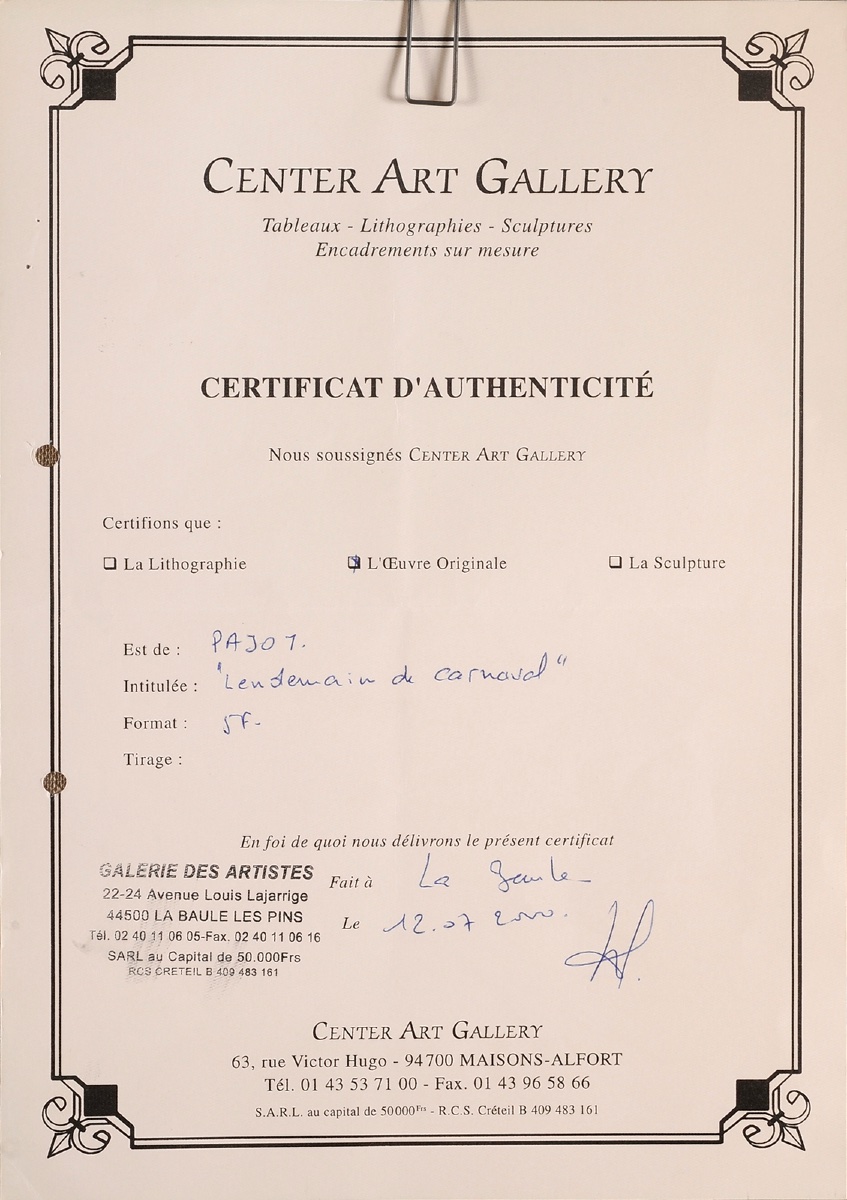
Provenance: 2000, La Baule, Galerie des Artistes
From childhood onward, Marcel Pajot embraced and nurtured the gift passed down by his mother, Reine Pajot-Védry—herself born in Vergt—whose sculptures and terracotta works bear the mark of a rare sensitivity and a deeply felt connection to the material. From this silent legacy emerged an early, almost organic calling.
Self-taught, Marcel Pajot shaped his artistic vision through his encounters with artists—both amateurs and established professionals—at the Atelier de la Société des Beaux-Arts du Périgord, founded in 1978 by Jean-Daniel Ribeyrol and Paul-André Enard. There, in this space of shared learning and high standards, he refined a personal pictorial style, rooted in observation and intuition.
When he exhibited for the first time in 1981, in the simplicity of a Périgord village, it was not so much a debut as a first revelation of his inner explorations. For Marcel Pajot, the motif is never more than a threshold. It opens onto a relentless quest for nuance, an almost meditative repetition of forms and tones: deepening black to the abyss, softening gold to a whisper, making light vibrate with its most fragile intensity.
His series devoted to Venice and its festivities bear witness to this: the city is not depicted there, but dissolved, reinvented through play and subject matter, as if it were nothing more than a suspended memory. Conversely, the figure of Don Quixote, to whom he returns tirelessly, runs through his work like a haunting presence—a wandering silhouette, fragile and magnificent, the embodiment of an impossible yet necessary quest.
Though rarer, his landscapes of the Périgord nevertheless anchor his work in his homeland. They connect him to the discreet, almost secret tradition of a Périgord school where light, mass, and silence matter more than the picturesque. Here again, it is not a matter of representing, but of revealing a depth, a density of the world.
Thus, under the guise of forms, Marcel Pajot pursues a more fundamental inquiry. He watches for the passing of masks, questions the figures, and scrutinizes the moment when the visible wavers. And in this tension between appearance and disappearance, it is always the human condition that comes to the surface—fragile, uncertain, infinitely moving.
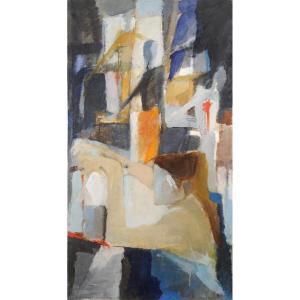
Our painting, part of this vast Venetian series, is the portrait of a man who has spent a long night of revelry in the isolated city. This subject is rare in this extensive body of work, where we are more accustomed to colorful masks and costumes.
Period: 20th century
Style: Modern Art
Condition: Perfect condition
Material: Oil painting
Length: 25 cm hors cadre
Width: 33,5 cm hors cadre
Reference (ID): 1838080
Availability: In stock