THIS OBJECT WAS SOLD
Dirk Meesters (1899–1950) / The Farrer / Stable Interior With Horses, Circa 1940


DIRK MEESTERS (1899-1950) THE FARRIER
STABLE INTERIOR WITH HORSES, CIRCA 1940
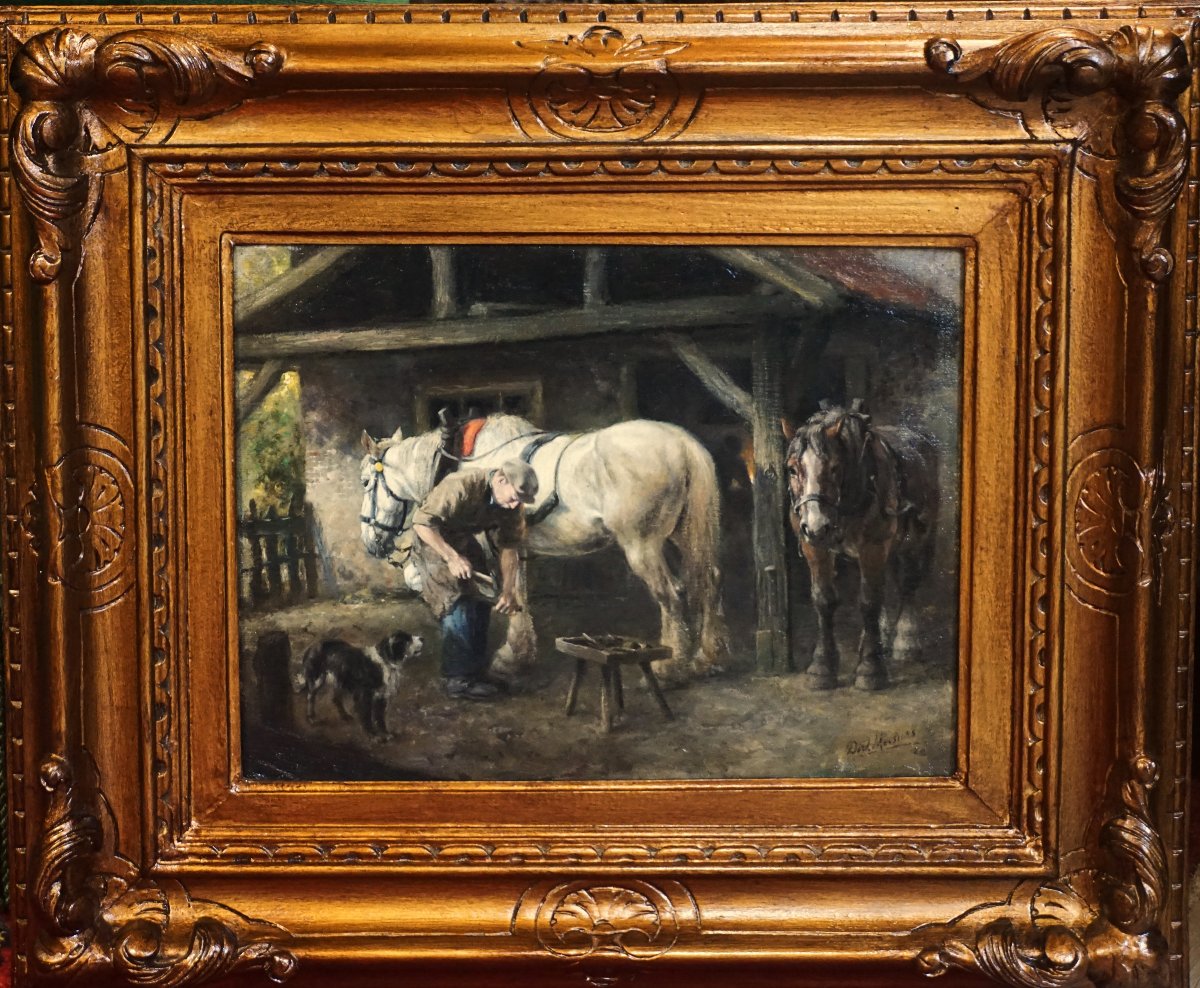
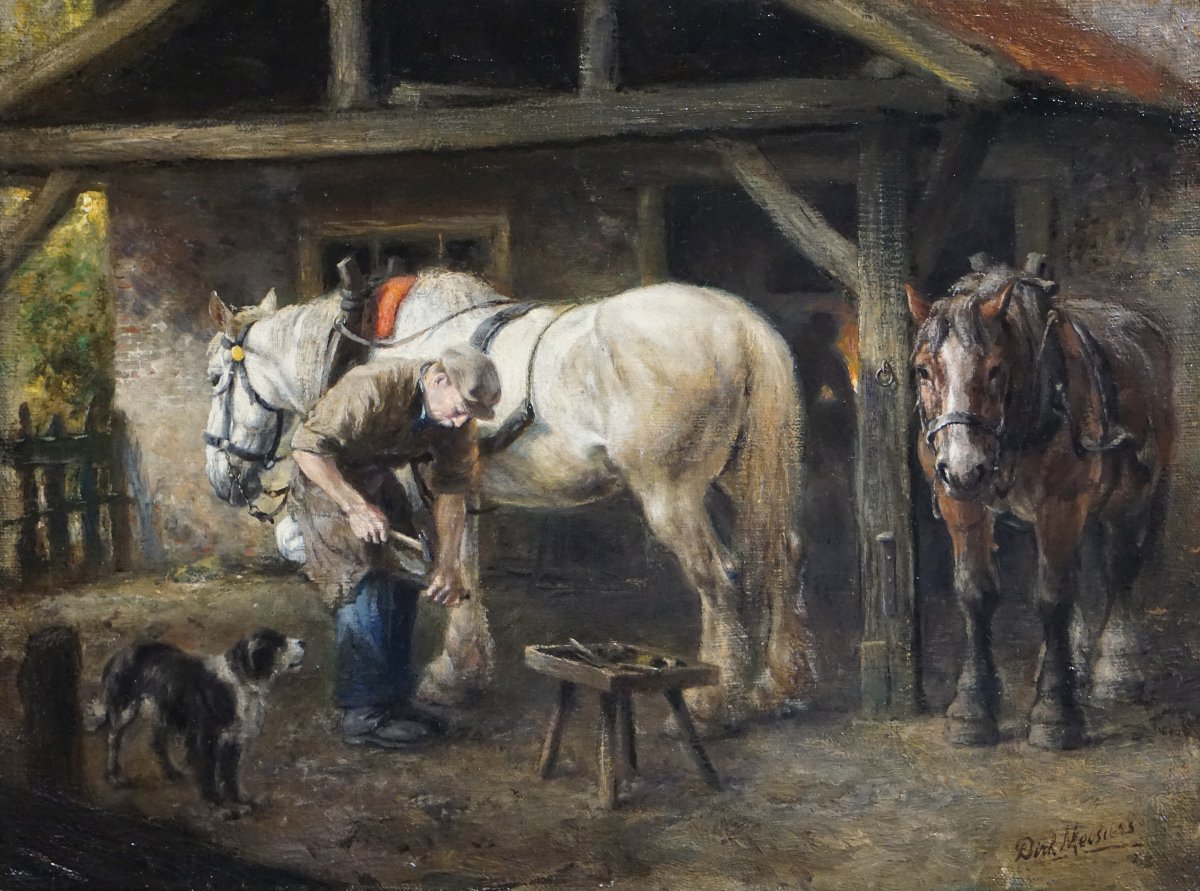
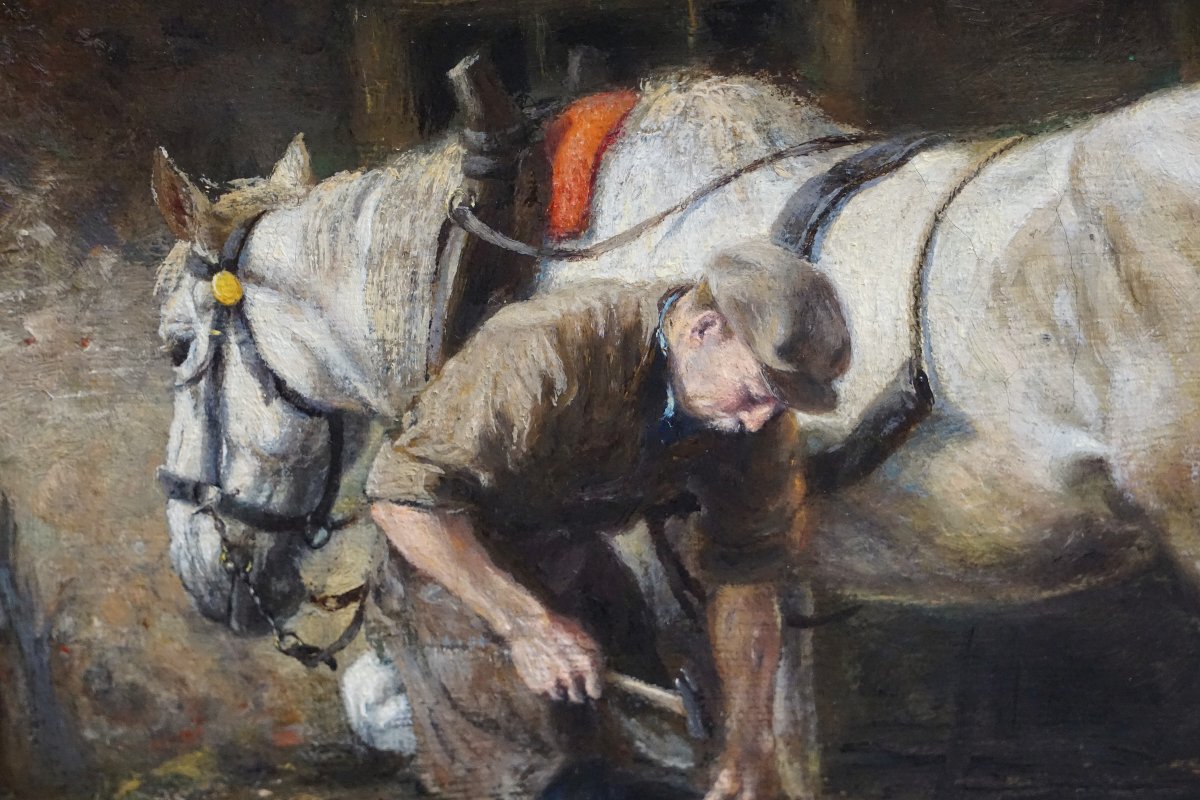
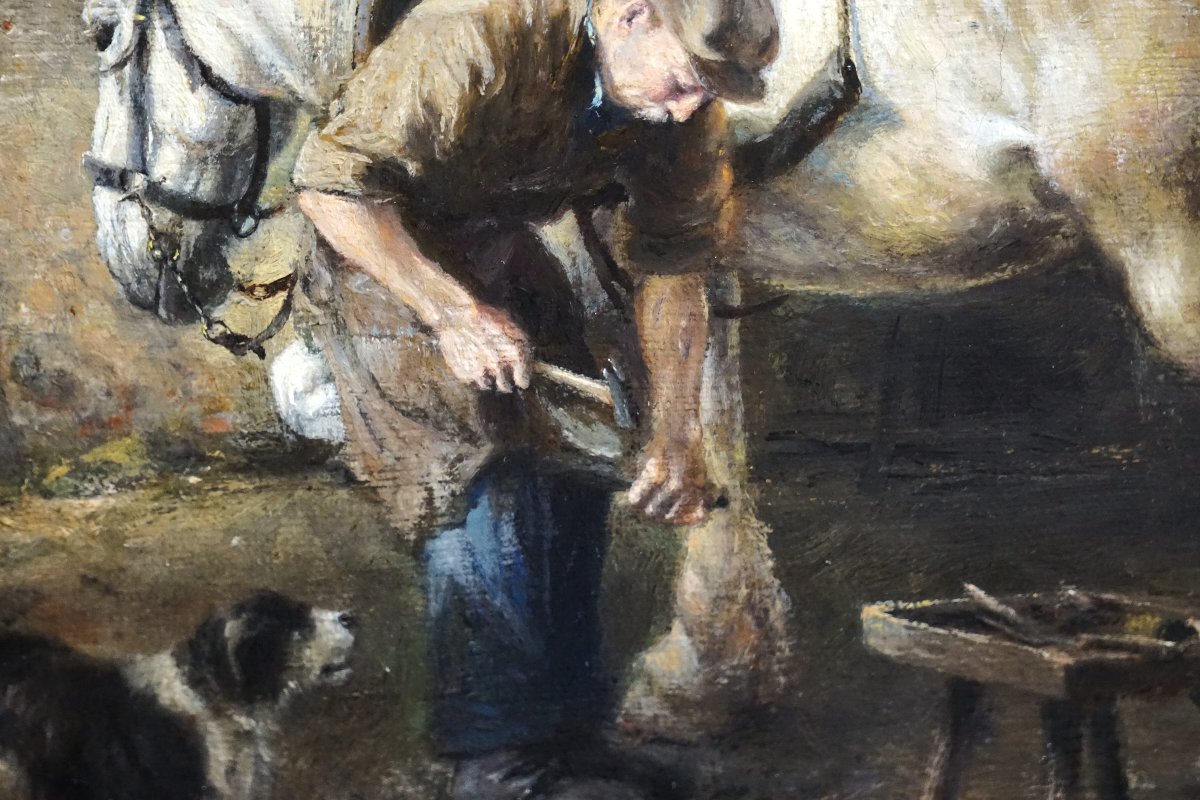
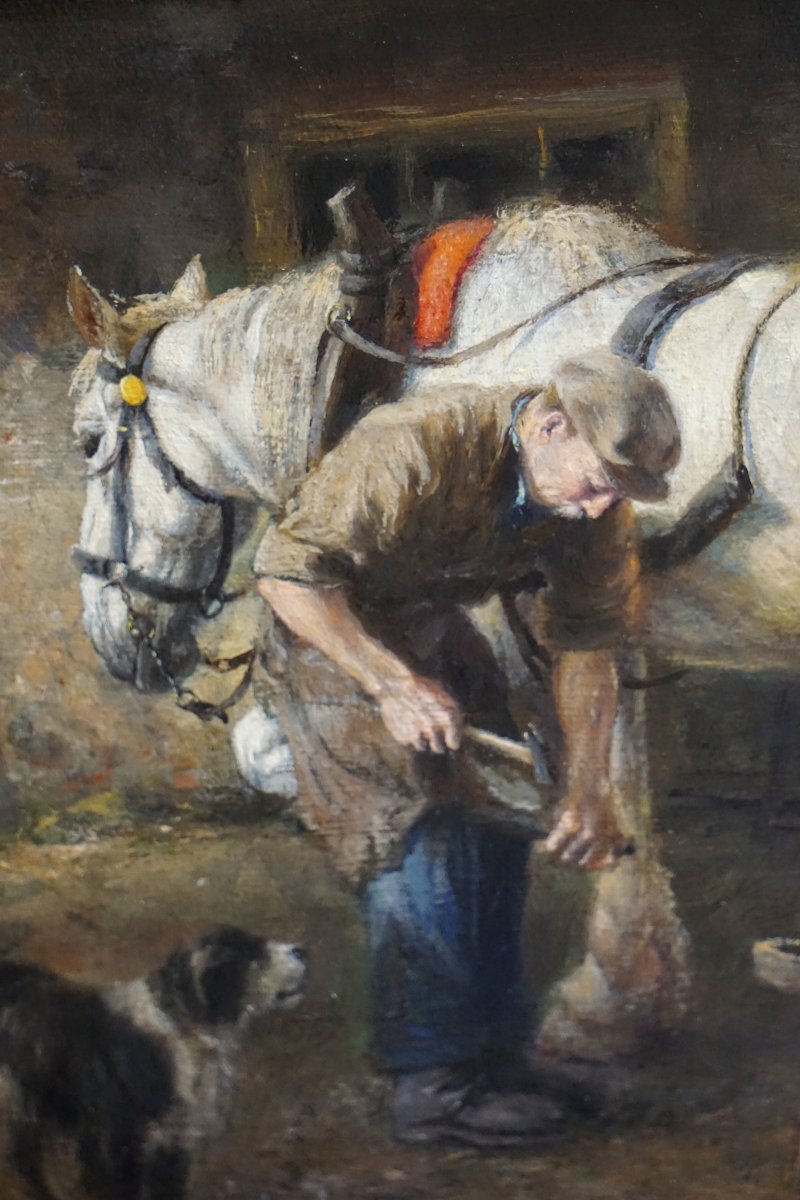
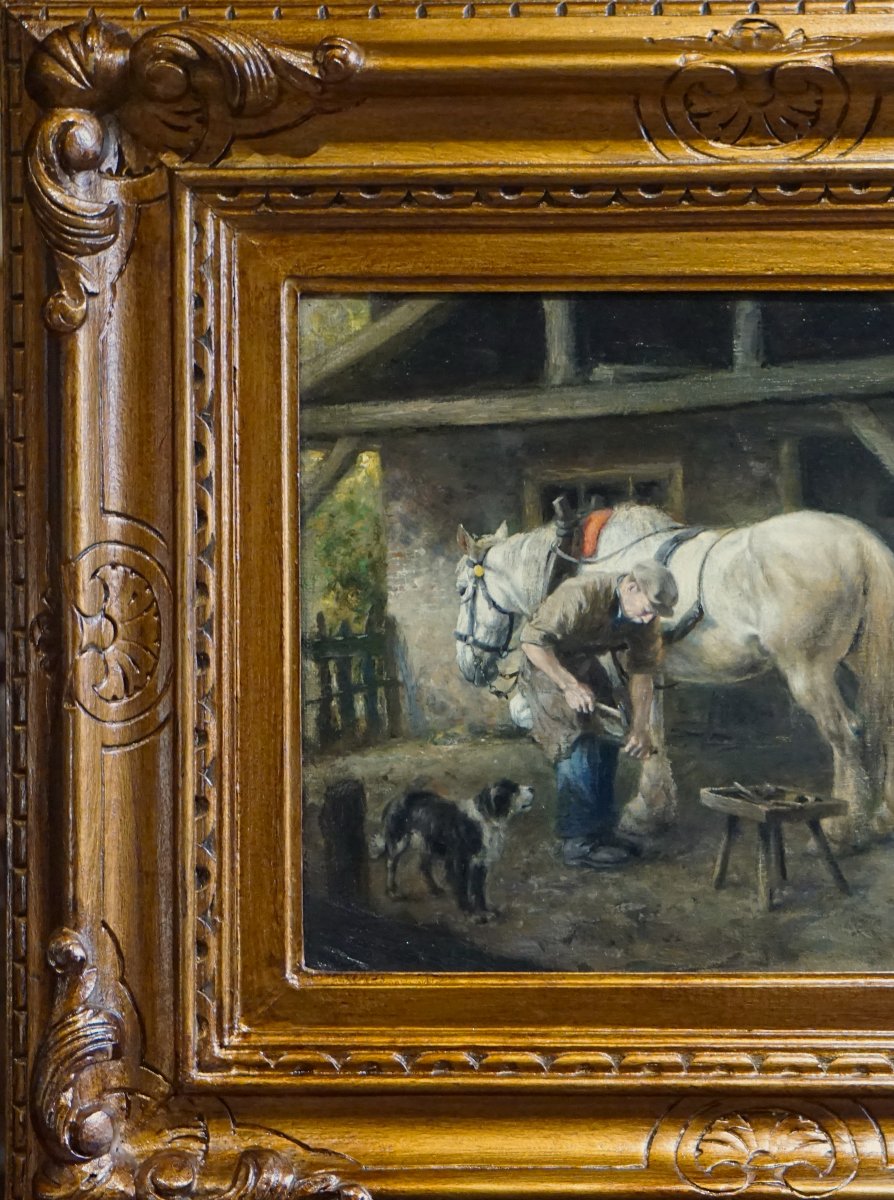
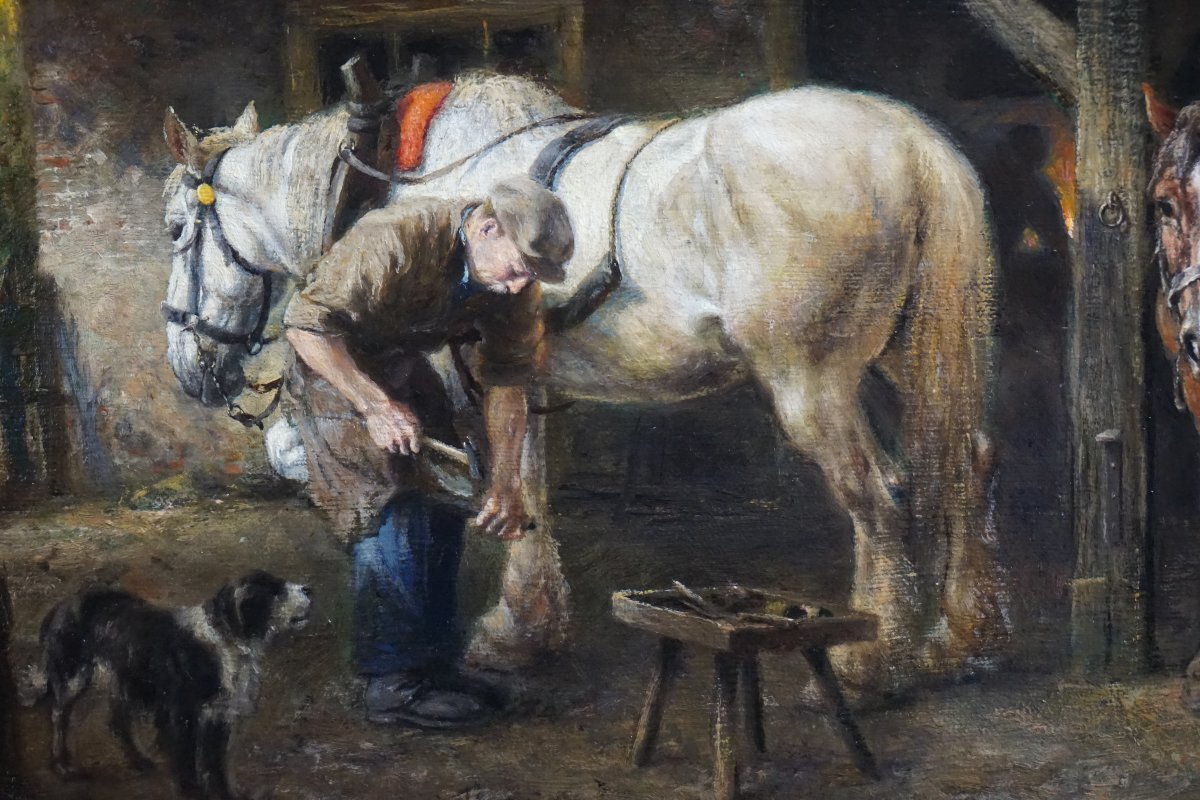
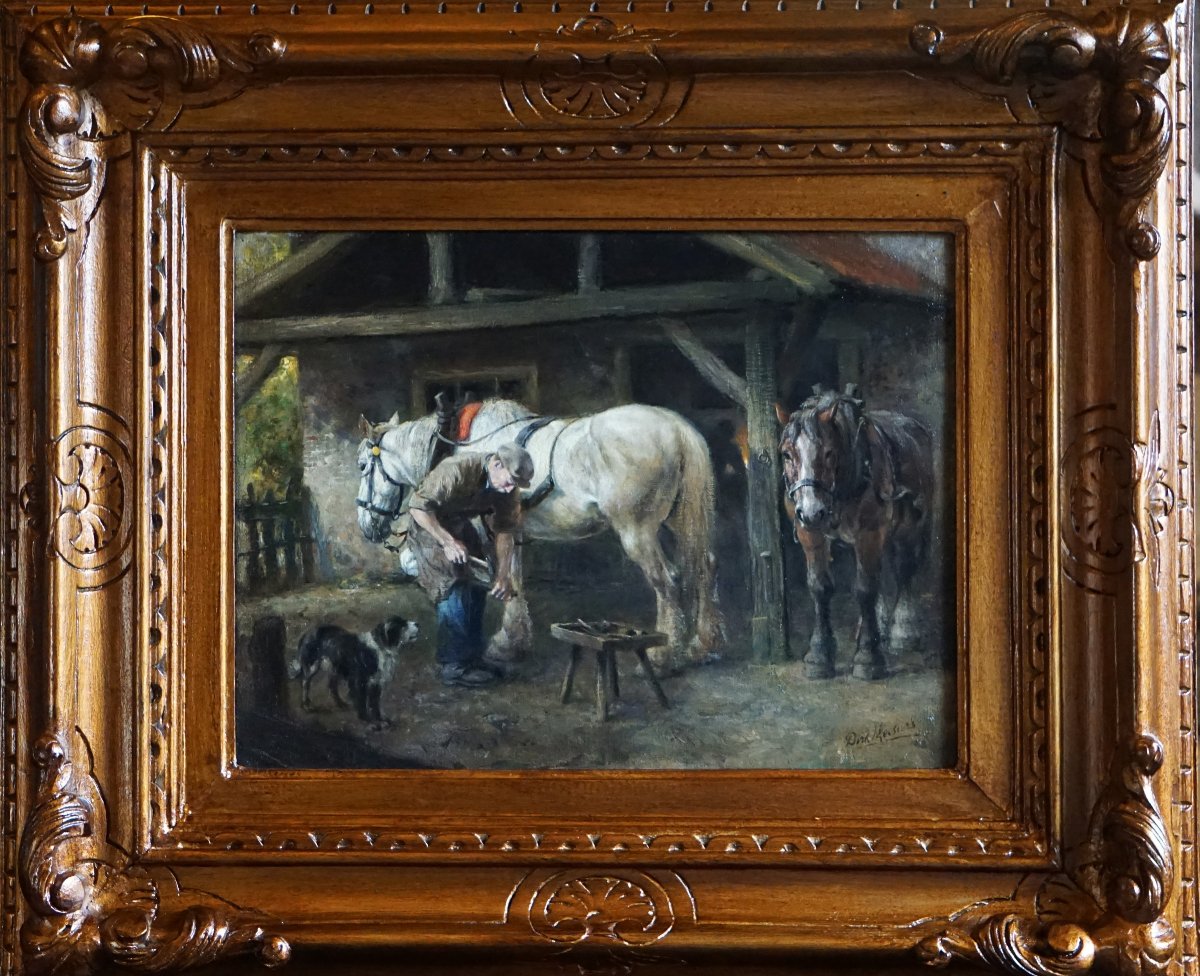
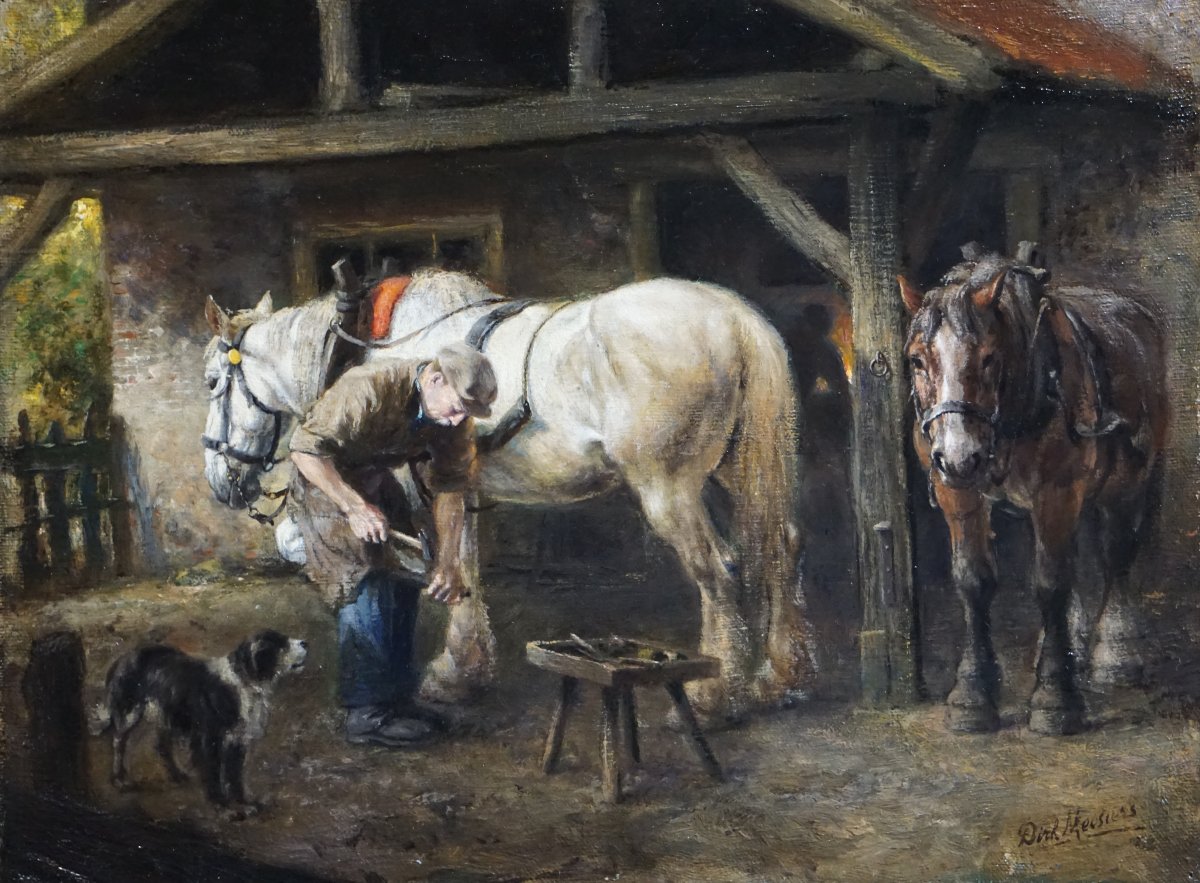
A beautiful oil on canvas by the Dutch painter Diederik, known as Dirk Meesters (1899–1950), depicting a farrier at work inside a stable. At the center of the composition, a powerful white horse occupies almost the entire space, while the farrier, leaning over the animal, works on one of its hooves.
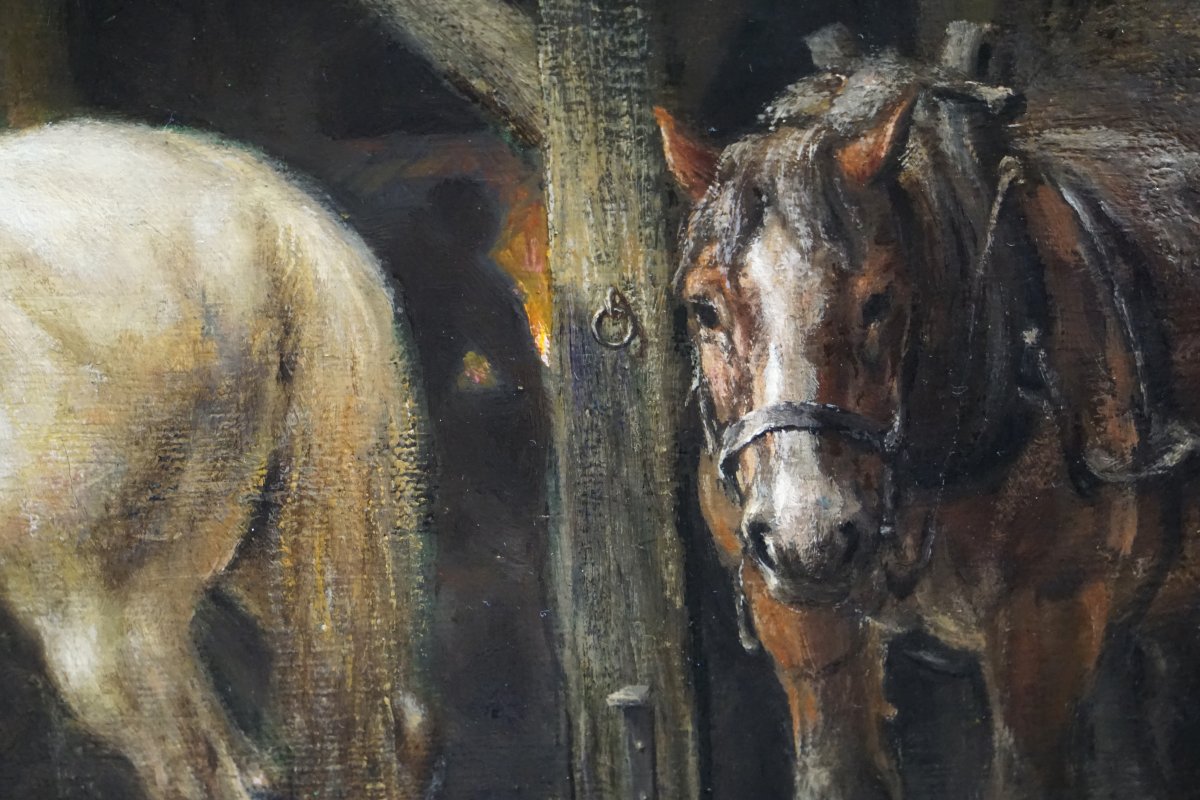
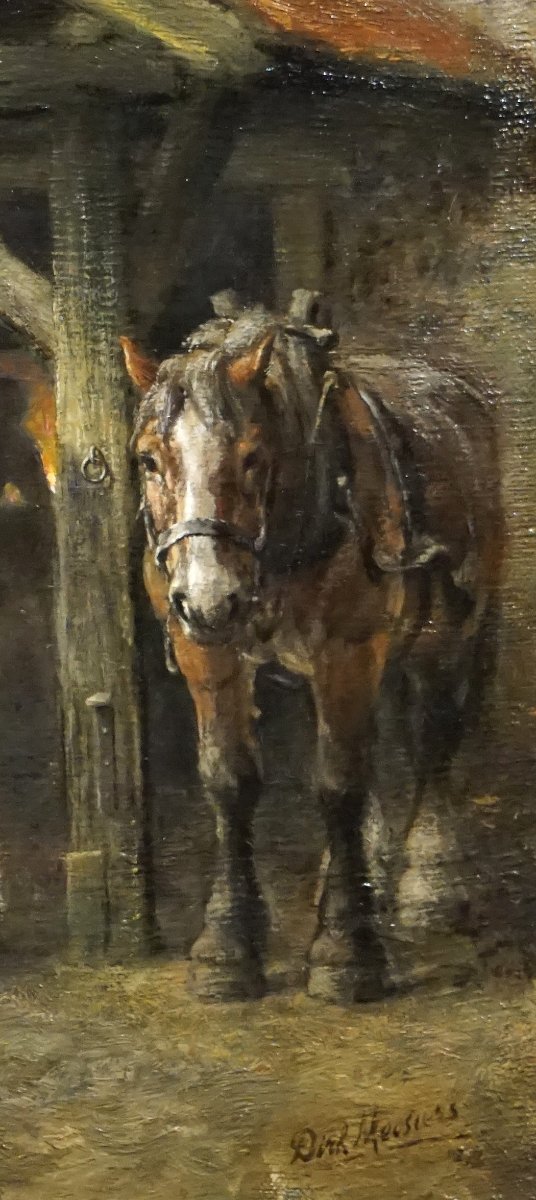
A second horse appears in the shadows on the right, while a dog, positioned in the foreground, completes this scene of rural life. The composition is particularly successful due to its treatment of light.Light streams into the stable through the large opening on the left, vividly illuminating the horse’s light coat as well as the farrier’s silhouette.
The artist thus plays on a beautiful contrast between the outdoor light and the deep brown and ochre tones of the stable’s interior. This work is particularly representative of Dirk Meesters’s body of work. Dutch biographical sources explicitly note his predilection for stable interiors featuring horses, which he depicts in a naturalistic and realistic style.
The rural world and the horse thus constitute one of the central themes of his work. The human presence here lends the subject a particularly vivid quality: Meesters does not limit himself to a simple animal portrait, but captures the everyday relationship between man, the workhorse, and the world of the stable. Stylistically, the work can be dated to around 1940, the artist’s mature period. Several comparable equestrian compositions are known from the early 1940s
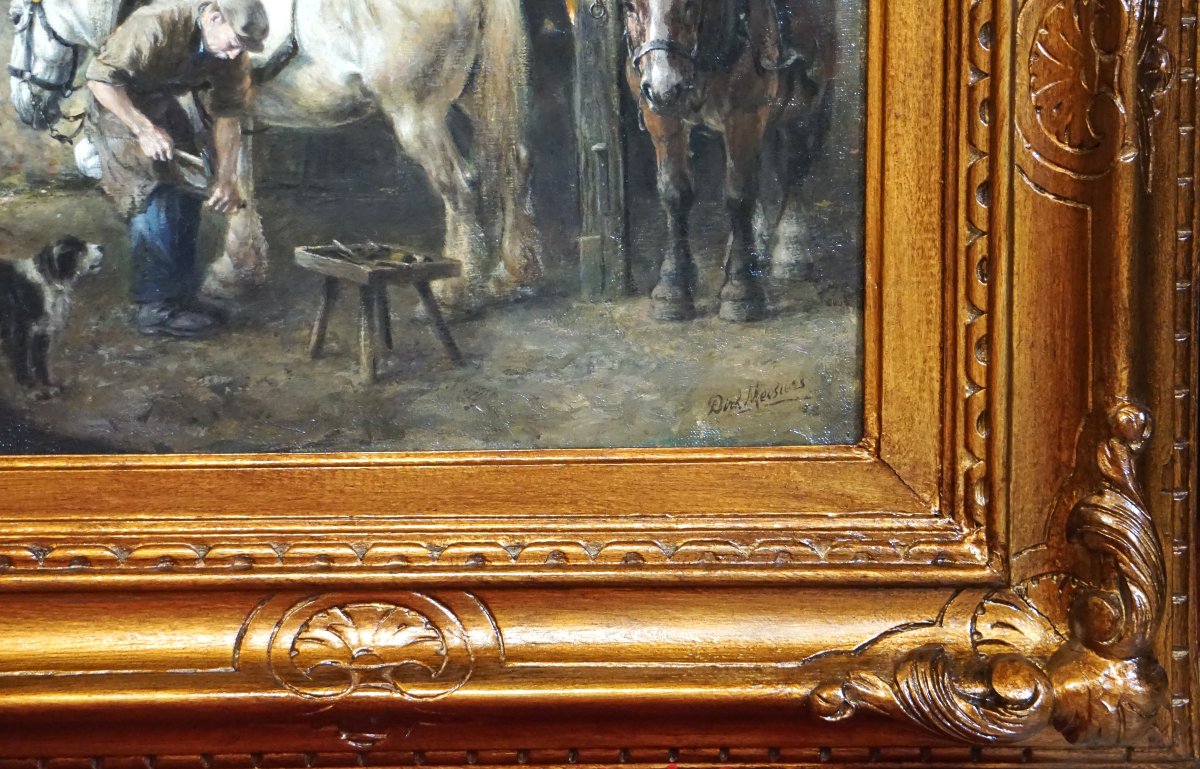
Signed “Dirk Meesters” in the lower right corner.
Canvas dimensions: 31 × 40 cm unframed / 55 × 64 cm framed.
Presented in a beautiful gilded frame with sculpted decoration.
DIEDERIK “DIRK ” MEESTERS (1899–1950)
Diederik, known as Dirk Meesters, was a Dutch painter and draftsman born in The Hague in 1899 and who died in Amsterdam in 1950. He received his artistic training at the Academy of Fine Arts in Rotterdam (Akademie van Beeldende Kunsten te Rotterdam). Throughout his career, Meesters lived and worked in several cities across the Netherlands, including The Hague, Dordrecht, Heerlen, and Heemstede. His work belongs to a figurative tradition that Dutch sources describe as naturalistic-realist. A keen observer of the rural world and animals, Meesters developed a particular fondness for horses and stable interiors, which constitute one of the most characteristic themes of his body of work. In these compositions, the artist readily exploits the effects produced by natural light streaming into farm buildings, causing horses and figures to emerge from the shadows. He also painted landscapes populated by livestock, scenes of rural labor, shellfish gatherers, and portraits.
The Amsterdam Museum holds, under inventory number SA 2643, a large oil on canvas measuring 110 × 160 cm, executed by Meesters after Théodore Géricault’s *The Raft of the Medusa*. The history of this work is unique: abandoned by German troops during their retreat at the end of World War II, it passed to the Stichting 1940–1945 before being donated to the museum in 1950. This large-scale work also demonstrates the breadth of his technical abilities, extending beyond the landscapes and equestrian scenes for which he remains best known. Dirk Meesters, who died in Amsterdam in 1950, belongs to that generation of Dutch painters from the first half of the 20th century who upheld a figurative and naturalistic tradition, placing particular emphasis on the observation of daily life, the rural world, and animals. Bibliography and references: Pieter A. Scheen, Lexicon Nederlandse Beeldende Kunstenaars 1750–1950; Simonis & Buunk archives and documentation, Netherlands; Amsterdam Museum / Collectie Nederland.
STABLE INTERIOR WITH HORSES, CIRCA 1940
A beautiful oil on canvas by the Dutch painter Diederik, known as Dirk Meesters (1899–1950), depicting a farrier at work inside a stable. At the center of the composition, a powerful white horse occupies almost the entire space, while the farrier, leaning over the animal, works on one of its hooves.
A second horse appears in the shadows on the right, while a dog, positioned in the foreground, completes this scene of rural life. The composition is particularly successful due to its treatment of light.Light streams into the stable through the large opening on the left, vividly illuminating the horse’s light coat as well as the farrier’s silhouette.
The artist thus plays on a beautiful contrast between the outdoor light and the deep brown and ochre tones of the stable’s interior. This work is particularly representative of Dirk Meesters’s body of work. Dutch biographical sources explicitly note his predilection for stable interiors featuring horses, which he depicts in a naturalistic and realistic style.
The rural world and the horse thus constitute one of the central themes of his work. The human presence here lends the subject a particularly vivid quality: Meesters does not limit himself to a simple animal portrait, but captures the everyday relationship between man, the workhorse, and the world of the stable. Stylistically, the work can be dated to around 1940, the artist’s mature period. Several comparable equestrian compositions are known from the early 1940s
Signed “Dirk Meesters” in the lower right corner.
Canvas dimensions: 31 × 40 cm unframed / 55 × 64 cm framed.
Presented in a beautiful gilded frame with sculpted decoration.
DIEDERIK “DIRK ” MEESTERS (1899–1950)
Diederik, known as Dirk Meesters, was a Dutch painter and draftsman born in The Hague in 1899 and who died in Amsterdam in 1950. He received his artistic training at the Academy of Fine Arts in Rotterdam (Akademie van Beeldende Kunsten te Rotterdam). Throughout his career, Meesters lived and worked in several cities across the Netherlands, including The Hague, Dordrecht, Heerlen, and Heemstede. His work belongs to a figurative tradition that Dutch sources describe as naturalistic-realist. A keen observer of the rural world and animals, Meesters developed a particular fondness for horses and stable interiors, which constitute one of the most characteristic themes of his body of work. In these compositions, the artist readily exploits the effects produced by natural light streaming into farm buildings, causing horses and figures to emerge from the shadows. He also painted landscapes populated by livestock, scenes of rural labor, shellfish gatherers, and portraits.
The Amsterdam Museum holds, under inventory number SA 2643, a large oil on canvas measuring 110 × 160 cm, executed by Meesters after Théodore Géricault’s *The Raft of the Medusa*. The history of this work is unique: abandoned by German troops during their retreat at the end of World War II, it passed to the Stichting 1940–1945 before being donated to the museum in 1950. This large-scale work also demonstrates the breadth of his technical abilities, extending beyond the landscapes and equestrian scenes for which he remains best known. Dirk Meesters, who died in Amsterdam in 1950, belongs to that generation of Dutch painters from the first half of the 20th century who upheld a figurative and naturalistic tradition, placing particular emphasis on the observation of daily life, the rural world, and animals. Bibliography and references: Pieter A. Scheen, Lexicon Nederlandse Beeldende Kunstenaars 1750–1950; Simonis & Buunk archives and documentation, Netherlands; Amsterdam Museum / Collectie Nederland.
Explore similar pieces and discover your ideal find:
Genre Scenes, Nudes