

Roger Desserprit (1923–1985) / Geometric Abstract Drawing, 1971
Artist: Roger Desserprit (1923-1985)
ROGER DESSERPRIT (1923–1985) 7
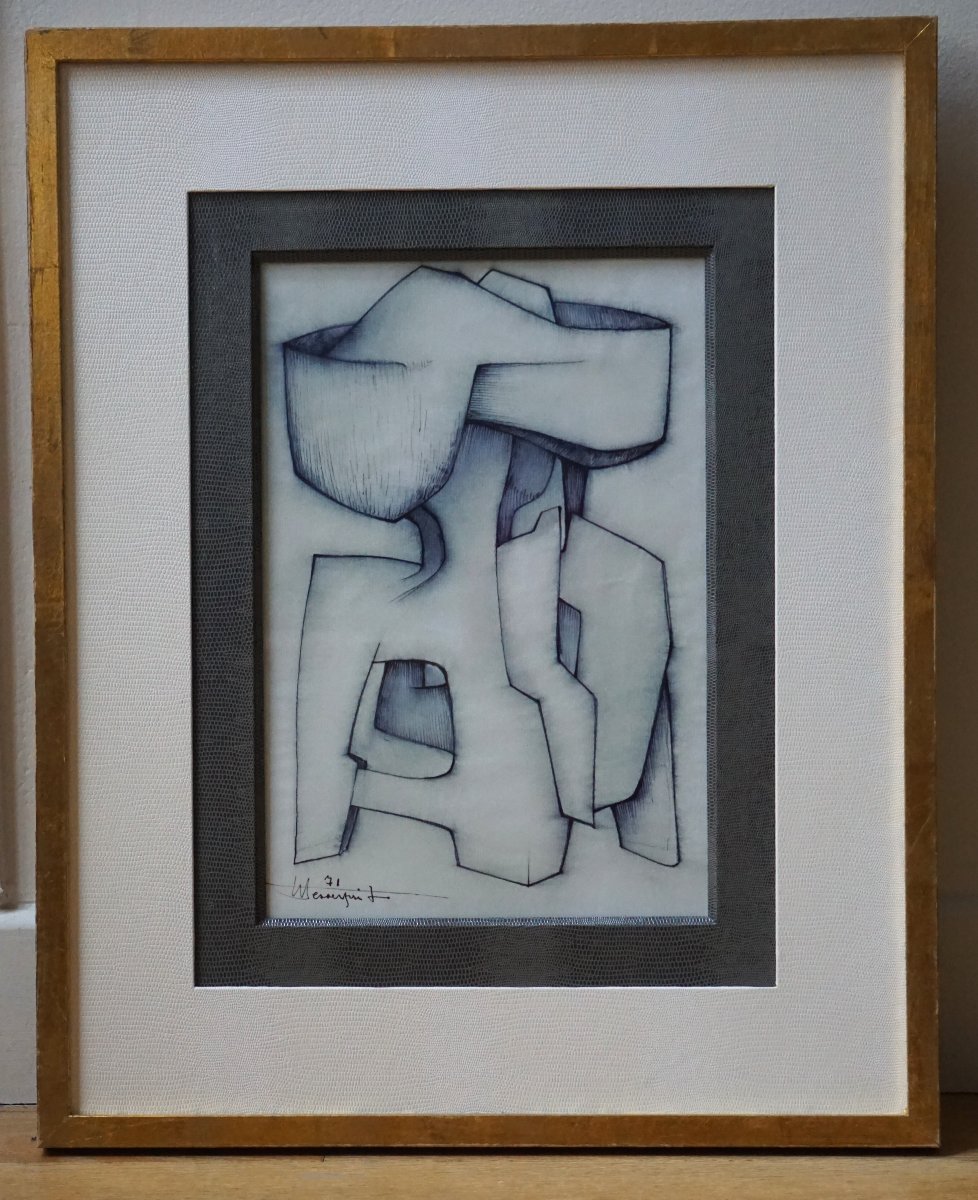
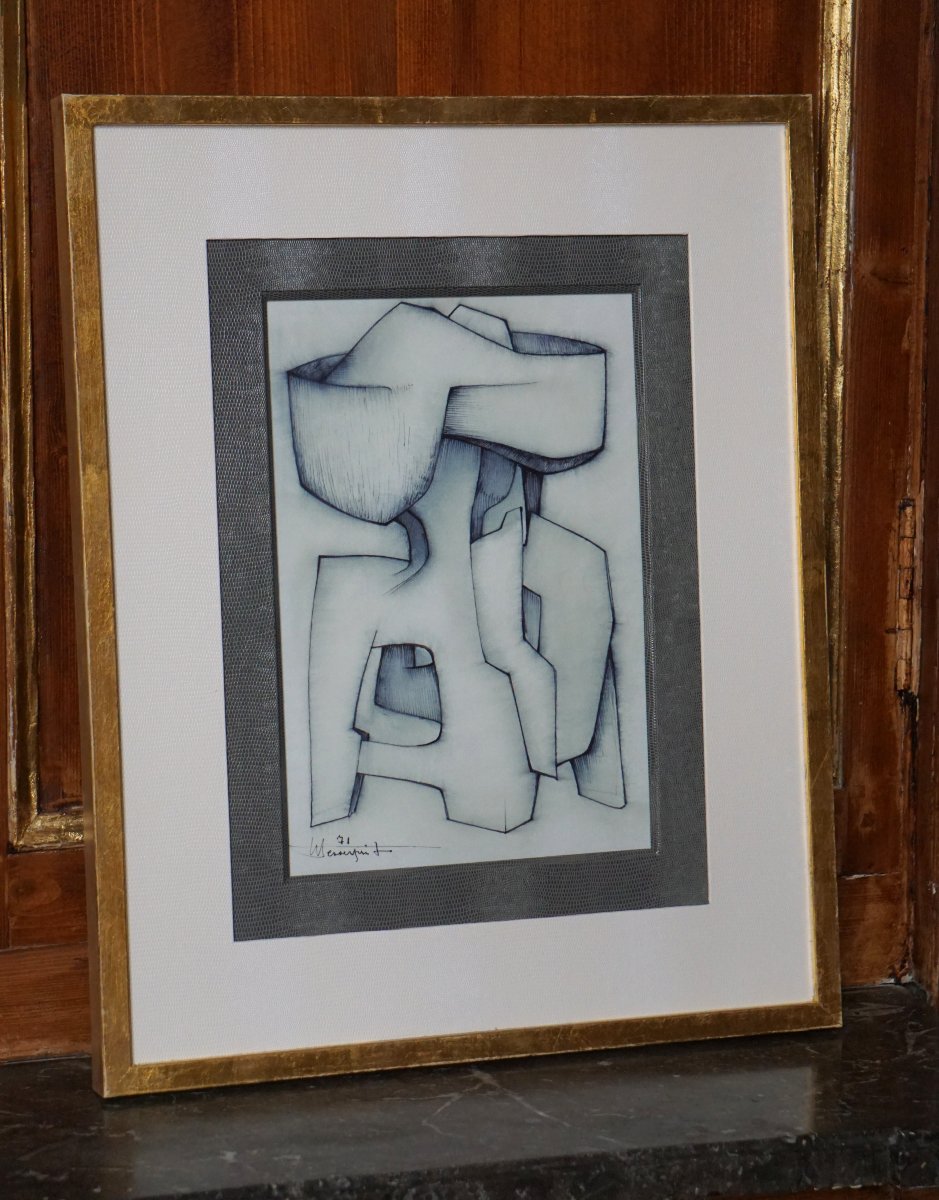
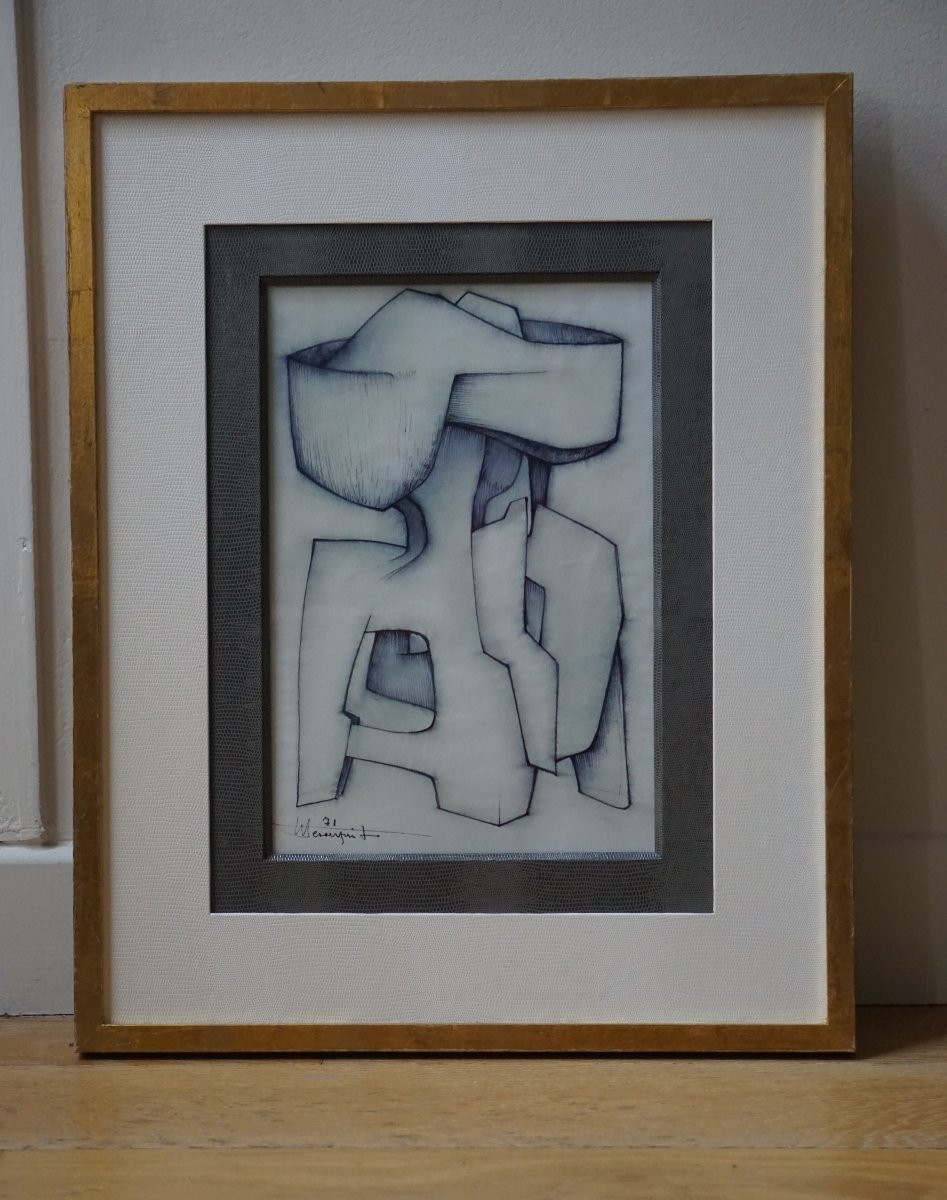
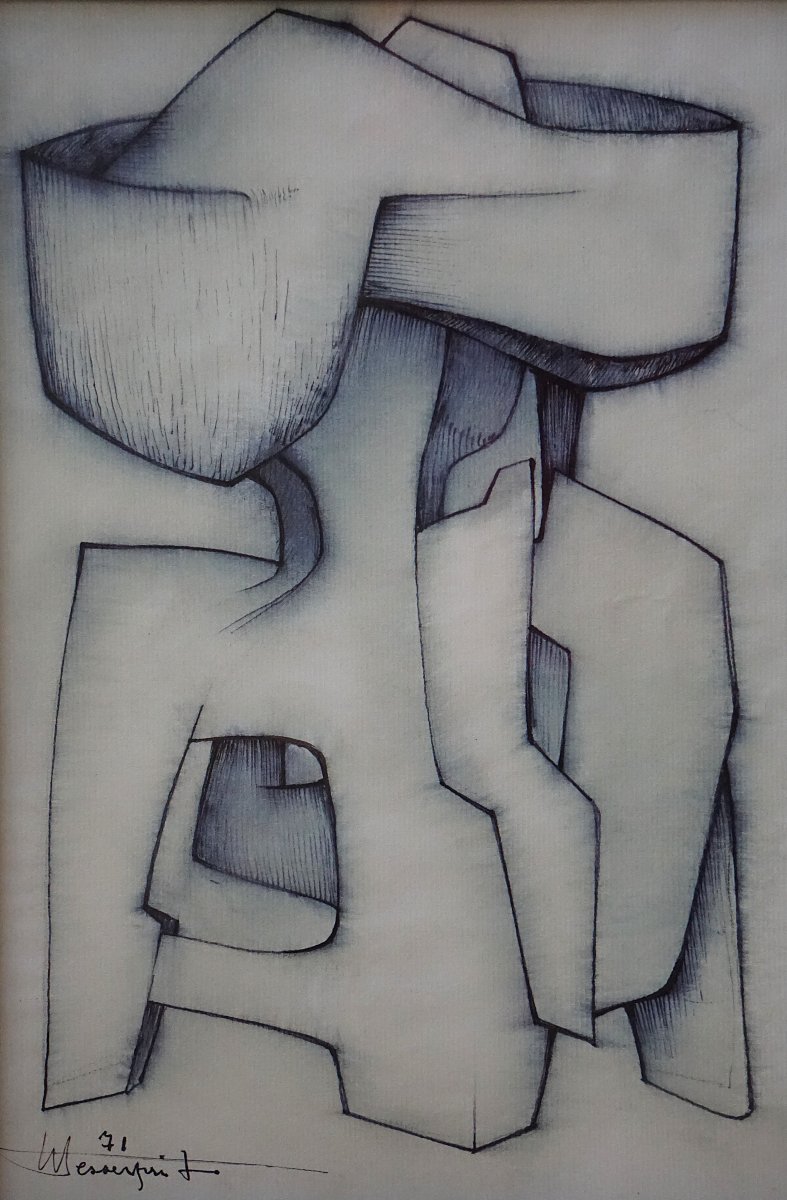
Abstract Geometric Drawing, 1971
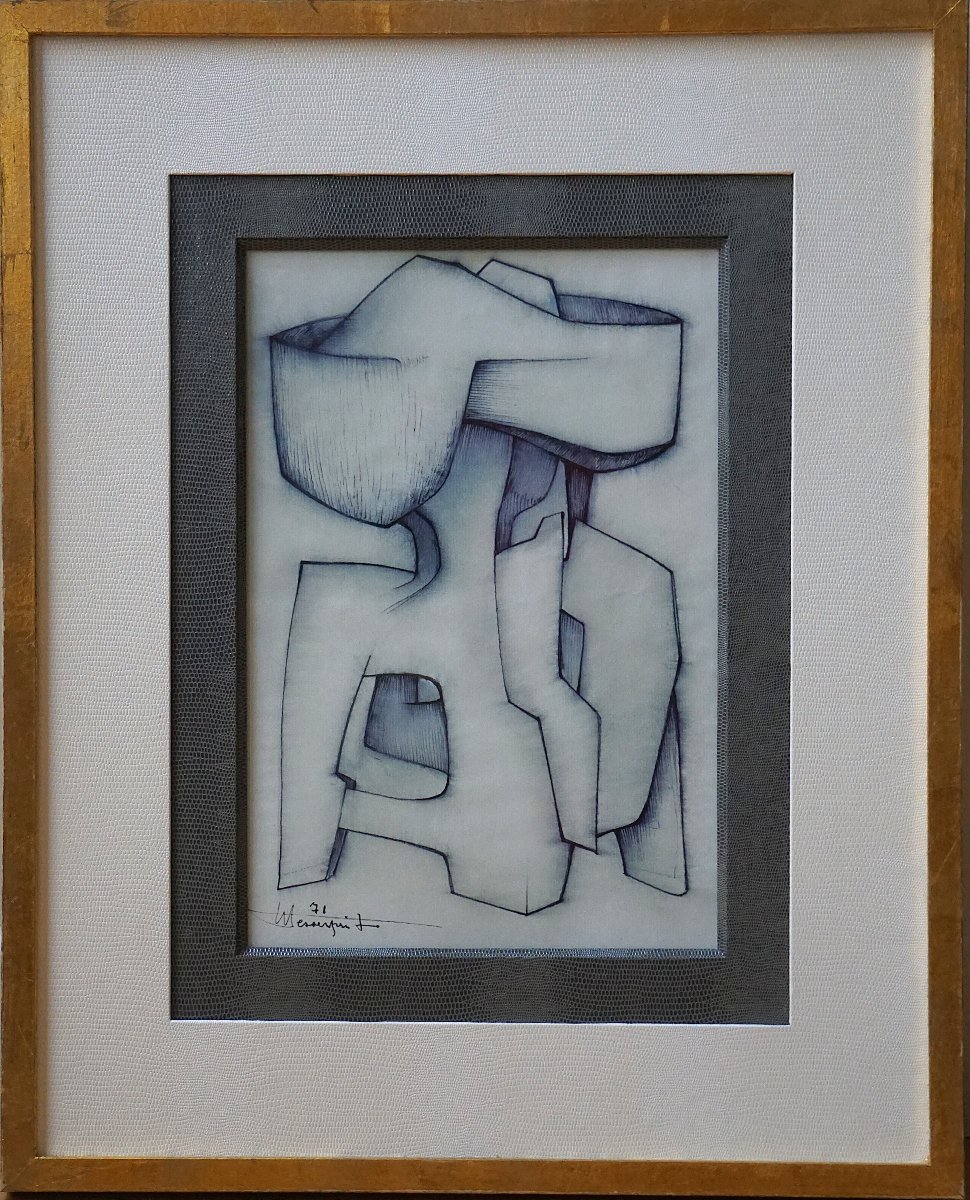
Composition - Study of Folded Volumes
1971 Original drawing in India ink on vellum paper
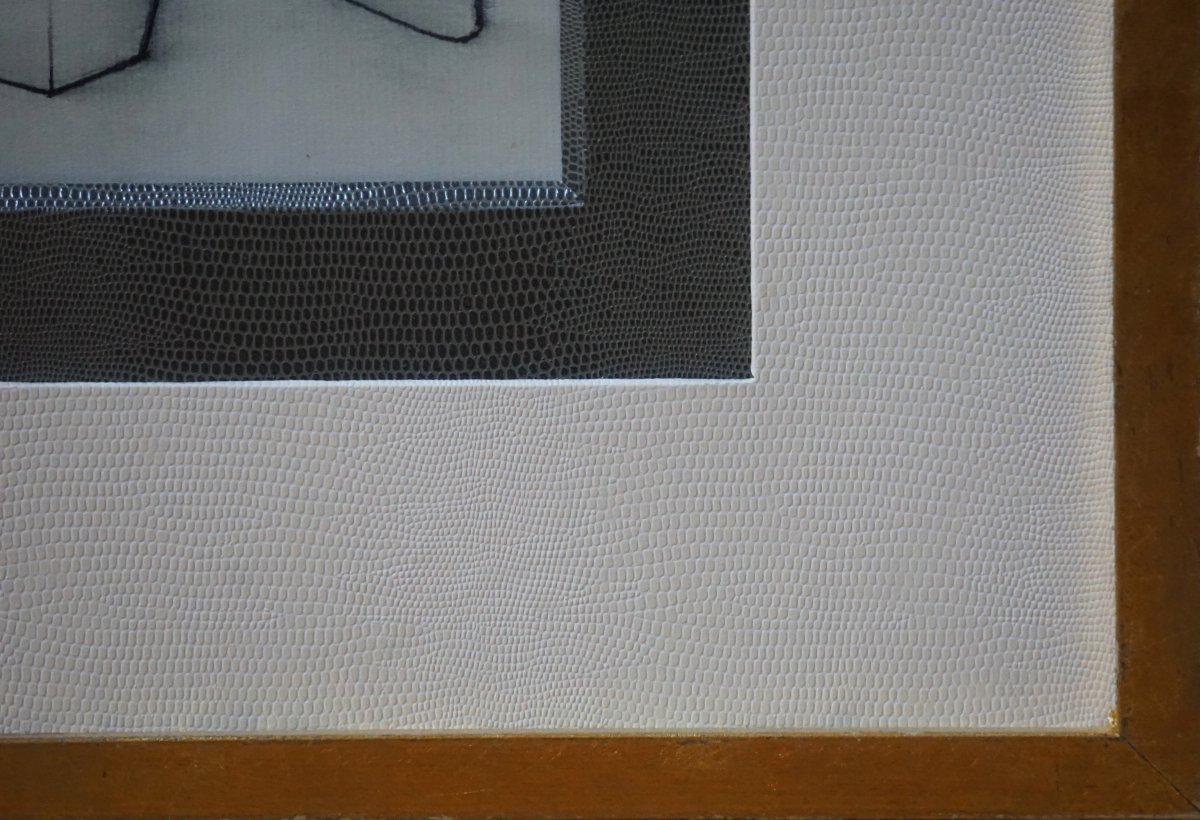
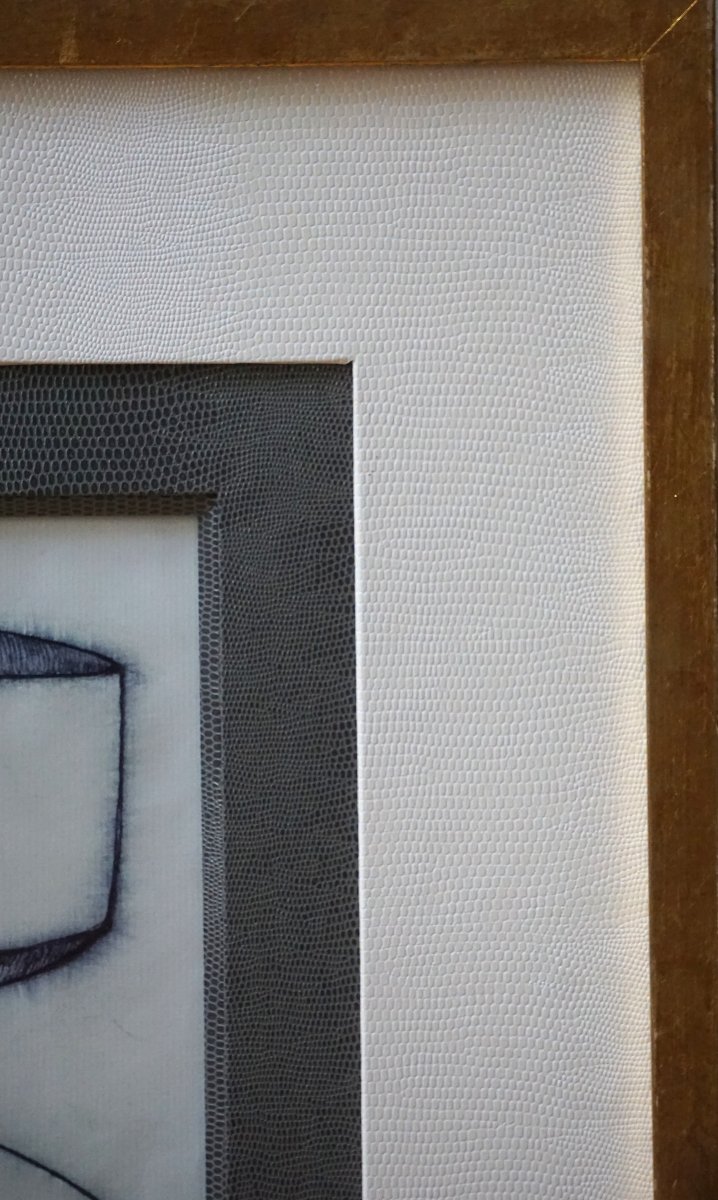
Dimensions: 21 x 31 cm (image size) / 52 x 42 cm with frame
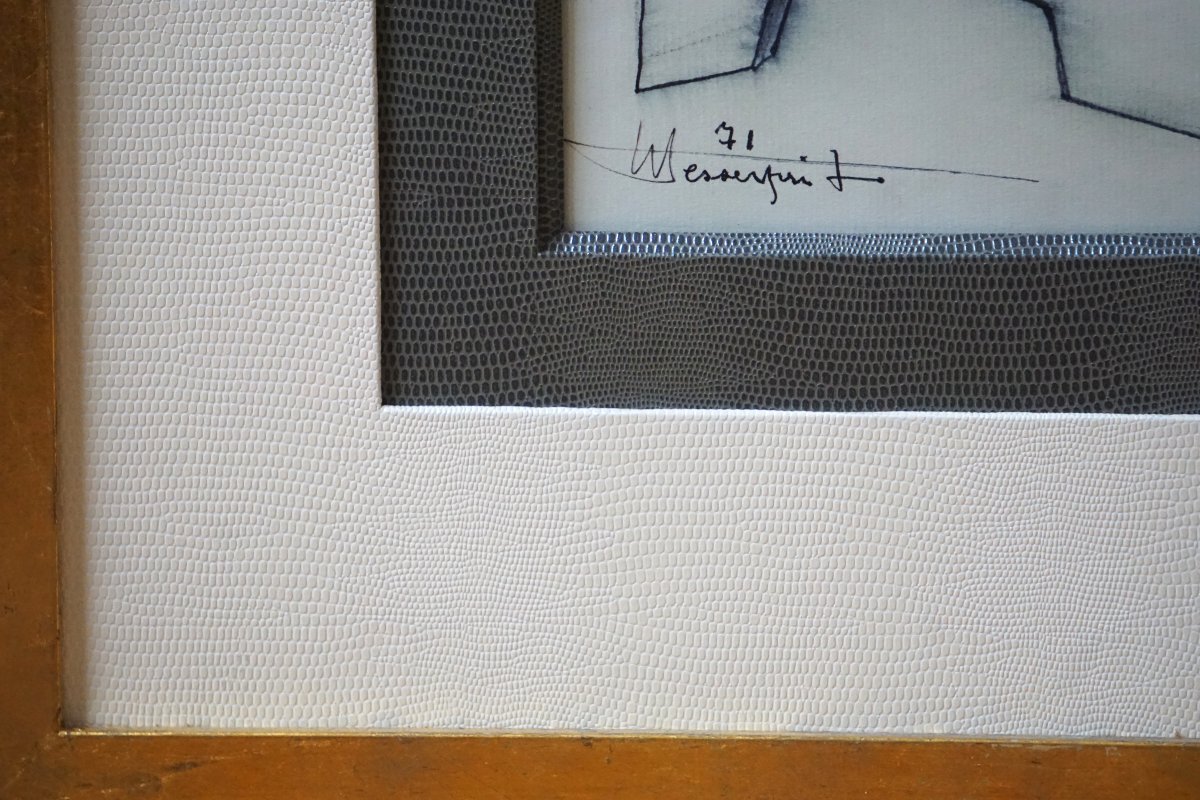
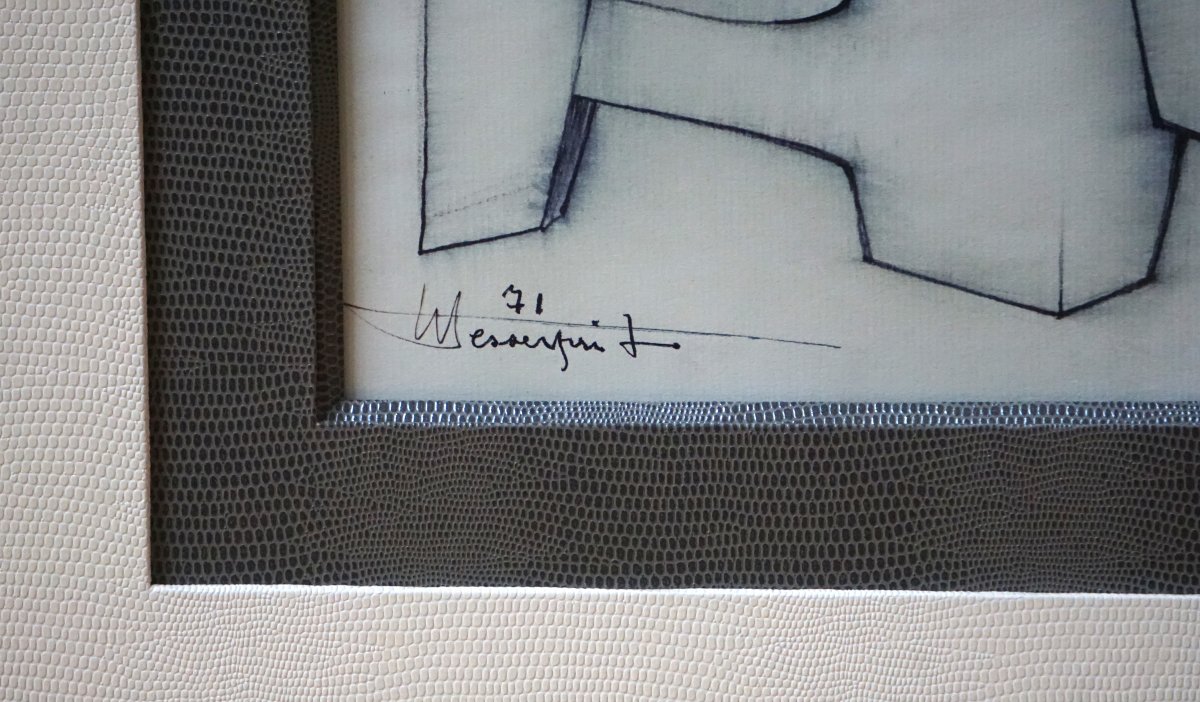
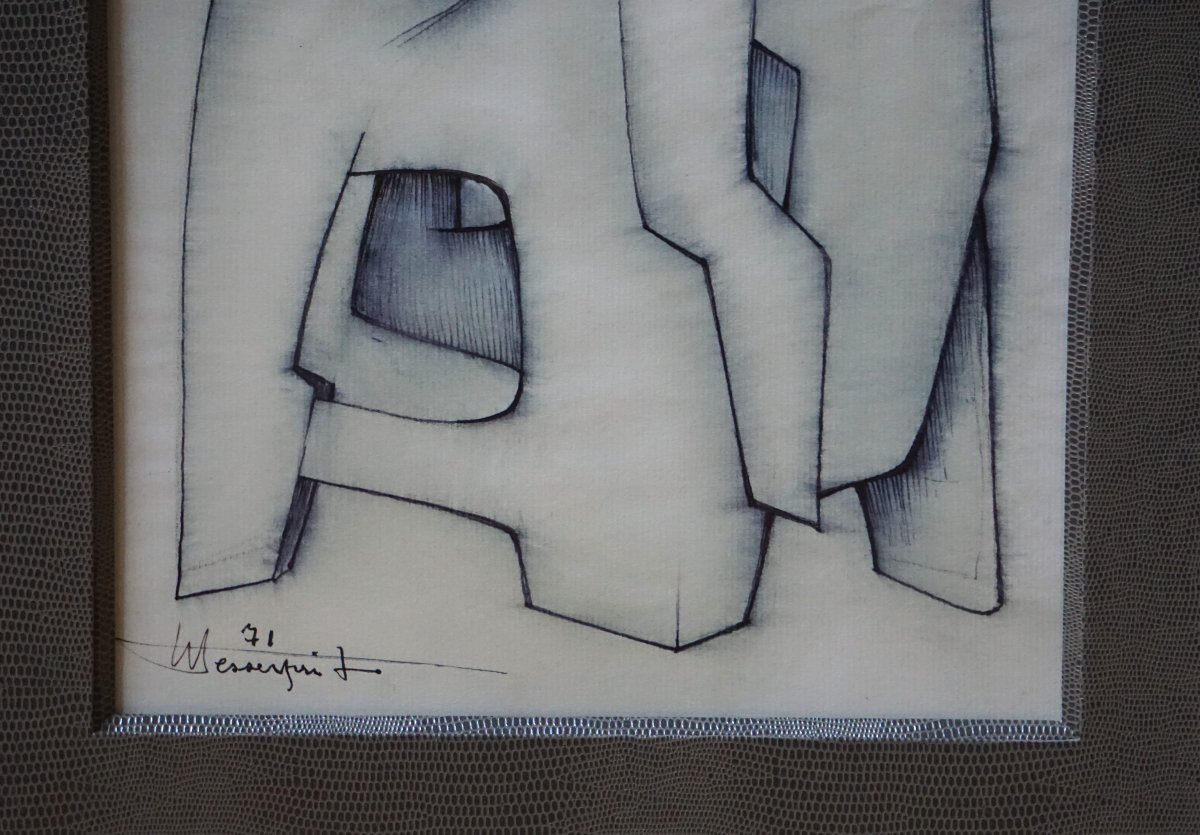
Signed "Desserprit" and dated "71" in ink at the lower left
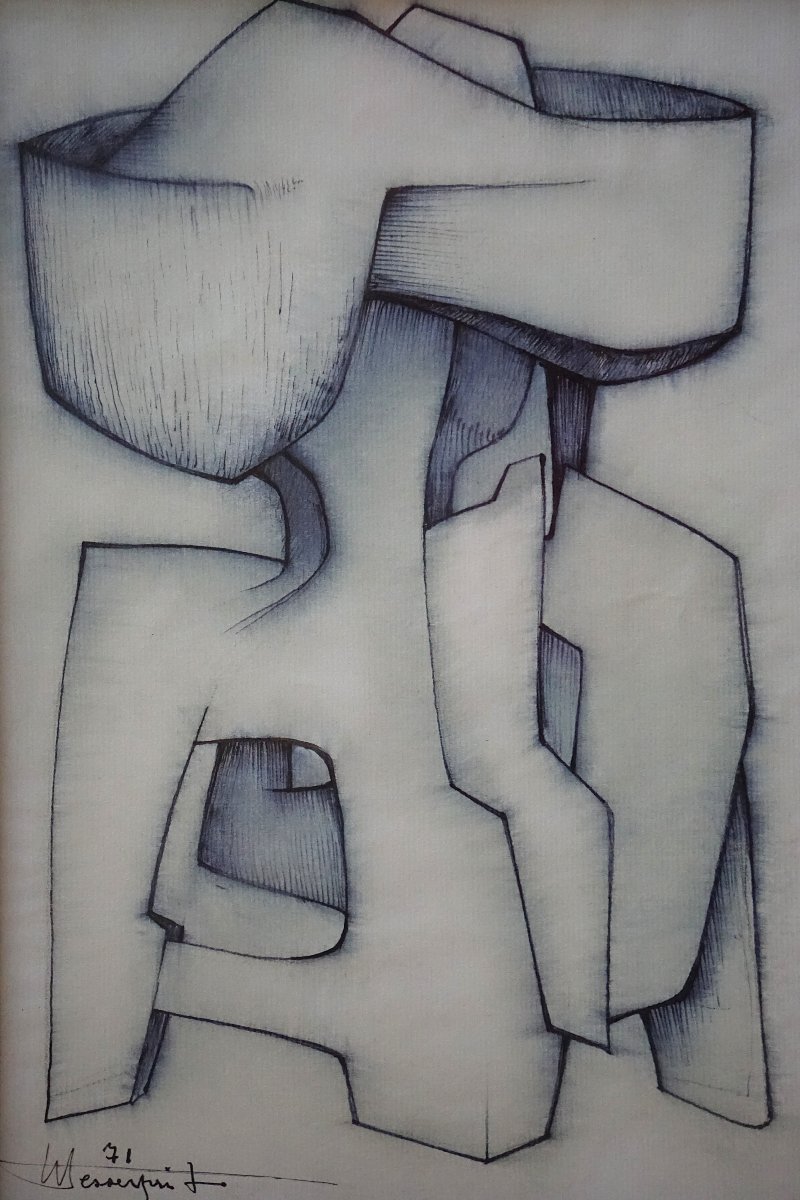
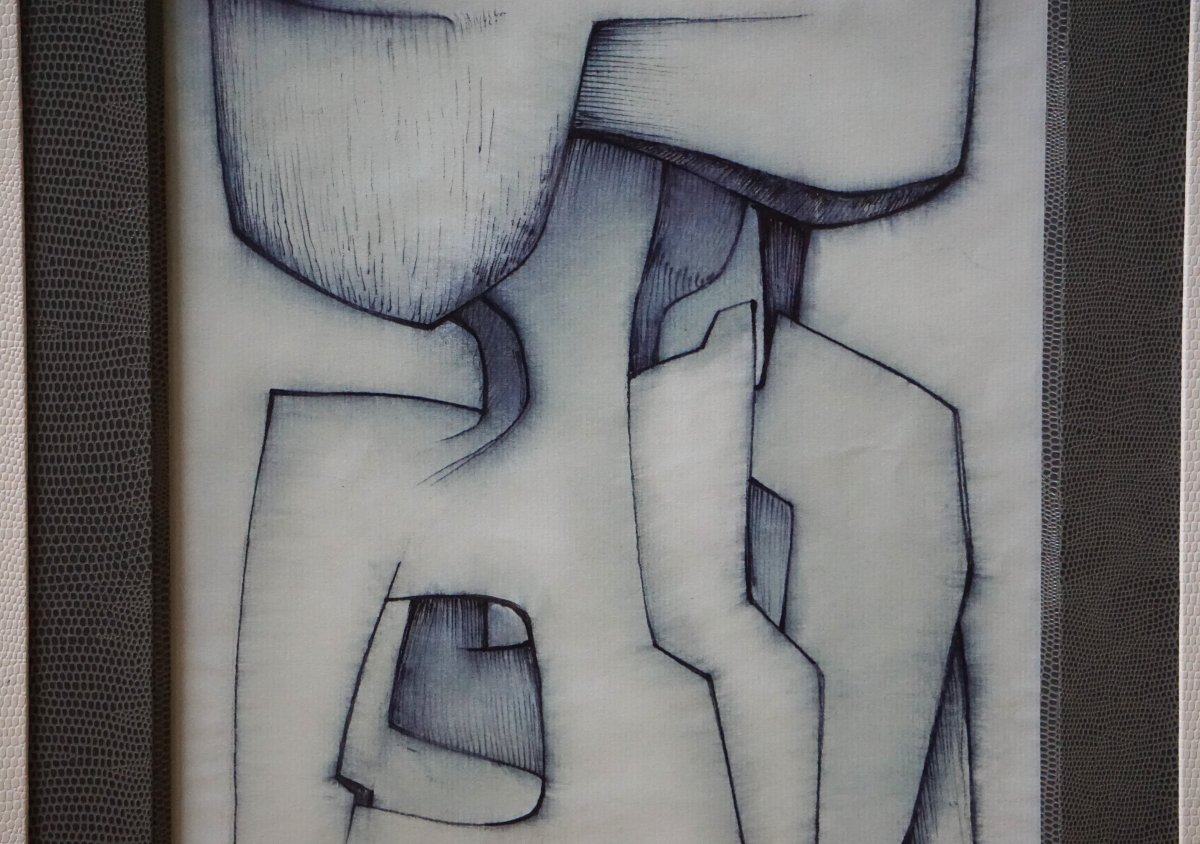
A work of great precision, absolutely emblematic of Desserprit’s mature period. Here we see his sculptor’s language transposed onto paper: two monumental volumes, composed of angular planes and sharp folds like sheet metal, interlocking in space.
The line is drawn with a pen—incisive and architectural. Shadows are rendered through extremely fine hatching with a ballpoint pen, which gives these abstract forms a presence, a weight, and a low-angle light. It is a sculpture without a pedestal. It brings to mind an architectural model or an origami sculpture made of concrete. This embodies the very spirit of concrete abstraction: the work represents nothing other than its own real space.
Roger Desserprit was born in 1923 in Buxy. A student at the École des Beaux-Arts in Paris beginning in 1941, he broke free from academic traditions very early on through lithography. Spotted by Colette Allendy, Paris’s most avant-garde gallery owner, he began exhibiting there in 1950. Close to the South American artists Carmelo Arden-Quin and Gyula Kosice, he joined the Madi movement and, beginning in 1949, participated in the Salon des Réalités Nouvelles alongside Arden Quin, Bresciani, Eielson, and Vardanega.
Both a painter and a sculptor, he was introduced by the poet André Frénaud to Bazaine and Ubac and developed a coherent body of work spanning painting, drawing, and his famous sculptures made of alloy that was embossed, hammered, and soldered with tin.
Roger DESSERPRIT (1923–1985)
French abstract painter and sculptor. Born on March 9, 1923, in Buxy (Saône-et-Loire). He developed a passion for drawing at a very early age and enrolled at the École des Beaux-Arts in Paris in 1941. There, he studied lithography under Jaudon, who steered him away from academic art. In the aftermath of the war, he became part of the Parisian avant-garde art scene. Through the poet André Frénaud, he met Bazaine and Ubac. He became particularly close with the South American artists Carmelo Arden-Quin and Gyula Kosice, founders of the Madi geometric abstraction movement. Noticed by Colette Allendy, whose gallery was then a hub for abstraction, he exhibited there for the first time in 1949–1950. That same year, he participated in the Salon des Réalités Nouvelles alongside Arden-Quin, Bresciani, Eielson, and Vardanega, as well as in the Madi exhibition in April 1950 at the Colette Allendy Gallery. Desserprit was then fully immersed in concrete abstraction. Initially a painter—creating rigorous geometric compositions—he turned to sculpture in the late 1950s, a medium that would bring him fame: stylized figures, families, birds, and porters, crafted from lightweight alloy that was embossed, hammered, and soldered with tin, and later cast in bronze in editions of 12. The 1960s and 1970s marked his period of artistic maturity. Painting and sculpture engaged in a dialogue: the same angular volumes, the same folded planes, the same search for a real, constructed space. His ink drawings, such as the one from 1971, served as the direct testing ground for his sculptures. A discreet artist, operating on the fringes of the art market, yet firmly established in the history of postwar French geometric abstraction.
Abstract Geometric Drawing, 1971
Composition - Study of Folded Volumes
1971 Original drawing in India ink on vellum paper
Dimensions: 21 x 31 cm (image size) / 52 x 42 cm with frame
Signed "Desserprit" and dated "71" in ink at the lower left
A work of great precision, absolutely emblematic of Desserprit’s mature period. Here we see his sculptor’s language transposed onto paper: two monumental volumes, composed of angular planes and sharp folds like sheet metal, interlocking in space.
The line is drawn with a pen—incisive and architectural. Shadows are rendered through extremely fine hatching with a ballpoint pen, which gives these abstract forms a presence, a weight, and a low-angle light. It is a sculpture without a pedestal. It brings to mind an architectural model or an origami sculpture made of concrete. This embodies the very spirit of concrete abstraction: the work represents nothing other than its own real space.
Roger Desserprit was born in 1923 in Buxy. A student at the École des Beaux-Arts in Paris beginning in 1941, he broke free from academic traditions very early on through lithography. Spotted by Colette Allendy, Paris’s most avant-garde gallery owner, he began exhibiting there in 1950. Close to the South American artists Carmelo Arden-Quin and Gyula Kosice, he joined the Madi movement and, beginning in 1949, participated in the Salon des Réalités Nouvelles alongside Arden Quin, Bresciani, Eielson, and Vardanega.
Both a painter and a sculptor, he was introduced by the poet André Frénaud to Bazaine and Ubac and developed a coherent body of work spanning painting, drawing, and his famous sculptures made of alloy that was embossed, hammered, and soldered with tin.
Roger DESSERPRIT (1923–1985)
French abstract painter and sculptor. Born on March 9, 1923, in Buxy (Saône-et-Loire). He developed a passion for drawing at a very early age and enrolled at the École des Beaux-Arts in Paris in 1941. There, he studied lithography under Jaudon, who steered him away from academic art. In the aftermath of the war, he became part of the Parisian avant-garde art scene. Through the poet André Frénaud, he met Bazaine and Ubac. He became particularly close with the South American artists Carmelo Arden-Quin and Gyula Kosice, founders of the Madi geometric abstraction movement. Noticed by Colette Allendy, whose gallery was then a hub for abstraction, he exhibited there for the first time in 1949–1950. That same year, he participated in the Salon des Réalités Nouvelles alongside Arden-Quin, Bresciani, Eielson, and Vardanega, as well as in the Madi exhibition in April 1950 at the Colette Allendy Gallery. Desserprit was then fully immersed in concrete abstraction. Initially a painter—creating rigorous geometric compositions—he turned to sculpture in the late 1950s, a medium that would bring him fame: stylized figures, families, birds, and porters, crafted from lightweight alloy that was embossed, hammered, and soldered with tin, and later cast in bronze in editions of 12. The 1960s and 1970s marked his period of artistic maturity. Painting and sculpture engaged in a dialogue: the same angular volumes, the same folded planes, the same search for a real, constructed space. His ink drawings, such as the one from 1971, served as the direct testing ground for his sculptures. A discreet artist, operating on the fringes of the art market, yet firmly established in the history of postwar French geometric abstraction.
850 €
Period: 20th century
Style: Modern Art
Condition: Perfect condition
Material: Paper
Reference (ID): 1835552
Availability: In stock
Print