


Cup By Sophie Gail, Manufacture Lebon Halley, Classical Music, Empire Porcelain
Artist: Manufacture Lebon Halley
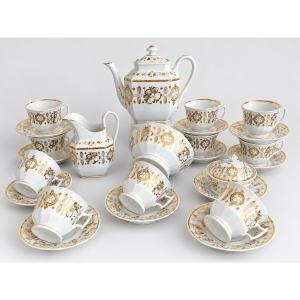
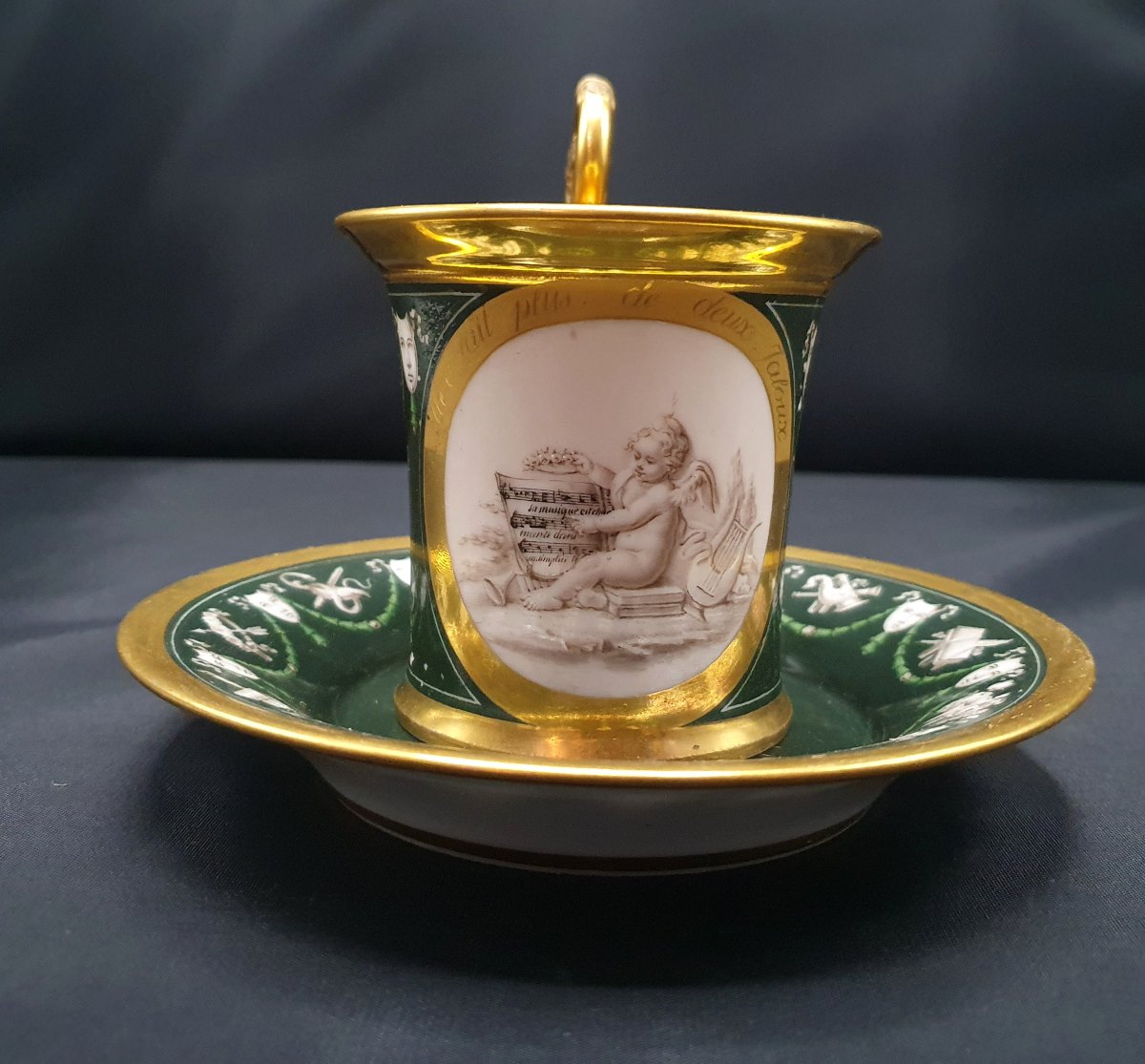
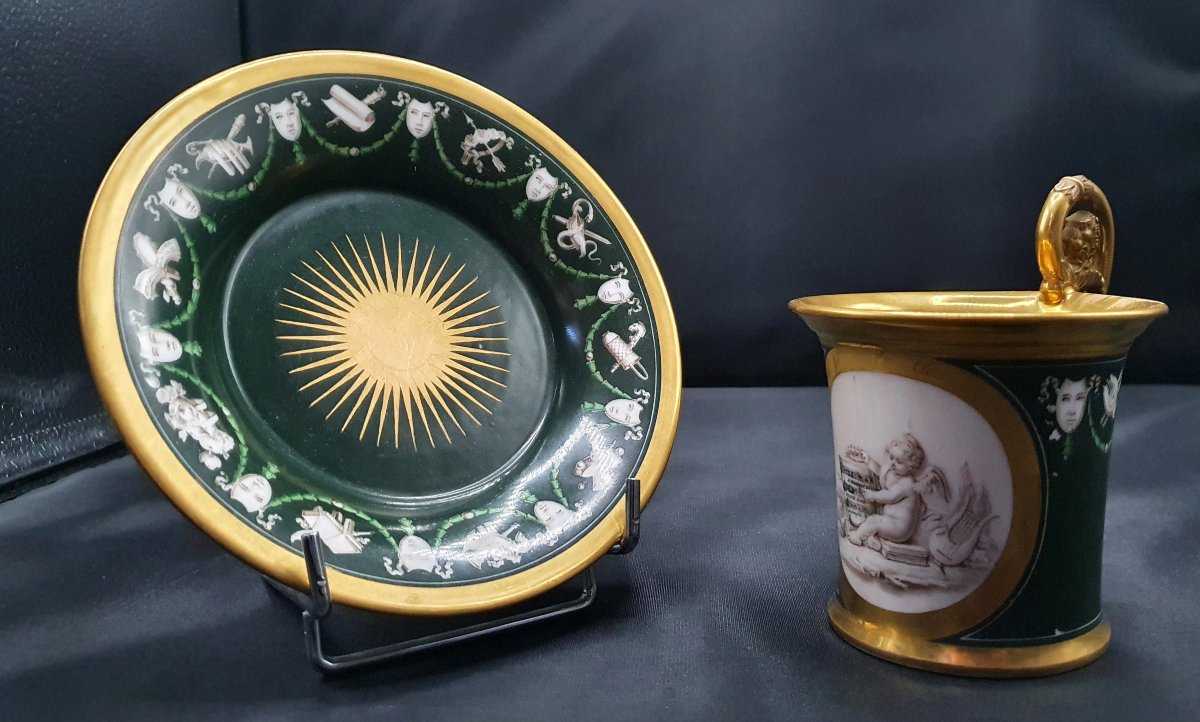
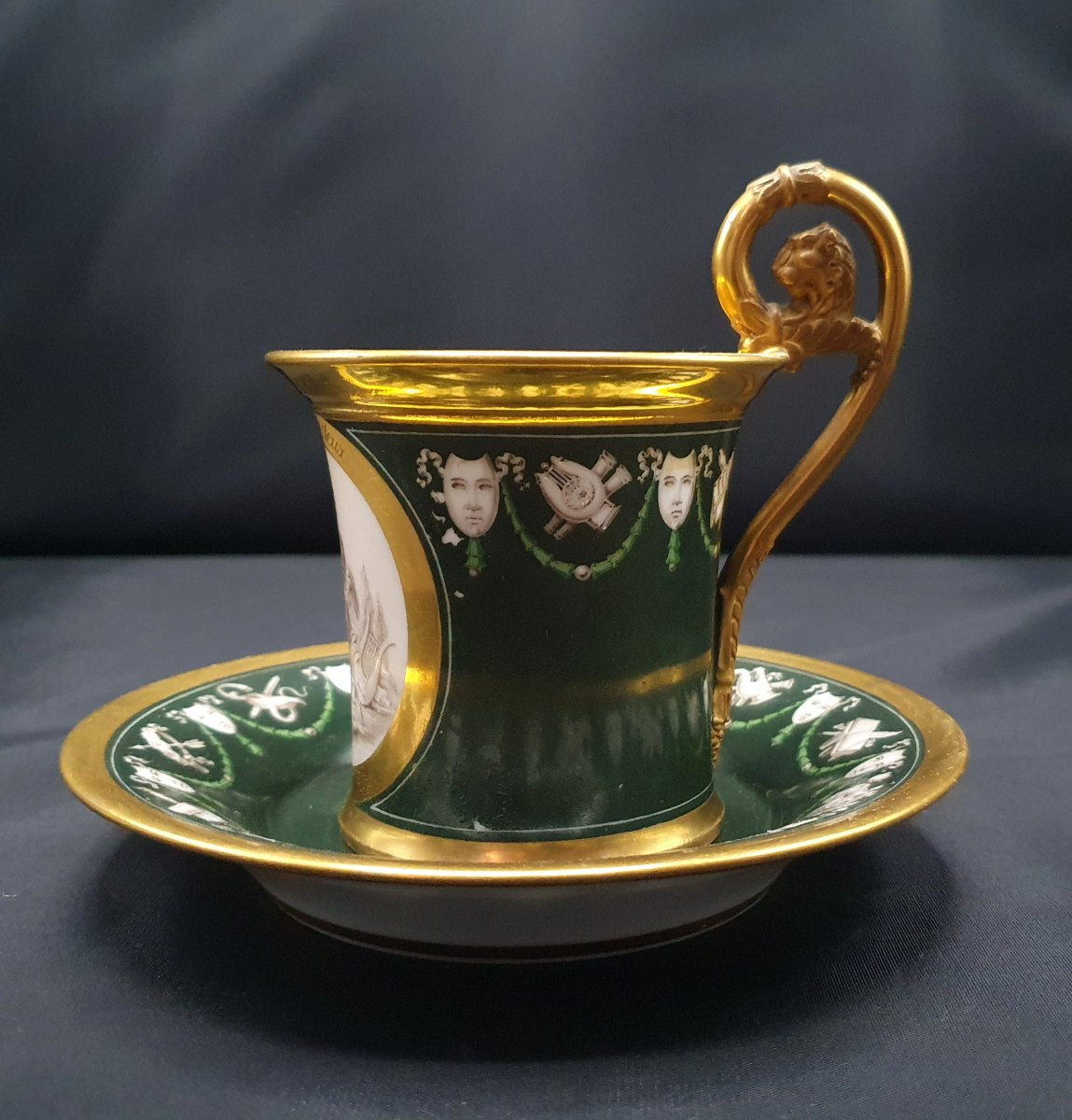
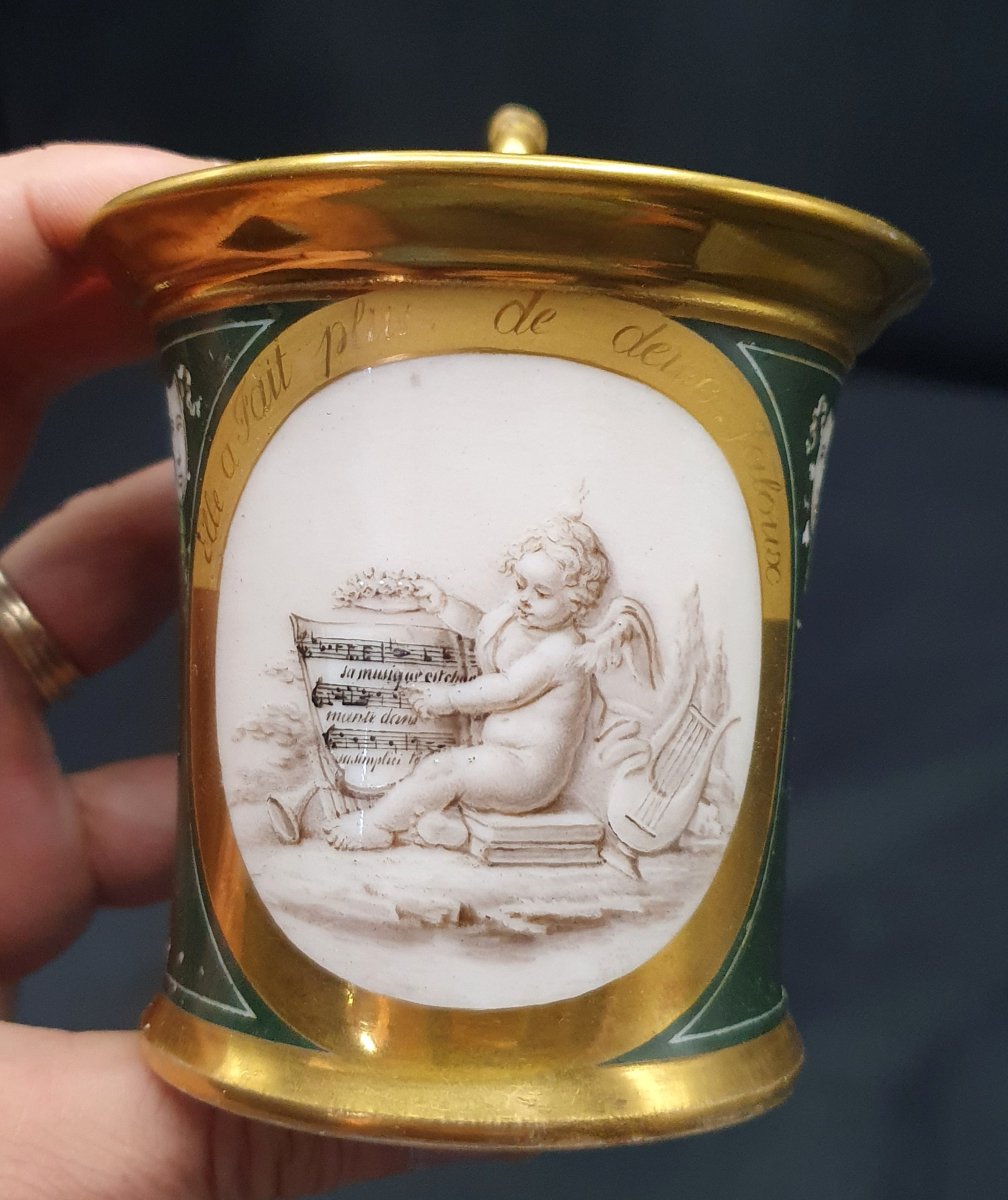
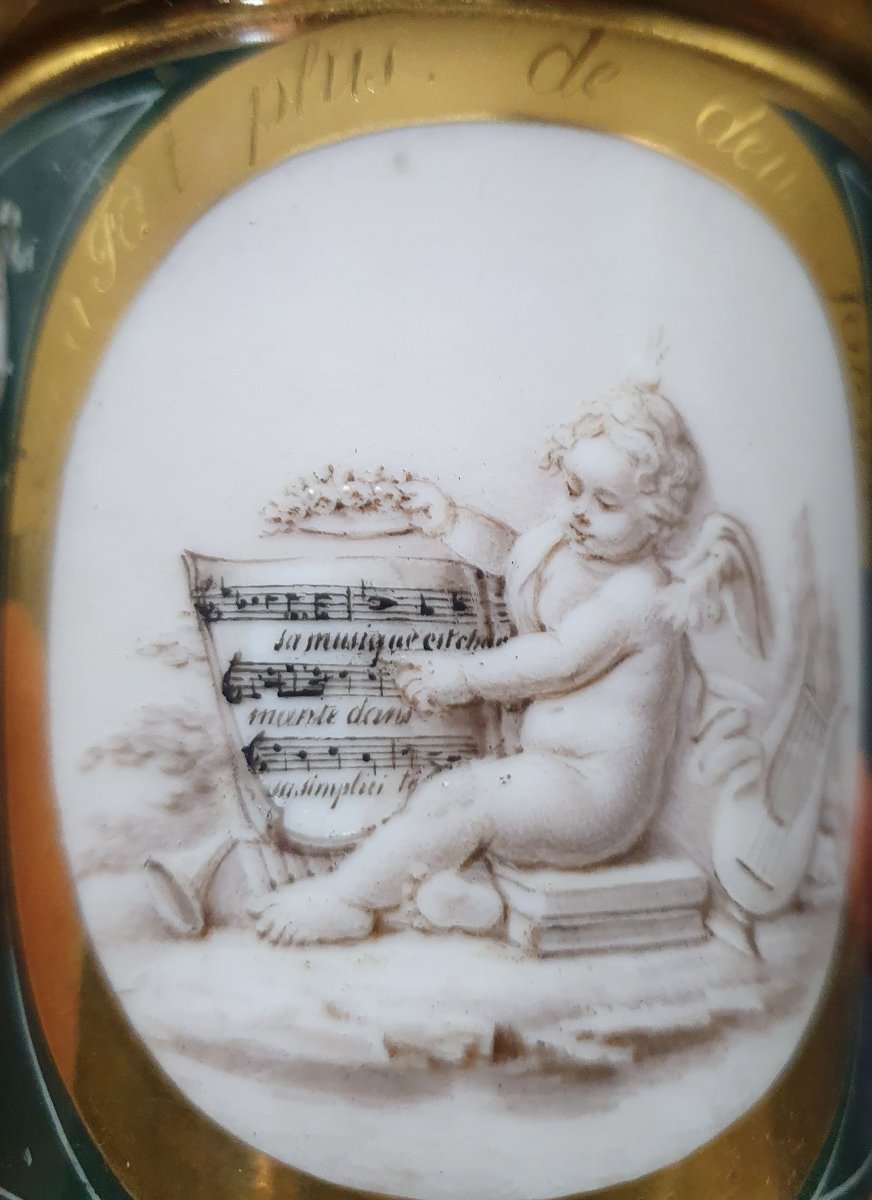
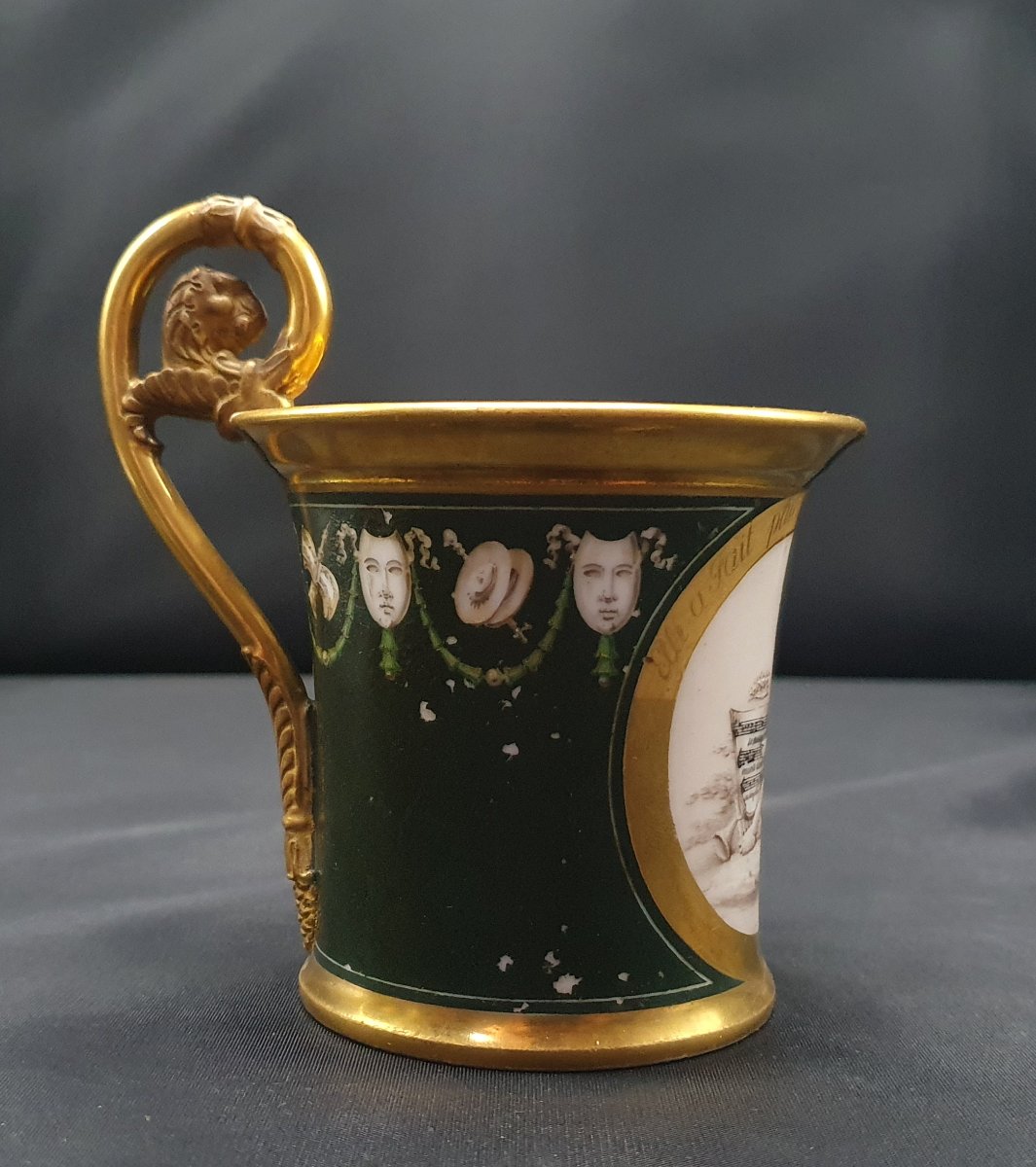
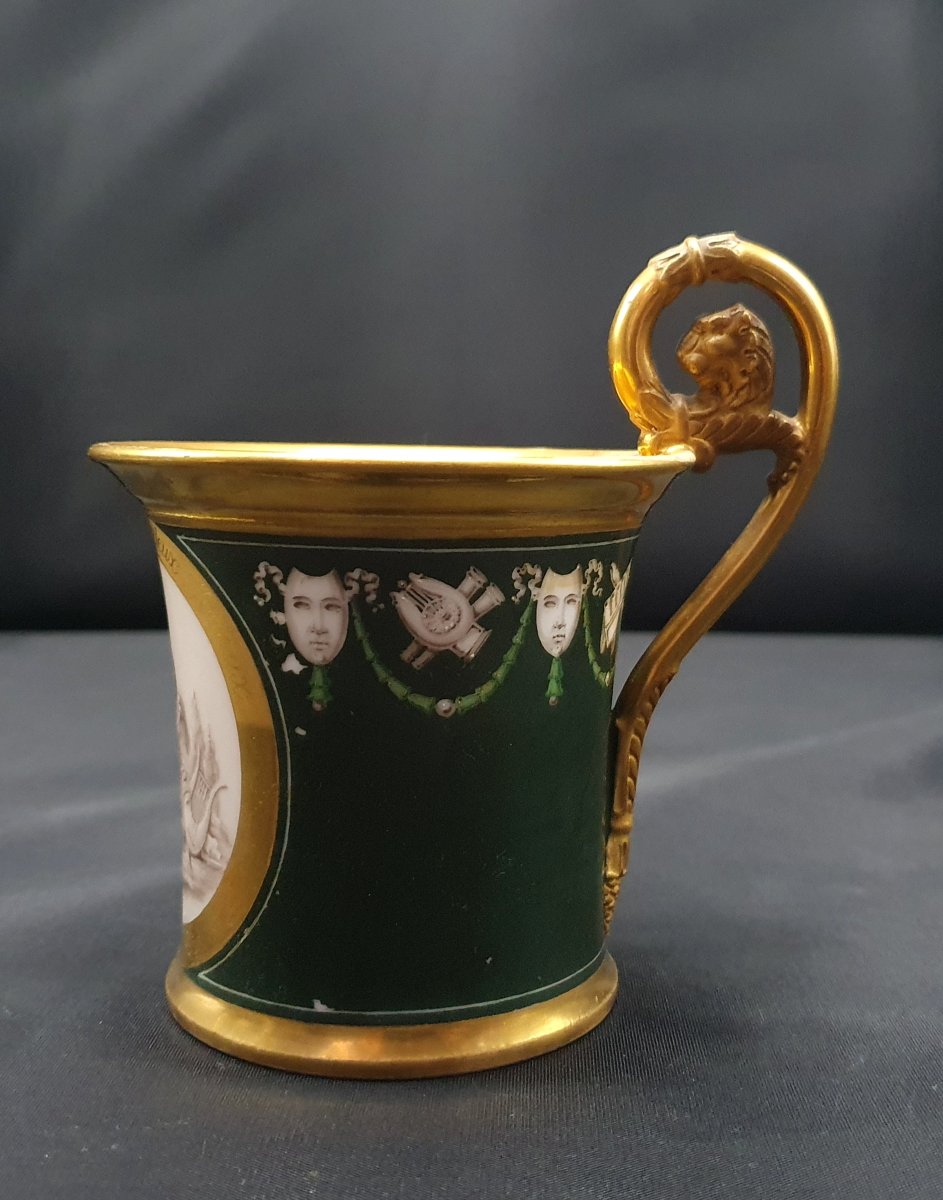
A slightly flared, straight-sided porcelain cup and saucer, the green background accented with gold, featuring a central medallion in grisaille depicting a
cupid pointing to a music book inscribed with “music is charming in its simplicity”; at the bottom, a trumpet and a
lyre. The gold border surrounding the medallion bears the inscription in burnished gold, “She has made more than two jealous,” as a motto.
The handle is made of gilded bisque and features a lion’s head.
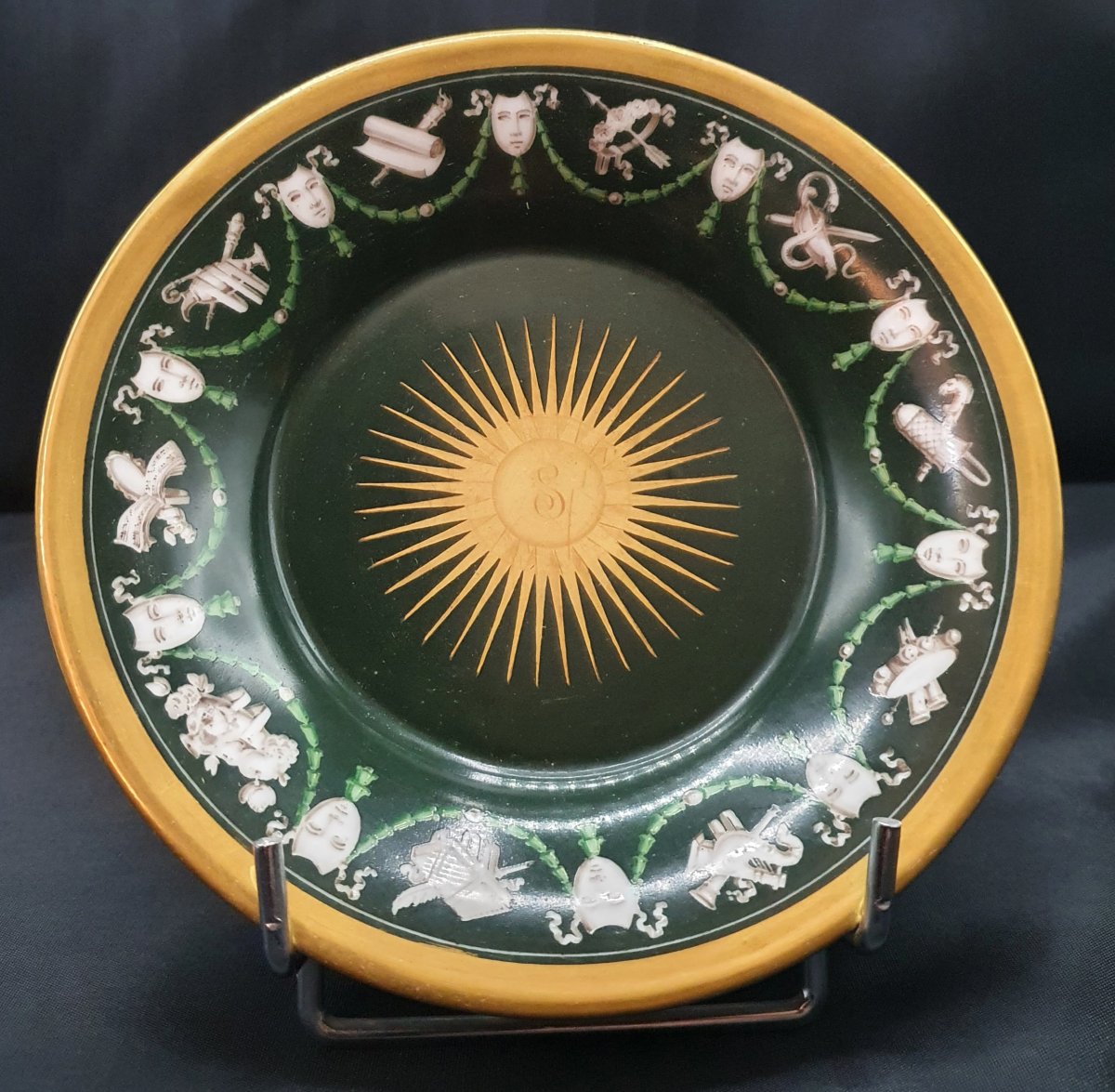
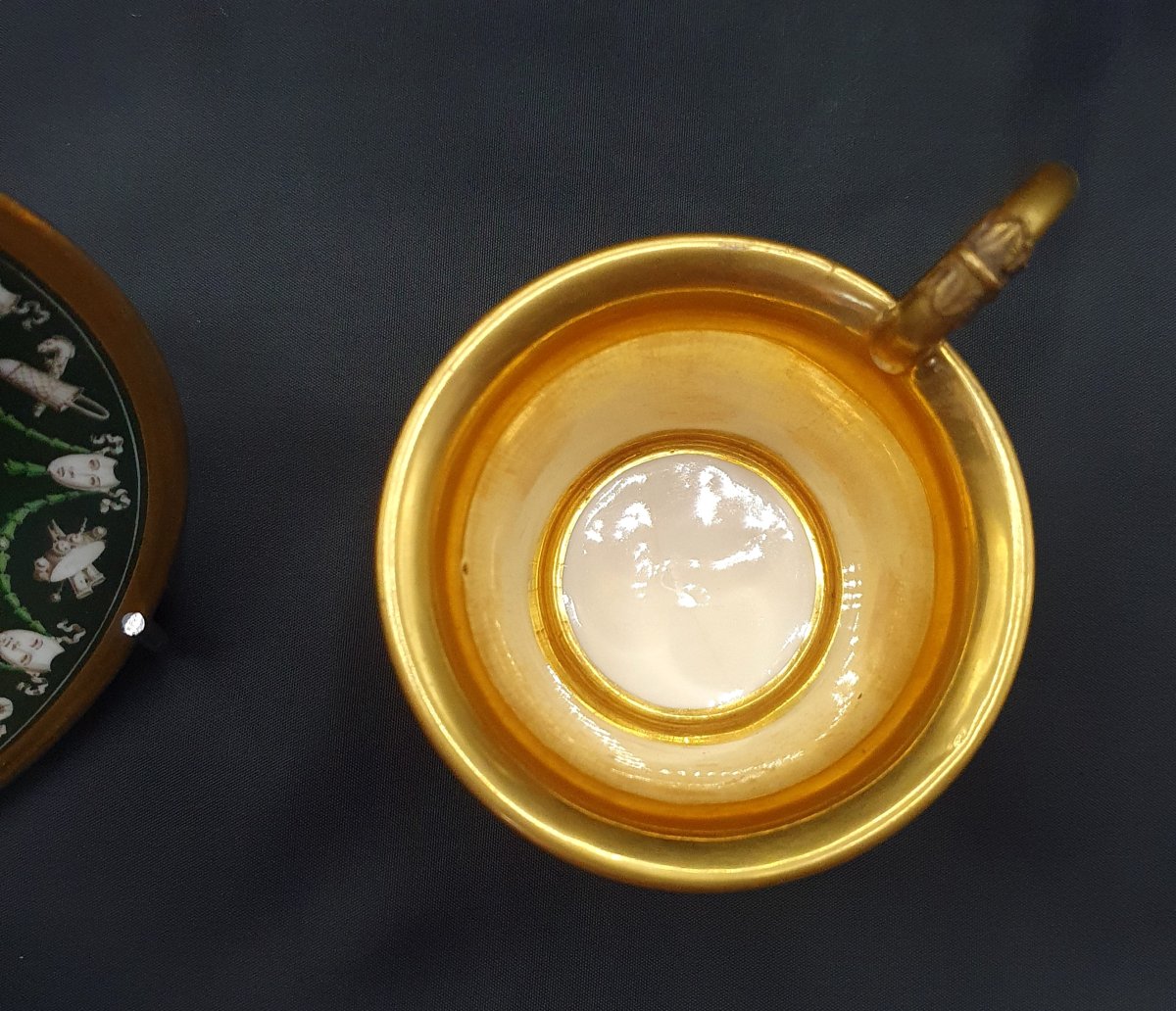
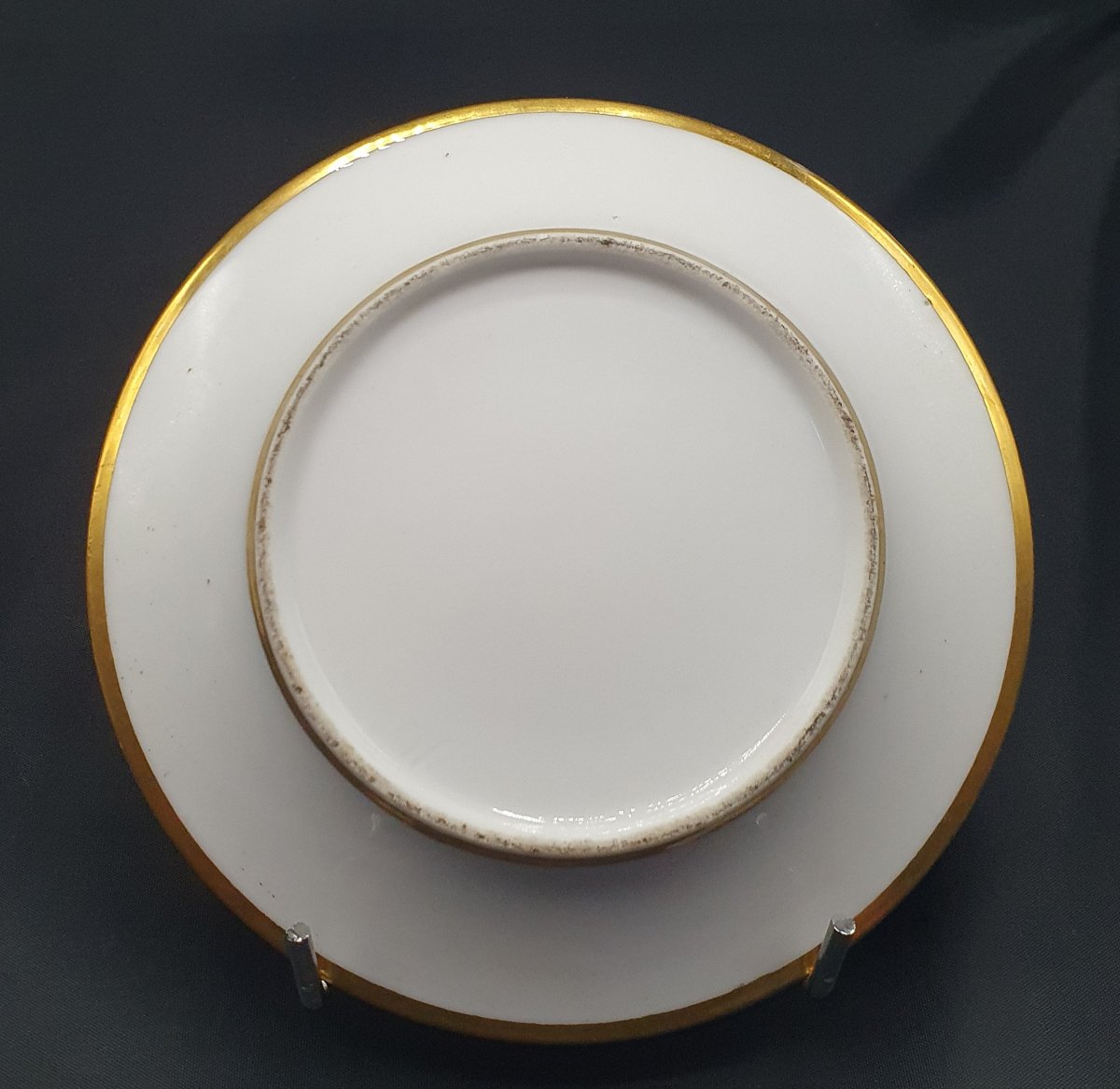
The saucer is decorated in the same style; the rim features motifs associated with theater and music, with a sun in the center engraved with the letter “S” for Sophie.
Restorations to the green base of the cup and a few small chips on the base.
The rest is in perfect condition.
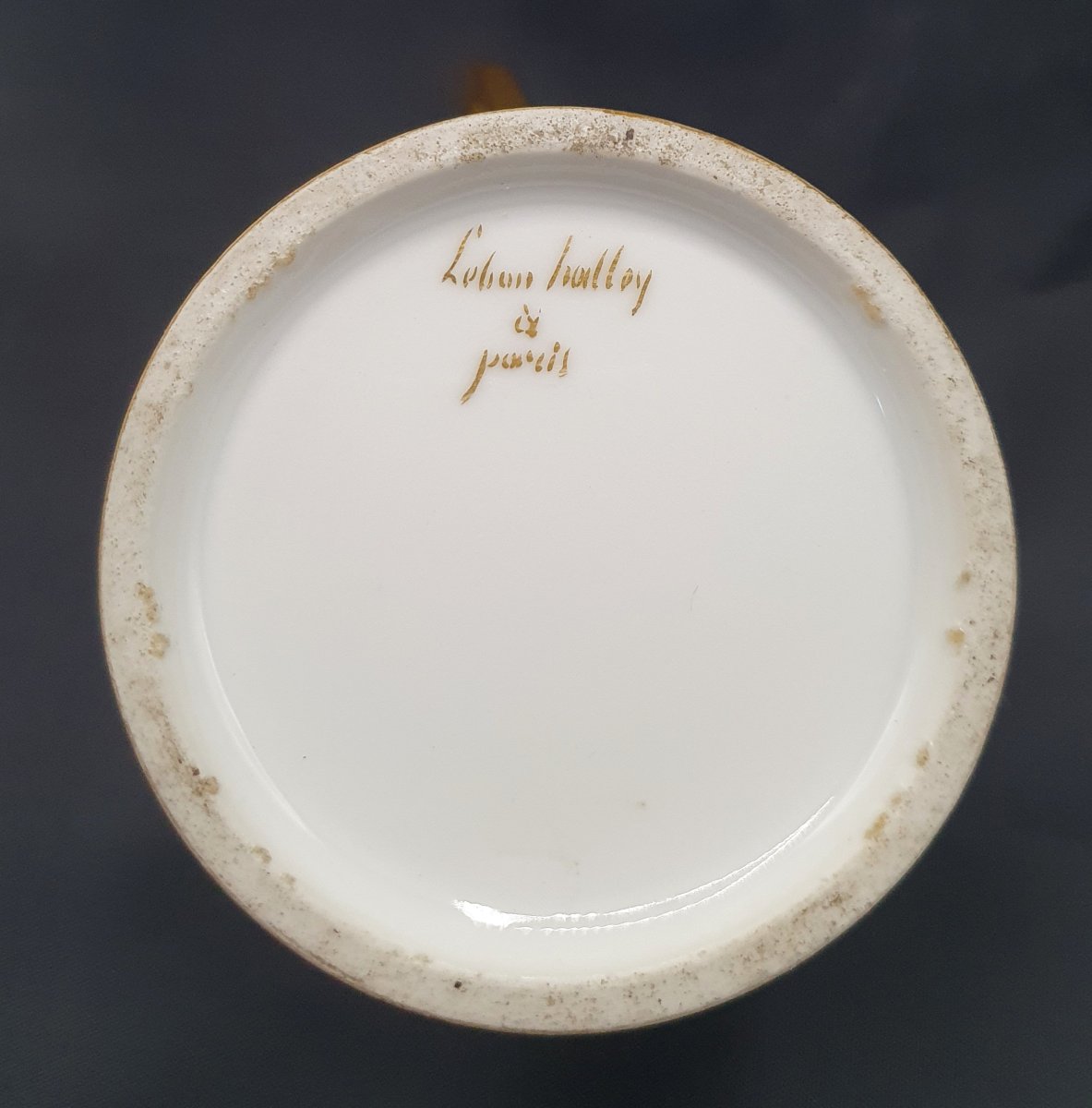
Lebon Halley Manufactory, Paris, Restoration period.
Gold mark beneath the cup.
Cup: H. 12 x D. 9.3 cm.
Saucer: H. 2.7 x D. 16 cm.
Provenance
- Collection of Sophie Gail (1775–1819) or the collection of Sophie de la Valette
(1776–1852), wife of Gay.
- Detroyat Collection.
- Private French collection.
History
The decoration on this cup directly references the comic opera “Les deux jaloux” by Sophie Gail (1775–1819), which was a great success in
1813.
Sophie Gail was born on August 28, 1775, in Paris. She was the daughter of Claude-François Garre (1730–1799), a surgeon and major at the Royal Military School of the
Grande and Petite Écurie, a member of the College of Surgery, and an academician.
According to her husband, she had received “an education beyond what was customary for her gender.”
Like other young women of her social class, Sophie studied music, piano, and singing. At age 14, she composed and published romances, her
first works. In 1794, at age 19, she married the Hellenist Jean-Baptiste Gail, who was 20 years her senior; they had one son, Jean-François Gail. She
divorced very soon after, in 1801, and led a free-spirited life; she would go on to have three more sons by different fathers. She earned her living as a pianist and singer, published
romances, and composed arias for the theater in France, London, Vienna, Germany, and Spain.
Her opéra-comique *Les Deux Jaloux*
was a great success in 1813 and remained in the repertoire until 1839, with
more than three hundred performances. After a few failures, she returned to success with the premiere at the Opéra-Comique on April 2, 1818, of
La Sérénade, with a libretto by Sophie Gay. She was working on new compositions, particularly in the art of the romance, when she died
of a lung disease on July 24, 1819, at the age of forty-three in Paris.
In 1847, musicologist Adrien de La Fage (1801–1862) described her as “the only female composer to have achieved genuine success in the theater.” He
advocated for the use of the term “composer” in reference to her, signifying the established status and growing visibility of musical creation by women.
cupid pointing to a music book inscribed with “music is charming in its simplicity”; at the bottom, a trumpet and a
lyre. The gold border surrounding the medallion bears the inscription in burnished gold, “She has made more than two jealous,” as a motto.
The handle is made of gilded bisque and features a lion’s head.
The saucer is decorated in the same style; the rim features motifs associated with theater and music, with a sun in the center engraved with the letter “S” for Sophie.
Restorations to the green base of the cup and a few small chips on the base.
The rest is in perfect condition.
Lebon Halley Manufactory, Paris, Restoration period.
Gold mark beneath the cup.
Cup: H. 12 x D. 9.3 cm.
Saucer: H. 2.7 x D. 16 cm.
Provenance
- Collection of Sophie Gail (1775–1819) or the collection of Sophie de la Valette
(1776–1852), wife of Gay.
- Detroyat Collection.
- Private French collection.
History
The decoration on this cup directly references the comic opera “Les deux jaloux” by Sophie Gail (1775–1819), which was a great success in
1813.
Sophie Gail was born on August 28, 1775, in Paris. She was the daughter of Claude-François Garre (1730–1799), a surgeon and major at the Royal Military School of the
Grande and Petite Écurie, a member of the College of Surgery, and an academician.
According to her husband, she had received “an education beyond what was customary for her gender.”
Like other young women of her social class, Sophie studied music, piano, and singing. At age 14, she composed and published romances, her
first works. In 1794, at age 19, she married the Hellenist Jean-Baptiste Gail, who was 20 years her senior; they had one son, Jean-François Gail. She
divorced very soon after, in 1801, and led a free-spirited life; she would go on to have three more sons by different fathers. She earned her living as a pianist and singer, published
romances, and composed arias for the theater in France, London, Vienna, Germany, and Spain.
Her opéra-comique *Les Deux Jaloux*
was a great success in 1813 and remained in the repertoire until 1839, with
more than three hundred performances. After a few failures, she returned to success with the premiere at the Opéra-Comique on April 2, 1818, of
La Sérénade, with a libretto by Sophie Gay. She was working on new compositions, particularly in the art of the romance, when she died
of a lung disease on July 24, 1819, at the age of forty-three in Paris.
In 1847, musicologist Adrien de La Fage (1801–1862) described her as “the only female composer to have achieved genuine success in the theater.” He
advocated for the use of the term “composer” in reference to her, signifying the established status and growing visibility of musical creation by women.
3 200 €
Period: 19th century
Style: Consulat, Empire
Condition: Good condition
Material: Porcelain
Diameter: 16 cm
Height: 12 cm
Reference (ID): 1834640
Availability: In stock
Print