THIS OBJECT WAS SOLD
Provençal Santibelli: St. Mary Magdalene The Penitent, "vanity," Terracotta, 19th Century
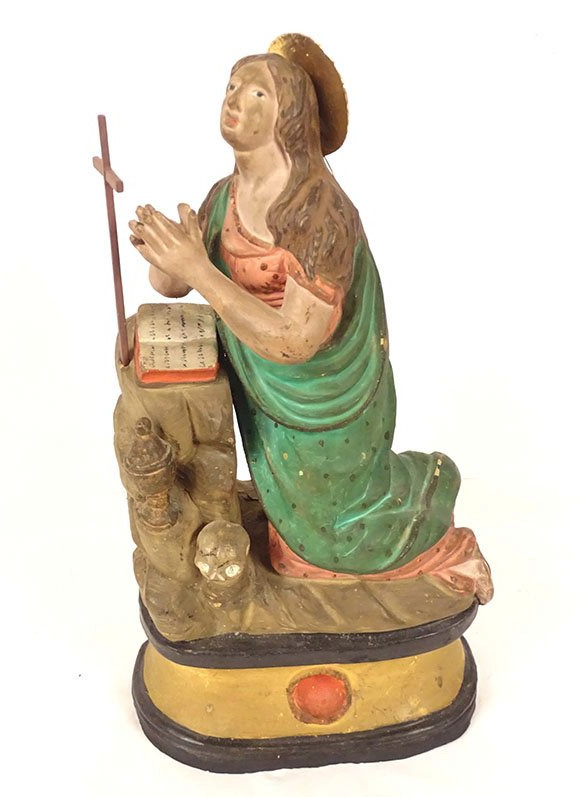
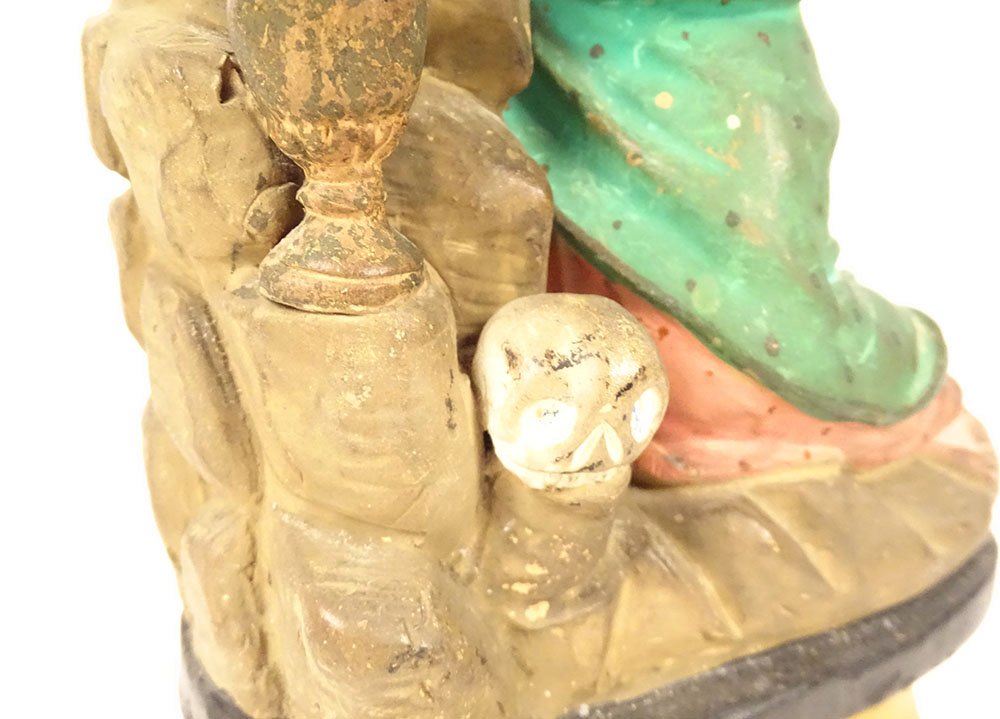
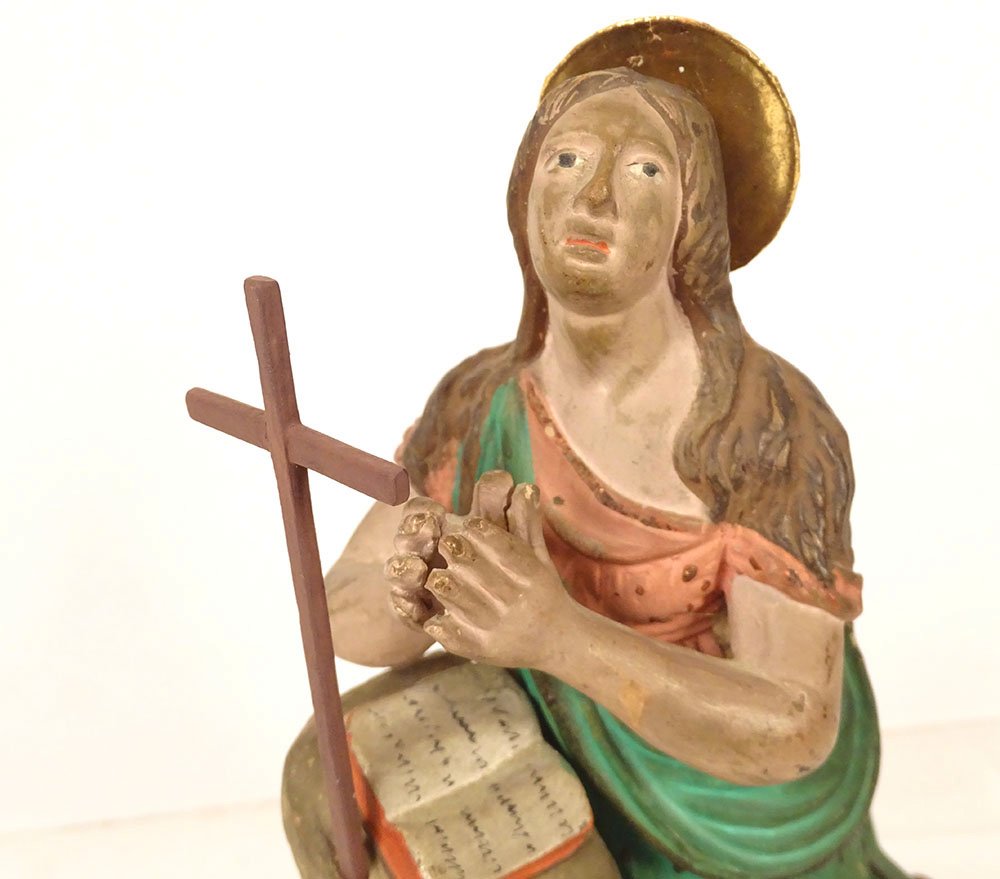
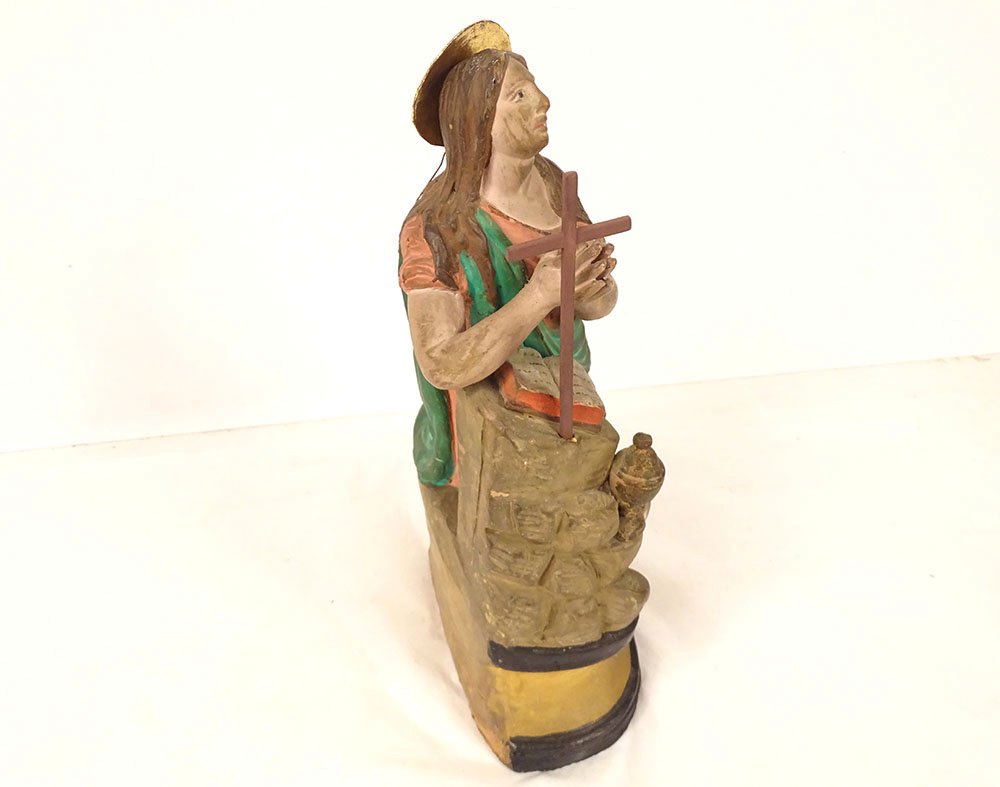

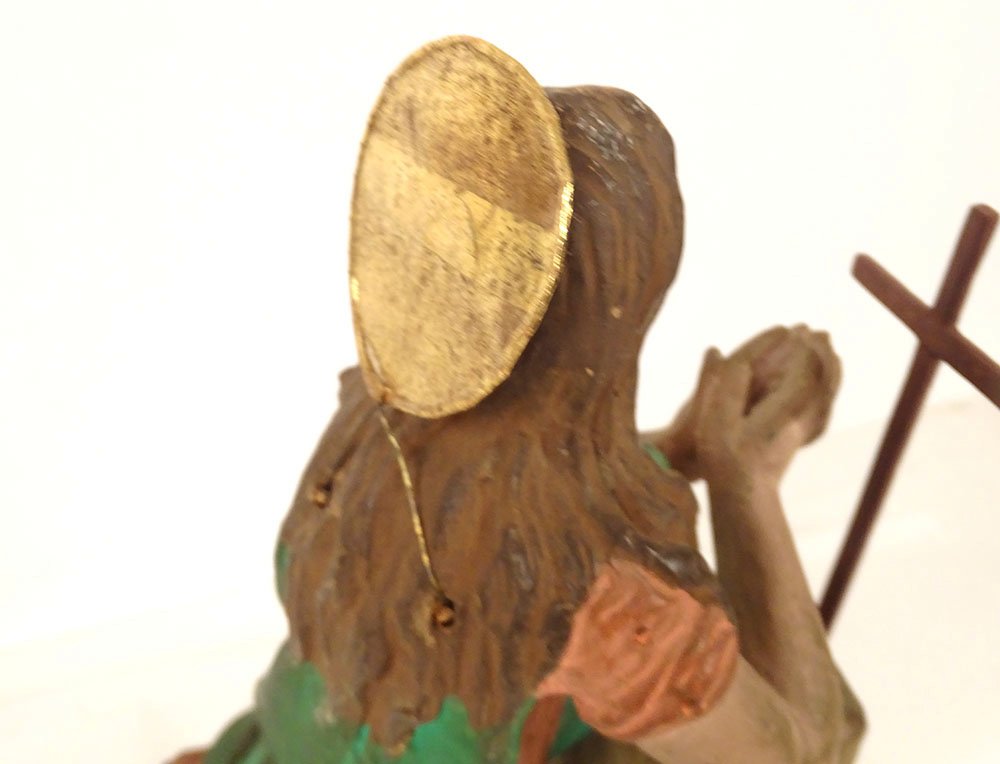

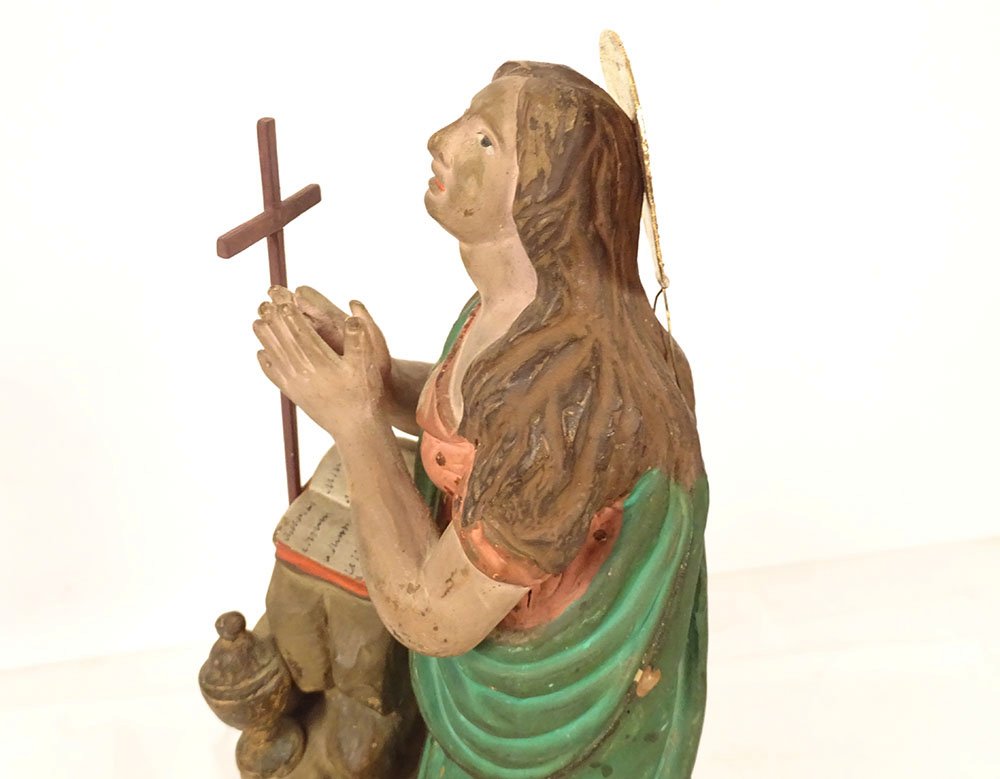
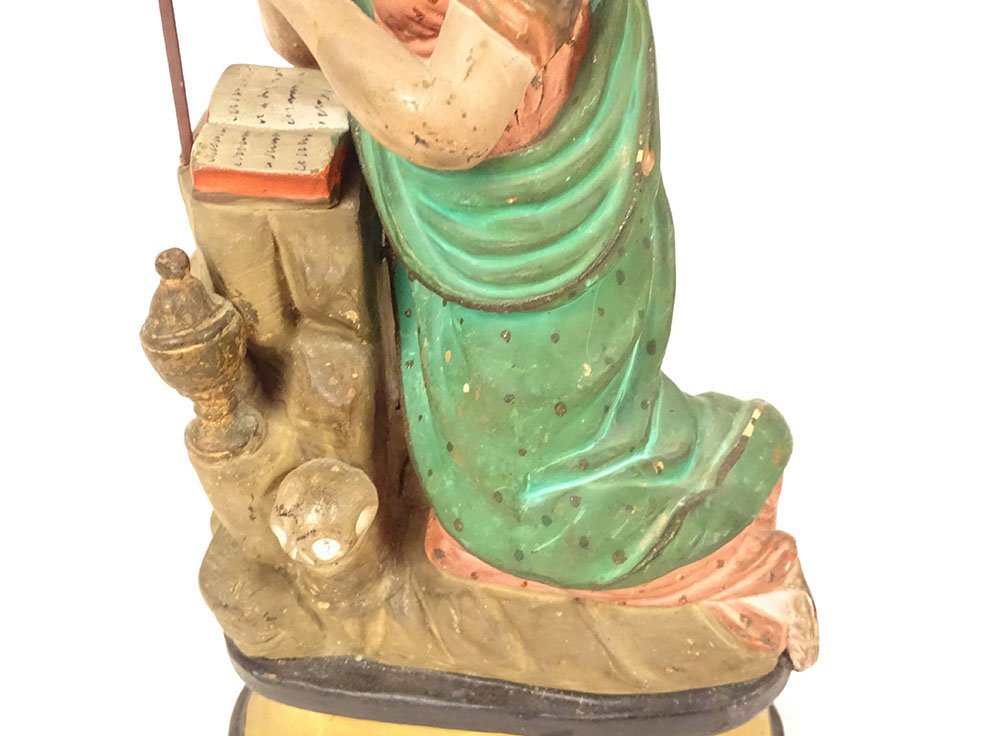
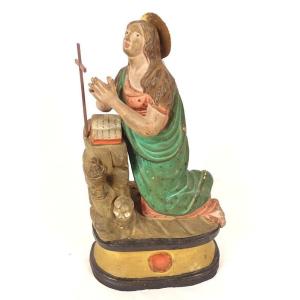


A Provençal *Santibelli* made of polychrome terracotta depicting Saint Mary Magdalene** in a penitent pose. She is kneeling, her eyes turned toward Heaven as a sign of devotion and her hands clasped in prayer; her long hair frames her face and her glorious halo.
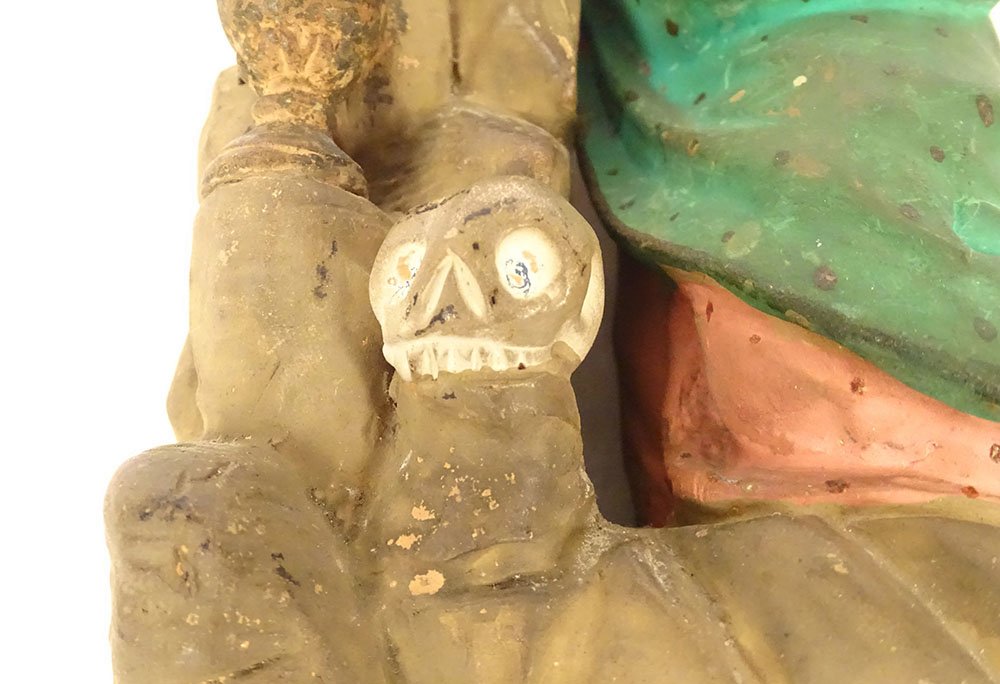
Surrounding her are her traditional attributes: a skull (a memento mori), the jar of ointment with which she washed and anointed Christ’s feet, and the open book symbolizing meditation; and finally the cross before which she stands in contemplation. Dates from the first half of the 19th century.
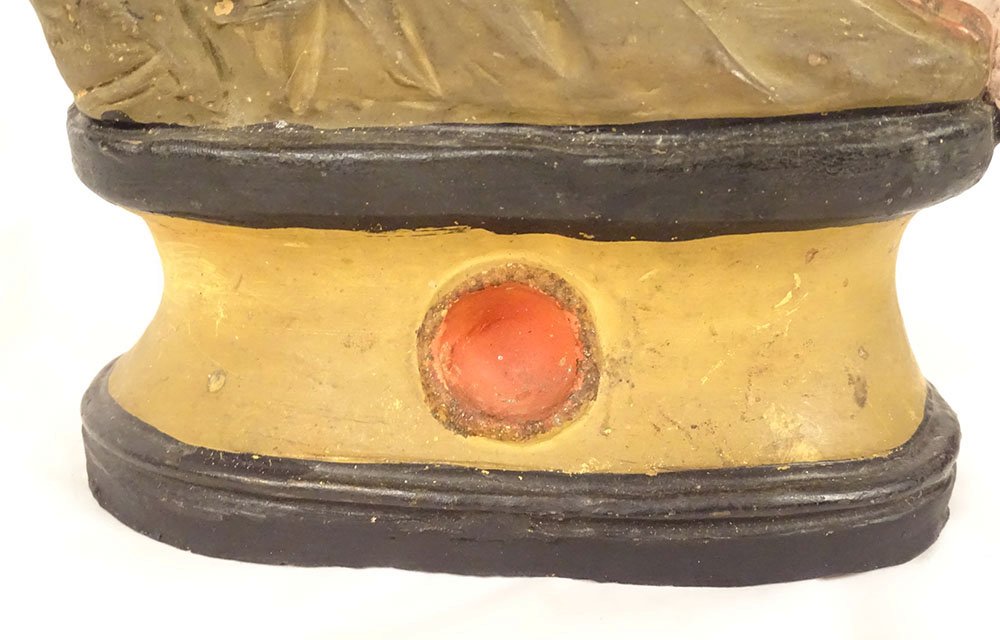
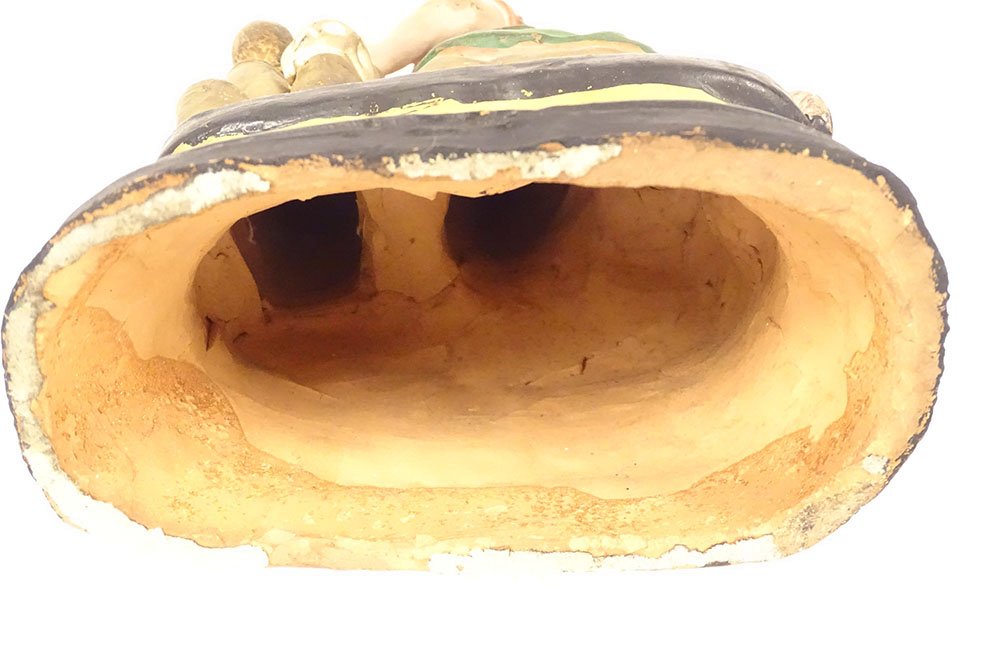
Please note: a few minor chips and areas where the polychrome has worn away, signs of age; see photos.
* The SantibelliThe "Santibelli" are statuettes generally about 40 centimeters tall. Cast in terracotta, but also in plaster, originating from Italy, they are painted in very bright colors, sometimes sprinkled with glitter, or gilded with gold leaf. The origin of these figurines’ name is difficult to pinpoint: here, it refers to a typical Marseille nickname that describes a “Santibelli” as the local simpleton, the likeable but not very savvy fool. Here, one imagines that “Santibelli” comes from the cry of Italian vendors who, according to tradition, peddled these objects: “Santi... Belli...”; like a street cry, which, in shorthand, would have stuck to refer to these statuettes sold by street vendors.
** Mary Magdalene:Mary of Magdala, Mary Magdalene, or Magdalene—referred to as Mary the Magdalene in the Gospels—was a disciple of Jesus who followed him until his final days. The four Gospels identify her as the first witness to the Resurrection, entrusted with informing the apostles. Christian tradition and iconography draw upon these canonical and apocryphal texts to present various portrayals of Mary of Magdala, first as the spiritual bride of Christ and the apostle of Revelation, and then, beginning in the 4th century, as the sinner who was rejected and scorned but who repented, with the Middle Ages drawing on numerous legends to fashion her into a saint. In sacred art, Mary Magdalene is very often depicted nude, with long, loose hair, to signify her repentance and penance. One depiction of Mary Magdalene shows her as a hermit in the desert after Christ’s death; an alluring woman, not without sensuality, with long, flowing hair covering her nakedness, she prays or meditates, accompanied by her customary symbols of repentance—a skull, a cross, a Bible...
Dimensions- Height 32.5 cm
- Base 17 cm x 9.5 cm
- D10 136
- All photos are available at:
www.antiques-delaval.com
Explore similar pieces and discover your ideal find:
Terracotta Sculptures