



"crucifixion" 17th-century Carved Stone Bas-relief, Folk Art
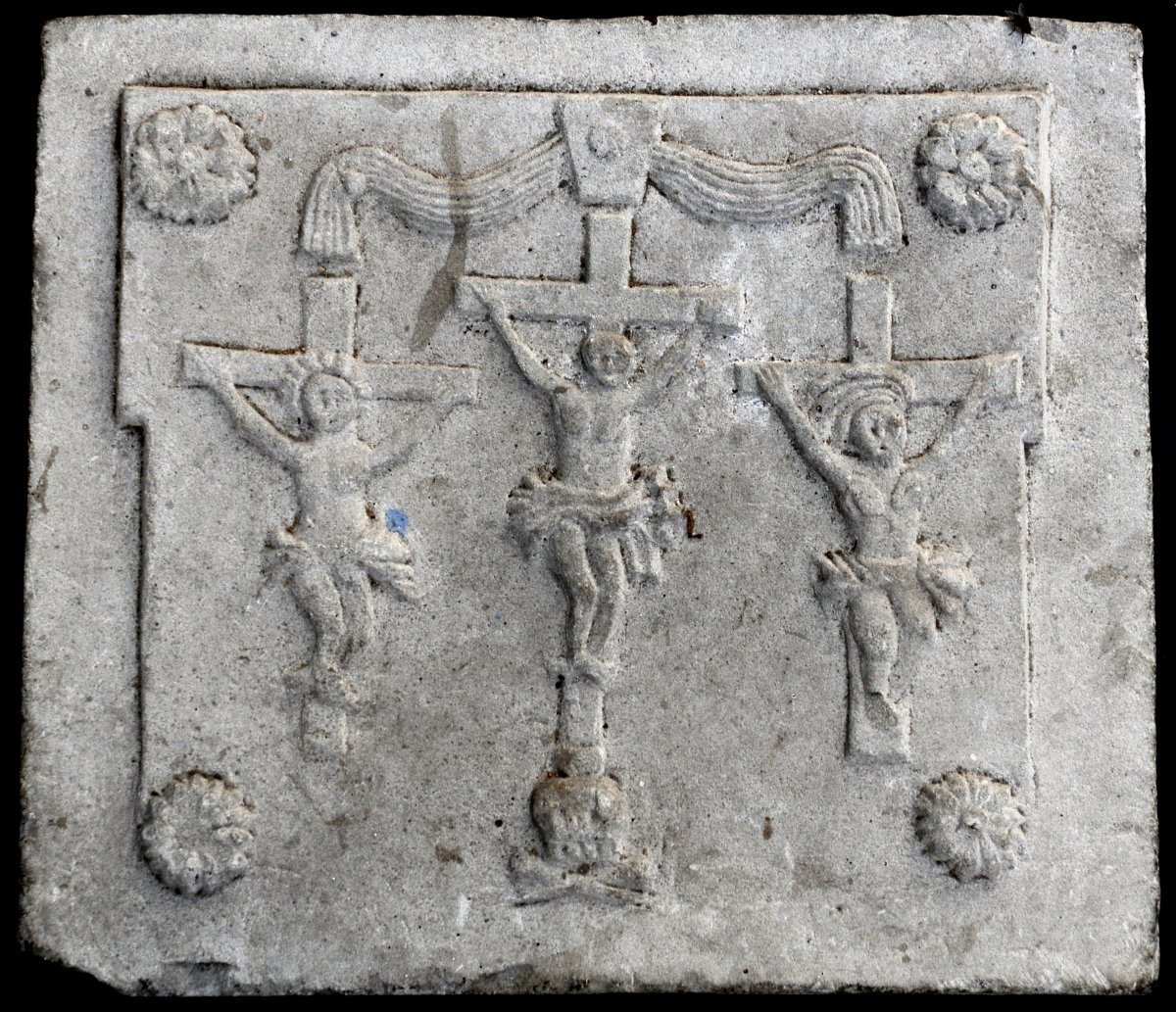
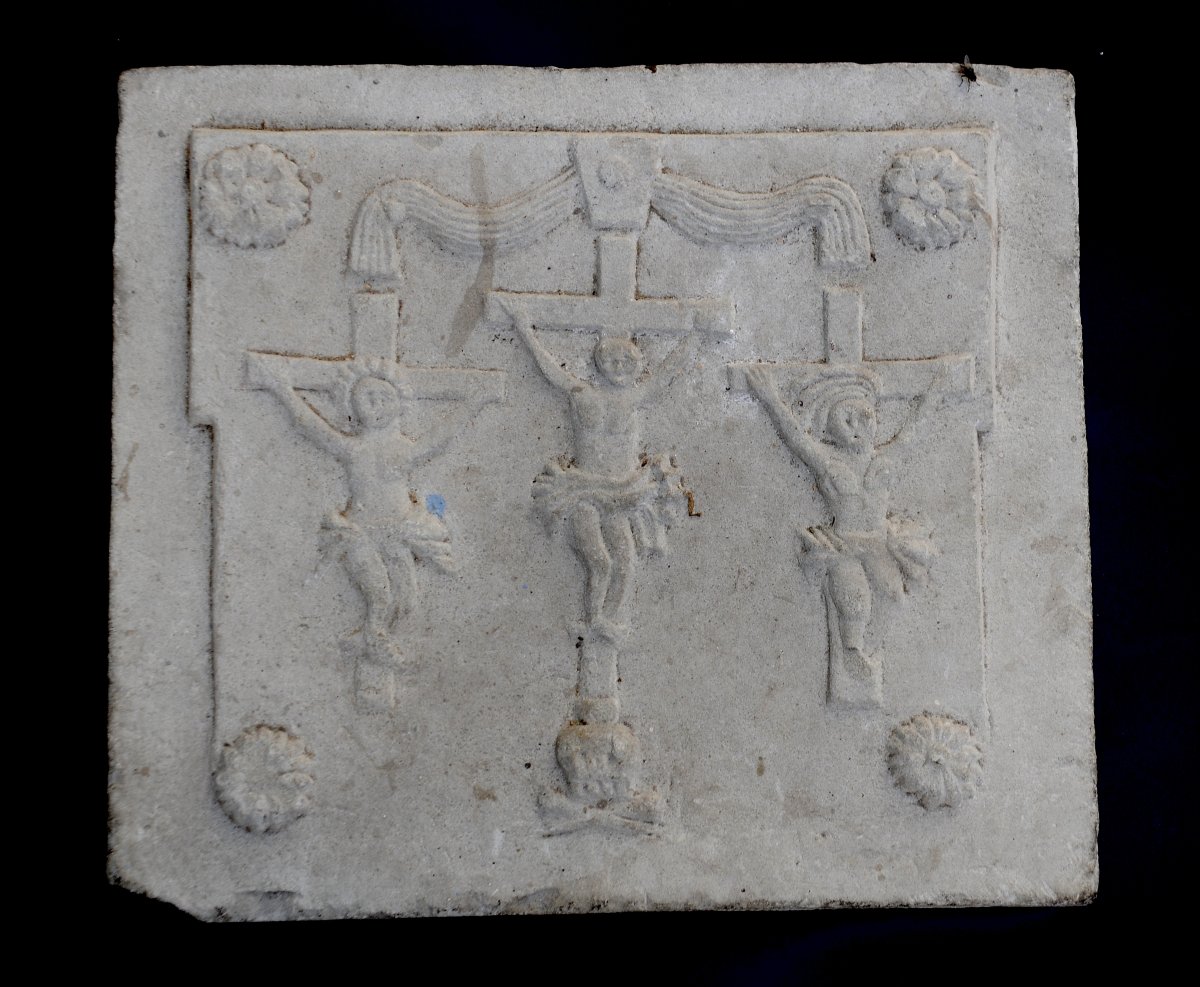
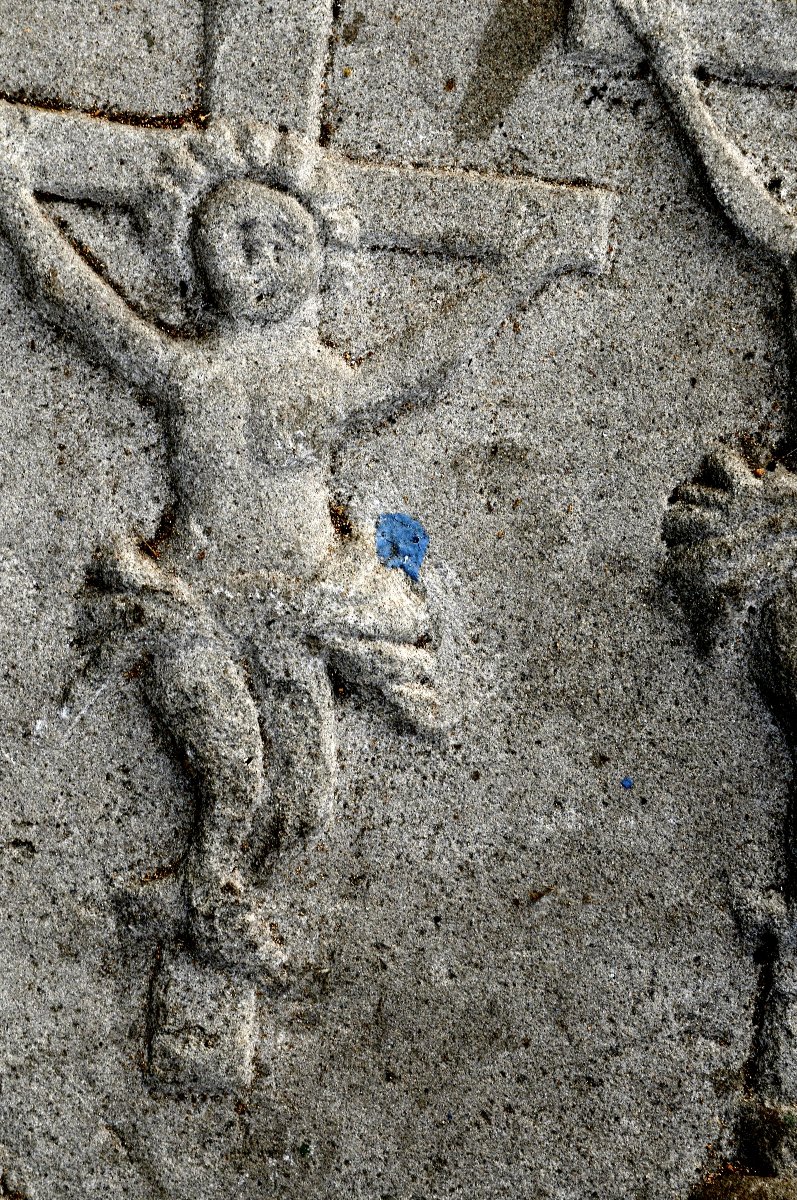
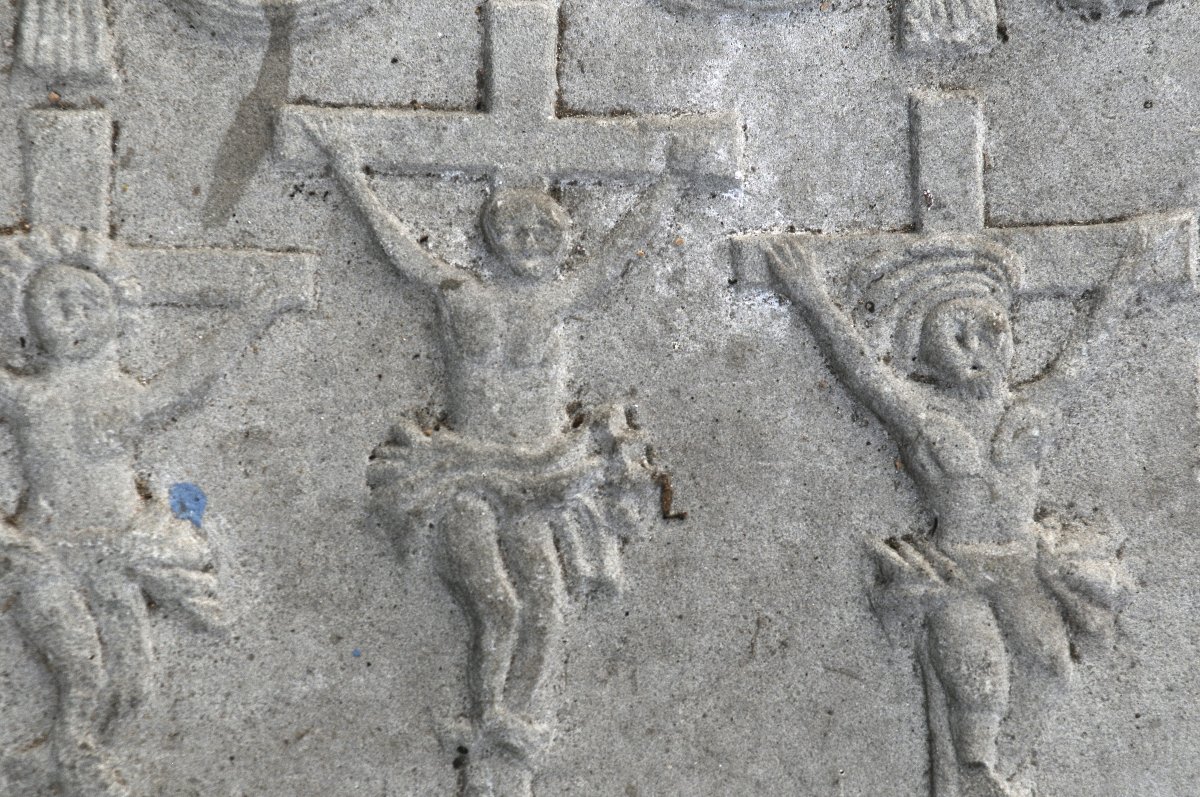
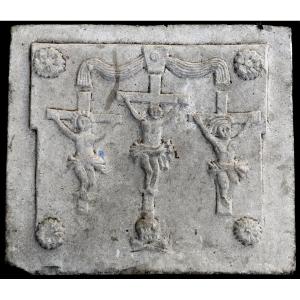
Religious bas-relief carved in stone depicting the scene of the Crucifixion (Calvary) with Christ flanked by the two thieves (Dimas and Gestas)
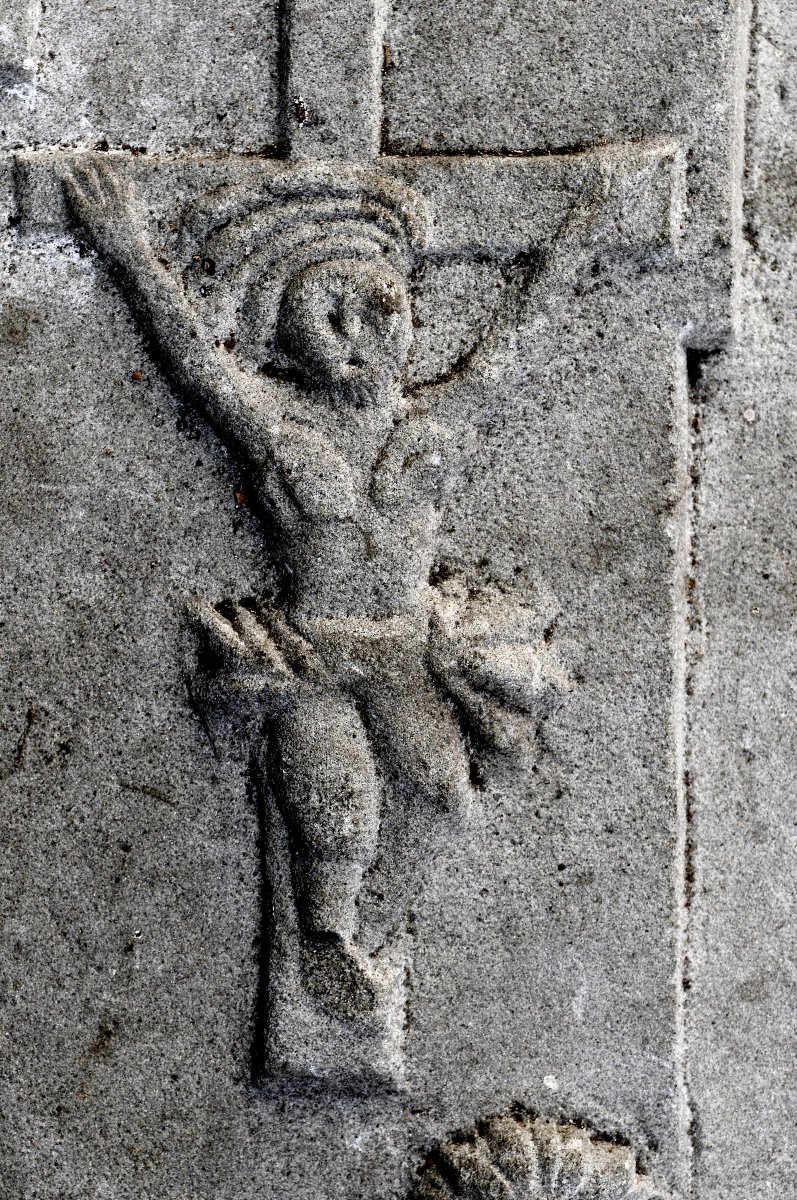
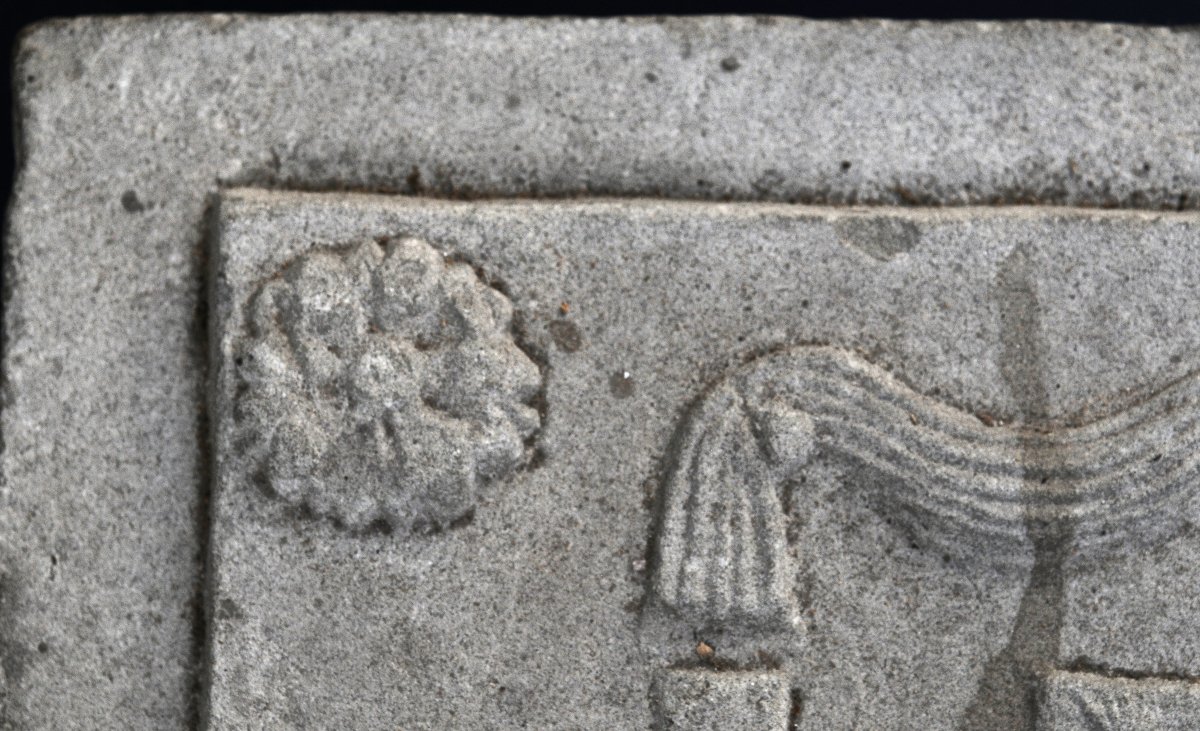
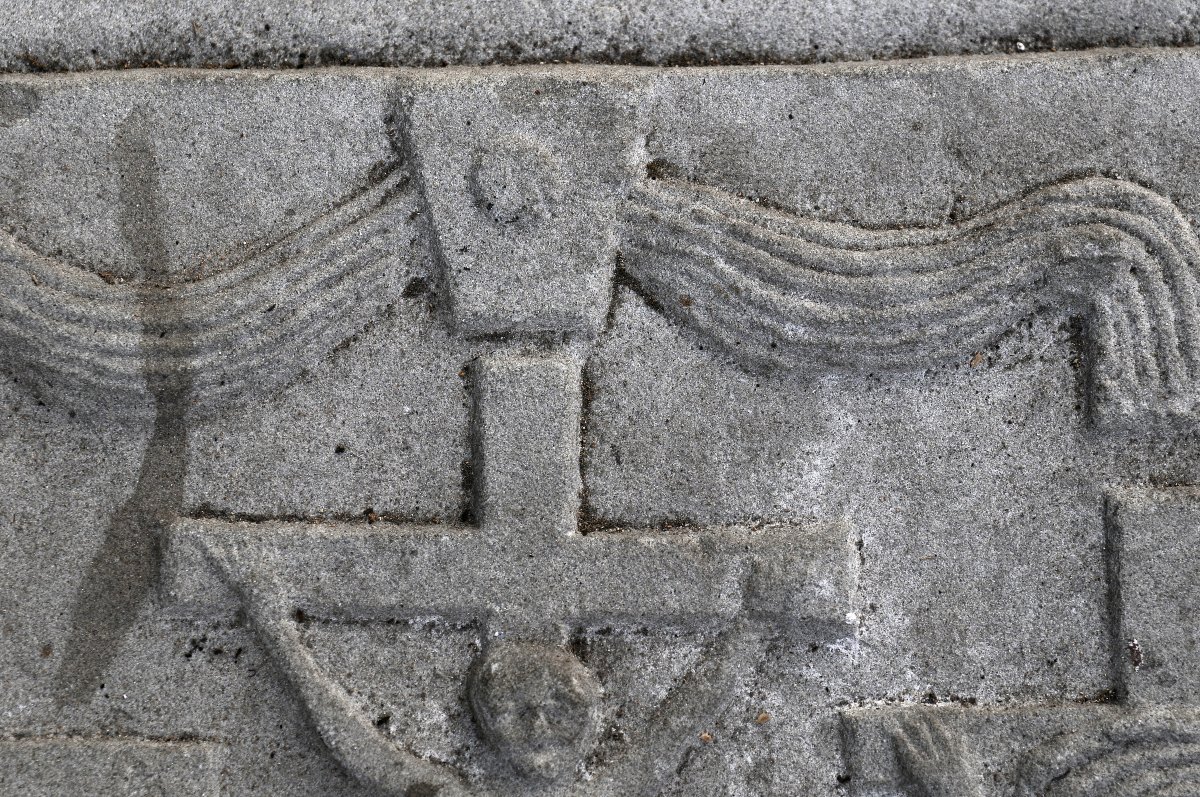
Iconography: Christ occupies the central position. At his feet, the rounded shape adorned with two crossed bones represents Adam’s skull (Golgotha, or “place of the skull”). On either side are the two thieves attached to their respective crosses. The scalloped drapery (garland or canopy) surmounting the three crosses, as well as the four rosettes (stylized flowers) arranged at the corners, are characteristic of the ornamentation found in folk art from the late Renaissance or early Classical period (17th century). A piece of folk art from eastern France, likely originating from Lorraine or Alsace, dating from the late 17th or early 18th century.Stone quality: Macro details reveal a hard, fine-grained limestone typical of certain quarries in eastern France. Tool marks and the complete absence of cracks are excellent indicators of the stone’s condition. The festooned decoration: The drapery hanging above the crosses resembles the Baroque drapery and garland motifs commonly found in the religious art of this region during that period. The rosettes: The carving of the corner rosette is clean and well-preserved, reflecting the skill of a local artisan (a village sculptor or stonemason).
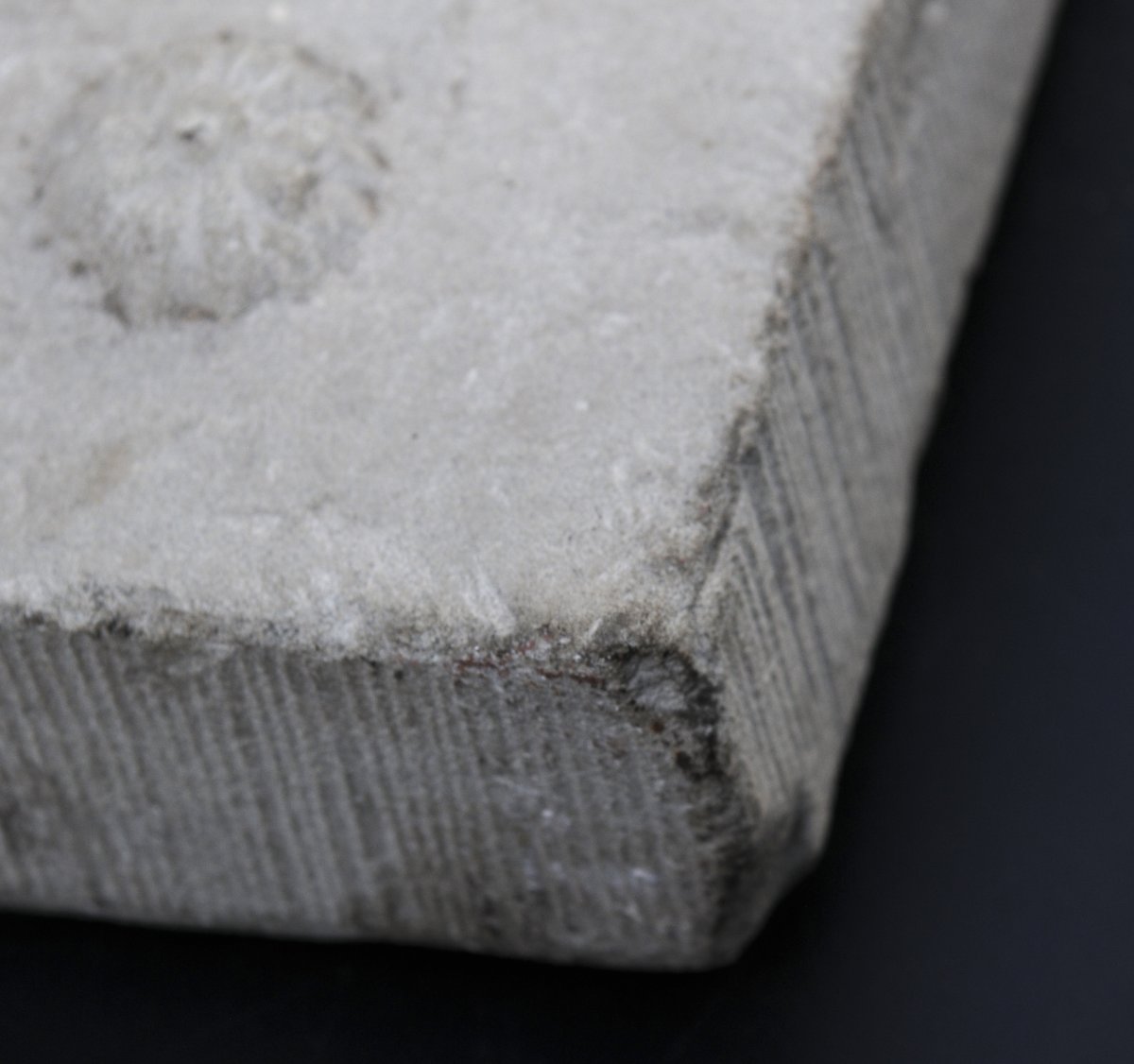
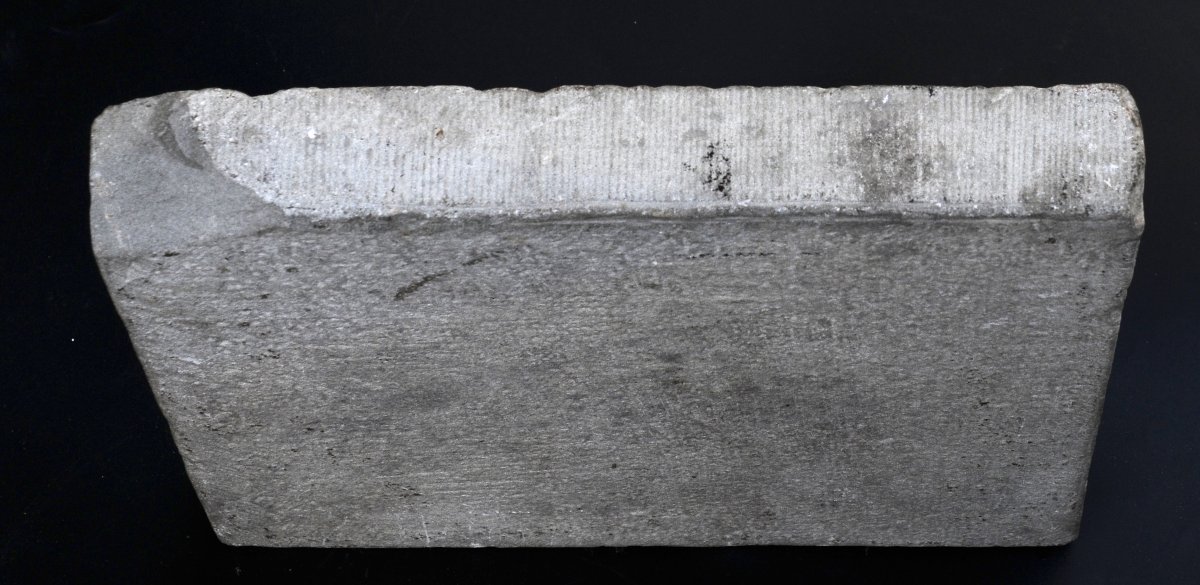
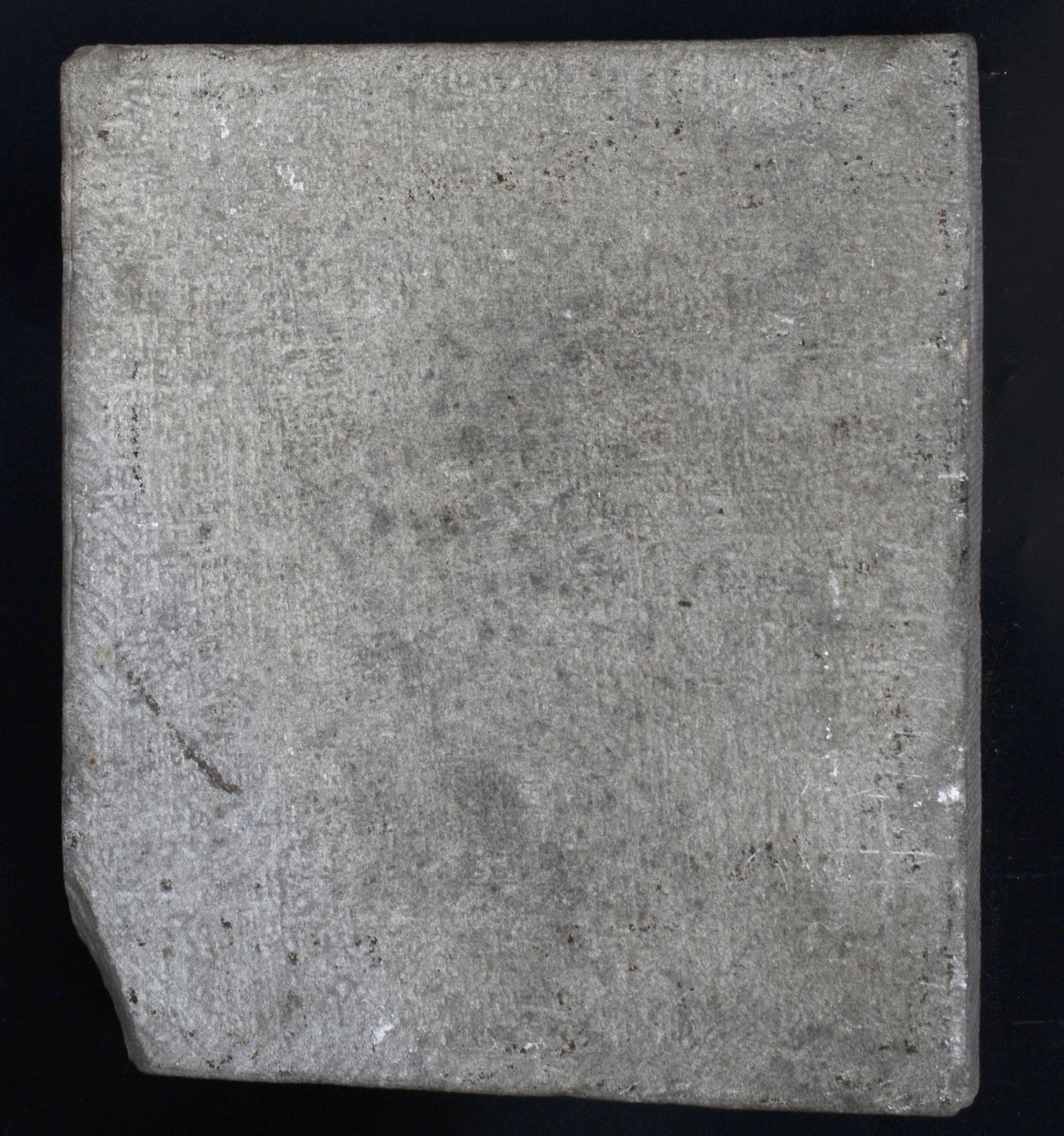
Technique & Material: It is a rectangular slab of limestone or fine sandstone. Although the carving is naive in its proportions (folk art), the relief work is meticulous. The reverse side and edges reveal regular chisel marks and a uniform gray patina, attesting to the block’s age. Original Function: This type of thick slab could have served as a built-in architectural element (such as a Stations of the Cross marker, a devotional stele, or a wall niche plaque), or as a memorial or foundation slab
Iconography: Christ occupies the central position. At his feet, the rounded shape adorned with two crossed bones represents Adam’s skull (Golgotha, or “place of the skull”). On either side are the two thieves attached to their respective crosses. The scalloped drapery (garland or canopy) surmounting the three crosses, as well as the four rosettes (stylized flowers) arranged at the corners, are characteristic of the ornamentation found in folk art from the late Renaissance or early Classical period (17th century). A piece of folk art from eastern France, likely originating from Lorraine or Alsace, dating from the late 17th or early 18th century.
1 200 €
Period: 17th century
Style: Renaissance, Louis 13th
Condition: Good condition
Material: Stone
Reference (ID): 1830155
Availability: In stock
Print