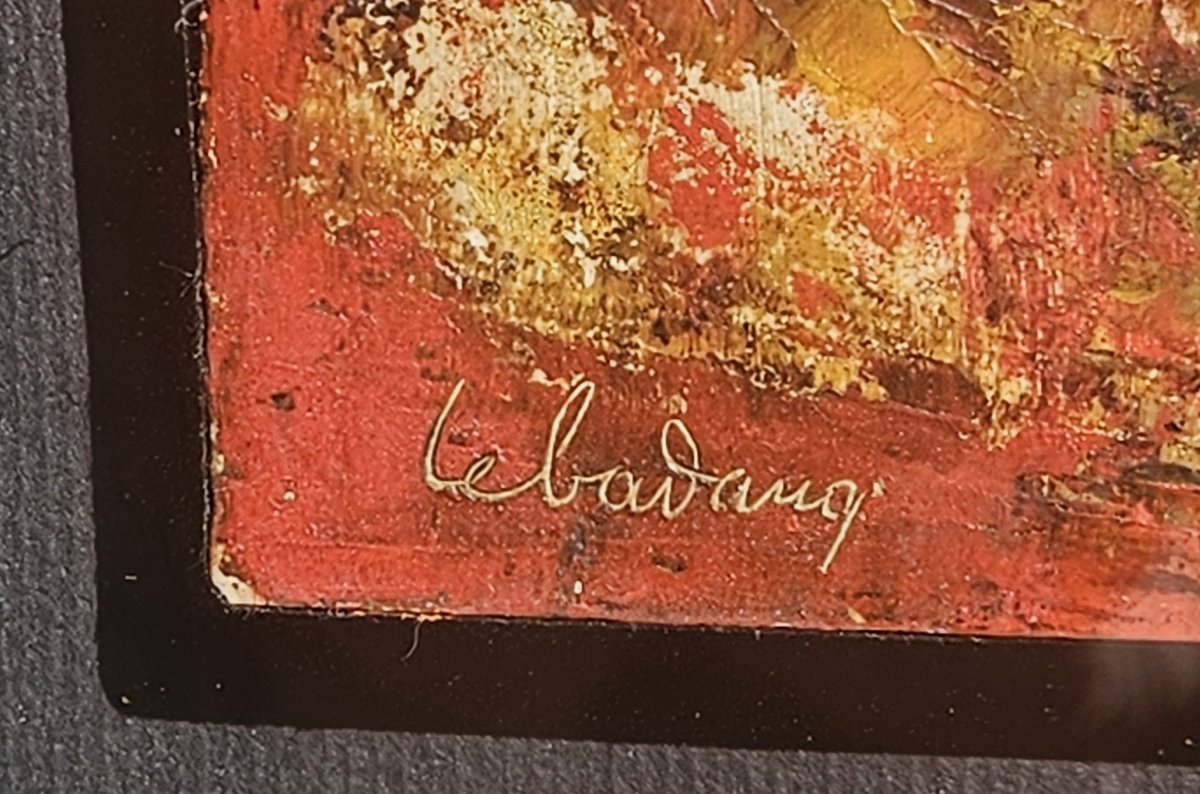
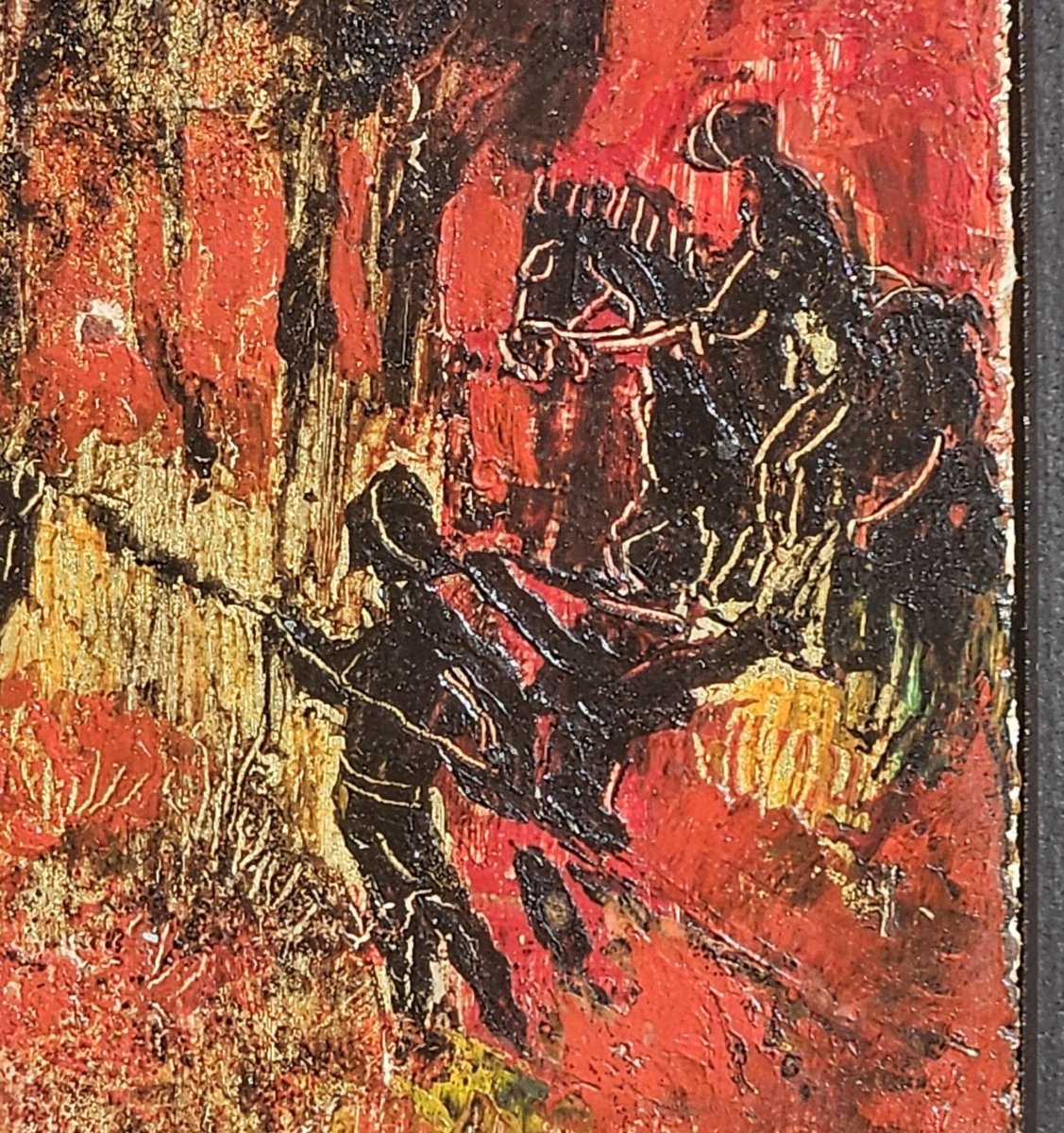
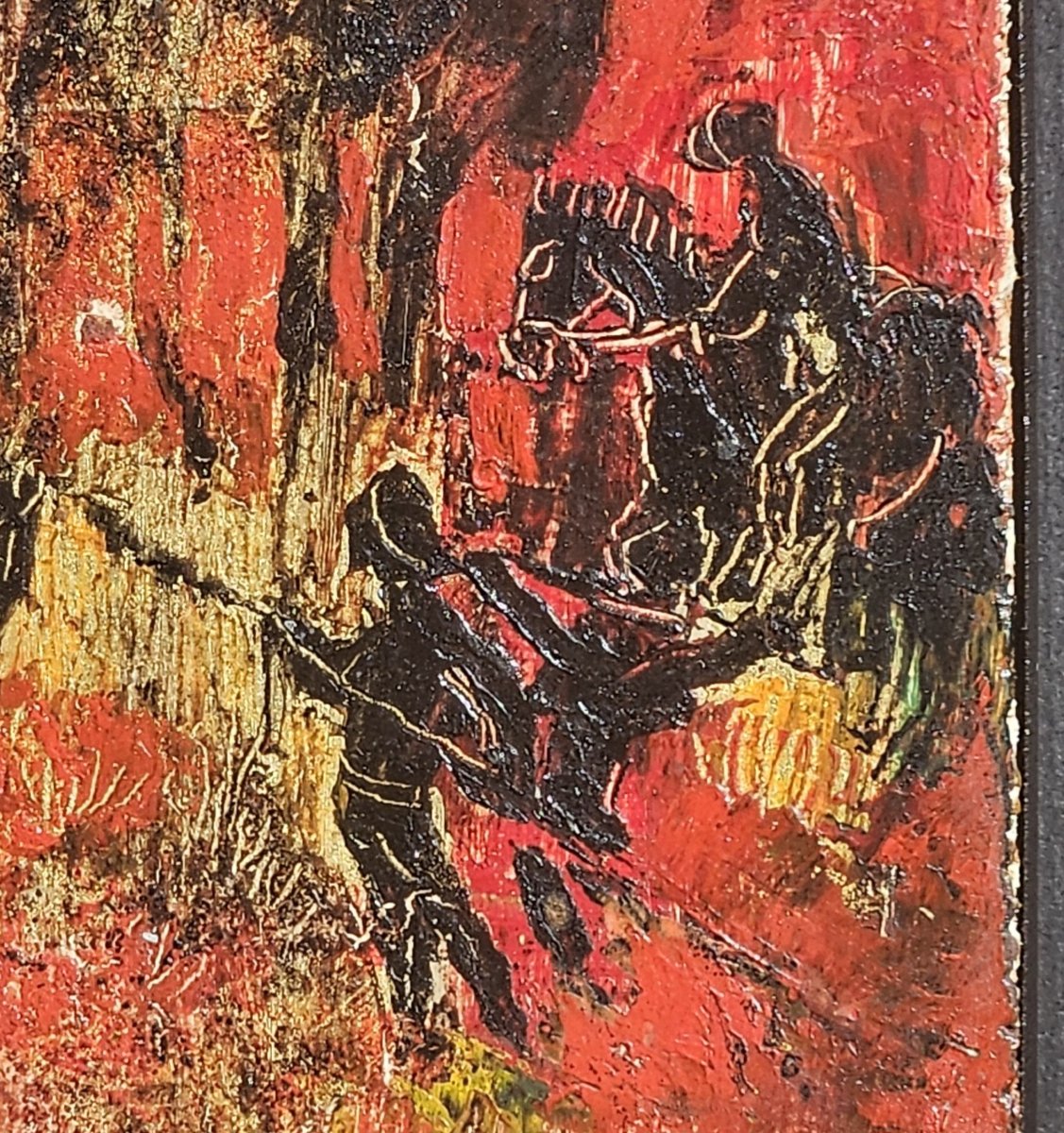
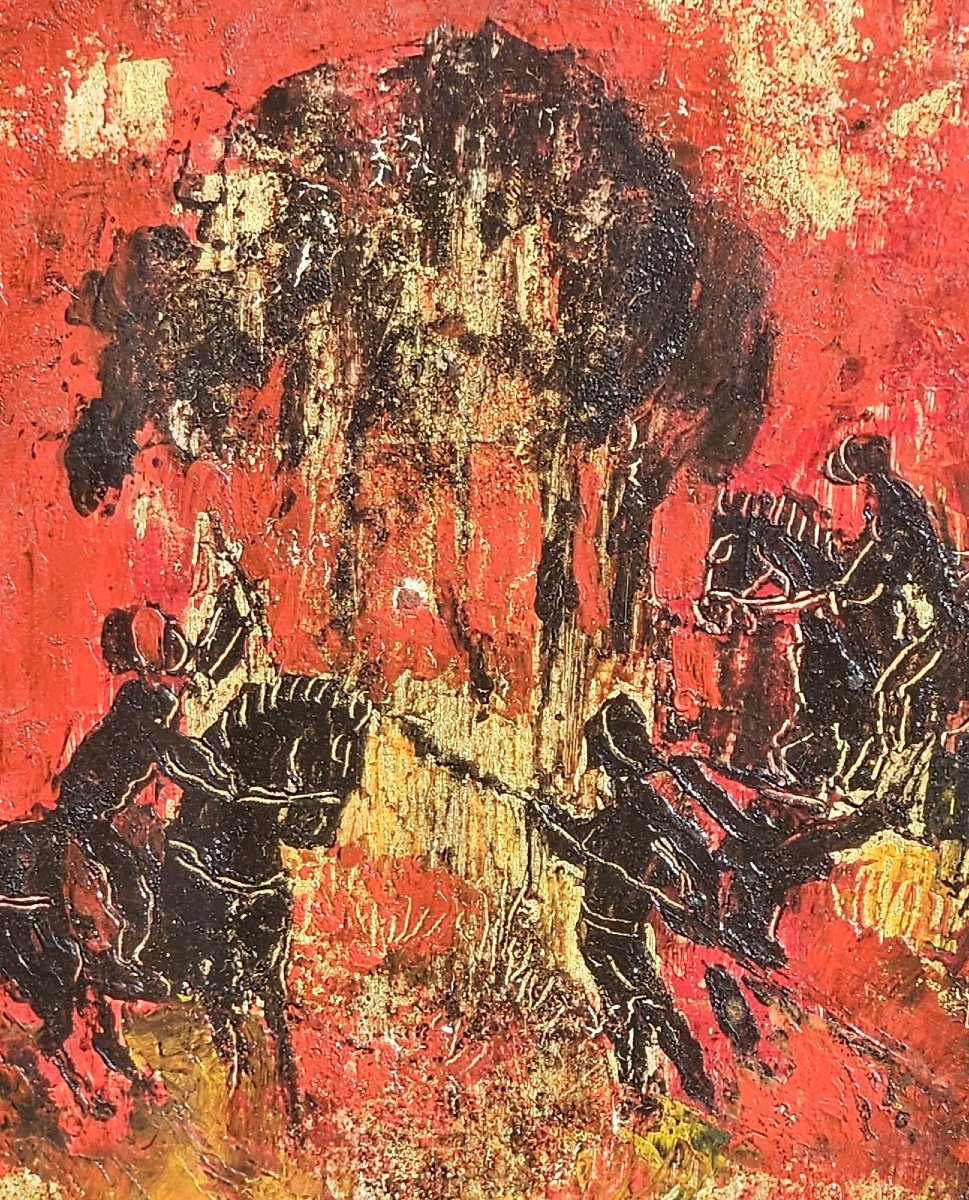

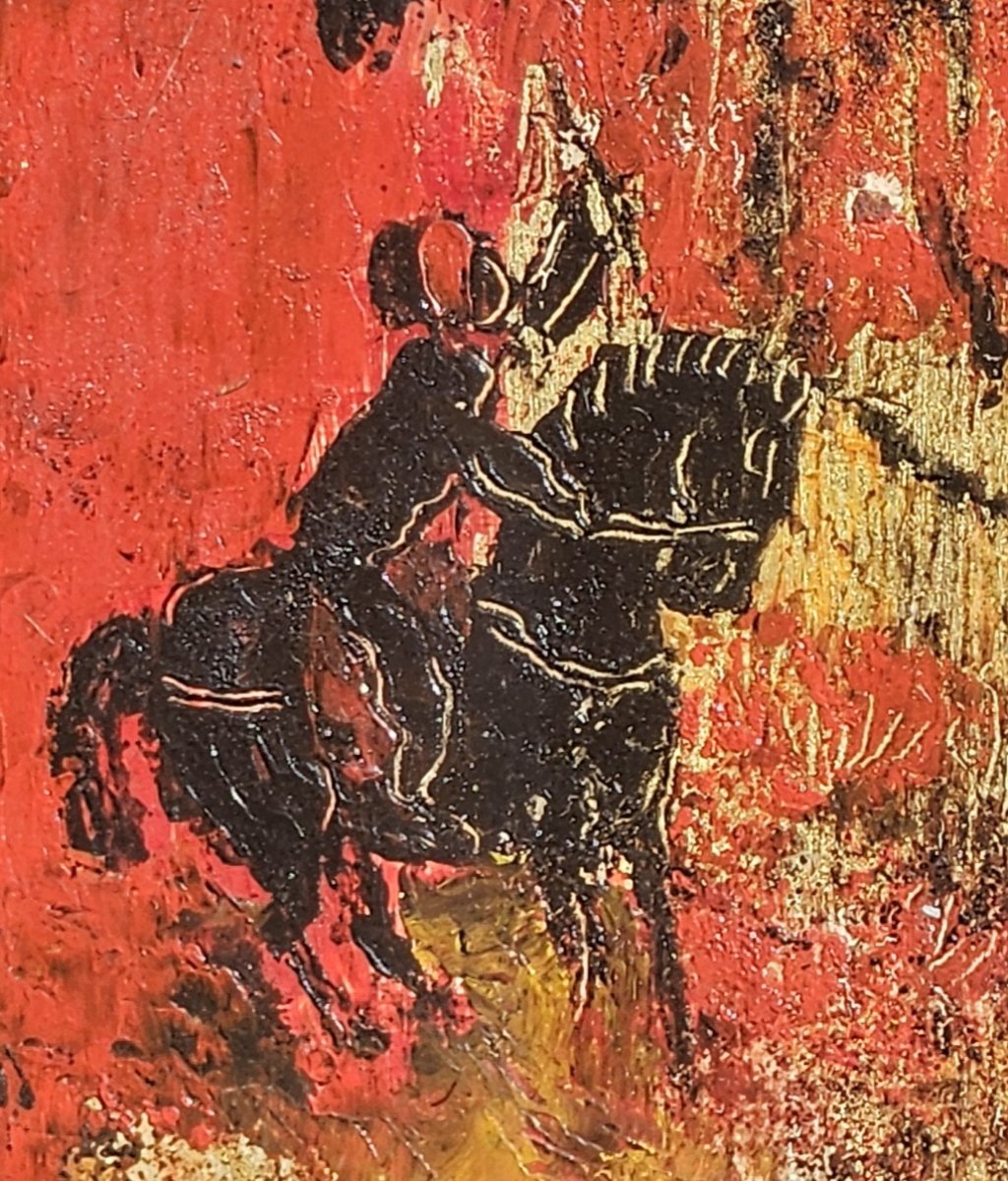
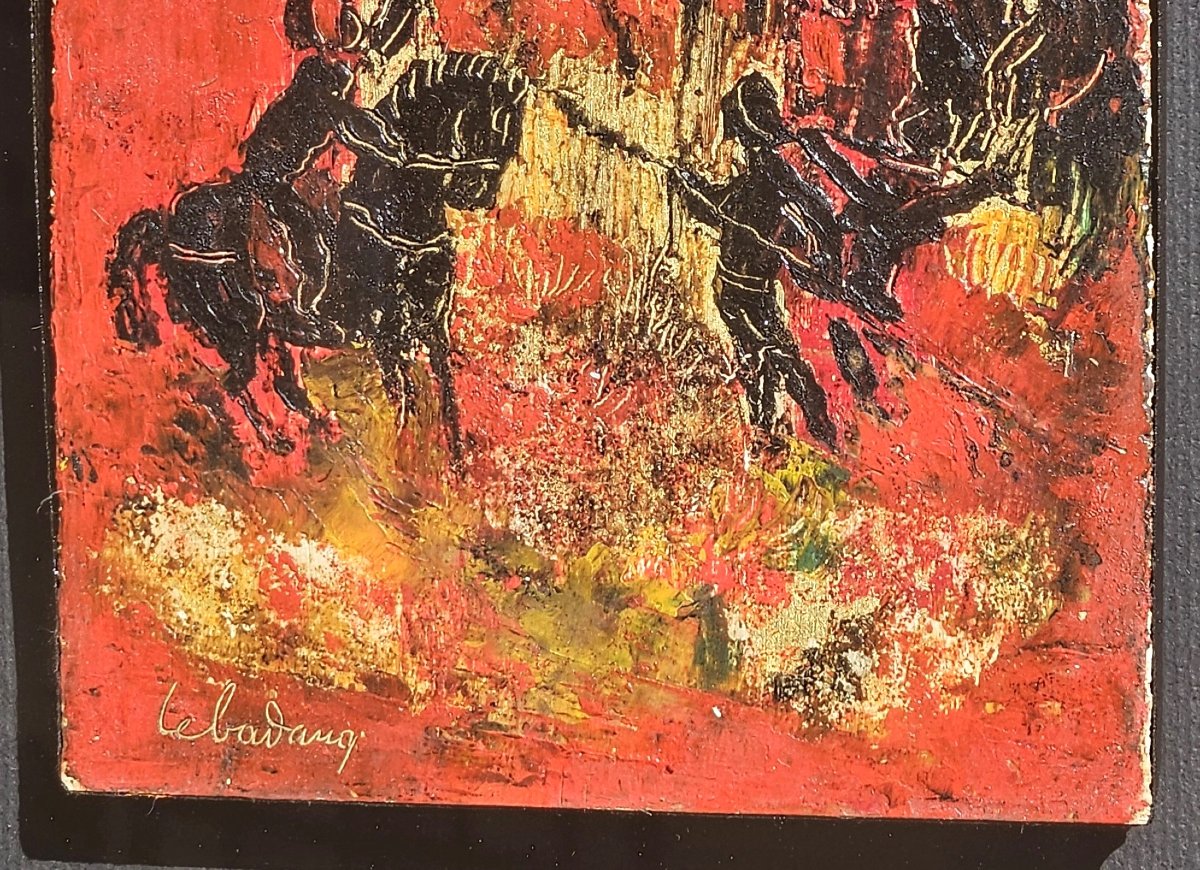
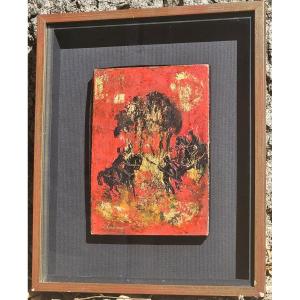


Lebadang "horses"
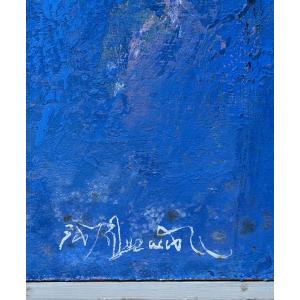
Artist: Lebadang 1921 - 2015
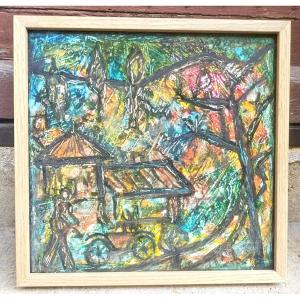
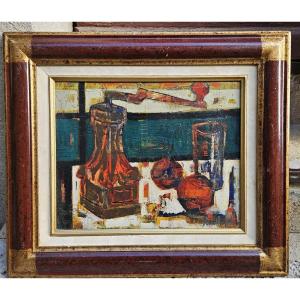
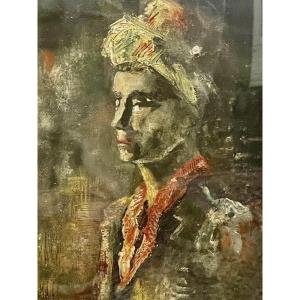
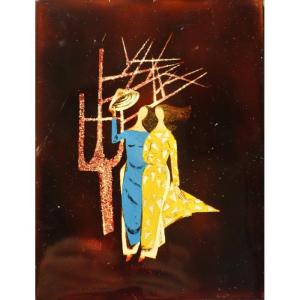
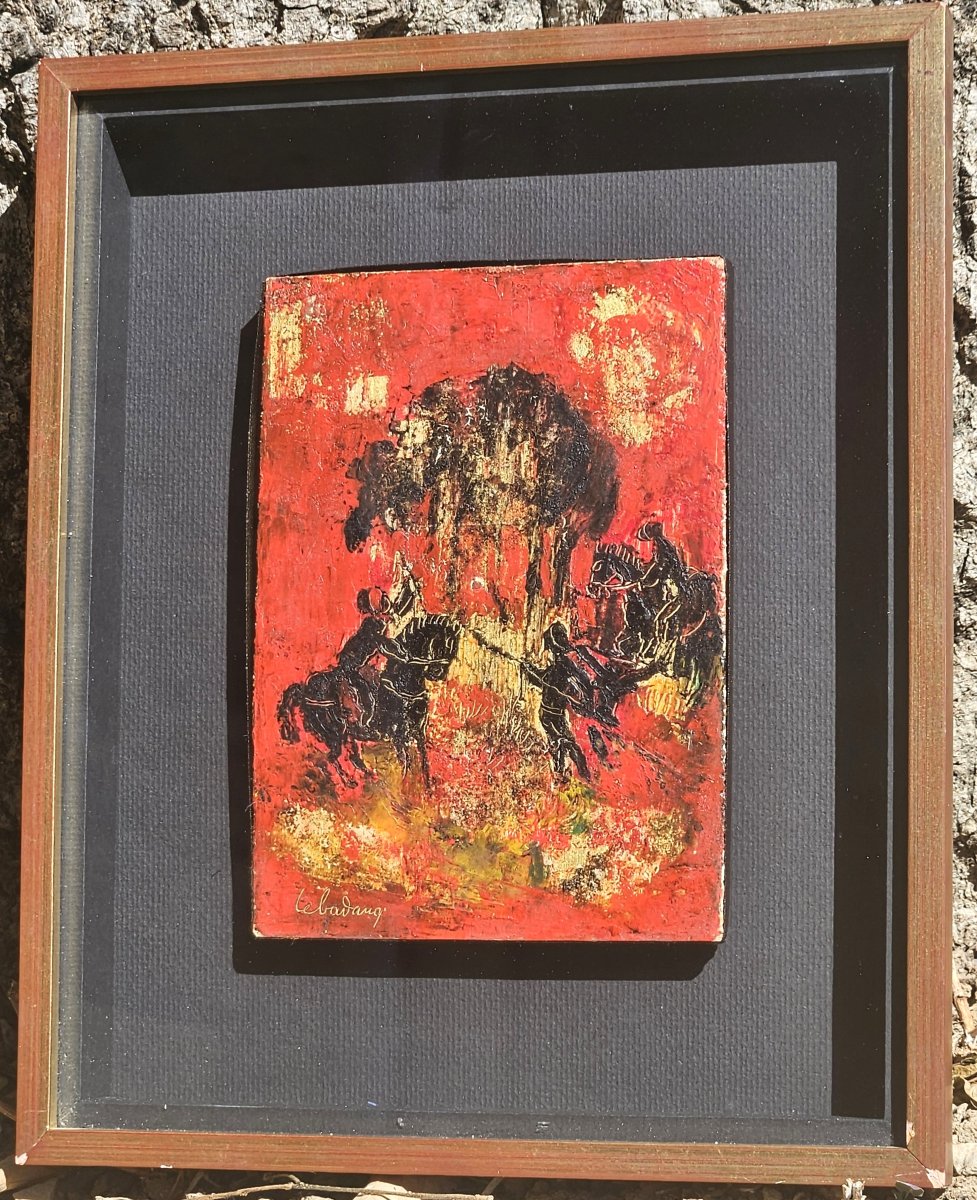
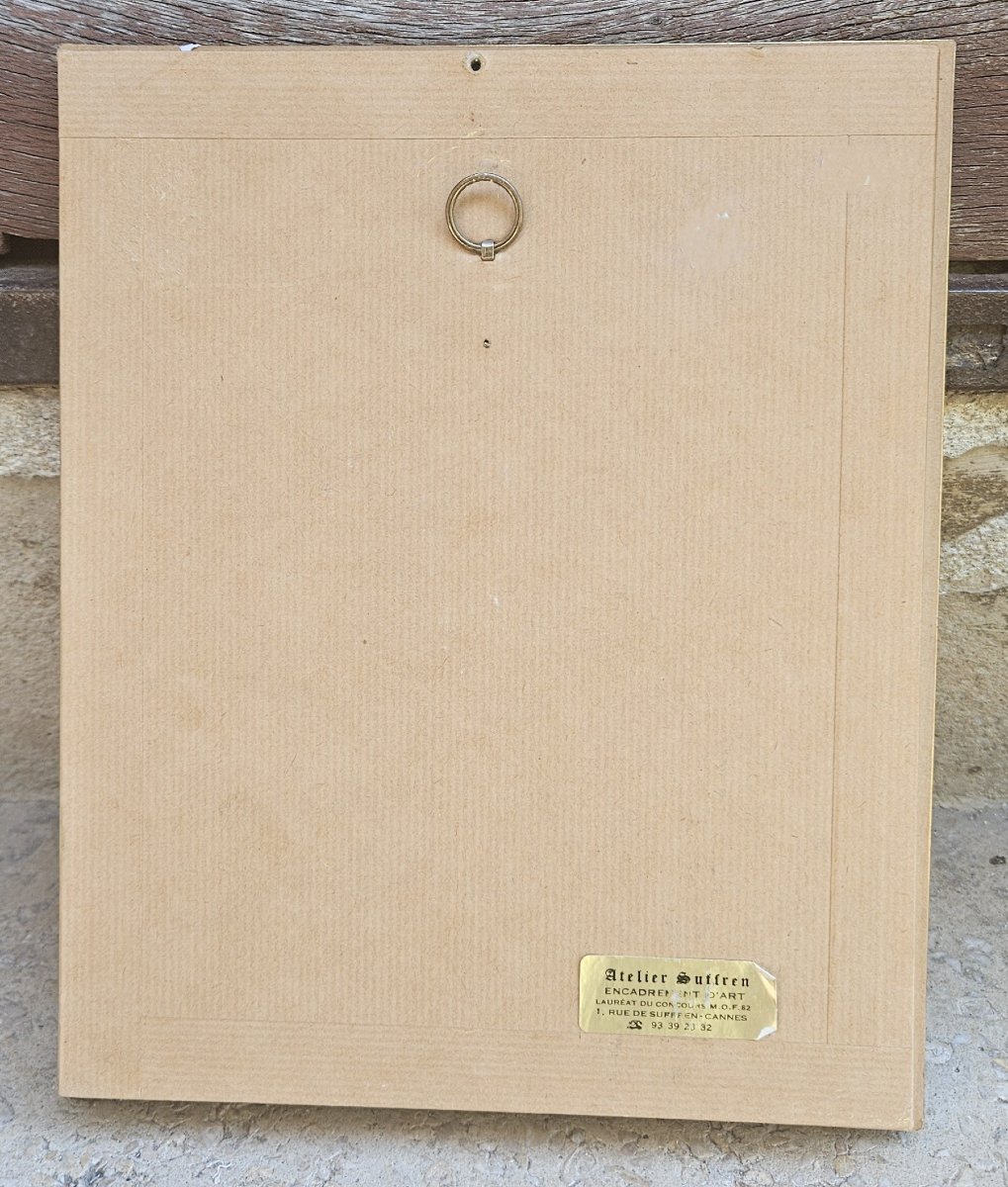
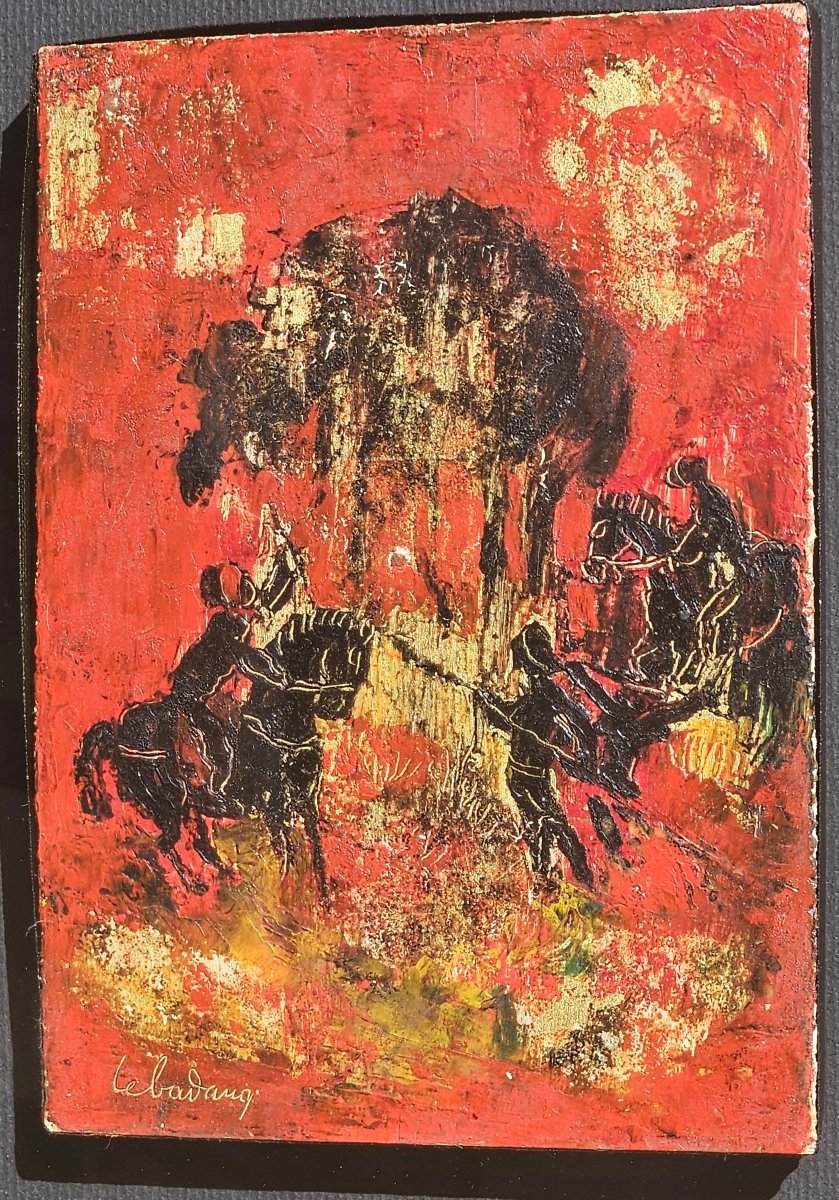
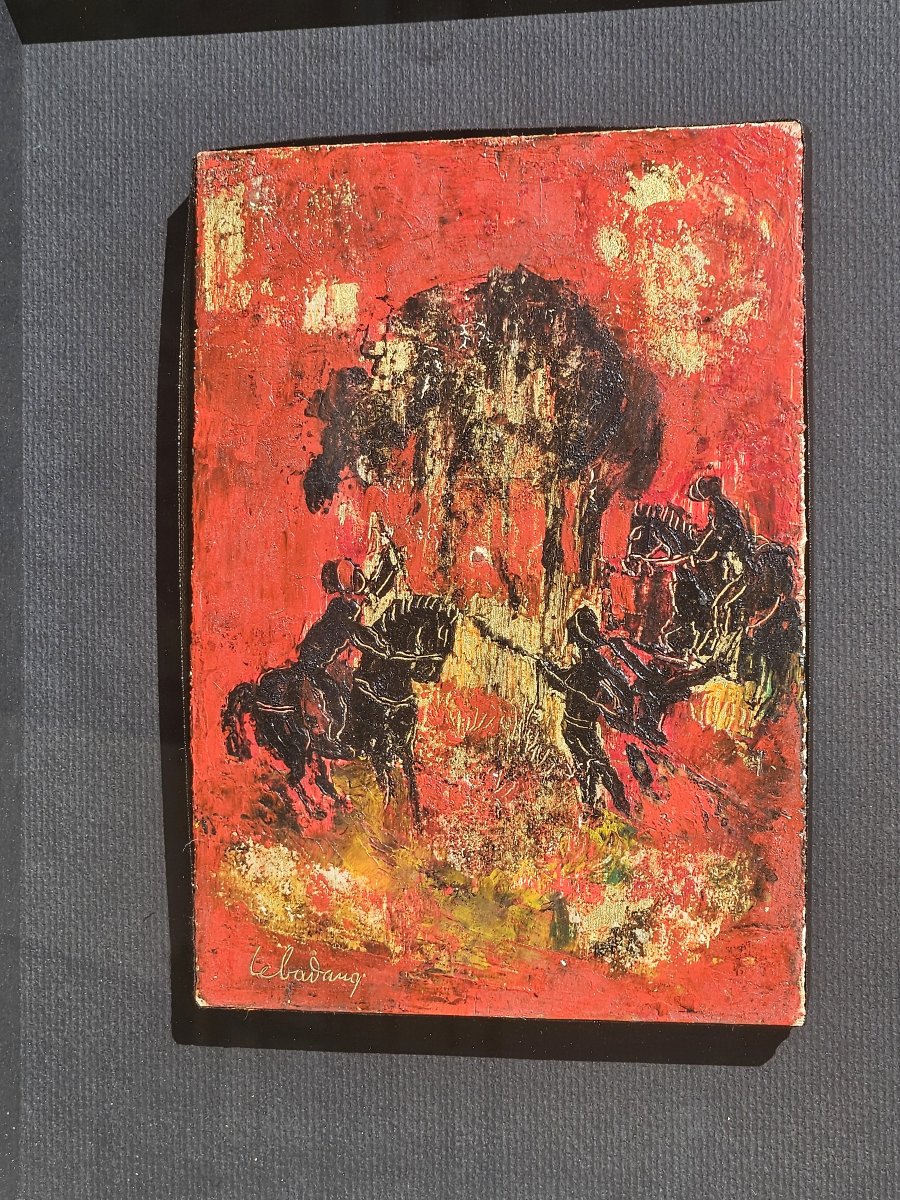
A magnificent oil on panel measuring 16.5 cm x 12.5 cm, plus frame 28.5 cm x 23.5 cm
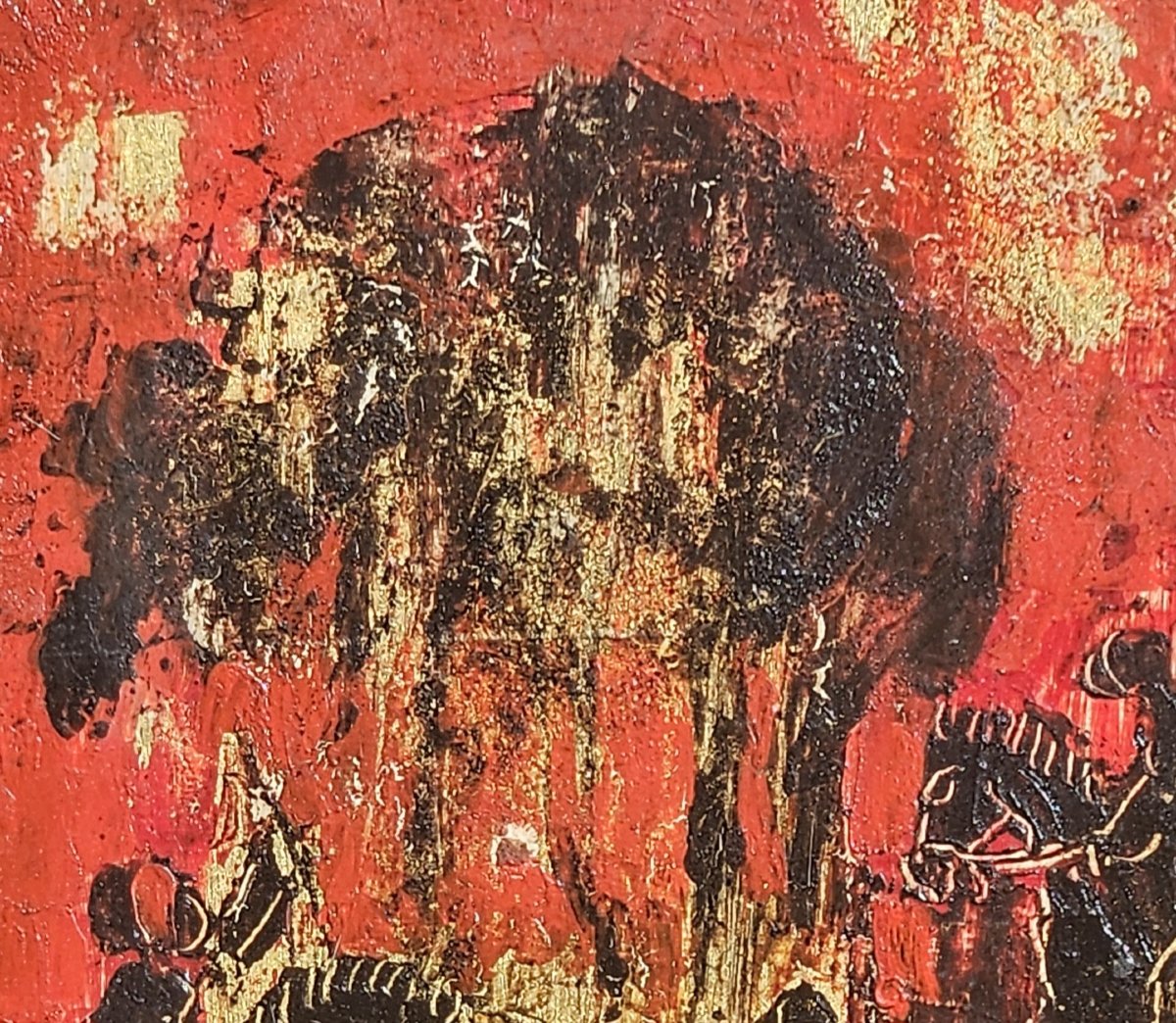
, depicting two horsemen with their horses and a figure holding a lance? under trees, the whole scene accented in places with gold on a red lacquer background
The painting I am presenting to you is of remarkable quality. The refinement ofFar East blended with Western technique
DEBADANG is a French artist born in Vietnam in 1921 who lived and pursued his career in France
His work has been exhibited all over the world
A museum near Hué is dedicated to him
An artist who is increasingly sought after
Lebadang (Lê Bá Đảng 黎白璗), a French artist of Vietnamese origin who has lived in France since the age of eighteen, has always maintained a strong cultural and emotional bond with his country of origin despite the distance.
In 1969, the conflict between communist North Vietnam and U.S.-backed South Vietnam was raging. President Nixon, elected in January, pledged to withdraw his troops. The violence, at its peak, was captured by an unprecedented flood of images that left a lasting impression and sparked a wave of protest. In Paris, Lebadang followed the unfolding fighting from afar. It had been thirty years since he left his native country, ravaged first by the war of independence against France and then by this fratricidal war. In 1972, peace negotiations in Paris made progress and culminated in the signing of the Paris Peace Accords in January 1973.
During this pivotal period, when desolation coexists with hope, Lebadang expresses his inner turmoil through a series of paintings titled *Indomitable Landscapes* (1969–1973). A chaotic natural landscape—black, sheer cliffs, aggressive swirls, and hostile splashes—is pierced by a red line. The sole touch of color—a violent, tenuous yet sharp hope—evokes the Ho Chi Minh Trail, a secret network of roads running from north to south through impenetrable mountains, along which supplies for Communist troops were transported. The highly fluid black ink is applied with extreme speed to the primed surface of the canvas. The vigor of the stroke echoes Eastern calligraphic art, while the subjugation of the motif in favor of the expression of the gesture and the creative process attests to Lebadang’s immersion in the artistic culture of his time.
Free shipping within the European Union
190 euros for international shipping
, depicting two horsemen with their horses and a figure holding a lance? under trees, the whole scene accented in places with gold on a red lacquer background
The painting I am presenting to you is of remarkable quality. The refinement ofFar East blended with Western technique
DEBADANG is a French artist born in Vietnam in 1921 who lived and pursued his career in France
His work has been exhibited all over the world
A museum near Hué is dedicated to him
An artist who is increasingly sought after
Lebadang (Lê Bá Đảng 黎白璗), a French artist of Vietnamese origin who has lived in France since the age of eighteen, has always maintained a strong cultural and emotional bond with his country of origin despite the distance.
In 1969, the conflict between communist North Vietnam and U.S.-backed South Vietnam was raging. President Nixon, elected in January, pledged to withdraw his troops. The violence, at its peak, was captured by an unprecedented flood of images that left a lasting impression and sparked a wave of protest. In Paris, Lebadang followed the unfolding fighting from afar. It had been thirty years since he left his native country, ravaged first by the war of independence against France and then by this fratricidal war. In 1972, peace negotiations in Paris made progress and culminated in the signing of the Paris Peace Accords in January 1973.
During this pivotal period, when desolation coexists with hope, Lebadang expresses his inner turmoil through a series of paintings titled *Indomitable Landscapes* (1969–1973). A chaotic natural landscape—black, sheer cliffs, aggressive swirls, and hostile splashes—is pierced by a red line. The sole touch of color—a violent, tenuous yet sharp hope—evokes the Ho Chi Minh Trail, a secret network of roads running from north to south through impenetrable mountains, along which supplies for Communist troops were transported. The highly fluid black ink is applied with extreme speed to the primed surface of the canvas. The vigor of the stroke echoes Eastern calligraphic art, while the subjugation of the motif in favor of the expression of the gesture and the creative process attests to Lebadang’s immersion in the artistic culture of his time.
Free shipping within the European Union
190 euros for international shipping
3 200 €
Period: 20th century
Style: Asian art
Condition: Excellent condition
Material: Oil painting on wood
Reference (ID): 1828551
Availability: In stock
Print