

"portrait Of A Lady With A Diamond," Regency Period
Artist: Anonyme
"Portrait of a Lady with a Diamond," Regency period
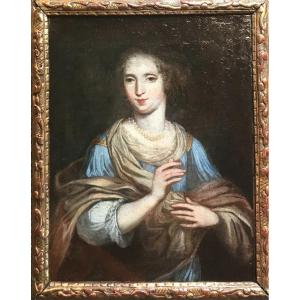
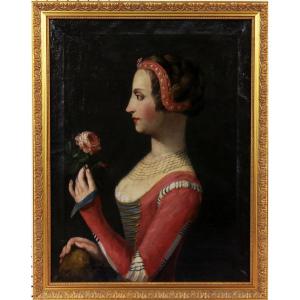
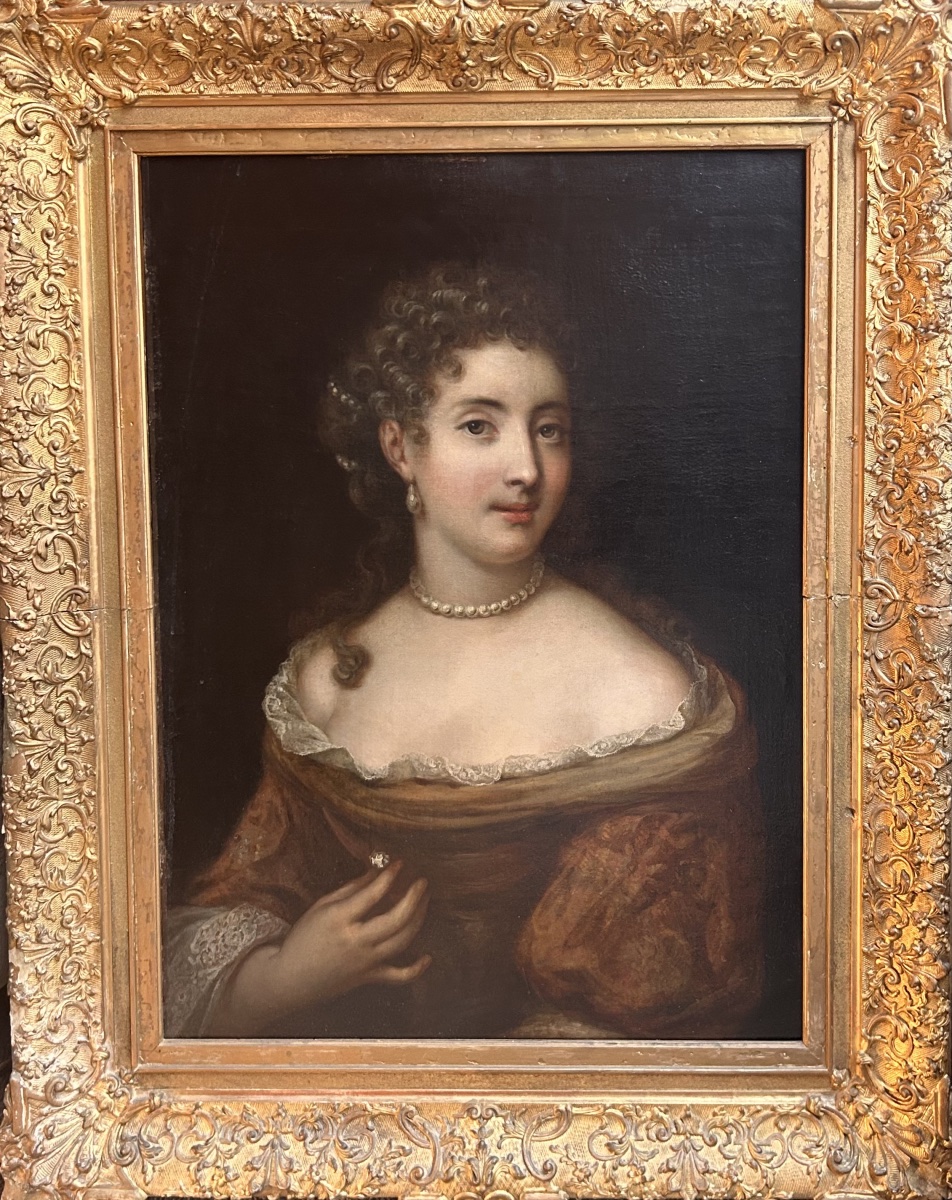
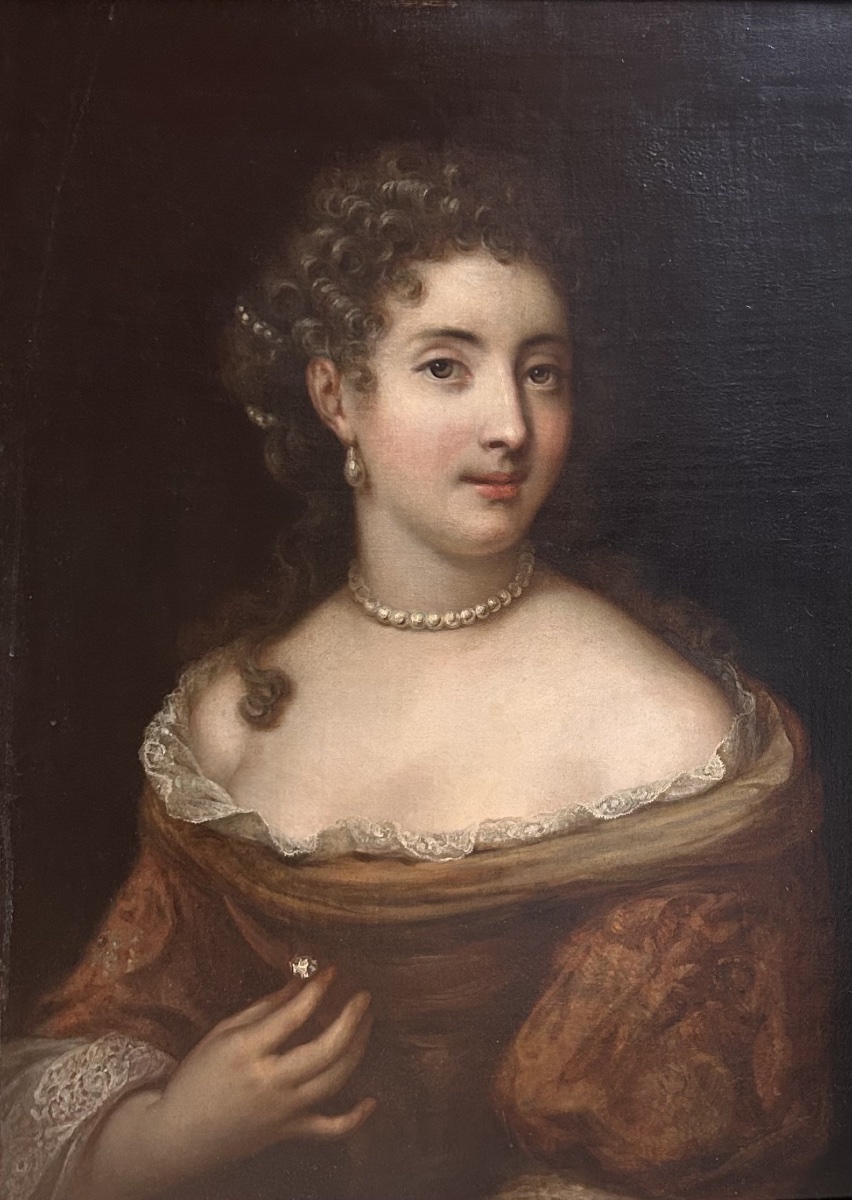
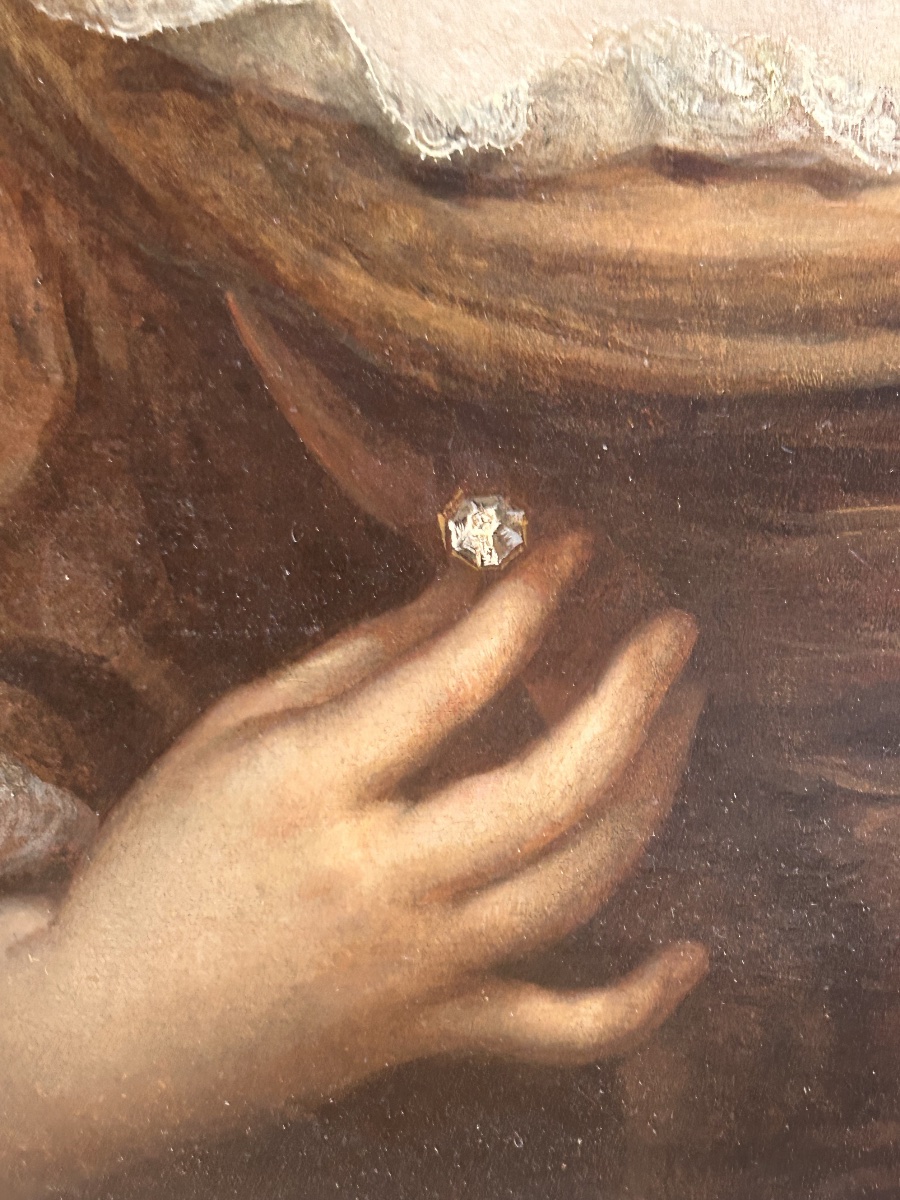
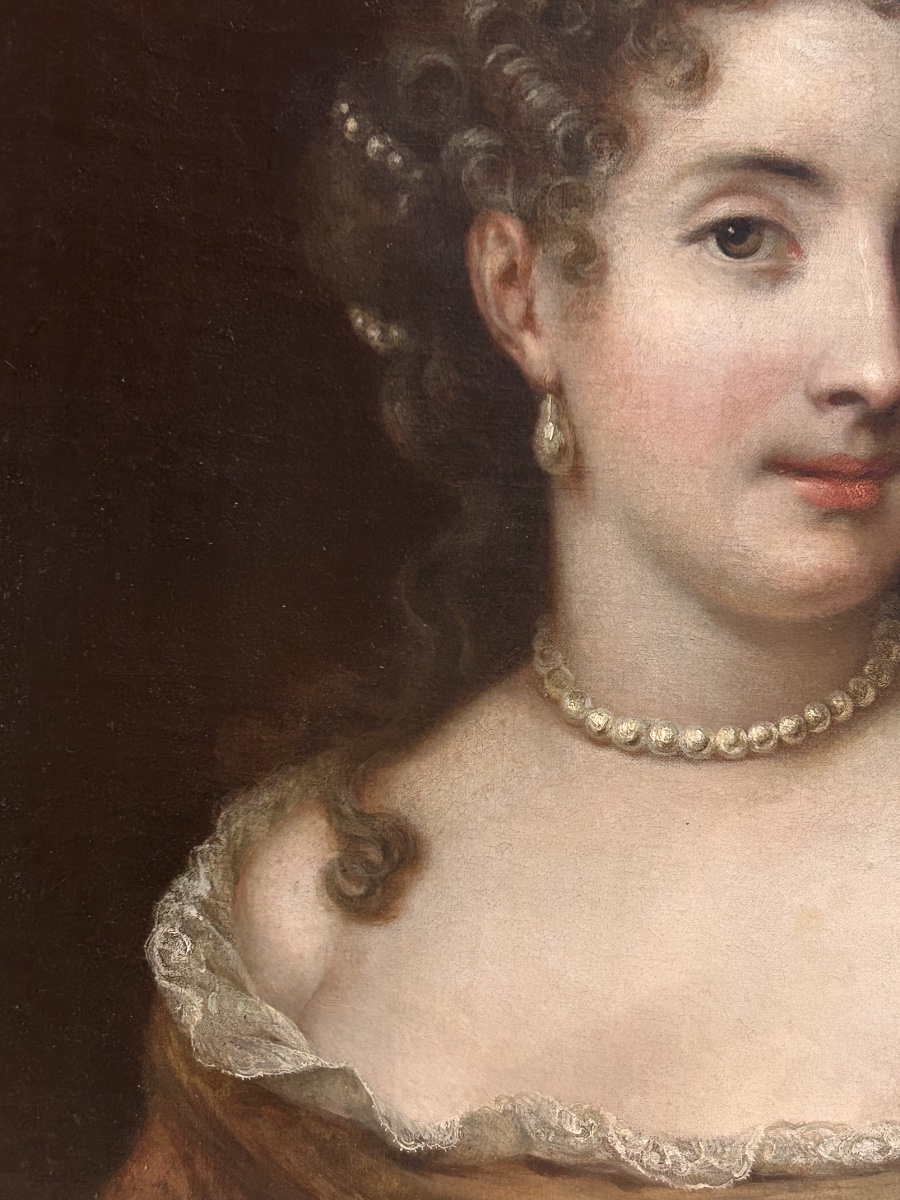
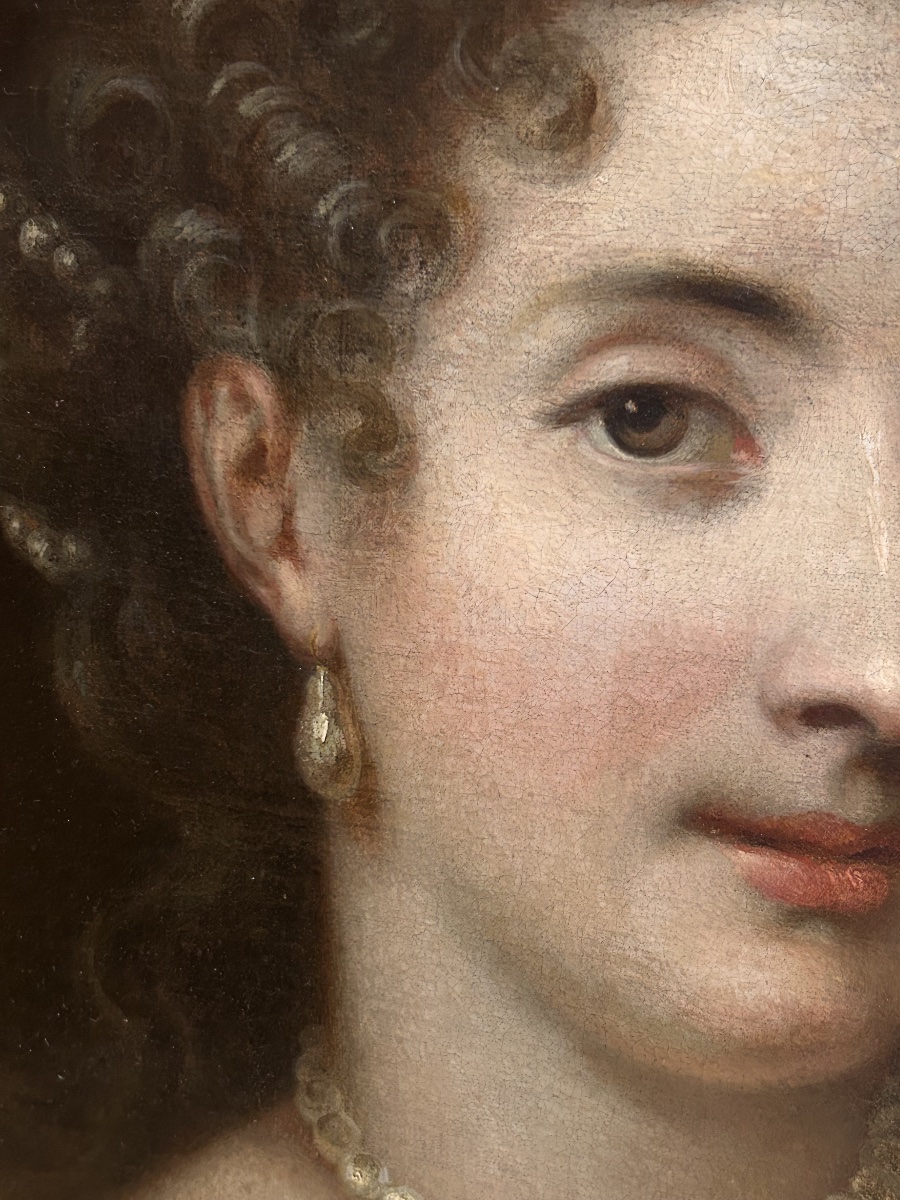
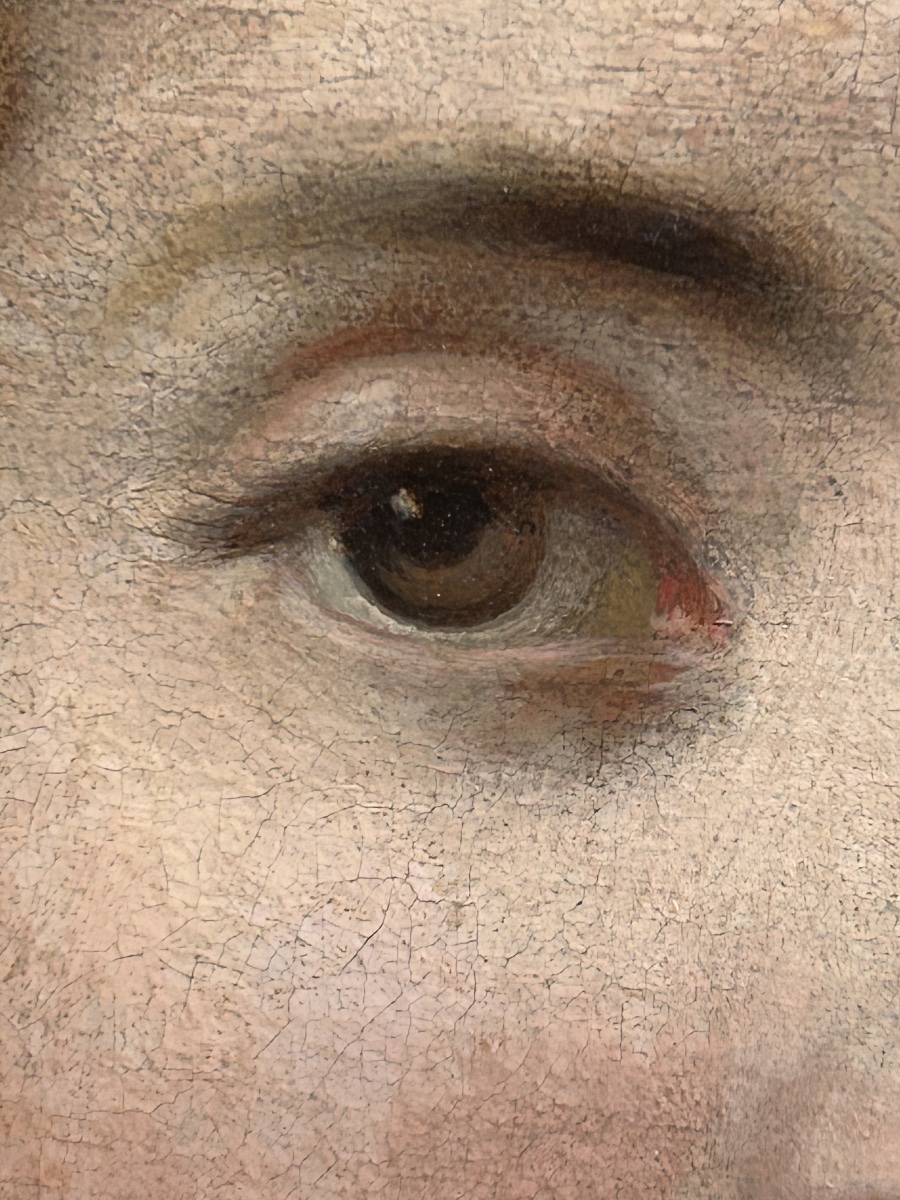
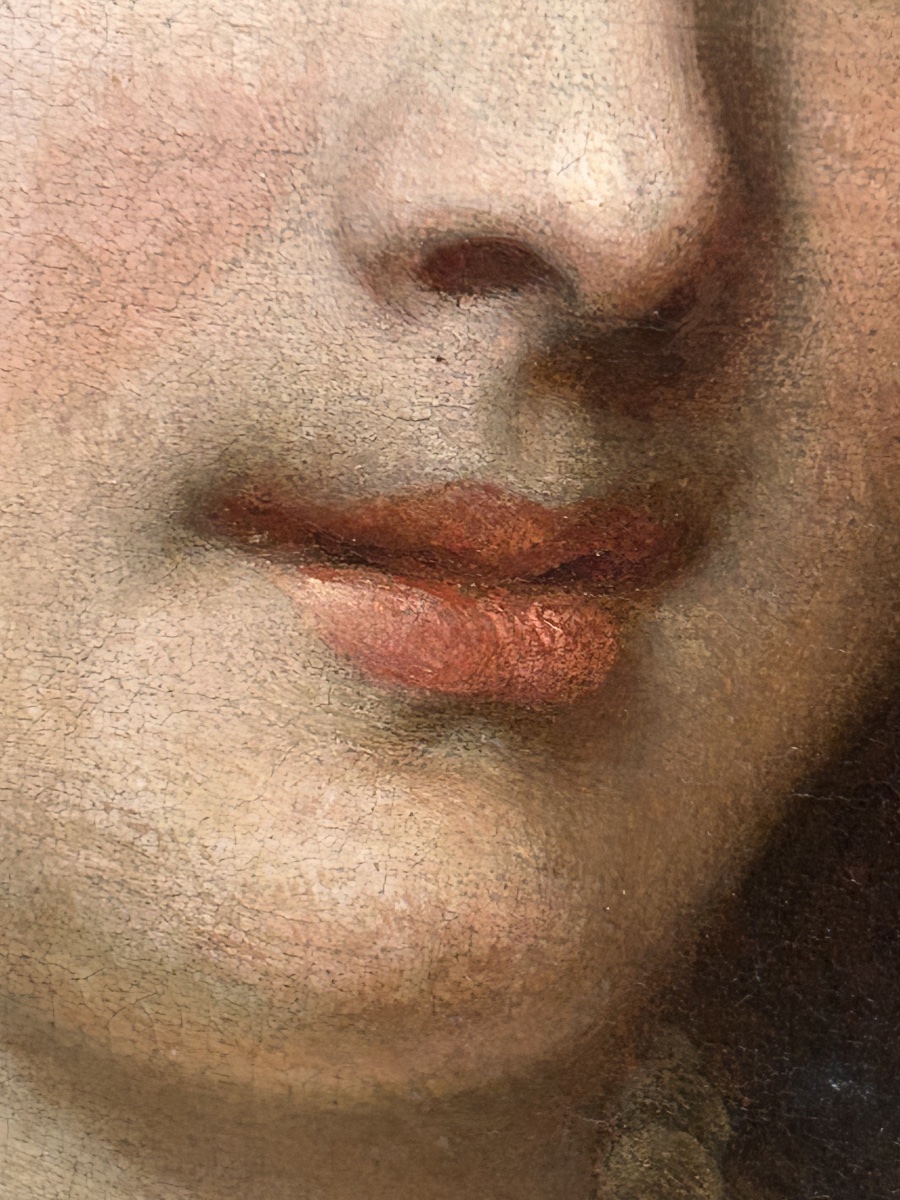
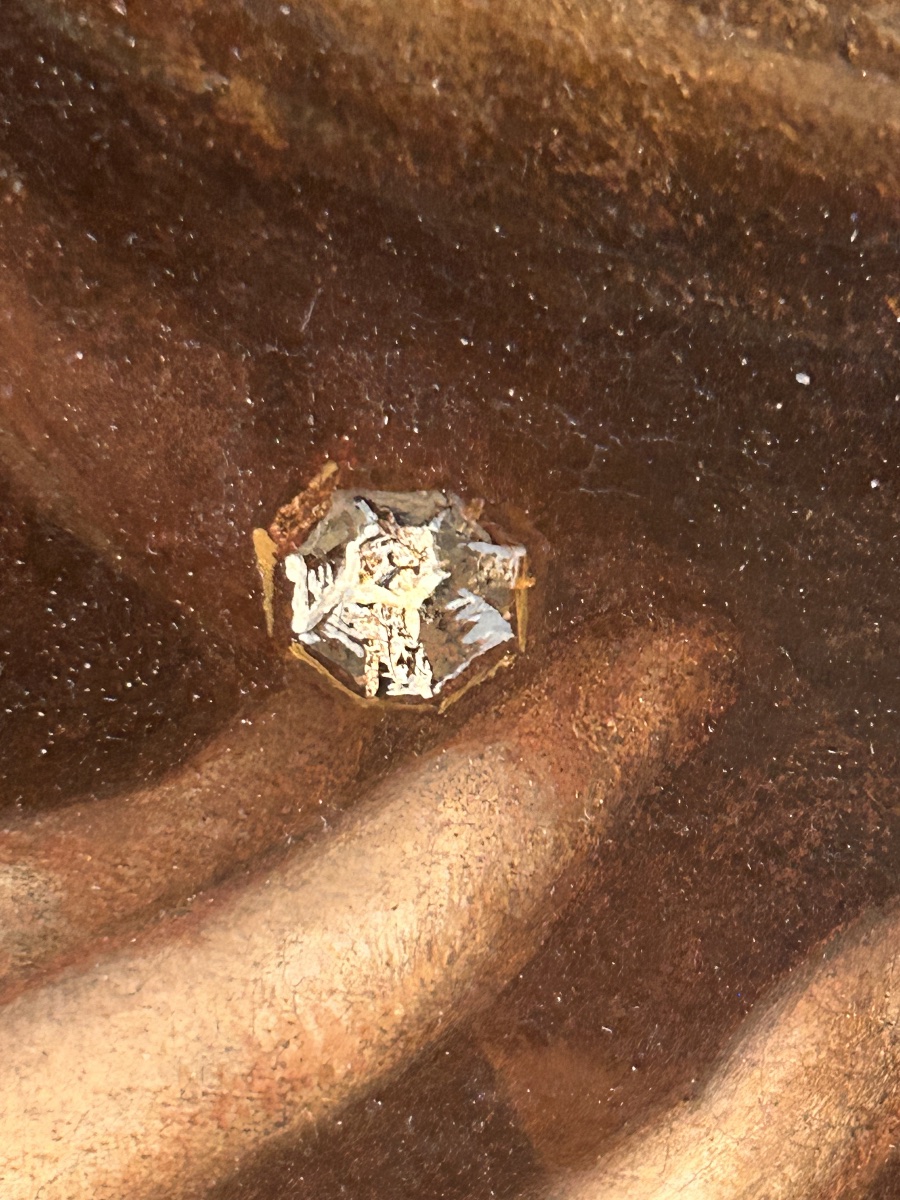
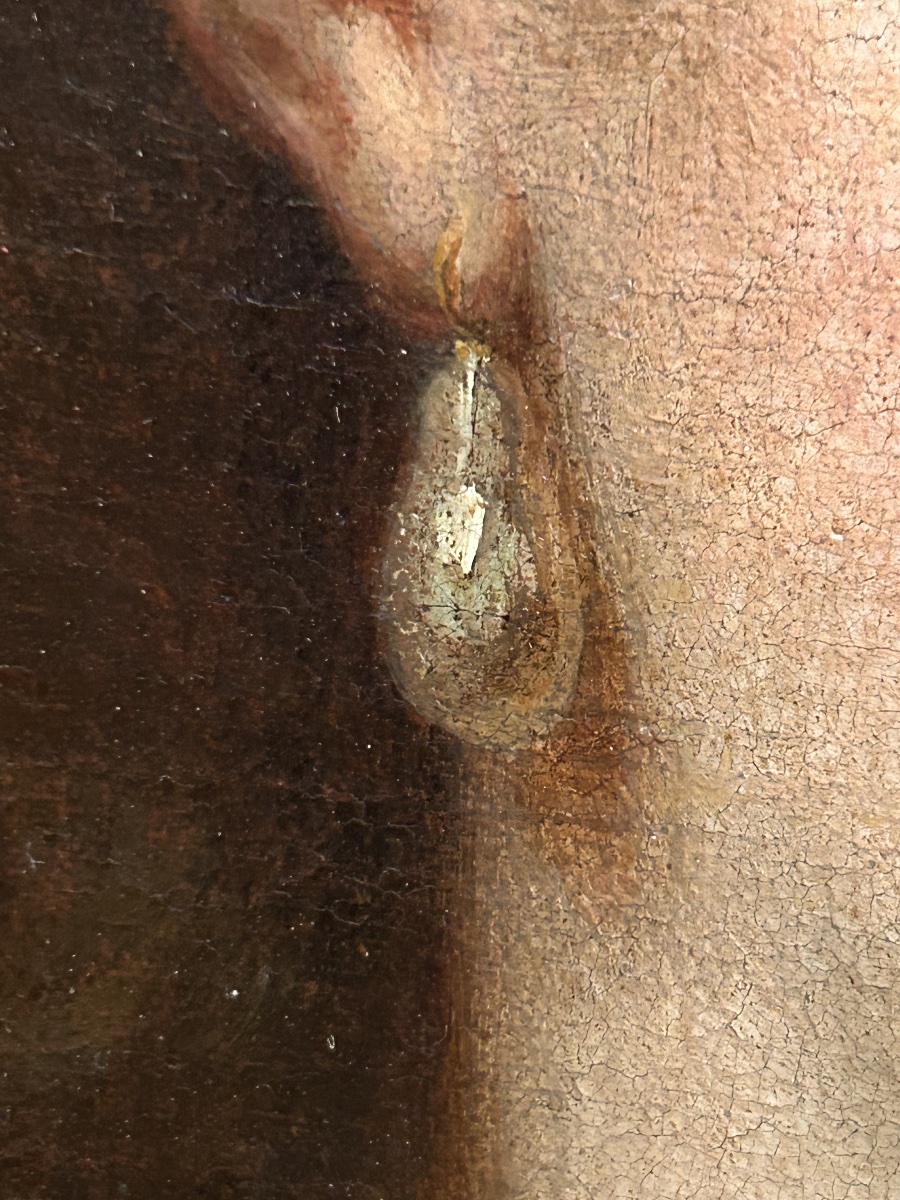
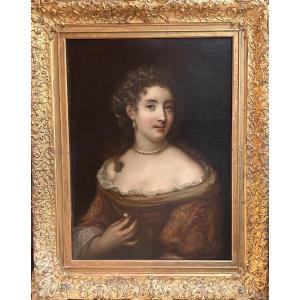
Oil on canvas depicting a woman wearing her hair in an "hurluberlu" style à la Anne-Marie d’Orléans (sister of Philippe II d’Orléans, the Regent), adorned with pearls and holding a diamond.
The history of modern jewelry in France began in the 17th century, when advances in diamond cutting introduced a new technique that influenced the shape of jewelry and the way it was worn. Diamond cutting techniques improved throughout the 17th century, thanks in particular to Mazarin’s encouragement. This led to the development of the “sixteen-facet” cut, which was perfected by the end of the century, culminating in the famous “thirty-two-facet” cuts. This improvement in cutting techniques made it possible to take full advantage of the diamond’s refractive properties.
From a very young age, King Louis XIV’s taste was cultivated by Cardinal Mazarin, who was passionate about diamonds. The young monarch, in turn, developed this same passion, which led him to considerably expand the Crown Jewels collection, as well as his own.
During the lavish period of his reign, not a year went by without a new diamond or other precious stone being added to the royal treasury. From 1685 onward, however, acquisitions became much rarer due to the state’s financial difficulties. In 1714, Louis XIV, ruling over an impoverished France, had to forgo purchasing the largest diamond in the Western world, weighing 140 carats.
Taking advantage of the economic prosperity brought about by John Law’s system during the Regency in France, Philippe d’Orléans, regent from 1715 to 1723, convinced the Regency Council to purchase the diamond on June 6, 1717. At the time of its acquisition, “Le Régent” surpassed all other diamonds then known in the West; by 1719, its value had already tripled. Even today, it is considered the most beautiful diamond in the world: its color is “first-water,” meaning it is perfectly white and of virtually flawless purity. After the Regency, this jewel remained one of the most precious items in the Crown’s collection and was worn by all crowned heads.
Is the woman in our portrait the Regent’s mistress, or perhaps the very embodiment of the era?
Could it be Madame de Parabère? The Regent’s and Madame de Parabère’s first romance dates back to the winter of 1715. Philippe II d’Orléans spared no expense in love, any more than he did in anything else. He took a sort of gallant pride in anticipating his mistresses’ every desire, and he went out of his way to magnificently satisfy any whim he had not already guessed.
During her reign as the Regent’s official mistress, Madame de Parabère retained absolute power over him for five years. Of all the Regent’s mistresses, it was Madame de Parabère who wielded influence over the prince’s mind—all the influence she wished to have without appearing to do so. And it was precisely because he knew her to be carefree and disinterested that the Regent did not consistently turn a deaf ear to her when she tried to discuss politics. Madame de Parabère’s influence was such that Law and the Paris family—prominent financiers of the Regency—had no qualms about, in turn, staking their rival fortunes on it.
Later stucco frame
Height with frame: 99 cm
Width with frame: 79 cm
France
Period: 18th century, Regency
Price is non-negotiable
Oil on canvas depicting a woman wearing her hair in an "hurluberlu" style à la Anne-Marie d’Orléans (sister of Philippe II d’Orléans, the Regent), adorned with pearls and holding a diamond.
The history of modern jewelry in France began in the 17th century, when advances in diamond cutting introduced a new technique that influenced the shape of jewelry and the way it was worn. Diamond cutting techniques improved throughout the 17th century, thanks in particular to Mazarin’s encouragement. This led to the development of the “sixteen-facet” cut, which was perfected by the end of the century, culminating in the famous “thirty-two-facet” cuts. This improvement in cutting techniques made it possible to take full advantage of the diamond’s refractive properties.
From a very young age, King Louis XIV’s taste was cultivated by Cardinal Mazarin, who was passionate about diamonds. The young monarch, in turn, developed this same passion, which led him to considerably expand the Crown Jewels collection, as well as his own.
During the lavish period of his reign, not a year went by without a new diamond or other precious stone being added to the royal treasury. From 1685 onward, however, acquisitions became much rarer due to the state’s financial difficulties. In 1714, Louis XIV, ruling over an impoverished France, had to forgo purchasing the largest diamond in the Western world, weighing 140 carats.
Taking advantage of the economic prosperity brought about by John Law’s system during the Regency in France, Philippe d’Orléans, regent from 1715 to 1723, convinced the Regency Council to purchase the diamond on June 6, 1717. At the time of its acquisition, “Le Régent” surpassed all other diamonds then known in the West; by 1719, its value had already tripled. Even today, it is considered the most beautiful diamond in the world: its color is “first-water,” meaning it is perfectly white and of virtually flawless purity. After the Regency, this jewel remained one of the most precious items in the Crown’s collection and was worn by all crowned heads.
Is the woman in our portrait the Regent’s mistress, or perhaps the very embodiment of the era?
Could it be Madame de Parabère? The Regent’s and Madame de Parabère’s first romance dates back to the winter of 1715. Philippe II d’Orléans spared no expense in love, any more than he did in anything else. He took a sort of gallant pride in anticipating his mistresses’ every desire, and he went out of his way to magnificently satisfy any whim he had not already guessed.
During her reign as the Regent’s official mistress, Madame de Parabère retained absolute power over him for five years. Of all the Regent’s mistresses, it was Madame de Parabère who wielded influence over the prince’s mind—all the influence she wished to have without appearing to do so. And it was precisely because he knew her to be carefree and disinterested that the Regent did not consistently turn a deaf ear to her when she tried to discuss politics. Madame de Parabère’s influence was such that Law and the Paris family—prominent financiers of the Regency—had no qualms about, in turn, staking their rival fortunes on it.
Later stucco frame
Height with frame: 99 cm
Width with frame: 79 cm
France
Period: 18th century, Regency
Price is non-negotiable
4 000 €
Period: 18th century
Style: Louis 15th - Transition
Condition: Perfect condition
Material: Oil painting
Width: 79 cm.
Height: 99 cm.
Reference (ID): 1828319
Availability: In stock
Print