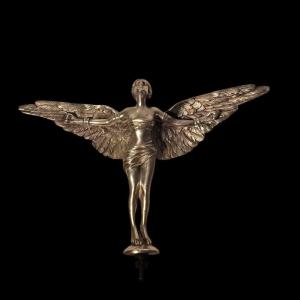


'the Conquest Of The Air,' A Rare Silver-plated Bronze Car Ornament, Ca. 1910–1925
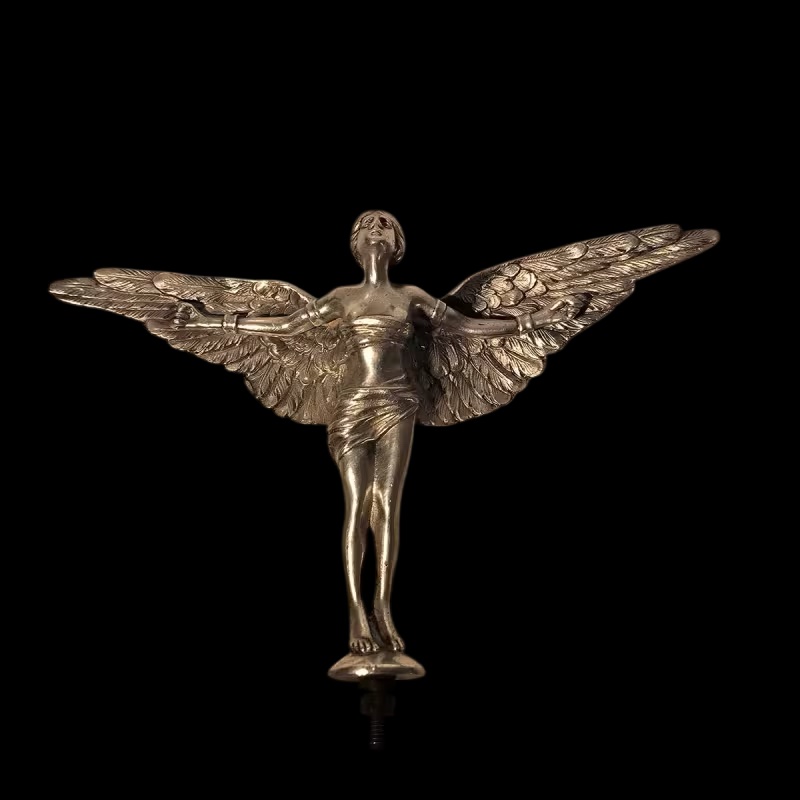
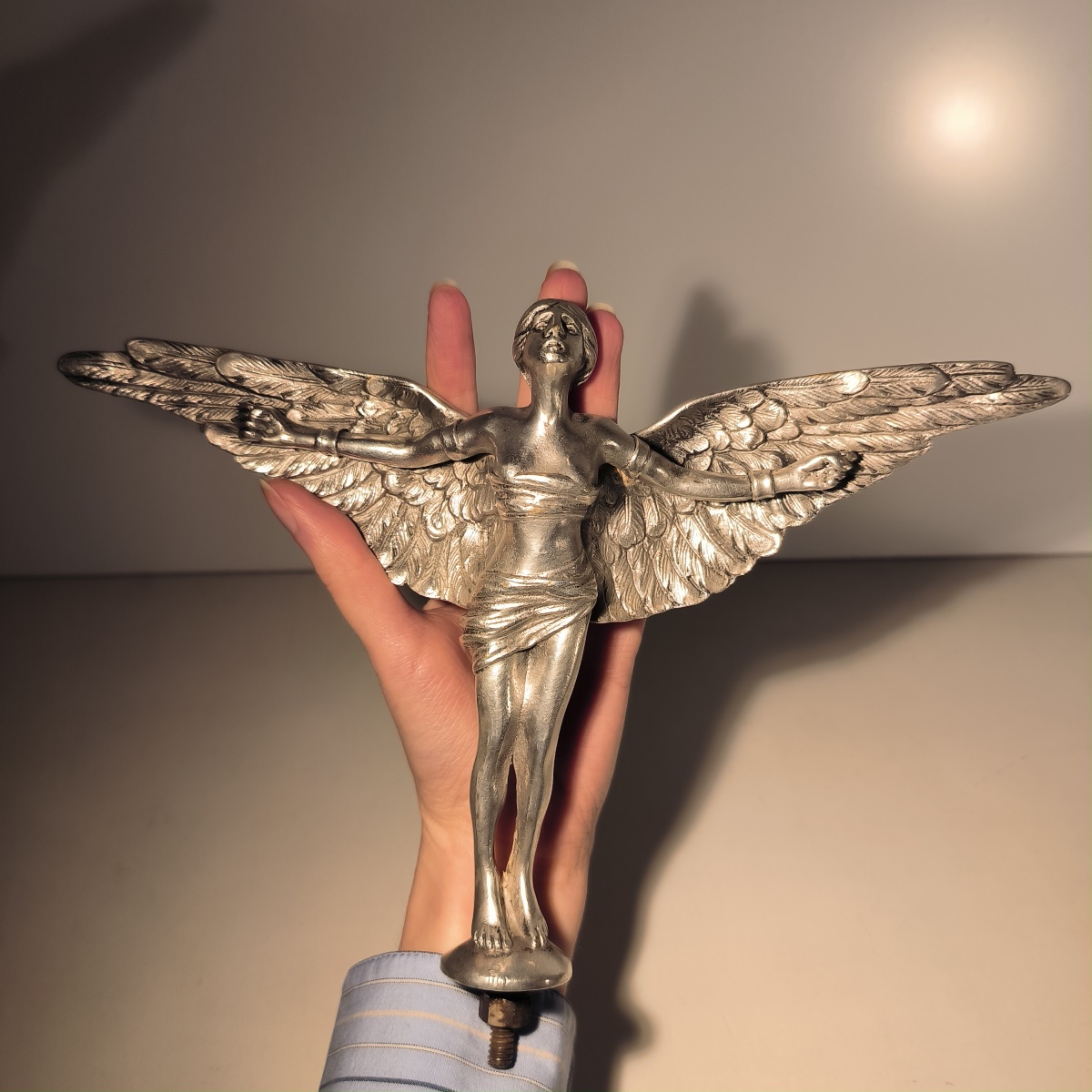
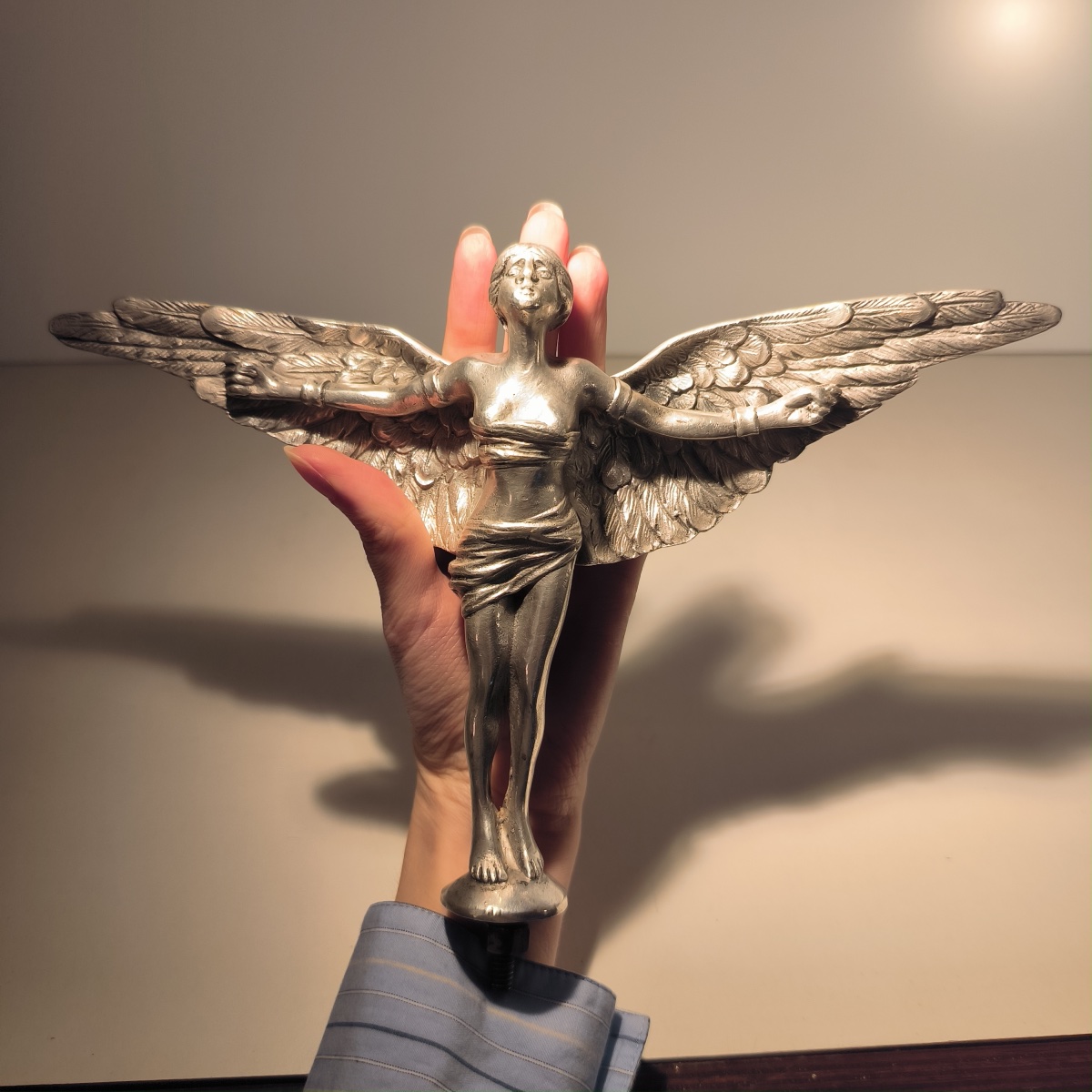
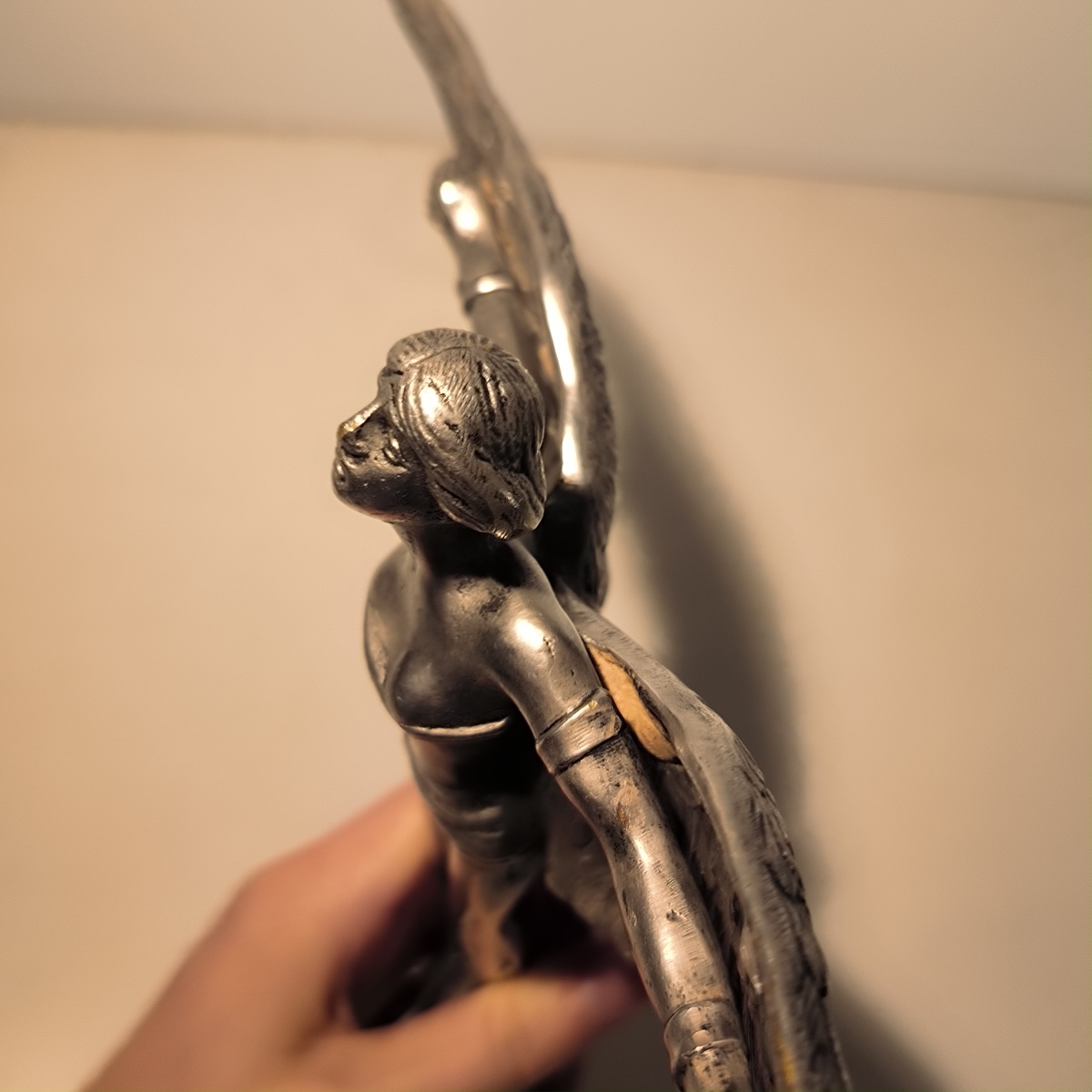
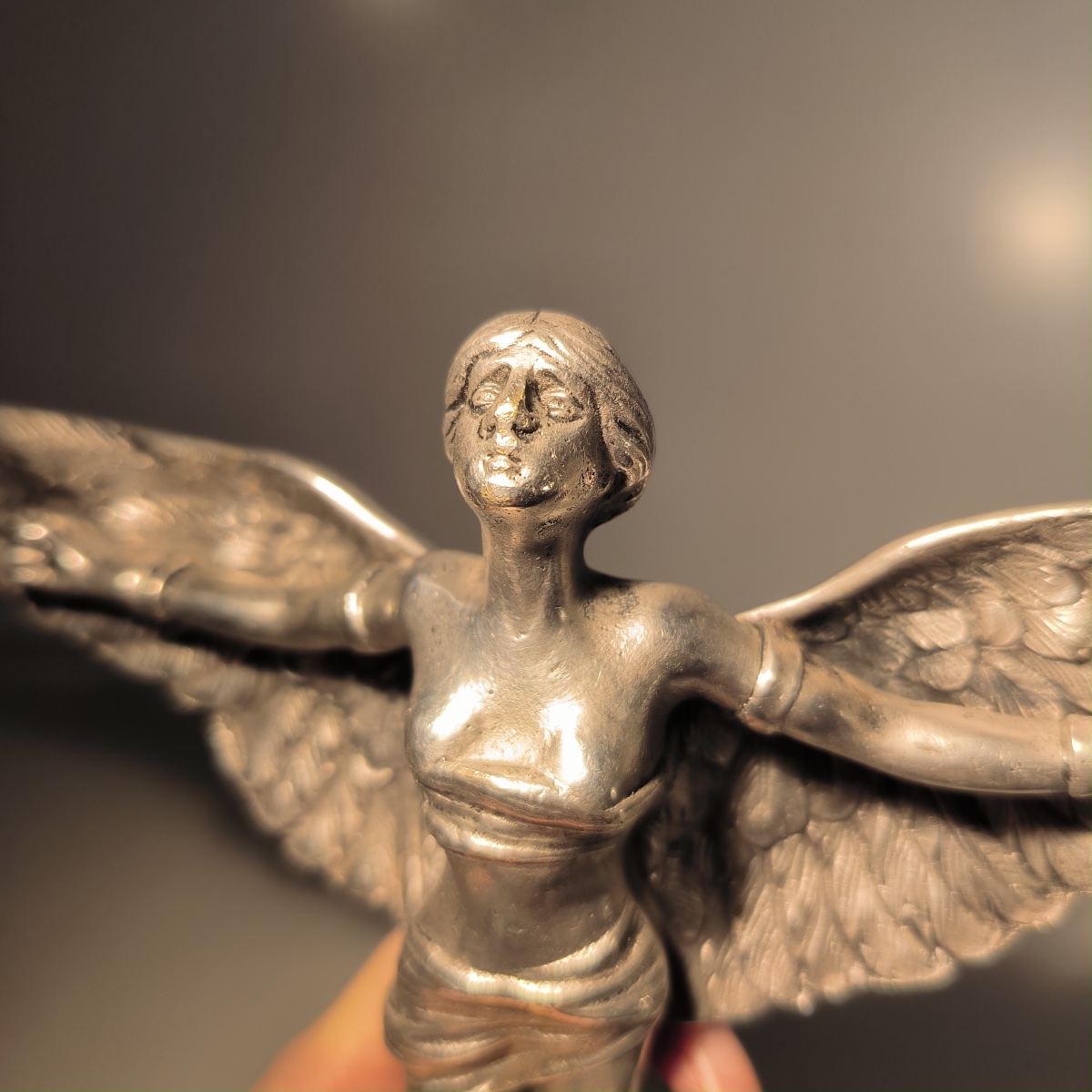
A rare vintage automobile mascot depicting a young, winged woman in a flowing gown, standing with her arms spread wide in line with two large, outstretched wings. Through its iconography, the work embodies a true Winged Victory, an allegory of Flight, Speed, and the Conquest of the Air, themes closely associated with the early days of the automobile and aviation at the beginning of the 20th century.
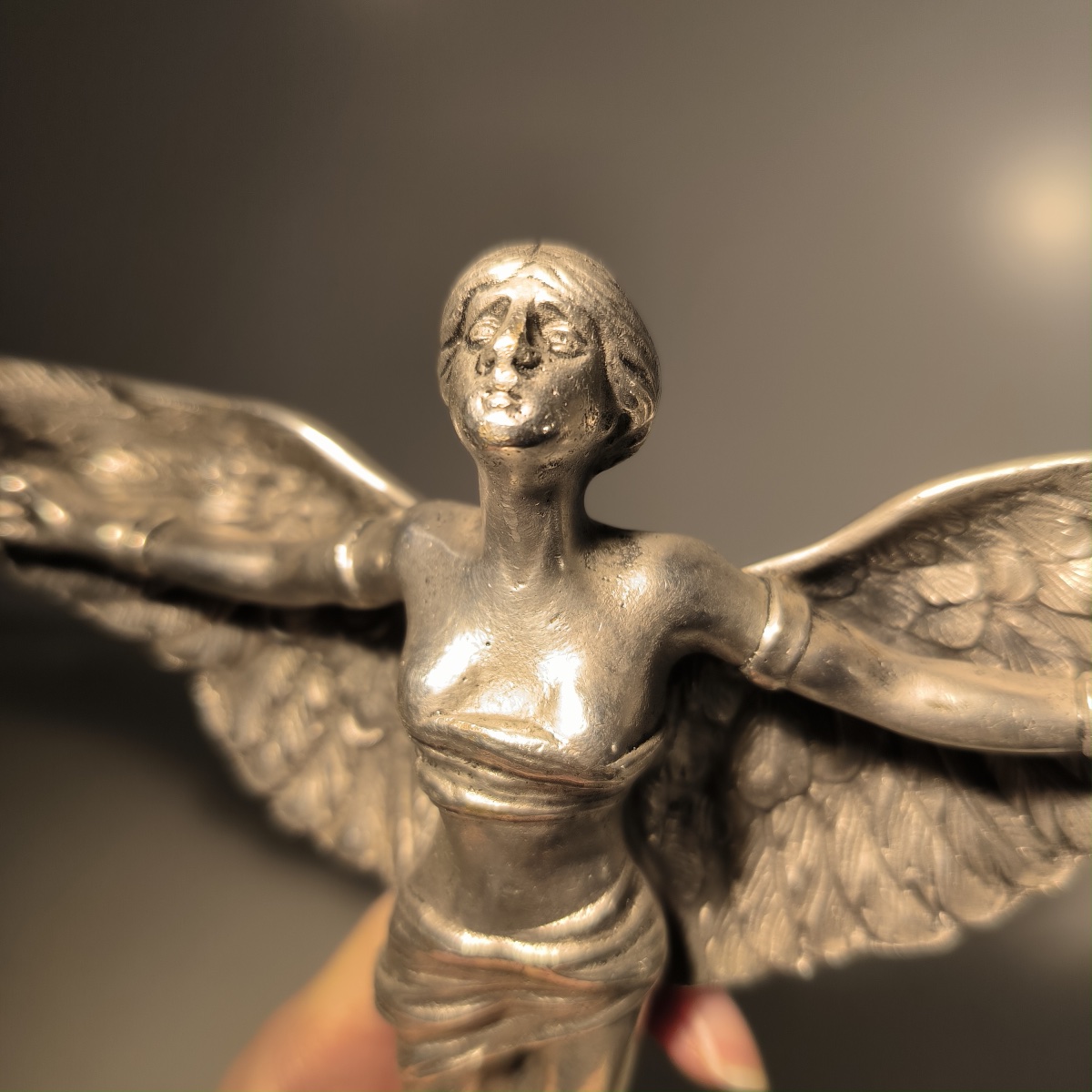
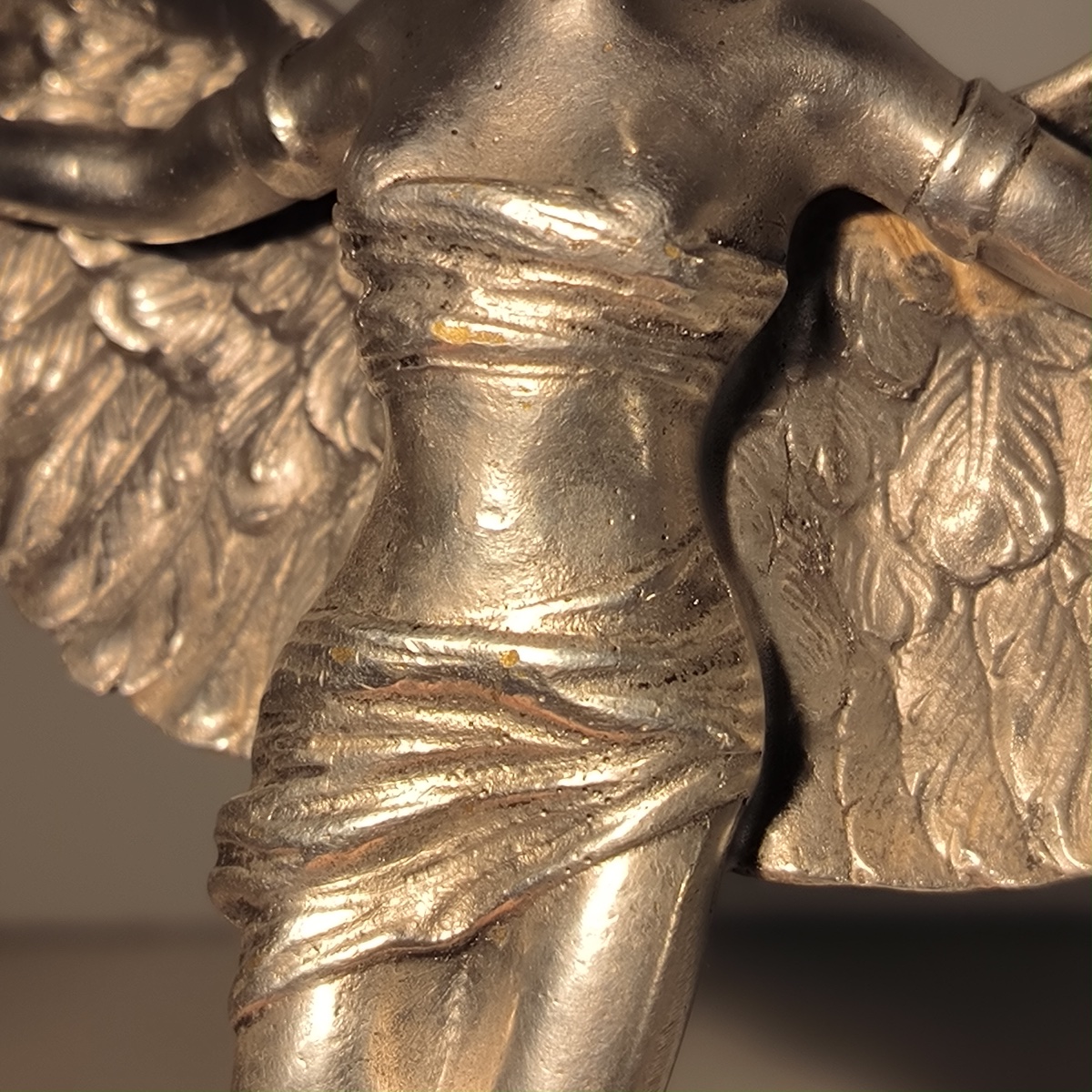
The nearly nude female figure is simply draped in a cloth cinched around her waist and legs. Her face turned toward the sky and the frontal position of her body lend the composition a particularly successful sense of elevation and momentum. Her outstretched arms seem to extend the movement of the wings themselves.
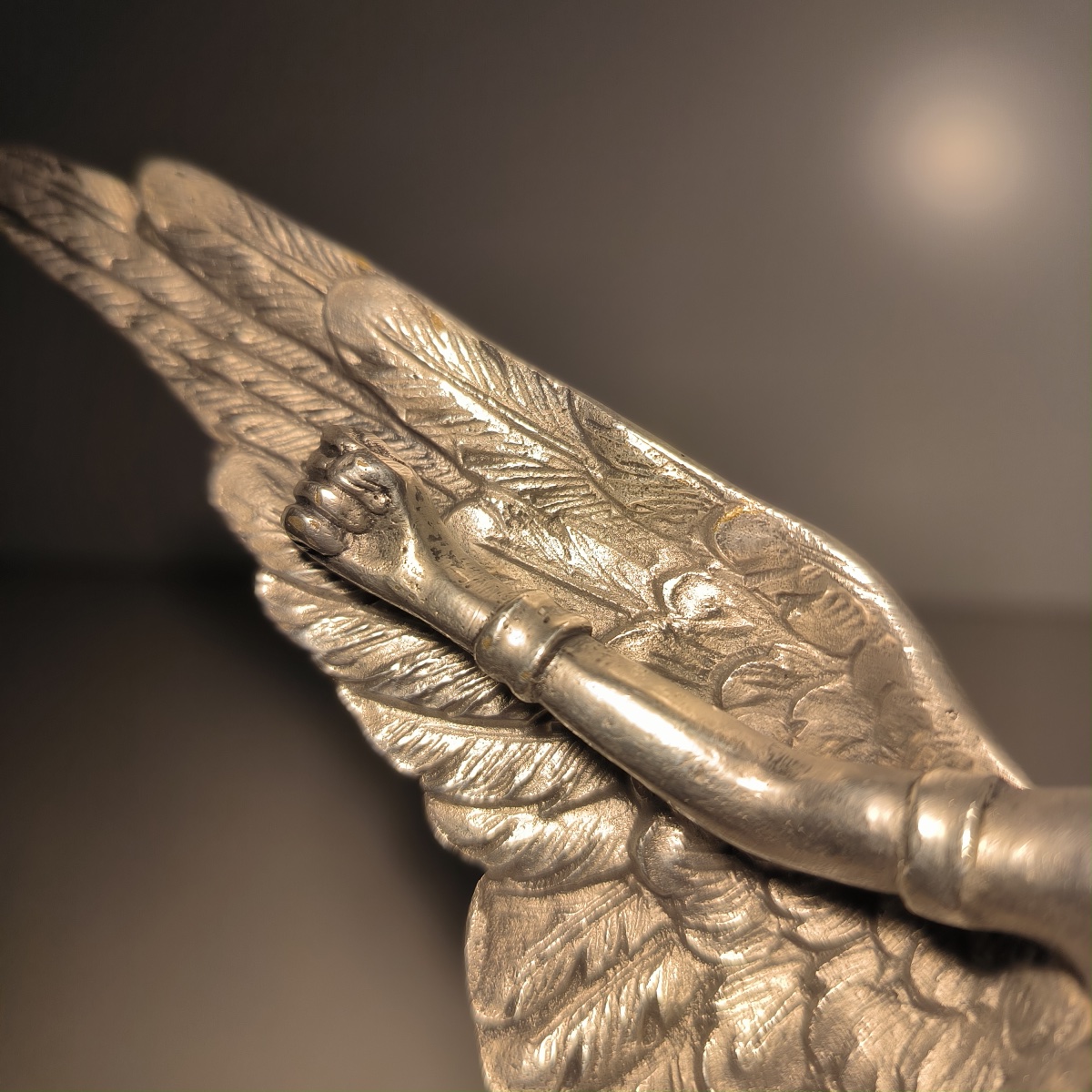
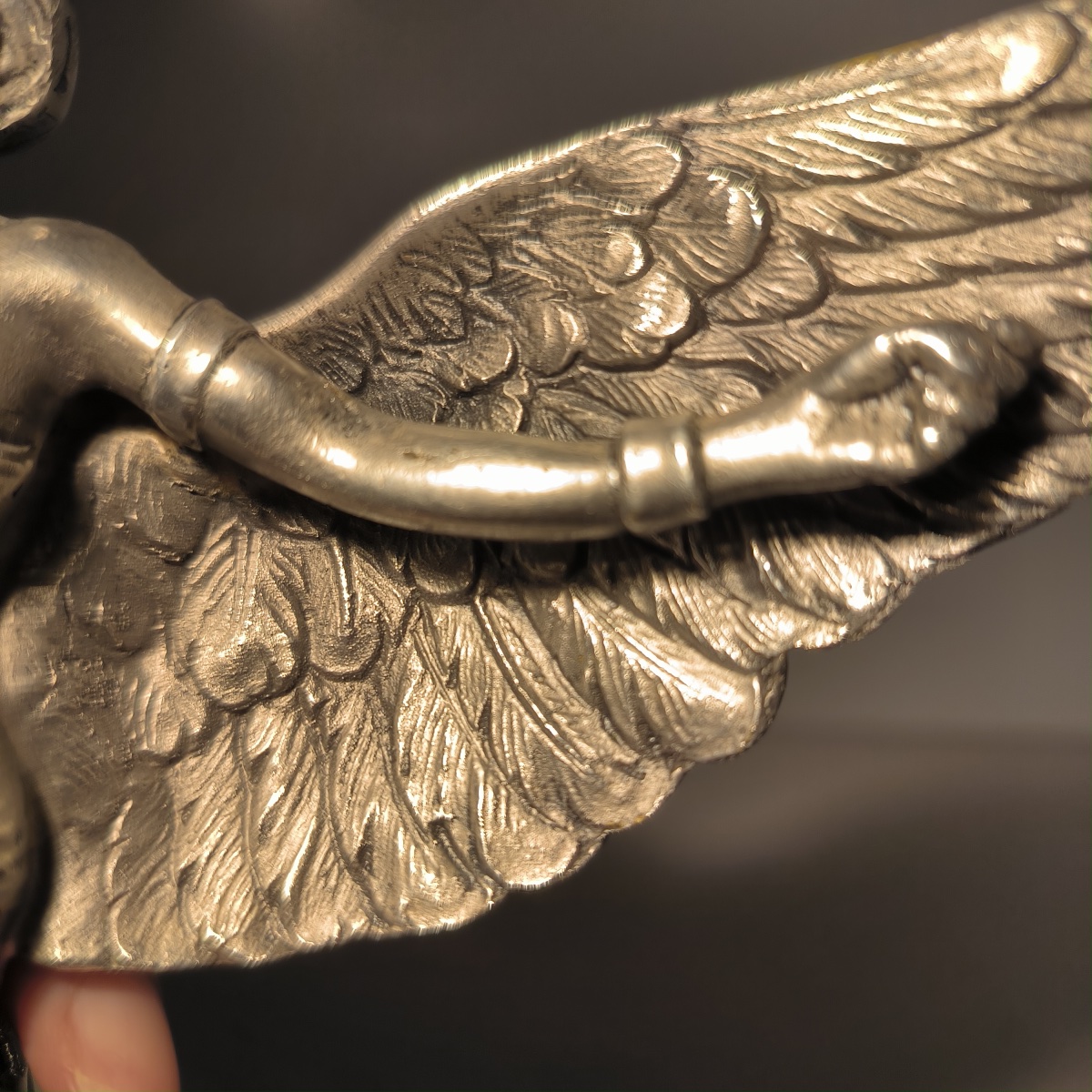
The quality of the craftsmanship is particularly evident in the rendering of the extremely detailed plumage. Interestingly, the artist did not simply reproduce the two wings symmetrically: upon close inspection, the arrangement and pattern of the feathers show variations between the left and right wings, lending the sculpture a much more lifelike and naturalistic quality.
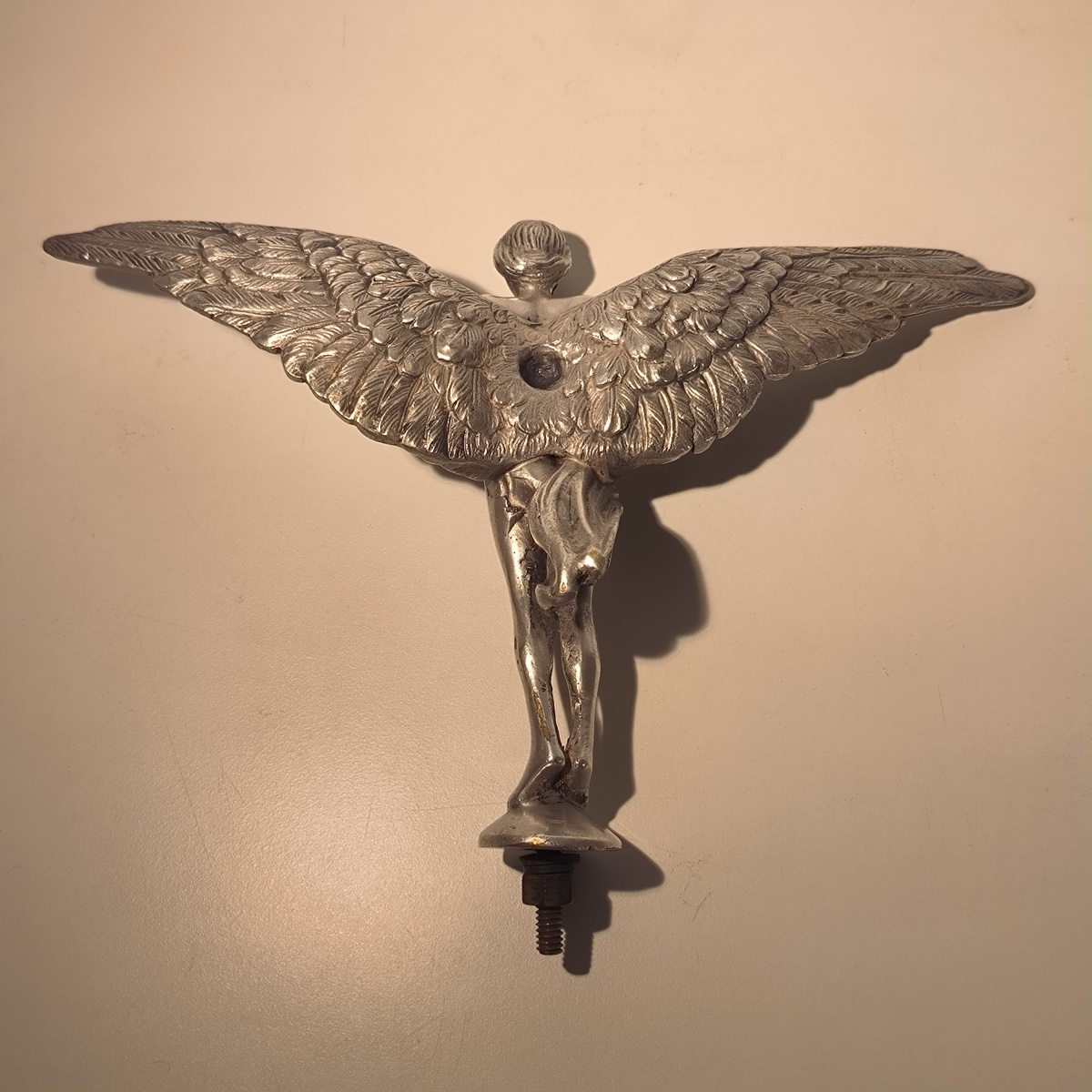
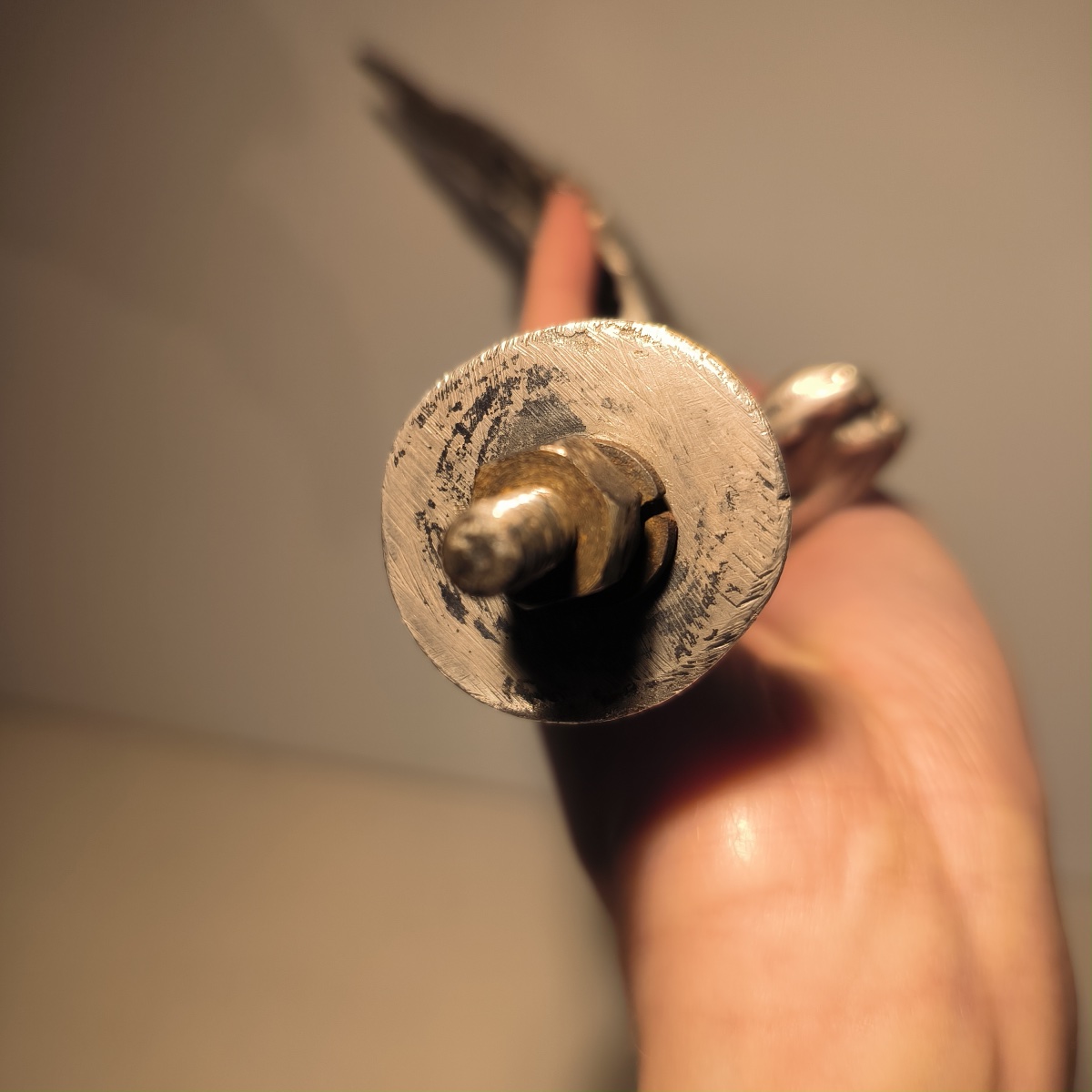
The figurine is made up of several parts: the body forms one section, while the assembly consisting of the wings and arms is attached and securely fastened to the back using an ancient technique of interlocking and heat-setting. The construction is clearly visible on the reverse side. The heavy-duty threading located beneath the feet, which is clearly dimensioned, confirms that this is not a decorative figurine or a desk ornament but rather a part intended to be securely screwed onto a vehicle, most likely onto a radiator cap.
Its design immediately brings to mind the famous automobile mascots developed during the 1910s and 1920s. The most interesting comparison can be made with “Icarus” or “The Conquest of the Air” by Georges Colin for Farman automobiles, a winged figure that became one of the brand’s emblems. Our model, however, differs radically from it in its choice of a female figure, the spectacular horizontal position of the wings, and its sculptural treatment. It can also be placed within the family of “Winged Lady,” “Winged Victory,” “Speed Nymph,” and other female figures used at the time to symbolize speed and mechanical progress.
This theme would inspire several famous interpretations, from the Spirit of Ecstasy created by Charles Sykes for Rolls-Royce in 1911 to the various “Speed Nymphs” and winged women produced notably by A.E. Lejeune in the 1910s and 1920s. This mascot fully embodies the era’s fascination with the fusion of the human body, wings, movement, and machinery.
No signature or foundry mark could be identified, and despite our research, we have not found any other example of this specific model, suggesting that it was produced in limited quantities.
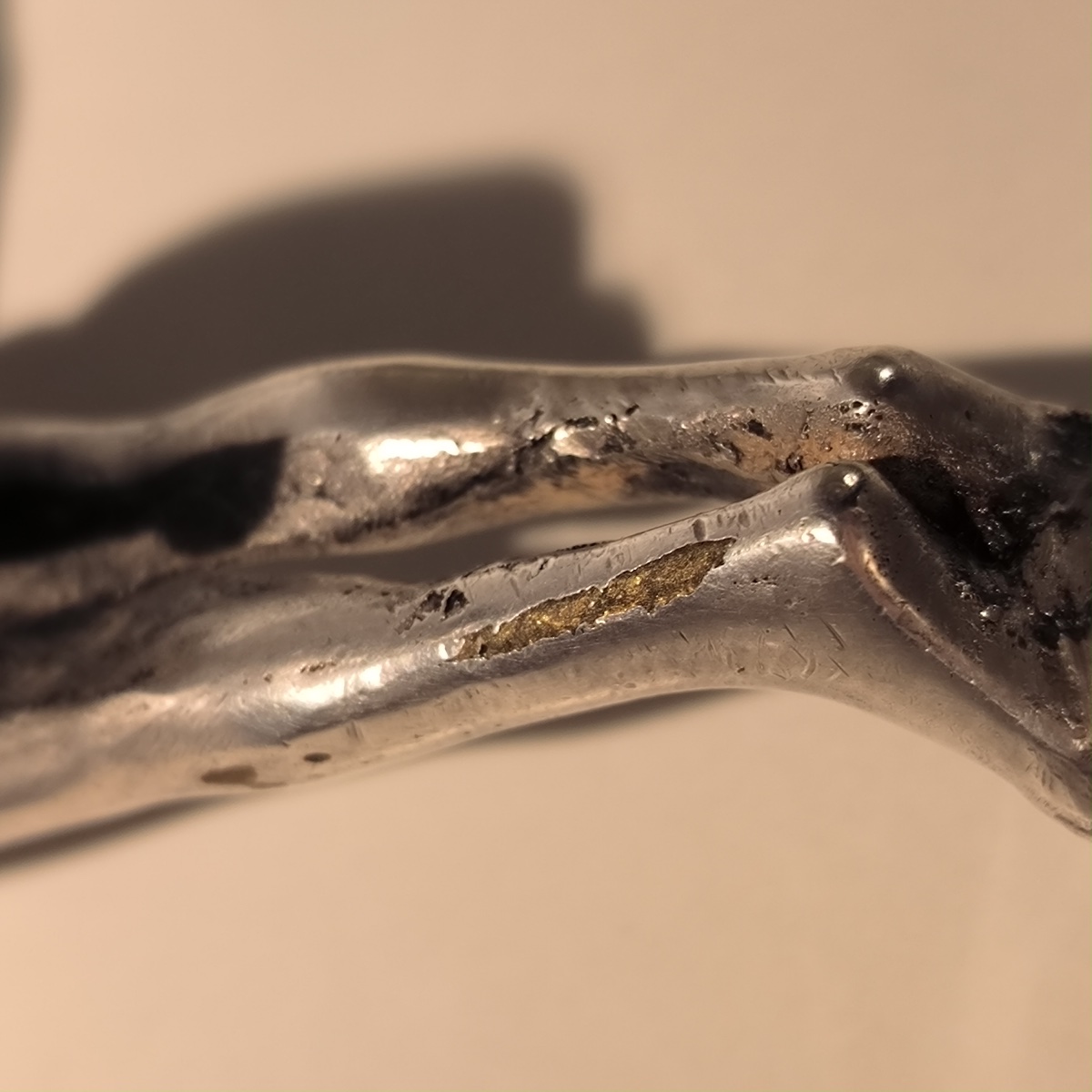
The mascot was actually used and bears the normal signs of wear from that use. In particular, it features two or three small dents on the legs and calves, as well as a few marks and surface irregularities. These signs of wear are consistent with its age and its use as a car mascot and do not detract from the remarkable overall appearance of the piece.
Period: 20th century
Style: Art Deco
Condition: Excellent condition
Material: Bronze
Width: 24
Height: 16
Depth: 5,5
Reference (ID): 1824968
Availability: In stock