THIS OBJECT WAS SOLD
Relief Fragment Depicting Nike – Roman Empire – 3rd Century
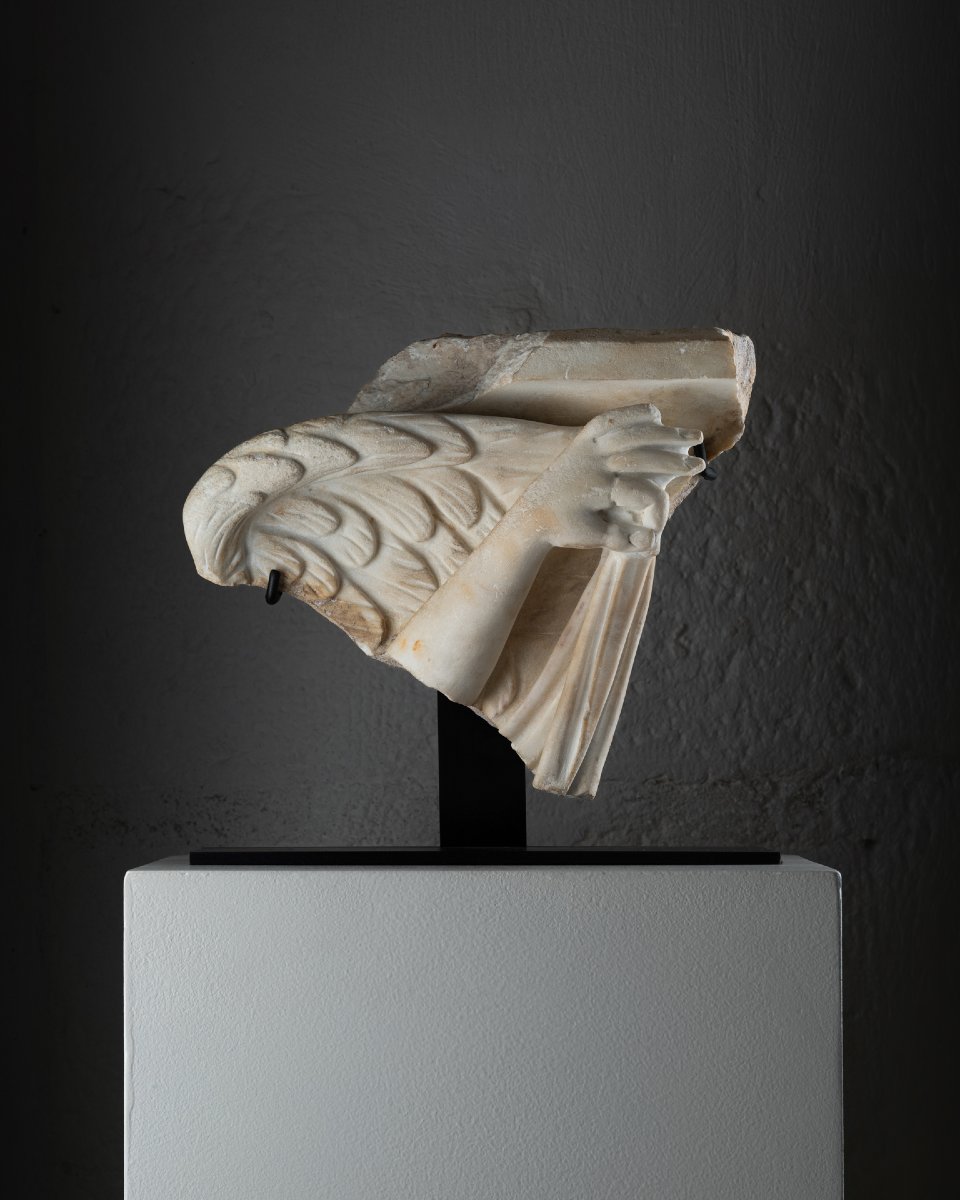
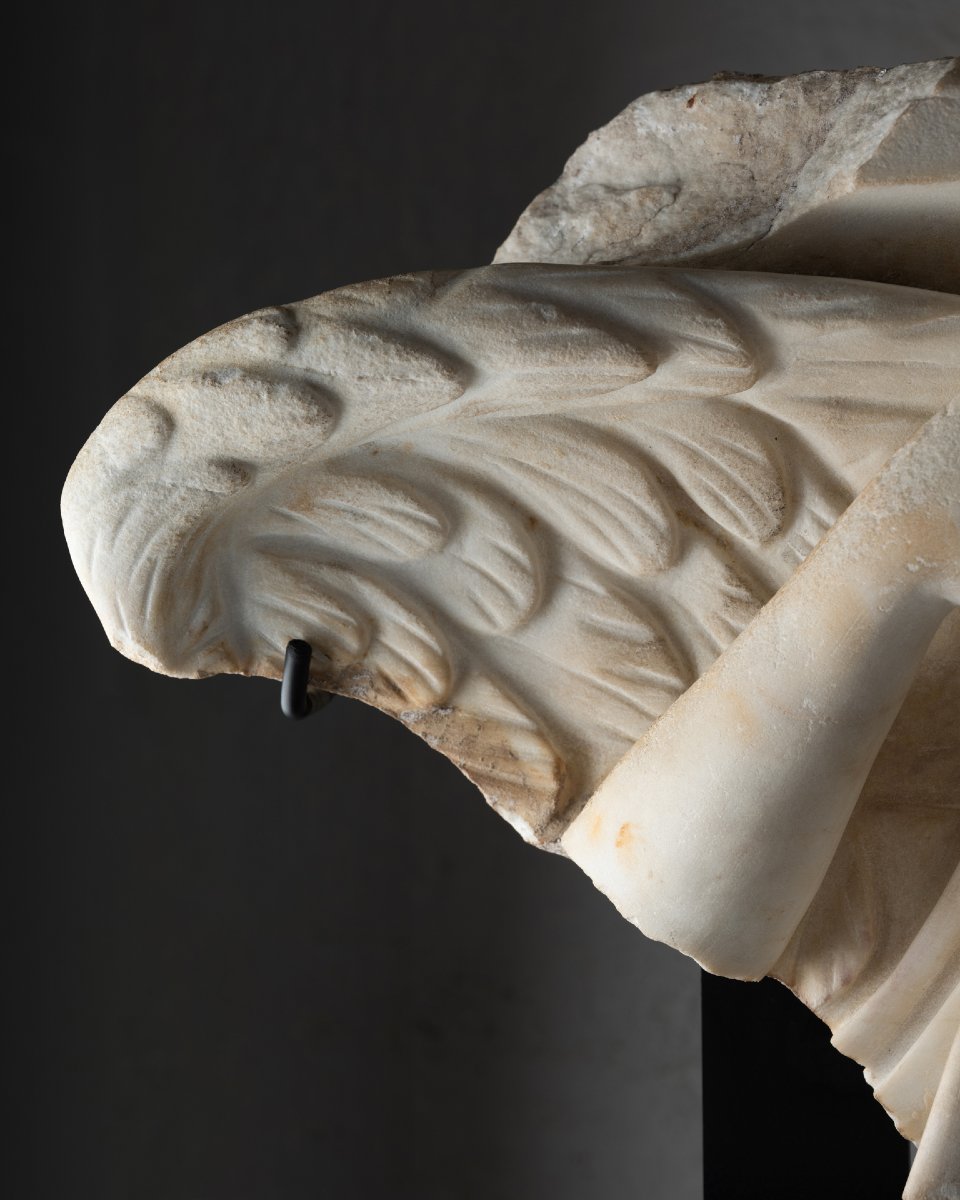
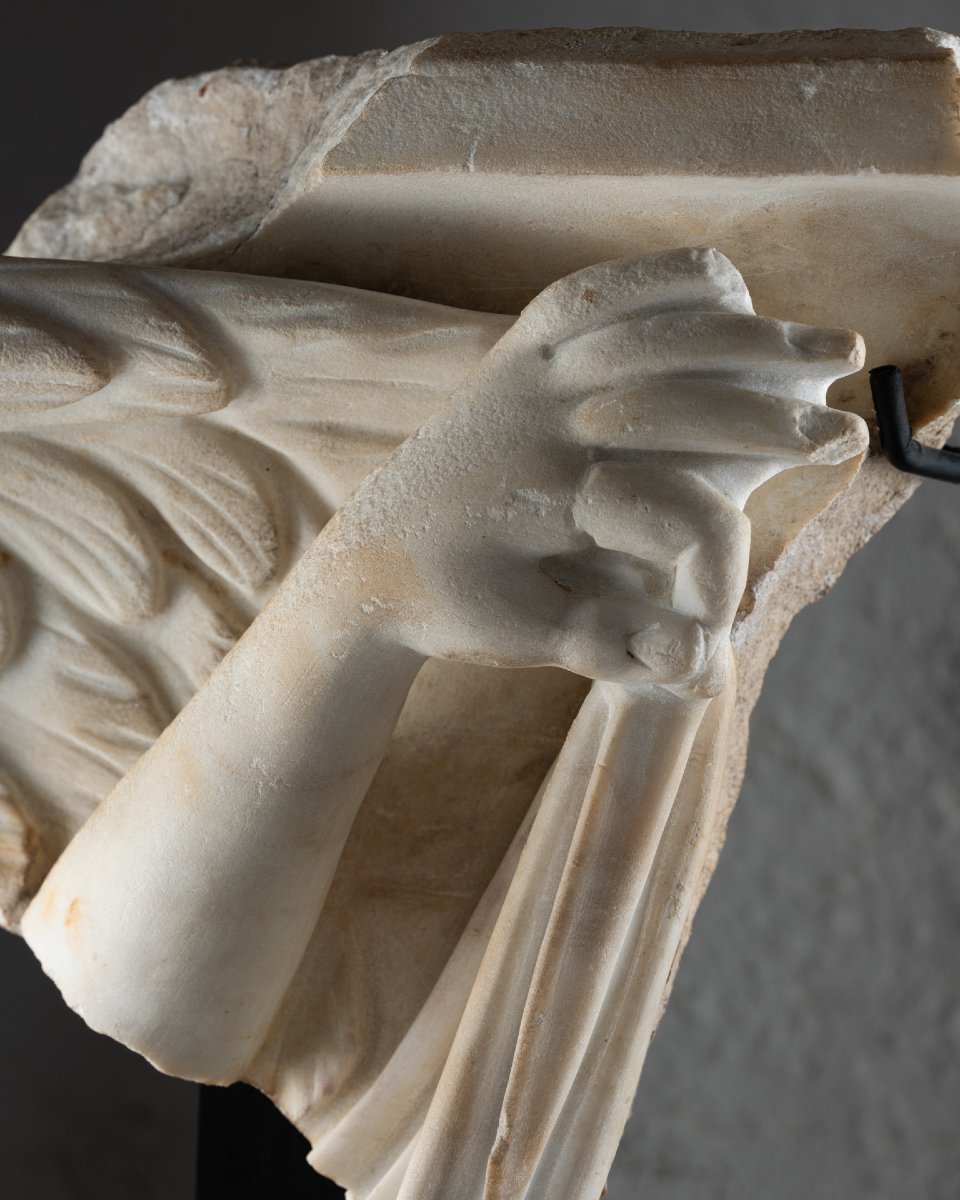
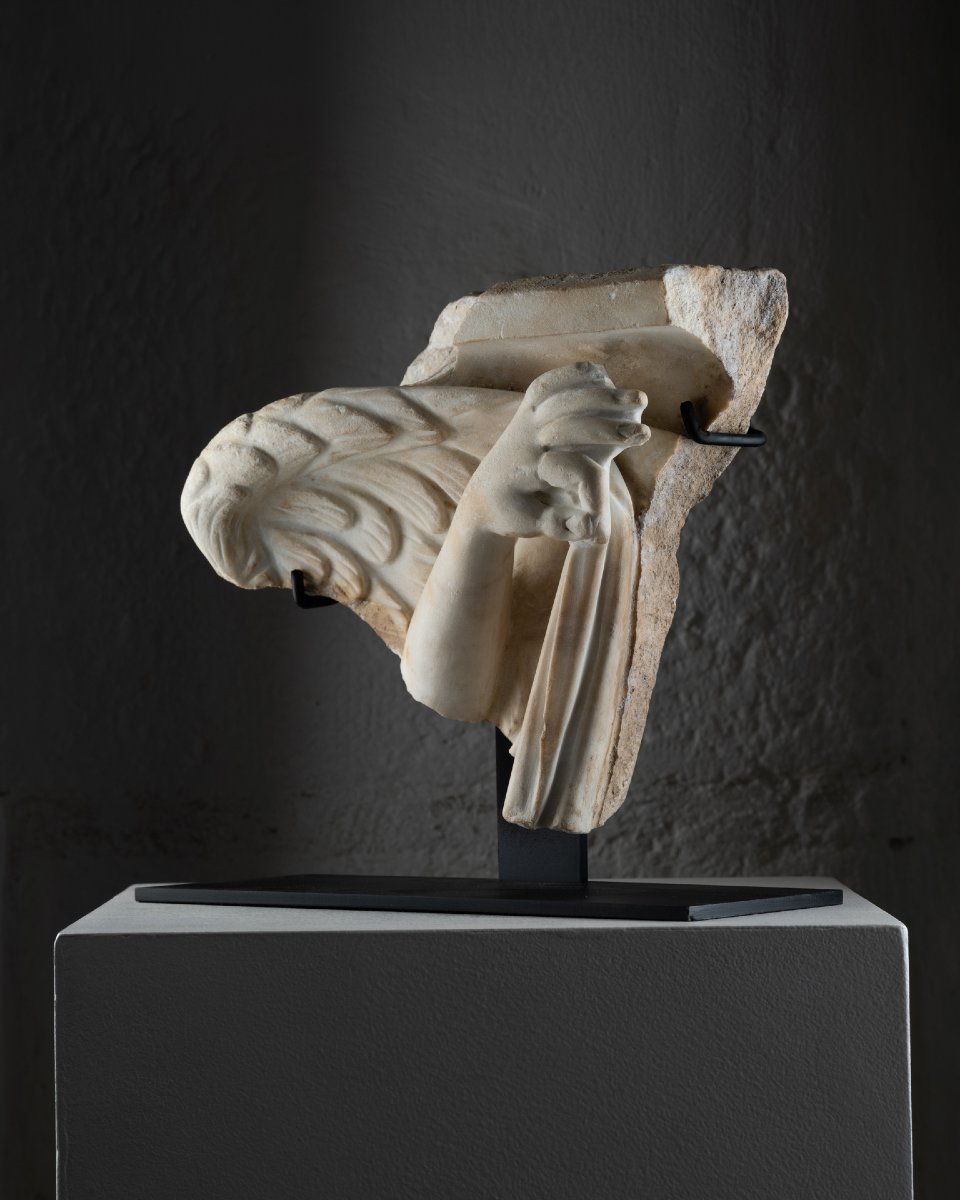
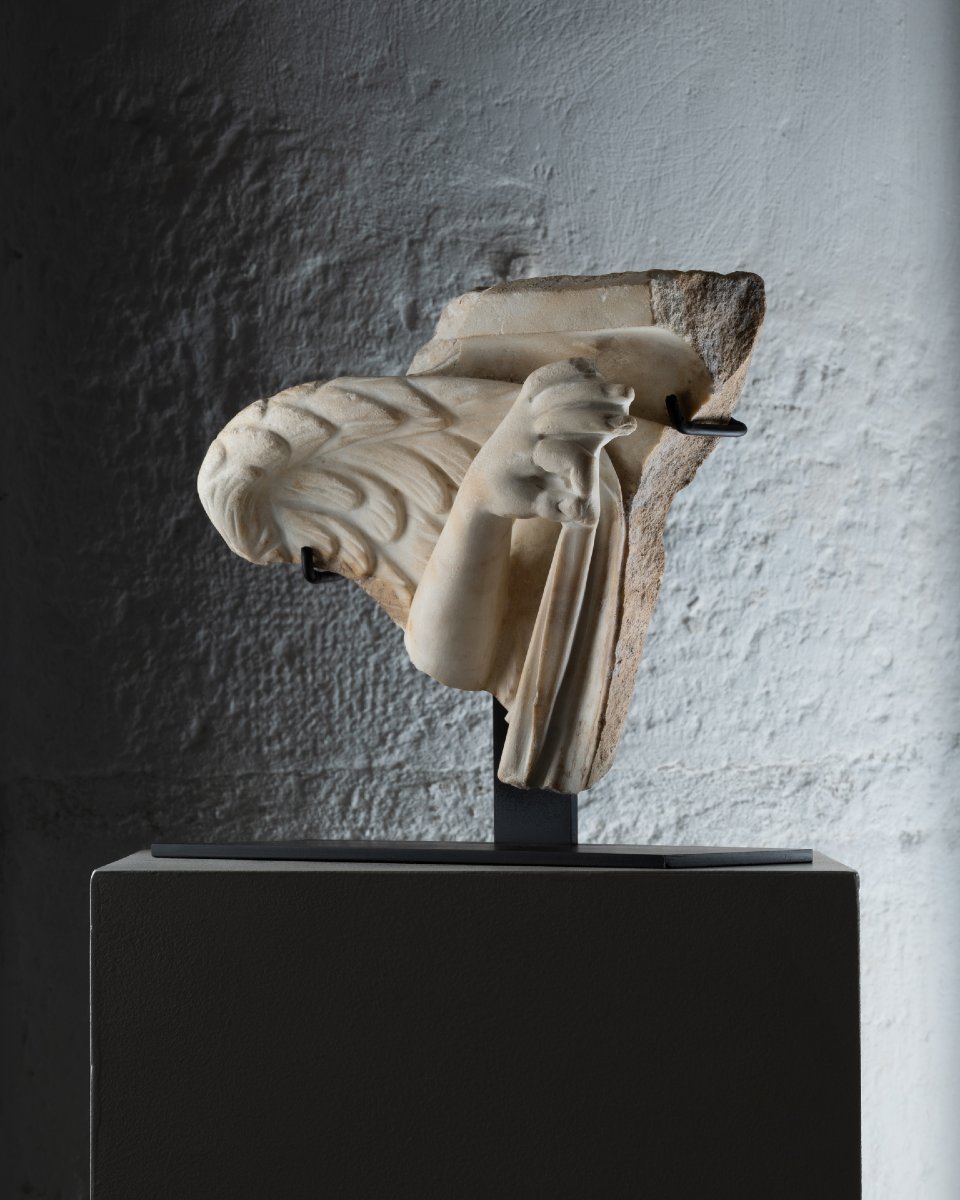
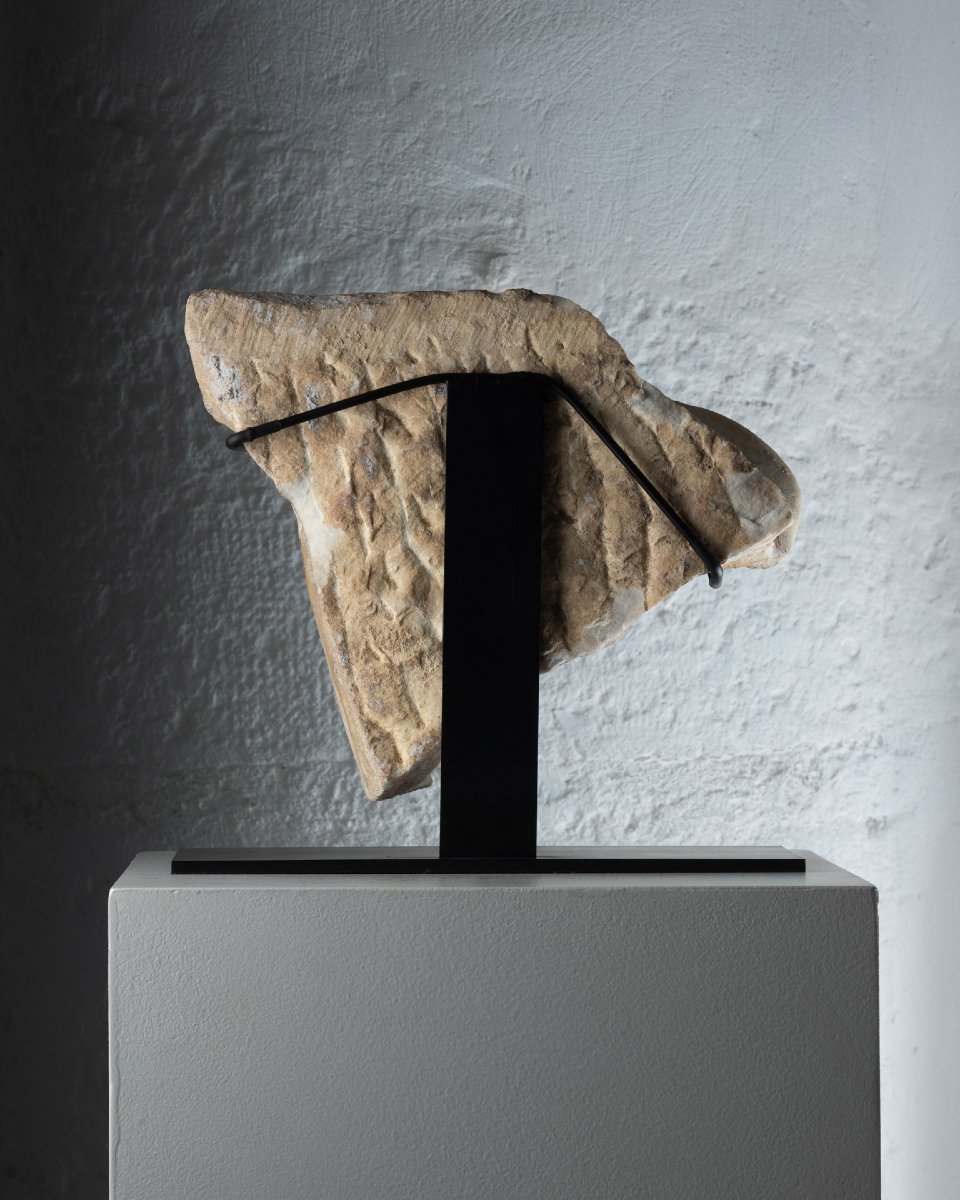
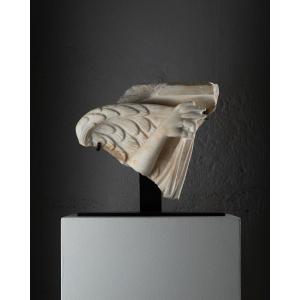


This white marble sculpture depicts a fragment of a winged figure, Nike, the Greek personification of Victory, adapted here to the Roman world. The work dates from the Roman Imperial period, more specifically the 3rd century A.D. It takes the form of a relief fragment preserving a widely spread wing, an arm, a hand, and a panel of drapery.
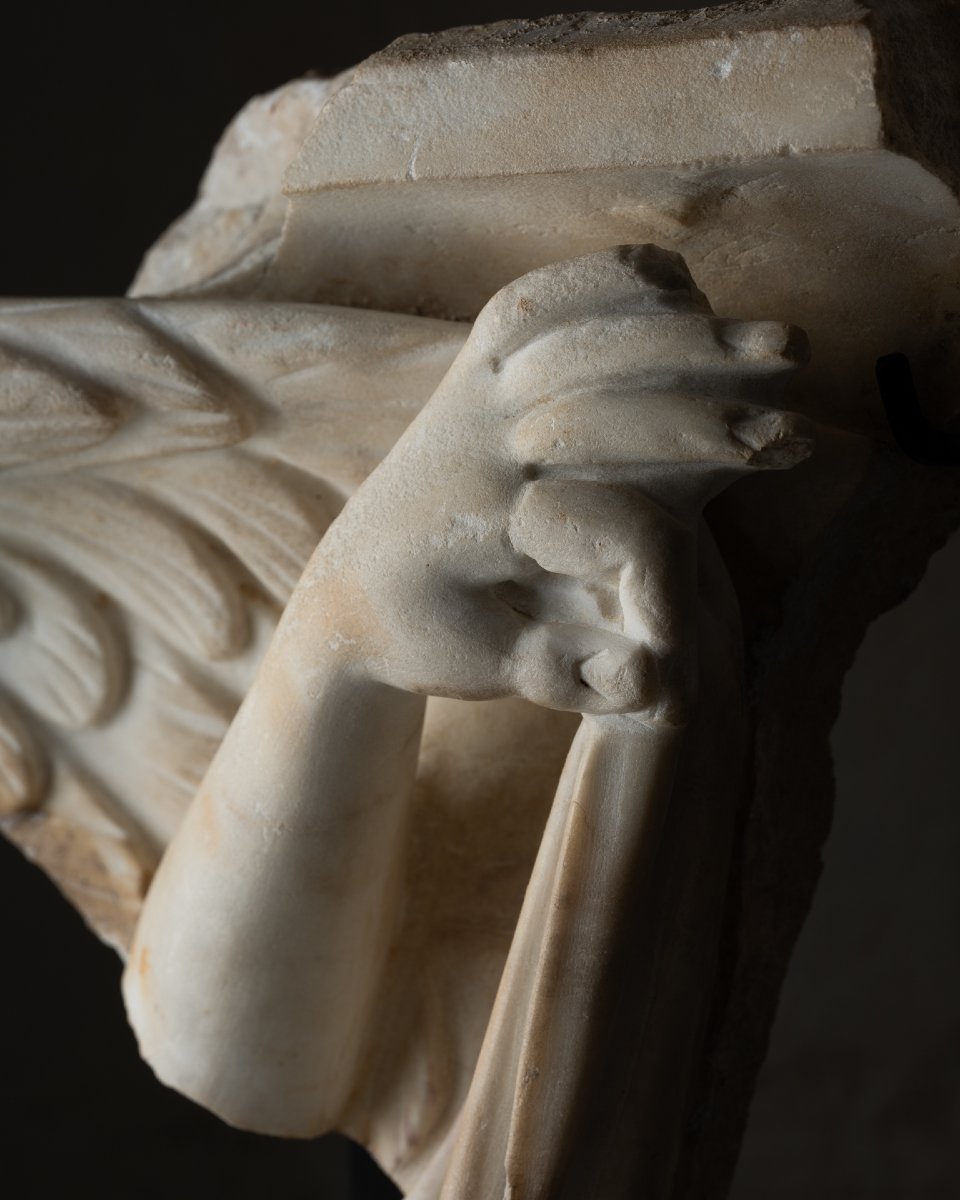
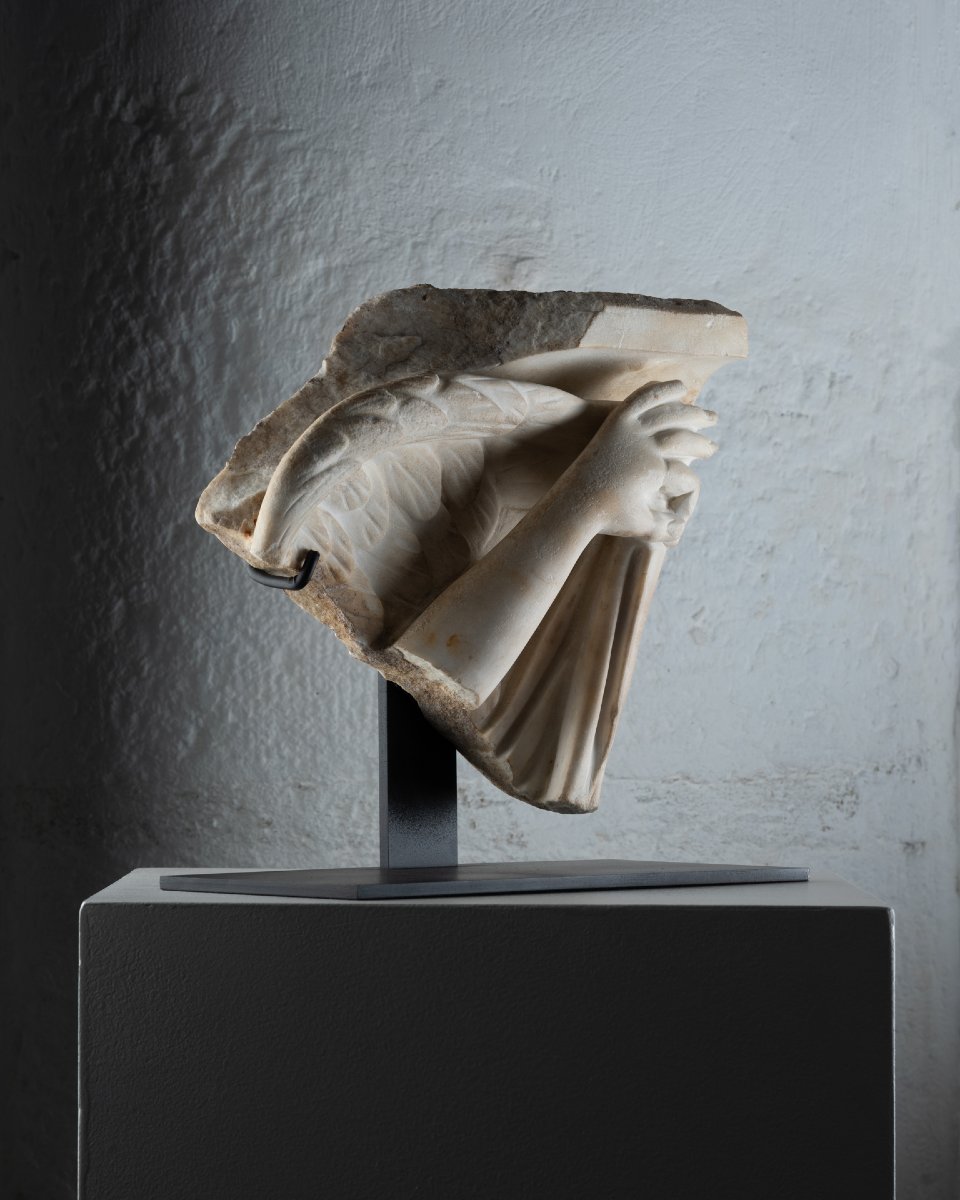
The figure is depicted in dynamic motion. The wing, which occupies a large part of the composition, is composed of carefully individualized feathers, whose various parts are highlighted by incisions and variations in depth. In the foreground, the arm bends toward a hand with slender, elongated fingers, which appears to be holding a fold of fabric. The modeling of the arm and hand reflects a pursuit of naturalism, particularly evident in the articulation of the wrist, the volume of the fingers, and the rendering of the nails.
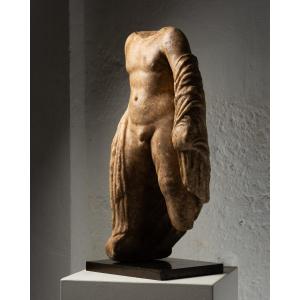
The fragmentary nature of the work makes it impossible to directly reconstruct the entire figure: the torso, head, and legs are missing, as are any attributes she may have been holding. However, the discovery of an almost identical work provides a better understanding of the original composition and confirms the identification of the figure. A comparison of the two sculptures notably highlights the correspondence between the positions of the wing, the arm, the hand, and the drapery. Furthermore, the reverse side of our fragment—which is largely rough and irregular—suggests that the work was intended to be viewed primarily from the front. This characteristic points to an architectural relief, a monumental or funerary decoration, or even a fragment of a sarcophagus, rather than a statue conceived in the round.
In the ancient artistic tradition, Nike is the winged personification of Victory, generally depicted as a female figure with large wings and in dynamic motion. The comparative work, which is nearly identical to our fragment, confirms this identification: it features the same widely spread wing, the bent arm, the hand with elongated fingers, and the gesture of holding back a fold of drapery. This correspondence confirms that the preserved elements indeed belong to a depiction of Nike in motion. Comparison with this work is therefore essential for identifying the fragment and for reconstructing, with greater precision, its original pose and gesture.
This work also possesses a symbolic dimension that goes beyond the mere representation of a winged figure. In the Roman world, Nike embodies Victory, a concept of particular importance in imperial culture: she expresses the triumph, success, and glory associated with the great figures and events with which she is linked. Her presence in monumental or honorary settings thus served to make the idea of victory visible and enduring.
The figure’s movement, her outstretched wing, and the elegant gesture holding back the drapery lend this Victory a particularly lively quality. Far from being a mere decorative element, Nike thus conveys a message of power and prestige, while lending the composition a great sense of visual lightness. The fact that this fragment precisely preserves these elements makes its identification immediately clear, while its ancient and fragmentary condition lends it the unique character of a testament to Imperial Roman sculpture. Through its iconography, the quality of its craftsmanship, and the symbolic power of the Victory it represents, this work stands on its own, whether in a collection or in a contemporary interior.
Explore similar pieces and discover your ideal find:
Marble & Stone Sculptures