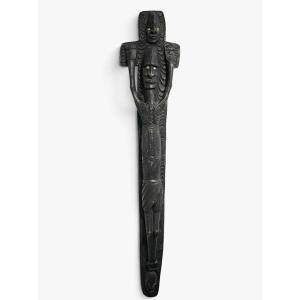


Syncretic Figure Of Christ From The Sepik Region, With Eyes Made Of Cowrie Shells, Papua—
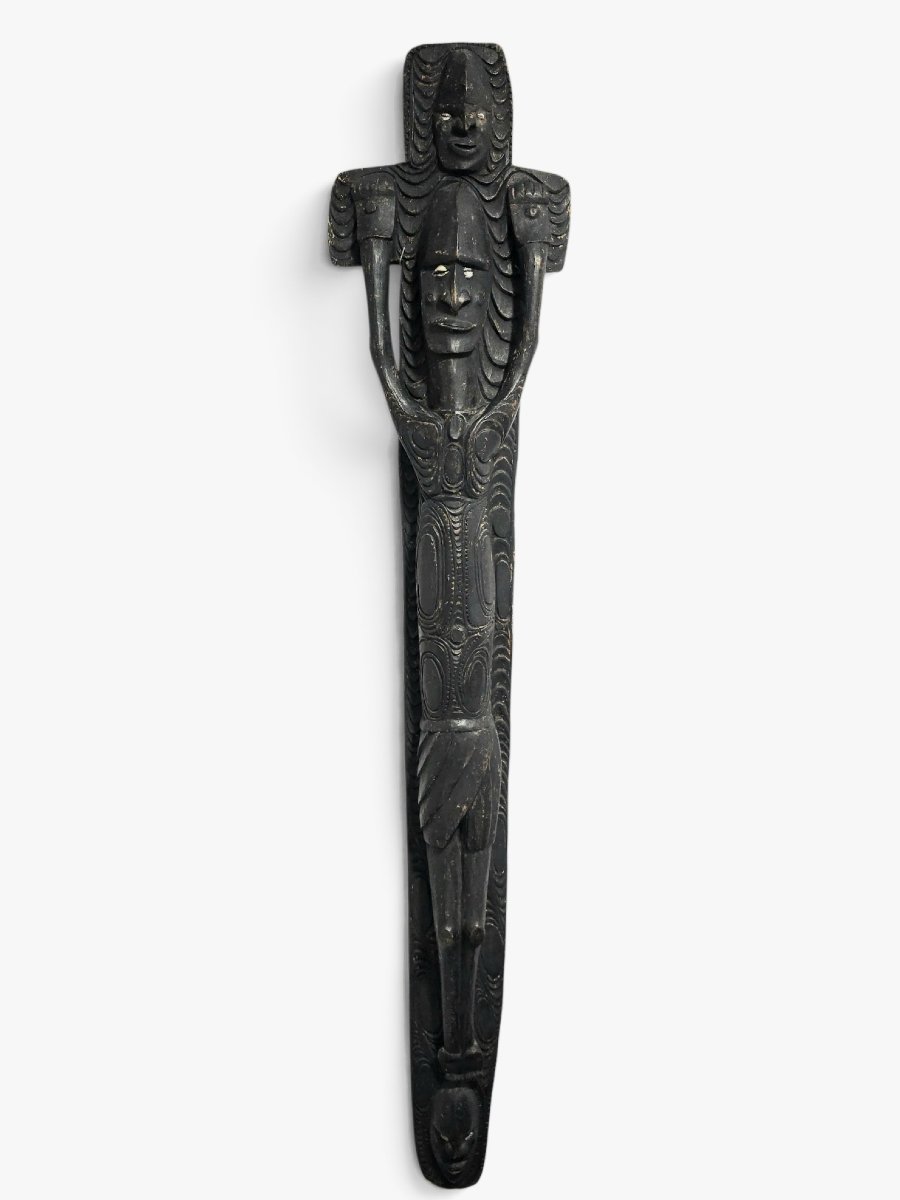
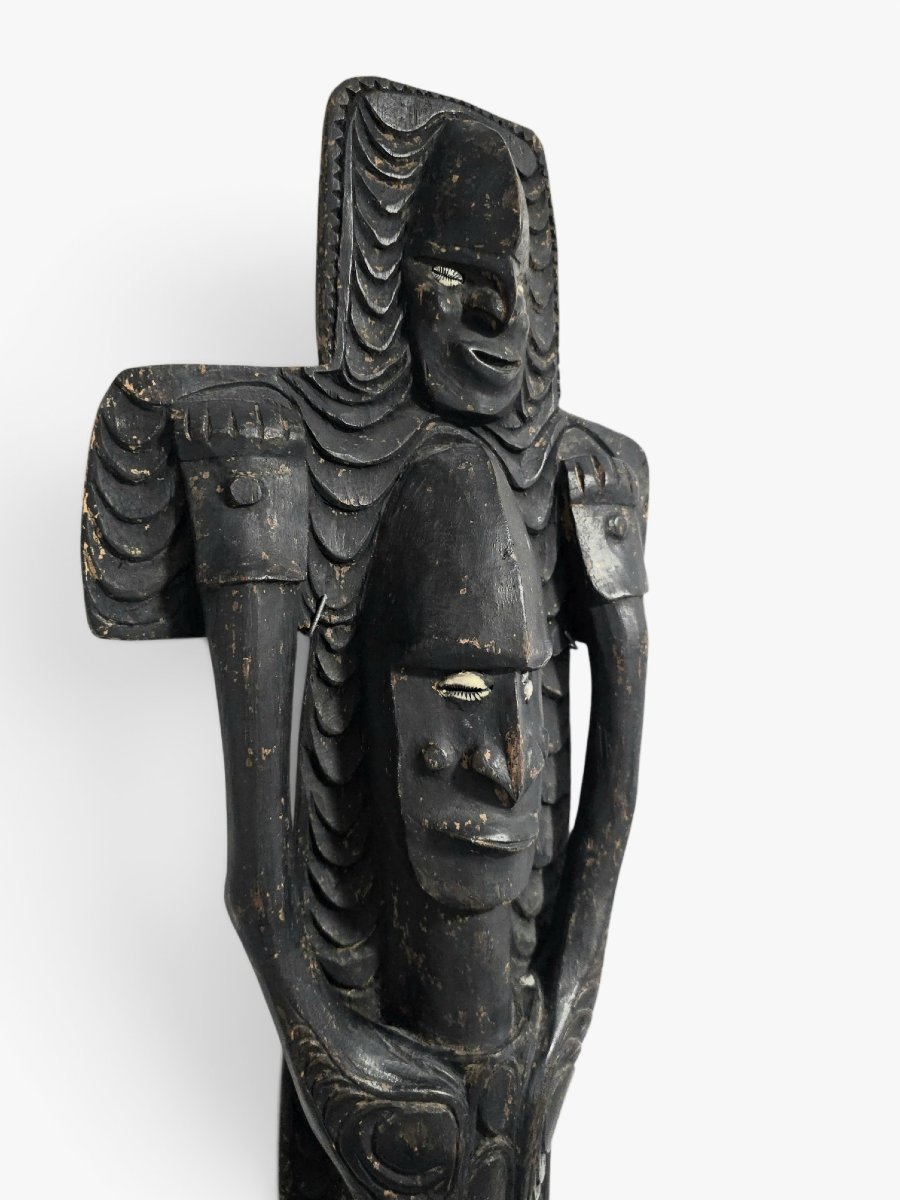
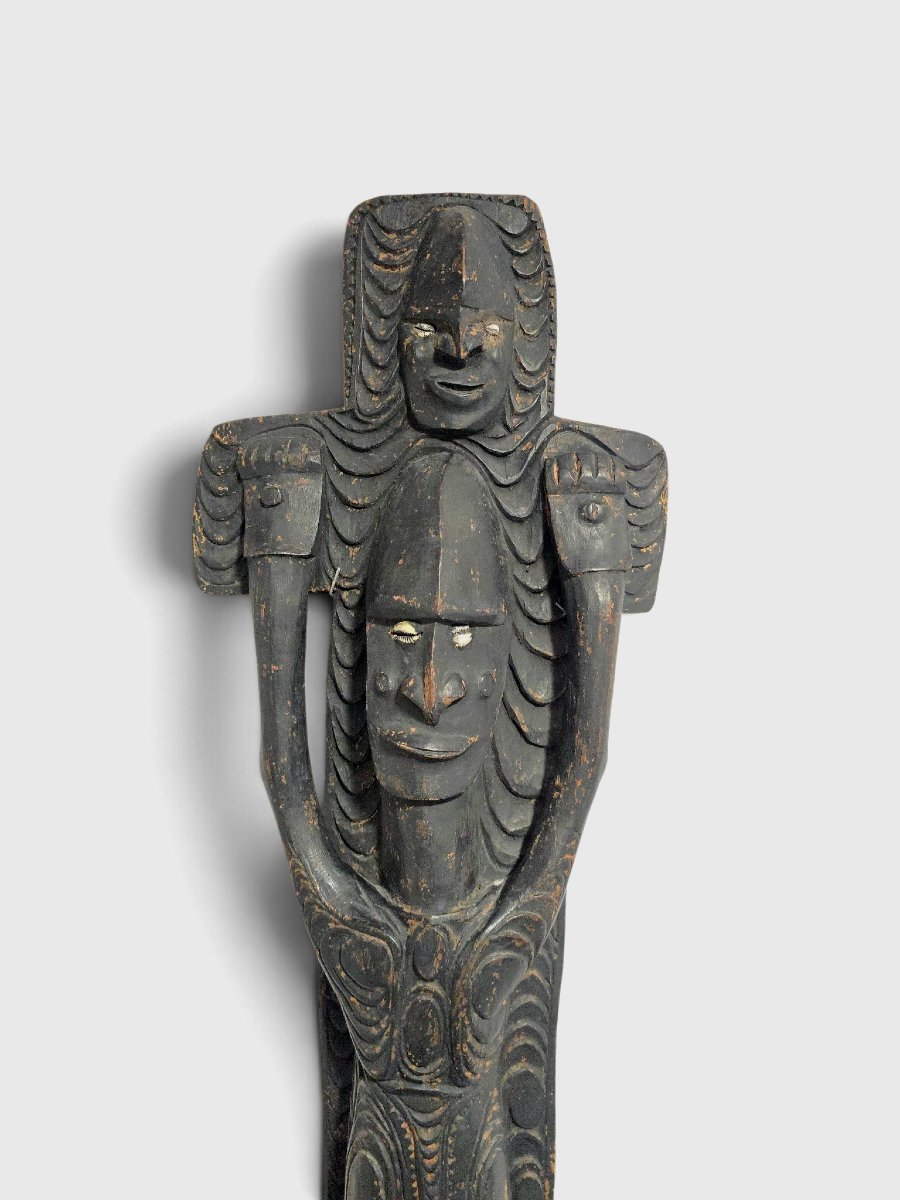
An extraordinary and monumental syncretic carved wooden figure of Jesus Christ, created by a Sepik artist in northern Papua New Guinea, circa 1960, combining Christian iconography with the ancestral sculptural traditions of the Sepik River region.
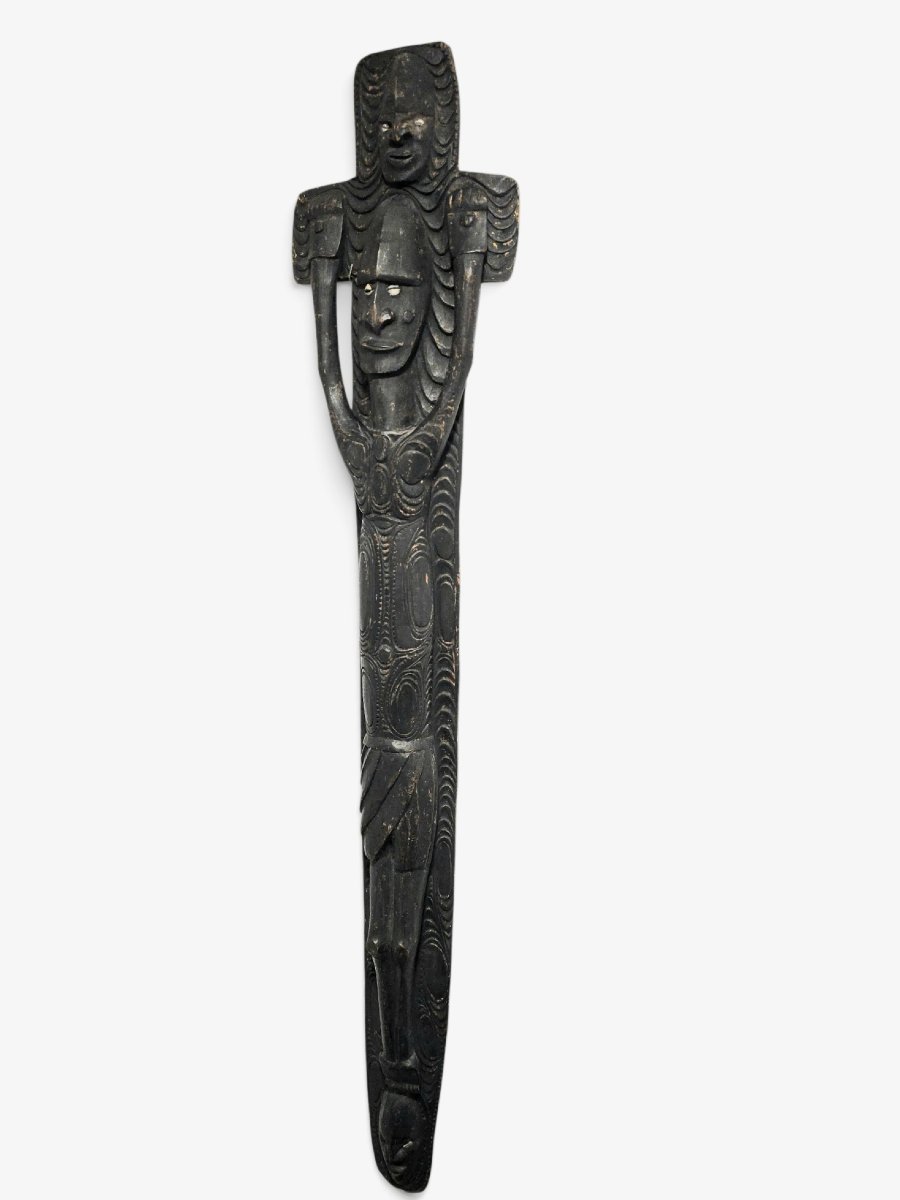
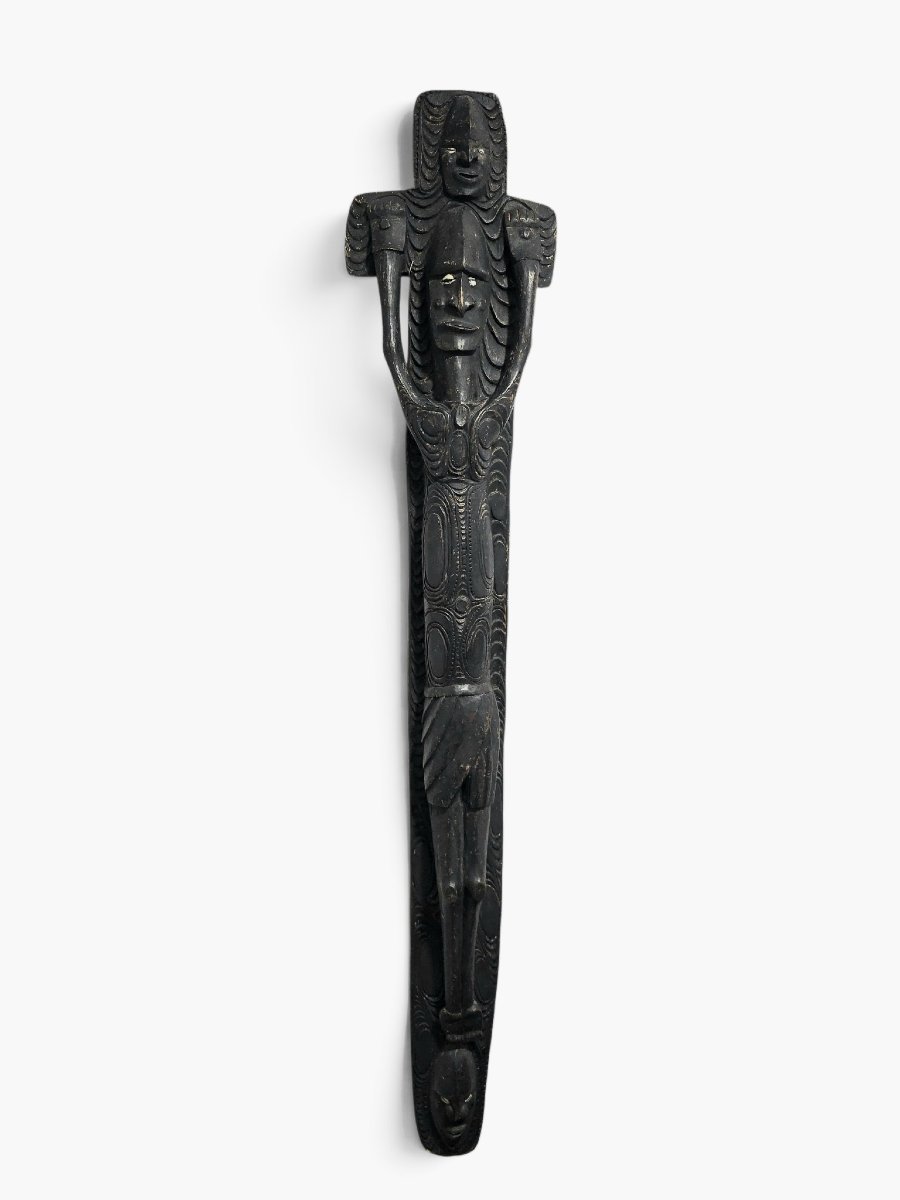
Standing an impressive 158 cm (62.2 in) high, the sculpture represents a fascinating encounter between Christian missionary imagery and indigenous Oceanic art. Rather than reproducing a conventional European representation of Christ, the carver interpreted the subject according to the established visual language of Sepik sculpture.
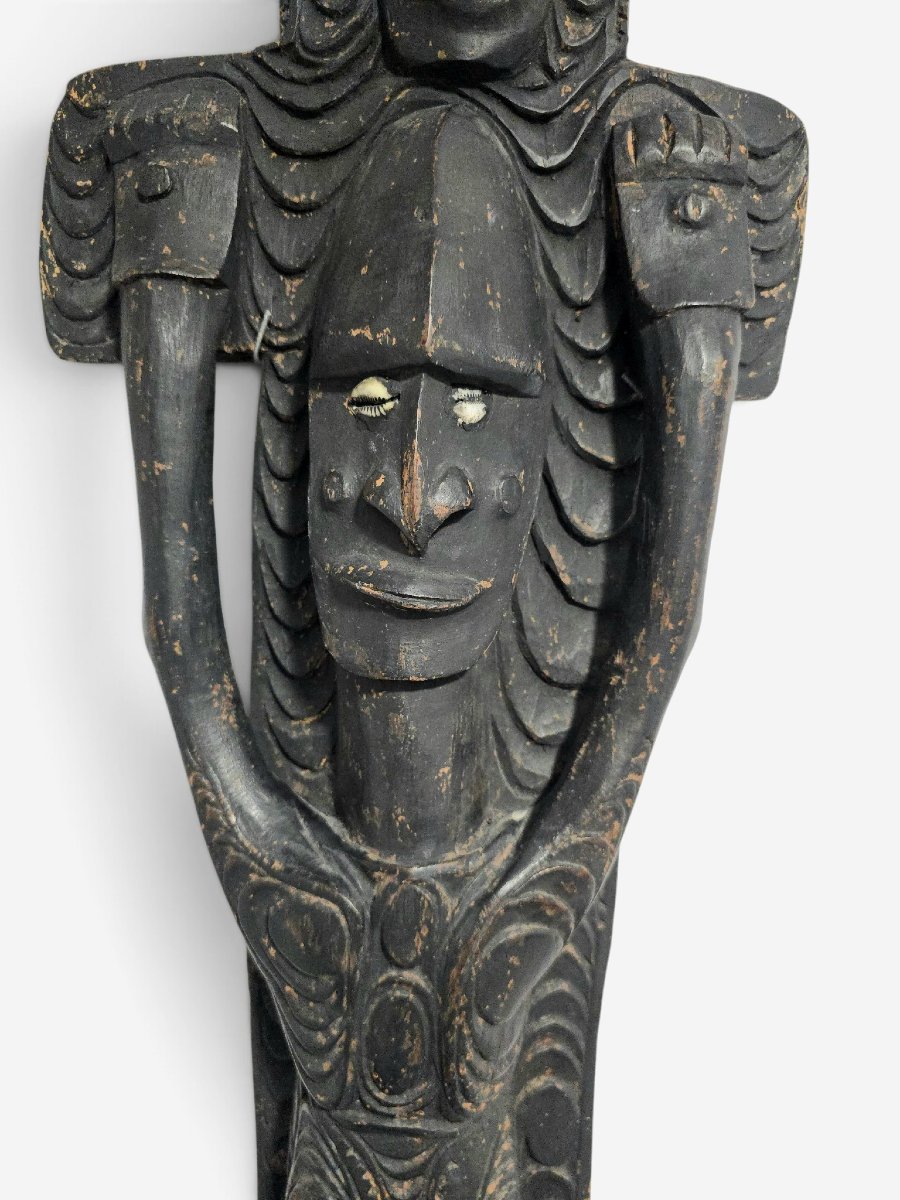
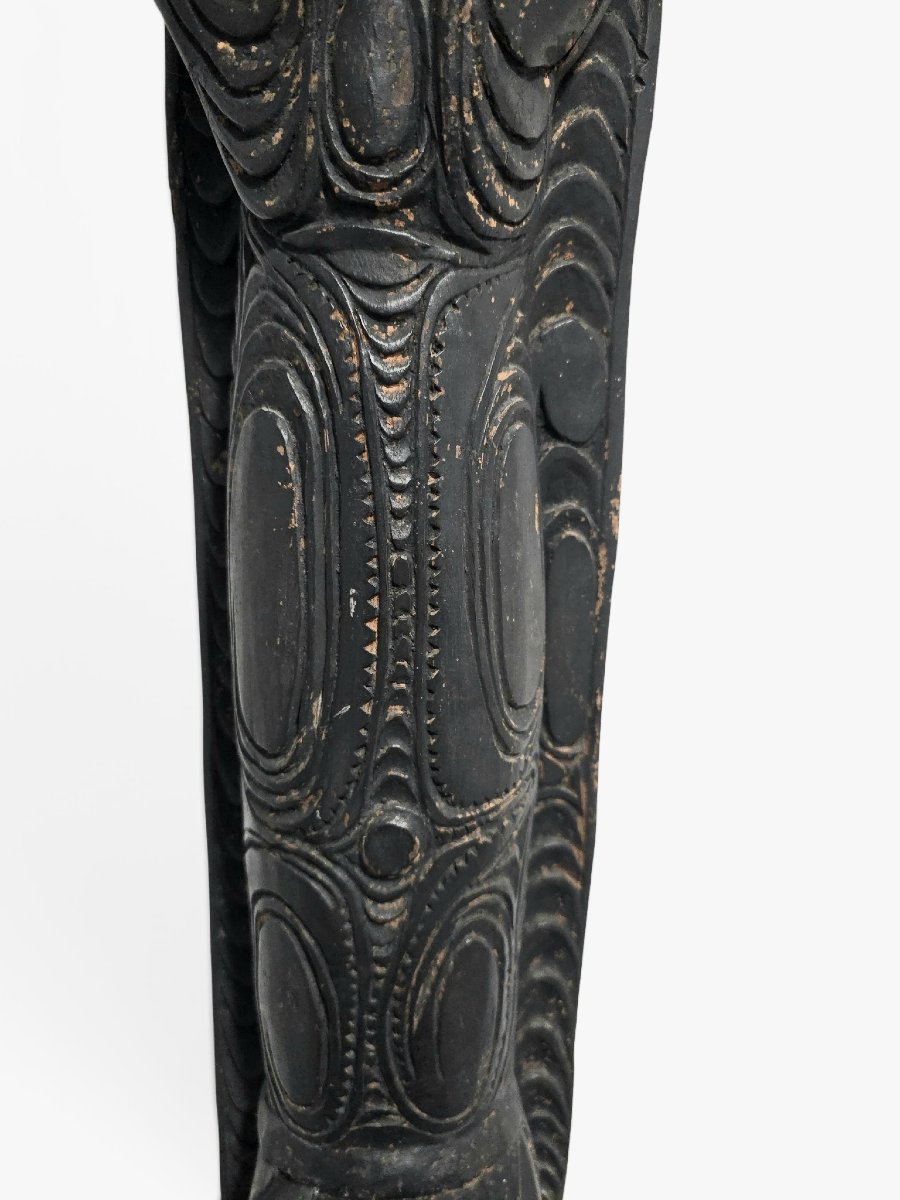
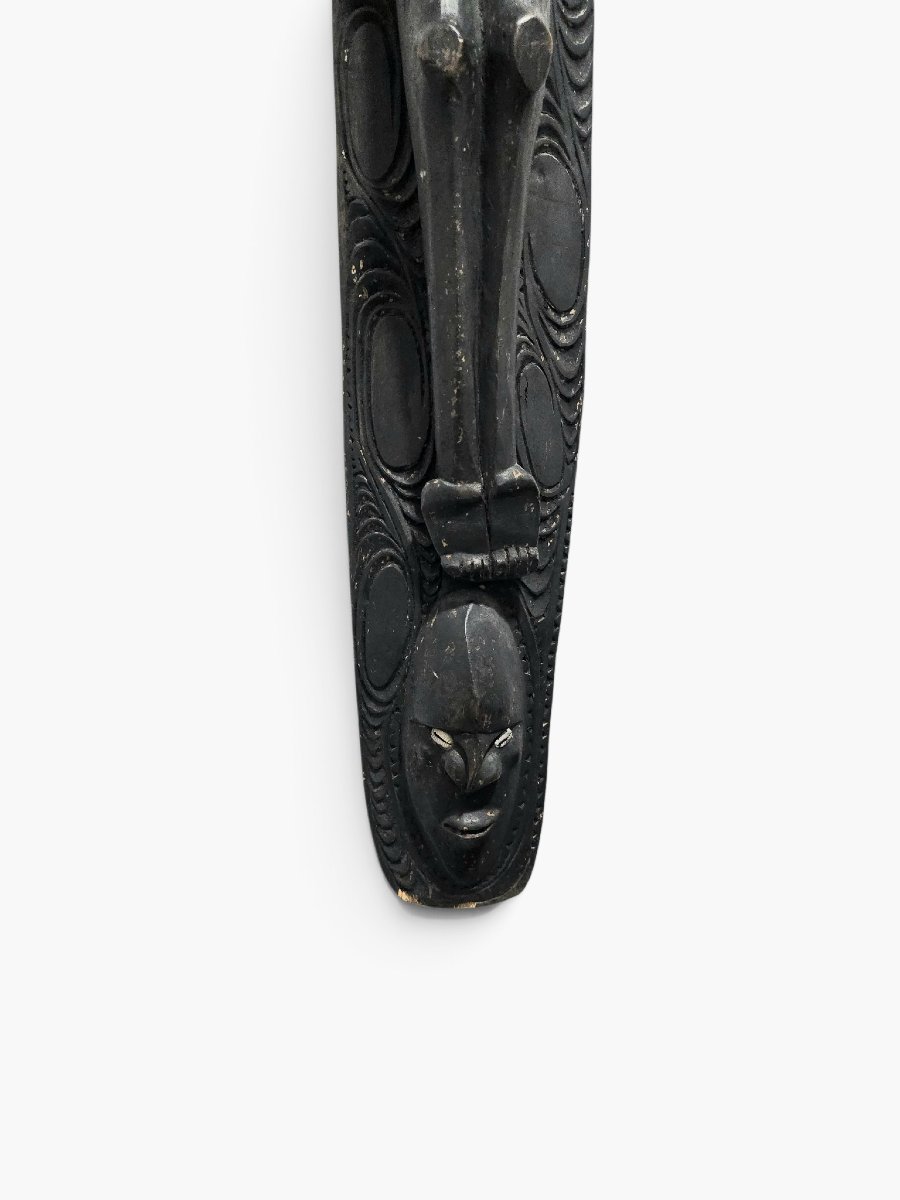
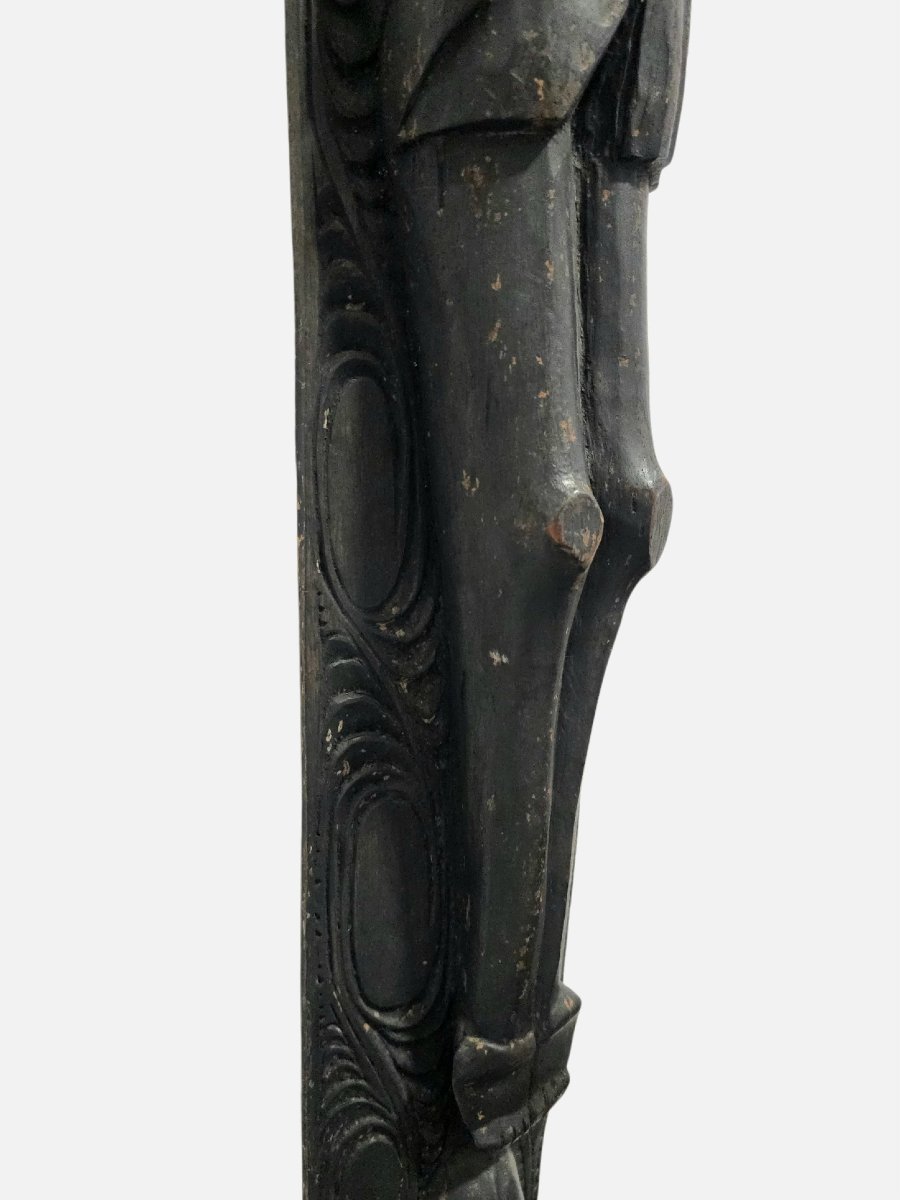
The figure is carved from a single block of local wood and displays the powerful stylization associated with Sepik ancestral figures: an elongated face and prominent nose, emphatic torso, abbreviated lower body, strongly articulated features, and extensive carved surface decoration.
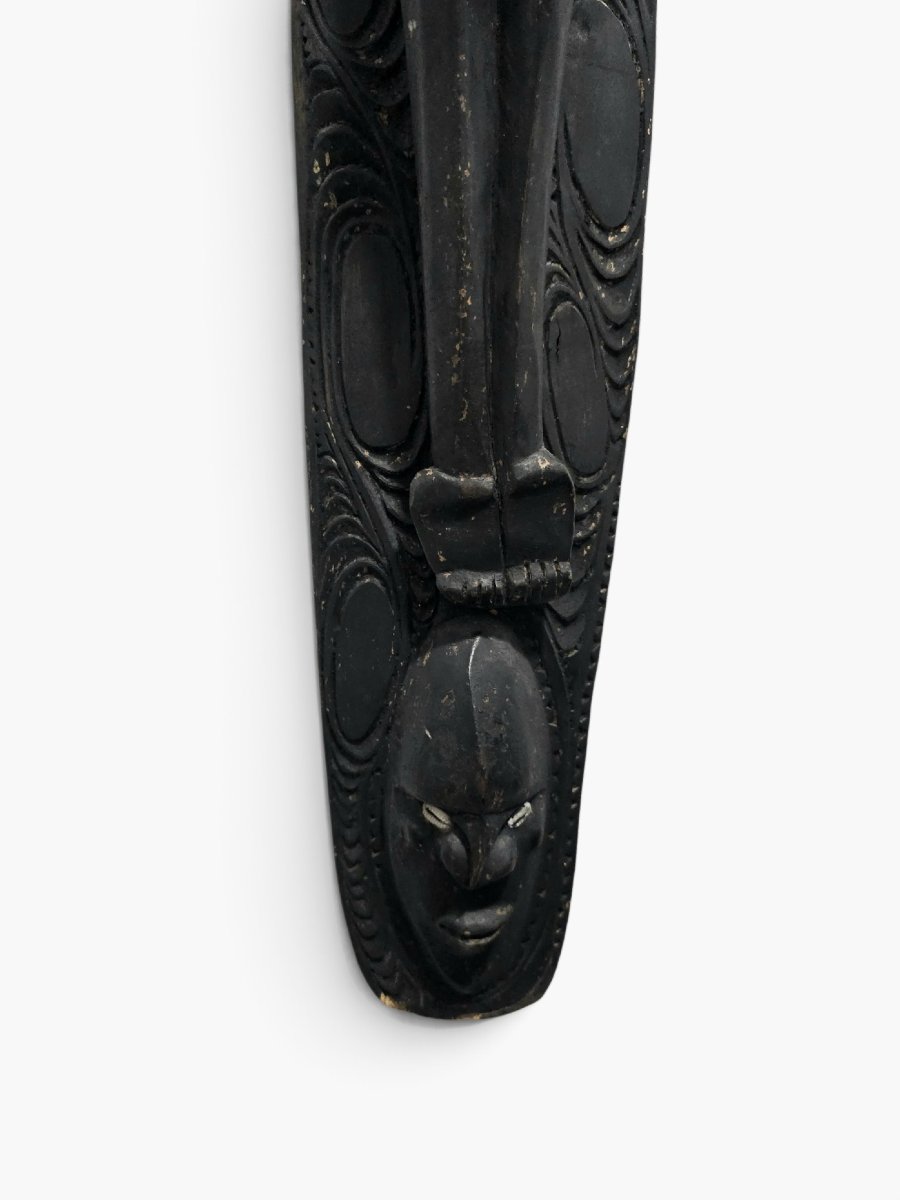
Particularly remarkable are the inlaid cowrie-shell eyes (Cypraea moneta). Shells traditionally possessed considerable economic, ceremonial, and symbolic importance in Melanesian societies and were frequently incorporated into sculpture to emphasize the eyes and spiritual presence of a figure. Their incorporation into this representation of Christ creates a compelling visual fusion of indigenous and Christian symbolism.
Scarification and Sepik Symbolism
The body is extensively decorated with carved patterns recalling the ritual scarification traditions practiced by communities of the Sepik region. In several Sepik cultures, scarification forms part of male initiation ceremonies and can invoke ancestral and crocodile imagery.
Within this Christian representation, these indigenous bodily markings have been transferred onto the figure of the adult Christ. The result is a striking example of religious and artistic syncretism, in which a Christian sacred figure is expressed through an established local vocabulary of adulthood, ancestry, spiritual authority, and ritual identity.
The figure can consequently be understood not simply as a European religious image reproduced in Oceania, but as a localized interpretation of Christ through Sepik artistic conventions.
Christianity and Oceanic Art
Christian missions became increasingly influential throughout Papua New Guinea during the 20th century. Local artists responded to the introduction of Christian subjects in different ways, sometimes incorporating them into existing sculptural traditions.
Christ, biblical figures, crucifixes, and other Christian subjects could consequently acquire the proportions, facial characteristics, carved ornament, pigments, and symbolic elements traditionally associated with ancestral sculpture.
This work belongs to that important field of syncretic Oceanic Christian art, documenting a moment when two very different visual and spiritual traditions encountered one another.
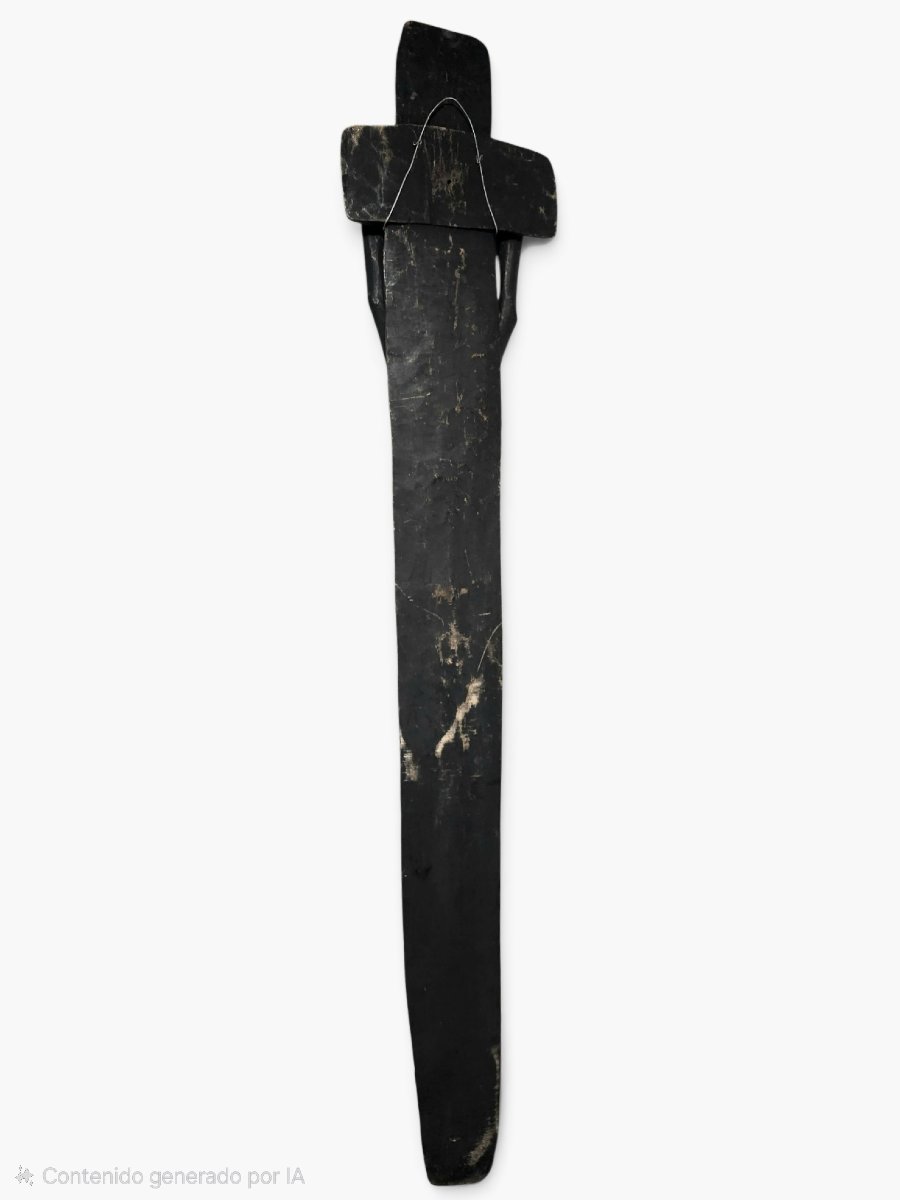
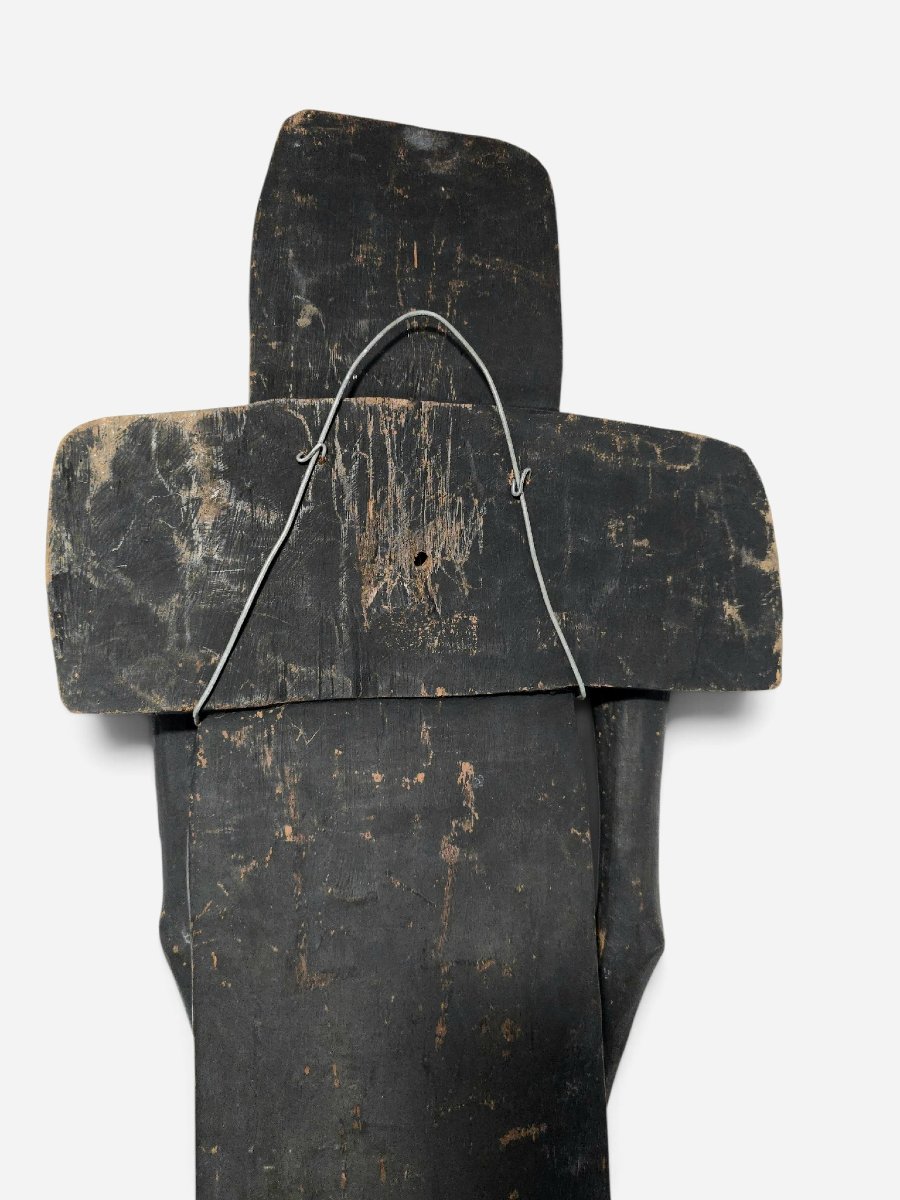
The surface retains vegetal and mineral pigments, together with an attractive handling patina. Areas of wear, particularly to the reverse and points of contact, contribute to the sculpture's authentic ethnographic character.
Its monumental size is particularly noteworthy. At 158 cm high, the sculpture possesses an imposing physical presence and is considerably larger than many portable carvings produced for European collectors during the mid-20th century.
Provenance
According to the documented provenance supplied with the sculpture:
After 1960: Brought to Europe by members associated with the Roman Catholic Missionaries of the Sacred Heart (MSC), Tilburg, The Netherlands.
After 1985: Collection of a Dutch gentleman specializing in ethnographic objects, tribal art, and antiquities.
1990s: Acquired by a private collection in Belgium.
2000s: Acquired by a private collection in Spain.
Subsequently in a Spanish Private Collection.
Origin
Sepik Region, Northern Papua New Guinea
People / Culture
Sepik
Period
Circa 1960
Subject
Syncretic Representation of Jesus Christ
Materials
Local Wood, Organic Binder, Plant-Based Dyes, Vegetal and Mineral Pigments, and Cowrie Shells (Cypraea moneta)
Technique
Hand-carved from a single block of wood, with carved surface decoration, applied pigments, and shell inlays.
Dimensions
Height: 62.2 in (158 cm)
Weight
Approximately 7.5 kg (16.5 lb)
Condition
Good condition consistent with age and ritual or decorative use. The surface retains an attractive handling patina, with areas of friction and wear, particularly to the reverse. Minor age-related cracks, dents, and splits are present. These characteristics are consistent with the material, age, and history of the sculpture and contribute to its authentic character.
A rare, monumental and visually commanding example of Christian–Oceanic syncretic sculpture, combining the iconography of Jesus Christ with the powerful ancestral artistic language of the Sepik River region.
Keywords: Sepik Art, Papu
Standing an impressive 158 cm (62.2 in) high, the sculpture represents a fascinating encounter between Christian missionary imagery and indigenous Oceanic art. Rather than reproducing a conventional European representation of Christ, the carver interpreted the subject according to the established visual language of Sepik sculpture.
The figure is carved from a single block of local wood and displays the powerful stylization associated with Sepik ancestral figures: an elongated face and prominent nose, emphatic torso, abbreviated lower body, strongly articulated features, and extensive carved surface decoration.
Particularly remarkable are the inlaid cowrie-shell eyes (Cypraea moneta). Shells traditionally possessed considerable economic, ceremonial, and symbolic importance in Melanesian societies and were frequently incorporated into sculpture to emphasize the eyes and spiritual presence of a figure. Their incorporation into this representation of Christ creates a compelling visual fusion of indigenous and Christian symbolism.
Scarification and Sepik Symbolism
The body is extensively decorated with carved patterns recalling the ritual scarification traditions practiced by communities of the Sepik region. In several Sepik cultures, scarification forms part of male initiation ceremonies and can invoke ancestral and crocodile imagery.
Within this Christian representation, these indigenous bodily markings have been transferred onto the figure of the adult Christ. The result is a striking example of religious and artistic syncretism, in which a Christian sacred figure is expressed through an established local vocabulary of adulthood, ancestry, spiritual authority, and ritual identity.
The figure can consequently be understood not simply as a European religious image reproduced in Oceania, but as a localized interpretation of Christ through Sepik artistic conventions.
Christianity and Oceanic Art
Christian missions became increasingly influential throughout Papua New Guinea during the 20th century. Local artists responded to the introduction of Christian subjects in different ways, sometimes incorporating them into existing sculptural traditions.
Christ, biblical figures, crucifixes, and other Christian subjects could consequently acquire the proportions, facial characteristics, carved ornament, pigments, and symbolic elements traditionally associated with ancestral sculpture.
This work belongs to that important field of syncretic Oceanic Christian art, documenting a moment when two very different visual and spiritual traditions encountered one another.
The surface retains vegetal and mineral pigments, together with an attractive handling patina. Areas of wear, particularly to the reverse and points of contact, contribute to the sculpture's authentic ethnographic character.
Its monumental size is particularly noteworthy. At 158 cm high, the sculpture possesses an imposing physical presence and is considerably larger than many portable carvings produced for European collectors during the mid-20th century.
Provenance
According to the documented provenance supplied with the sculpture:
After 1960: Brought to Europe by members associated with the Roman Catholic Missionaries of the Sacred Heart (MSC), Tilburg, The Netherlands.
After 1985: Collection of a Dutch gentleman specializing in ethnographic objects, tribal art, and antiquities.
1990s: Acquired by a private collection in Belgium.
2000s: Acquired by a private collection in Spain.
Subsequently in a Spanish Private Collection.
Origin
Sepik Region, Northern Papua New Guinea
People / Culture
Sepik
Period
Circa 1960
Subject
Syncretic Representation of Jesus Christ
Materials
Local Wood, Organic Binder, Plant-Based Dyes, Vegetal and Mineral Pigments, and Cowrie Shells (Cypraea moneta)
Technique
Hand-carved from a single block of wood, with carved surface decoration, applied pigments, and shell inlays.
Dimensions
Height: 62.2 in (158 cm)
Weight
Approximately 7.5 kg (16.5 lb)
Condition
Good condition consistent with age and ritual or decorative use. The surface retains an attractive handling patina, with areas of friction and wear, particularly to the reverse. Minor age-related cracks, dents, and splits are present. These characteristics are consistent with the material, age, and history of the sculpture and contribute to its authentic character.
A rare, monumental and visually commanding example of Christian–Oceanic syncretic sculpture, combining the iconography of Jesus Christ with the powerful ancestral artistic language of the Sepik River region.
Keywords: Sepik Art, Papu
5 450 €
Period: 20th century
Style: Other Style
Condition: Good condition
Material: Solid wood
Reference (ID): 1824186
Availability: In stock
Print