



2 Small Ivory Needle-holder Sculptures From Dieppe And Poletais, Depicting A Fishing Couple, 19th Century
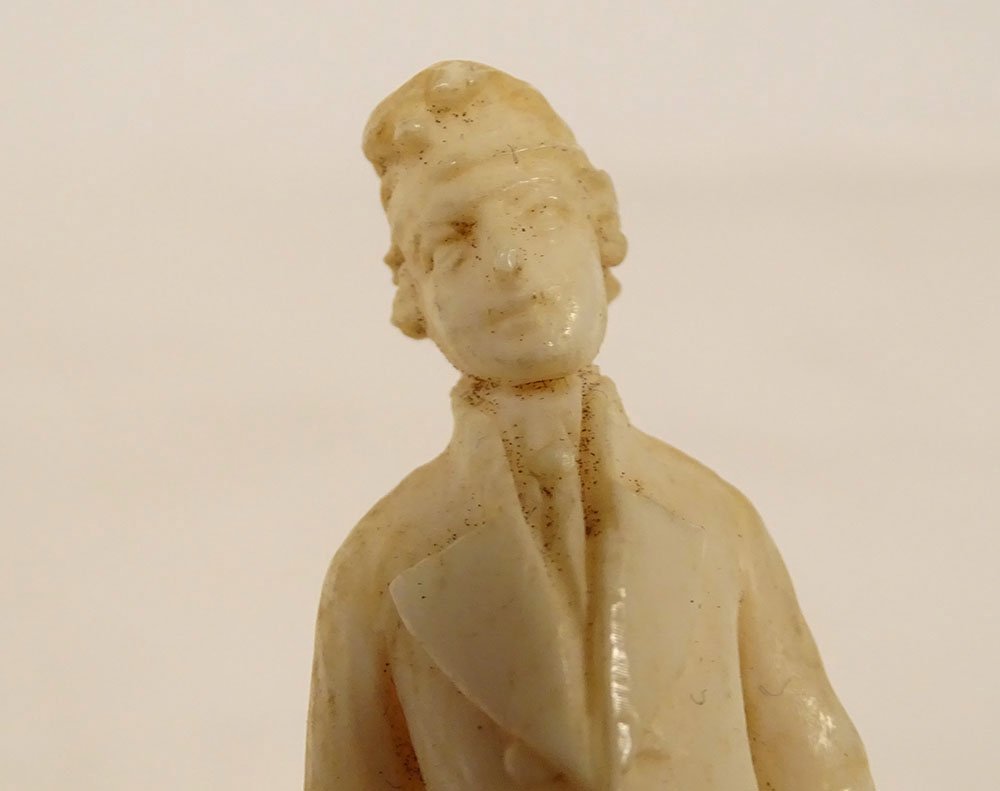
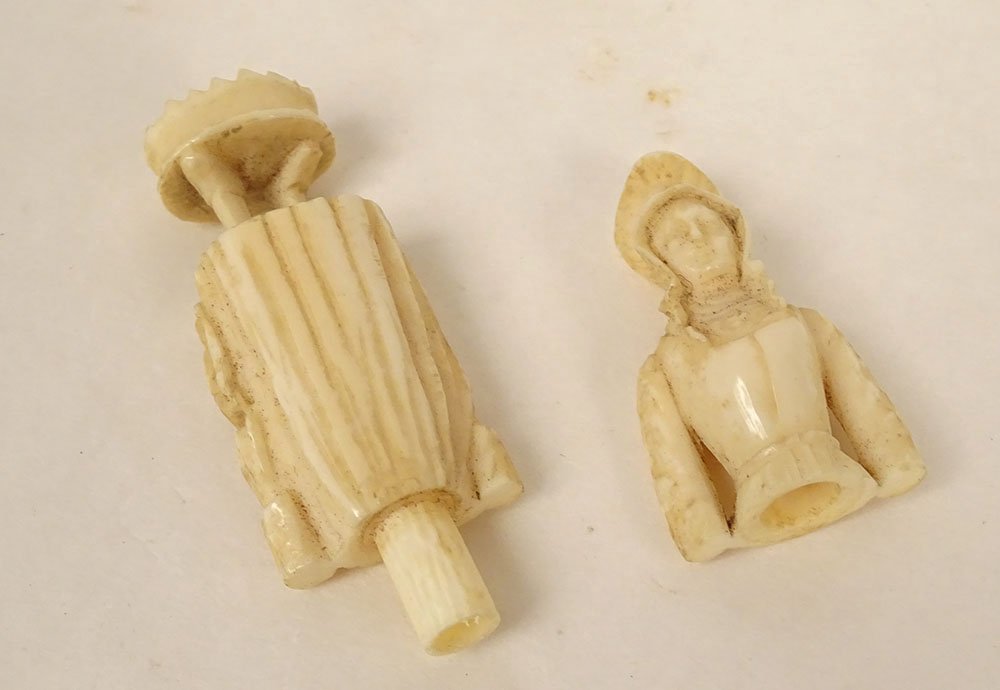
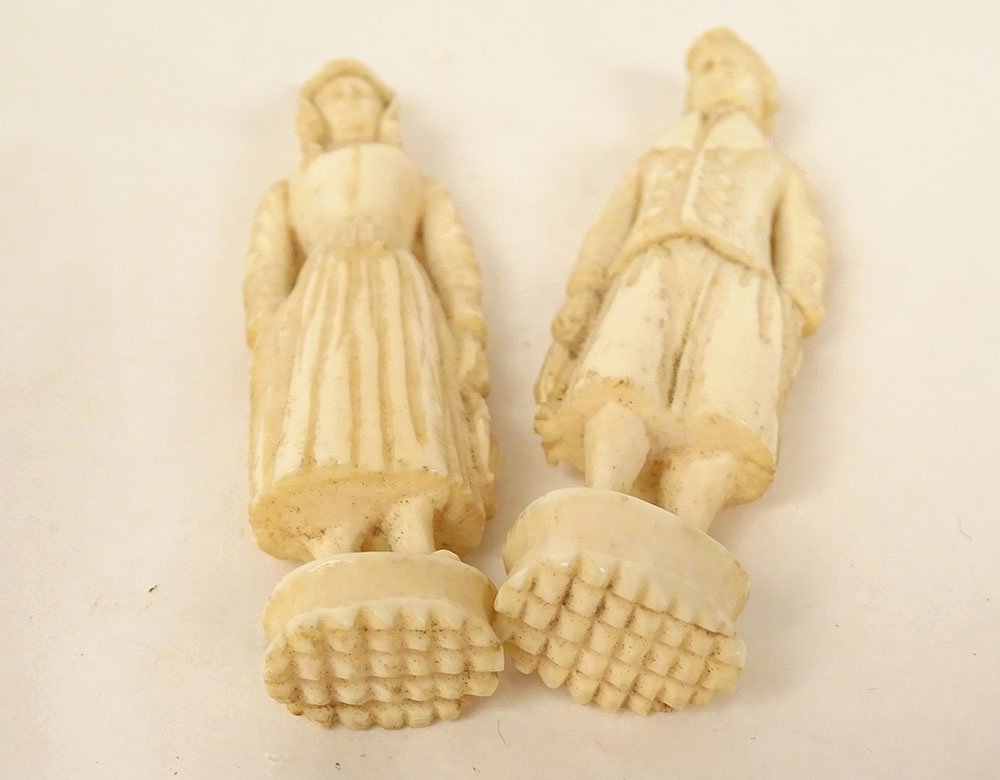
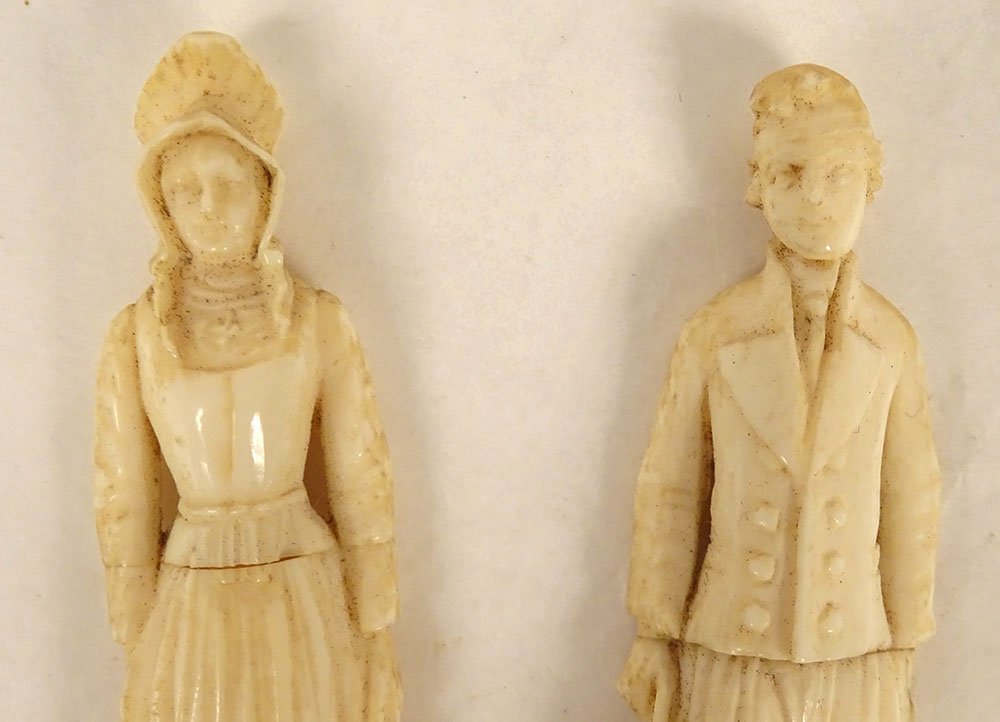
Two small ivory sculptures from Dieppe* serving as needle holders, depicting a pair of "Poletais" fishermen in traditional dress, each holding a fish in their hand, dating from the 19th century.
These needle holders are in good condition. They open in two parts (the man is currently stuck; you will need to move him carefully and gently to open it).
They are called “Poletais” in reference to the Pollet district, a historic neighborhood in Dieppe, Normandy, where a large community of sailors and fishermen once lived.
Please note: slight soiling and wear from age; see photos.
* Dieppe IvorySailors from Dieppe are said to have discovered Guinea before the Portuguese. In 1384, they are said to have brought back a large quantity of ivory, which is believed to have been the origin of the Norman port’s economic focus. The proliferation of ivory workshops quickly gave Dieppe a leading position in Europe in the field of tabletop crafts. In the 17th century, artisans produced all sorts of religious objects and items for secular use, such as boxes, shuttles, fans, perfume boxes, and powder boxes, as well as scientific instruments such as compasses and sundials, not to mention the famous tobacco rasps, or “grivoises”. In the 18th century, new production was characterized by openwork and turned objects. A wide variety of objects were produced: carved, guilloché, fluted and saw-cut cases, snuffboxes, ladies’ shuttles, knives, baskets, ordinary crucifixes and other “finely finished” crucifixes of all sizes, figures of saints, fans, marbles and billiard balls, dice, chess and domino sets. Miniatures and portraits are also worth mentioning. The Revolutionary period and the First Empire were not particularly favorable for ivory work. During the Restoration, the Countess of Berry took up residence there, and the town became fashionable. Her taste for the Neo-Gothic style was reflected not only in furniture but also in the production of all kinds of objects. The popularity of ivory was very strong: people would take locally produced ivory items home as souvenirs or gifts. This craze continued until 1850. The advent of celluloid in 1869 dealt a fatal blow to this craft. Dieppe ivories are highly sought after by collectors, depending on the quality of the decoration and the theme.
Dimensions- Height: man 7.2 cm / woman 7 cm
- E10 837
- All photos are available at:
www.antiques-delaval.com
Period: 19th century
Style: Other Style
Condition: Good condition
Height: homme 7,2 cm / femme 7 cm
Reference (ID): 1823741
Availability: In stock