

The Virgin And Child. Carved Alabaster. Attributed To Pardo, Gregorio (1513–1552).
The Virgin and Child. Carved alabaster. Attributed to PARDO, Gregorio (1513–1552).
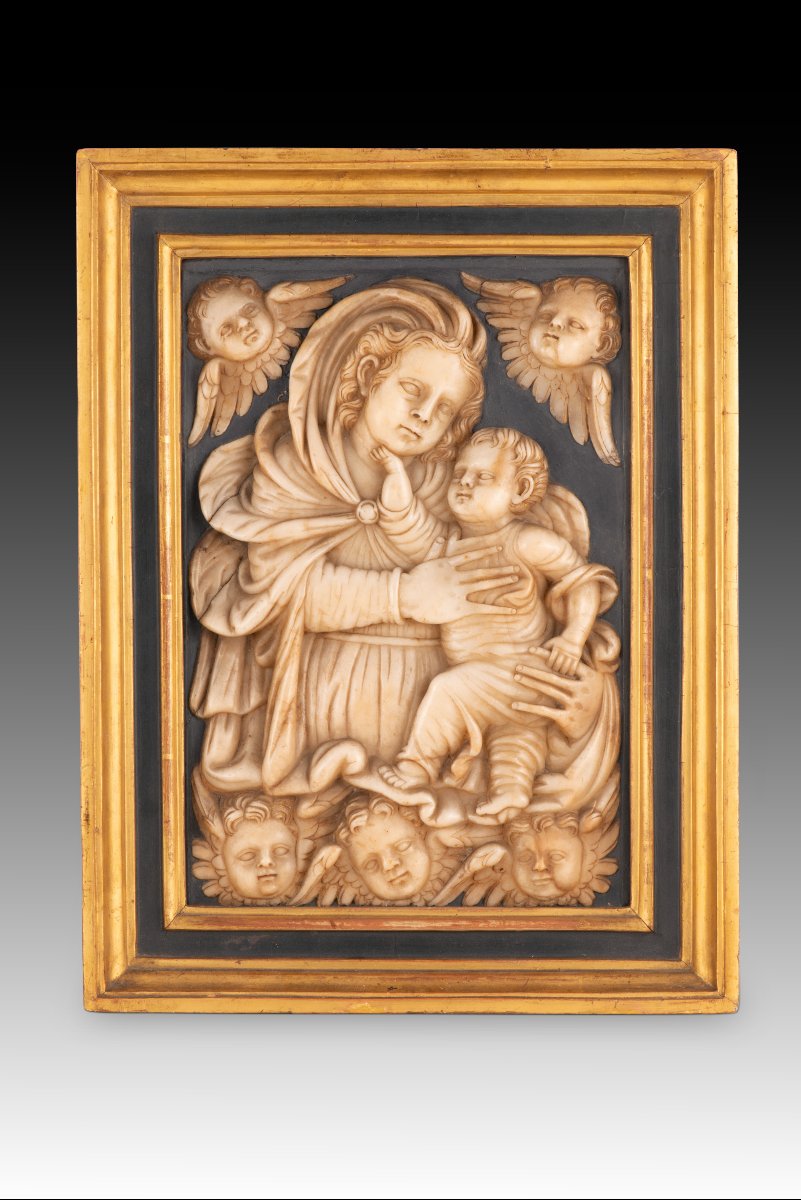
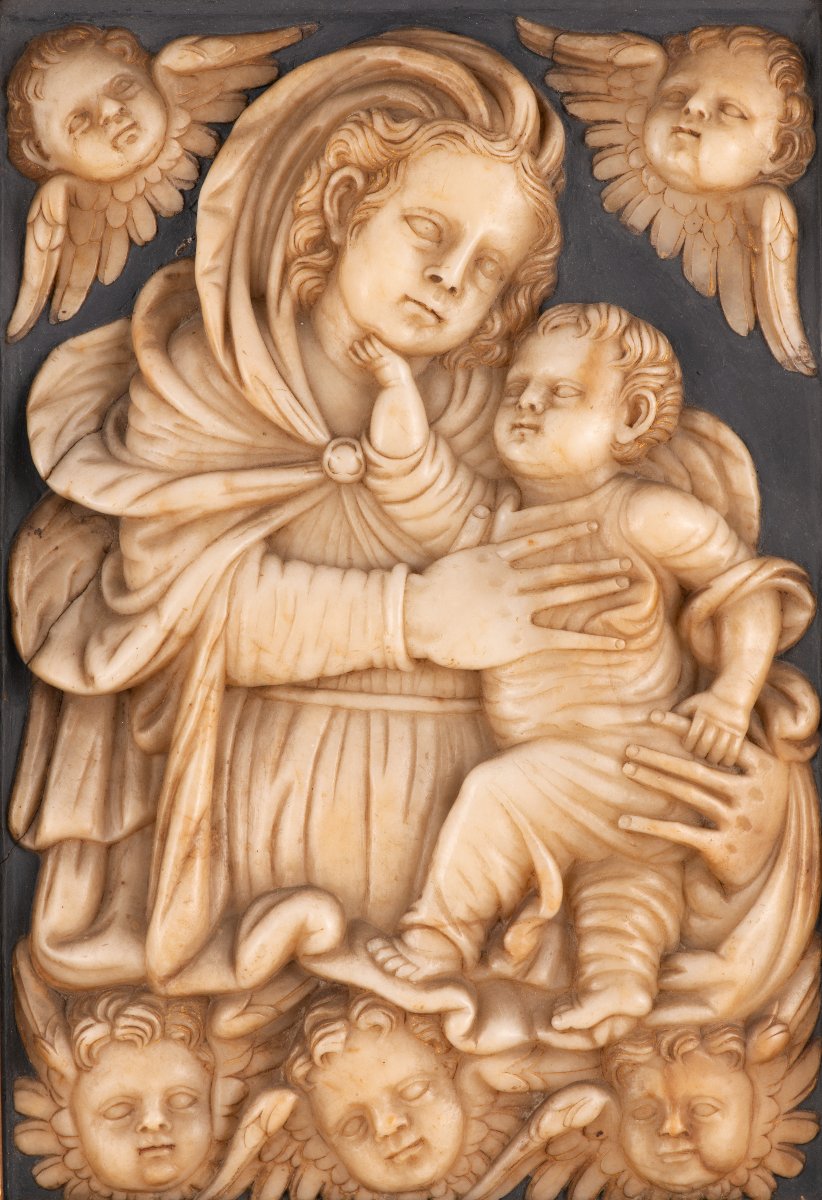
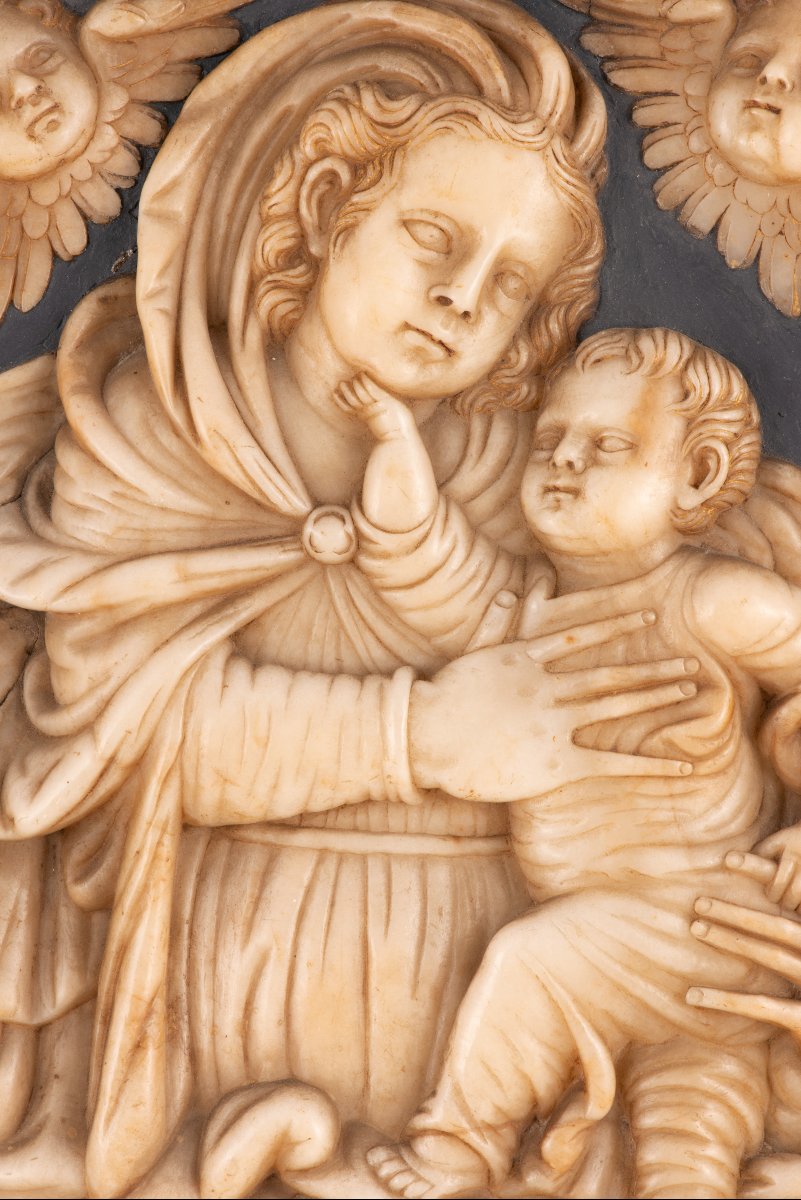
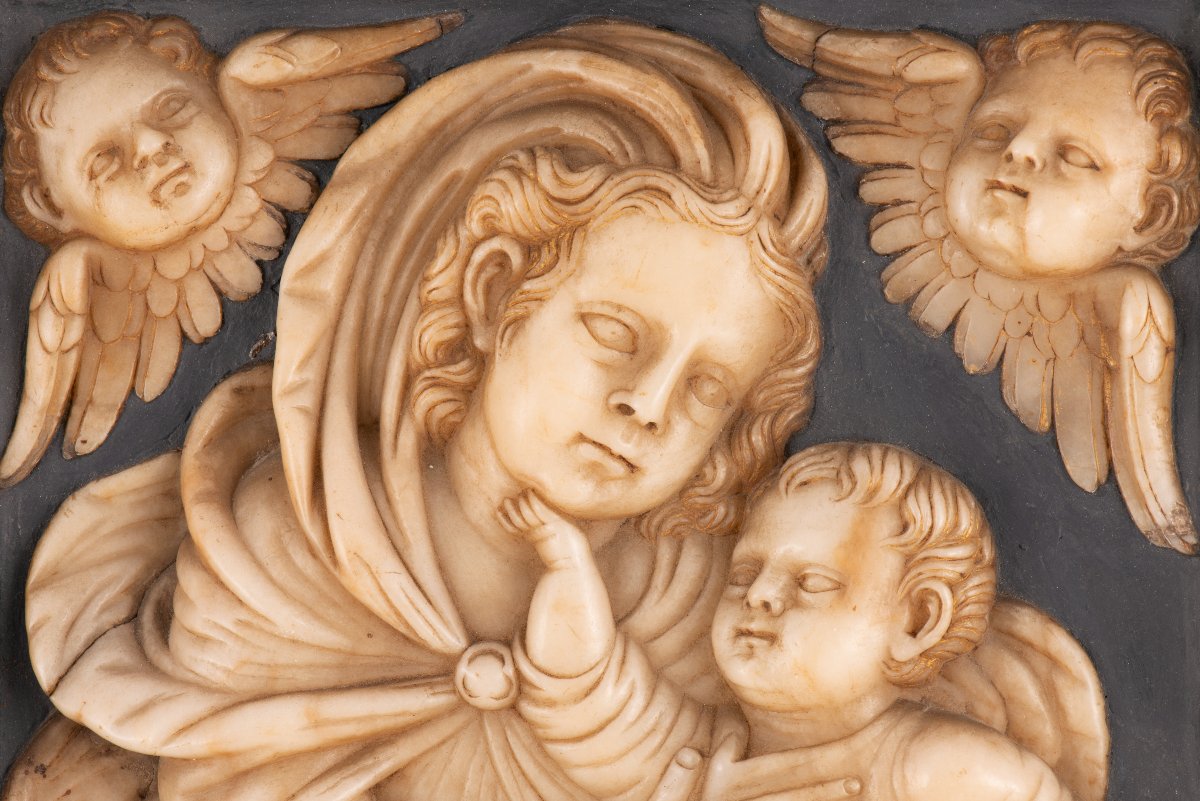
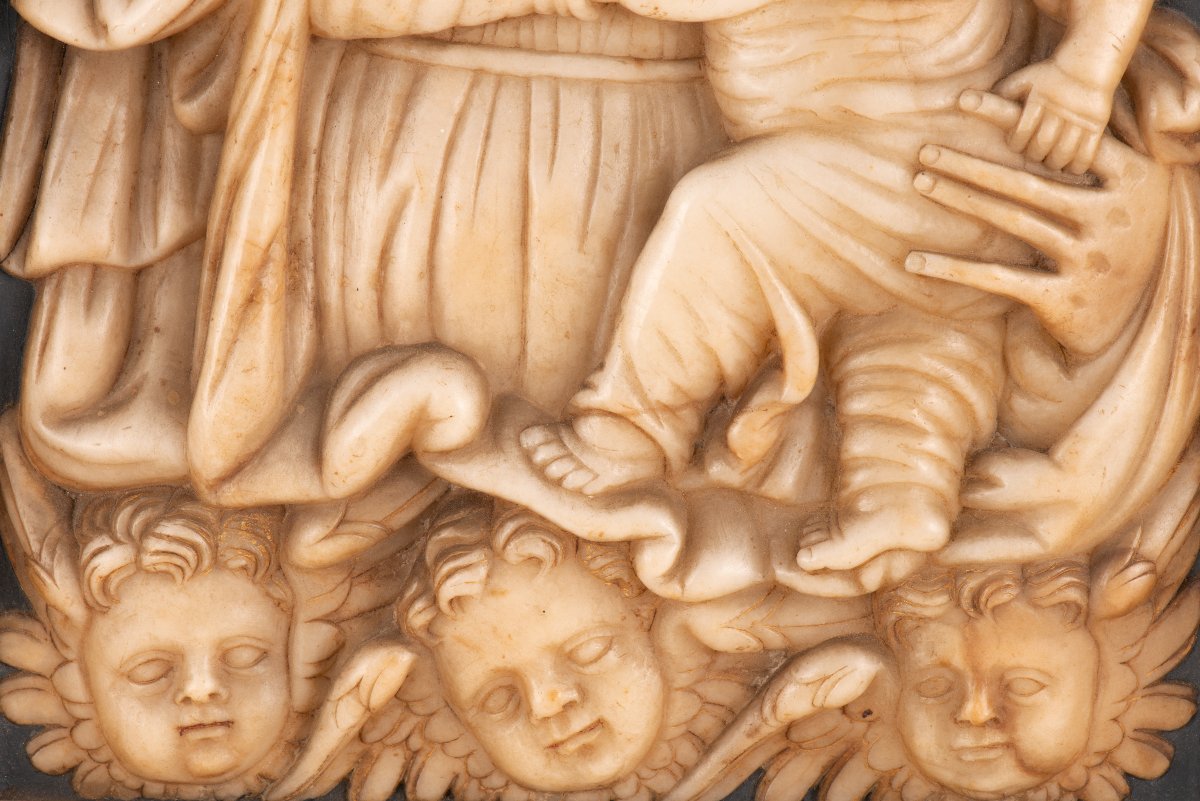
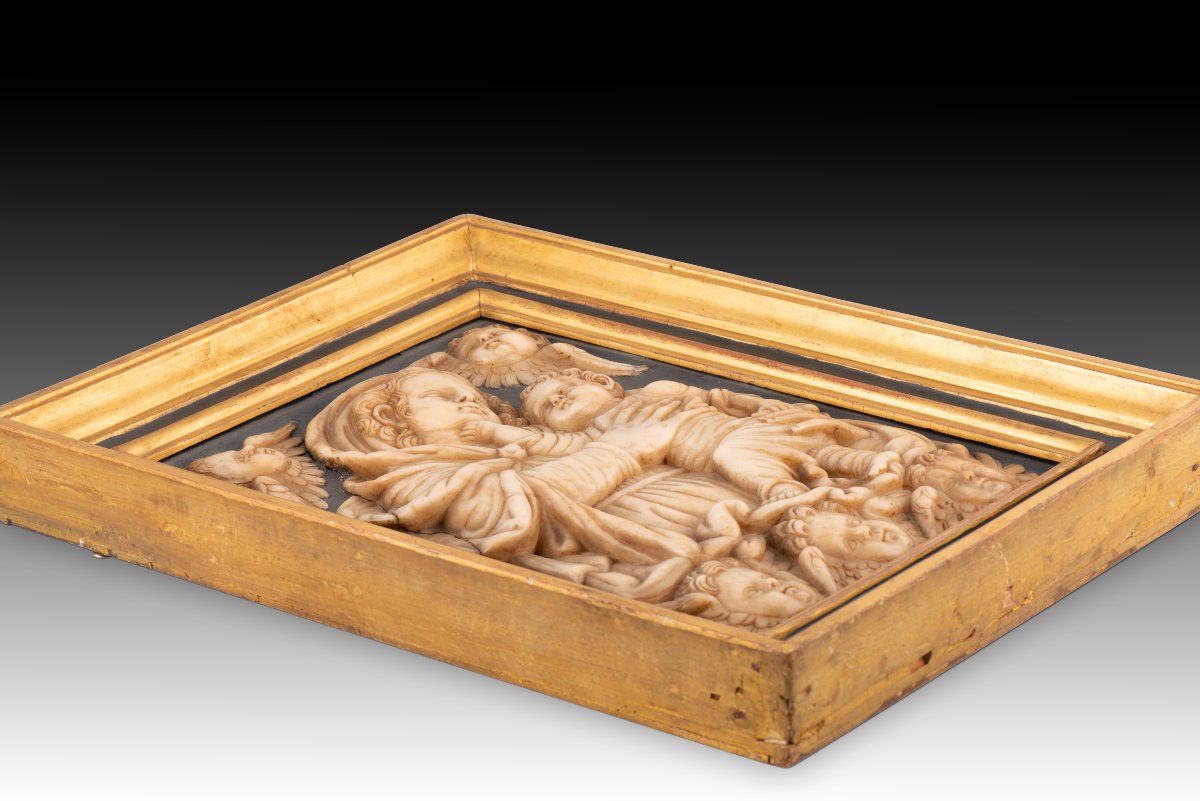
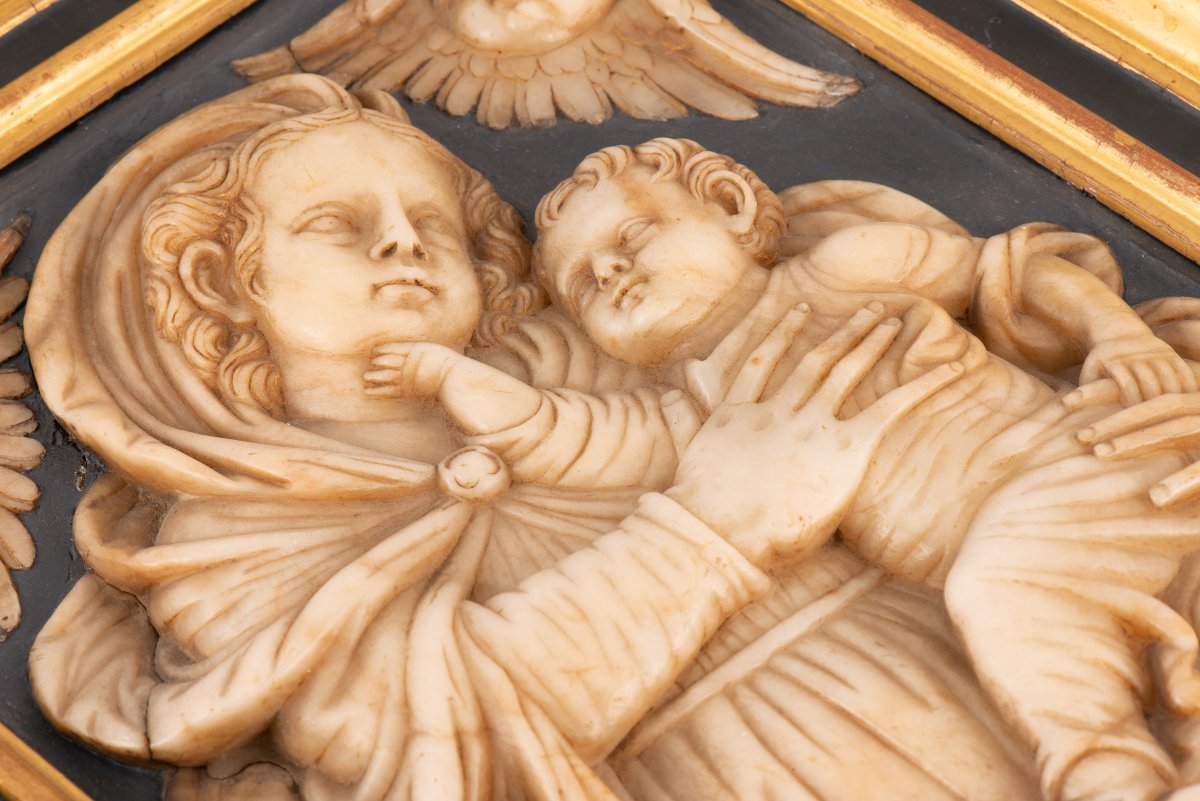
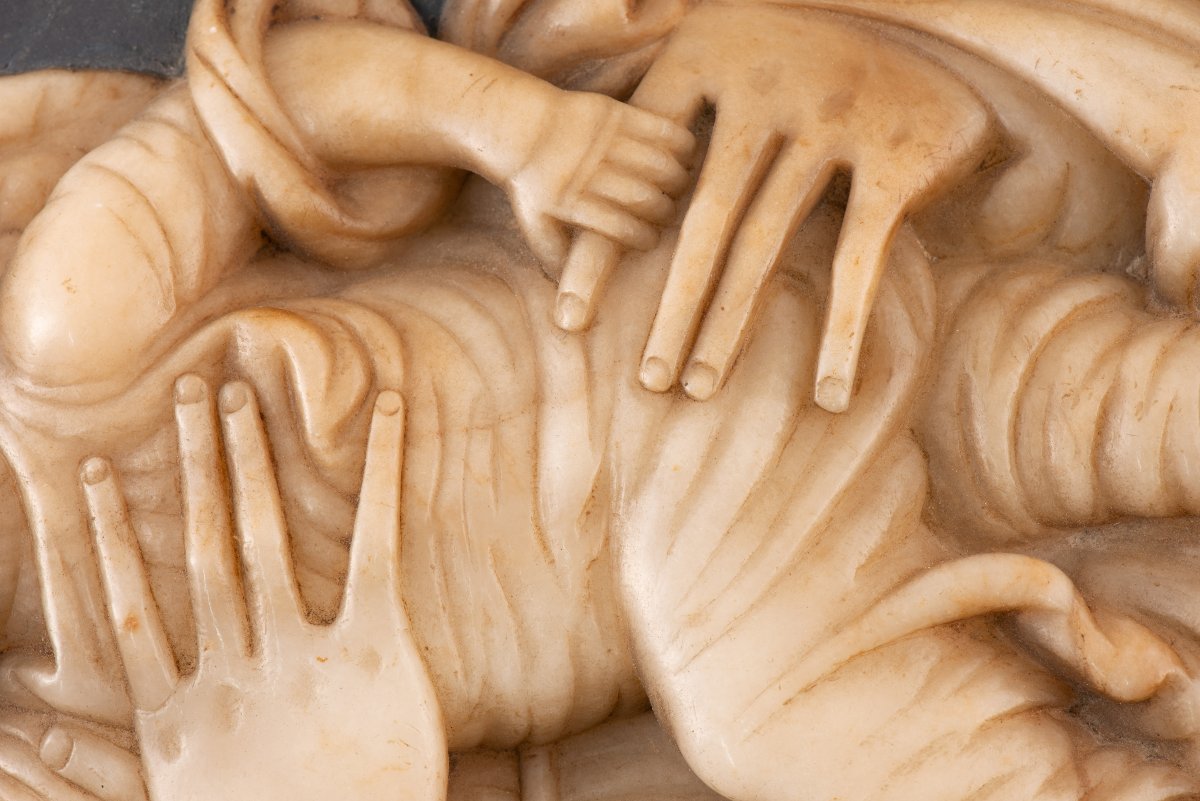
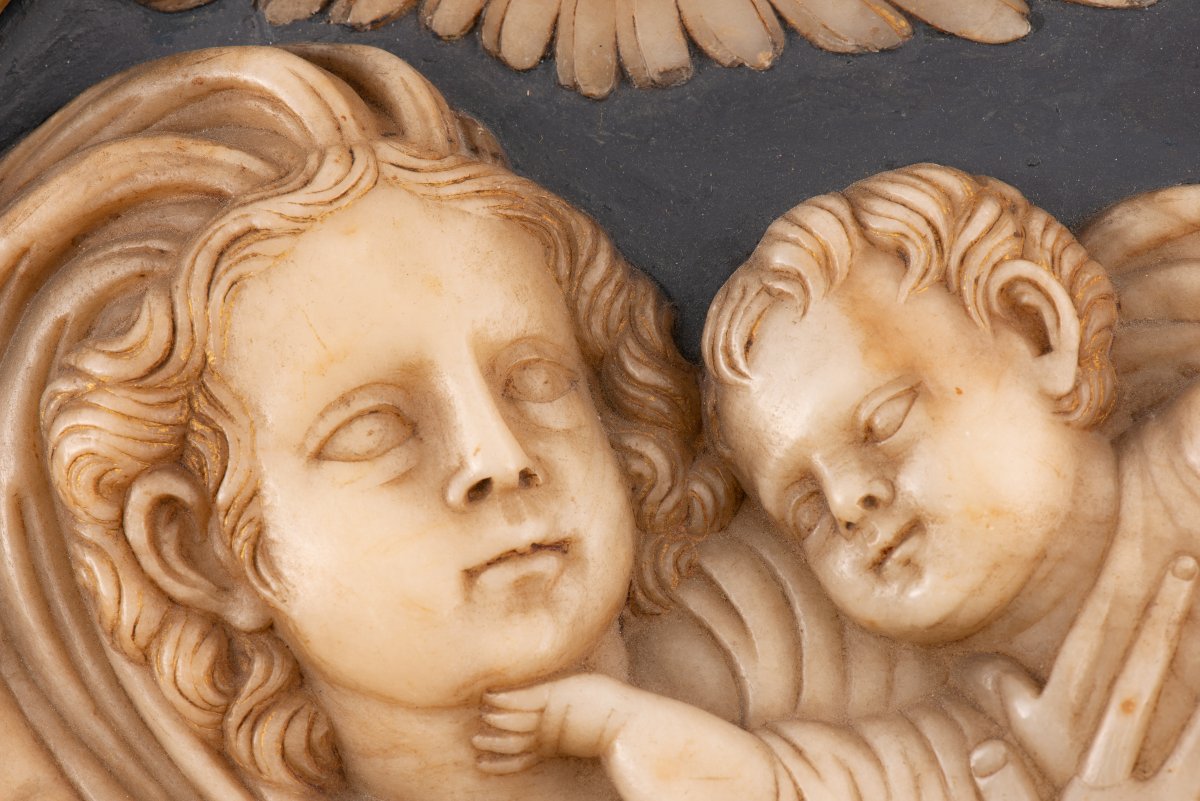
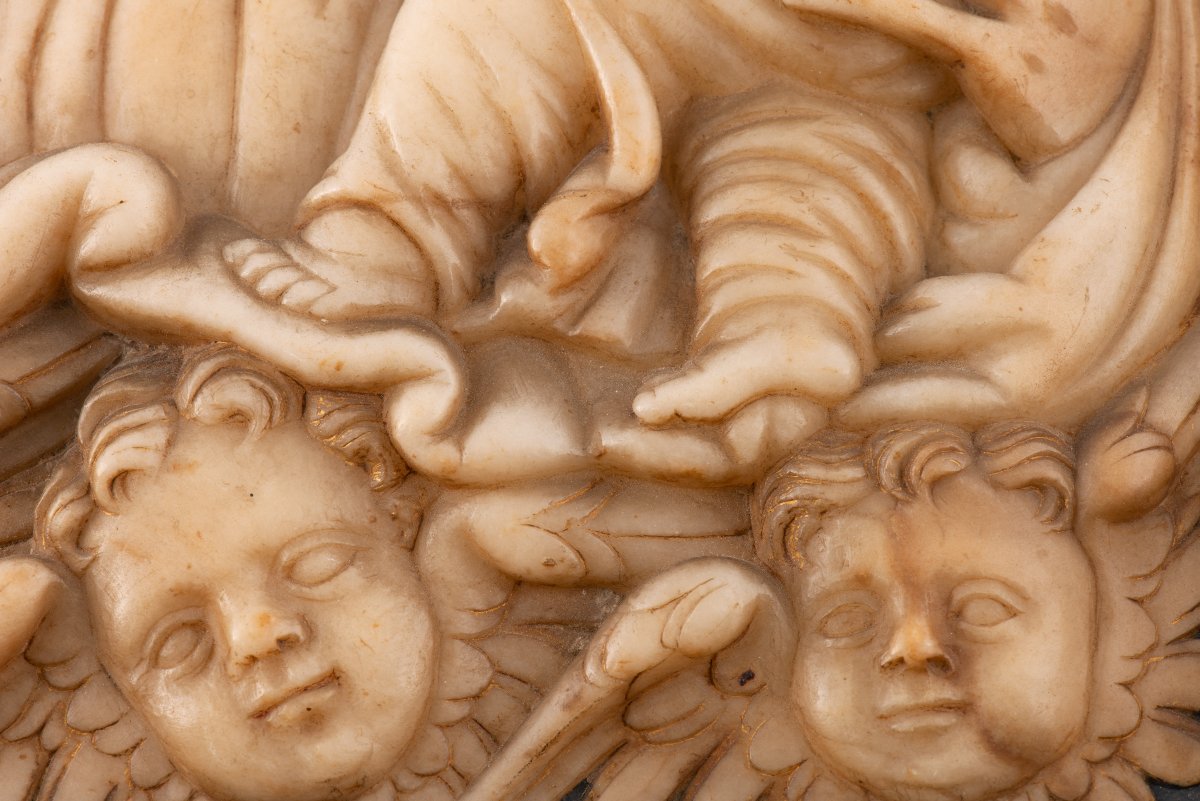
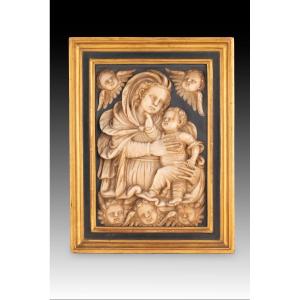
A framed relief, carved from alabaster (on a polychrome blue background), depicts the Virgin Mary accompanied by the Infant Jesus, with two angel heads at the top and three others at the bottom. Mary is dressed in a tunic and a cloak with pronounced folds, and wears a characteristic wavy drape over her head. Iconographically speaking, this is undoubtedly one of the most common themes in European Christian art since the Middle Ages. In Gothic art, Mary and her Son are depicted with tenderness, visually reflecting important theological concepts. The Madonna del Popolo icon, widely attributed to Saint Luke, is an example of this. It was brought to the church of the same name by Gregory IX from the Sancta Sanctorum of the Lateran Palace after a flood had caused a terrible plague epidemic in the city, and then carried in a solemn procession to Santa Maria del Popolo (Rome, Italy). Stylistically, this relief clearly belongs to a series of works created primarily in the Burgos region during the 16th century, with a clear Italian (particularly Florentine) influence. According to experts, this influence stems from Diego de Siloé’s stay in Italy before he settled in this Spanish city. The first is an alabaster relief showing traces of polychromy, created by Diego de Siloé (c. 1490–1553), considered part of his Burgos period (c. 1519–1528), and housed at the Victoria & Albert Museum in London (reference 153 1879). The second is another alabaster relief depicting Mary and the Child (Metropolitan Museum, inventory no. 31.33.7), which is believed to have been modeled after a work by Diego de Siloé or Felipe Vigarni Bigarny (c. 1475–1542), between 1520 and 1530. The third relief, which bears the greatest resemblance (discussed in R. Coppel, “From Father to Son: Two Alabaster Reliefs of the Virgin and Child by Felipe Bigarny and Gregorio Pardo,” Jaime Eguiguren Studies, III, Argentina, 2018), is attributed to Felipe Bigarny’s son, Gregorio Pardo (1513–1552); it depicts Mary and the Child atop the head of a winged angel within an oval, with other angel heads at the corners of the alabaster plaque, which still retains traces of gilding. A similar relief is known, also depicting Mary and Jesus on the head of a winged angel within an octagonal frame (private collection); another framed example, dated around 1540 and attributed to Gregorio Pardo, is housed in the Diocesan and Cathedral Museum of Valladolid. Gregorio Bigarny or Gregorio Pardo (Burgos, c. 1513 – Toledo, in 1556 or earlier) was a Spanish sculptor and wood engraver, a disciple of Damián Forment and the husband of the daughter of the architect Alonso de Covarrubias. He worked at the Cathedral of Huesca and in Madrid (a relief depicting the Assumption of the Virgin for the Convent of Santo Domingo el Real, now housed in the National Archaeological Museum, inventory no. 50244), at the Cathedral of Toledo, etc. In addition to the works already mentioned, his works are housed in the Burgos Museum, as well as a relief attributed to him in Colmenar Viejo (Madrid, Basilica of the Assumption of Our Lady), in Cuenca (San Bartolomé de Belmonte), and elsewhere.
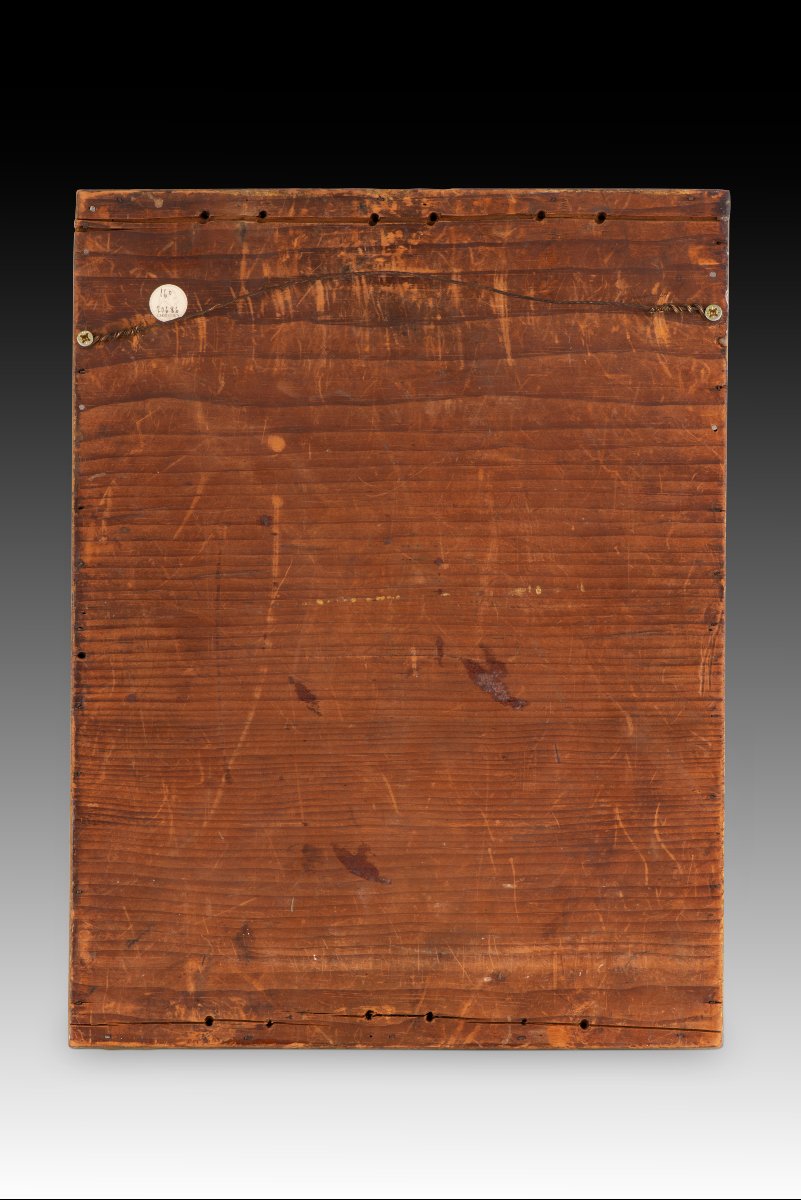
· Dimensions: 33 x 5 x 43.5 cm; int.: 22.5 x 32.5 cm
A framed relief, carved from alabaster (on a polychrome blue background), depicts the Virgin Mary accompanied by the Infant Jesus, with two angel heads at the top and three others at the bottom. Mary is dressed in a tunic and a cloak with pronounced folds, and wears a characteristic wavy drape over her head. Iconographically speaking, this is undoubtedly one of the most common themes in European Christian art since the Middle Ages. In Gothic art, Mary and her Son are depicted with tenderness, visually reflecting important theological concepts. The Madonna del Popolo icon, widely attributed to Saint Luke, is an example of this. It was brought to the church of the same name by Gregory IX from the Sancta Sanctorum of the Lateran Palace after a flood had caused a terrible plague epidemic in the city, and then carried in a solemn procession to Santa Maria del Popolo (Rome, Italy). Stylistically, this relief clearly belongs to a series of works created primarily in the Burgos region during the 16th century, with a clear Italian (particularly Florentine) influence. According to experts, this influence stems from Diego de Siloé’s stay in Italy before he settled in this Spanish city. The first is an alabaster relief showing traces of polychromy, created by Diego de Siloé (c. 1490–1553), considered part of his Burgos period (c. 1519–1528), and housed at the Victoria & Albert Museum in London (reference 153 1879). The second is another alabaster relief depicting Mary and the Child (Metropolitan Museum, inventory no. 31.33.7), which is believed to have been modeled after a work by Diego de Siloé or Felipe Vigarni Bigarny (c. 1475–1542), between 1520 and 1530. The third relief, which bears the greatest resemblance (discussed in R. Coppel, “From Father to Son: Two Alabaster Reliefs of the Virgin and Child by Felipe Bigarny and Gregorio Pardo,” Jaime Eguiguren Studies, III, Argentina, 2018), is attributed to Felipe Bigarny’s son, Gregorio Pardo (1513–1552); it depicts Mary and the Child atop the head of a winged angel within an oval, with other angel heads at the corners of the alabaster plaque, which still retains traces of gilding. A similar relief is known, also depicting Mary and Jesus on the head of a winged angel within an octagonal frame (private collection); another framed example, dated around 1540 and attributed to Gregorio Pardo, is housed in the Diocesan and Cathedral Museum of Valladolid. Gregorio Bigarny or Gregorio Pardo (Burgos, c. 1513 – Toledo, in 1556 or earlier) was a Spanish sculptor and wood engraver, a disciple of Damián Forment and the husband of the daughter of the architect Alonso de Covarrubias. He worked at the Cathedral of Huesca and in Madrid (a relief depicting the Assumption of the Virgin for the Convent of Santo Domingo el Real, now housed in the National Archaeological Museum, inventory no. 50244), at the Cathedral of Toledo, etc. In addition to the works already mentioned, his works are housed in the Burgos Museum, as well as a relief attributed to him in Colmenar Viejo (Madrid, Basilica of the Assumption of Our Lady), in Cuenca (San Bartolomé de Belmonte), and elsewhere.
· Dimensions: 33 x 5 x 43.5 cm; int.: 22.5 x 32.5 cm
19 000 €
Period: 16th century
Style: Other Style
Condition: En l'etat
Material: Stone
Width: 33 cm
Height: 43,5 cm
Depth: 5 cm
Reference (ID): 1821885
Availability: In stock
Print