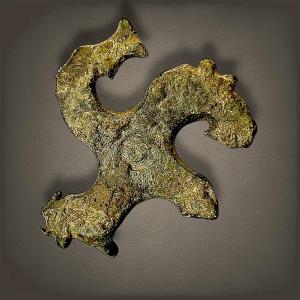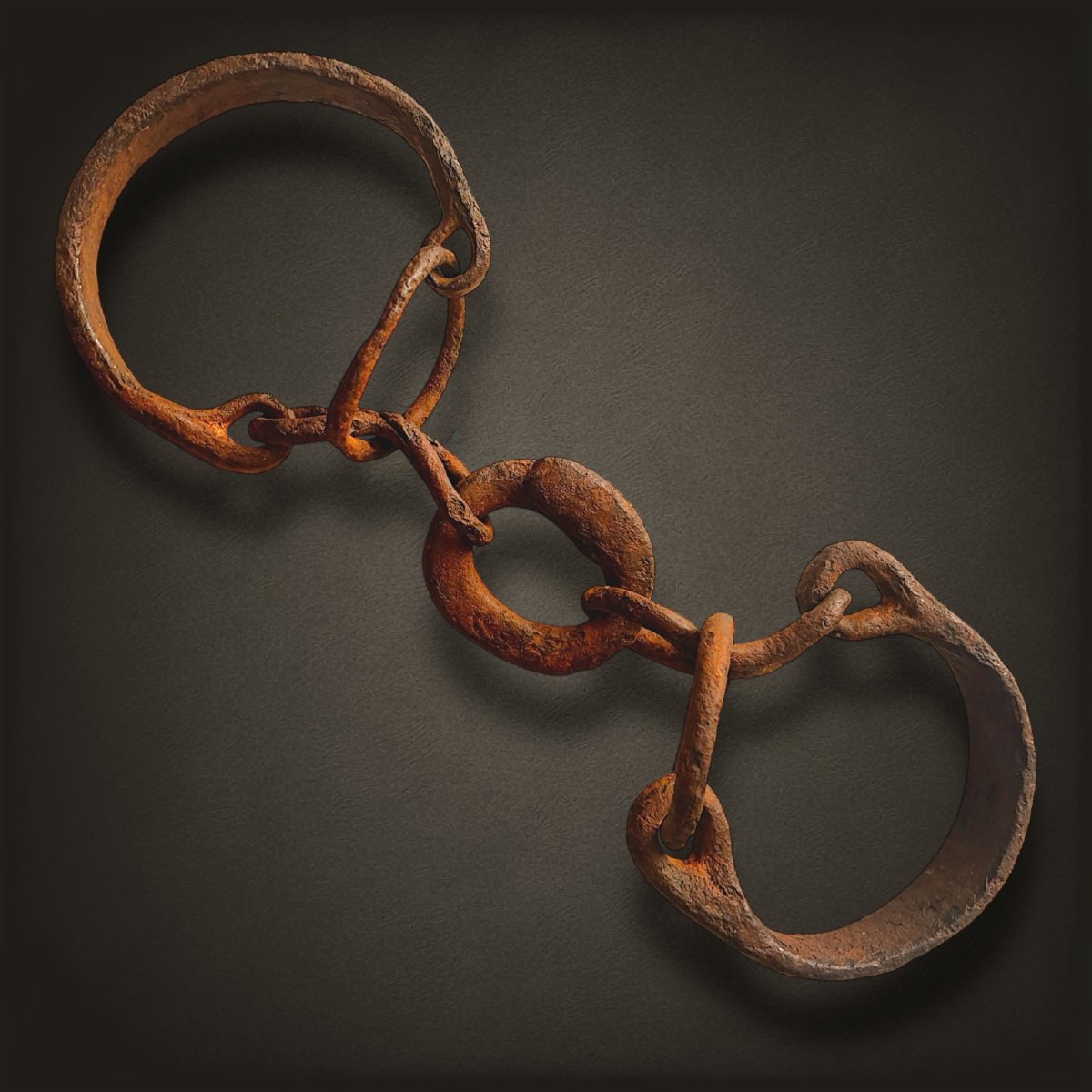



Slave Iron Foot Shackles, 17th Or 18th Century.
Slavery Iron foot shackles, dating from the 17th or 18th century.
These shackles were used during the capture and transport of slaves from African villages to ships, in preparation for their voyage to the colonial Americas.
Ankle rings were used to chain individuals within the villages themselves. This type of shackle generally allowed captives to move only by dragging their feet. Once the shackles were locked around the ankles, only a blacksmith could remove them.
The feet of enslaved Africans were held fast at the ankles by these shackles, with a chain passing through the central ring.
The Atlantic crossing was one stage of the triangular trade, during which millions of Africans were deported to the New World as part of the transatlantic slave trade. Ships left Europe for African markets loaded with manufactured goods; these goods were exchanged for Africans—who had been purchased or abducted—intended to be transported across the Atlantic as slaves. These individuals were then sold or exchanged for raw materials, which were shipped back to Europe to complete the cycle of the voyage. These voyages represented a considerable financial undertaking, generally organized by companies or groups of investors rather than by individuals. Of the approximately 20 million people torn from their homes and enslaved, half never reached the African coast; most perished along the way.
These shackles were used during the capture and transport of slaves from African villages to ships, in preparation for their voyage to the colonial Americas.
Ankle rings were used to chain individuals within the villages themselves. This type of shackle generally allowed captives to move only by dragging their feet. Once the shackles were locked around the ankles, only a blacksmith could remove them.
The feet of enslaved Africans were held fast at the ankles by these shackles, with a chain passing through the central ring.
The Atlantic crossing was one stage of the triangular trade, during which millions of Africans were deported to the New World as part of the transatlantic slave trade. Ships left Europe for African markets loaded with manufactured goods; these goods were exchanged for Africans—who had been purchased or abducted—intended to be transported across the Atlantic as slaves. These individuals were then sold or exchanged for raw materials, which were shipped back to Europe to complete the cycle of the voyage. These voyages represented a considerable financial undertaking, generally organized by companies or groups of investors rather than by individuals. Of the approximately 20 million people torn from their homes and enslaved, half never reached the African coast; most perished along the way.
2 500 €
Period: 17th century
Style: Other Style
Condition: Good condition
Material: Metal
Reference (ID): 1818941
Availability: In stock
Print