THIS OBJECT WAS SOLD
Léon Detroy (1859–1955) Footbridge At La Folie Over The Sedelle. School Of Crozant, Guillaumin...
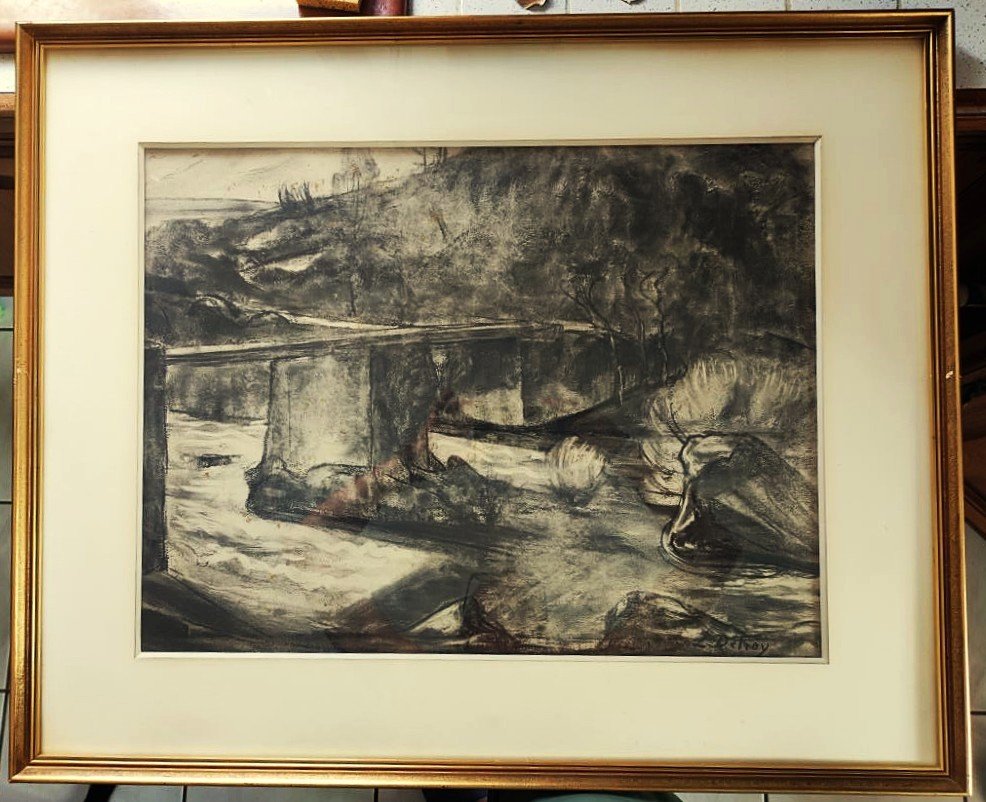
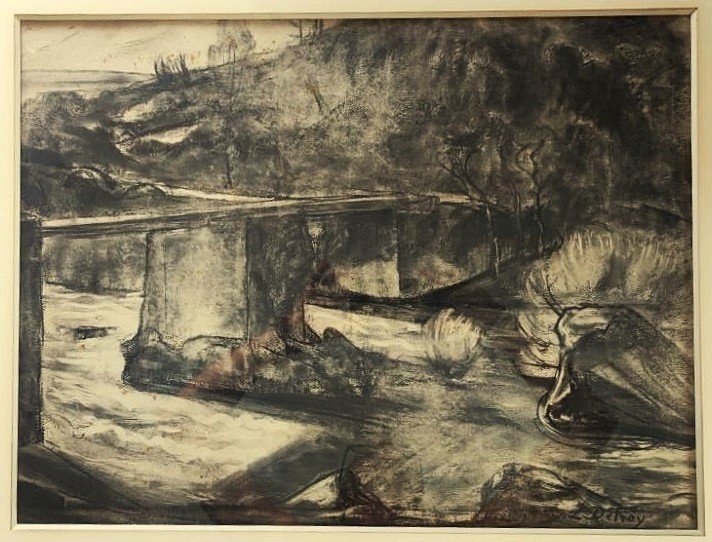
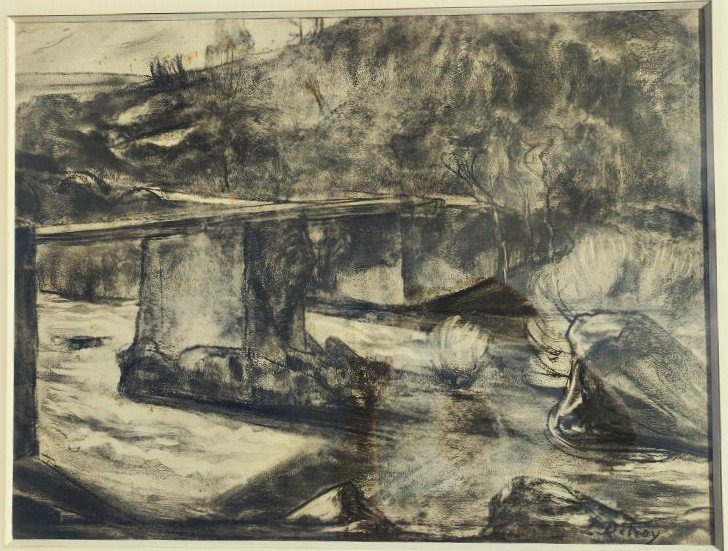
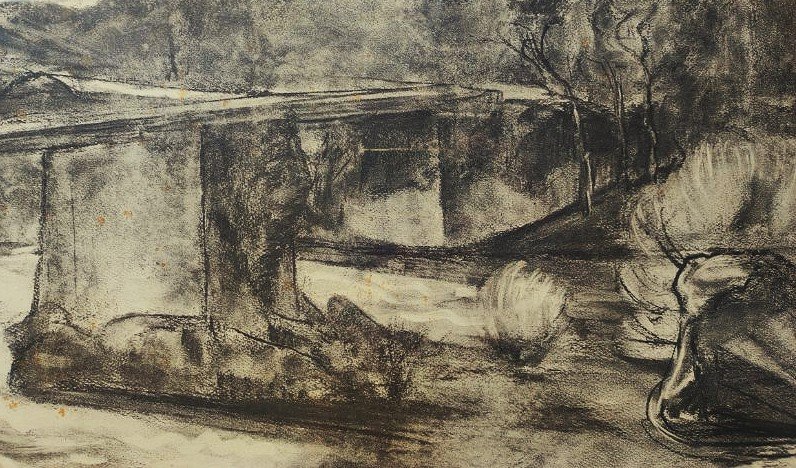
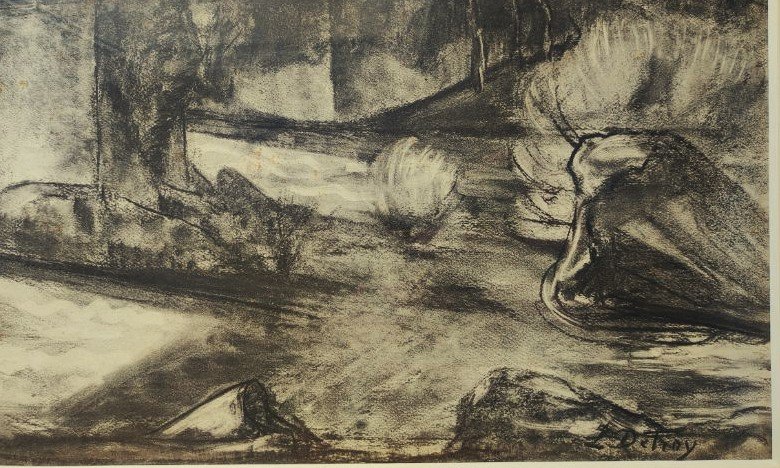
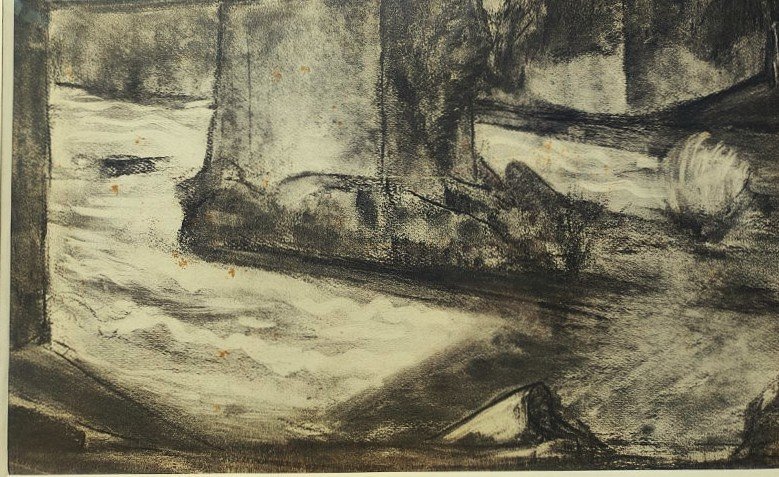
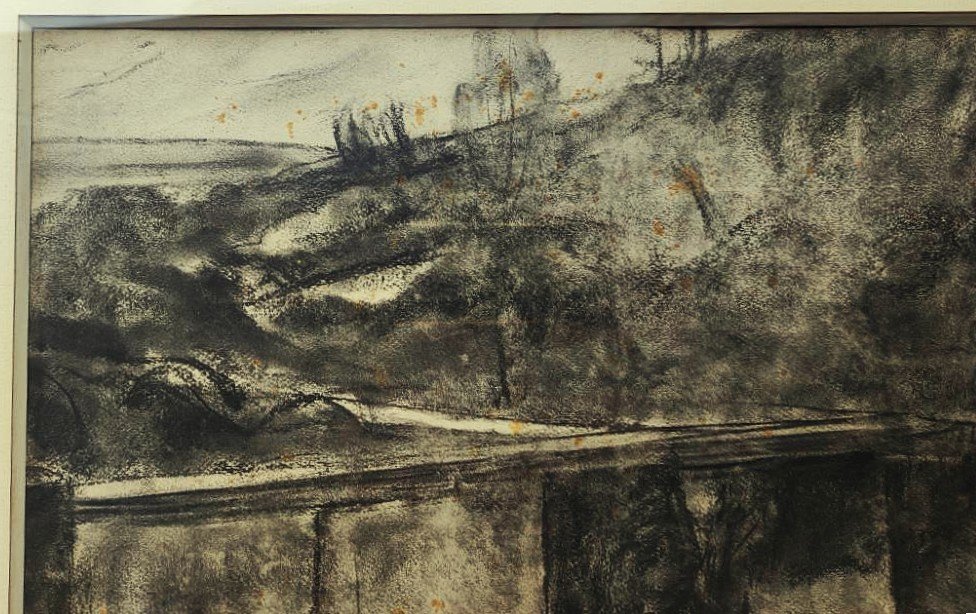
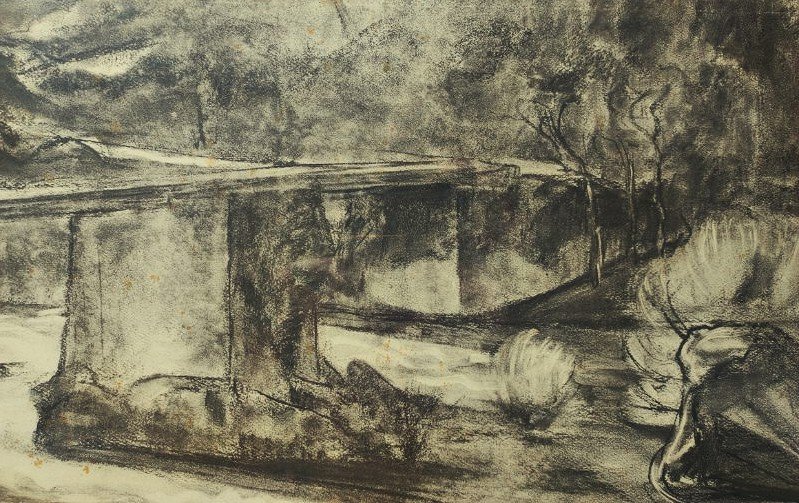
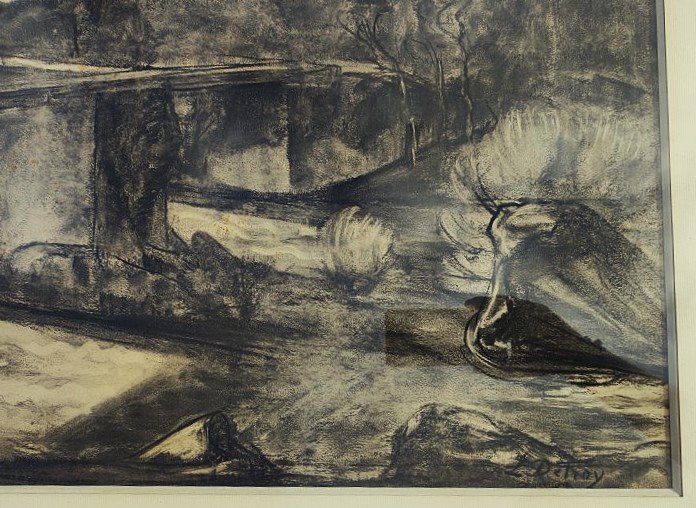
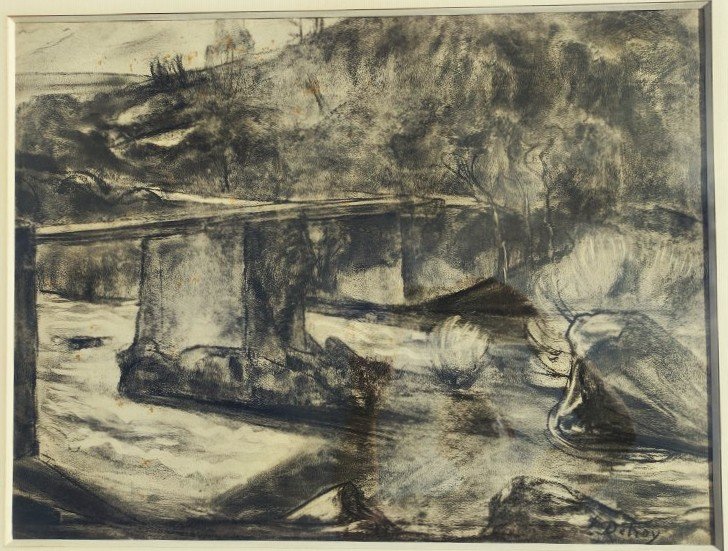
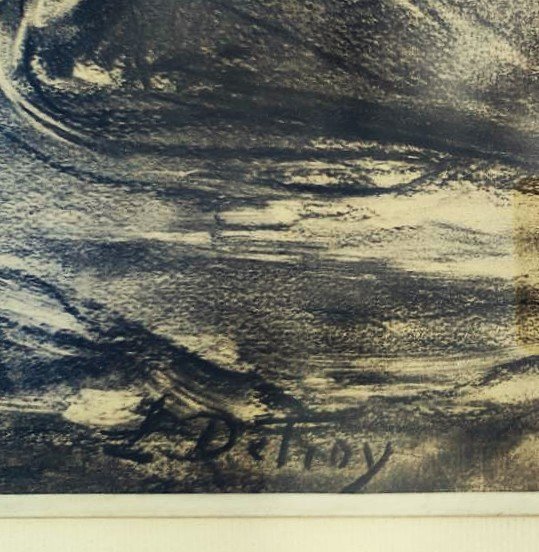
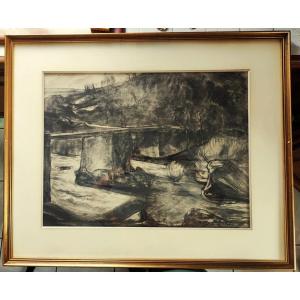


A superb, large charcoal drawing by Léon Detroy depicting the footbridge at the Moulin de la Folie on the Sedelle River, signed in the lower right corner.
Dimensions of the drawing alone (unframed): 46x61 cm; 67.5x82.5 cm including the frame.
The drawing is in very good condition, with a few slight foxing spots that are less noticeable in person than in the photos; it comes in a lovely modern gold frame.
Authenticity guaranteed.
The work is much more impressive in person due to the reflections from the glass in the photos.
This is, therefore, a very beautiful drawing by Léon Detroy depicting a most interesting subject—one that Detroy actually addressed quite rarely, preferring the banks of the Gargilesse to those of the Sedelle— as this depicts the footbridge at the Moulin de la Folie near Crozant. It is a charcoal drawing of great power, as was typical of Detroy; moreover, he must have been very pleased with it himself, as he signed it very visibly by hand, whereas his drawings are often found signed only with his studio stamp.
A great painter among greats, I will only briefly introduce Léon Detroy, who, along with Guillaumin, was a leading figure of the now-famous Crozant School.
Together with Guillaumin, these two painters shared honors, students, and friends, as well as the sites of the Creuse Valley—Detroy being more attached to Gargilesse and its surroundings, while Guillaumin was more drawn to Crozant and its environs.
Having first settled in Crozant, then in Fresselines and Gargilesse, he would become a key figure in the Creuse Valley. He had studied in Paris alongside Lebourg; like Lebourg, he would leave school fairly quickly, finding it too academic for his tastes. He discovered the Creuse around 1888, after reading George Sand, and there he met Maurice Rollinat, Monet, and became friends with Alluaud, with whom he would take trips to Italy and Agay, where he met other great painters of the time—such as Valtat, Van den Eckout, Anquetin, and others—who would remain loyal to him throughout their lives. He earned the recognition of numerous artists and critics of the time
His techniques evolved over the course of his life; he adopted the Divisionist brushstroke, then moved toward a style akin to Fauvism with a broader brushstroke (as seen here), and eventually blended small brushstrokes with large areas of flat color until he stylized his motifs, whether in the Creuse, on the French Riviera, in Collioure, in Italy, in the Maghreb, in Holland, Belgium, Brittany, and elsewhere... He was, therefore, a great traveler, but it was the shores of the Mediterranean that most captivated the artist. Toward the end of his career, having settled in Gargillesse, he would paint almost exclusively still lifes, yet they played a very significant role in his career; some, in fact, are true masterpieces, every bit as much as his landscapes. And even at the end of his life, his charm continued to captivate, for his painting remained TRUE and SINCERE!
Finally recognized as one of the greatest painters of the Creuse Valley—if not the greatest—his reputation continues to grow, even more so since the exhibition and book mentioned earlier.
Finally, I encourage you to visit a magnificent exhibition currently on view at the Draguignan Museum, accompanied by a superb catalog—and of course, Léon Detroy is prominently featured there alongside the Guillaumins, Ballot, Pailler, Valtat, Marquet, Seyssaud, Cross, Camoin, etc....
Dimensions of the drawing alone (unframed): 46x61 cm; 67.5x82.5 cm including the frame.
The drawing is in very good condition, with a few slight foxing spots that are less noticeable in person than in the photos; it comes in a lovely modern gold frame.
Authenticity guaranteed.
The work is much more impressive in person due to the reflections from the glass in the photos.
This is, therefore, a very beautiful drawing by Léon Detroy depicting a most interesting subject—one that Detroy actually addressed quite rarely, preferring the banks of the Gargilesse to those of the Sedelle— as this depicts the footbridge at the Moulin de la Folie near Crozant. It is a charcoal drawing of great power, as was typical of Detroy; moreover, he must have been very pleased with it himself, as he signed it very visibly by hand, whereas his drawings are often found signed only with his studio stamp.
A great painter among greats, I will only briefly introduce Léon Detroy, who, along with Guillaumin, was a leading figure of the now-famous Crozant School.
Together with Guillaumin, these two painters shared honors, students, and friends, as well as the sites of the Creuse Valley—Detroy being more attached to Gargilesse and its surroundings, while Guillaumin was more drawn to Crozant and its environs.
Having first settled in Crozant, then in Fresselines and Gargilesse, he would become a key figure in the Creuse Valley. He had studied in Paris alongside Lebourg; like Lebourg, he would leave school fairly quickly, finding it too academic for his tastes. He discovered the Creuse around 1888, after reading George Sand, and there he met Maurice Rollinat, Monet, and became friends with Alluaud, with whom he would take trips to Italy and Agay, where he met other great painters of the time—such as Valtat, Van den Eckout, Anquetin, and others—who would remain loyal to him throughout their lives. He earned the recognition of numerous artists and critics of the time
His techniques evolved over the course of his life; he adopted the Divisionist brushstroke, then moved toward a style akin to Fauvism with a broader brushstroke (as seen here), and eventually blended small brushstrokes with large areas of flat color until he stylized his motifs, whether in the Creuse, on the French Riviera, in Collioure, in Italy, in the Maghreb, in Holland, Belgium, Brittany, and elsewhere... He was, therefore, a great traveler, but it was the shores of the Mediterranean that most captivated the artist. Toward the end of his career, having settled in Gargillesse, he would paint almost exclusively still lifes, yet they played a very significant role in his career; some, in fact, are true masterpieces, every bit as much as his landscapes. And even at the end of his life, his charm continued to captivate, for his painting remained TRUE and SINCERE!
Finally recognized as one of the greatest painters of the Creuse Valley—if not the greatest—his reputation continues to grow, even more so since the exhibition and book mentioned earlier.
Finally, I encourage you to visit a magnificent exhibition currently on view at the Draguignan Museum, accompanied by a superb catalog—and of course, Léon Detroy is prominently featured there alongside the Guillaumins, Ballot, Pailler, Valtat, Marquet, Seyssaud, Cross, Camoin, etc....
Explore similar pieces and discover your ideal find:
drawings