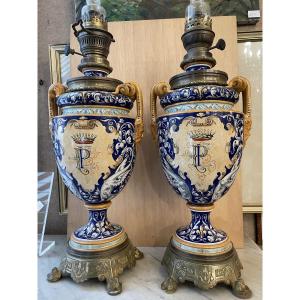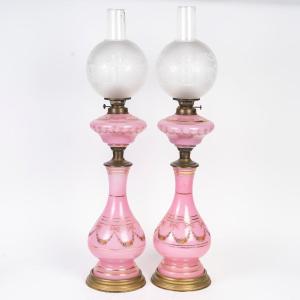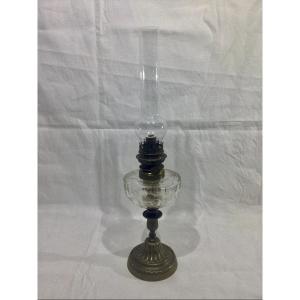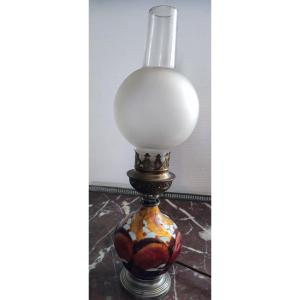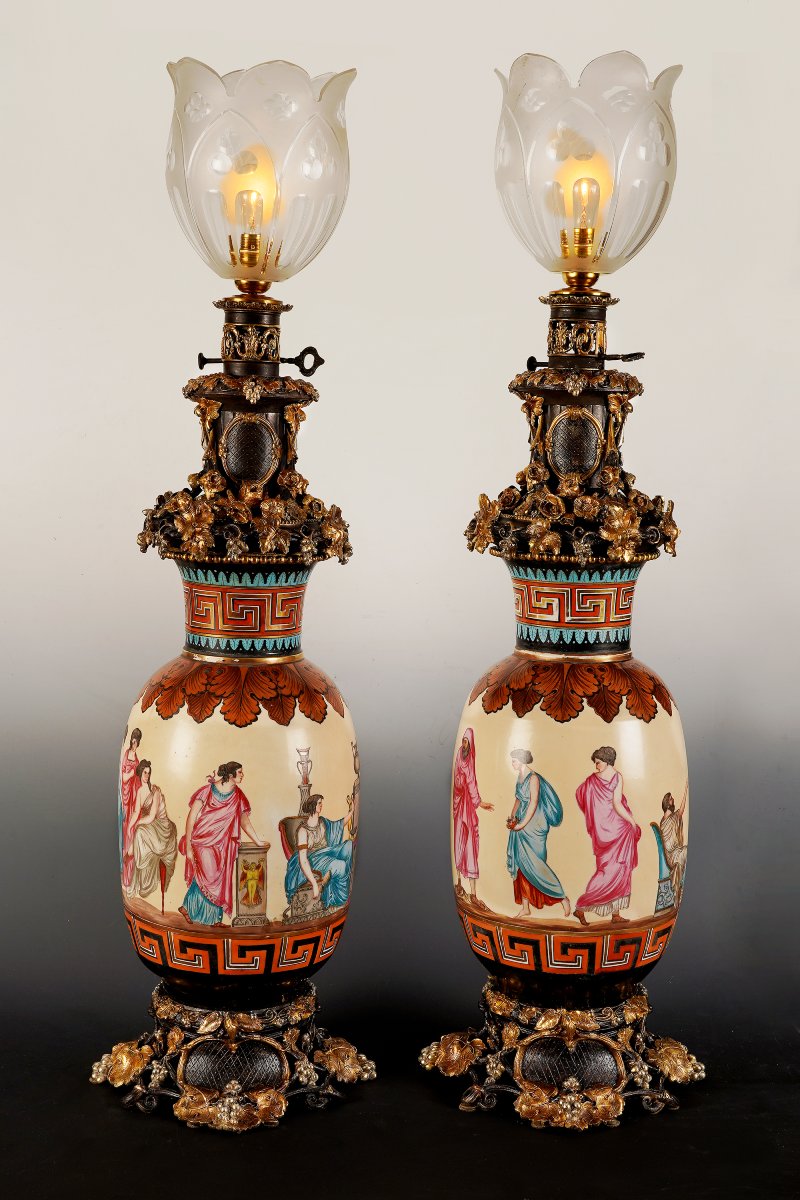
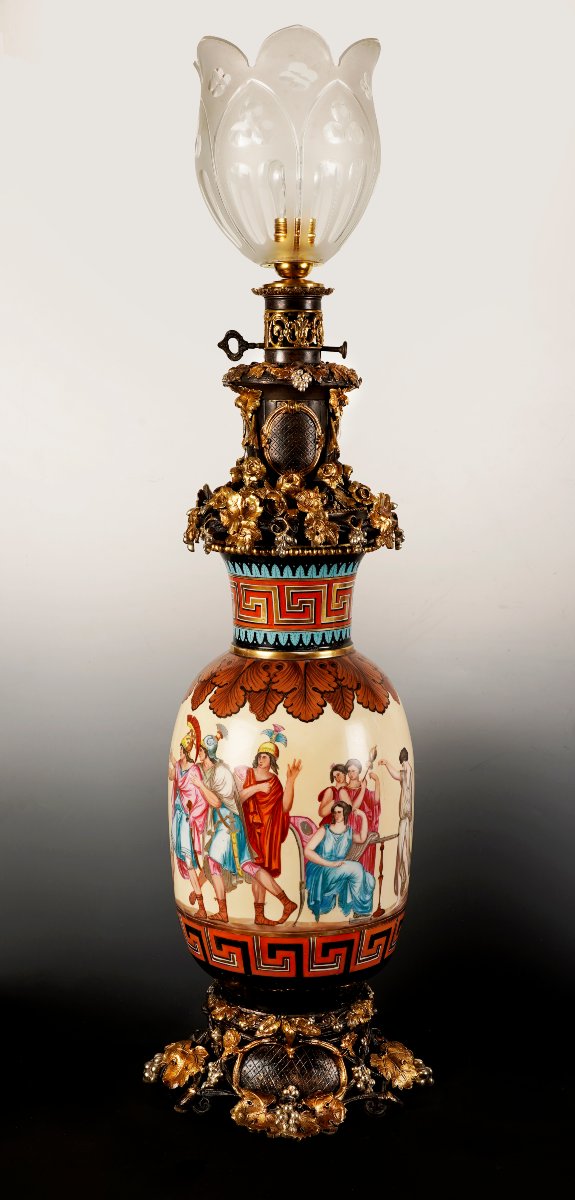
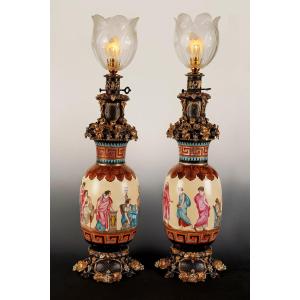


Paris Porcelain , Pair Of Neo-greek Lamps, France, Circa 1860
Artist: Porcelaine De Paris
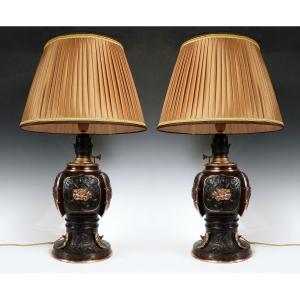
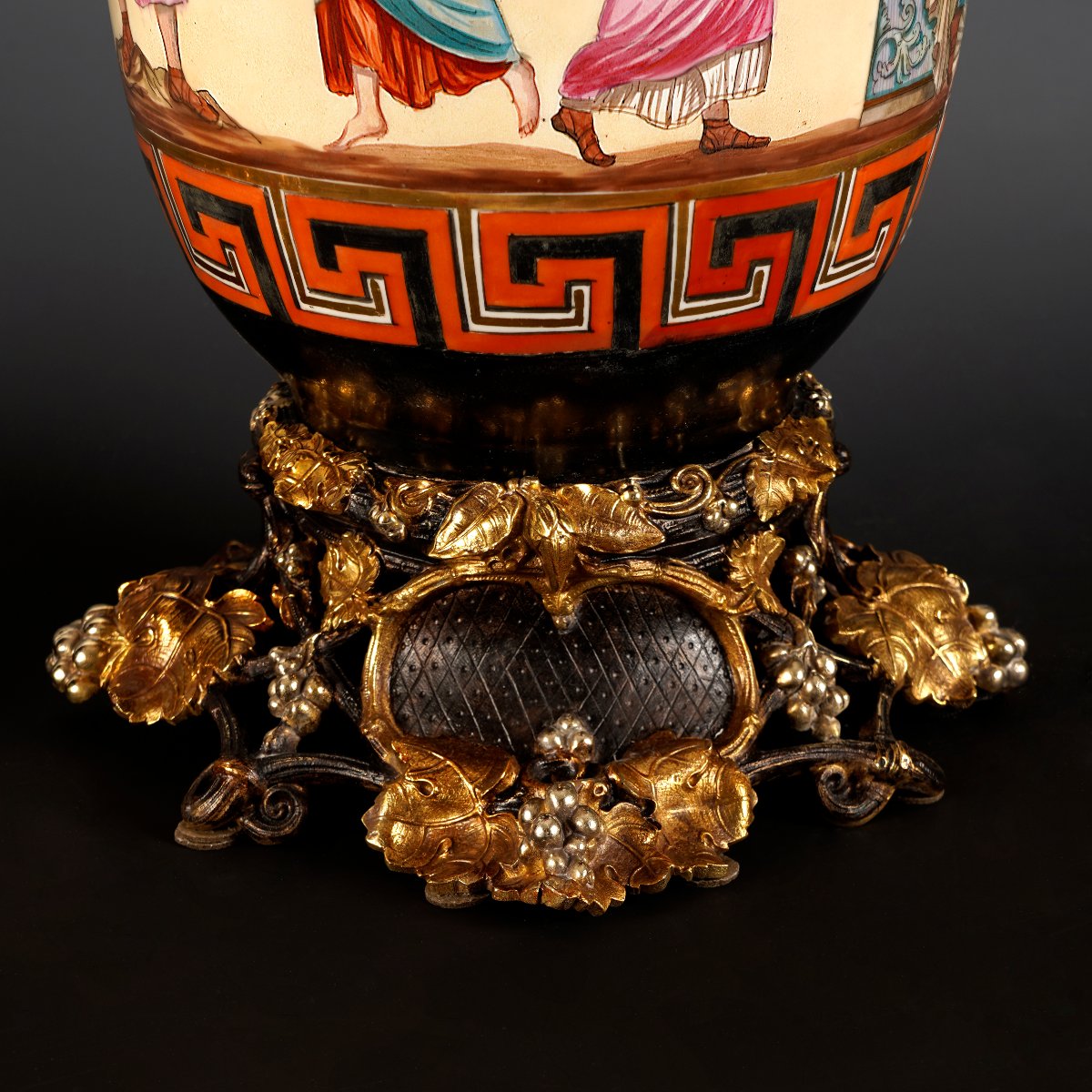
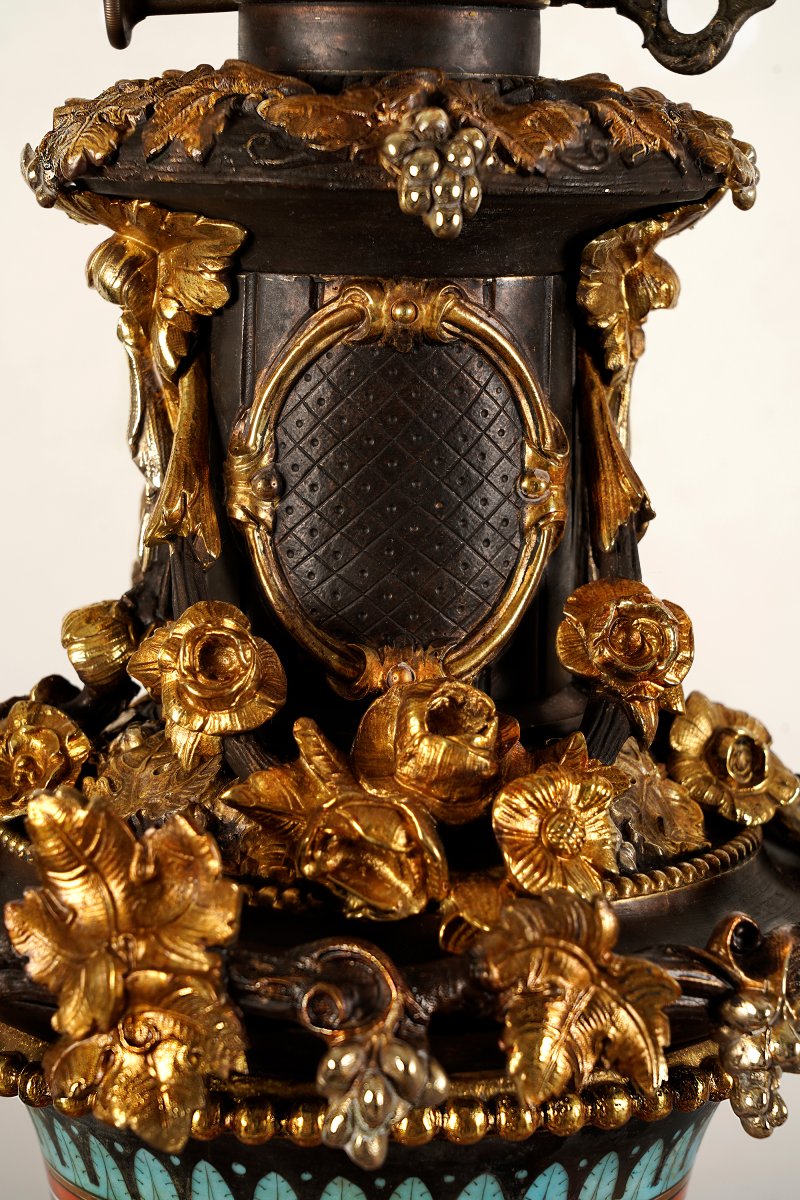
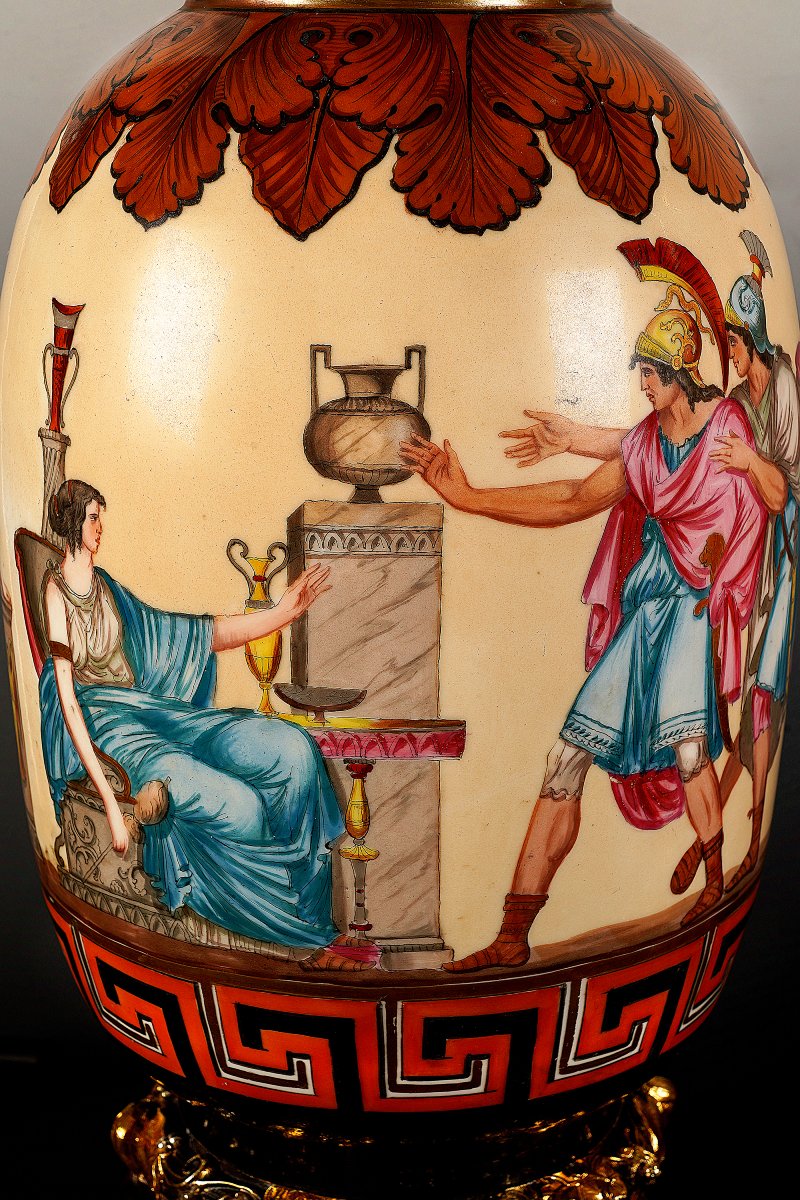
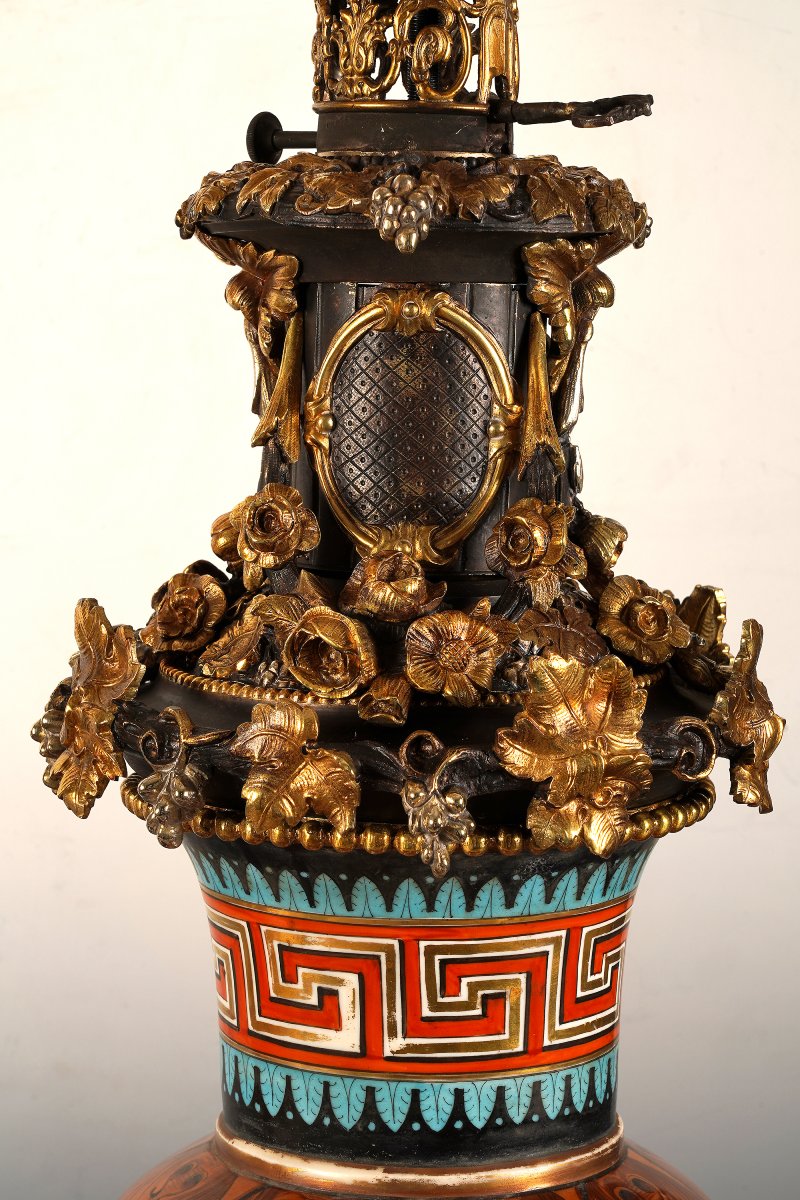
An important pair of Neo-Greek lamps,richly decorated with scenes inspired by Greco-Roman antiquity. The paintedrotating decoration depicts graceful draped female figures, accompanied by furnitureand architectural elements. The bowl is framed by friezes of Greek motifs andstylized plant motifs in shades of red, turquoise, orange, and black. The porcelain is mounted on a richgilded, silvered, and patinated bronze frame, finely chased and lavishlydecorated with vine leaves, grape clusters, and rosettes. Each lampis topped with a molded opaline glass globe, delicately sculpted in the shapeof a flower corolla.
La Porcelaine de Paris
Paris, the capital of art, fashion, and luxury,could not—upon the discovery of kaolin in the 18th century around 1765, inSaint-Yrieix-la-Perche near Limoges—fail to produce a porcelain ofprestige. Porcelaine de Paris, more commonly known as “Vieux Paris,” isa hard-paste porcelain, pure white, milky, and highly lustrous, decorated withpaint and very often with gold. There were porcelain factories in Parisof the highest quality, each with its own distinct mark. But above all,the bisque pieces from the Limoges region were decoratedin backrooms. Unmarked, these bisque pieces often bear letters or numbers that arecovered with enamel. This is not the mark of a decorator or amanufactory. It is simply a mark that the worker made before firingto identify his work and get paid for the pieces he produced.
La Porcelaine de Paris
Paris, the capital of art, fashion, and luxury,could not—upon the discovery of kaolin in the 18th century around 1765, inSaint-Yrieix-la-Perche near Limoges—fail to produce a porcelain ofprestige. Porcelaine de Paris, more commonly known as “Vieux Paris,” isa hard-paste porcelain, pure white, milky, and highly lustrous, decorated withpaint and very often with gold. There were porcelain factories in Parisof the highest quality, each with its own distinct mark. But above all,the bisque pieces from the Limoges region were decoratedin backrooms. Unmarked, these bisque pieces often bear letters or numbers that arecovered with enamel. This is not the mark of a decorator or amanufactory. It is simply a mark that the worker made before firingto identify his work and get paid for the pieces he produced.
12 500 €
Period: 19th century
Style: Other Style
Condition: Good condition
Diameter: 32,5 cm
Height: 103,5 cm
Reference (ID): 1817192
Availability: In stock
Print