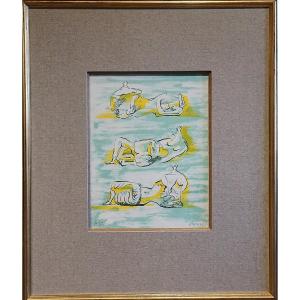


Henry Moore (1898–1986) – Three Reclining Figures – Original Lithograph Signed H.c.
Artist: Henry Moore (1898-1986)
Henry Moore (1898–1986)
Three Reclining Figures
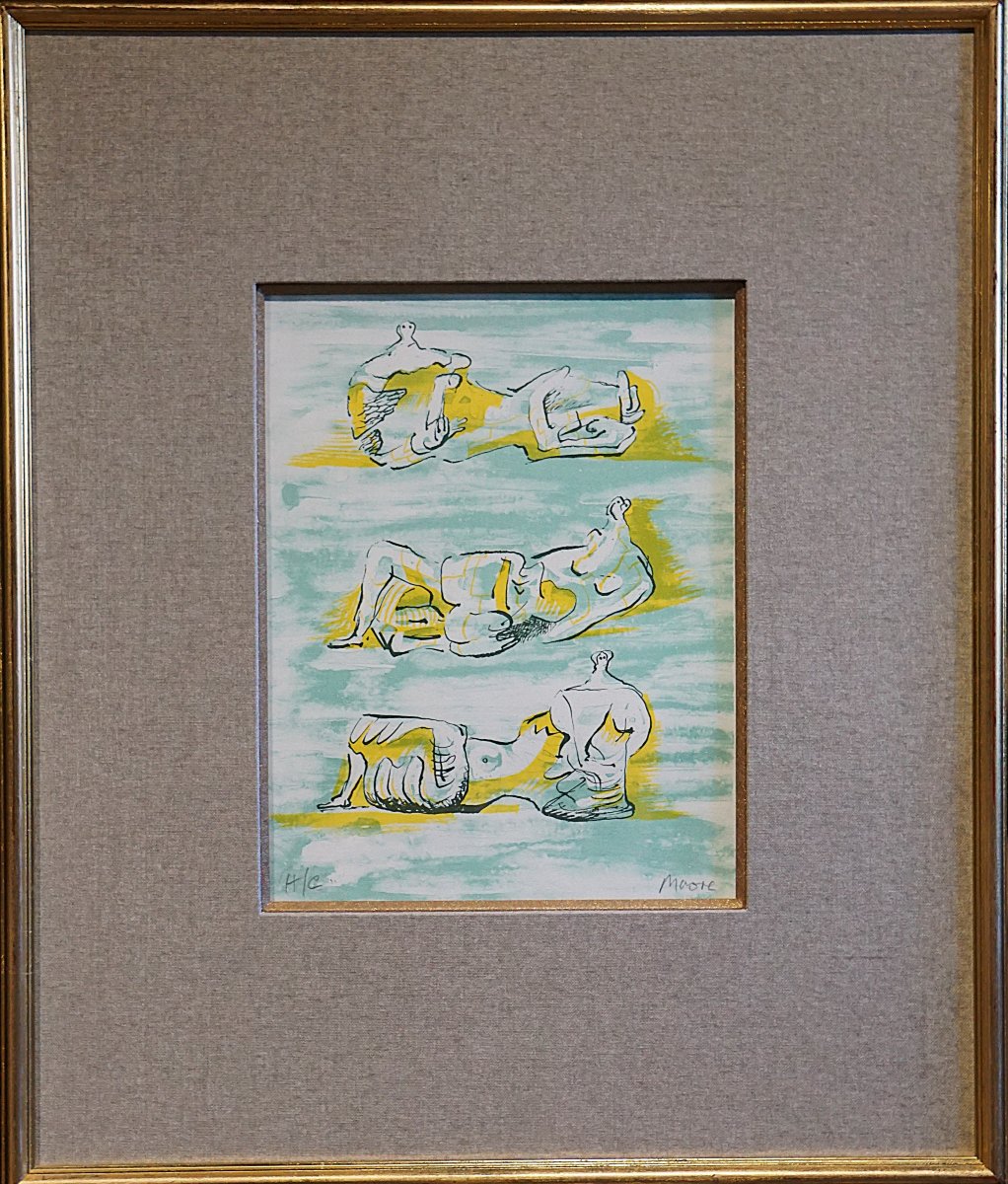
Original color lithograph on paper; H.C. proof (Not for Sale)
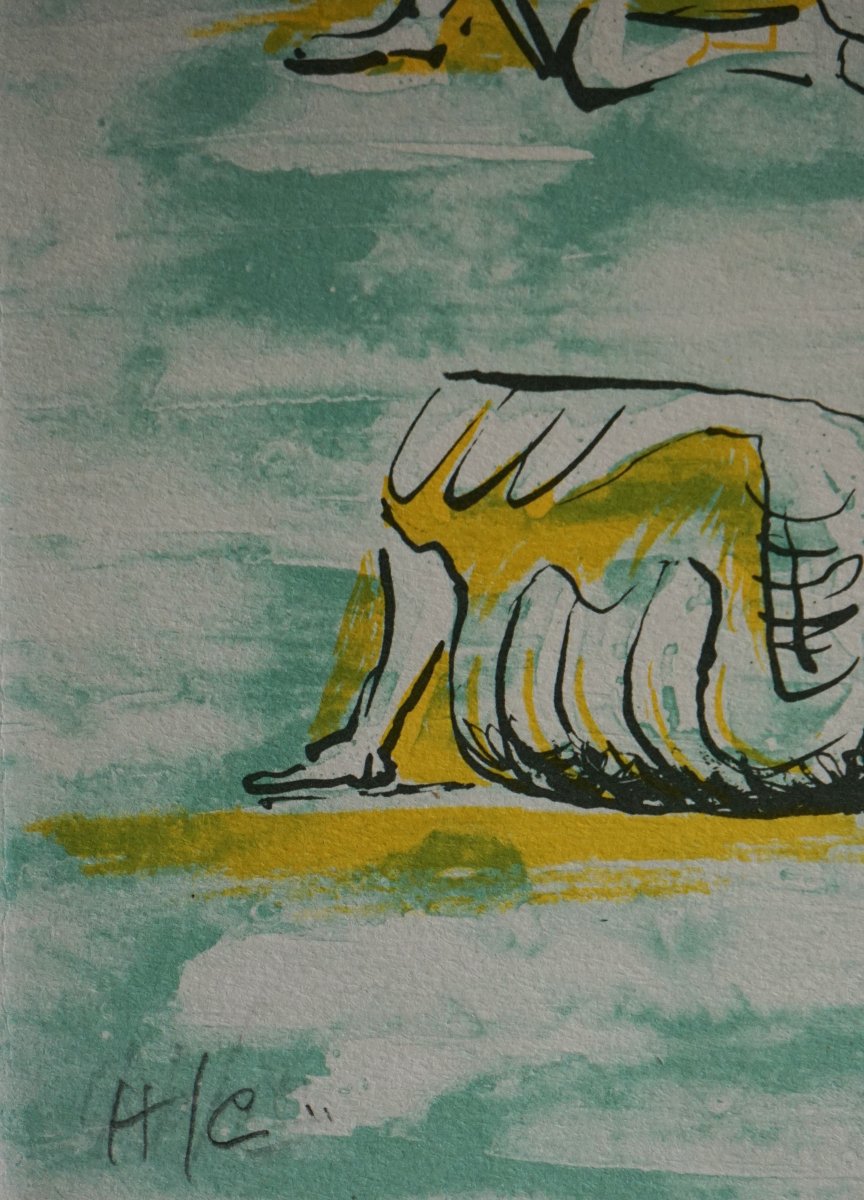
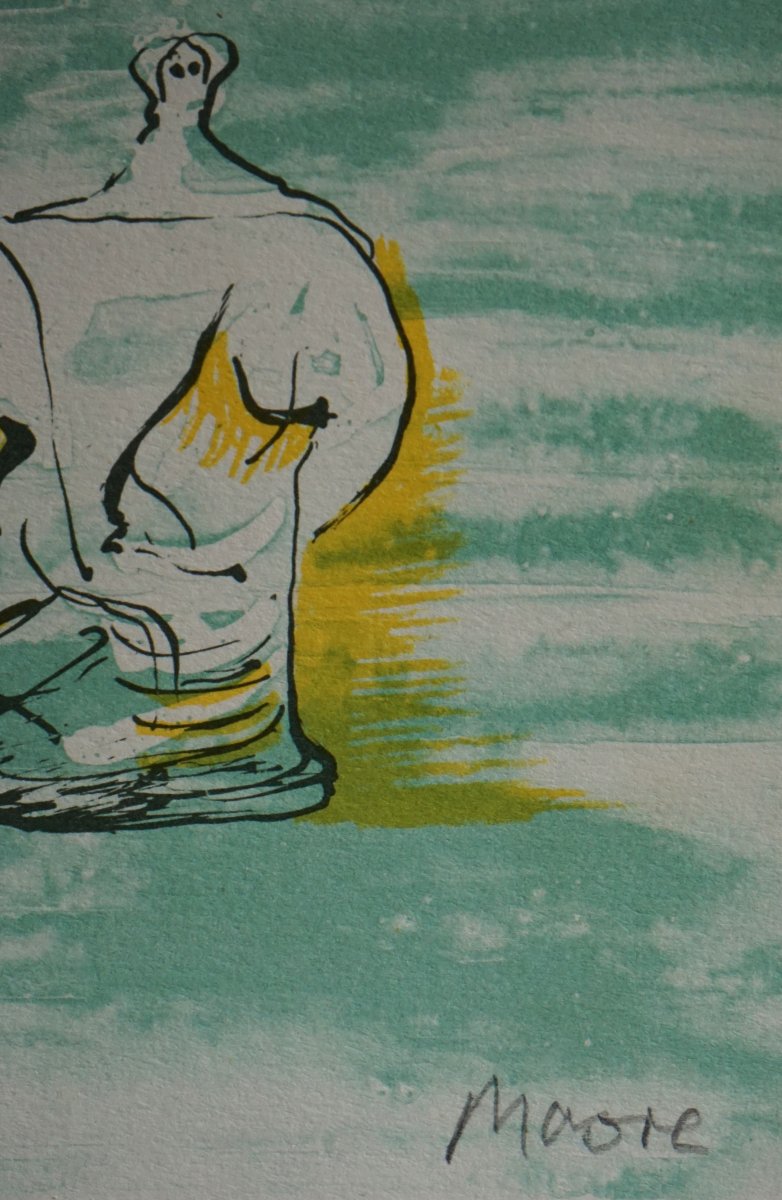
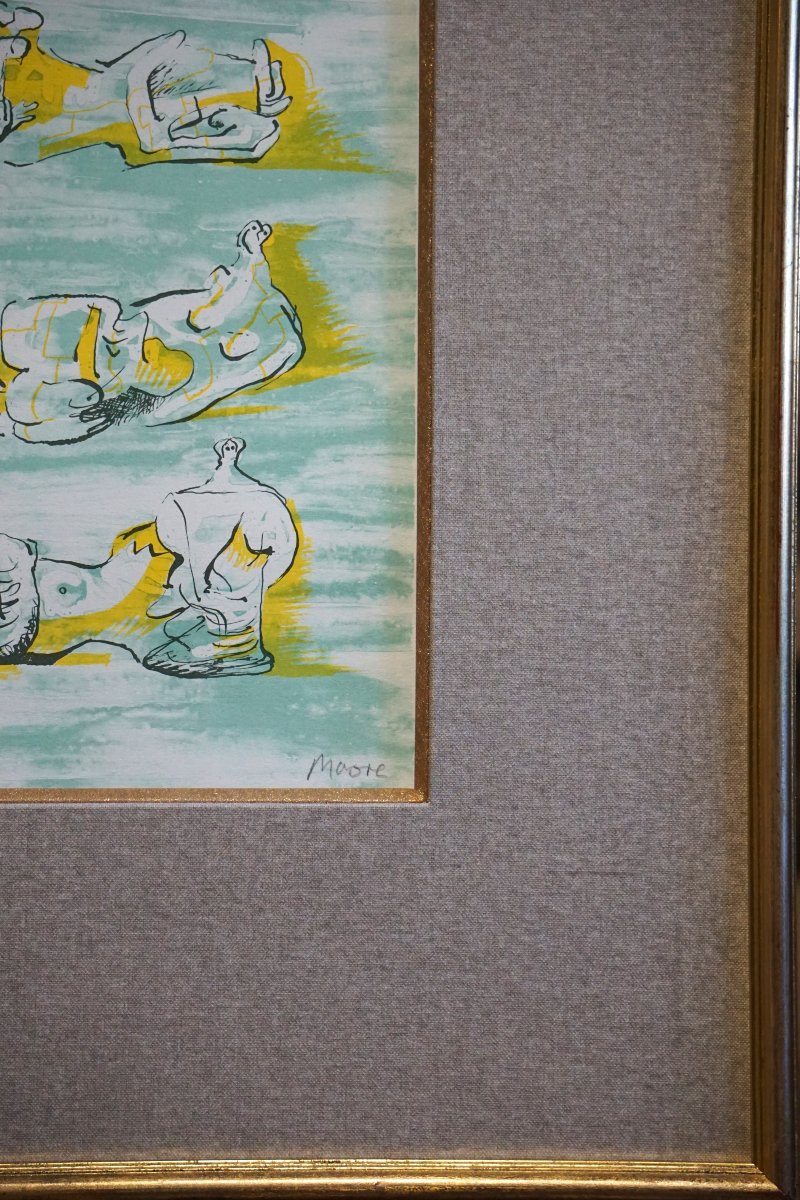
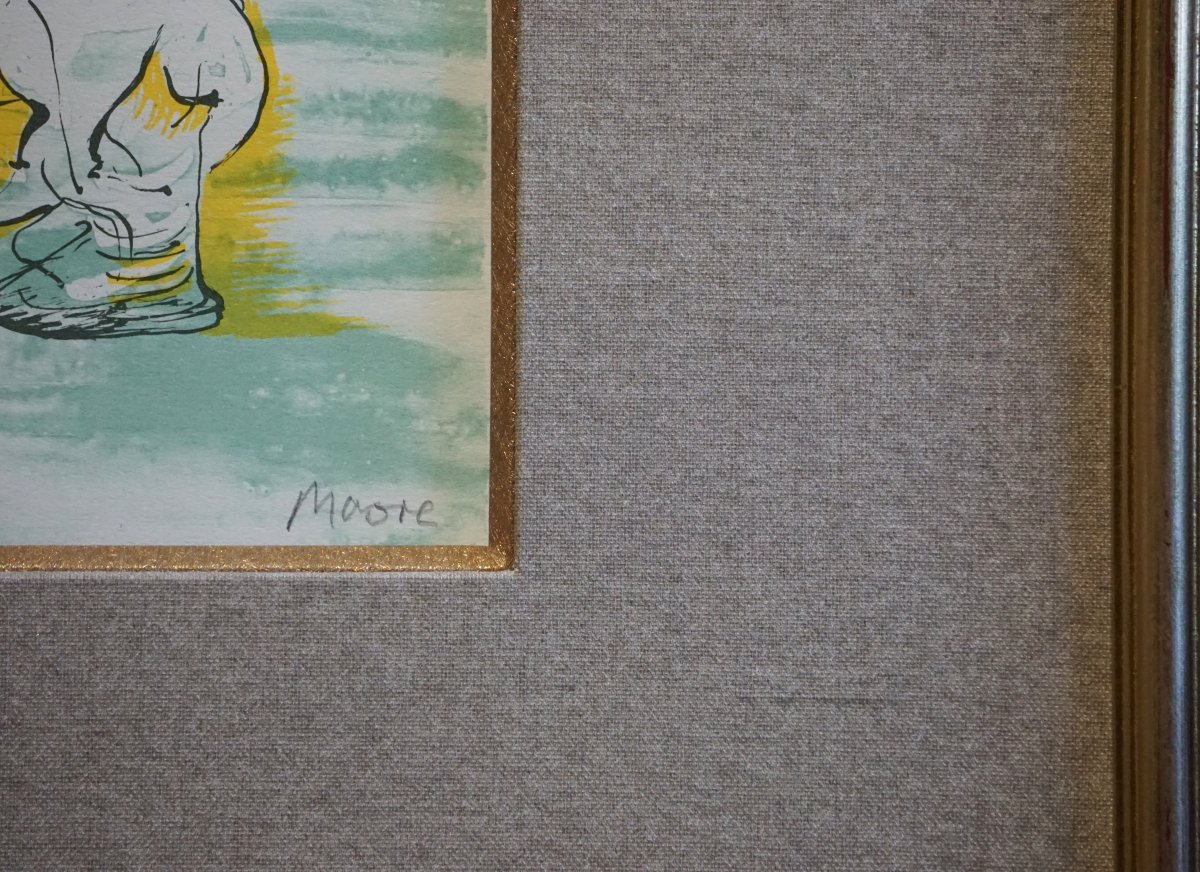
Signed in pencil “Moore” in the lower right corner
29.5 x 22.5 (image size)
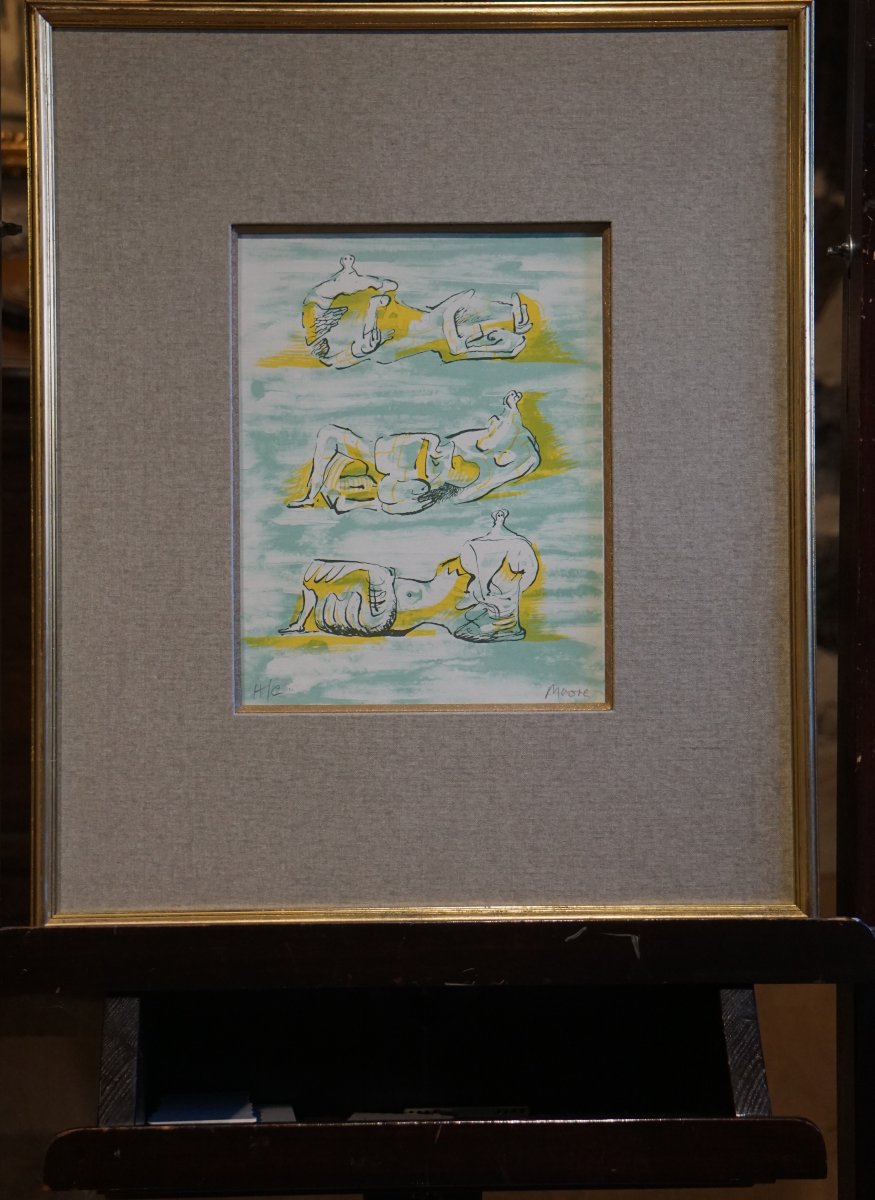
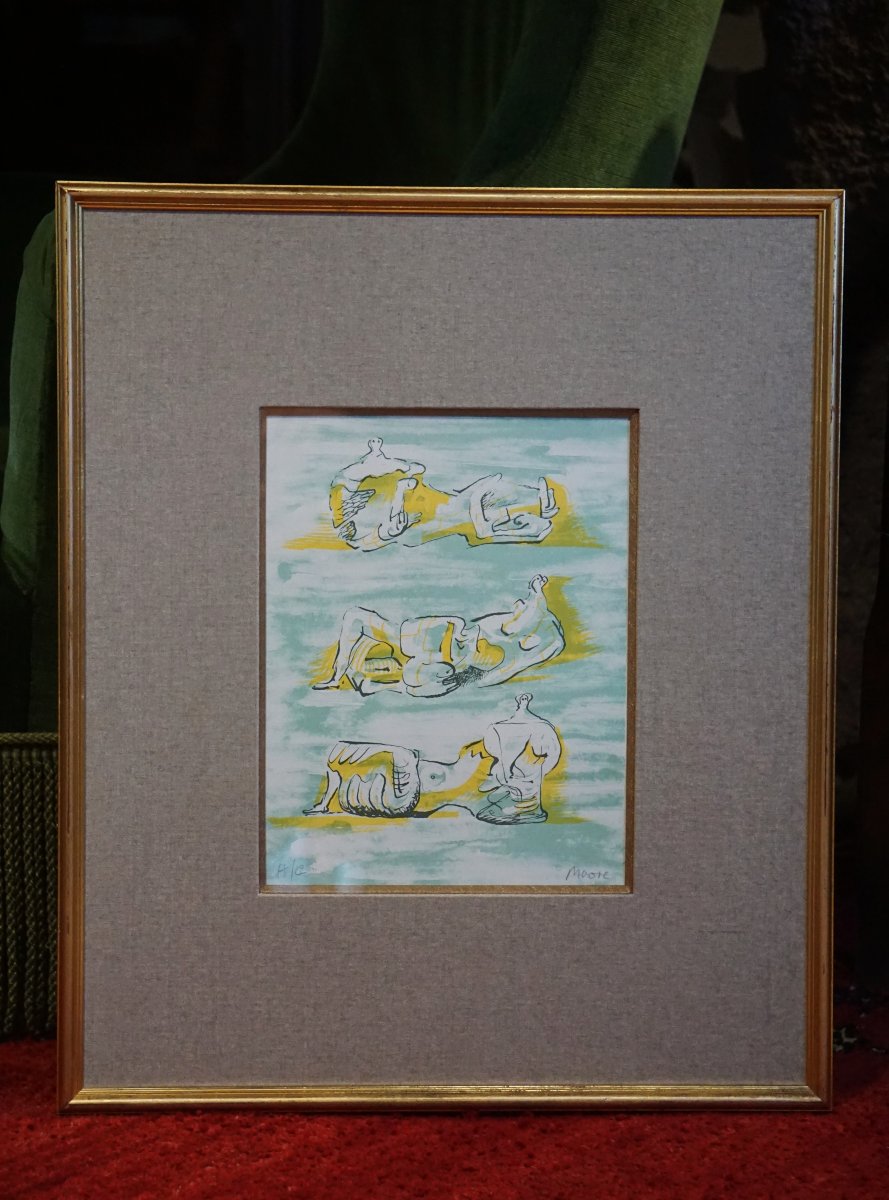
57.5 x 48.5 with frame
High-quality framing
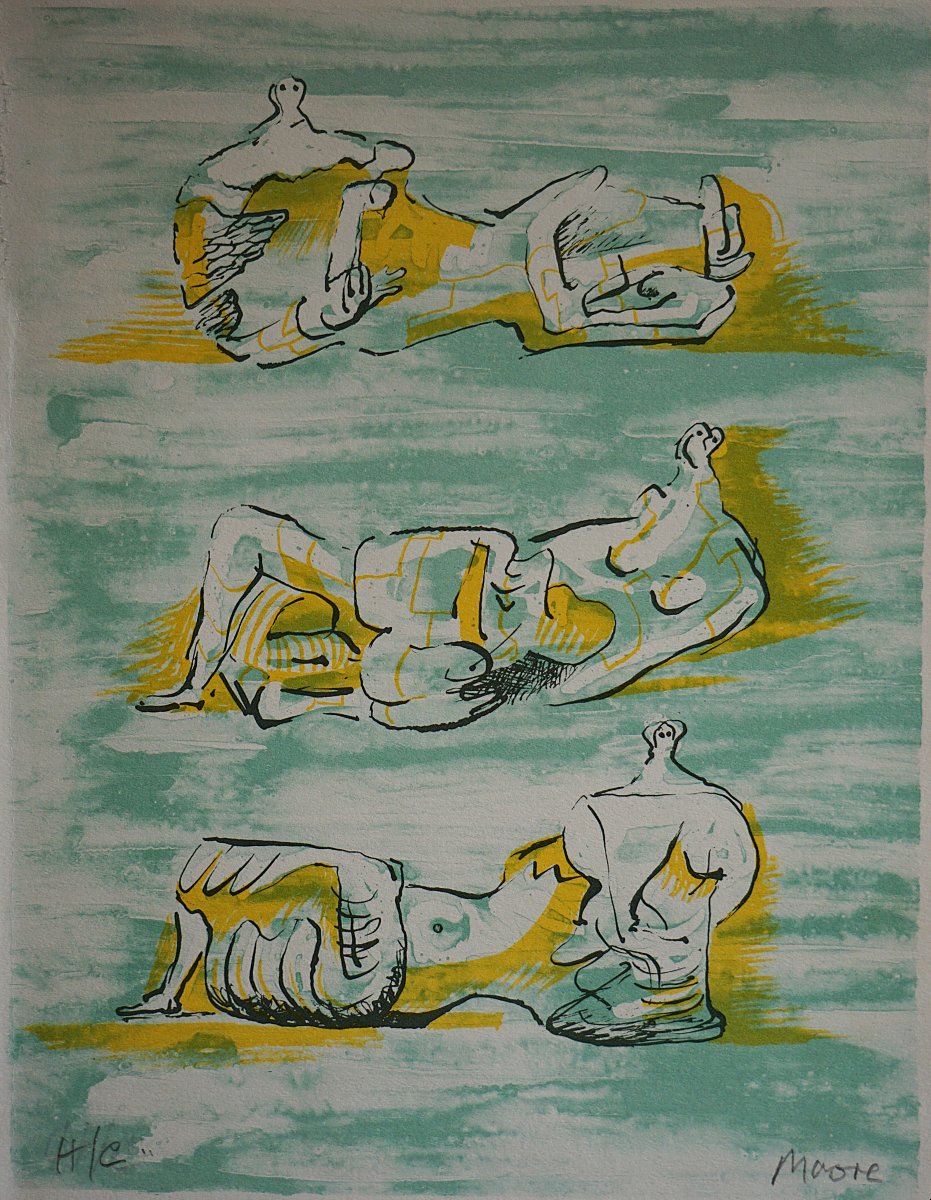
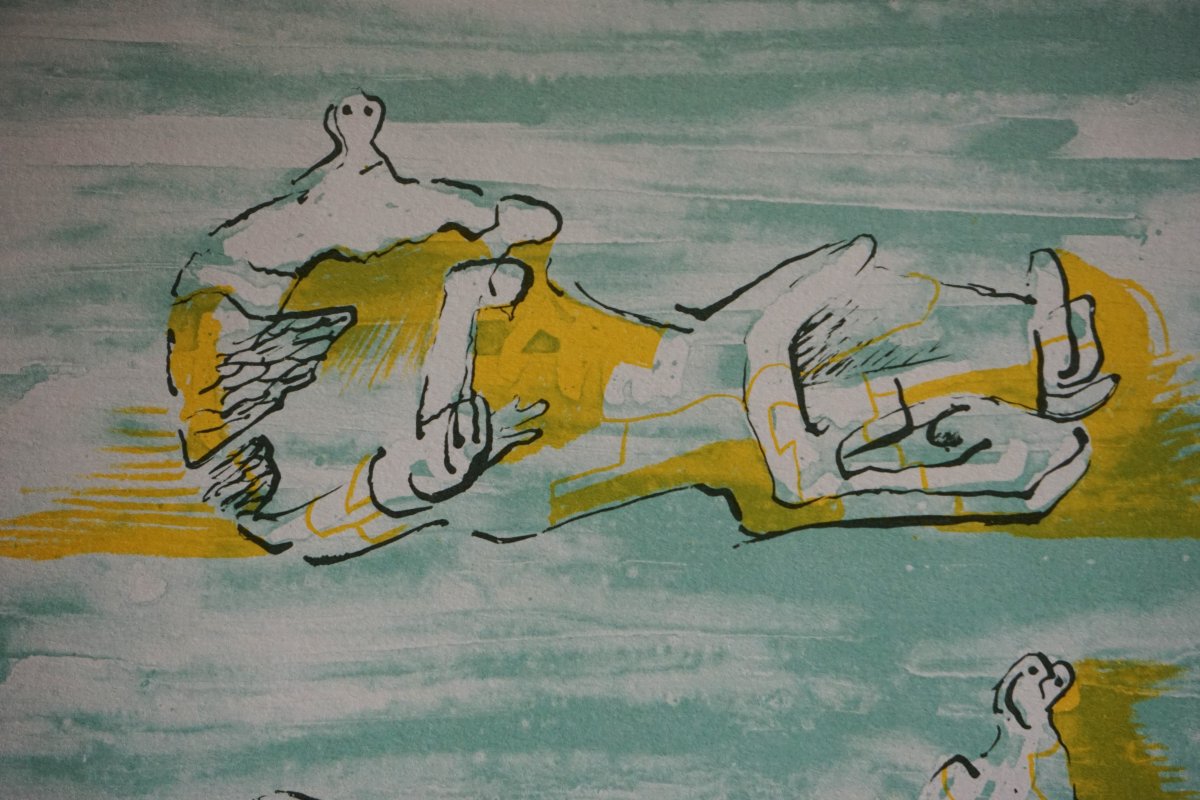
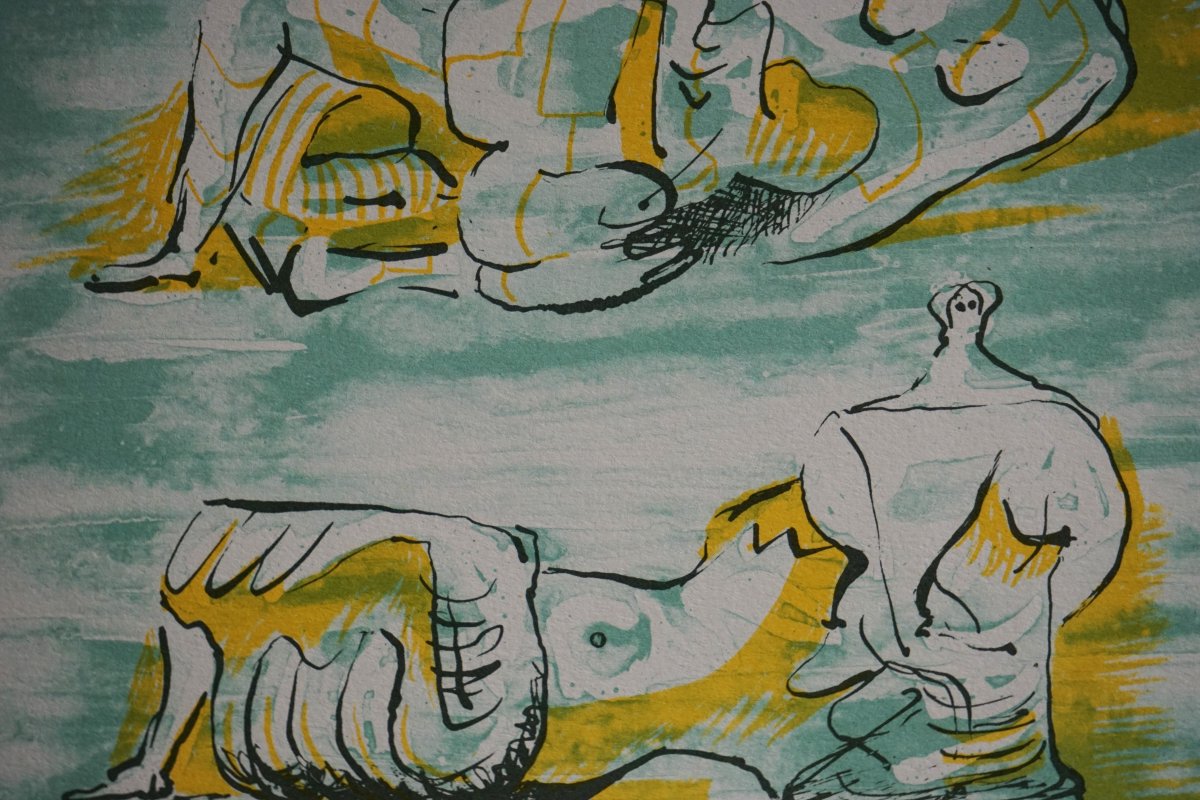
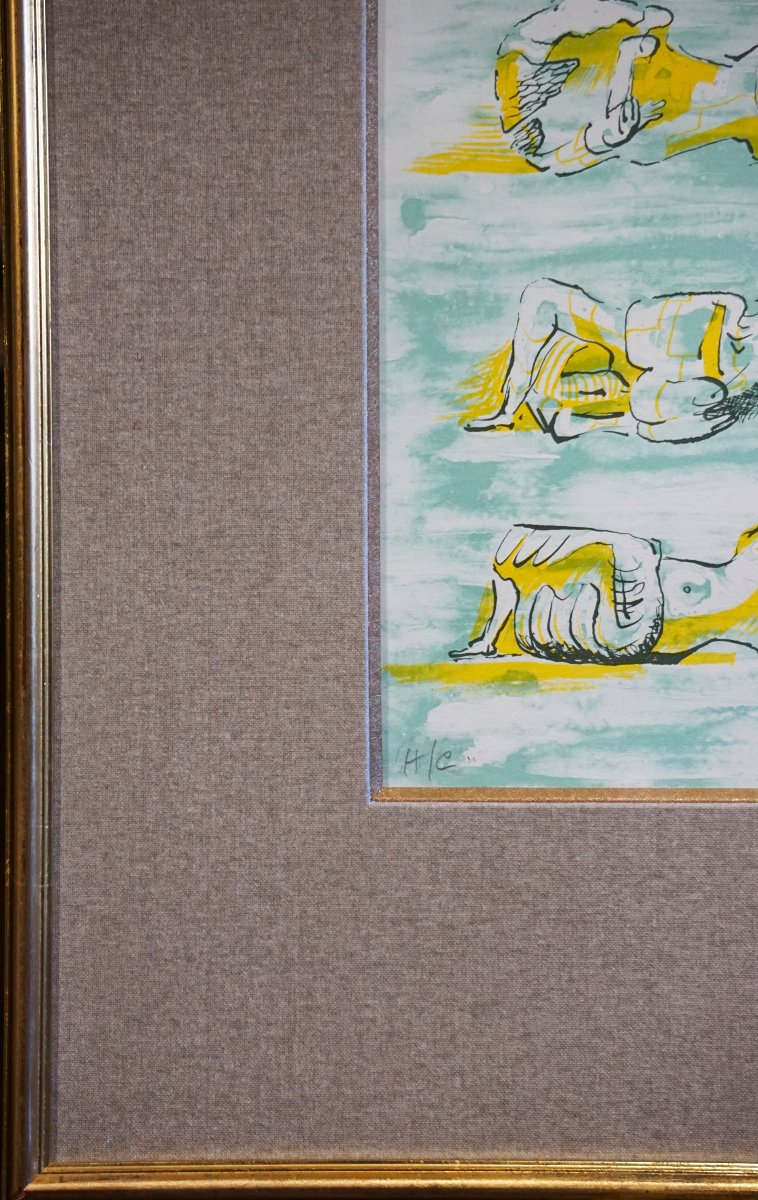
A very beautiful original color lithograph by Henry Moore, one of the major figures in 20th-century British and international sculpture. The work depicts three reclining human figures, a motif that occupies a central place in Moore’s oeuvre.
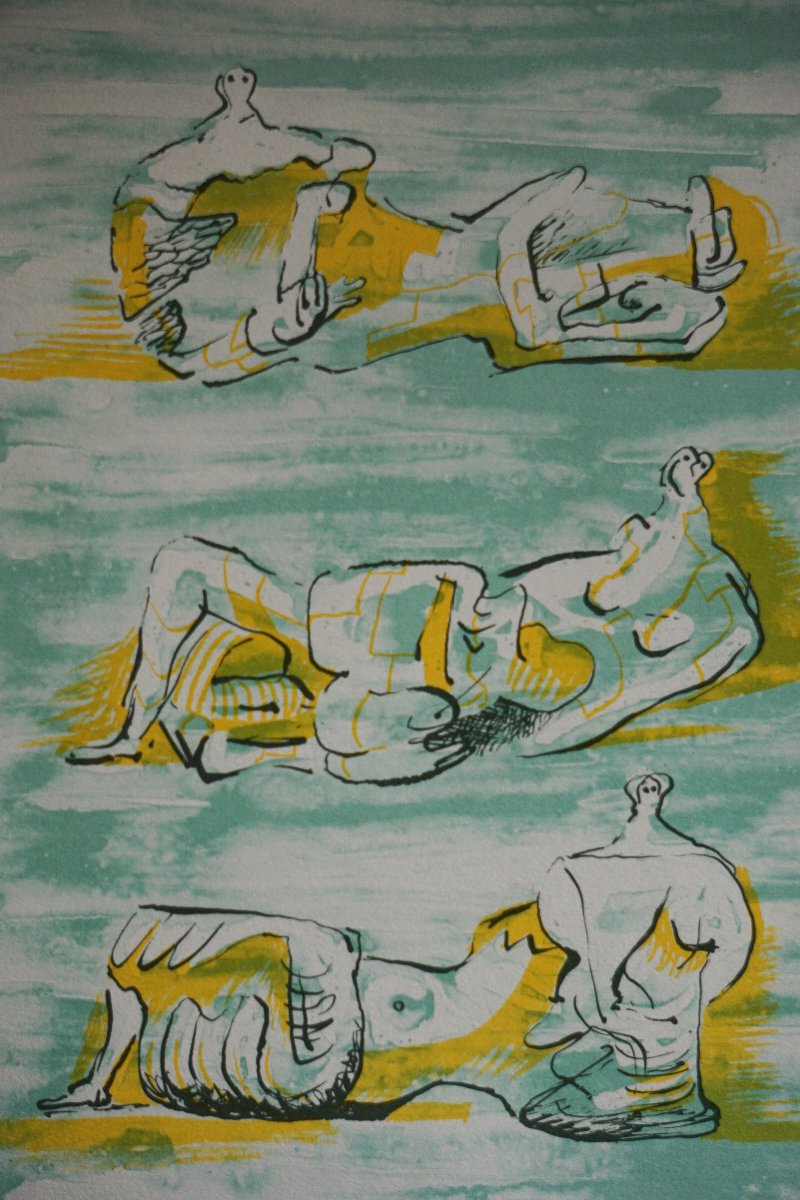
The artist devoted much of his work to the representation of the human body, which he transformed into organic, fluid, and monumental forms, situated at the boundary between figuration and abstraction. In this composition, the three bodies are arranged within a space rendered in an almost landscape-like manner. The broad swaths of green, yellow, and gray contrast with the free and energetic black linework that defines the figures’ contours.
This combination of spontaneous drawing, biomorphic forms, and muted colors is particularly characteristic of Moore’s graphic language. The elongated figure is one of the most recognizable themes in his work. Moore explored this theme for several decades, both in sculpture and in his extensive body of graphic work.
His prints now hold a significant place in the collections of numerous international museums.Several lithographs titled *Three Reclining Figures* are listed in the catalog raisonné of Henry Moore’s graphic work, notably versions dated 1971 and 1973. The Geneva Museum of Art and History holds several prints of these various compositions, notably from the Patrick Cramer collection.
Our copy bears the handwritten signature “Moore” in pencil as well as the notation H.C. (Hors Commerce) at the bottom of the sheet. This is a particularly interesting work for a collector of Henry Moore, combining one of his most iconic themes—elongated figures—with the expressive freedom of his lithographic work.
HENRY MOORE (1898–1986) Henry Spencer Moore was one of the greatest British sculptors of the 20th century and a leading figure in international modern sculpture. Born in 1898 in Castleford, Yorkshire, he studied at the Leeds School of Art and then at the Royal College of Art in London. By the 1930s, Moore had established himself as one of the leading figures of the European avant-garde. His work is deeply inspired by the human figure, organic forms, and nature, with recurring themes such as mother and child and, above all, the reclining figure, which would become one of his signature motifs. After World War II, he gained international renown. His monumental bronze sculptures, installed in numerous public spaces around the world, contributed to a profound renewal of modern sculpture. Alongside his sculpture, Moore produced a significant body of graphic work, including drawings, engravings, and lithographs. Based in Perry Green, Hertfordshire, he continued his work until his death in 1986. In 1977, he and his family established the Henry Moore Foundation, dedicated to preserving his work and promoting the understanding and dissemination of sculpture. Today, Henry Moore is considered one of the most important and influential British artists of the 20th century.
Three Reclining Figures
Original color lithograph on paper; H.C. proof (Not for Sale)
Signed in pencil “Moore” in the lower right corner
29.5 x 22.5 (image size)
57.5 x 48.5 with frame
High-quality framing
A very beautiful original color lithograph by Henry Moore, one of the major figures in 20th-century British and international sculpture. The work depicts three reclining human figures, a motif that occupies a central place in Moore’s oeuvre.
The artist devoted much of his work to the representation of the human body, which he transformed into organic, fluid, and monumental forms, situated at the boundary between figuration and abstraction. In this composition, the three bodies are arranged within a space rendered in an almost landscape-like manner. The broad swaths of green, yellow, and gray contrast with the free and energetic black linework that defines the figures’ contours.
This combination of spontaneous drawing, biomorphic forms, and muted colors is particularly characteristic of Moore’s graphic language. The elongated figure is one of the most recognizable themes in his work. Moore explored this theme for several decades, both in sculpture and in his extensive body of graphic work.
His prints now hold a significant place in the collections of numerous international museums.Several lithographs titled *Three Reclining Figures* are listed in the catalog raisonné of Henry Moore’s graphic work, notably versions dated 1971 and 1973. The Geneva Museum of Art and History holds several prints of these various compositions, notably from the Patrick Cramer collection.
Our copy bears the handwritten signature “Moore” in pencil as well as the notation H.C. (Hors Commerce) at the bottom of the sheet. This is a particularly interesting work for a collector of Henry Moore, combining one of his most iconic themes—elongated figures—with the expressive freedom of his lithographic work.
HENRY MOORE (1898–1986) Henry Spencer Moore was one of the greatest British sculptors of the 20th century and a leading figure in international modern sculpture. Born in 1898 in Castleford, Yorkshire, he studied at the Leeds School of Art and then at the Royal College of Art in London. By the 1930s, Moore had established himself as one of the leading figures of the European avant-garde. His work is deeply inspired by the human figure, organic forms, and nature, with recurring themes such as mother and child and, above all, the reclining figure, which would become one of his signature motifs. After World War II, he gained international renown. His monumental bronze sculptures, installed in numerous public spaces around the world, contributed to a profound renewal of modern sculpture. Alongside his sculpture, Moore produced a significant body of graphic work, including drawings, engravings, and lithographs. Based in Perry Green, Hertfordshire, he continued his work until his death in 1986. In 1977, he and his family established the Henry Moore Foundation, dedicated to preserving his work and promoting the understanding and dissemination of sculpture. Today, Henry Moore is considered one of the most important and influential British artists of the 20th century.
1 200 €
Period: 20th century
Style: Modern Art
Condition: Perfect condition
Material: Paper
Reference (ID): 1810785
Availability: In stock
Print