

16th-century Silver And Porphyry Fork
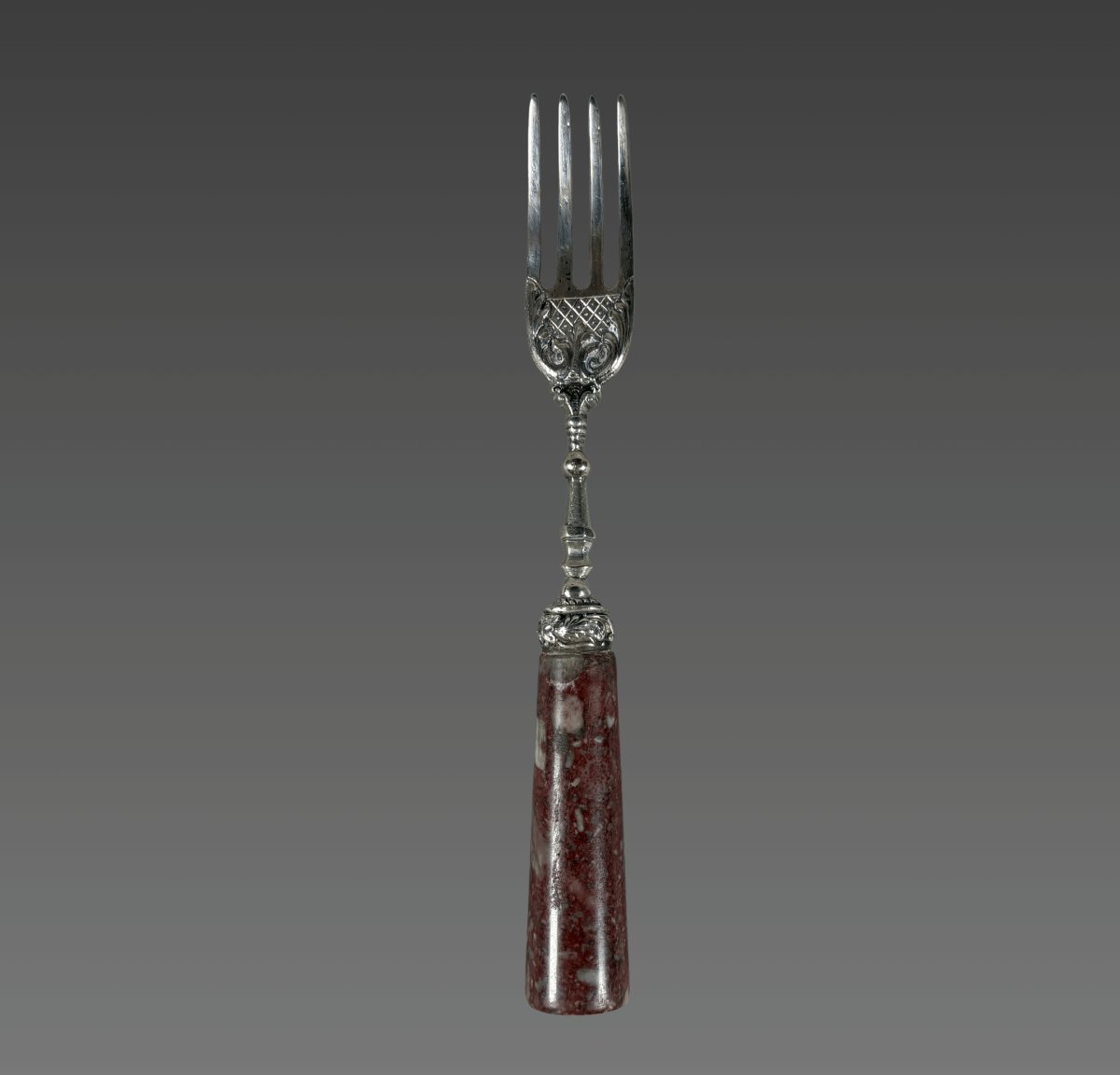
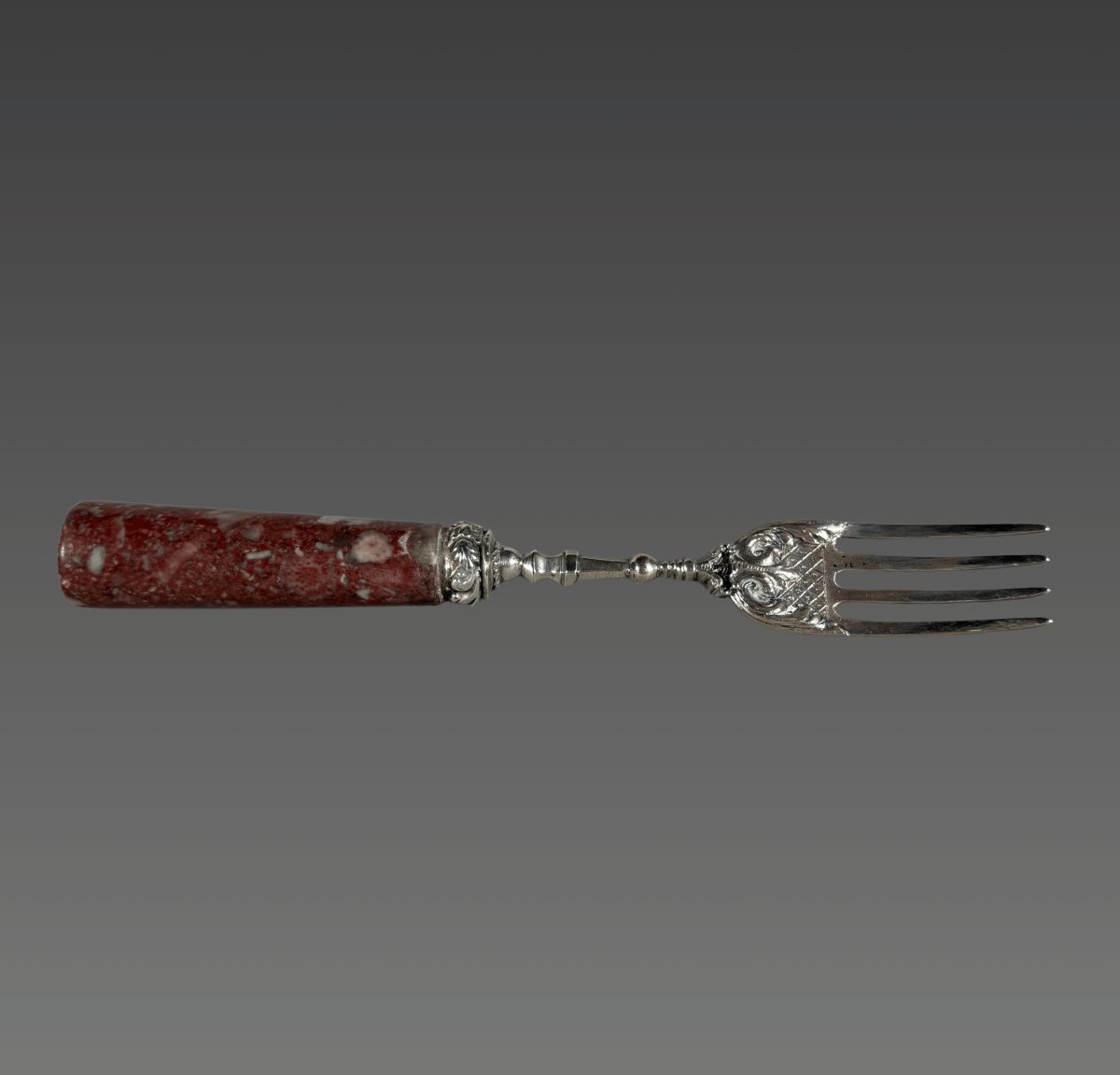
16th-century silver and porphyry fork
Made in Northern Italy, circa 1550
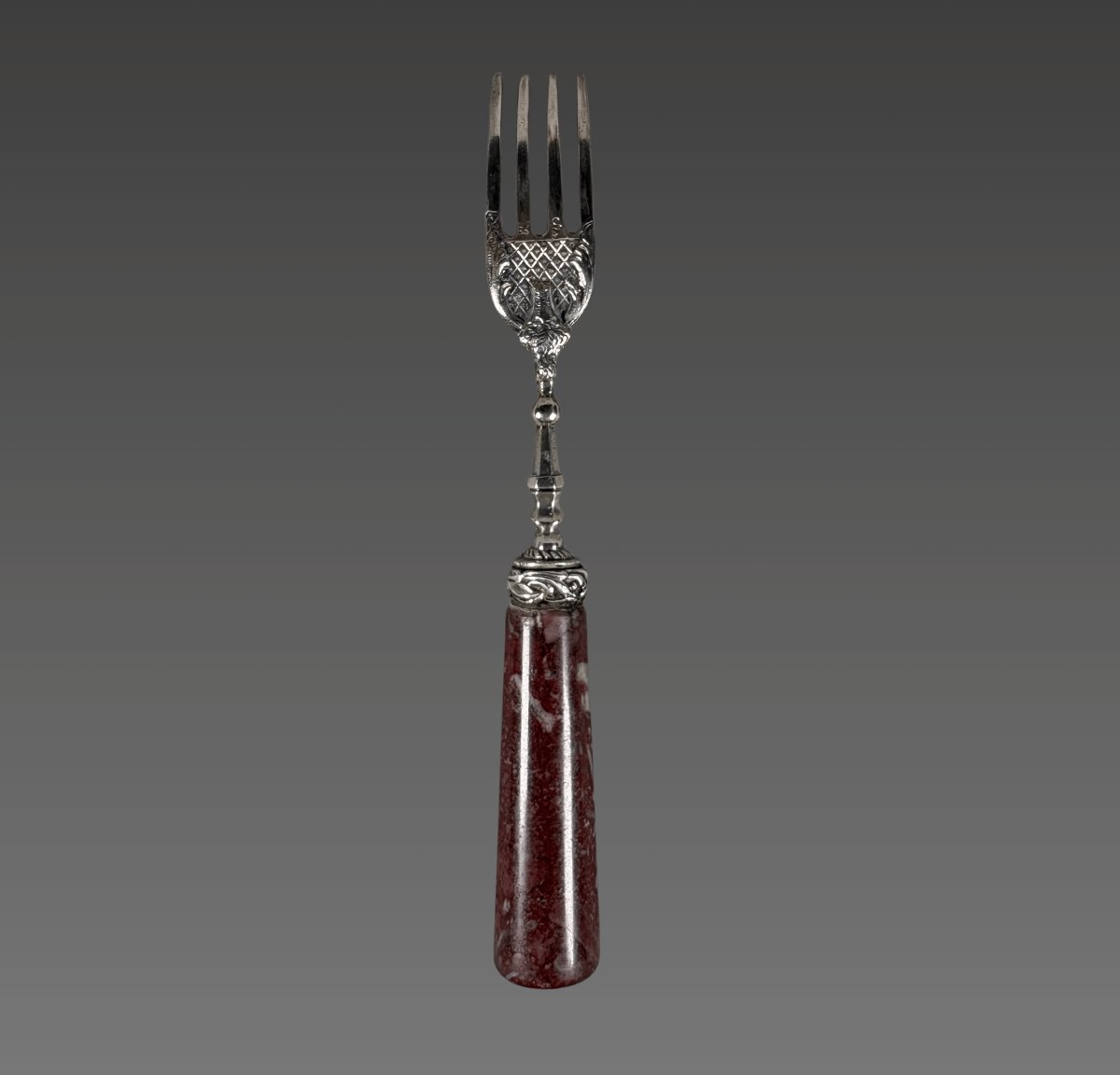
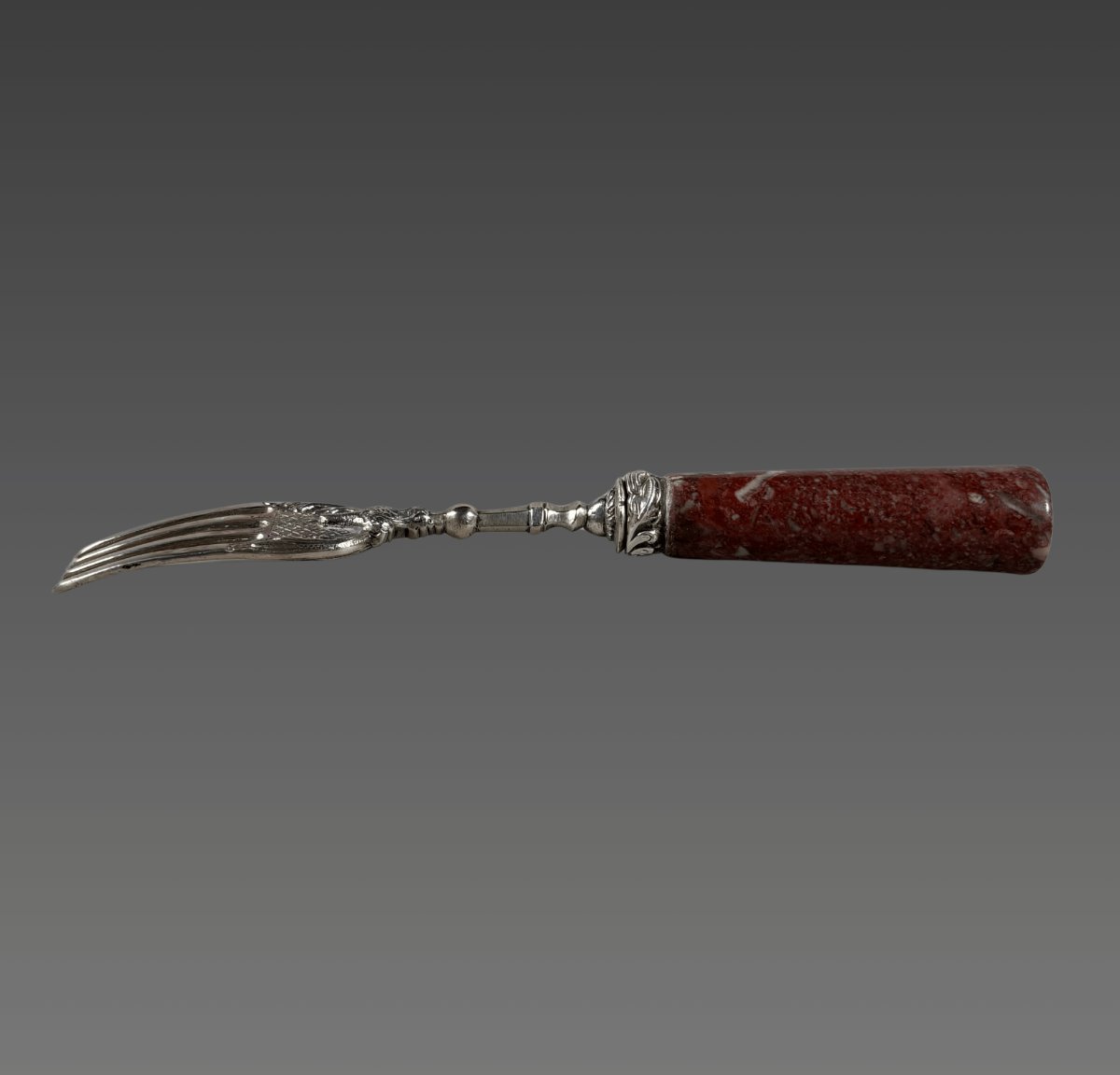
The cylindrical handle, made of red/purple porphyry (a hard volcanic stone), is an extremely prestigious material.
During the Renaissance (16th century) and into the 17th century, porphyry—an imperial and royal symbol since Roman antiquity — was reserved for princely works of art
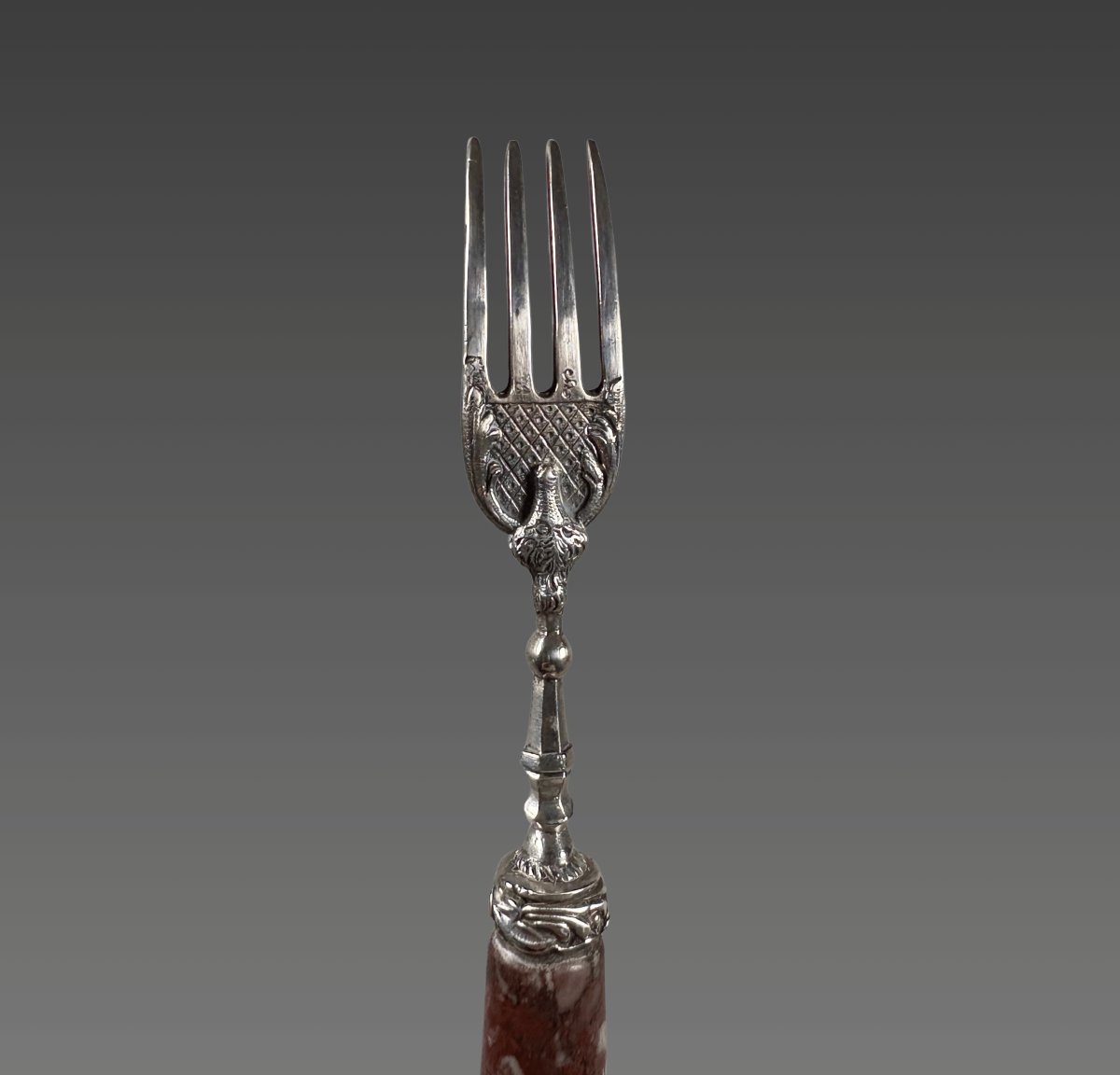
The sculpted silver joint connecting the handle to the head features a baluster/molded knot motif, very typical of late Renaissance and Mannerist silverwork (Northern Italy)
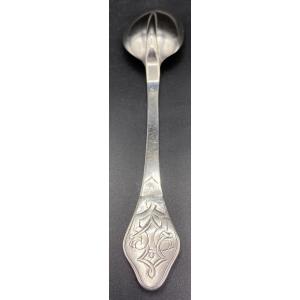
The base of the tines is adorned with a cartouche engraved with a network of trellises and leafy volutes, emblematic of the decorative repertoire of the 16th and early 17th centuries.
In the 16th century, everyday forks generally had 2 or 3 tines (used primarily for piercing candied fruit or hot meats, or to keep one’s fingers clean).
Although four-pronged forks were rarer in the 16th century, they were found among Italian and German ceremonial cutlery sets.
Dimensions: 17.5 x 2 x 2 cm
Provenance: - Private collection in Paris
Taxes and customs duties are included in the shipping cost for international shipments
Made in Northern Italy, circa 1550
The cylindrical handle, made of red/purple porphyry (a hard volcanic stone), is an extremely prestigious material.
During the Renaissance (16th century) and into the 17th century, porphyry—an imperial and royal symbol since Roman antiquity — was reserved for princely works of art
The sculpted silver joint connecting the handle to the head features a baluster/molded knot motif, very typical of late Renaissance and Mannerist silverwork (Northern Italy)
The base of the tines is adorned with a cartouche engraved with a network of trellises and leafy volutes, emblematic of the decorative repertoire of the 16th and early 17th centuries.
In the 16th century, everyday forks generally had 2 or 3 tines (used primarily for piercing candied fruit or hot meats, or to keep one’s fingers clean).
Although four-pronged forks were rarer in the 16th century, they were found among Italian and German ceremonial cutlery sets.
Dimensions: 17.5 x 2 x 2 cm
Provenance: - Private collection in Paris
Taxes and customs duties are included in the shipping cost for international shipments
2 500 €
Period: 16th century
Style: Renaissance, Louis 13th
Condition: Excellent condition
Material: Sterling silver
Reference (ID): 1809224
Availability: In stock
Print