THIS OBJECT WAS SOLD
The Adoration Of The Shepherds, Pieter Pourbus (gouda 1523 – Bruges 1584) Circle
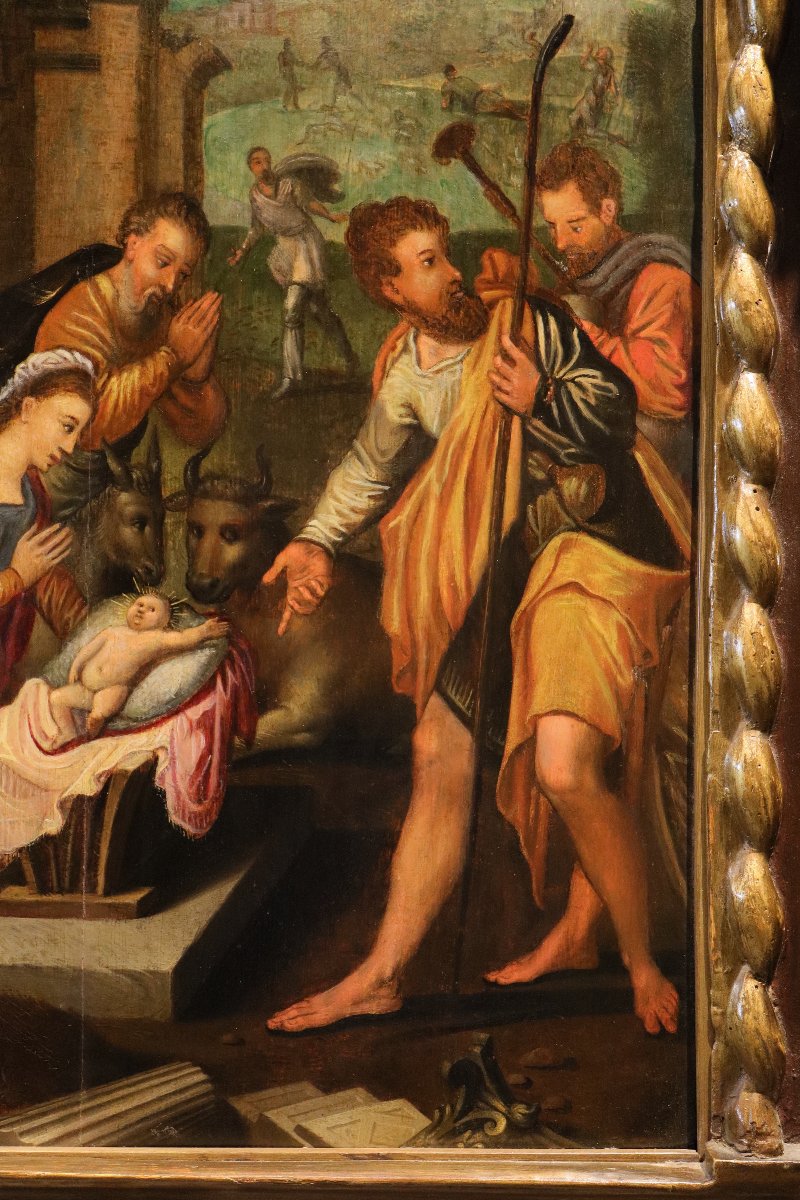
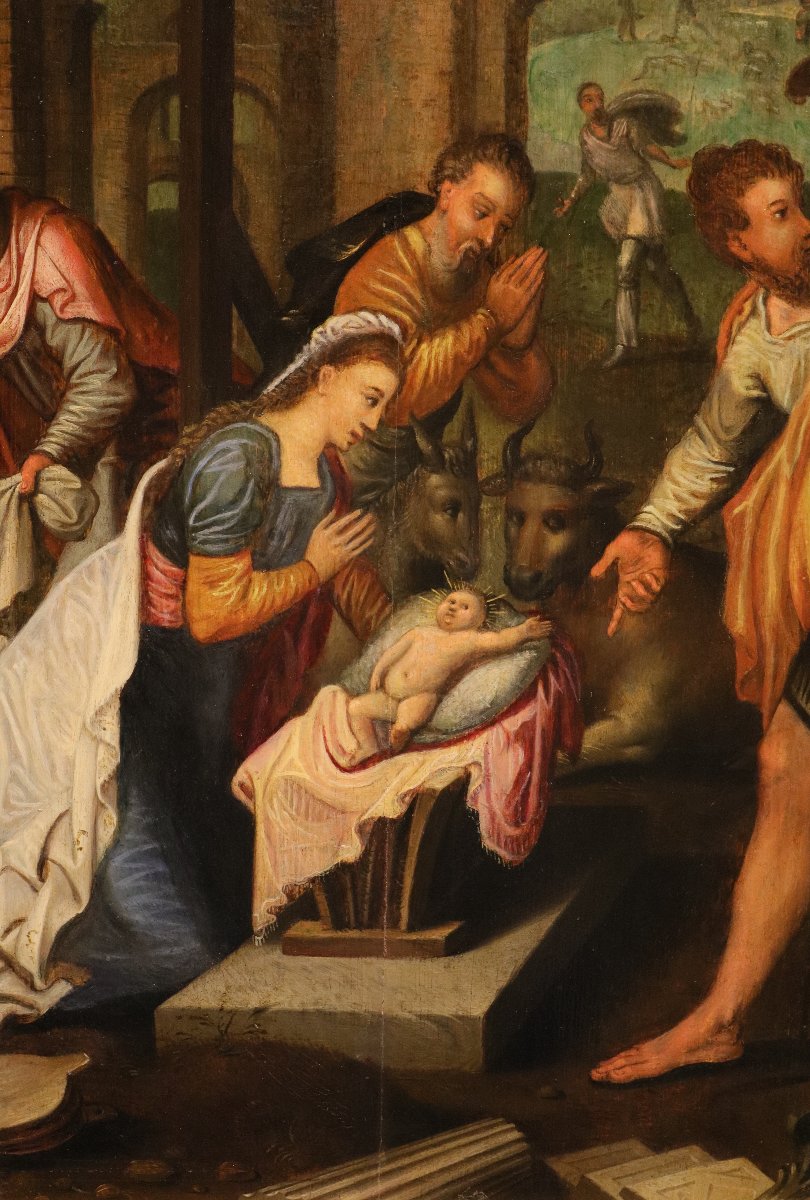
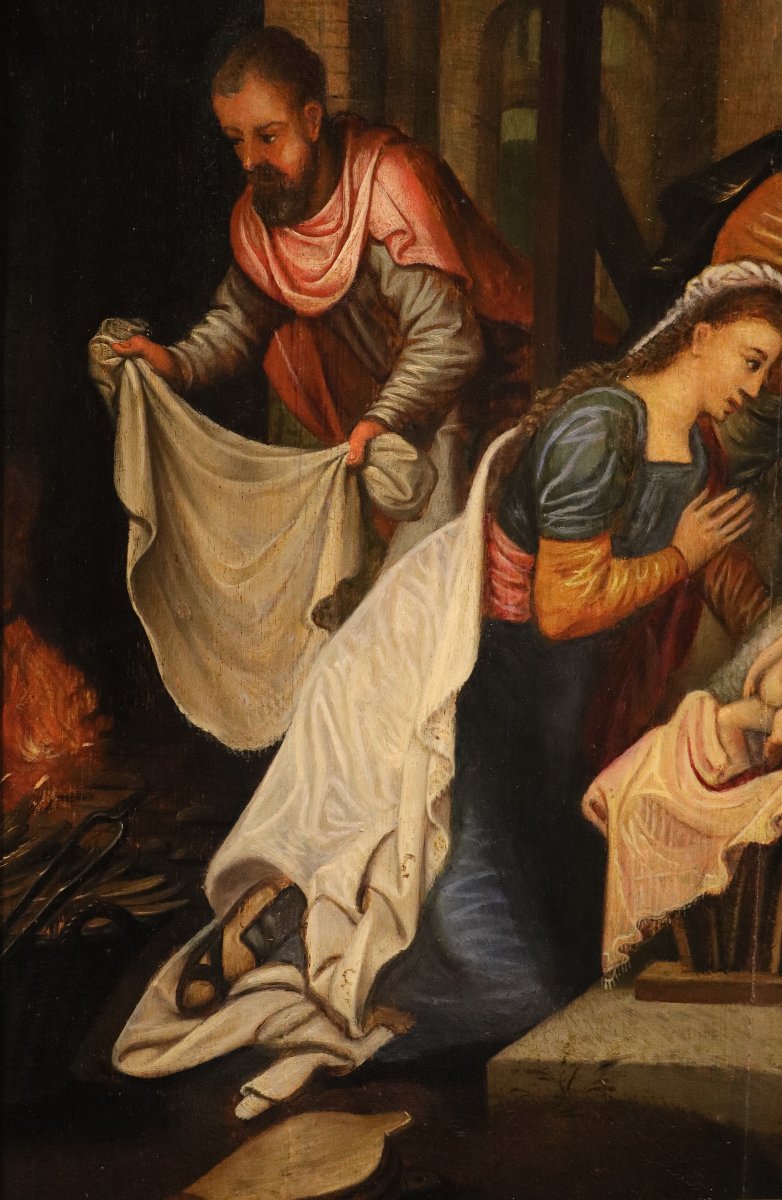
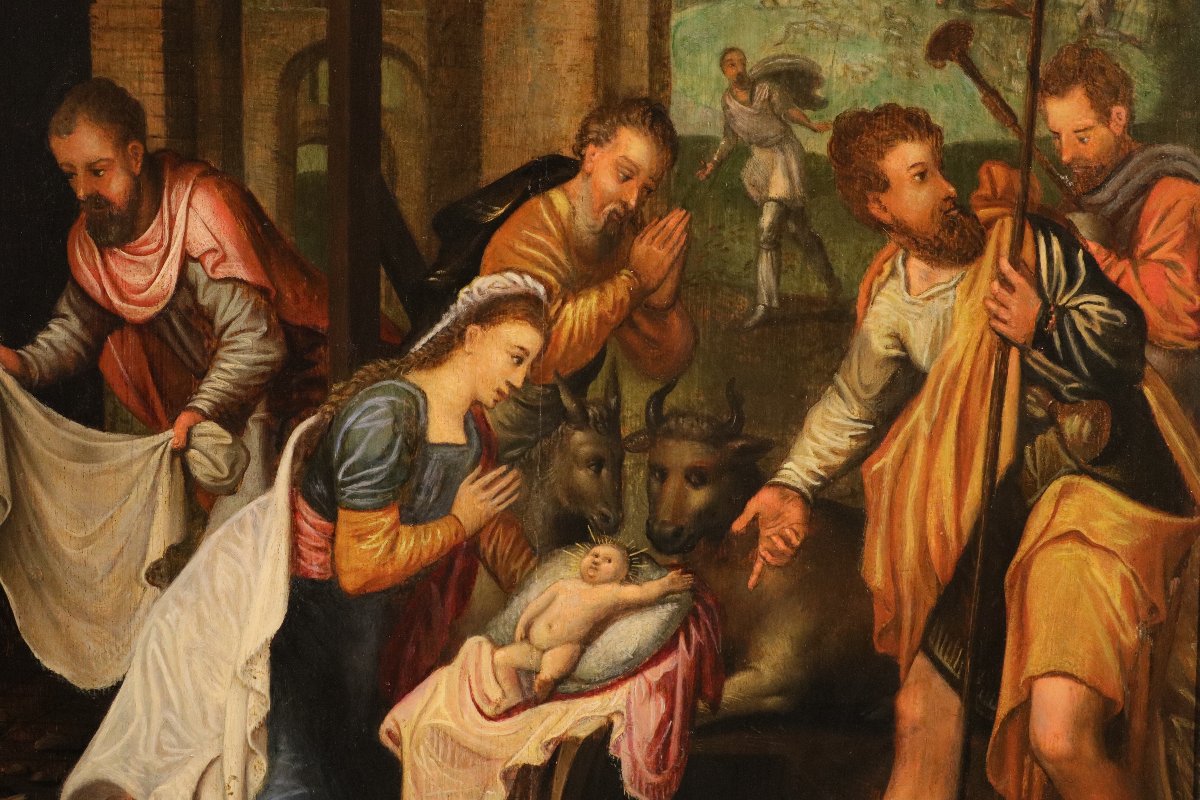
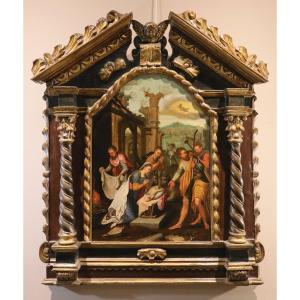


Pieter Pourbus (Gouda 1523 – Bruges 1584) Circle of
Adoration of the Shepherds
16th–17th century
Oil on panel
74 x 51 cm. - In an architectural “temple-style” frame, 110 x 94 cm.
FULL DETAILS (click HERE)
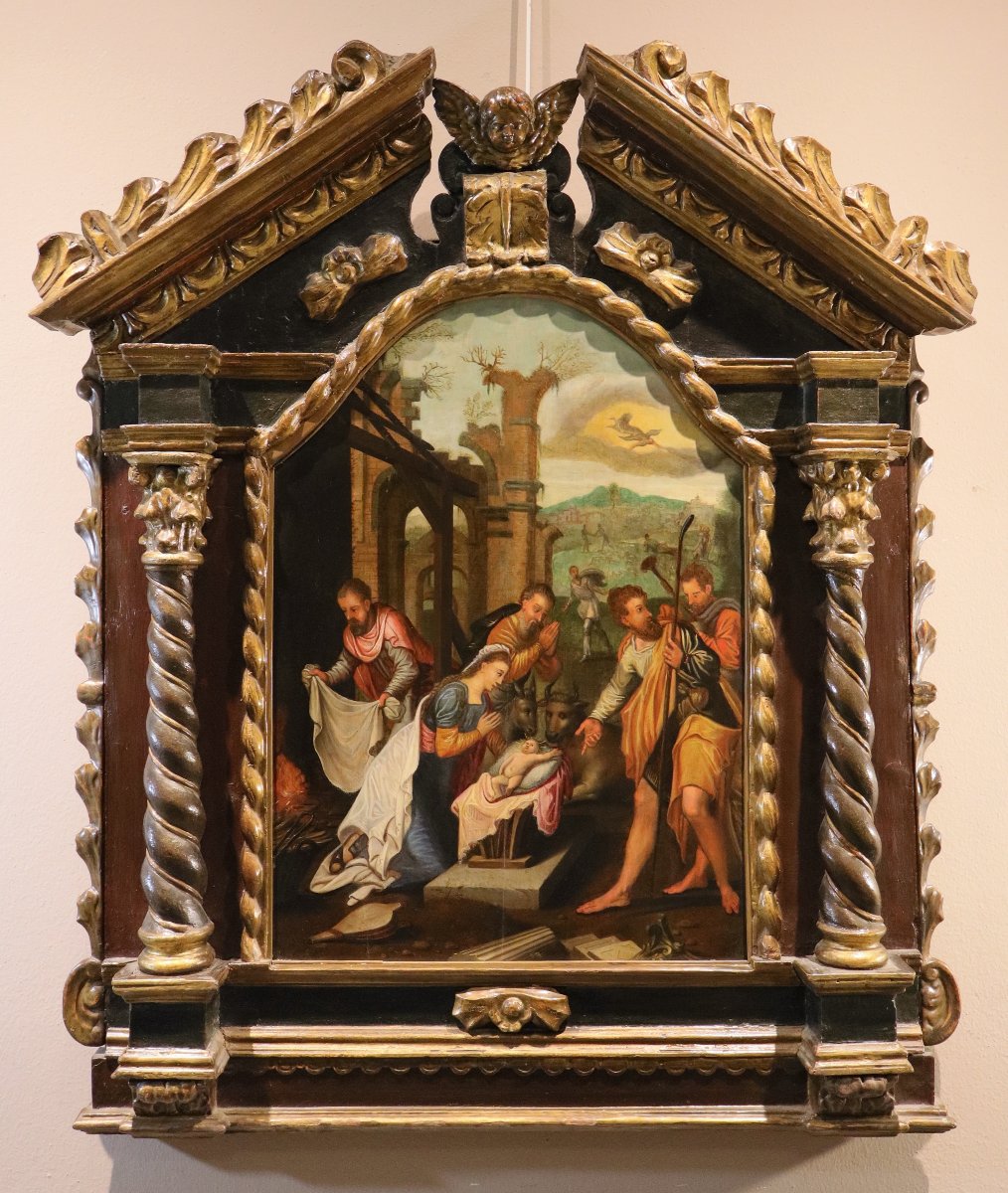
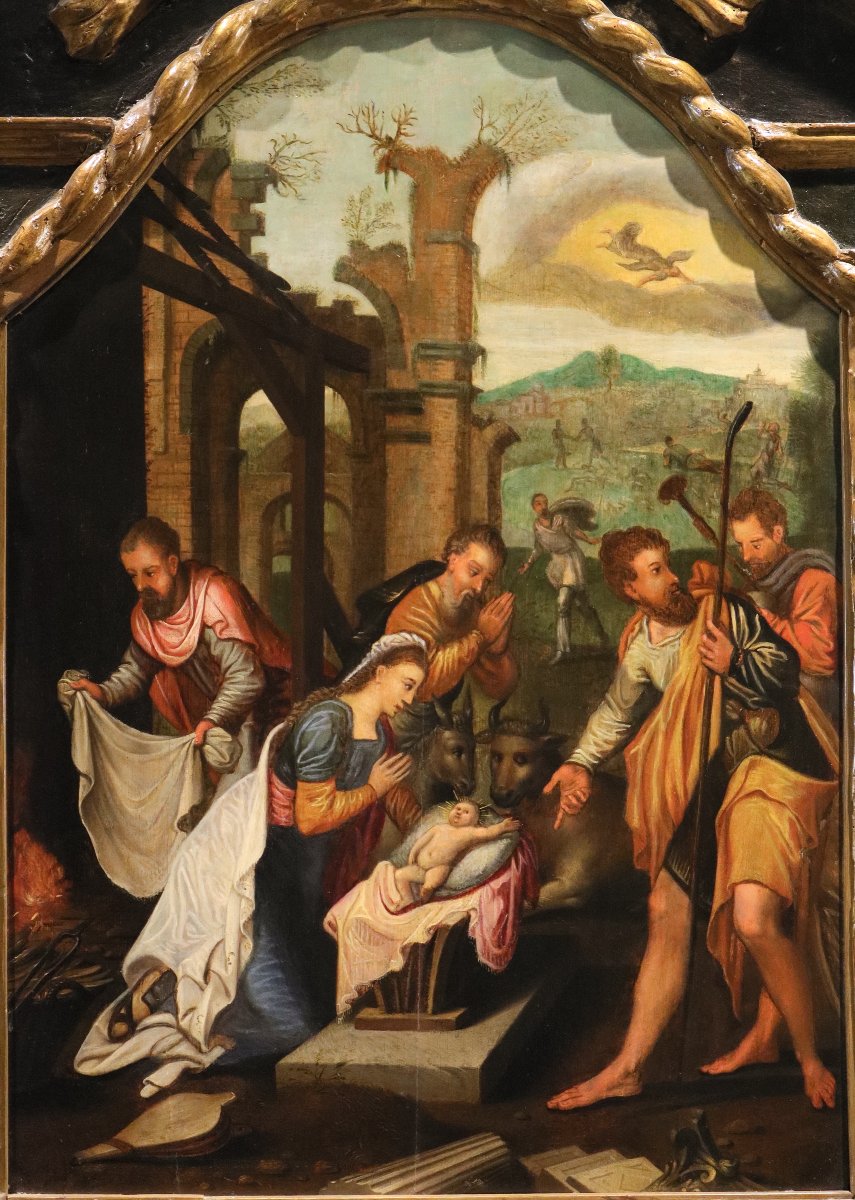
The work depicted here, which illustrates the Nativity theme with the Adoration of the Shepherds, is a painting of excellent artistic quality that fits seamlessly into the body of work by the circle of the Flemish artist Pieter Pourbus (Gouda 1523 – Bruges 1584).
A master of the Flemish Renaissance, he is renowned for having led the Bruges school of painting in the second half of the 16th century.
His artistic output combines the Flemish technical tradition with the models of Italian Mannerism, distinguished by its extraordinary geometric precision and sharpness of detail.
In particular, the defined anatomical details, the plasticity of the drapery, and the theatrical gestures of the figures evoke the style of Flemish Romanism. This movement saw painters from the Low Countries reinterpret Italian Mannerist and Renaissance models (particularly those of artists such as Giorgio Vasari and Frans Floris), blending them with the meticulous descriptive tradition of Northern Europe.
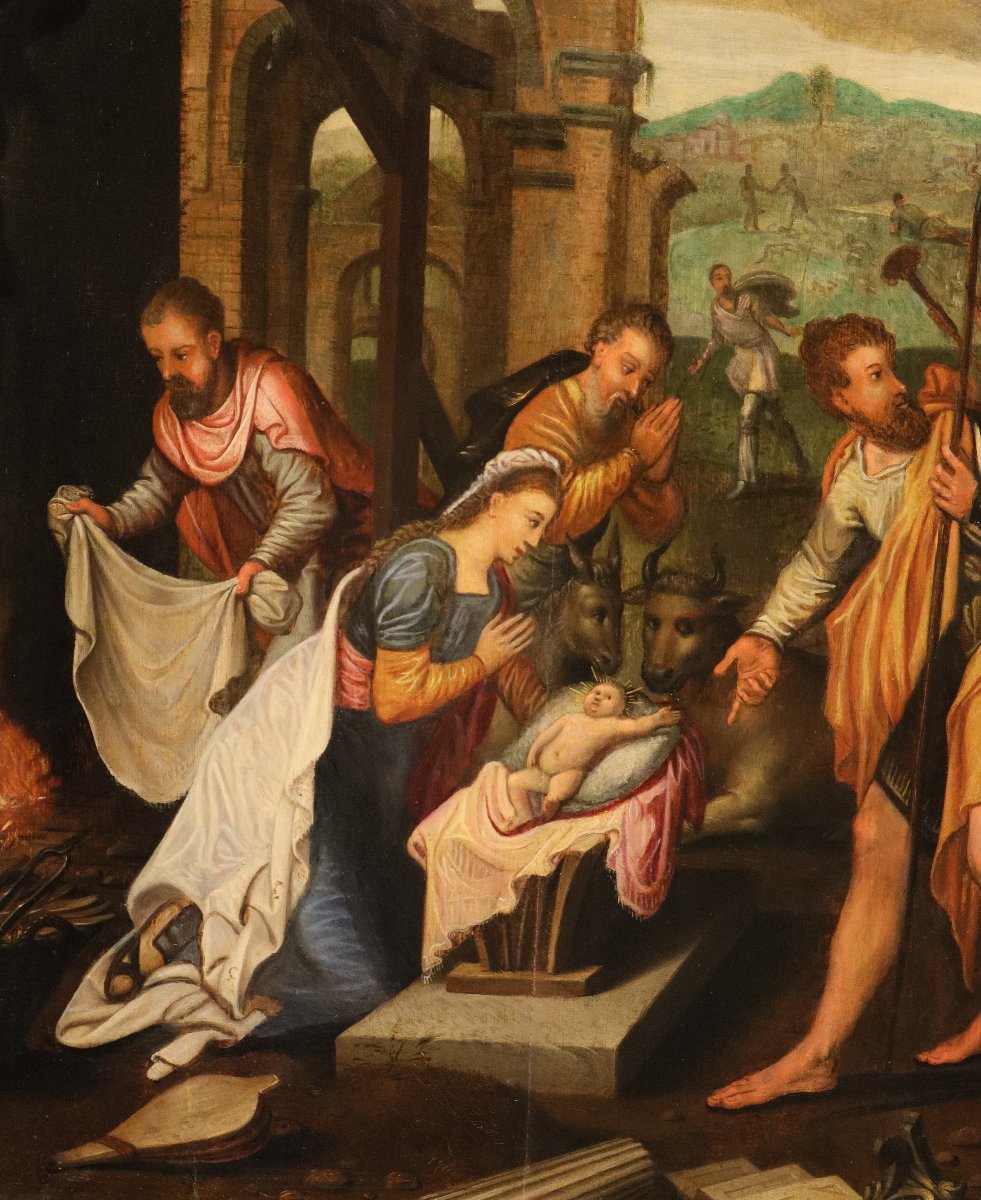
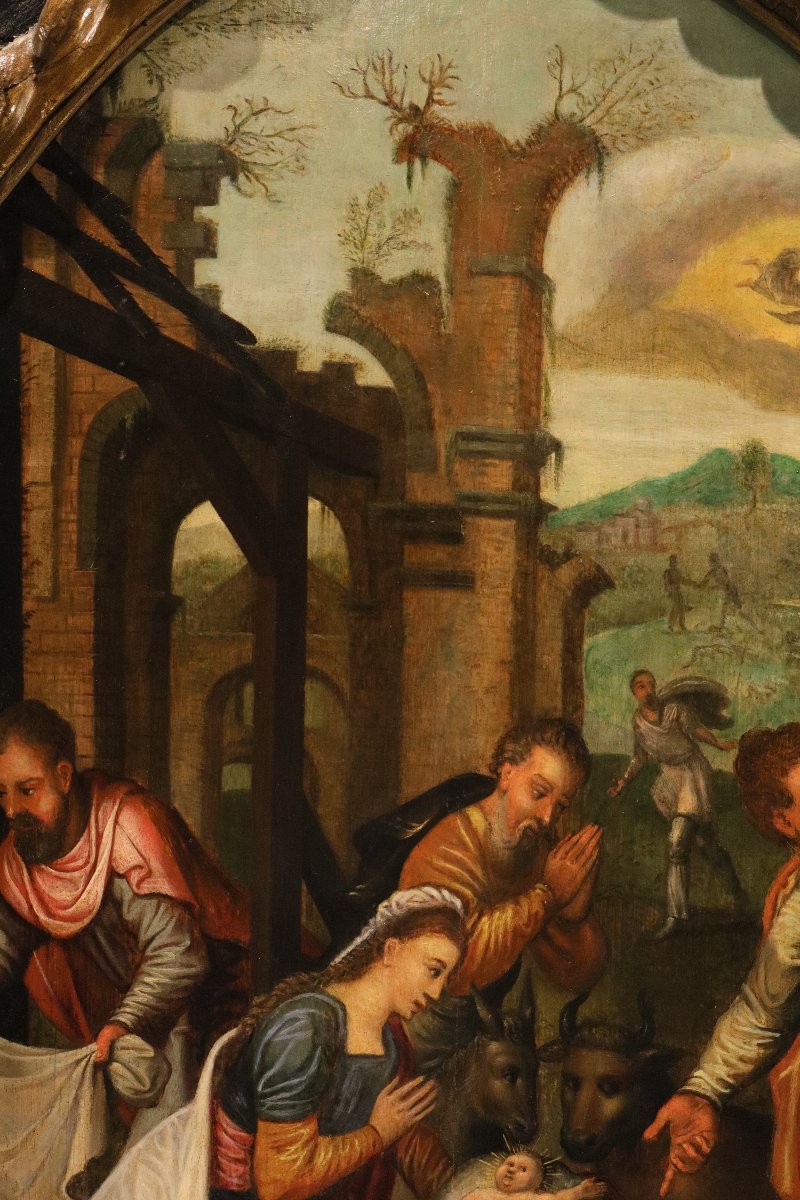
Returning our attention to the work itself, we are presented with a remarkable depiction of the moment when the shepherds reach the Nativity scene: the Virgin Mary and Saint Joseph are portrayed proudly showing the infant to the group of shepherds who have come to worship him.
An interesting and unusual detail shows Joseph not merely as a silent spectator, but acting as a caring father to keep the newborn warm, drying his swaddling clothes near a blazing fire: a motif much loved by 16th- and 17th-century painters to humanize the sacred scene.
Naturally, his action is imbued with strong symbolic meaning; the warmth against the cold symbolizes the earthly welcome of the Word made flesh in a hostile and cold world.
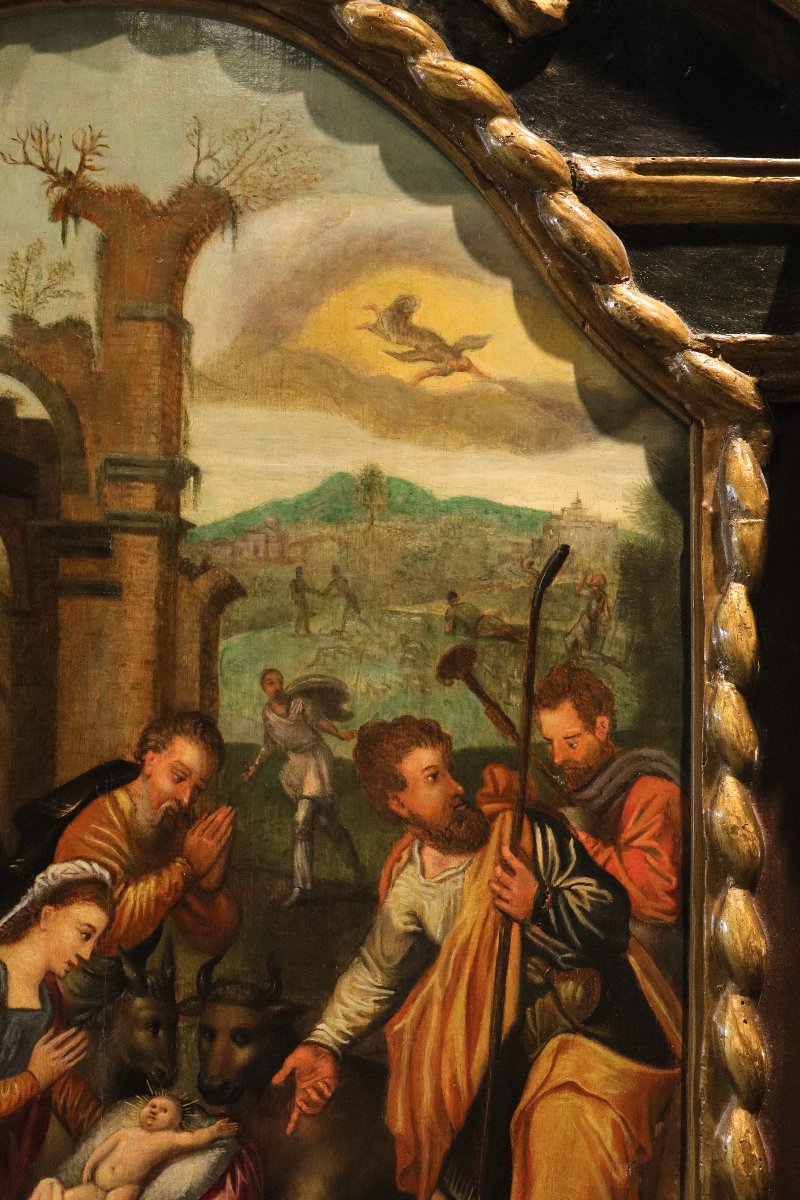
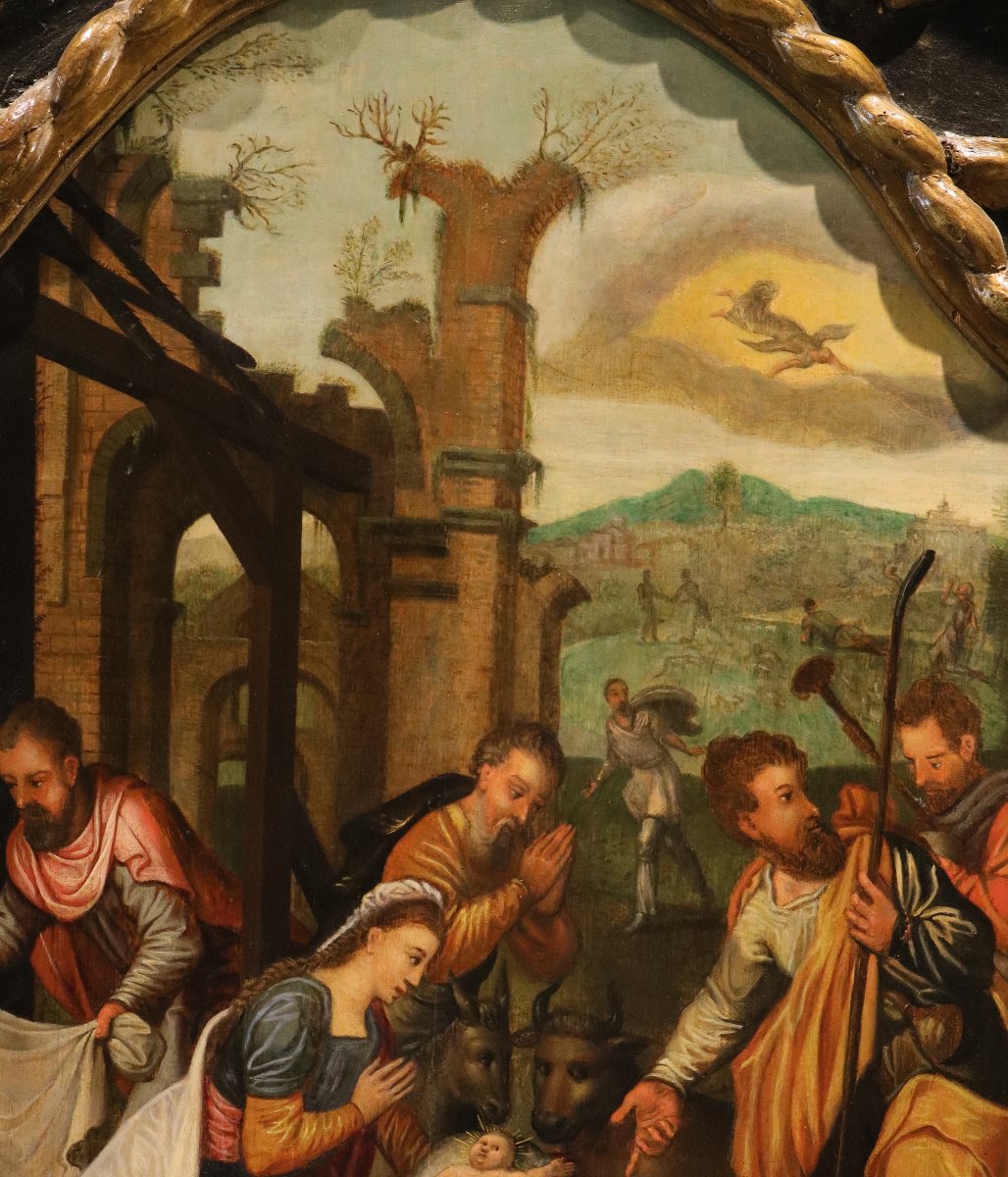
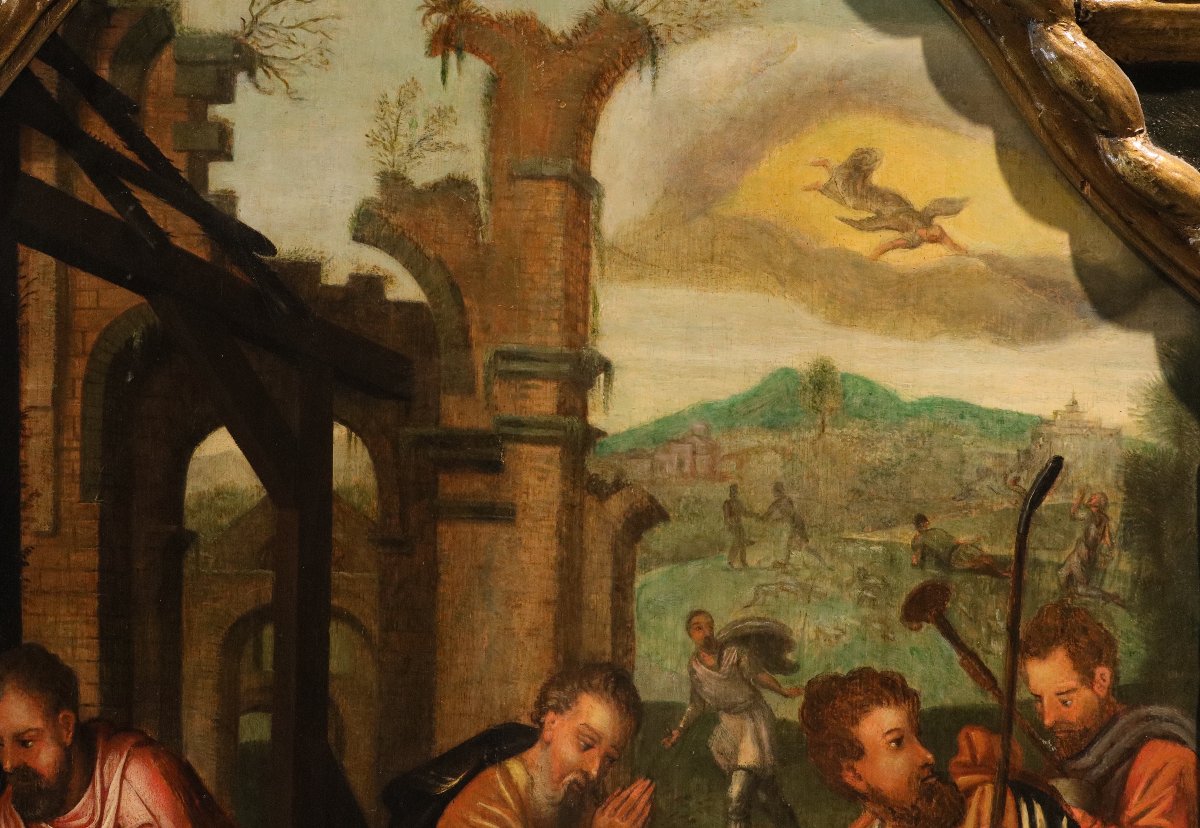
In the background, one can make out classical architecture in ruins, another symbolic element typical of Northern Renaissance painting that represents the decline of the pagan era and the birth of Christianity.
In the background, a beam of golden light breaks through the sky, from which an angel messenger emerges to bring the shepherds the news of the birth of Jesus the Savior. Here, too, the attention devoted to the landscape below is particularly noteworthy, featuring ancient towers and walls inspired by Bethlehem.
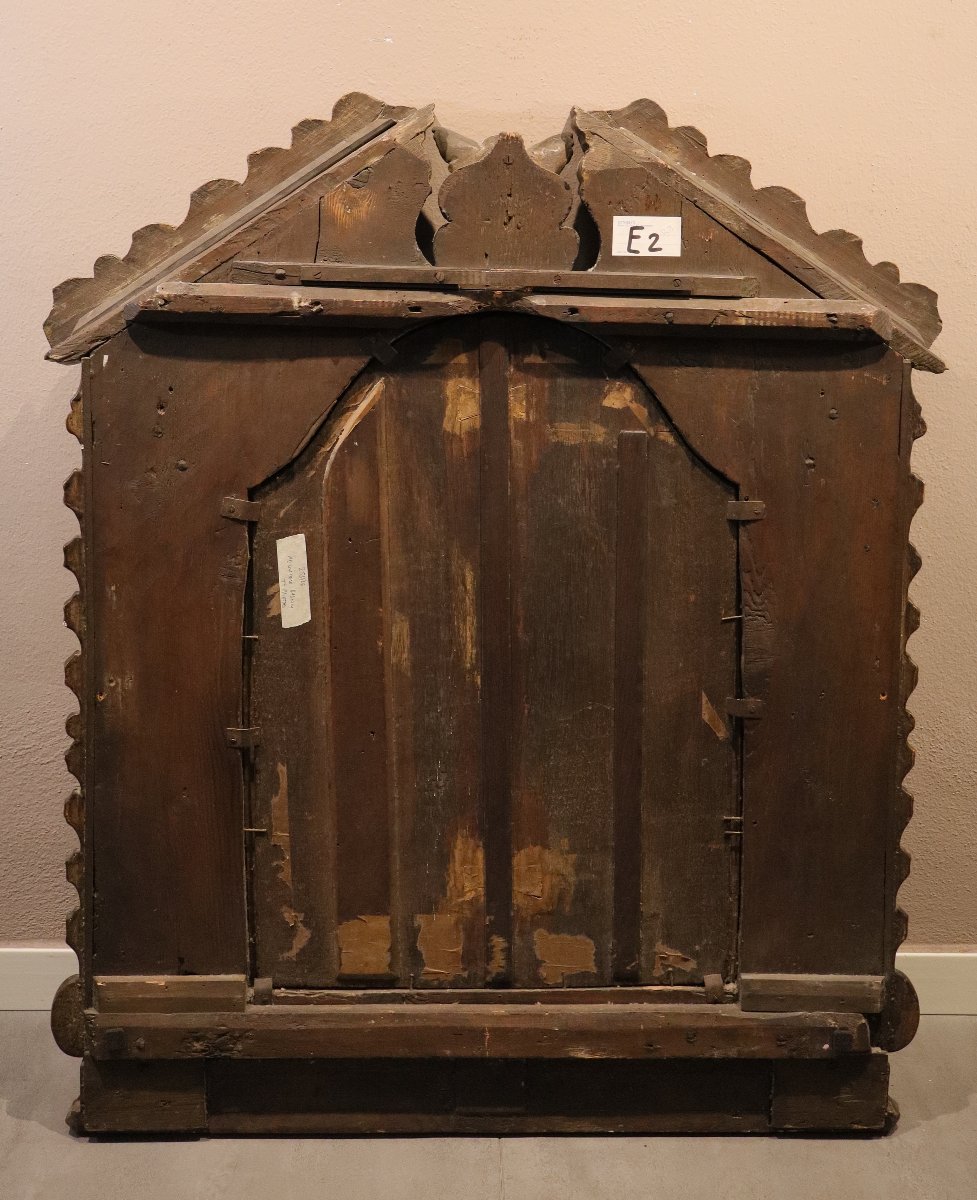
A noteworthy detail is the sumptuous and elaborate carved, gilded, and polychrome wooden aedicule frame in which the painting is set. The frame is embellished with fluted columns on the sides and crowned by a broken pediment decorated with cherub heads. This type of architectural frame accentuates the monumental aspect of the painting and was designed for devotional use both inside private chapels and in private settings.
ADDITIONAL INFORMATION:
The painting comes with a certificate of authenticity and a descriptive iconographic sheet.
We handle and arrange the shipping of purchased works, both within Italy and internationally, through professional and insured carriers.
Please contact us for any information; we will be happy to assist you.
Follow us on:
https://www.instagram.com/galleriacastelbarco/?hl=it
https://www.facebook.com/galleriacastelbarco/
Adoration of the Shepherds
16th–17th century
Oil on panel
74 x 51 cm. - In an architectural “temple-style” frame, 110 x 94 cm.
FULL DETAILS (click HERE)
The work depicted here, which illustrates the Nativity theme with the Adoration of the Shepherds, is a painting of excellent artistic quality that fits seamlessly into the body of work by the circle of the Flemish artist Pieter Pourbus (Gouda 1523 – Bruges 1584).
A master of the Flemish Renaissance, he is renowned for having led the Bruges school of painting in the second half of the 16th century.
His artistic output combines the Flemish technical tradition with the models of Italian Mannerism, distinguished by its extraordinary geometric precision and sharpness of detail.
In particular, the defined anatomical details, the plasticity of the drapery, and the theatrical gestures of the figures evoke the style of Flemish Romanism. This movement saw painters from the Low Countries reinterpret Italian Mannerist and Renaissance models (particularly those of artists such as Giorgio Vasari and Frans Floris), blending them with the meticulous descriptive tradition of Northern Europe.
Returning our attention to the work itself, we are presented with a remarkable depiction of the moment when the shepherds reach the Nativity scene: the Virgin Mary and Saint Joseph are portrayed proudly showing the infant to the group of shepherds who have come to worship him.
An interesting and unusual detail shows Joseph not merely as a silent spectator, but acting as a caring father to keep the newborn warm, drying his swaddling clothes near a blazing fire: a motif much loved by 16th- and 17th-century painters to humanize the sacred scene.
Naturally, his action is imbued with strong symbolic meaning; the warmth against the cold symbolizes the earthly welcome of the Word made flesh in a hostile and cold world.
In the background, one can make out classical architecture in ruins, another symbolic element typical of Northern Renaissance painting that represents the decline of the pagan era and the birth of Christianity.
In the background, a beam of golden light breaks through the sky, from which an angel messenger emerges to bring the shepherds the news of the birth of Jesus the Savior. Here, too, the attention devoted to the landscape below is particularly noteworthy, featuring ancient towers and walls inspired by Bethlehem.
A noteworthy detail is the sumptuous and elaborate carved, gilded, and polychrome wooden aedicule frame in which the painting is set. The frame is embellished with fluted columns on the sides and crowned by a broken pediment decorated with cherub heads. This type of architectural frame accentuates the monumental aspect of the painting and was designed for devotional use both inside private chapels and in private settings.
ADDITIONAL INFORMATION:
The painting comes with a certificate of authenticity and a descriptive iconographic sheet.
We handle and arrange the shipping of purchased works, both within Italy and internationally, through professional and insured carriers.
Please contact us for any information; we will be happy to assist you.
Follow us on:
https://www.instagram.com/galleriacastelbarco/?hl=it
https://www.facebook.com/galleriacastelbarco/
Explore similar pieces and discover your ideal find:
religious paintings