

Korean School, Late 19th–early 20th Century — Taoist Deity With Bagua And Celestial Lion
KOREAN SCHOOL, LATE 19TH–EARLY 20TH CENTURY
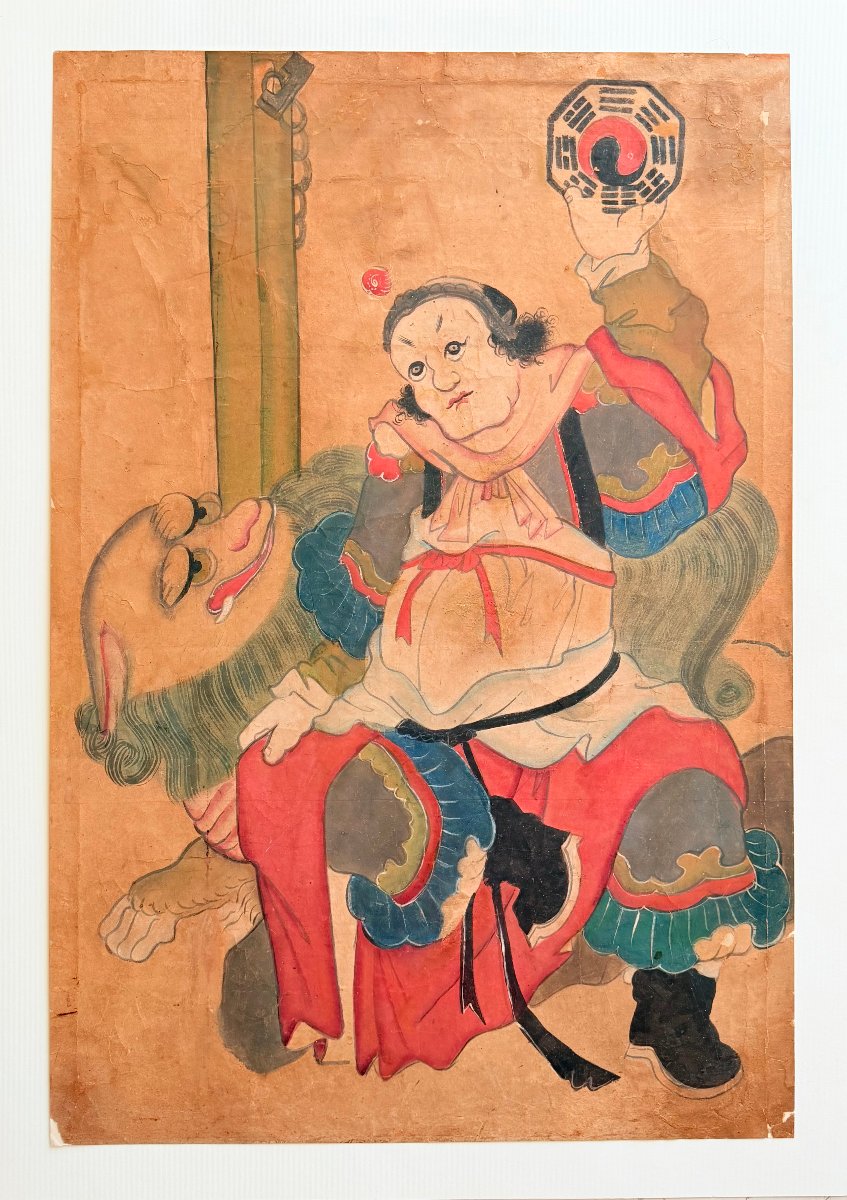
Taoist Protective Deity with the Bagua and a Celestial Guardian Lion (Shi)
Painting on lined paper, gouache and ink.
H_78 cm W_53 cm
Good condition.
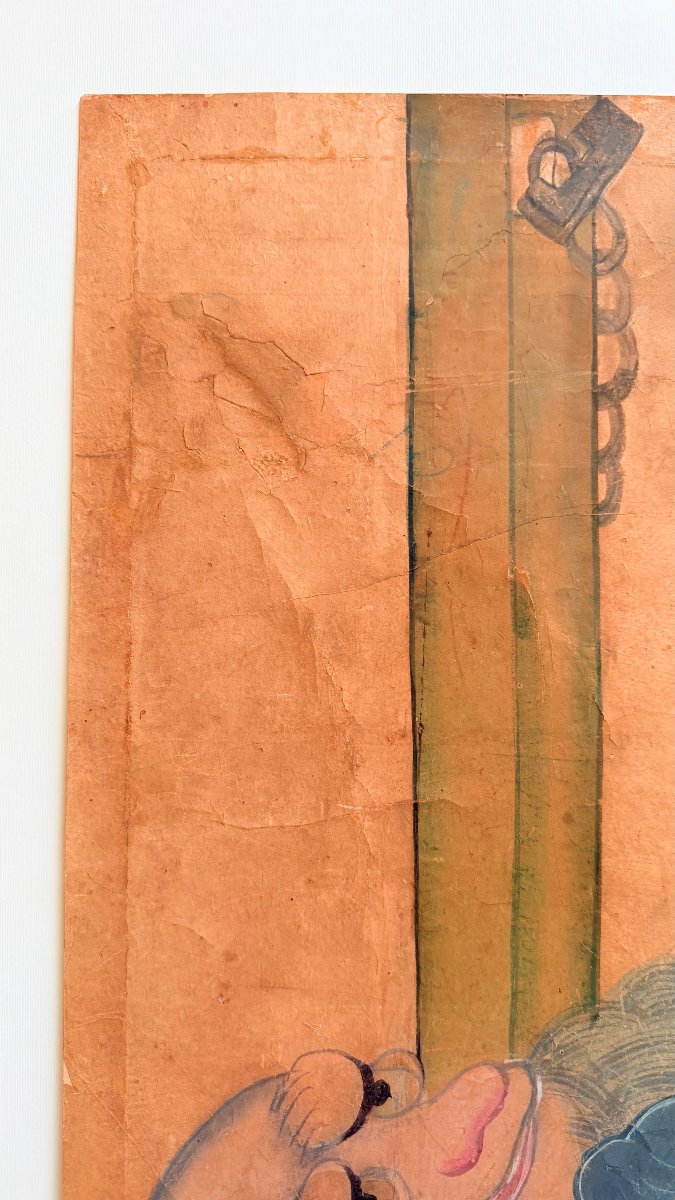
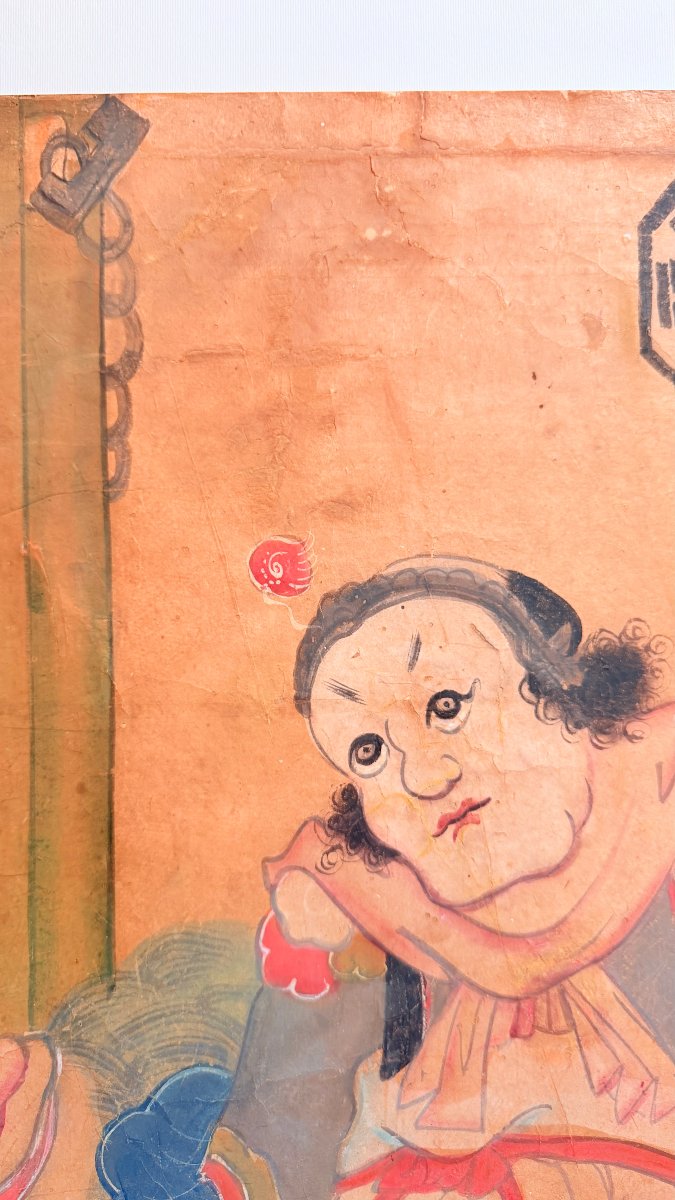
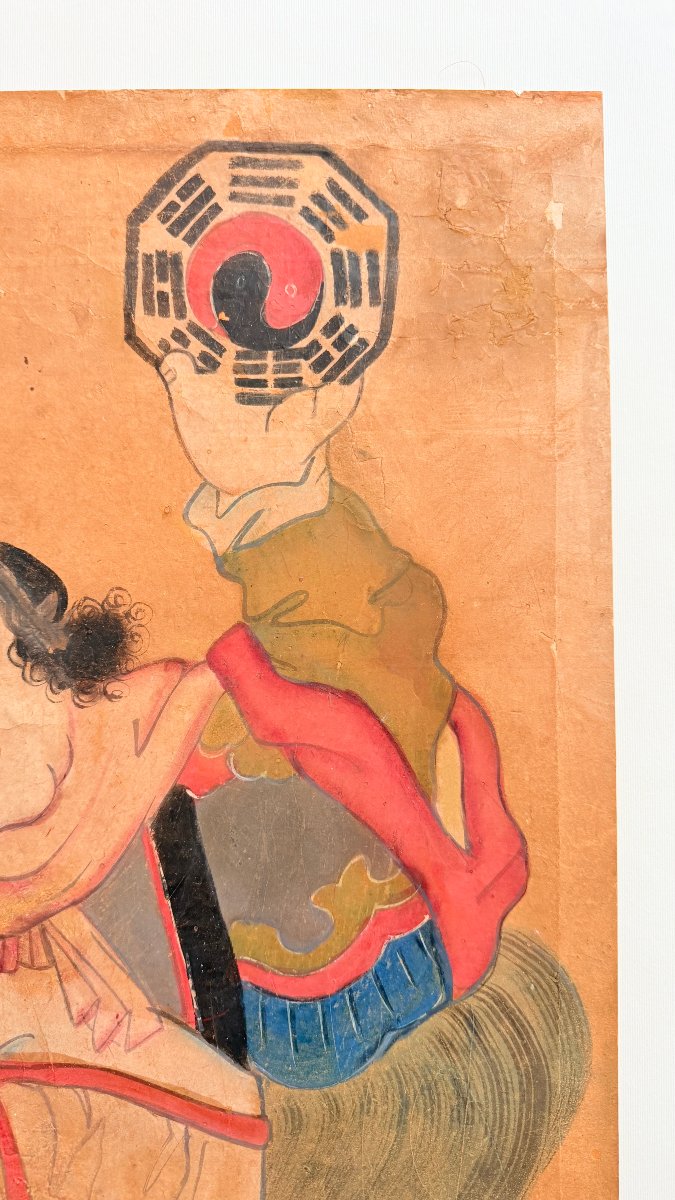
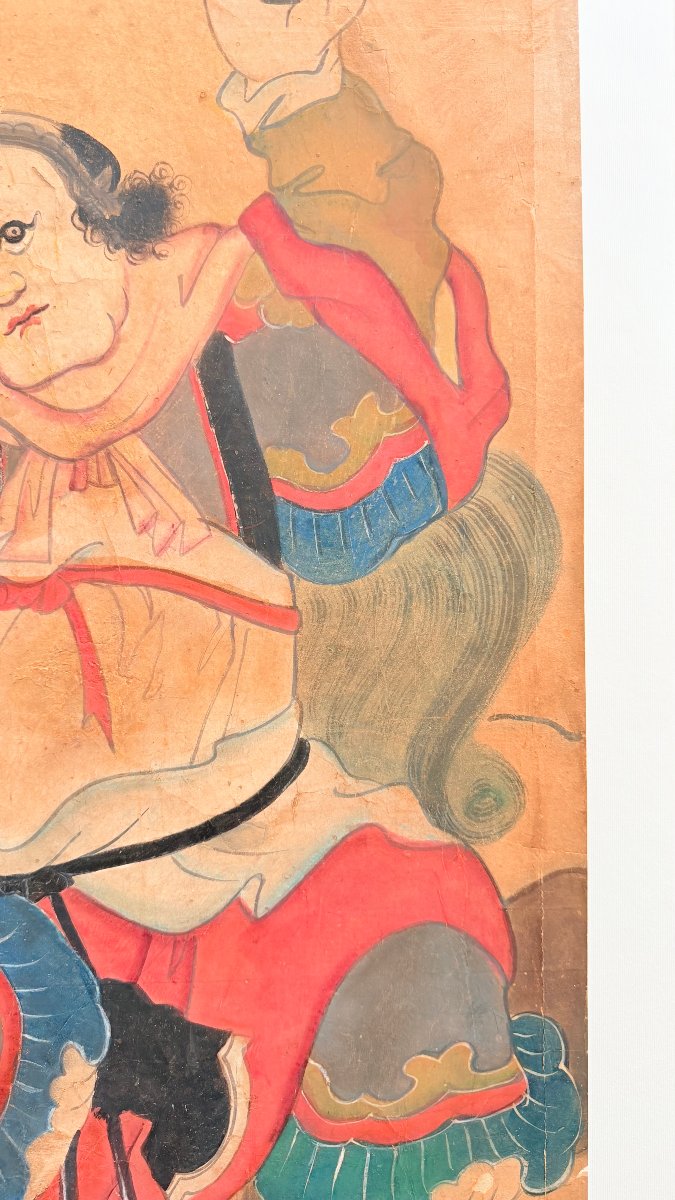
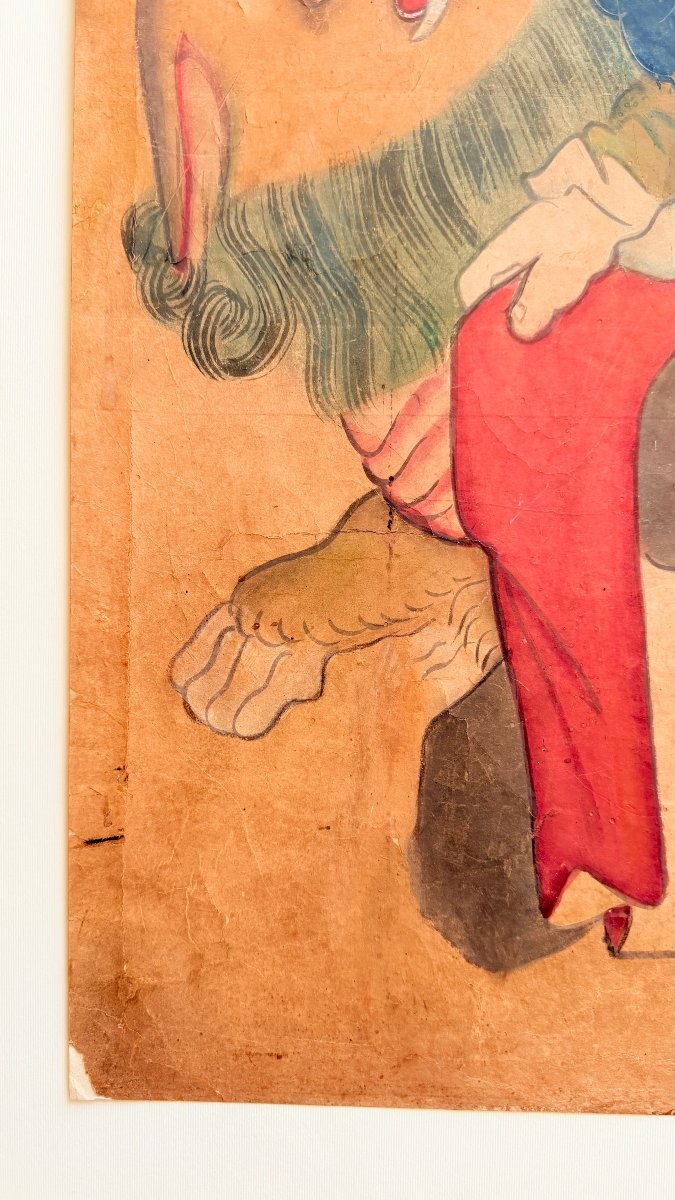
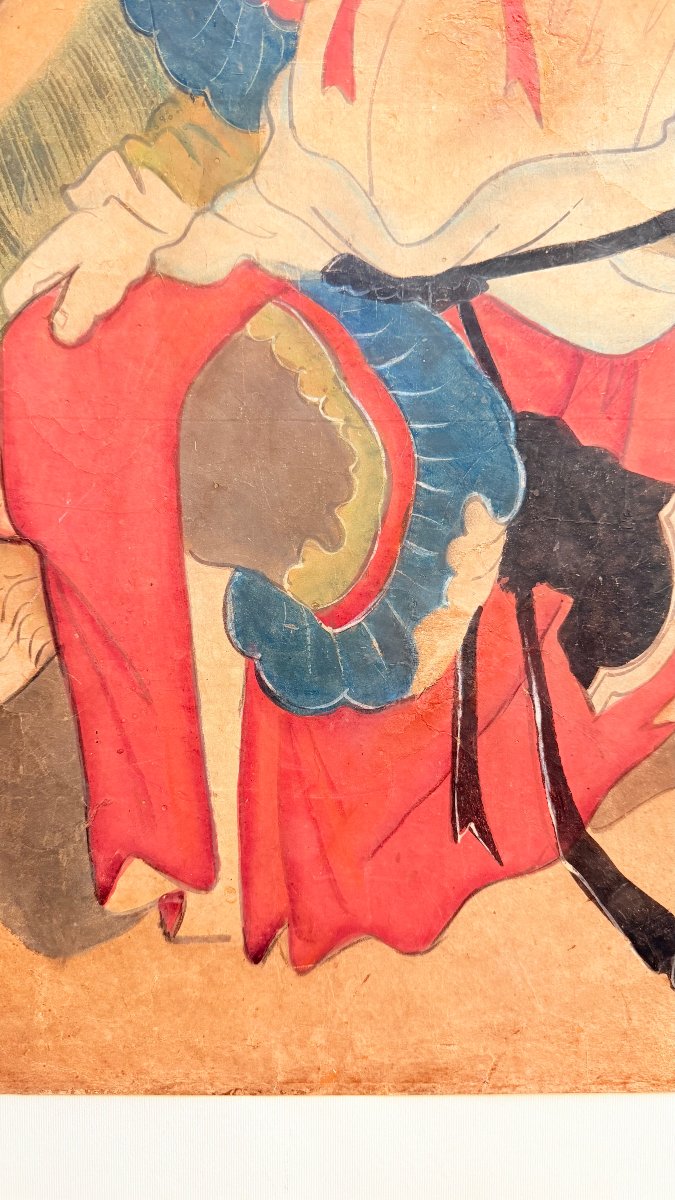
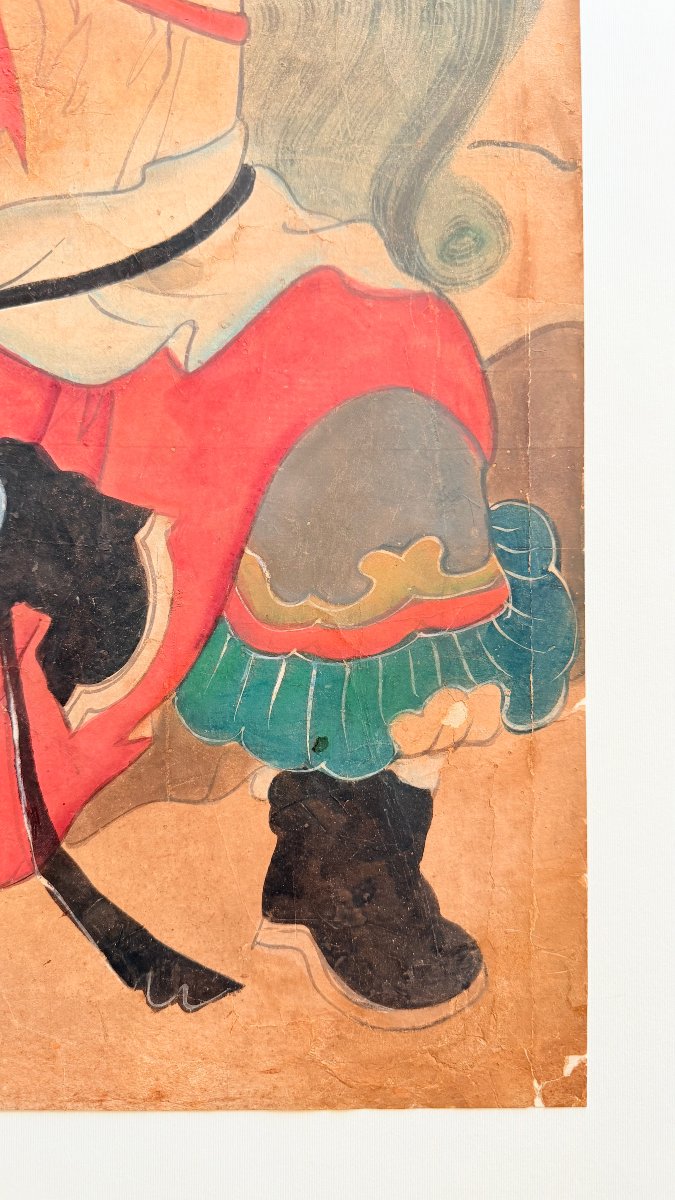
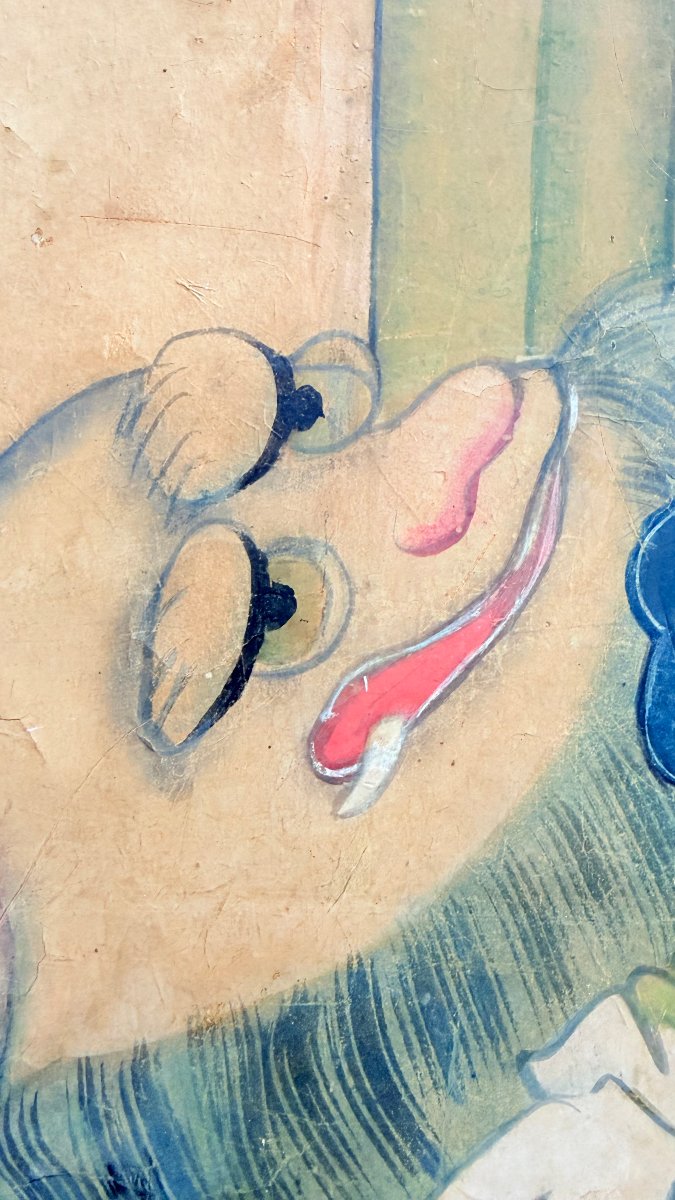
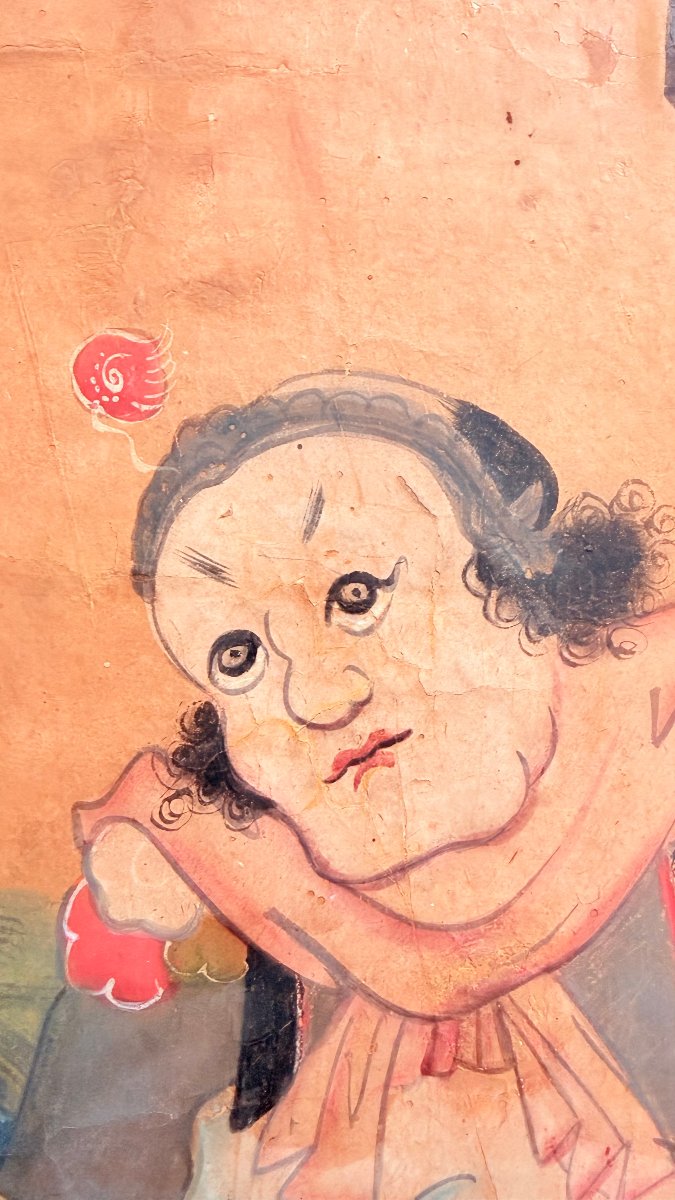
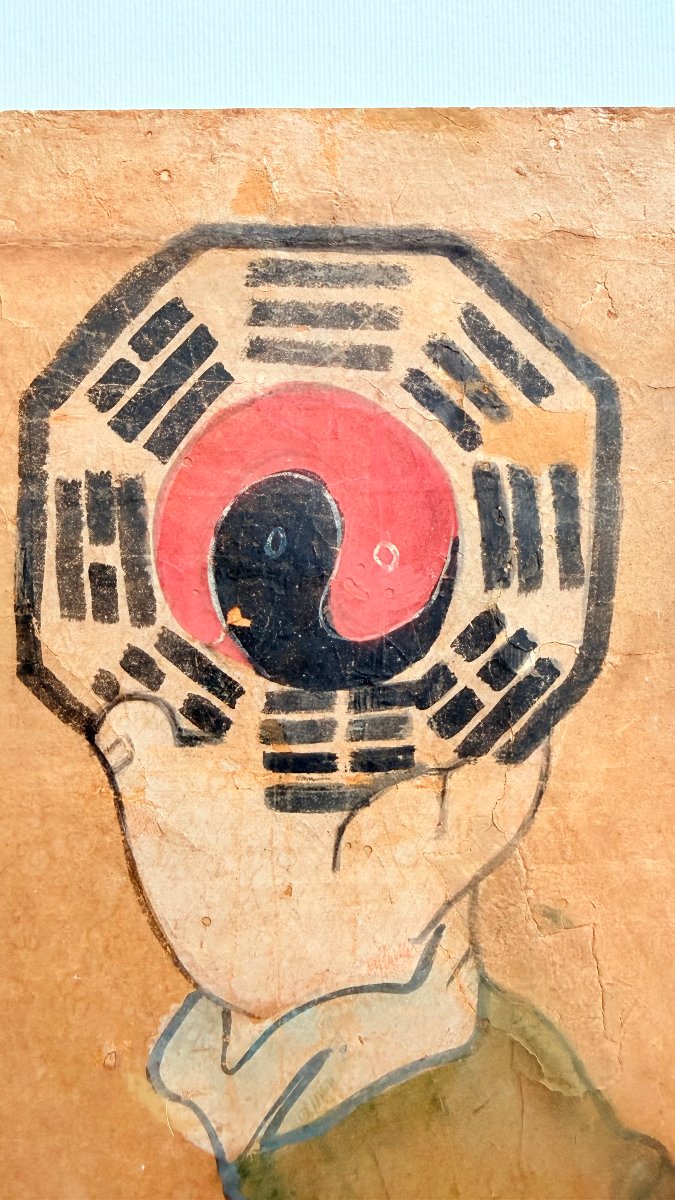
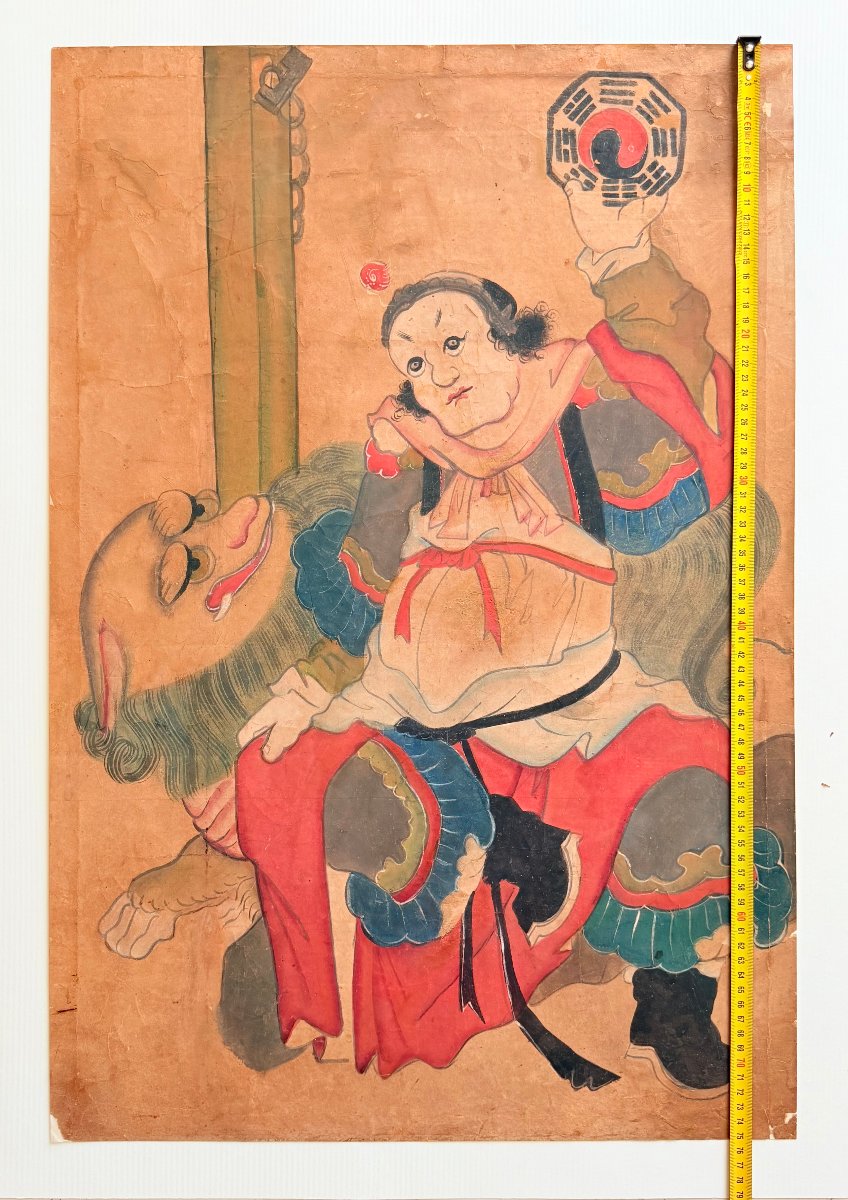
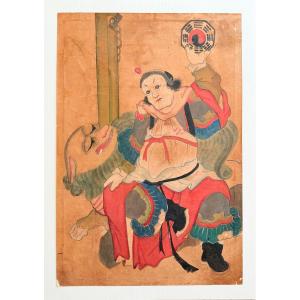
The central figure, with an expressive face marked by a threatening grimace and heavy-lidded eyes, is dressed in brightly coloured ceremonial armour in red, green, blue and yellow. He is shown riding or subduing a mythological guardian lion (shishi) with its mouth slightly open. In his raised left hand, he brandishes the octagonal Bagua diagram (八卦), with the Taijitu symbol of Yin and Yang at its centre. In the background, a wooden pole fitted with a metal loop or chain completes the scene.
This work belongs to the tradition of popular ritual and votive painting, whether understood as minhwa in Korea or as ritual imagery associated with the late Qing dynasty in China. The Bagua is an octagonal diagram composed of eight trigrams and is linked to Taoist thought, the Yijing and feng shui.
The combination of the Bagua—used in feng shui to repel negative energies—and the celestial guardian lion gives the image a strongly apotropaic character, intended to drive away demons and protect the household. The vivid armour, expressive physiognomy and guardian animal reinforce its protective and ritual function.
Period: 19th century
Style: Asian art
Condition: Good condition
Reference (ID): 1807915
Availability: In stock