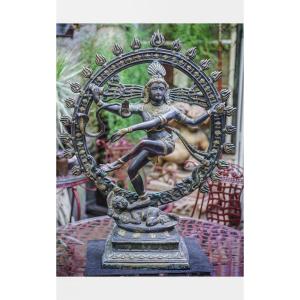


Shiva Nataraja, The Cosmic King Of Dance
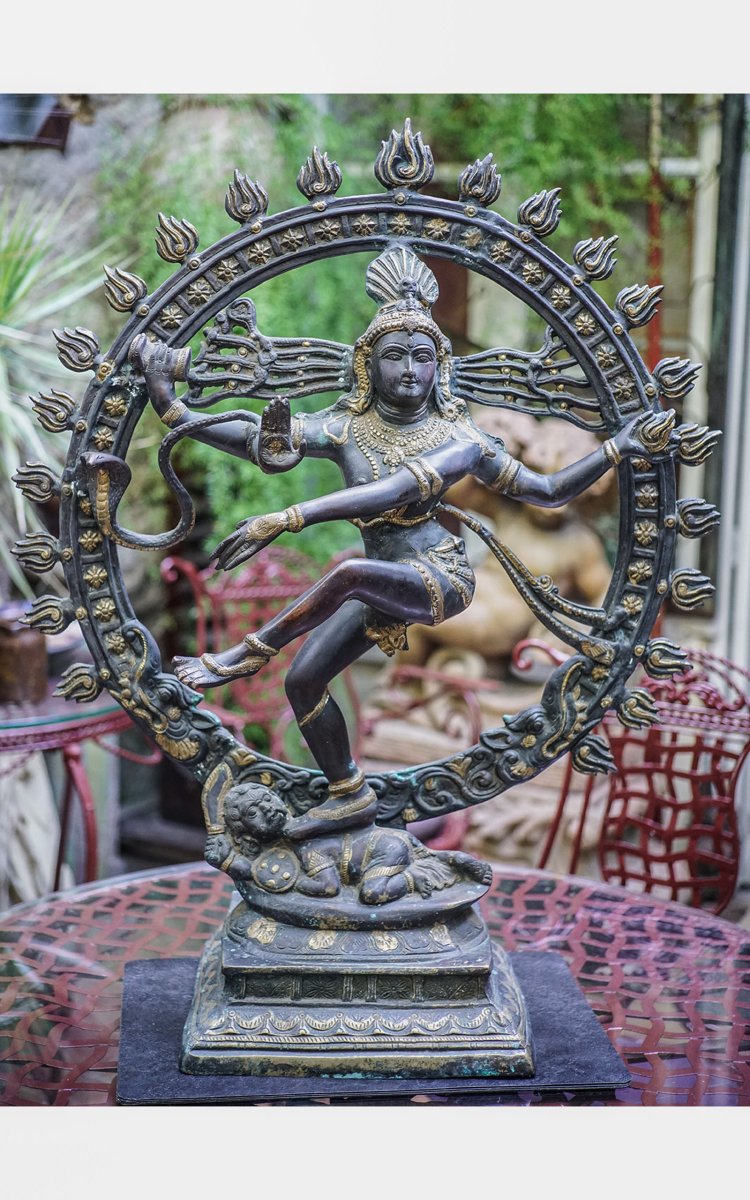
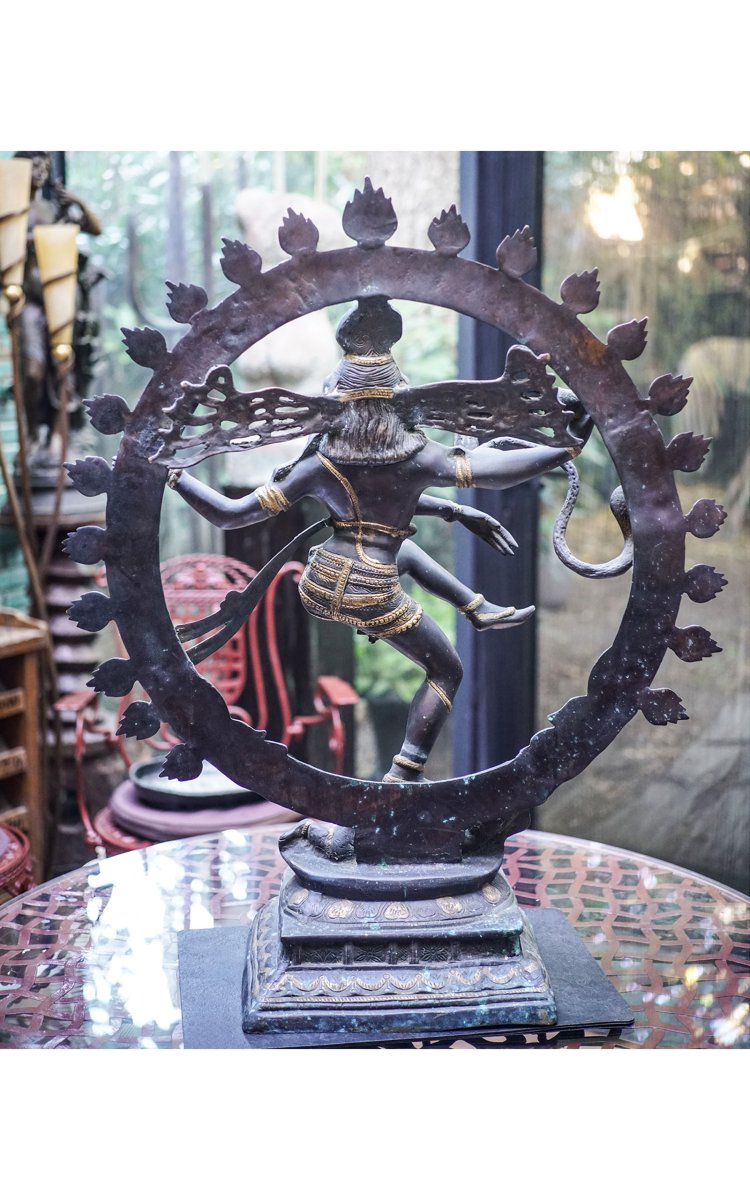
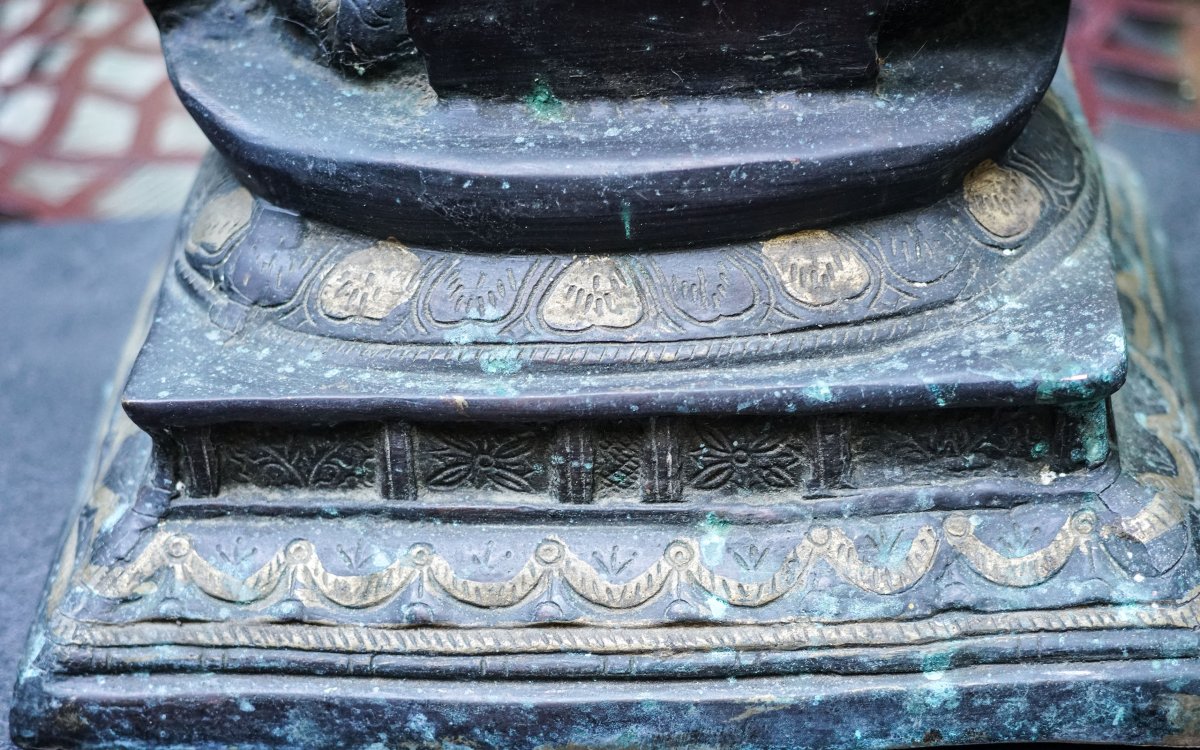
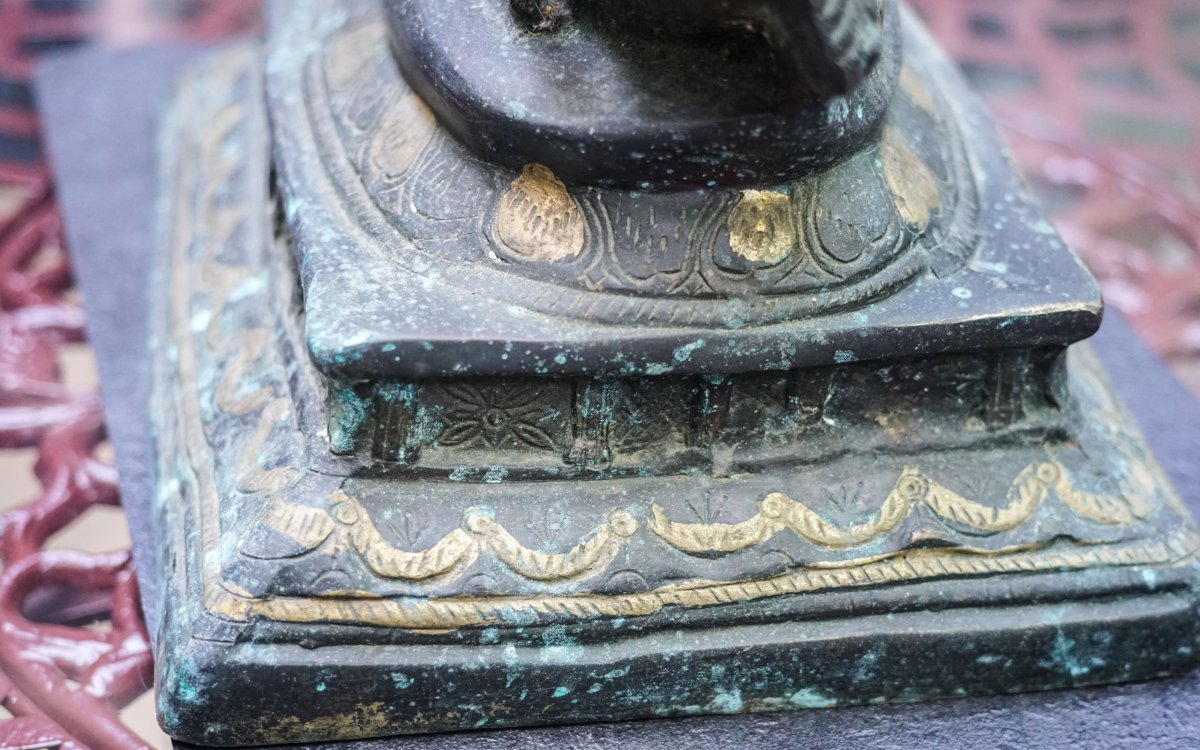
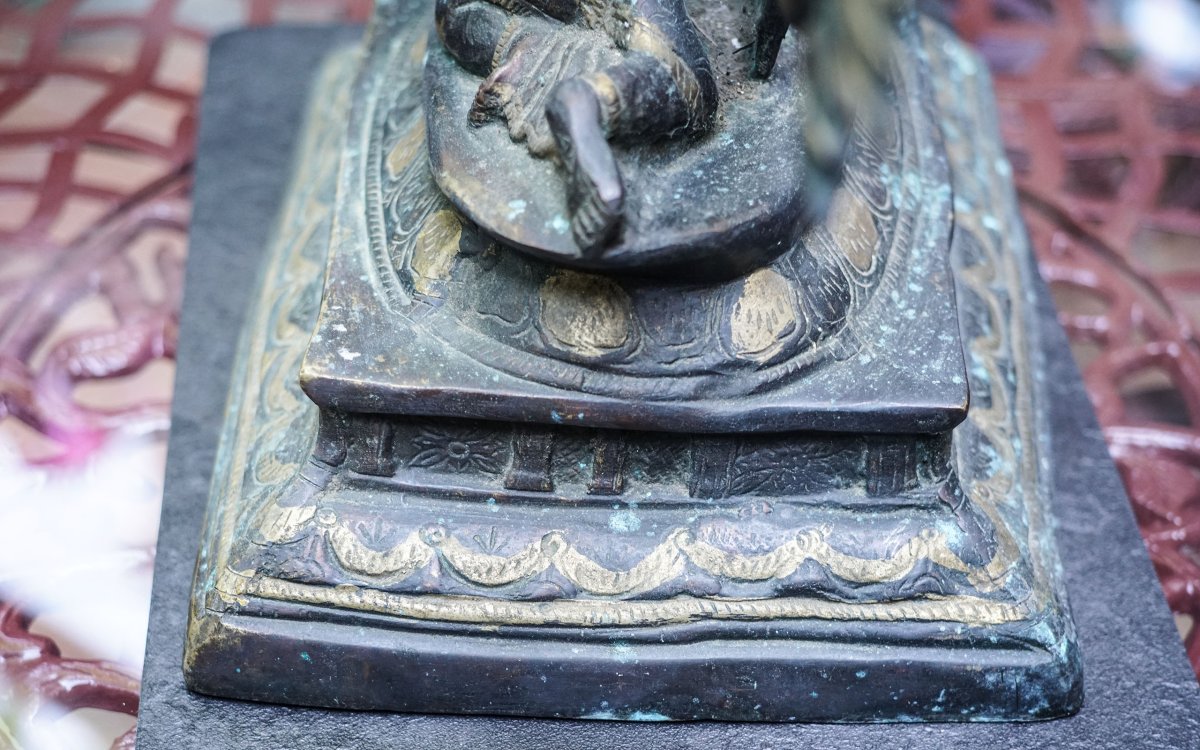
Bronze sculpture depicting Shiva
H. 84.5 cm, Diameter: 66 cm, Depth: 28 cm. Good condition.
Nataraja, King of Dance, Chola Dynasty, 11th century. Tamil Nadu, India.
A pinnacle of Dravidian metallurgy, comparable to the superb bronzes of the Chola Dynasty (9th–13th centuries), particularly the famous depictions of Shiva Nataraja based on the art of Panchaloha (an alloy of five metals) using the lost-wax casting technique.
An epiclete of the Hindu god Shiva performing a cosmic dance called nadānta or ānanda-tāṇḍava, “dance of bliss.” An iconography particularly popular in South India during the late Chola period (10th–12th centuries) depicts Shiva in this aspect, as both creator and destroyer. The dance of Nataraj represents movement and constant change. Nataraja is the principal deity of the Chidambaram shrine and the inspiration for Bharata Natyam dancers.
Depiction and Symbolism:
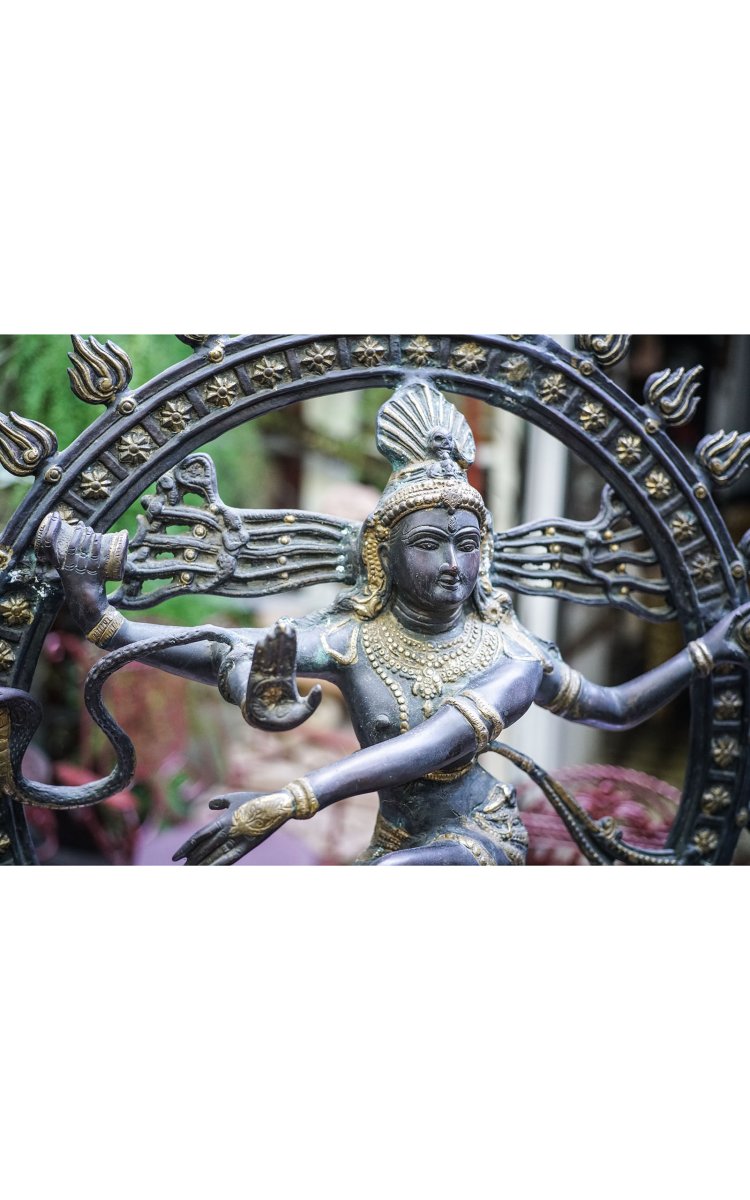
He has four arms. In his upper right hand, he holds a drum (damaru) symbolizing the primordial sound of the creation of the universe; in his left hand, a flame symbolizing the destruction of the world. His second right hand is in the abhaya-mudrā, a gesture of protection. His lower left hand points to his raised leg, symbolizing the hope of liberation (moksha).
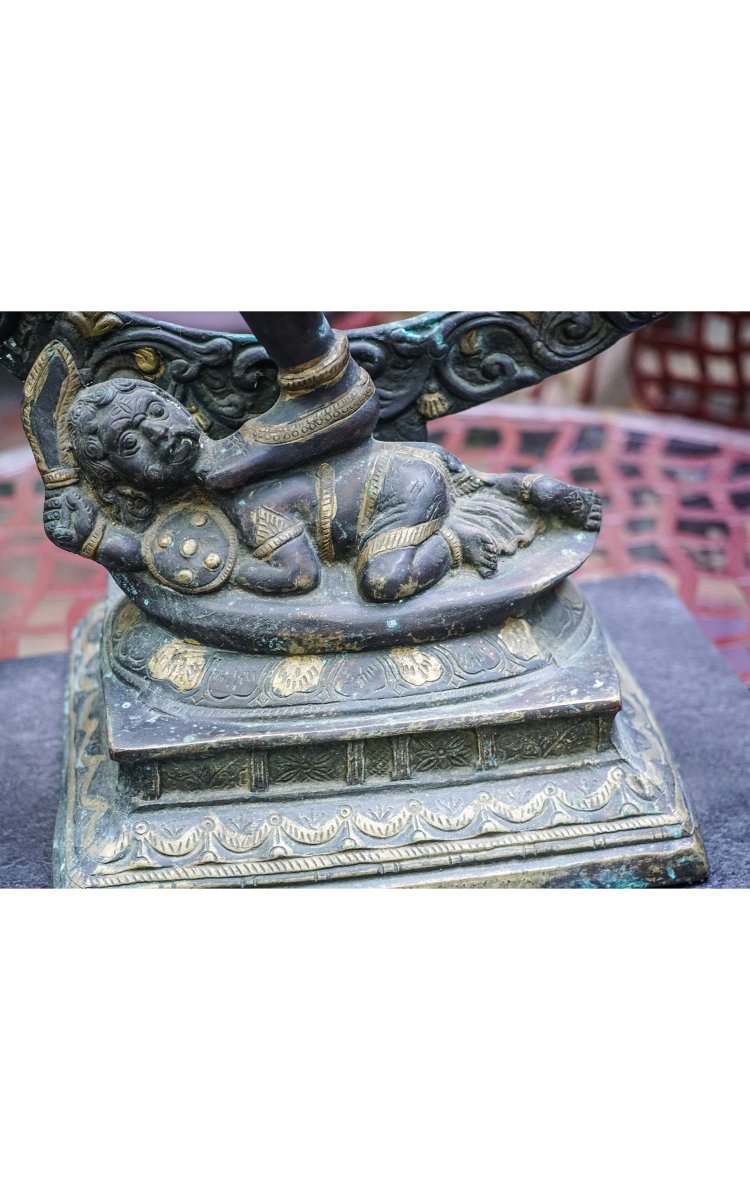
With his second leg, he crushes the dwarf Apasmārapuruṣa, also known as Muyalaka, who represents ignorance.
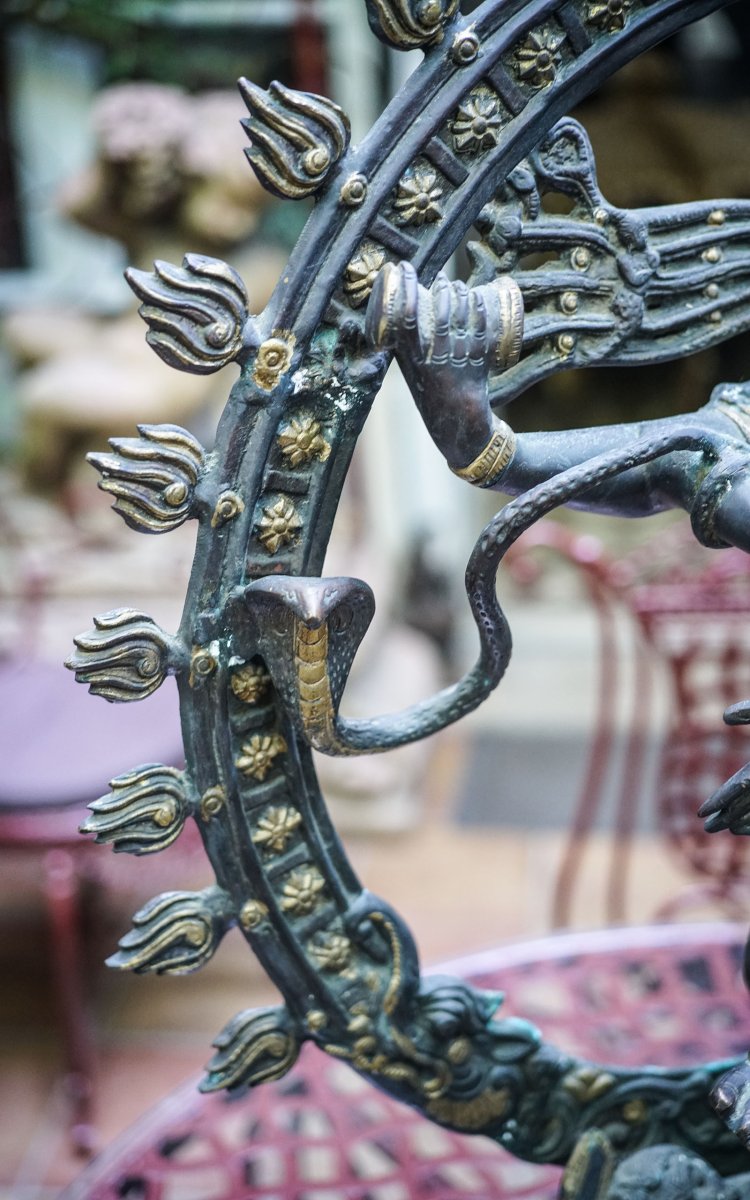
He is surrounded by flames that symbolize the succession of cosmic cycles. Using his topknot adorned with a diadem (jaṭā-mukuṭa), he cushions the descent of the celestial Ganges (mandākinī) to Earth[1], whose waters are represented by wavy braids. On one of them is Gangā, the goddess of the Ganges.
Period: 20th century
Style: Asian art
Condition: Excellent condition
Reference (ID): 1807836
Availability: In stock