THIS OBJECT WAS SOLD
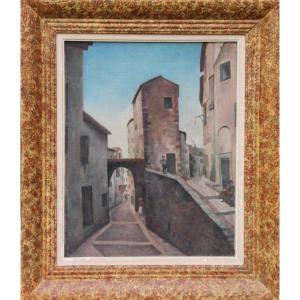
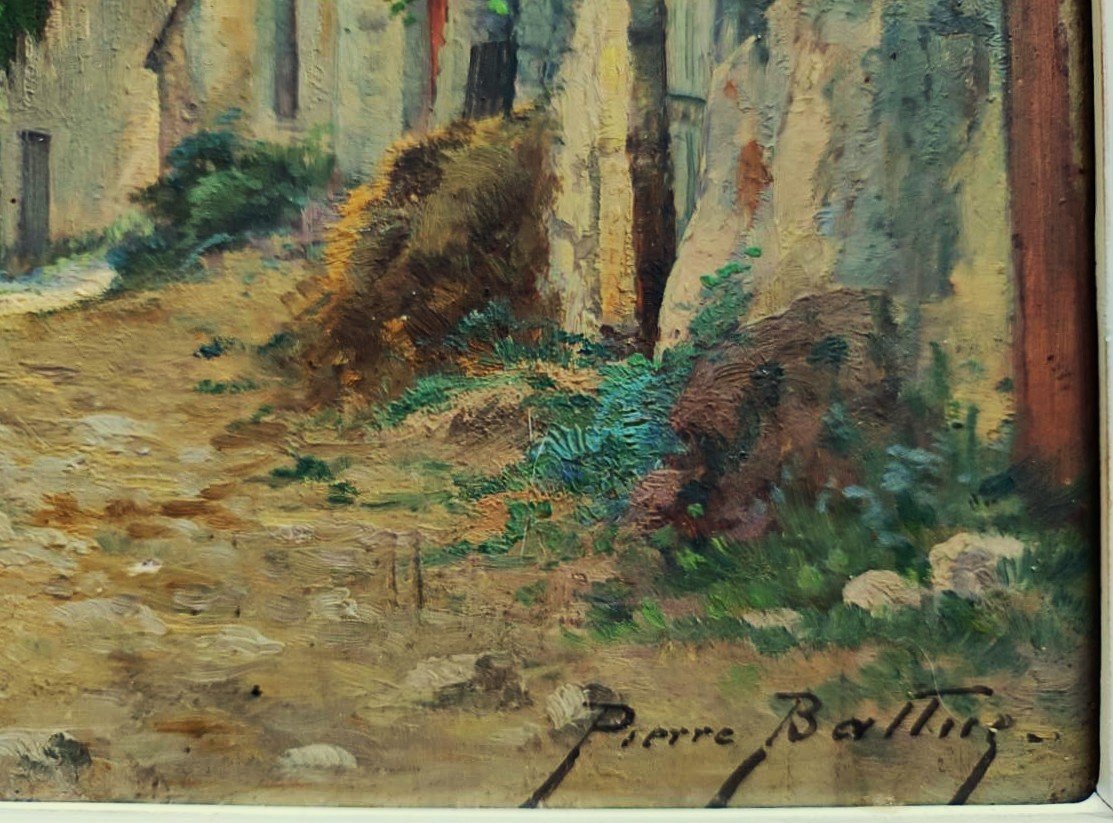
Pierre Ernest Ballue (1855–1928) Village In Creuse, Ca. 1900. School Of Crozant, Alluaud, Donzel
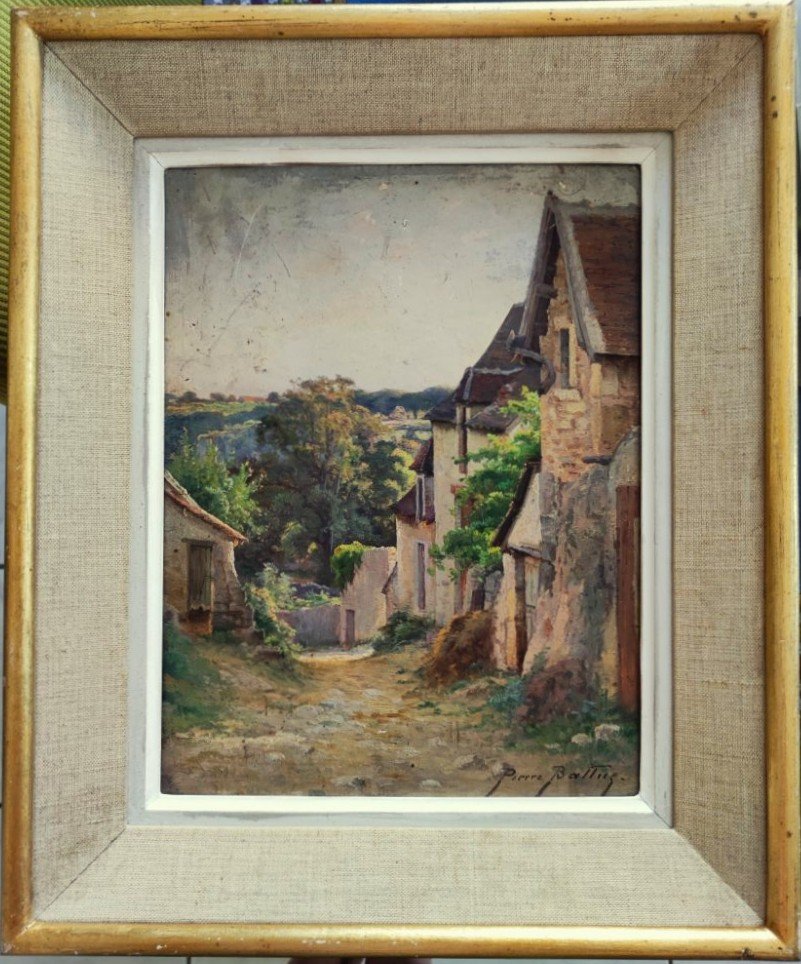
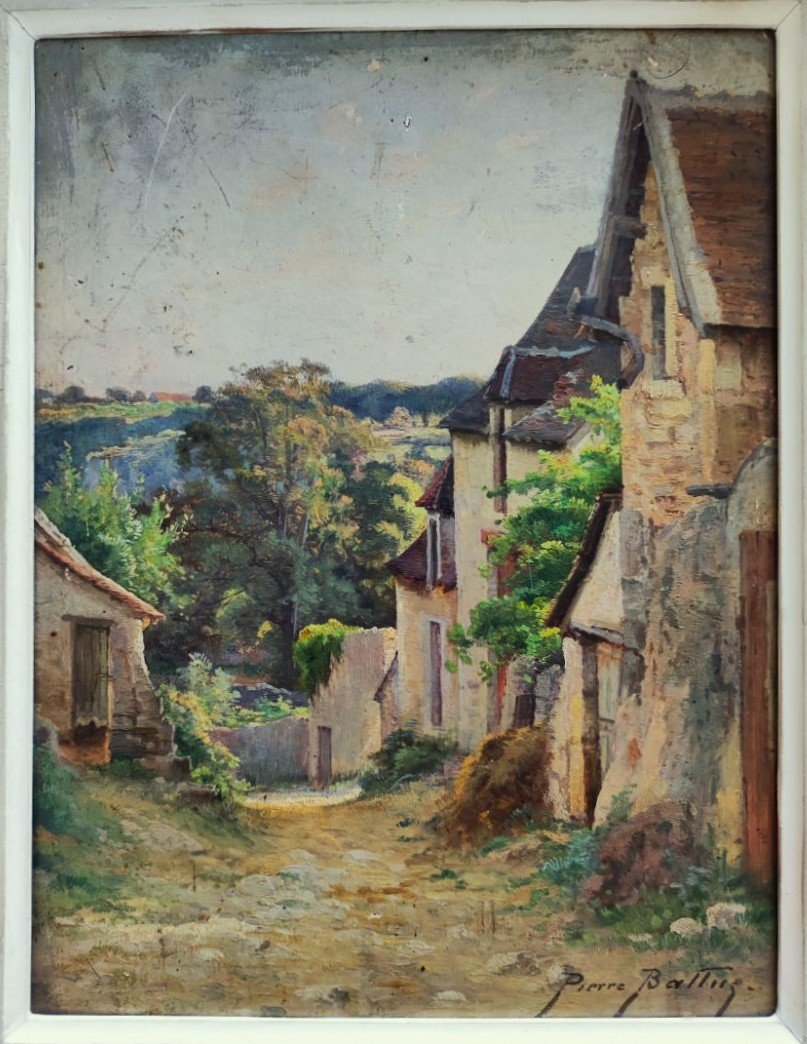
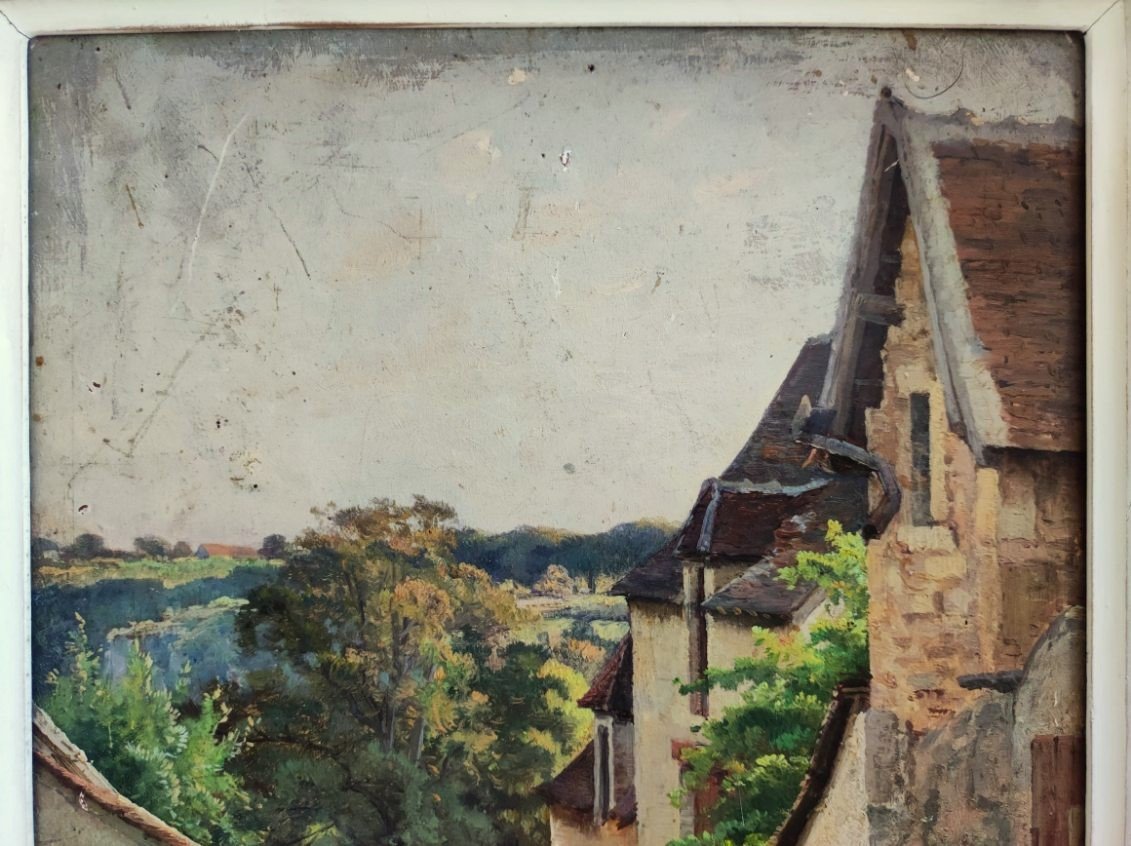
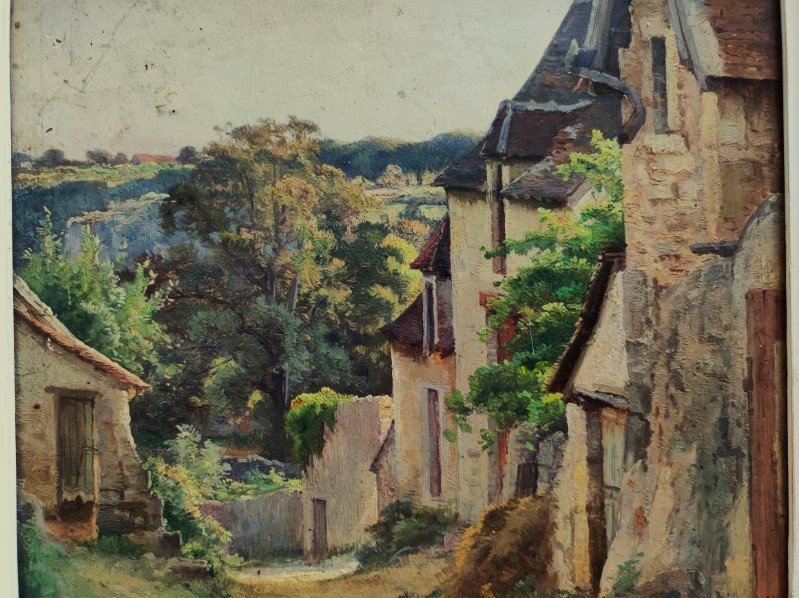
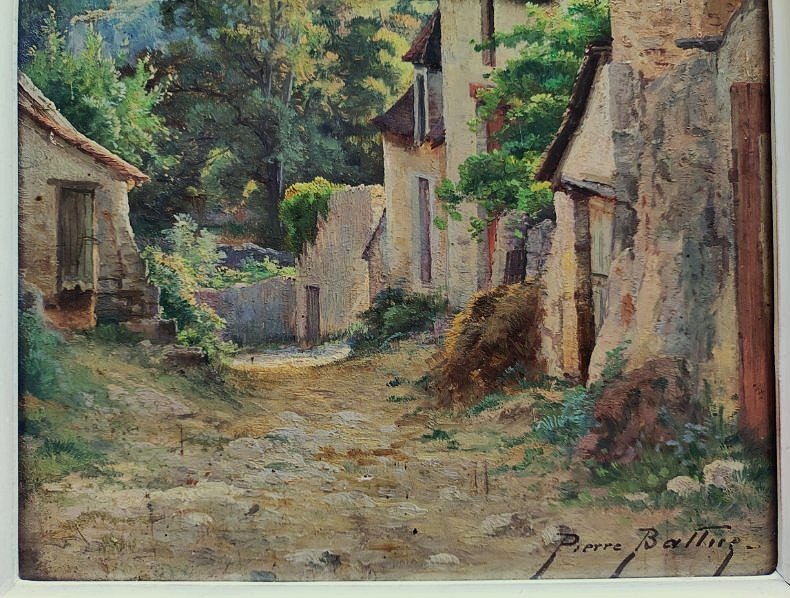
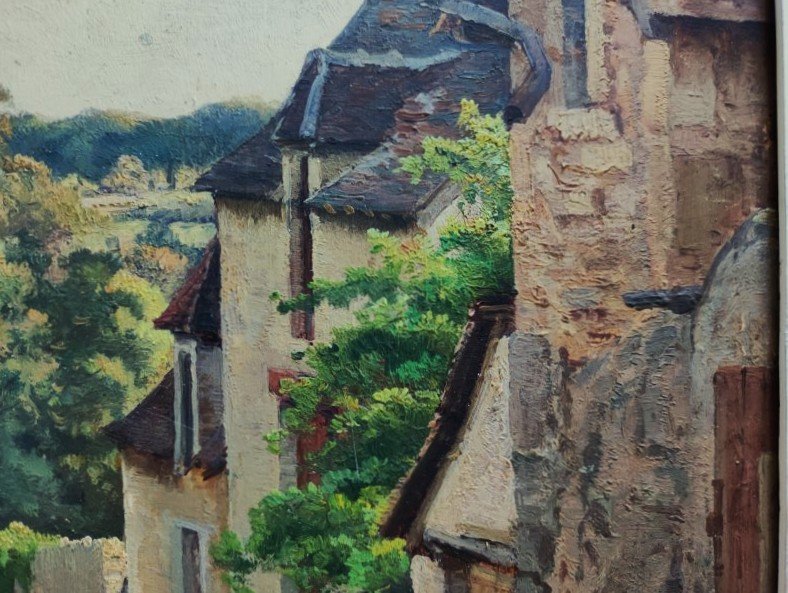
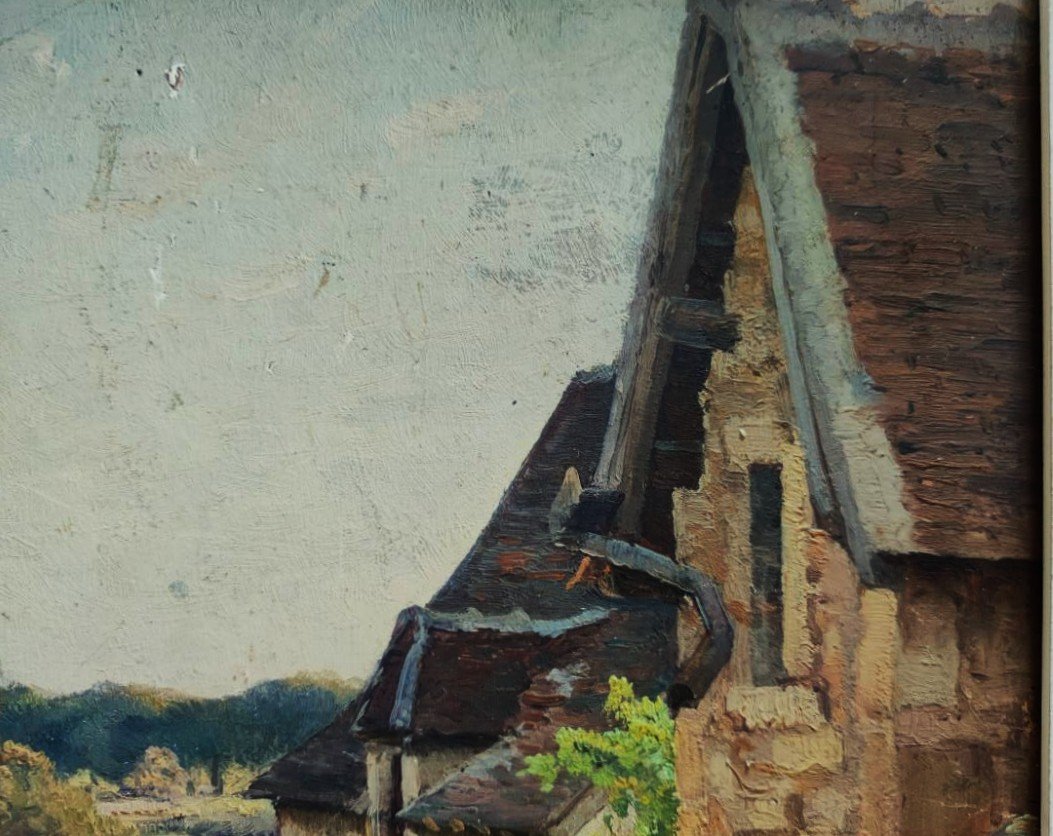
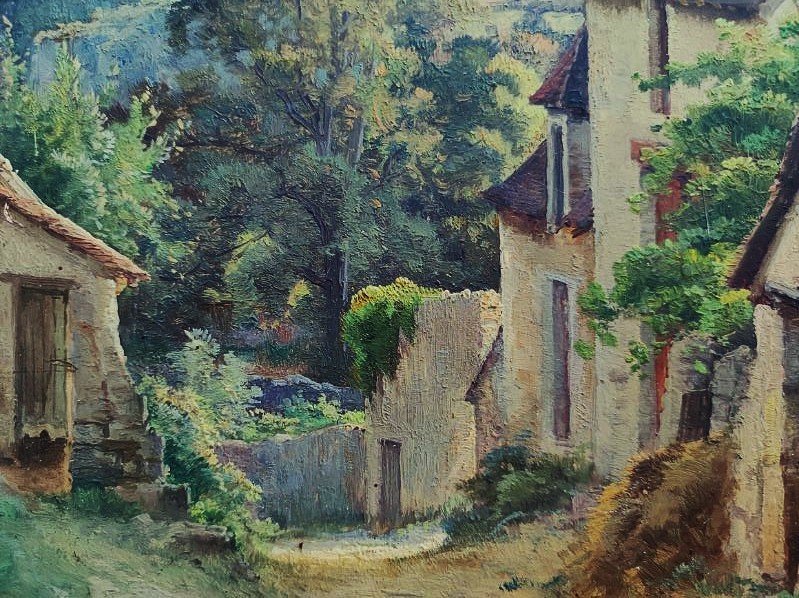
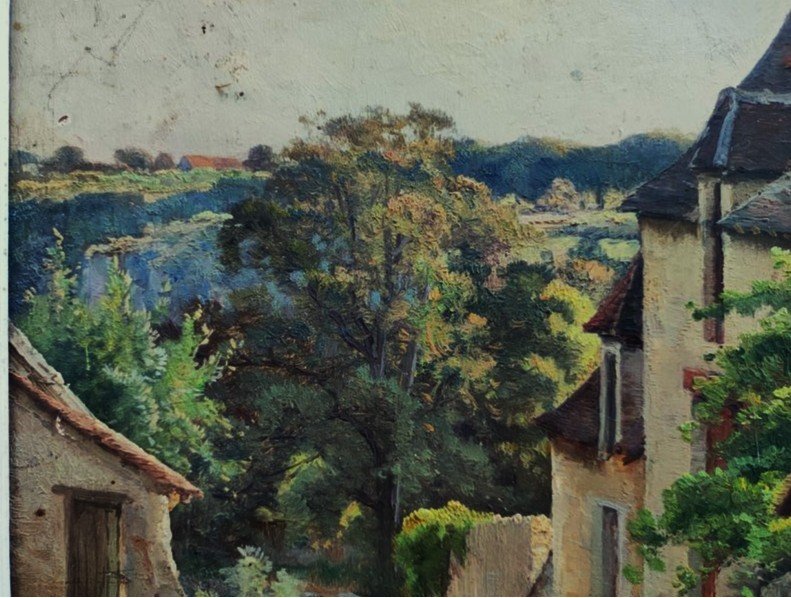
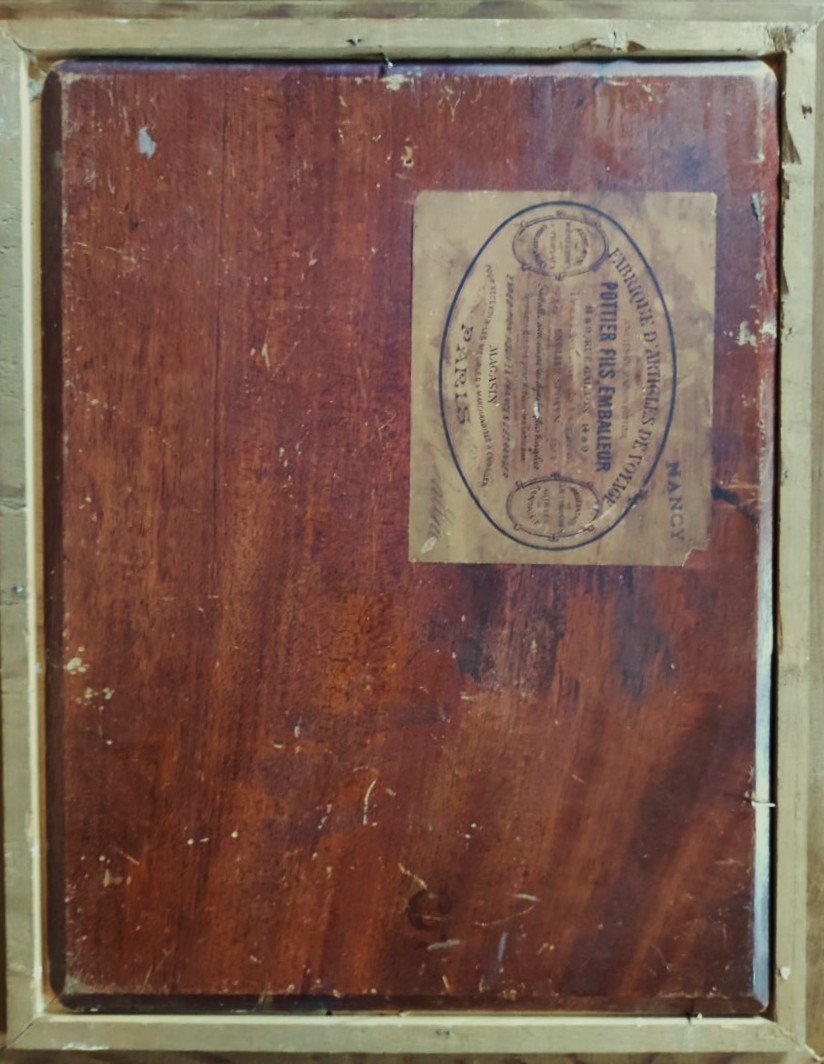
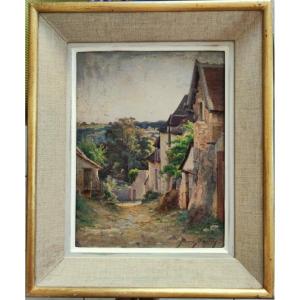


The painting alone (unframed) measures 35x27 cm, and 47x39 cm including the frame.
The painting is in good original condition, with some dirt and scratches, but I have given it to my restorer to clean and inspect; I will post new photos after cleaning.
Delivered in an antique frame from the 1940s/1950s.
Authenticity guaranteed
This is therefore a new painting by Pierre Ballue following *Le Moulin du Pin* from 1884, and the 1891 “Bay of Antibes”—both of which have been sold. The latter depicts a village scene in the Creuse region; I believe it dates from around 1895–1900. It could be Gargilesse, where he often painted, but perhaps also a village in northern Creuse or Vienne....In any case, the houses are typical of the region. Ballue employs his usual brushwork, characterized by great finesse, and his palette is highly subtle, very close to reality; in particular, one can see mist in the valley in the distance and many very refined details.
Pierre Ernest Ballue, born on February 27, 1855, in La Haye-Descartes, where he died on May 18, 1928, was a French painter and draftsman of the Barbizon and Crozant schools
His family’s origins date back to the 16th century; they can be traced to the towns of La Haye and Buxeuil[2]. His parents moved to Paris in 1867.
Pierre Ernest Ballue was a student of Alexandre Defaux (1826–1900), Émile Charles Dameron (1848–1908), Étienne Maxime Vallée (1850–1881), and Corot.
He exhibited regularly at the Salon des Artistes Français, where he received several medals. A landscape painter from Touraine, he also traveled throughout France, painting views of the Midi and the Côte d’Azur, as well as the Crozant and Fresselines regions. He traveled to the United States with Auguste Bartholdi in 1886 for the dedication of Bartholdi’s Statue of Liberty.
He married Thérèse Pomey on April 2, 1895, in Paris; the artists Fernand Cormon and Émile Charles Dameron served as witnesses to the marriage.. Born on January 26, 1867, in Paris and a student of her father, Louis Pomey, Thérèse Pomey was a genre painter and miniaturist. The couple had two daughters: Jeanne, born in 1896, who married veterinarian André Goupille and, along with her family, became a heroine of the Resistance, receiving the title of Righteous Among the Nations; and Marie-Louise, born in 1902.
Between 1882 and 1890, his studio was located at No. 5 Rue Saint-Vincent-de-Paul in Paris. In 1890, he moved to Rue de La Tour-d’Auvergne, then to Boulevard Lannes, where his mother-in-law died on August 21, 1917. At the time, the painter was in Royan with his two daughters.
He died on rue de l’Abattoir in La Haye Descartes on May 18, 1928. A street in that town bears his name in his honor.
Explore similar pieces and discover your ideal find:
Landscapes