

Etienne Kohlmann (1903–1988) Armchair From The 1950s
Artist: Etienne Kohlmann (1903-1988)
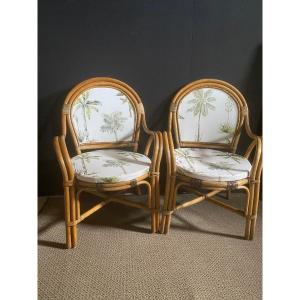
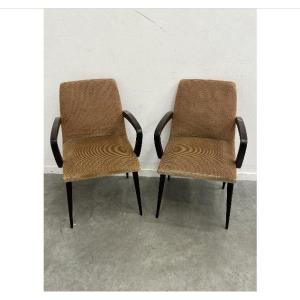
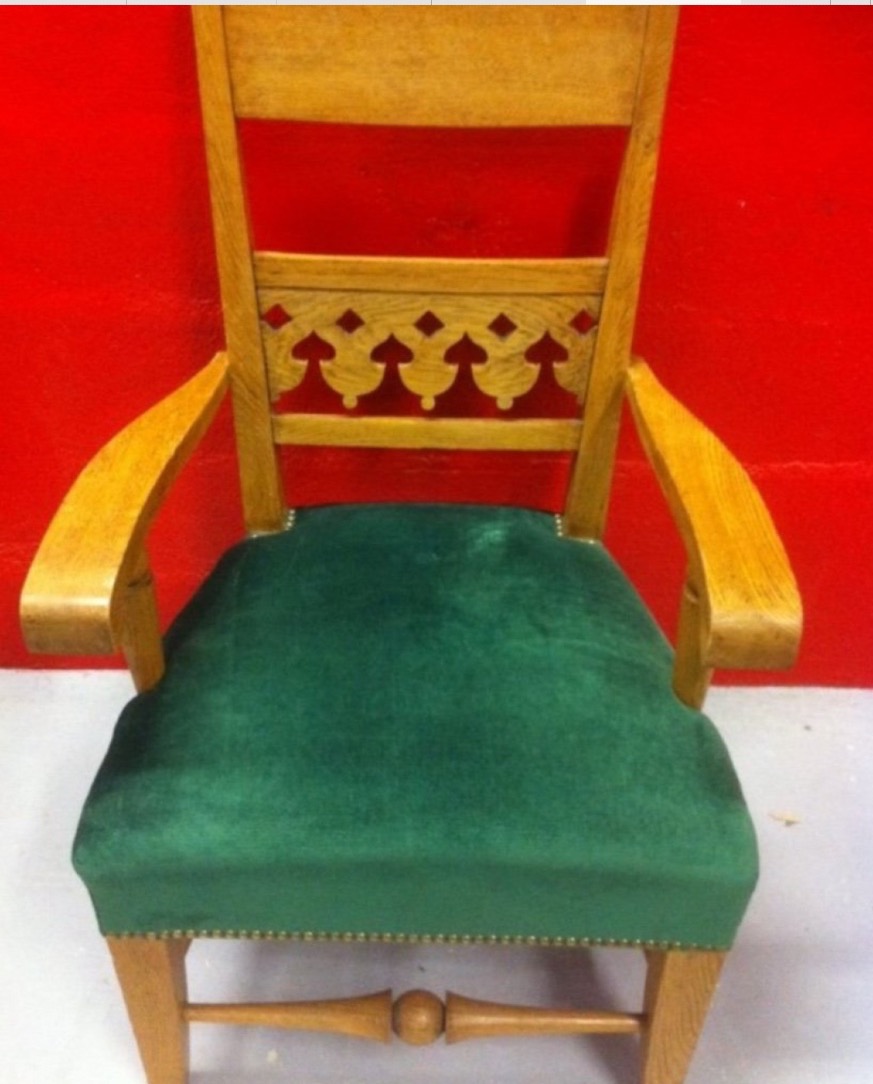
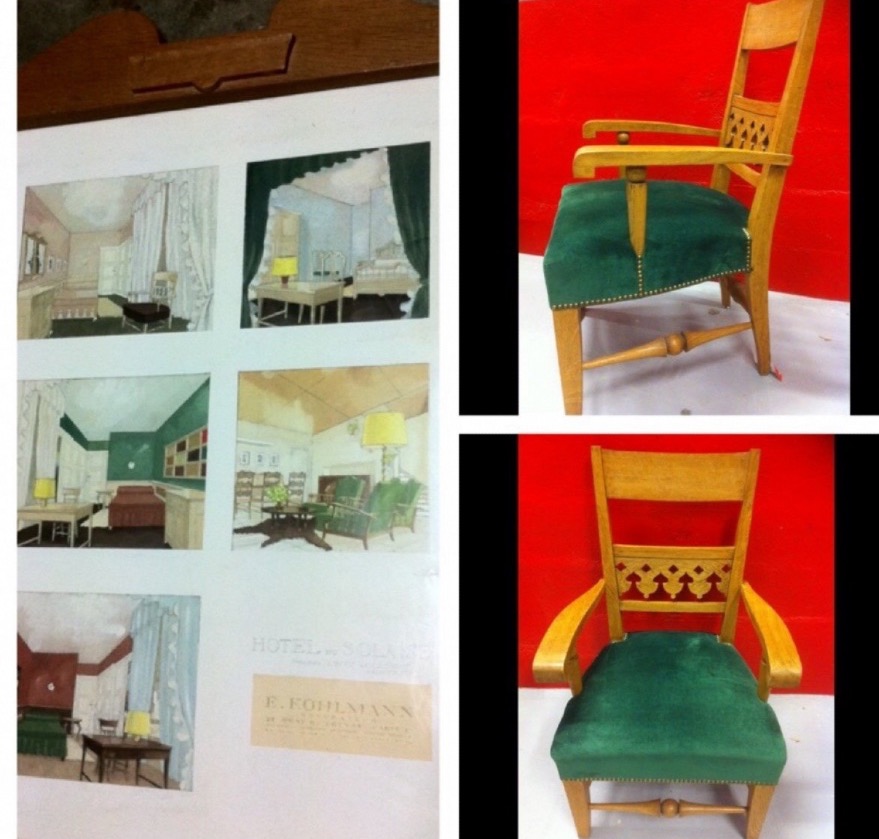
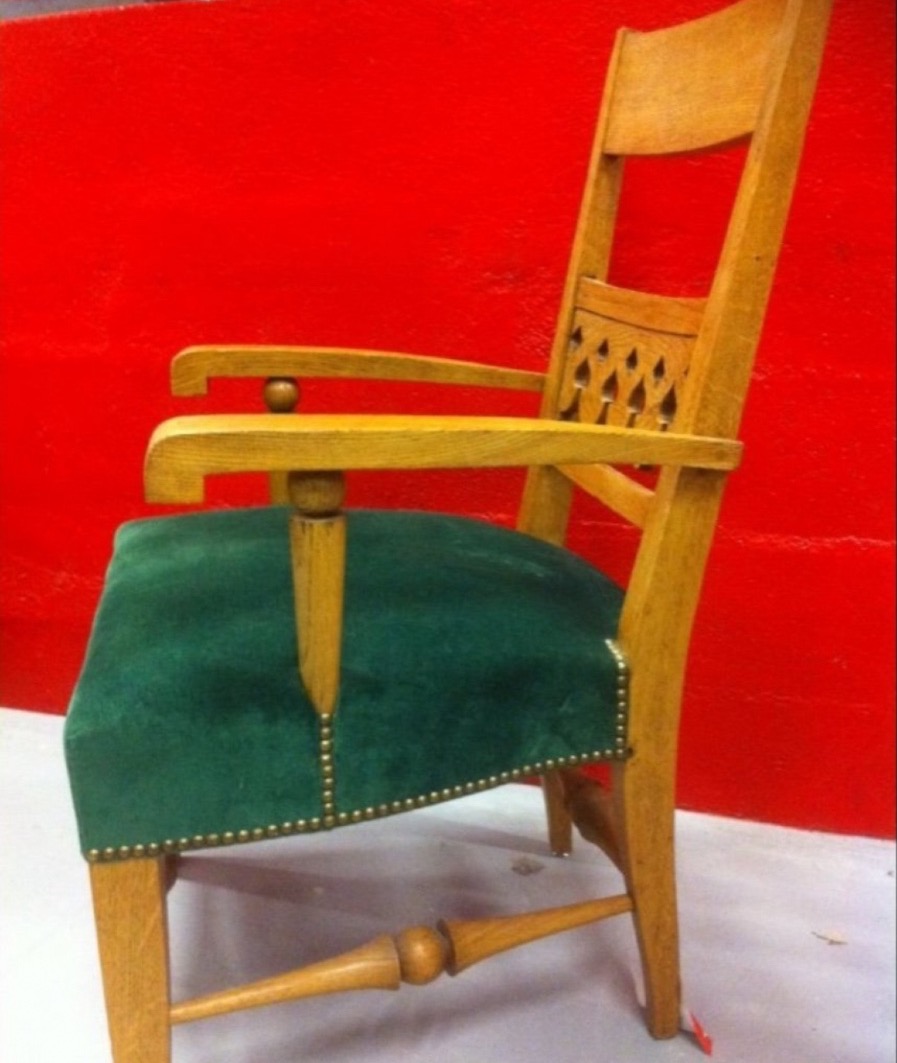
Armchair designed by ETIENNE KOHLMANN (1903–1988)
for the Hôtel de Solaise,
3 armchairs available, slightly different models
more photos available upon request
this armchair appears in the design created for the hotel
this design is mounted in a frame also created by ETIENNE KOHLMANN
backrest height: 95 cm; seat height: 46 cm; seat depth: 48 cm
Etienne Kohlmann was born on October 27, 1903, in Paris and died on September 24, 1988.
He studied at the Rambouillet Higher Professional School. He was a student at the École Boulle from 1918 to 1922.
In 1923, he joined the art studio of the Grands Magasins du Louvre, known as the Studium Louvre, where he served as director from 1927 to 1937. He contributed (woodwork and furniture) to the creation of a ladies’ bedroom with a desk in the Grands Magasins du Louvre pavilion at the 1925 Exposition of Modern Decorative and Industrial Arts in Paris. He participated in the Salons d’Automne and the Salons des Artistes Décorateurs.
After 1925, he began incorporating steel-tube frames into his furniture designs.
Beginning in 1933, he collaborated with architects Emile Aillaud and André Ventre on numerous design competitions:
- Decoration of Notre-Dame and the Panthéon in Paris for state funerals (competition organized by the Ministry of Fine Arts);
- The 1937 International Exposition: designs for the camouflage of the Trocadéro, the Arts and Crafts pavilion, and the Transportation and Tourism pavilion (with Nanquette).
Together with Aillaud and Ventre, he designed the pavilions for “Elégance,” “Parure,” and the “Grands Magasins du Louvre” at the 1937 Exposition.
At the 1939 New York World’s Fair, they designed the exhibits for the apparel, haute couture, and fur industries.
E. Kohlmann designed the interiors and furnishings for Dr. Debat’s laboratories in Garches (1930–1935), the offices of the Société Parisienne d’Électricité (1933), and the Dental Institute (Eastman Foundation, Paris 13th arrondissement).
After the war, he turned definitively to architecture. He designed schools, multipurpose halls, centers for people with disabilities, apartment buildings, and private homes in Seine-et-Marne.
See: DUNCAN, A. “Art Deco Furniture.” Paris: Thames and Hudson, 2000, 191 pp.
Source cited from L’Architecture
for the Hôtel de Solaise,
3 armchairs available, slightly different models
more photos available upon request
this armchair appears in the design created for the hotel
this design is mounted in a frame also created by ETIENNE KOHLMANN
backrest height: 95 cm; seat height: 46 cm; seat depth: 48 cm
Etienne Kohlmann was born on October 27, 1903, in Paris and died on September 24, 1988.
He studied at the Rambouillet Higher Professional School. He was a student at the École Boulle from 1918 to 1922.
In 1923, he joined the art studio of the Grands Magasins du Louvre, known as the Studium Louvre, where he served as director from 1927 to 1937. He contributed (woodwork and furniture) to the creation of a ladies’ bedroom with a desk in the Grands Magasins du Louvre pavilion at the 1925 Exposition of Modern Decorative and Industrial Arts in Paris. He participated in the Salons d’Automne and the Salons des Artistes Décorateurs.
After 1925, he began incorporating steel-tube frames into his furniture designs.
Beginning in 1933, he collaborated with architects Emile Aillaud and André Ventre on numerous design competitions:
- Decoration of Notre-Dame and the Panthéon in Paris for state funerals (competition organized by the Ministry of Fine Arts);
- The 1937 International Exposition: designs for the camouflage of the Trocadéro, the Arts and Crafts pavilion, and the Transportation and Tourism pavilion (with Nanquette).
Together with Aillaud and Ventre, he designed the pavilions for “Elégance,” “Parure,” and the “Grands Magasins du Louvre” at the 1937 Exposition.
At the 1939 New York World’s Fair, they designed the exhibits for the apparel, haute couture, and fur industries.
E. Kohlmann designed the interiors and furnishings for Dr. Debat’s laboratories in Garches (1930–1935), the offices of the Société Parisienne d’Électricité (1933), and the Dental Institute (Eastman Foundation, Paris 13th arrondissement).
After the war, he turned definitively to architecture. He designed schools, multipurpose halls, centers for people with disabilities, apartment buildings, and private homes in Seine-et-Marne.
See: DUNCAN, A. “Art Deco Furniture.” Paris: Thames and Hudson, 2000, 191 pp.
Source cited from L’Architecture
800 €
Period: 20th century
Style: Design 50's and 60's
Condition: Condition of use
Reference (ID): 1802921
Availability: In stock
Print