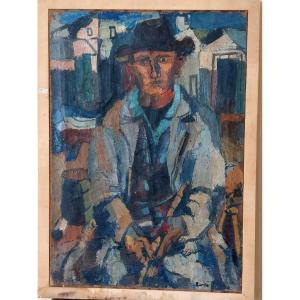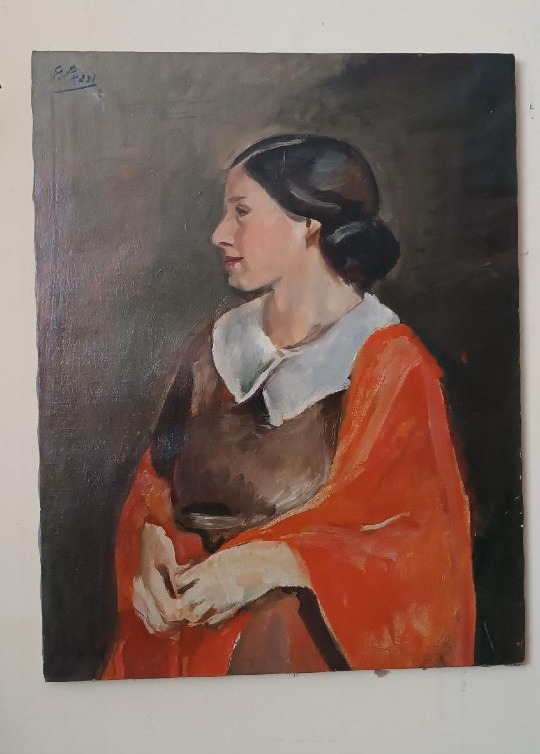
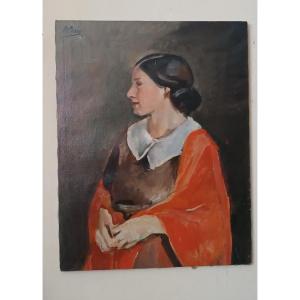


Antique Painting: Female Portrait, Oil On Canvas, By Ennio Pozzi (1893–1972)
Artist: Ennio Pozzi
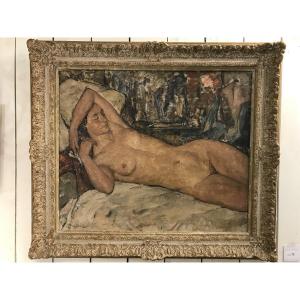
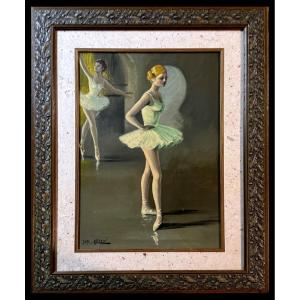
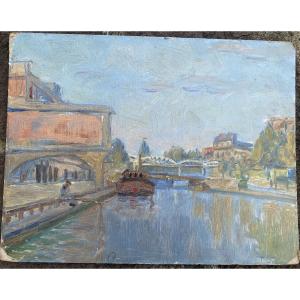
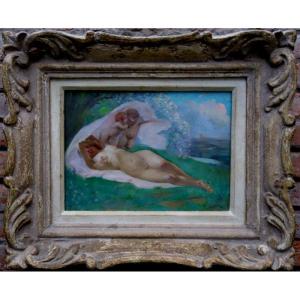
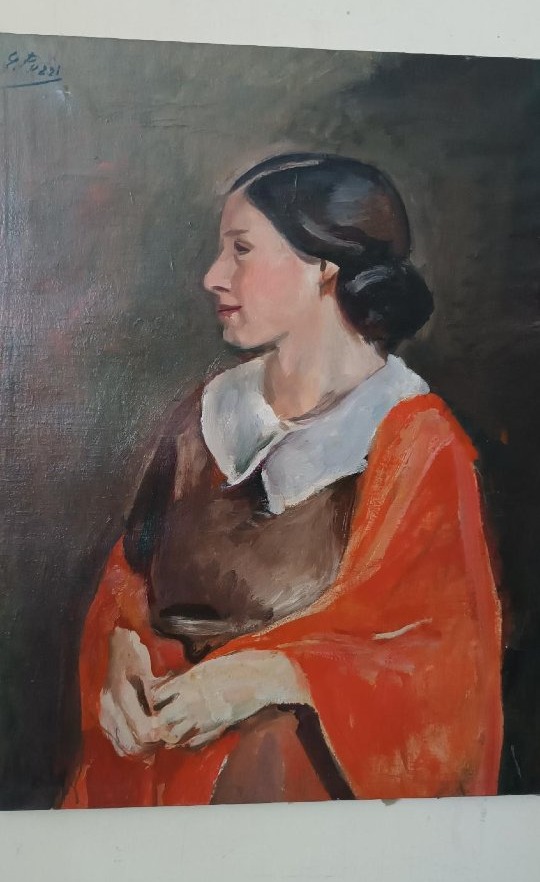
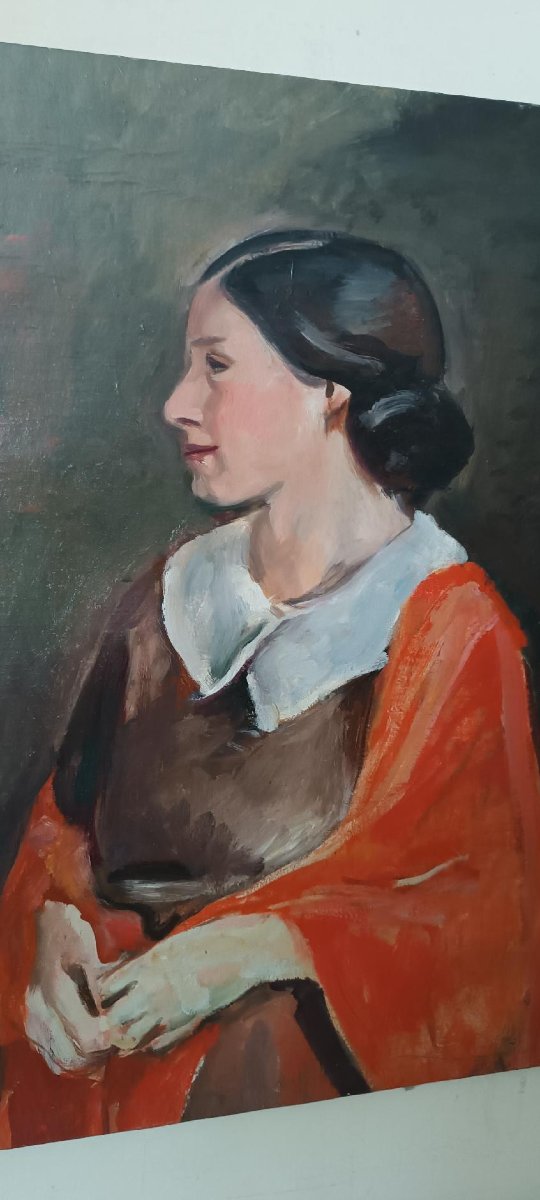
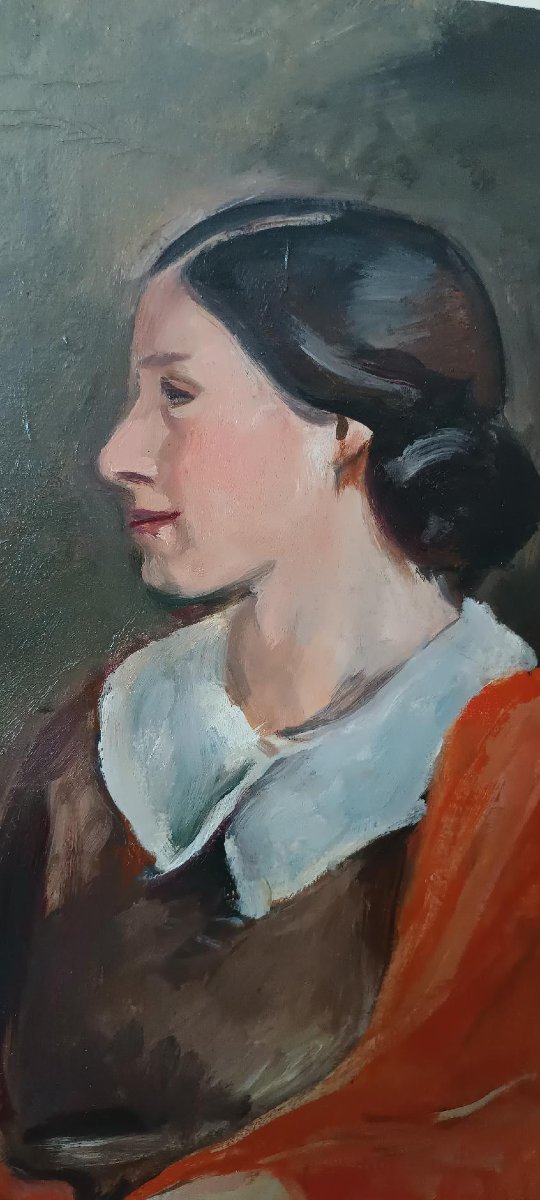
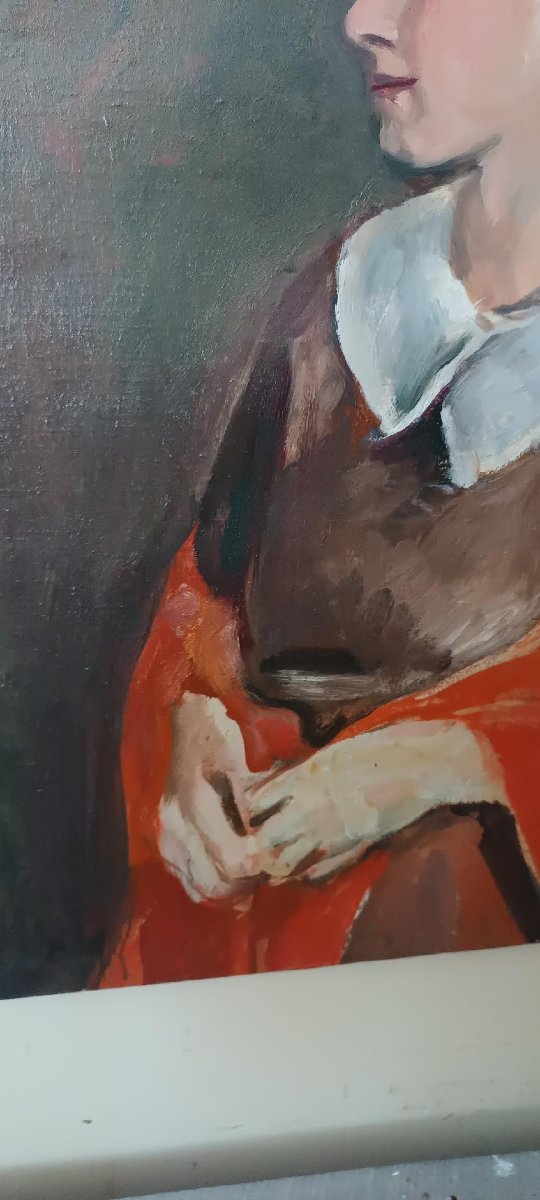
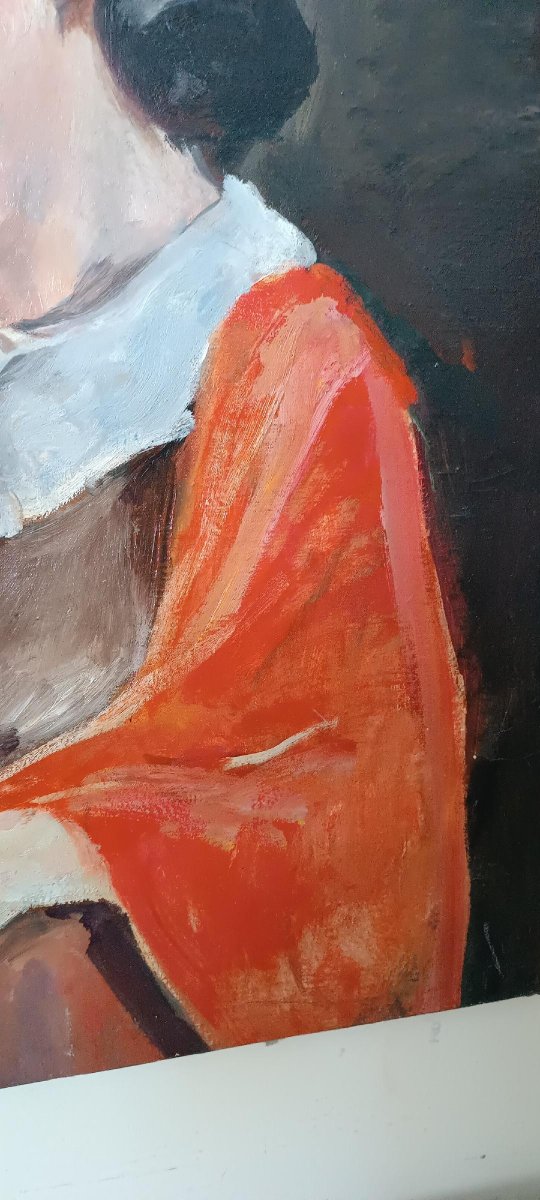
Beautiful oil on canvas painting depicting a female portrait from the 1920s -
Original work by Tuscan painter ENNIO POZZI (SESTO FIORENTINO 1893-1972)
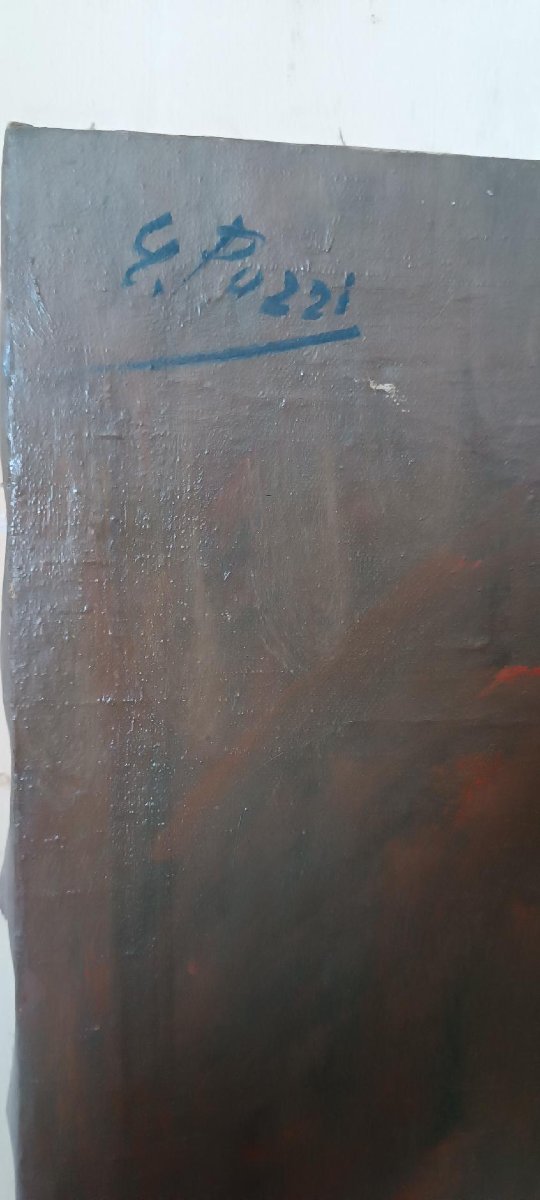
Signed upper left -
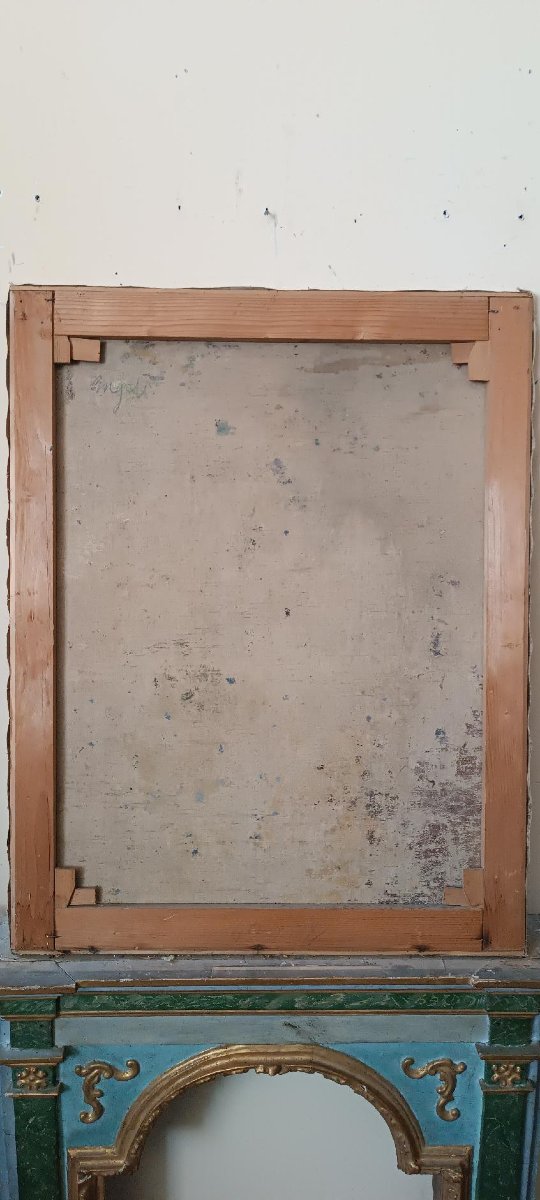
H 83 cm - W 65 cm
Biography
After completing his formal studies, Ennio Pozzi (Sesto Fiorentino, 1893 – 1972) devoted himself to self-taught painting from a young age, capitalizing on the legacy left in Florence by post-Macchiaioli painting. The first results of these studies appeared when the painter was already past his prime.
In fact, he won first prize in the 1924 Ussi Competition, when he was already thirty-one years old. That same year, as a representative of the group called "Toscani d'oggi," he took part in his first Venice Biennale.
Post-Impressionism became his model from the very beginning, naturally filtered through the new demands of the return to order of the 1920s. A vibrant and constructive palette, along with a careful attention to line, strongly connect Ennio Pozzi to the poetics of Cézanne.
In the late 1920s and early 1930s, the influence of Felice Carena (1879-1966) was also crucial, as is evident especially in his treatment of some nudes, which display a soft plasticity yet respectful of the fifteenth-century Italian tradition.
The Turning Point of the 1930s
A direct painting style and a full, soft treatment of atmosphere and space are then combined with an extremely personal language, characterized by a close connection to European Expressionist culture.
The numerous formative trips he took during the 1930s led Ennio Pozzi to further developments. In particular, after his stay in Paris, his style was imbued with elements peculiar to French and German Expressionism.
The intimate approach, the psychological introspection, the suffering of the bodies generated by the adoption of tormented and clear lines, almost like woodcuts, derived from the study of artists such as Oskar Kokoschka (1886-1980), Van Gogh (1853-1890), and Cézanne.
Among the works appearing in the exhibitions of the 1940s, the influence of the Florentine painter and friend Primo Conti (1900-1987) is also fundamental, especially with regard to the volumetric and plastic approach to the figures.
Participation in exhibitions and graphic work
In terms of exhibitions, Ennio Pozzi regularly participated in the Venice Biennale, the Rome Quadrennial, and the Florentine Trade Union exhibitions, always receiving good critical acclaim.
The artist's illustrative work was also very important: much of his graphic work is preserved in the Cabinet of Drawings and Prints of the Uffizi. He exhibited until the 1940s, but continued to paint in his home in Sesto Fiorentino until the 1960s, where he died in 1972 at the age of seventy-nine.
Ennio Pozzi: Between Expressionism and the Return to Order
As mentioned, the Tuscan painter Ennio Pozzi made his debut in 1924 at the Venice Biennale with Il bagno. In 1927, at the Mostra Sindacale in Florence, he presented Natura morta e Nudo, which already demonstrated a distinctive pictorial approach, characterized by an opaque and synthetic brushstroke that explicitly reflects Carena's mysterious and silent atmospheres.
At the 1st Tuscan Regional Art Exhibition in 1929, he exhibited Ritratto di mia moglie, Vecchia, Contadini, Figura di Bimba, and Gisella. In these figures, the introspective approach is the most significant element, along with the plastic conception of physicality that undoubtedly derives from the desire for a return to order, despite the choice of a wavy, almost material brushstroke.
White Girl Among Friendly Figures appeared at the 1928 Venice Biennale, and "Conversation," "Confidences," "My Daughter," "Tuscan Girls," "Flower," "Old Woman with Child," and the beautiful "Figures in the Garden" appeared at the 1930 Tuscan Regional Art Exhibition.
At the Biennale of the same year, some developments in the Expressionist direction were noted: wavy brushstrokes and tormented lines define some solemn and hieratic figures, thus combining the chromatic fluidity with the balance of Italian classicism, which Ennio Pozzi also found in 19th-century Tuscan naturalism.
The paintings in the Biennale are Maternity, Flowers, Tuscan Girl, Still Life, and Squadrists, works in which one can see the bright, Van Gogh-like color palette also present in the canvases from the 1931 Rome Quadrennial: The Old Gardener, Tuscan Girl, and Still Life.
Ennio Pozzi continued along this strong and expressive path throughout the 1930s and 1940s: another version of Figures in the Garden, perhaps with a primitive edge, appeared at the 1932 Venice Biennale, along with Girl with a Basket, Flowers, Nude, and Still Life.
Invalid Worker, Portrait of the Mother, and The Race were presented at the 1935 Rome Quadrennial, Boy with Lambs and Mary at the 1939 Quadrennial, and nine at the 1943 Quadrennial.
Original work by Tuscan painter ENNIO POZZI (SESTO FIORENTINO 1893-1972)
Signed upper left -
H 83 cm - W 65 cm
Biography
After completing his formal studies, Ennio Pozzi (Sesto Fiorentino, 1893 – 1972) devoted himself to self-taught painting from a young age, capitalizing on the legacy left in Florence by post-Macchiaioli painting. The first results of these studies appeared when the painter was already past his prime.
In fact, he won first prize in the 1924 Ussi Competition, when he was already thirty-one years old. That same year, as a representative of the group called "Toscani d'oggi," he took part in his first Venice Biennale.
Post-Impressionism became his model from the very beginning, naturally filtered through the new demands of the return to order of the 1920s. A vibrant and constructive palette, along with a careful attention to line, strongly connect Ennio Pozzi to the poetics of Cézanne.
In the late 1920s and early 1930s, the influence of Felice Carena (1879-1966) was also crucial, as is evident especially in his treatment of some nudes, which display a soft plasticity yet respectful of the fifteenth-century Italian tradition.
The Turning Point of the 1930s
A direct painting style and a full, soft treatment of atmosphere and space are then combined with an extremely personal language, characterized by a close connection to European Expressionist culture.
The numerous formative trips he took during the 1930s led Ennio Pozzi to further developments. In particular, after his stay in Paris, his style was imbued with elements peculiar to French and German Expressionism.
The intimate approach, the psychological introspection, the suffering of the bodies generated by the adoption of tormented and clear lines, almost like woodcuts, derived from the study of artists such as Oskar Kokoschka (1886-1980), Van Gogh (1853-1890), and Cézanne.
Among the works appearing in the exhibitions of the 1940s, the influence of the Florentine painter and friend Primo Conti (1900-1987) is also fundamental, especially with regard to the volumetric and plastic approach to the figures.
Participation in exhibitions and graphic work
In terms of exhibitions, Ennio Pozzi regularly participated in the Venice Biennale, the Rome Quadrennial, and the Florentine Trade Union exhibitions, always receiving good critical acclaim.
The artist's illustrative work was also very important: much of his graphic work is preserved in the Cabinet of Drawings and Prints of the Uffizi. He exhibited until the 1940s, but continued to paint in his home in Sesto Fiorentino until the 1960s, where he died in 1972 at the age of seventy-nine.
Ennio Pozzi: Between Expressionism and the Return to Order
As mentioned, the Tuscan painter Ennio Pozzi made his debut in 1924 at the Venice Biennale with Il bagno. In 1927, at the Mostra Sindacale in Florence, he presented Natura morta e Nudo, which already demonstrated a distinctive pictorial approach, characterized by an opaque and synthetic brushstroke that explicitly reflects Carena's mysterious and silent atmospheres.
At the 1st Tuscan Regional Art Exhibition in 1929, he exhibited Ritratto di mia moglie, Vecchia, Contadini, Figura di Bimba, and Gisella. In these figures, the introspective approach is the most significant element, along with the plastic conception of physicality that undoubtedly derives from the desire for a return to order, despite the choice of a wavy, almost material brushstroke.
White Girl Among Friendly Figures appeared at the 1928 Venice Biennale, and "Conversation," "Confidences," "My Daughter," "Tuscan Girls," "Flower," "Old Woman with Child," and the beautiful "Figures in the Garden" appeared at the 1930 Tuscan Regional Art Exhibition.
At the Biennale of the same year, some developments in the Expressionist direction were noted: wavy brushstrokes and tormented lines define some solemn and hieratic figures, thus combining the chromatic fluidity with the balance of Italian classicism, which Ennio Pozzi also found in 19th-century Tuscan naturalism.
The paintings in the Biennale are Maternity, Flowers, Tuscan Girl, Still Life, and Squadrists, works in which one can see the bright, Van Gogh-like color palette also present in the canvases from the 1931 Rome Quadrennial: The Old Gardener, Tuscan Girl, and Still Life.
Ennio Pozzi continued along this strong and expressive path throughout the 1930s and 1940s: another version of Figures in the Garden, perhaps with a primitive edge, appeared at the 1932 Venice Biennale, along with Girl with a Basket, Flowers, Nude, and Still Life.
Invalid Worker, Portrait of the Mother, and The Race were presented at the 1935 Rome Quadrennial, Boy with Lambs and Mary at the 1939 Quadrennial, and nine at the 1943 Quadrennial.
350 €
Period: 20th century
Style: Art Deco
Condition: Excellent condition
Material: Oil painting
Reference (ID): 1802668
Availability: In stock
Print