



Marble Bust Of Emperor Caracalla
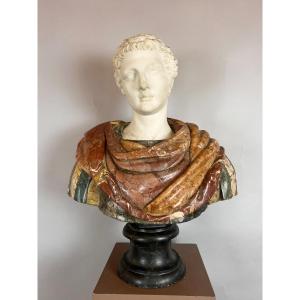
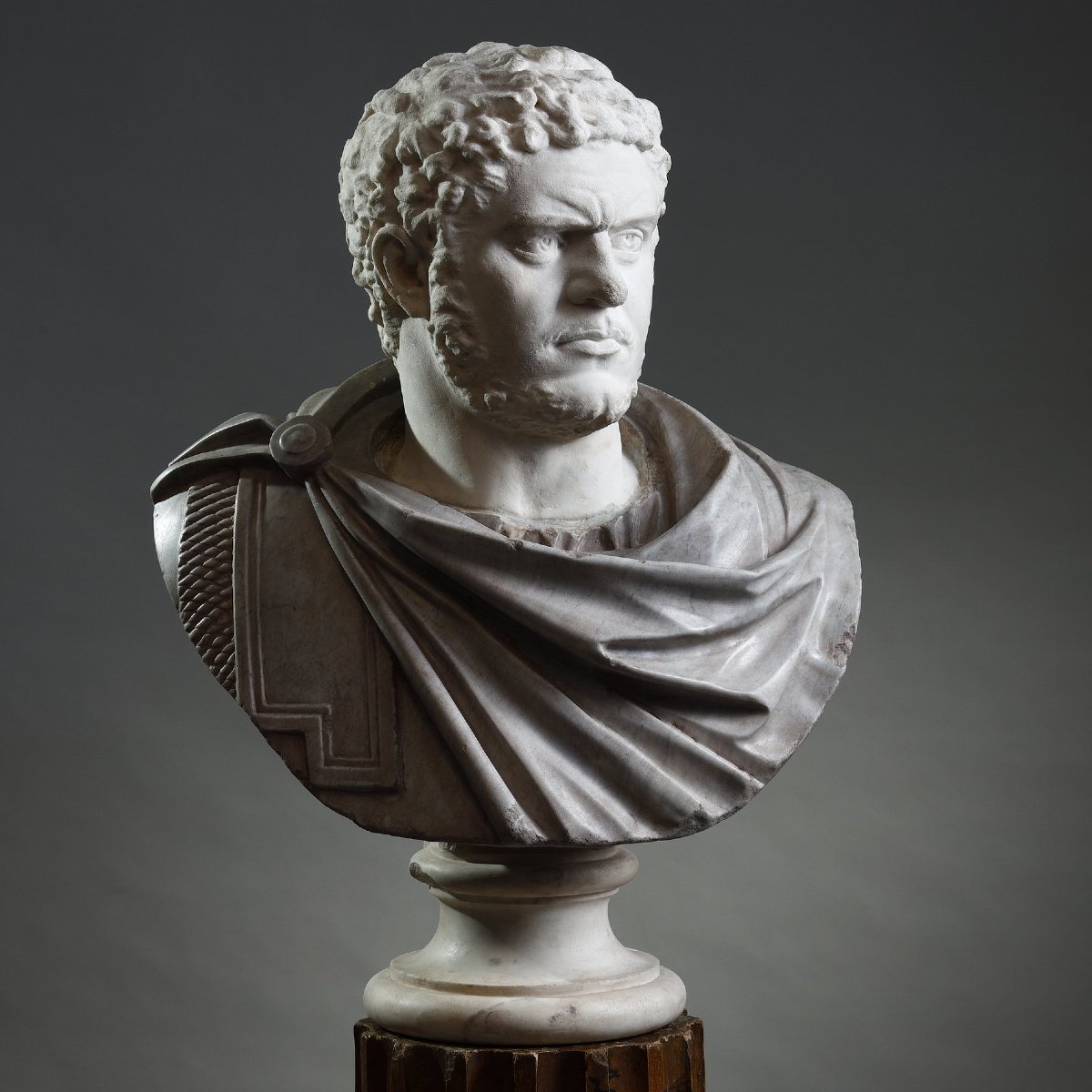
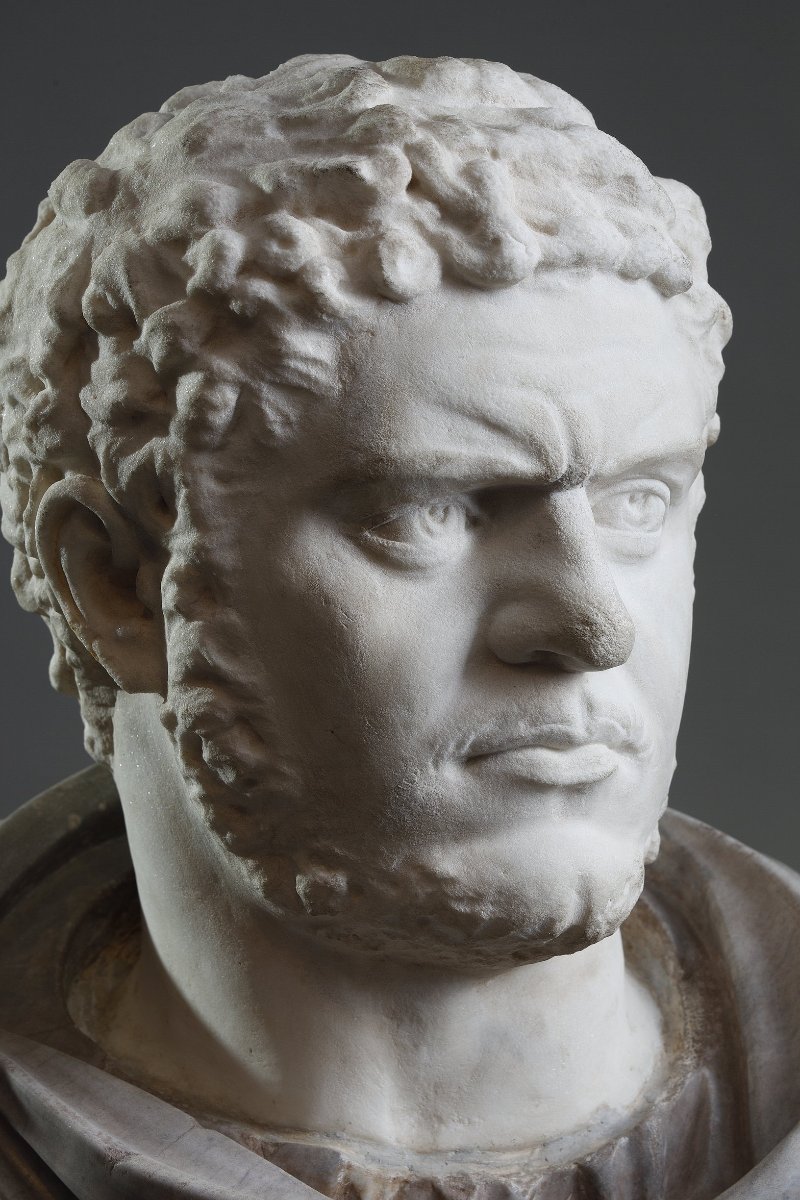
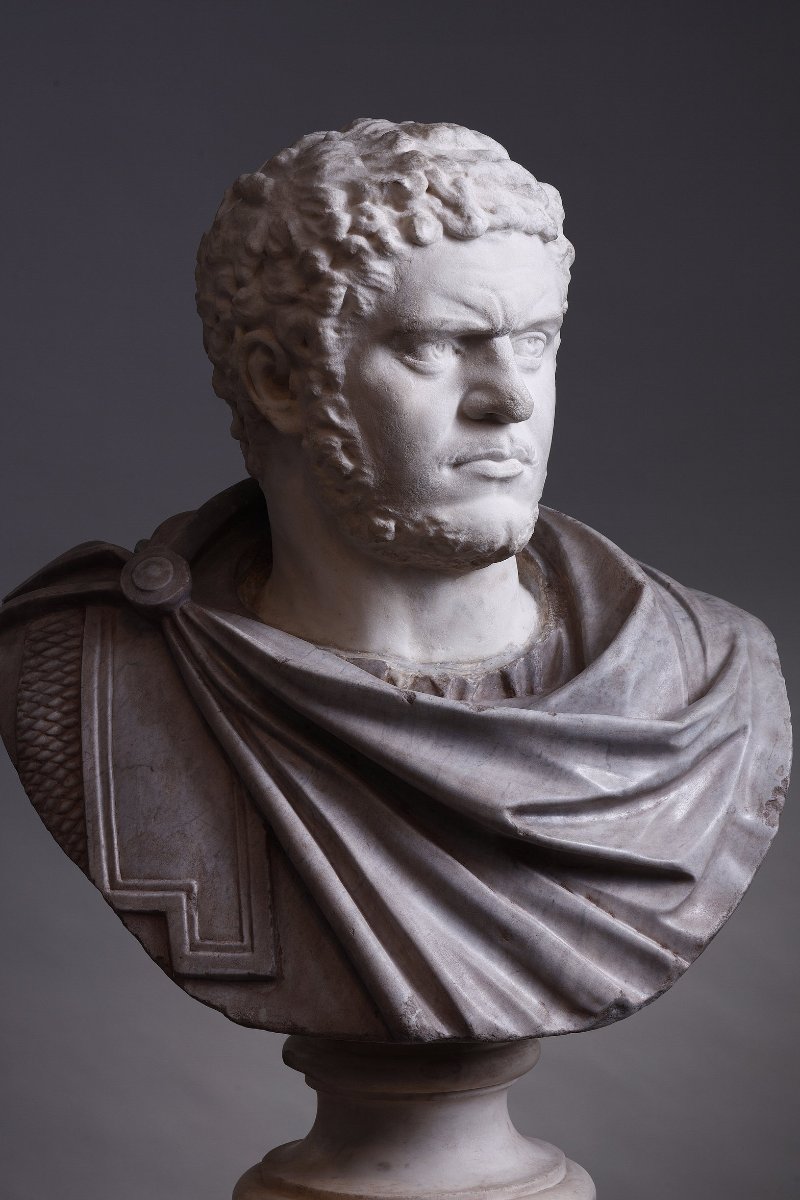
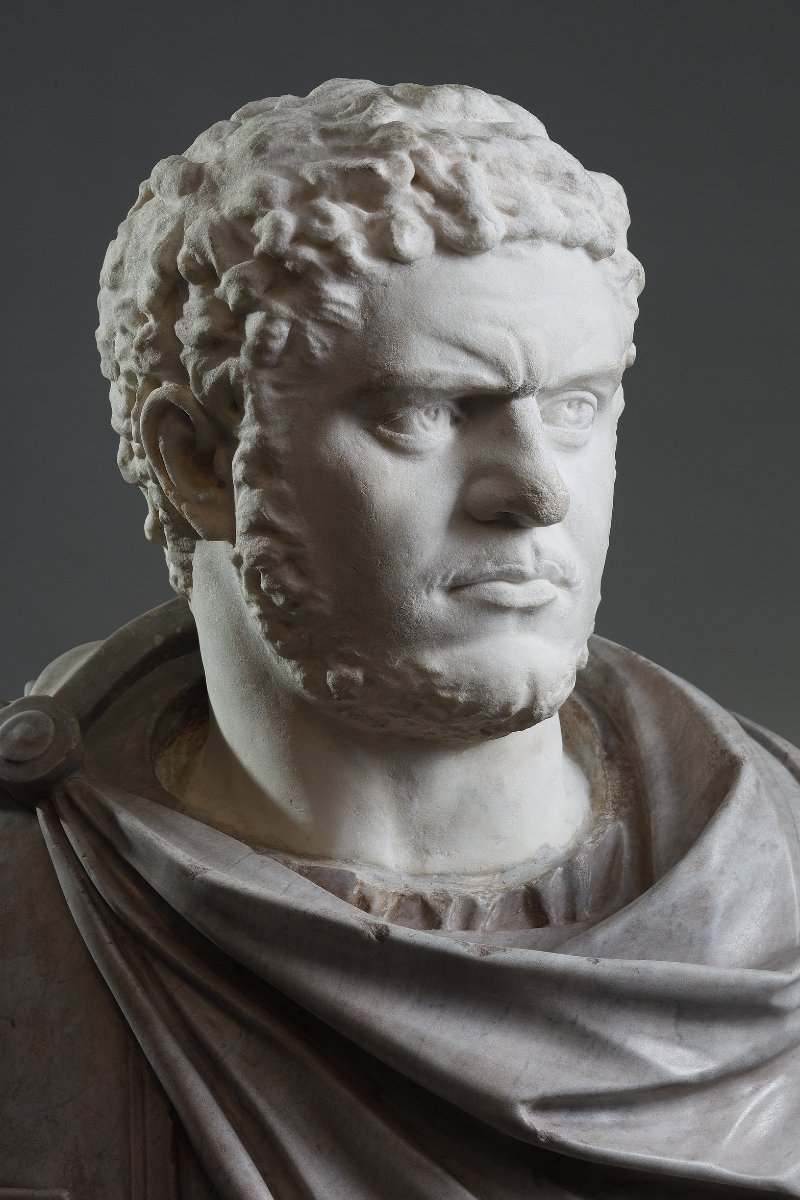
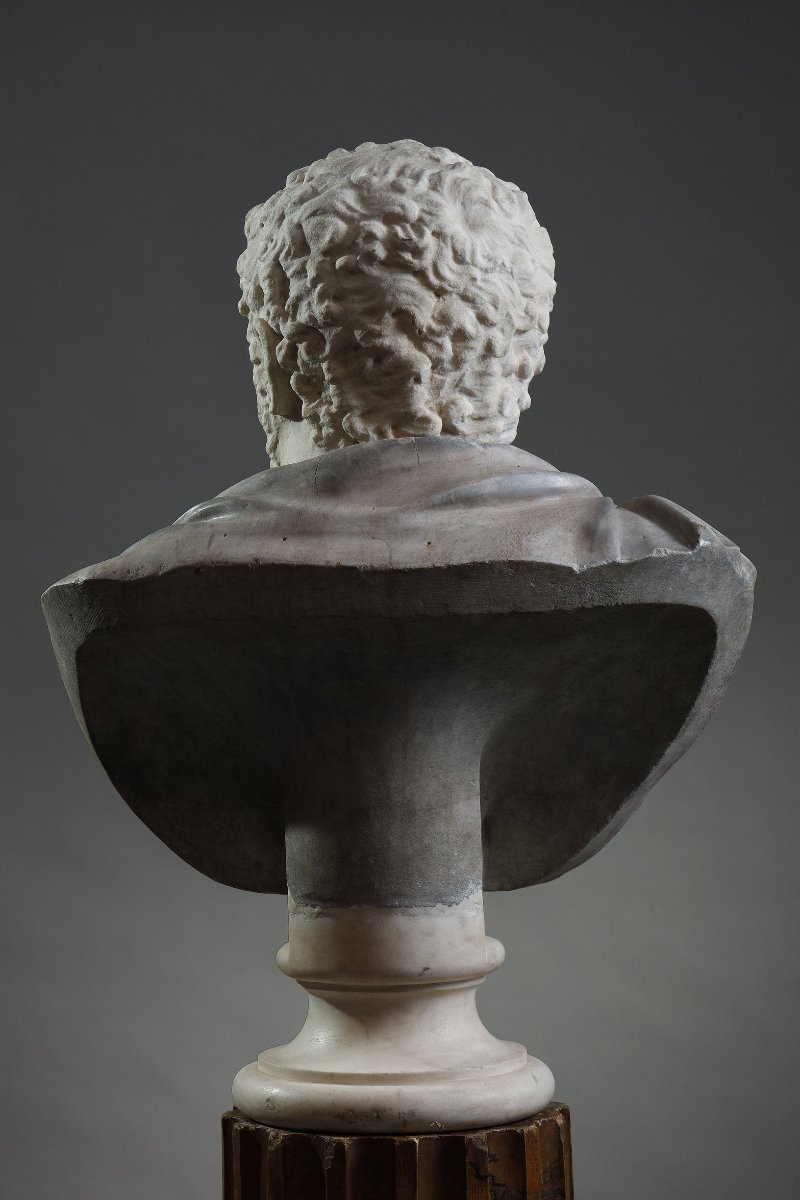
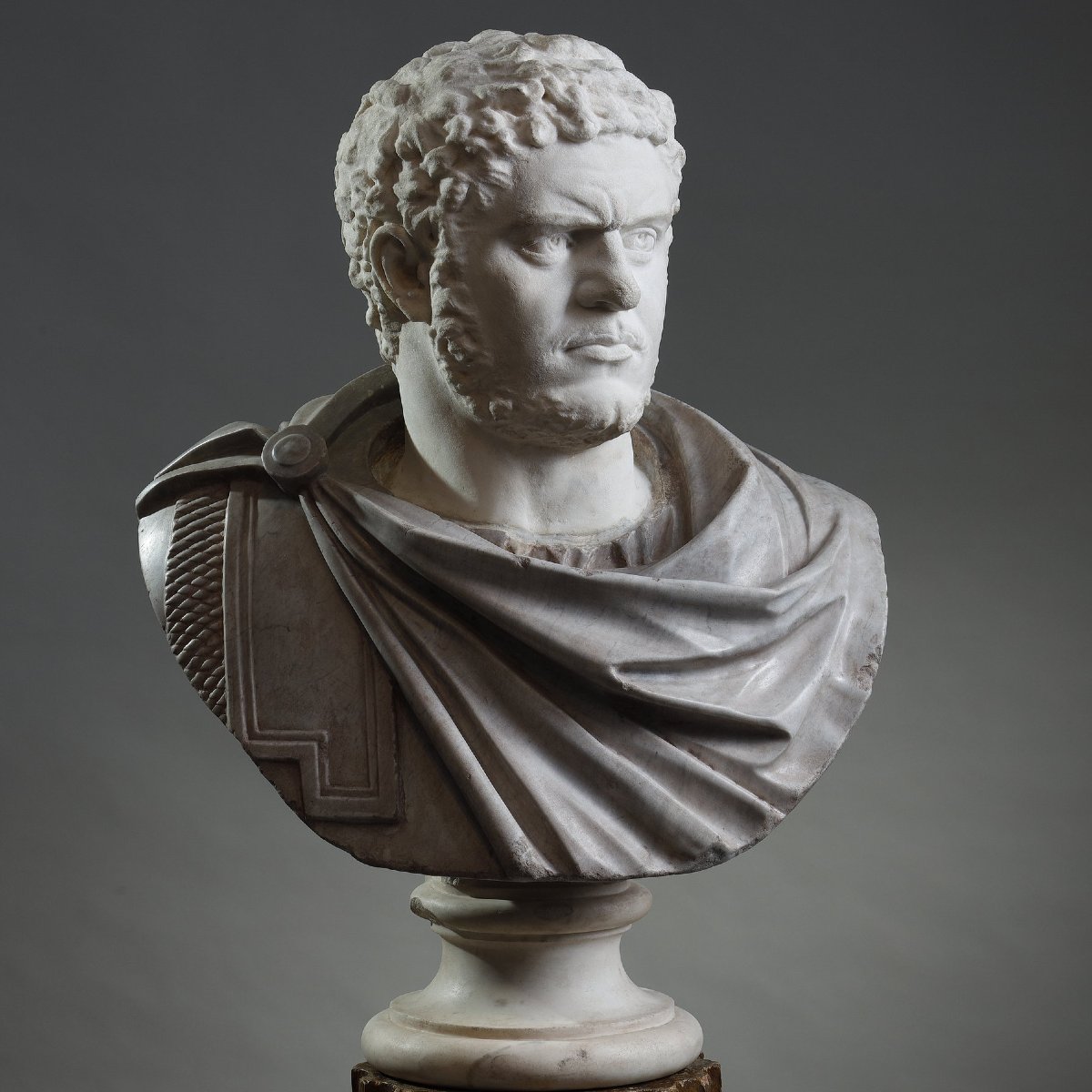
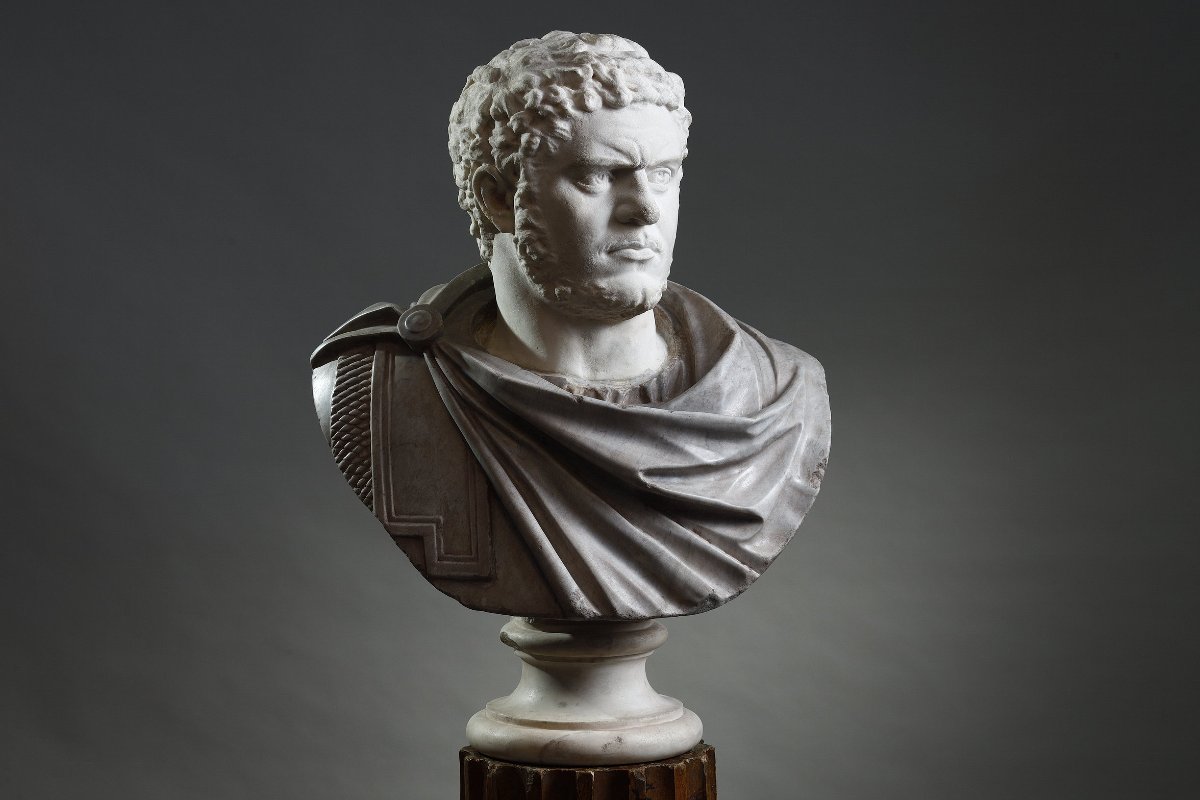
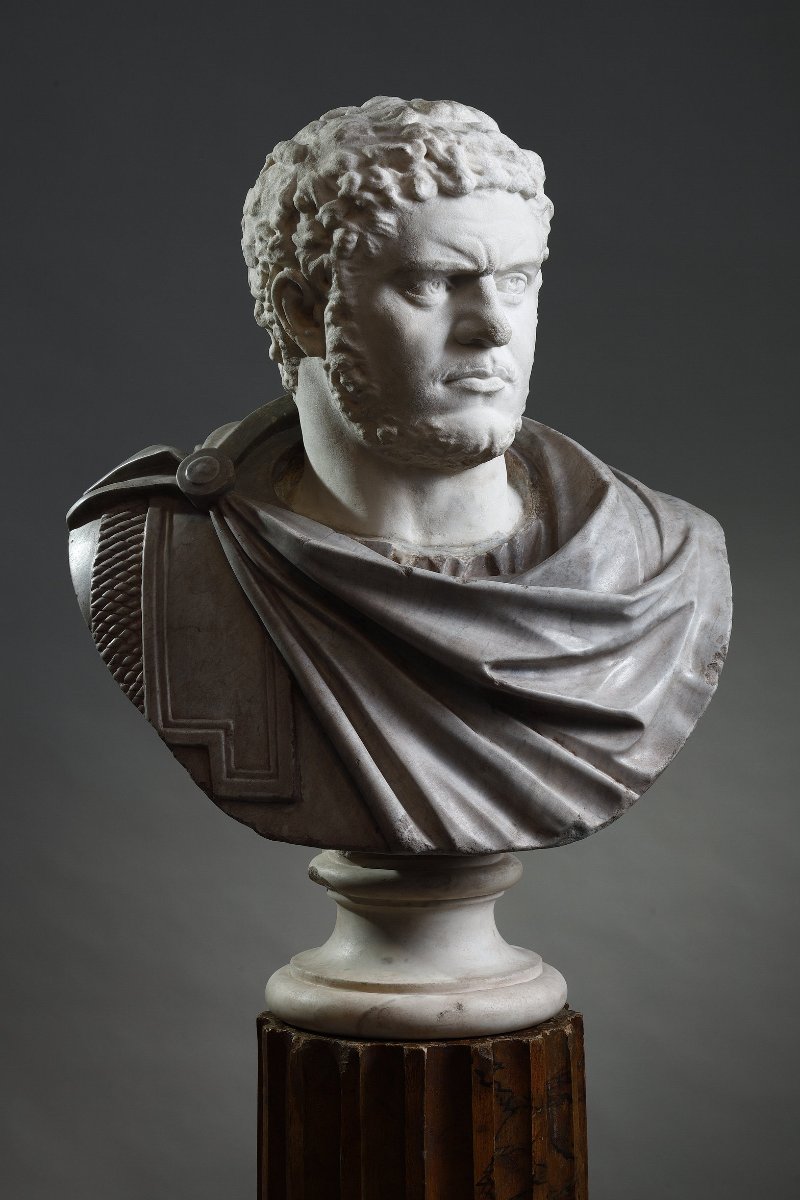
A remarkable bust of the Emperor Caracalla; the head, which predates the bust itself, was likely created in Italy during the 17th century, based on an antique model. It captures the emperor's characteristic features with great fidelity; the slightly turned head enlivens the composition and heightens the intensity of his expression.
The deeply furrowed brow, strongly arched eyebrows, and sidelong gaze lend the face a dramatic tension that became one of Caracalla's iconographic hallmarks.
The set lips, determined chin, and short beard, rendered in small, deeply carved locks, further reinforce this impression of firmness.
The hair, sculpted in tight, energetic curls, subtly complements the powerful modeling of the face. The 19th-century bust is draped in a rich military cloak with ample, fluid folds, fastened at the shoulder by a circular fibula.
To the left, the *paludamentum* is visible; its finely ornamented border signifies imperial rank. The contrast between the softness of the drapery and the vigor of the portrait gives the piece a remarkable visual balance.
Portraits of Caracalla rank among the most striking examples of Roman imperial sculpture.
Breaking with classical idealization, they favor a representation of rare psychological intensity, designed to convey the sovereign's authority, determination, and power.
Set upon a white marble socle, this sculpture bears witness to the 17th century's keen appreciation for the great figures and models of Roman antiquity.
Marcus Aurelius Antoninus, known as Caracalla (188–217 AD), was the son of the Emperor Septimius Severus. He was born in Lugdunum, modern-day Lyon, and reigned over Rome from 211 to 217, becoming the sole ruler following the assassination of his brother Geta in 212.
His reign is defined by the "Constitutio Antoniniana", an edict promulgated that same year which granted Roman citizenship to all free men in the Empire, one of the most significant reforms in Roman history. An ambitious military leader, he conducted several campaigns in Germania and the East, where he dreamed of emulating Alexander the Great, before being assassinated near Carrhae in 217.
Dimensions: H 68 cm x W 51 cm x D 30 cm
The deeply furrowed brow, strongly arched eyebrows, and sidelong gaze lend the face a dramatic tension that became one of Caracalla's iconographic hallmarks.
The set lips, determined chin, and short beard, rendered in small, deeply carved locks, further reinforce this impression of firmness.
The hair, sculpted in tight, energetic curls, subtly complements the powerful modeling of the face. The 19th-century bust is draped in a rich military cloak with ample, fluid folds, fastened at the shoulder by a circular fibula.
To the left, the *paludamentum* is visible; its finely ornamented border signifies imperial rank. The contrast between the softness of the drapery and the vigor of the portrait gives the piece a remarkable visual balance.
Portraits of Caracalla rank among the most striking examples of Roman imperial sculpture.
Breaking with classical idealization, they favor a representation of rare psychological intensity, designed to convey the sovereign's authority, determination, and power.
Set upon a white marble socle, this sculpture bears witness to the 17th century's keen appreciation for the great figures and models of Roman antiquity.
Marcus Aurelius Antoninus, known as Caracalla (188–217 AD), was the son of the Emperor Septimius Severus. He was born in Lugdunum, modern-day Lyon, and reigned over Rome from 211 to 217, becoming the sole ruler following the assassination of his brother Geta in 212.
His reign is defined by the "Constitutio Antoniniana", an edict promulgated that same year which granted Roman citizenship to all free men in the Empire, one of the most significant reforms in Roman history. An ambitious military leader, he conducted several campaigns in Germania and the East, where he dreamed of emulating Alexander the Great, before being assassinated near Carrhae in 217.
Dimensions: H 68 cm x W 51 cm x D 30 cm
19 000 €
Period: 17th century
Style: Rome and Antic Greece
Condition: Excellent condition
Material: Marble
Length: 51
Height: 68
Depth: 30
Reference (ID): 1801080
Availability: In stock
Print