THIS OBJECT WAS SOLD
Louis étienne Watelet (1780–1866) Landscape By The River
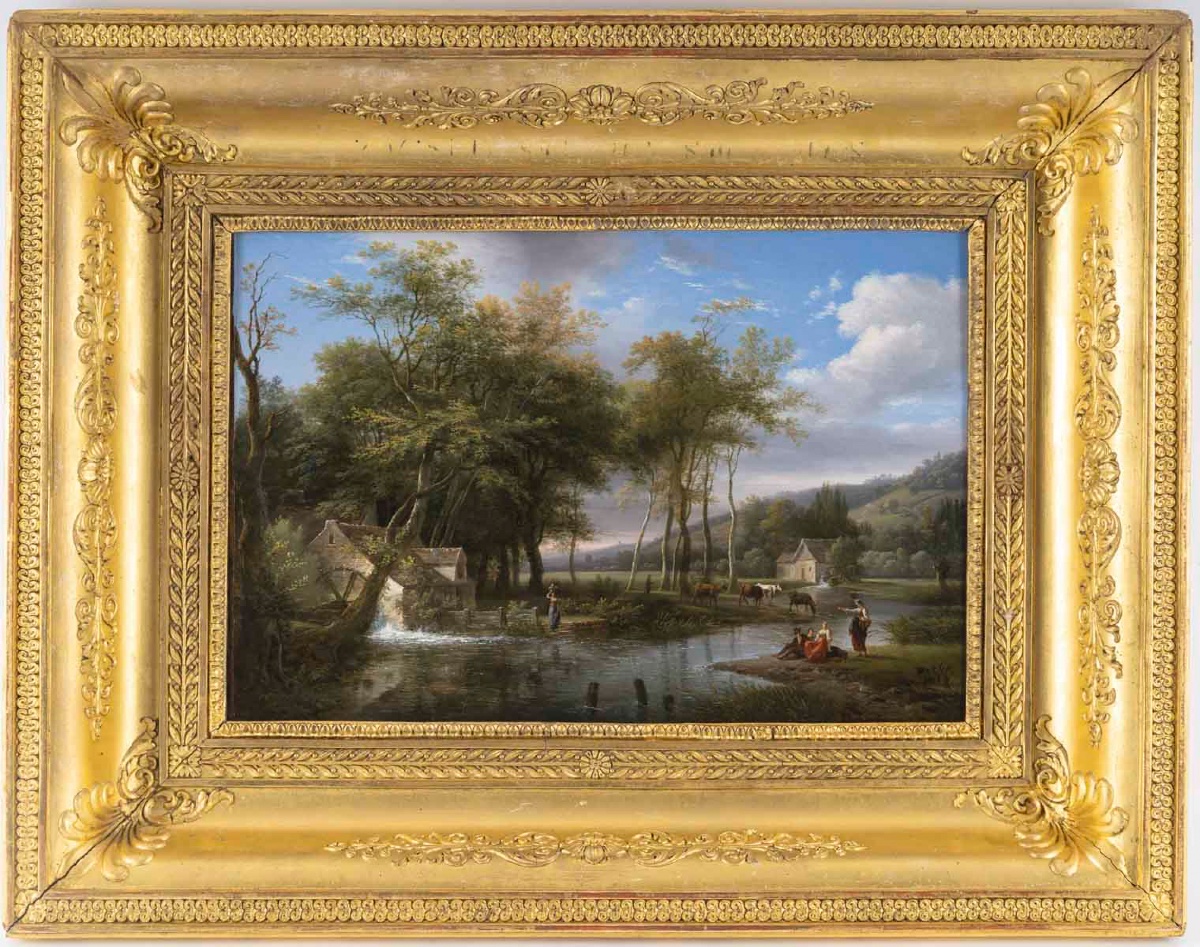
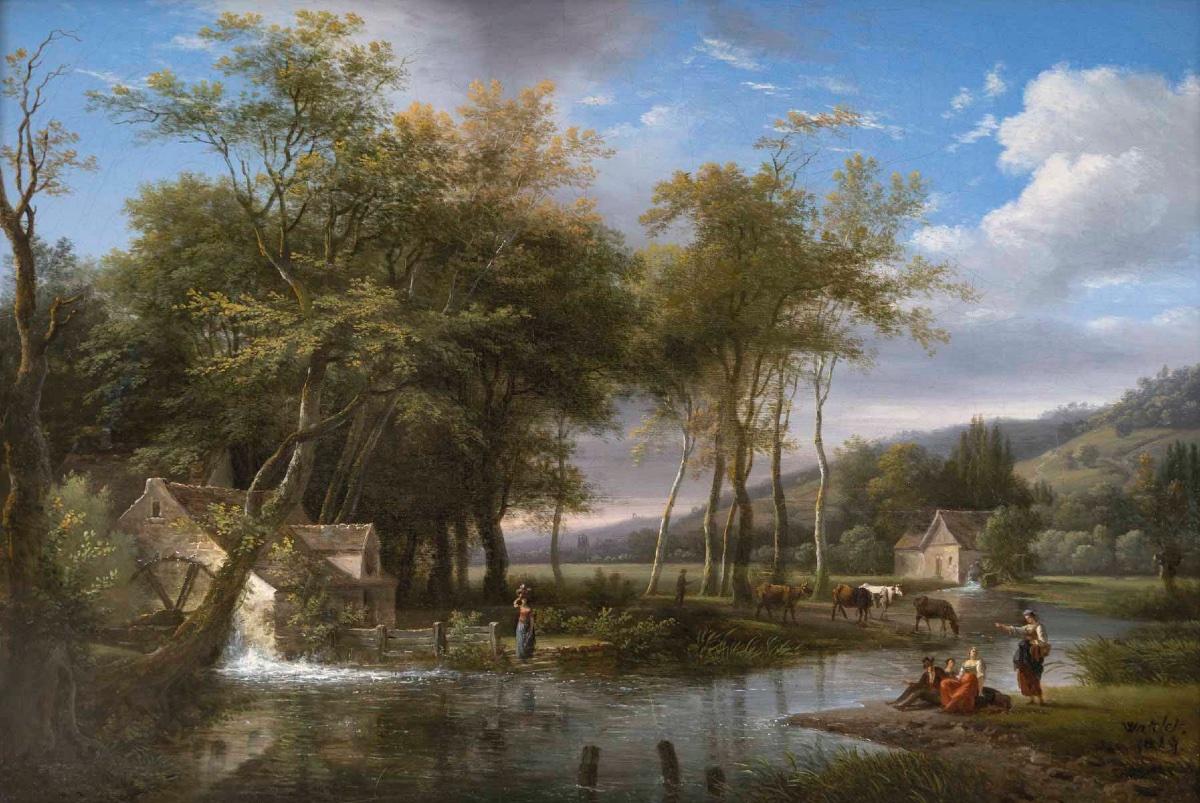
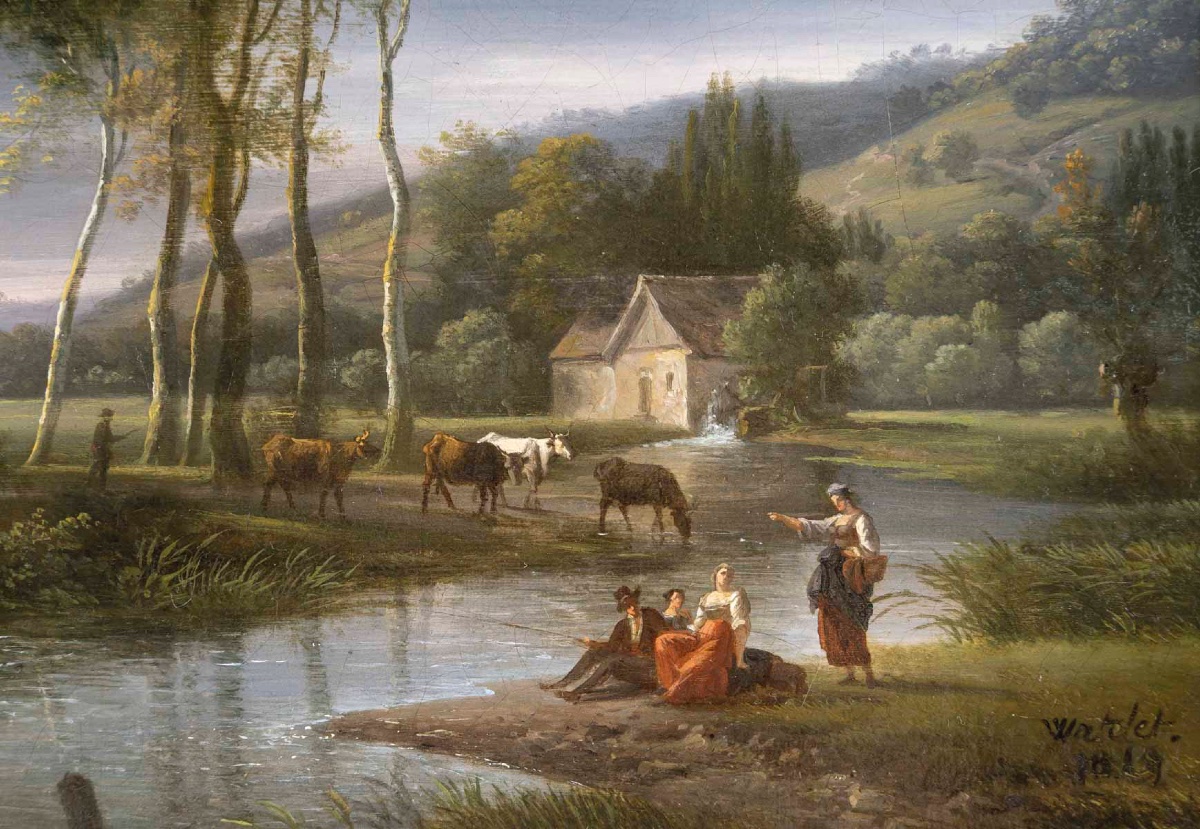
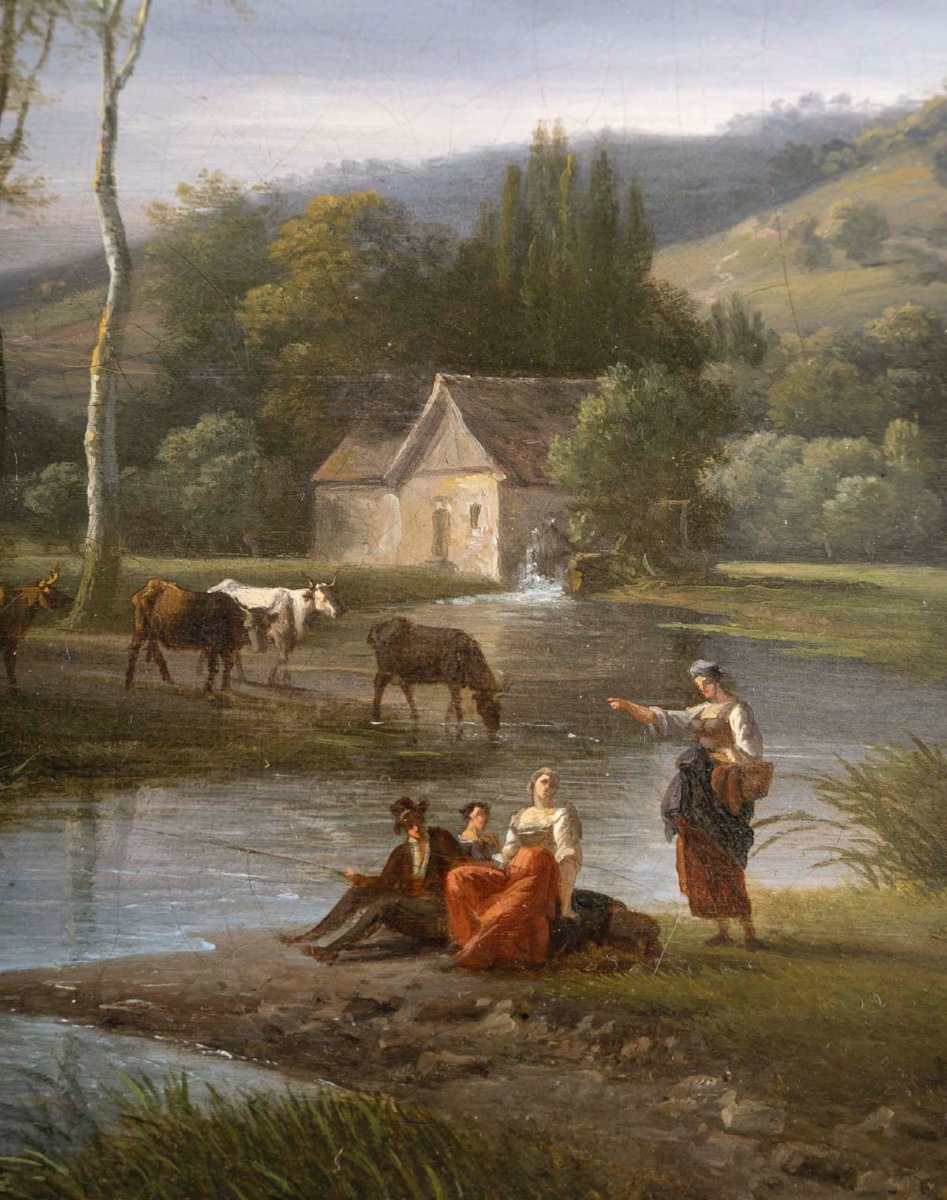
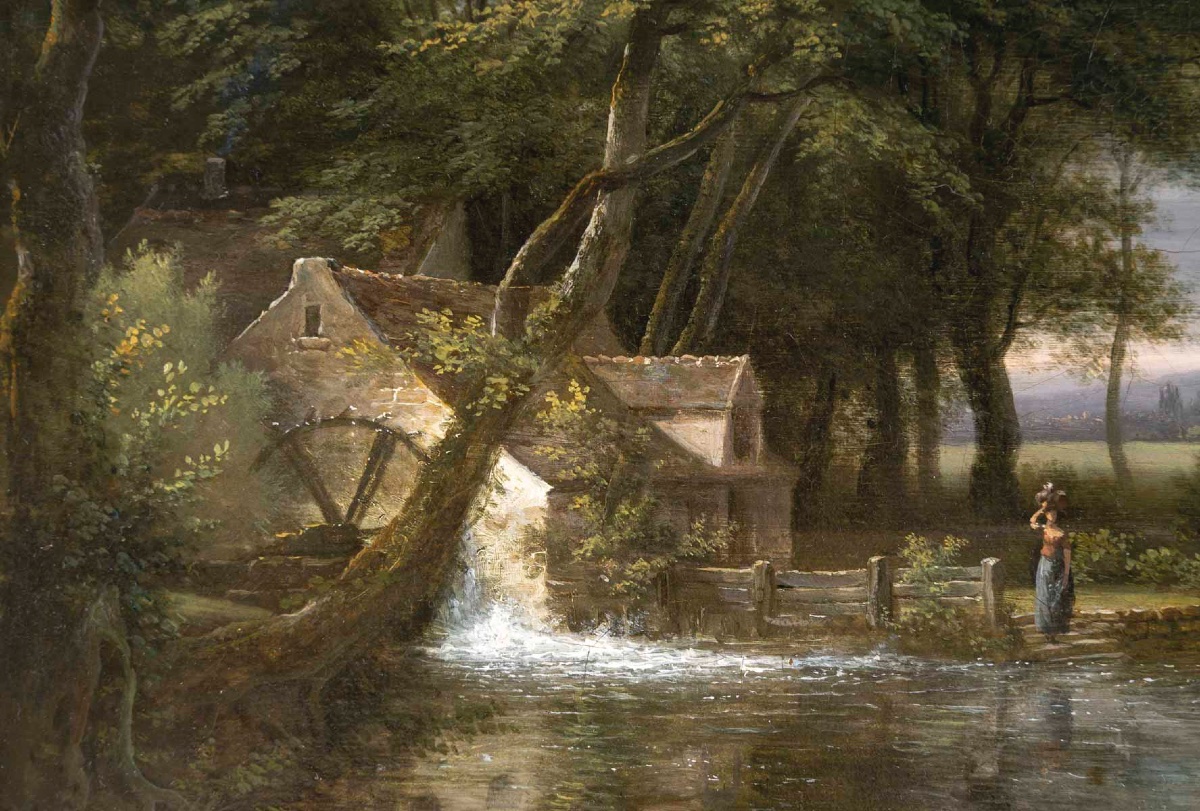
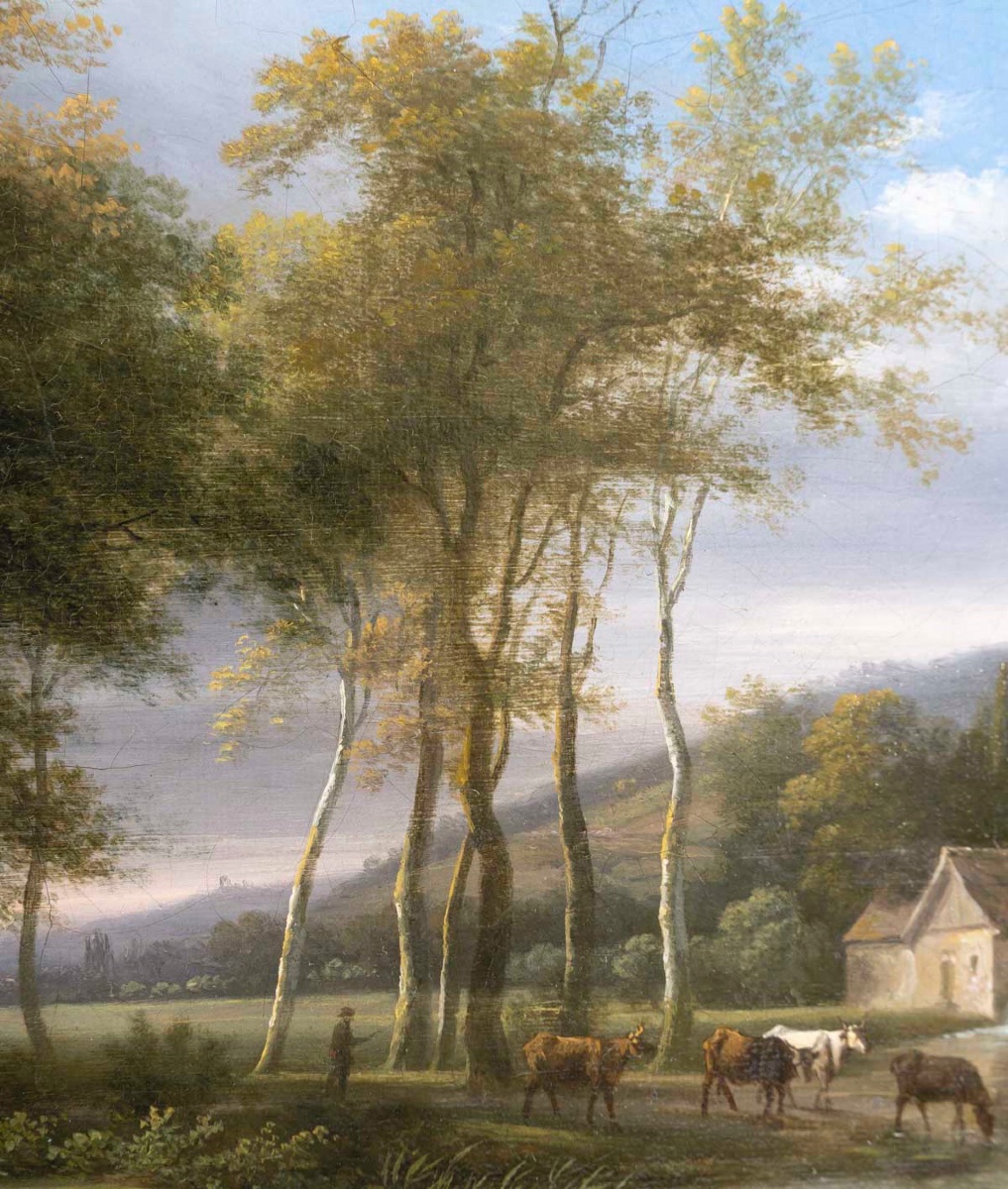
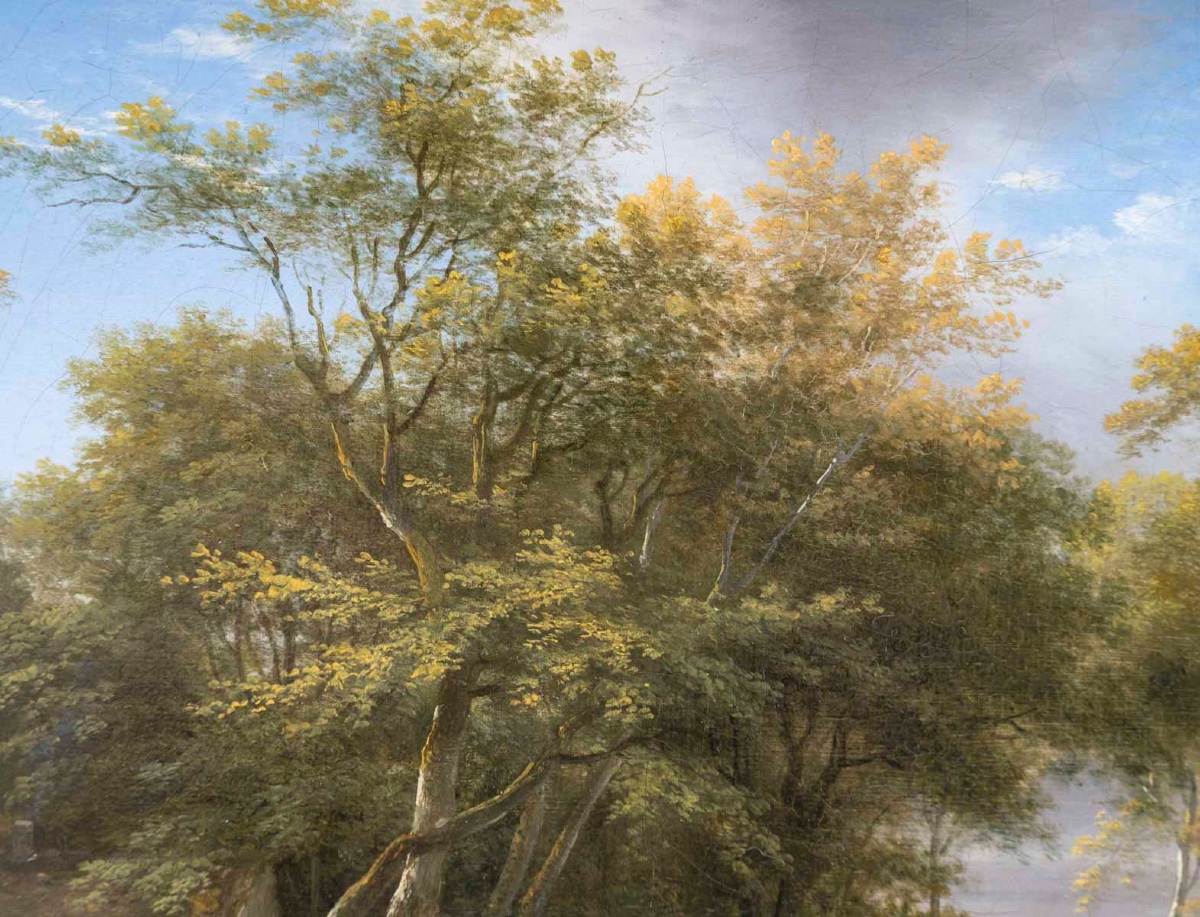
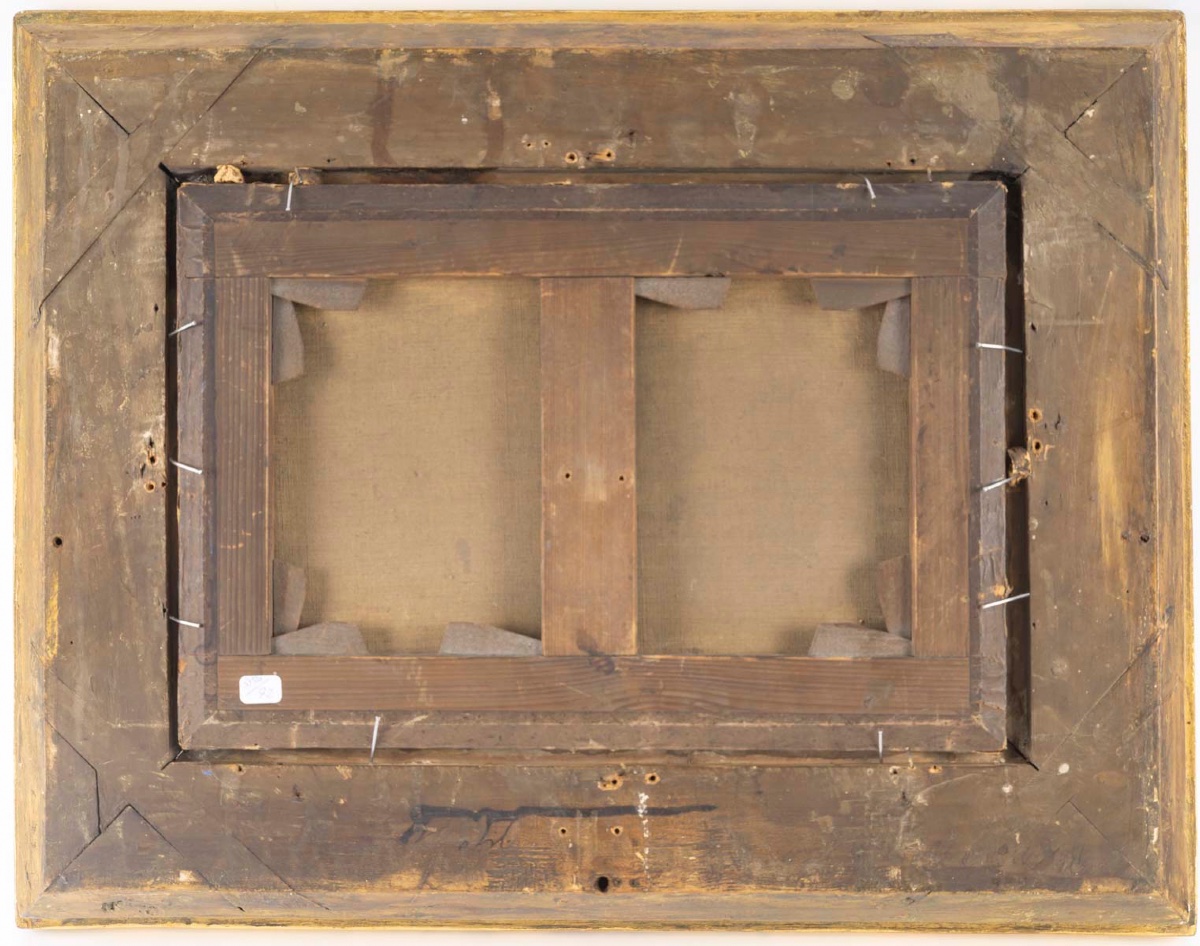
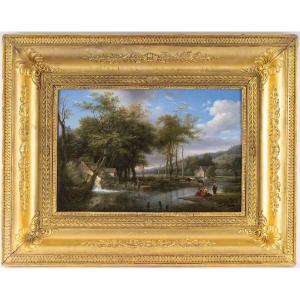


A naturalistic landscape, dated 1819, by the landscape painter Louis Étienne Watelet. A landscape with a neoclassical composition.
Oil on paper mounted on canvas
Signed and dated 1819 in the lower right corner
Dimensions: 25 x 36 cm
With frame: 43 x 55 cm
Louis Étienne Watelet: a style that oscillates between Neoclassicism and Naturalism
Watelet’s painting oscillates between the classical formula of the composed landscape—whose decorative aspect he emphasizes—and a more naturalistic expression.
From the Neoclassical tradition, Watelet retains a taste for layered planes, which allows him to push back the horizon while expanding the space, as well as a skillful distribution of light.
His brushwork is precise down to the smallest detail and is characterized by elegance and refinement of touch.
Our painting is a fine example of this.
A Scene from Daily Life
The scene is classic and bucolic: a river, a watermill, and figures going about their daily lives.
The river divides the painting into two banks, on which a group of people—including a fisherman, a woman carrying a basket, a shepherd, and his herd of cows—go about their business.
A great sense of serenity emanates from this harmoniously composed landscape.
Biography
Louis Étienne Watelet was a French landscape painter and the son of a Parisian haberdasher.
This self-taught landscape painter, who, according to Charles Gabet, had “no other masters than nature and his love of art,” nevertheless appears to have frequented the studios of Pierre-Henri de Valenciennes and Georges Malbeste.
He participated in the Salon de peinture for the first time in 1799 and subsequently exhibited there regularly. There, he was awarded a second gold medal in 1810, followed by a first-place medal in 1819, and was awarded the Legion of Honor in 1825.
A prolific painter and avid traveler for his art, he explored southern France, Savoy, Italy, Belgium, and Tyrol, and roamed the countryside of Île-de-France. He specialized in historical landscapes, which he rendered in the Romantic style.
Watelet is best known for his role as an art educator. It was in his studio that many esteemed future landscape painters, including Prosper Baccuet, Théodore Caruelle d’Aligny, Paul Delaroche, Abel Dufresne, and Pierre Thuillier, completed their apprenticeships.
Bibliography
• Bénézit Dictionary.
• “Dictionary of 19th-Century French Landscape Painters” by Lydia Harembourg
• Charles Gabet, “Watelet (Louis-Étienne),” in Dictionary of Artists of the French School in the 19th Century. : Painting, Sculpture, Architecture, Engraving, Drawing, Lithography, and Musical Composition, Paris, Madame Vergne, 1831, 710 pp. (read online [archive]), p. 704.
• Gustave Vapereau, Universal Dictionary of Contemporaries, Paris, 1858.
• Charles de Mourgues, Explanations of Works of Painting and Sculpture, Paris, 1833.
Museums
• Paris, Louvre Museum
• Aix-en-Provence
• Bordeaux
• Carcassonne, Museum of Fine Arts.
• Coutances, Quesnel-Morinière Museum.
• Dijon, Magnin Museum.
• Le Puy-en-Velay, Crozatier Museum.
• Montpellier, Fabre Museum
• Versailles, National Museum of the Palaces of Versailles and Trianon.
• Vienne, Museum of Fine Arts and Archaeology: View of a cloth factory in the city of Vienne, 1837.
Explore similar pieces and discover your ideal find:
Landscapes