


Etruscan Art - Great Haruspex - Archaeological Artifact - Grand Tour - Antiquity Craze - 19th Century
On display in Paris. Free in-person pickup in Paris and its suburbs. Shipping cost for France: €15. Contact me for Europe and the rest of the world.
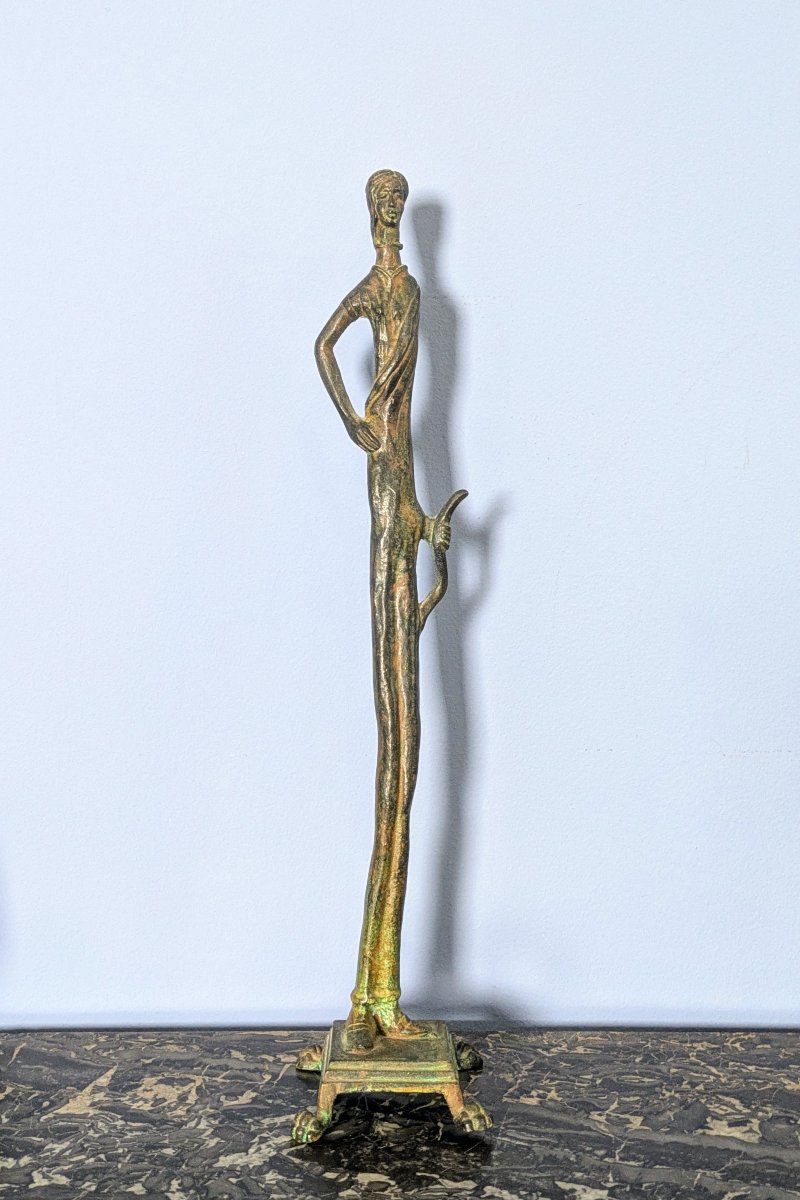
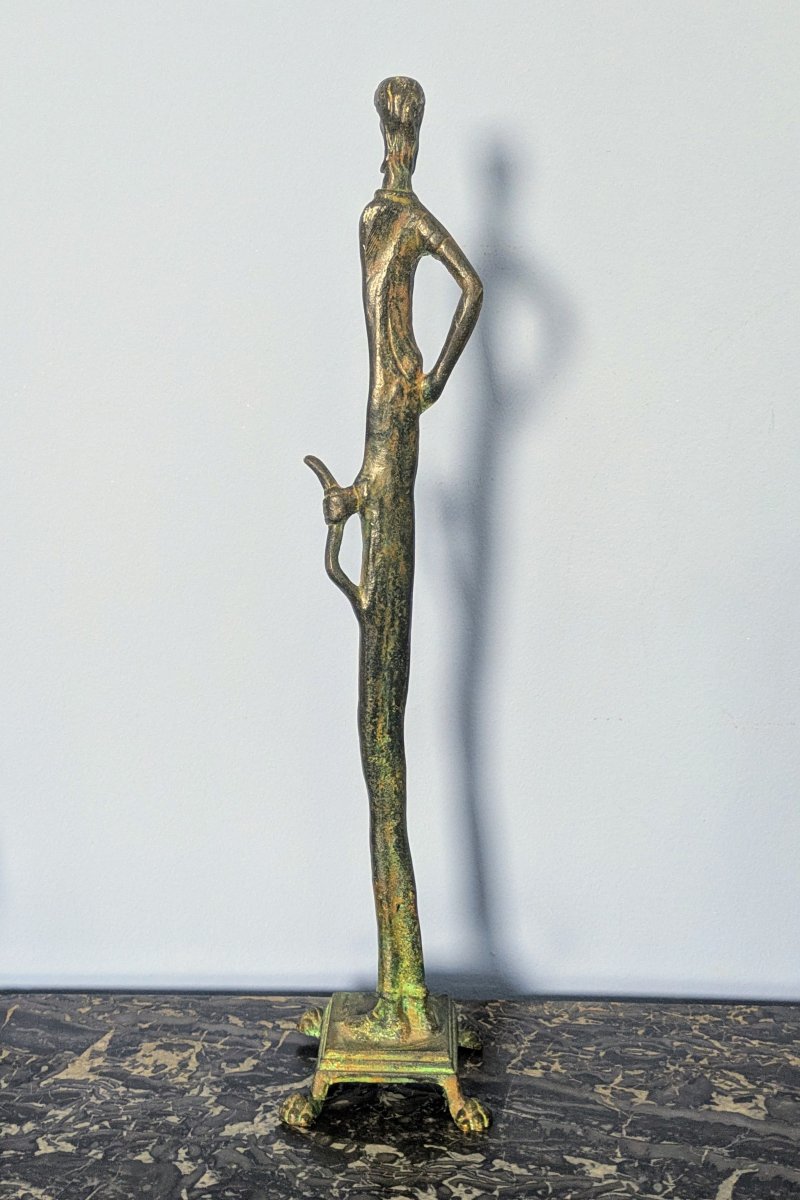
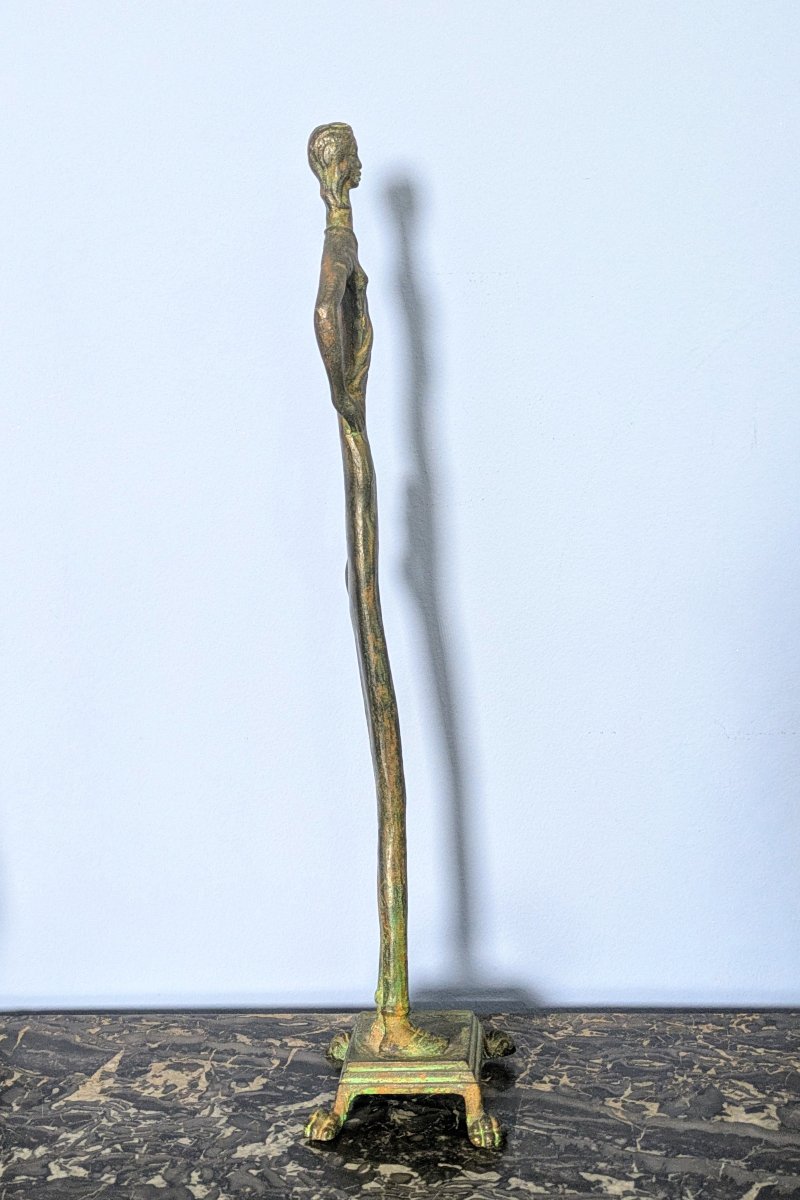
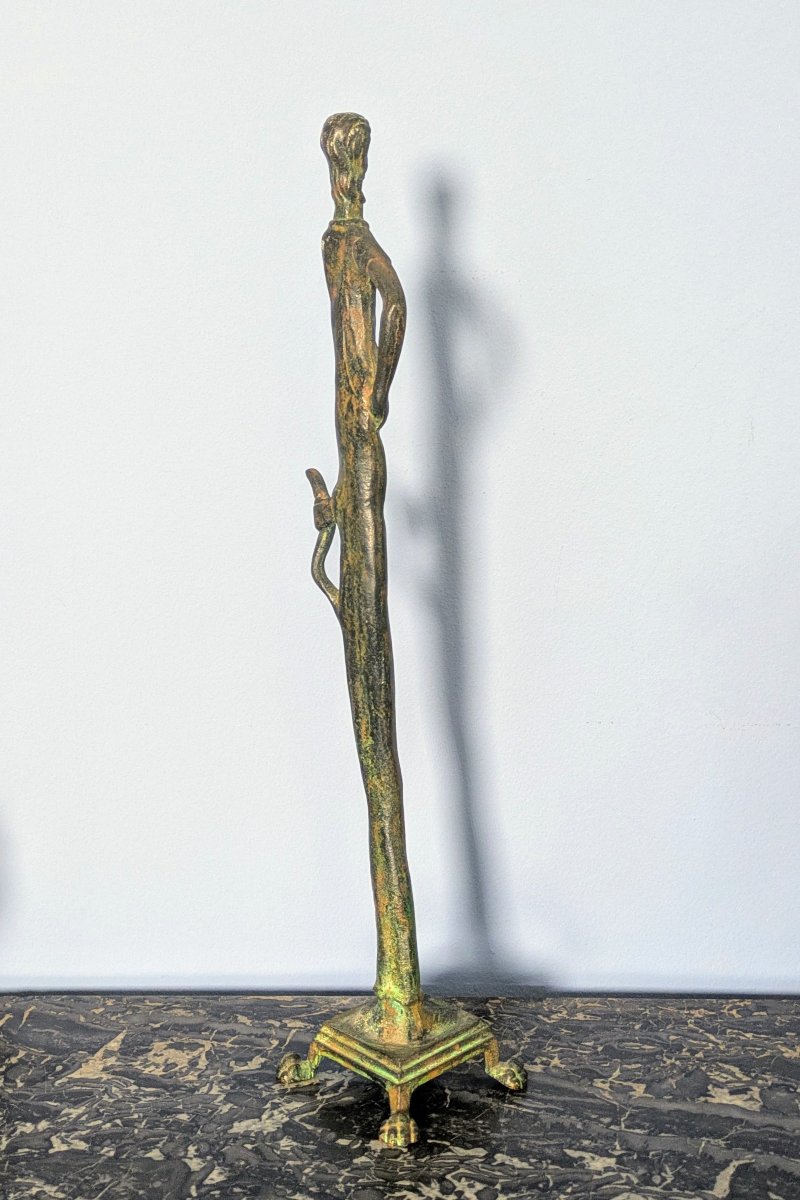
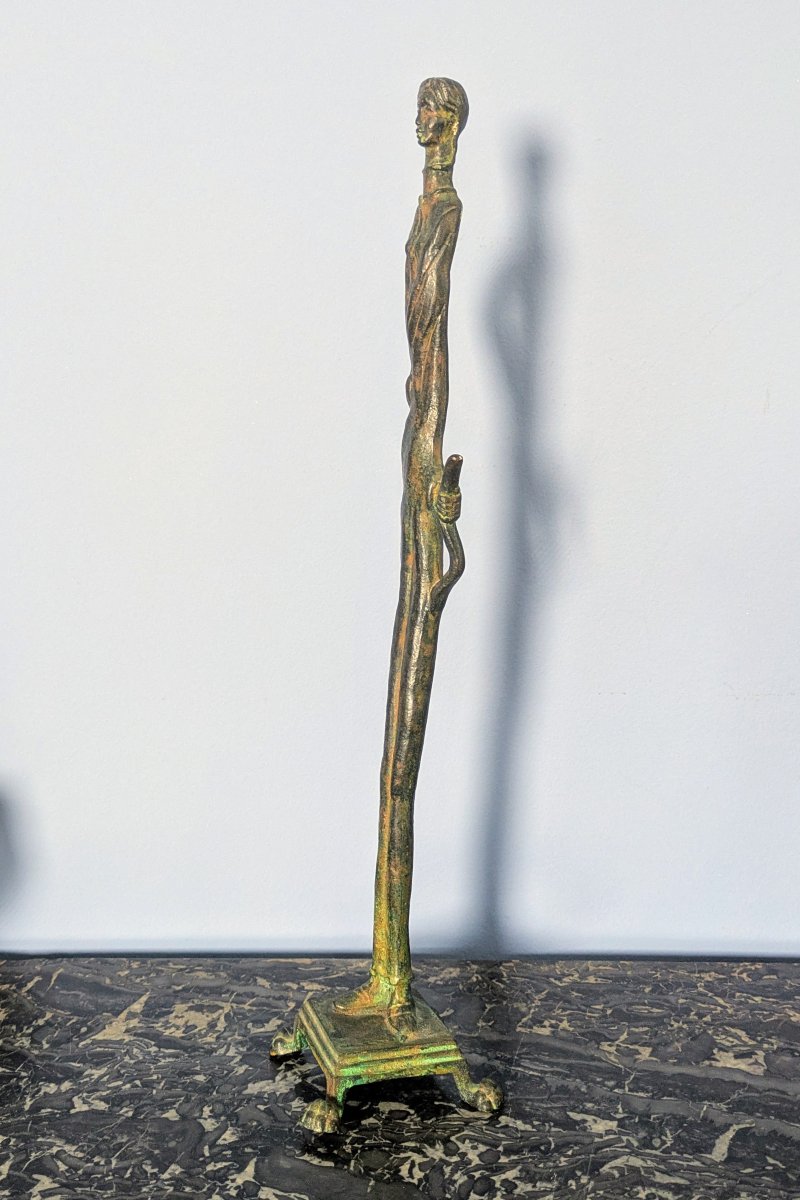
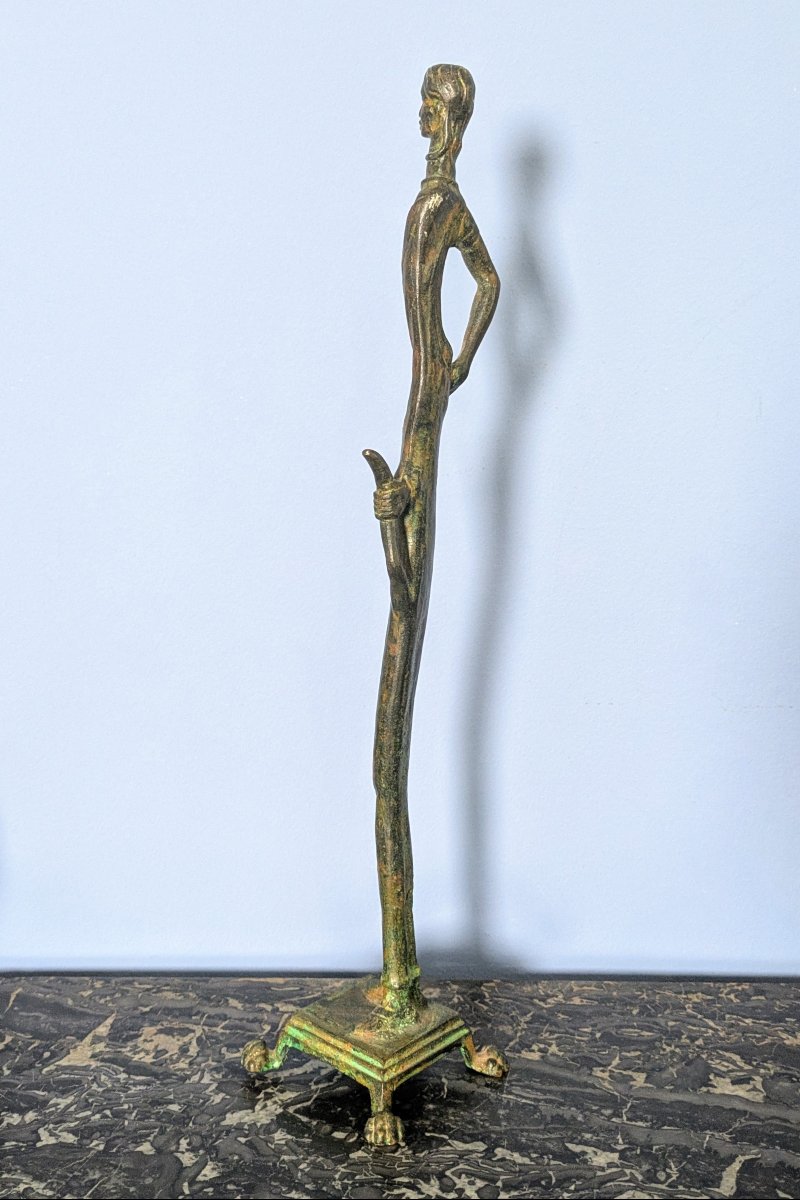
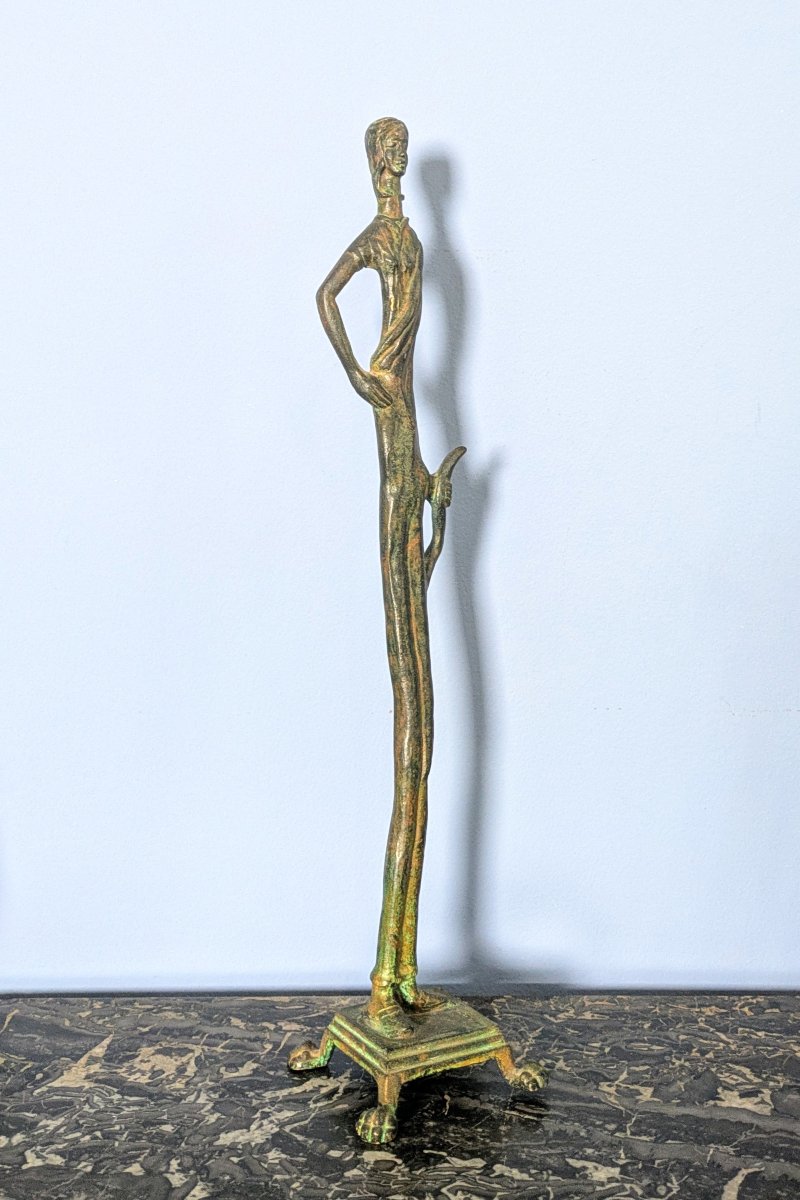
Haruspex holding a snake; bronze with excavation patina; likely from an Italian workshop; second half of the 19th century; H. 45 cm.
The haruspice rests on a four-legged base. His slender body is stylized, with subtle details, particularly on the feet and face. This is a reproduction of a well-known model housed at the Getty.
The Role of the Haruspex in Etruscan Society: The haruspices of Etruria distinguished themselves from the rest of the population by their attire: they wore a short, fringed cloak (similar to the hide of a sacrificed animal), rather than the Etruscan toga, fastened at the neck with a fibula, and a wide-brimmed headdress with a pointed top, tied under the chin—as it was considered a very bad omen if it were to fall off during ceremonies—and, above all, they carried their libri (as can be seen on the figurative sarcophagi of deceased haruspices). It appears that they were recruited from the upper classes of society.Among the Etruscans, the “fulgurating haruspices” practiced their divinatory art, called brontoscopy, based on lightning and thunder. They retained an important advisory role even after the Roman annexation of Etruria.
Condition report: excellent condition
Haruspex holding a snake; bronze with excavation patina; likely from an Italian workshop; second half of the 19th century; H. 45 cm.
The haruspice rests on a four-legged base. His slender body is stylized, with subtle details, particularly on the feet and face. This is a reproduction of a well-known model housed at the Getty.
The Role of the Haruspex in Etruscan Society: The haruspices of Etruria distinguished themselves from the rest of the population by their attire: they wore a short, fringed cloak (similar to the hide of a sacrificed animal), rather than the Etruscan toga, fastened at the neck with a fibula, and a wide-brimmed headdress with a pointed top, tied under the chin—as it was considered a very bad omen if it were to fall off during ceremonies—and, above all, they carried their libri (as can be seen on the figurative sarcophagi of deceased haruspices). It appears that they were recruited from the upper classes of society.Among the Etruscans, the “fulgurating haruspices” practiced their divinatory art, called brontoscopy, based on lightning and thunder. They retained an important advisory role even after the Roman annexation of Etruria.
Condition report: excellent condition
320 €
Period: 19th century
Style: Rome and Antic Greece
Condition: Excellent condition
Material: Bronze
Reference (ID): 1799896
Availability: In stock
Print