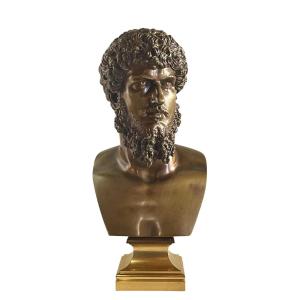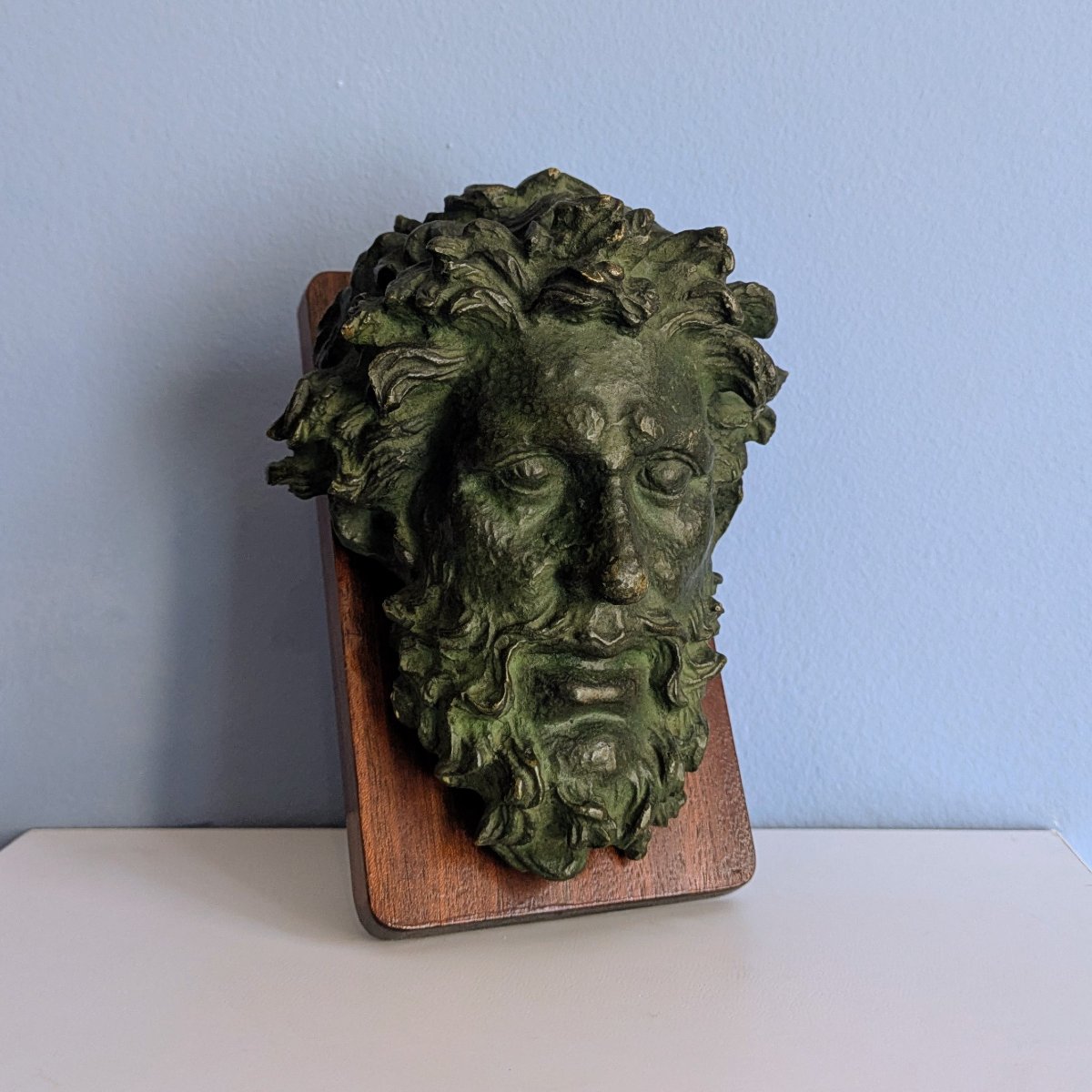
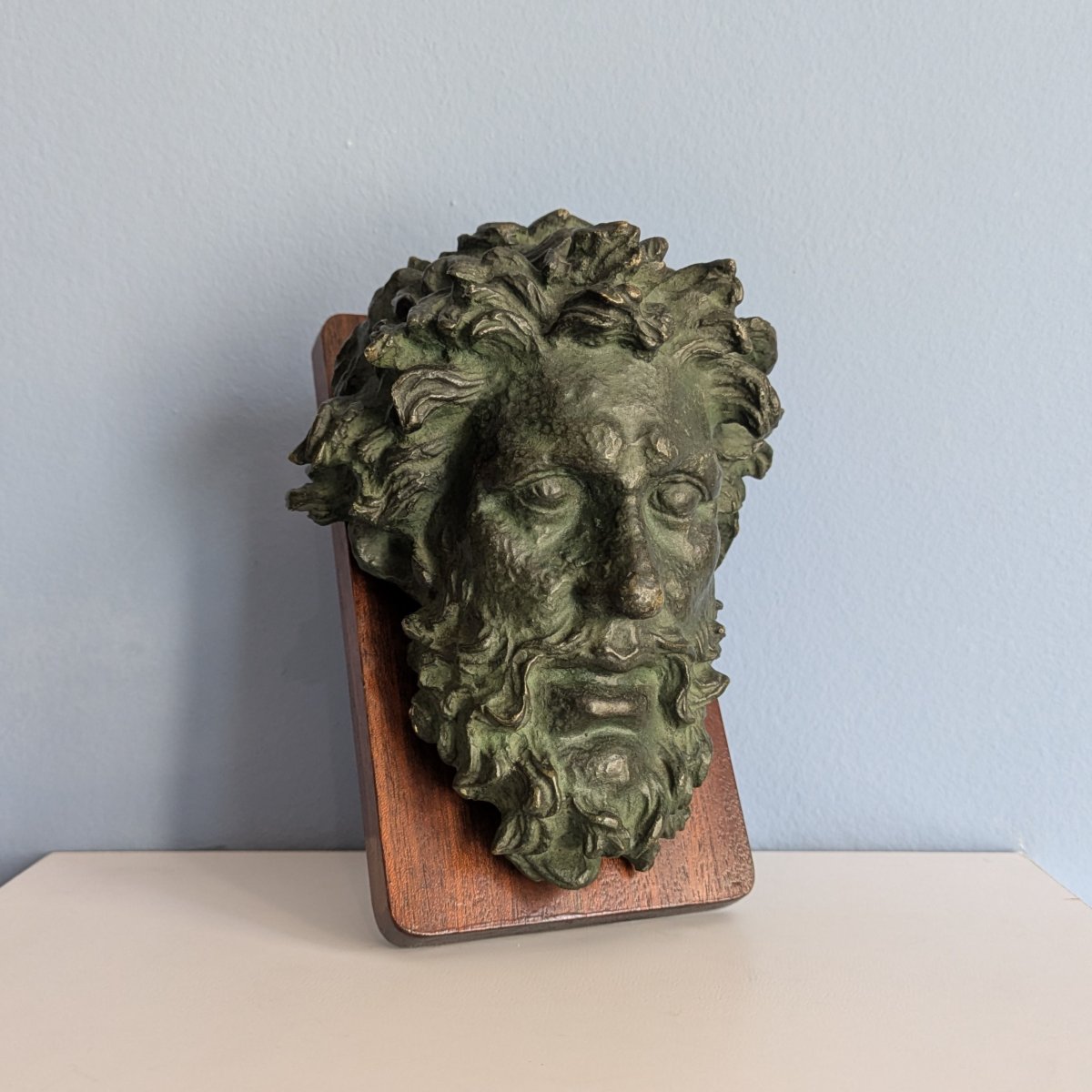
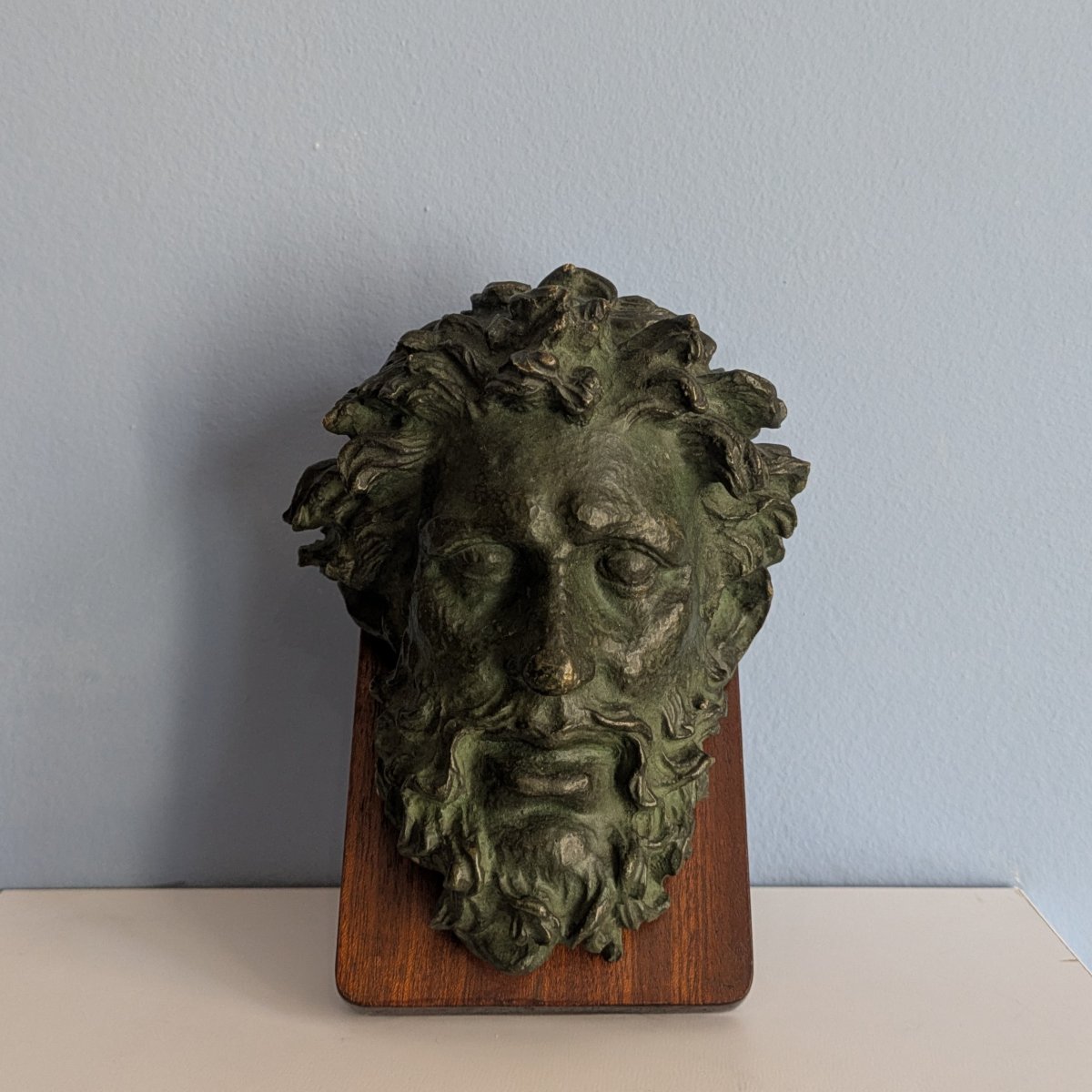
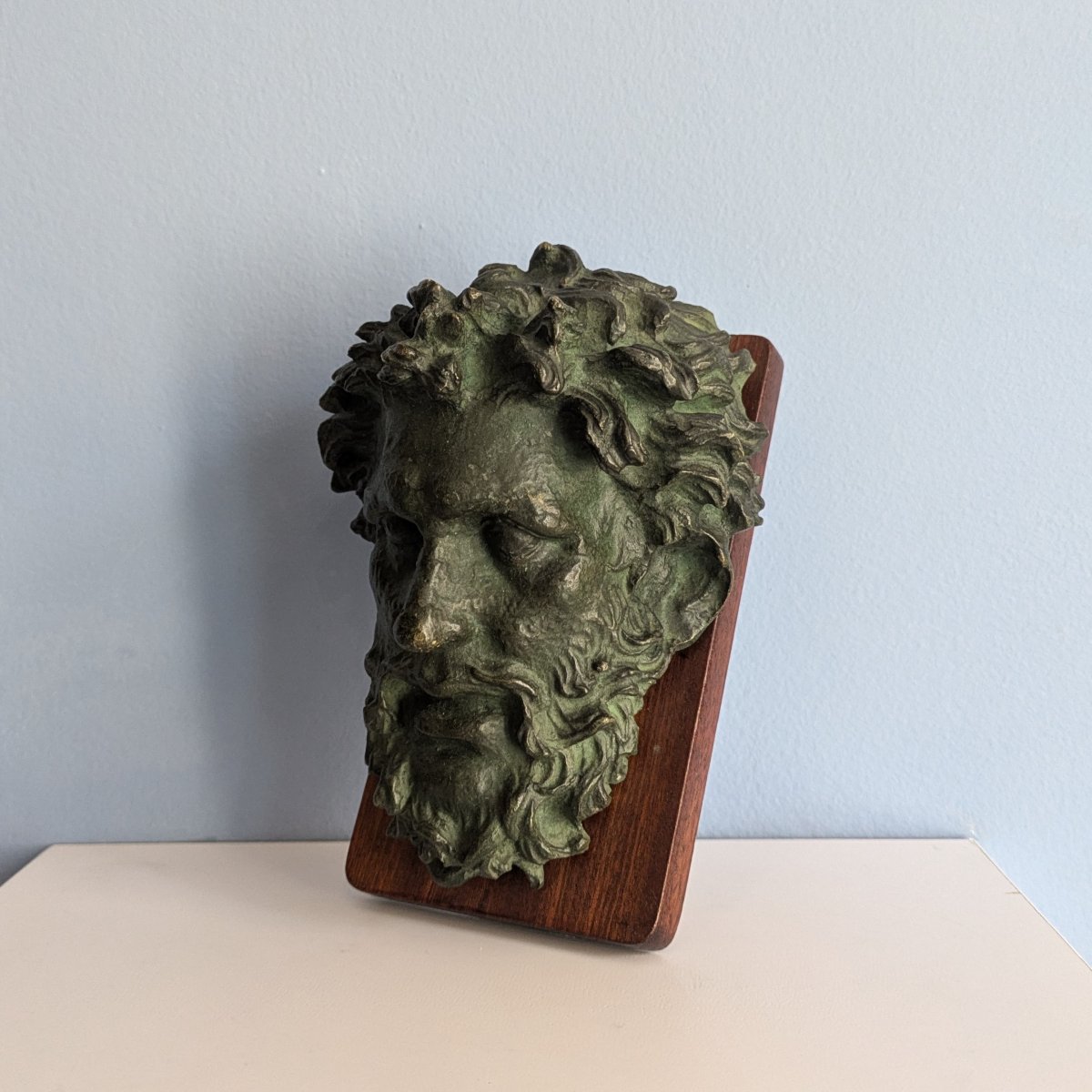
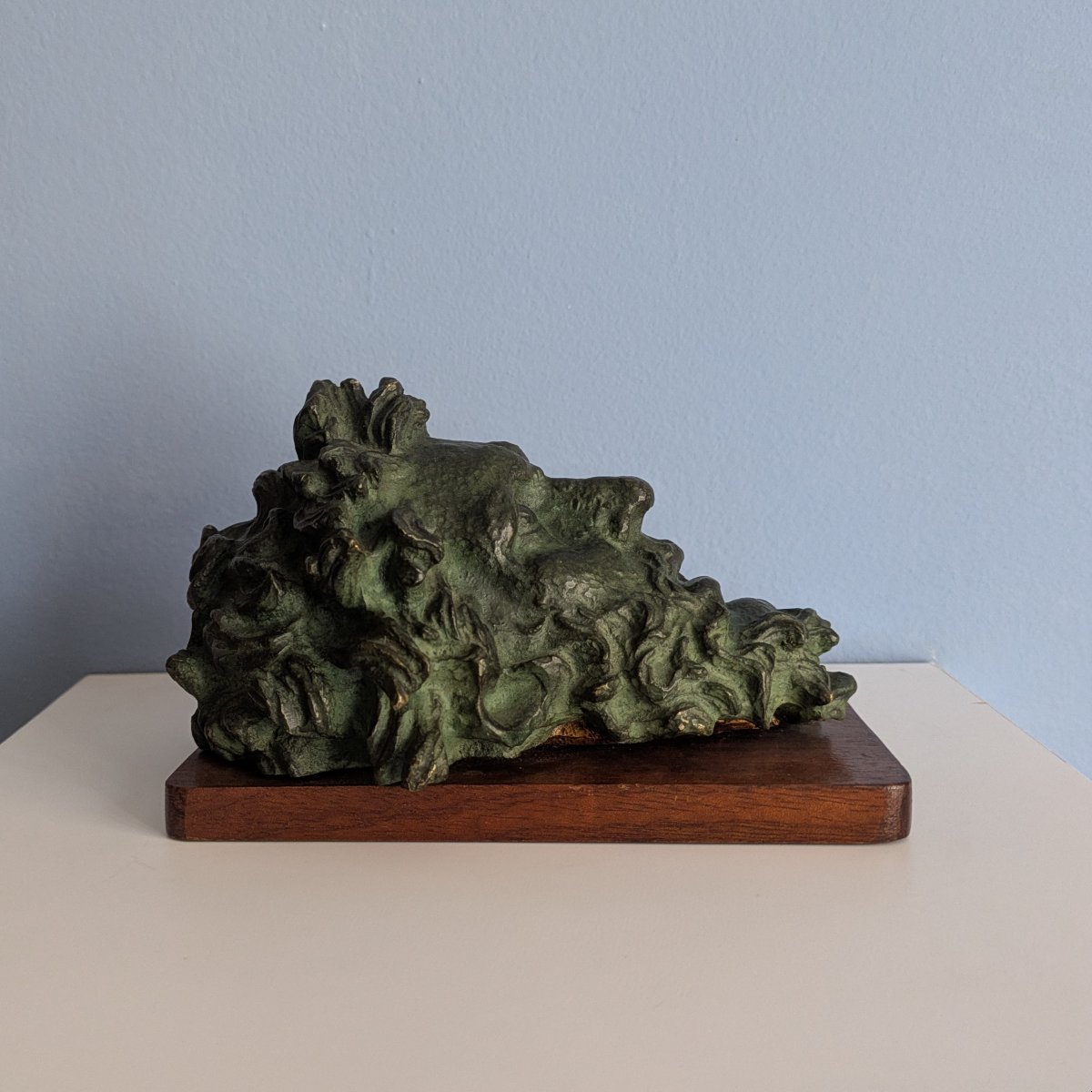
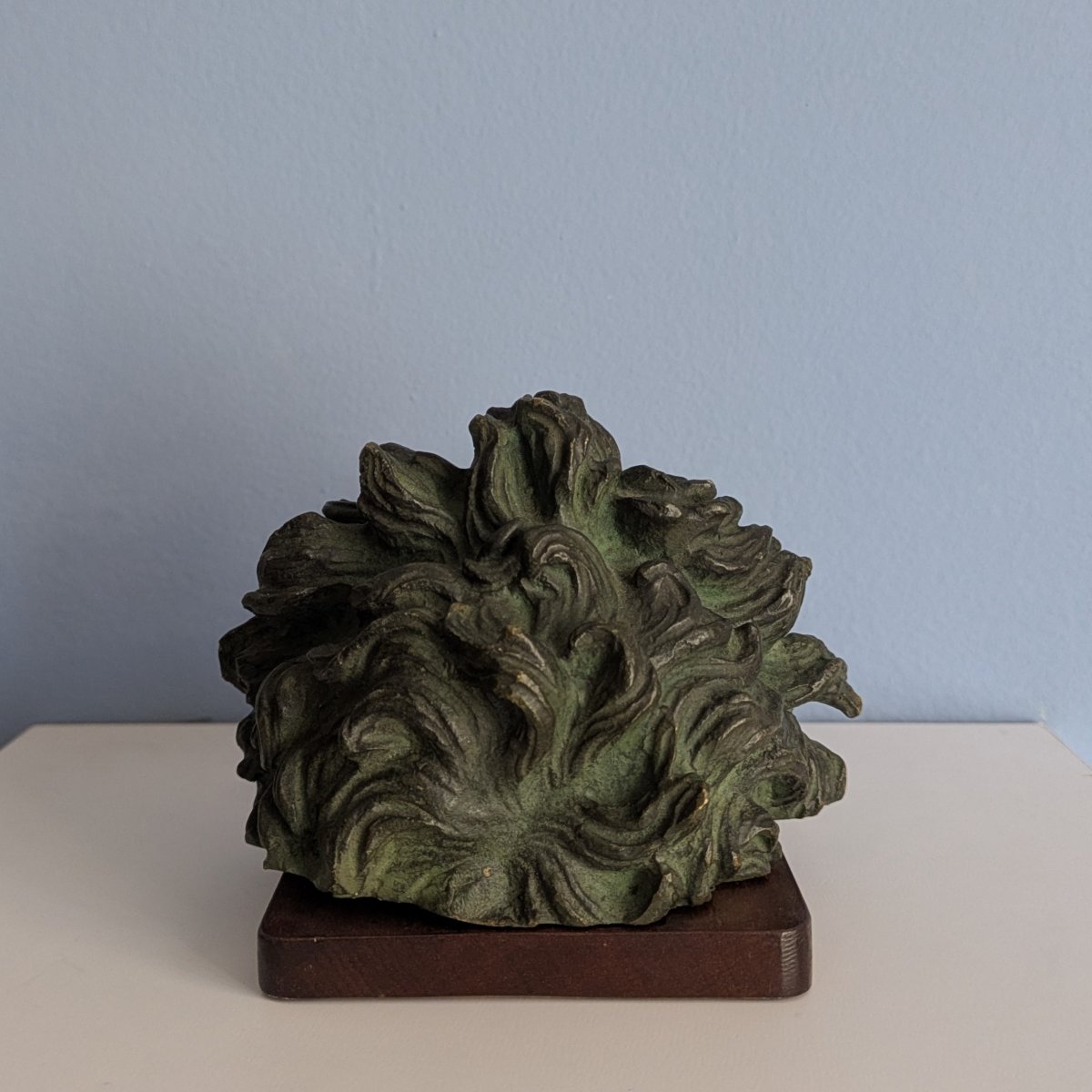
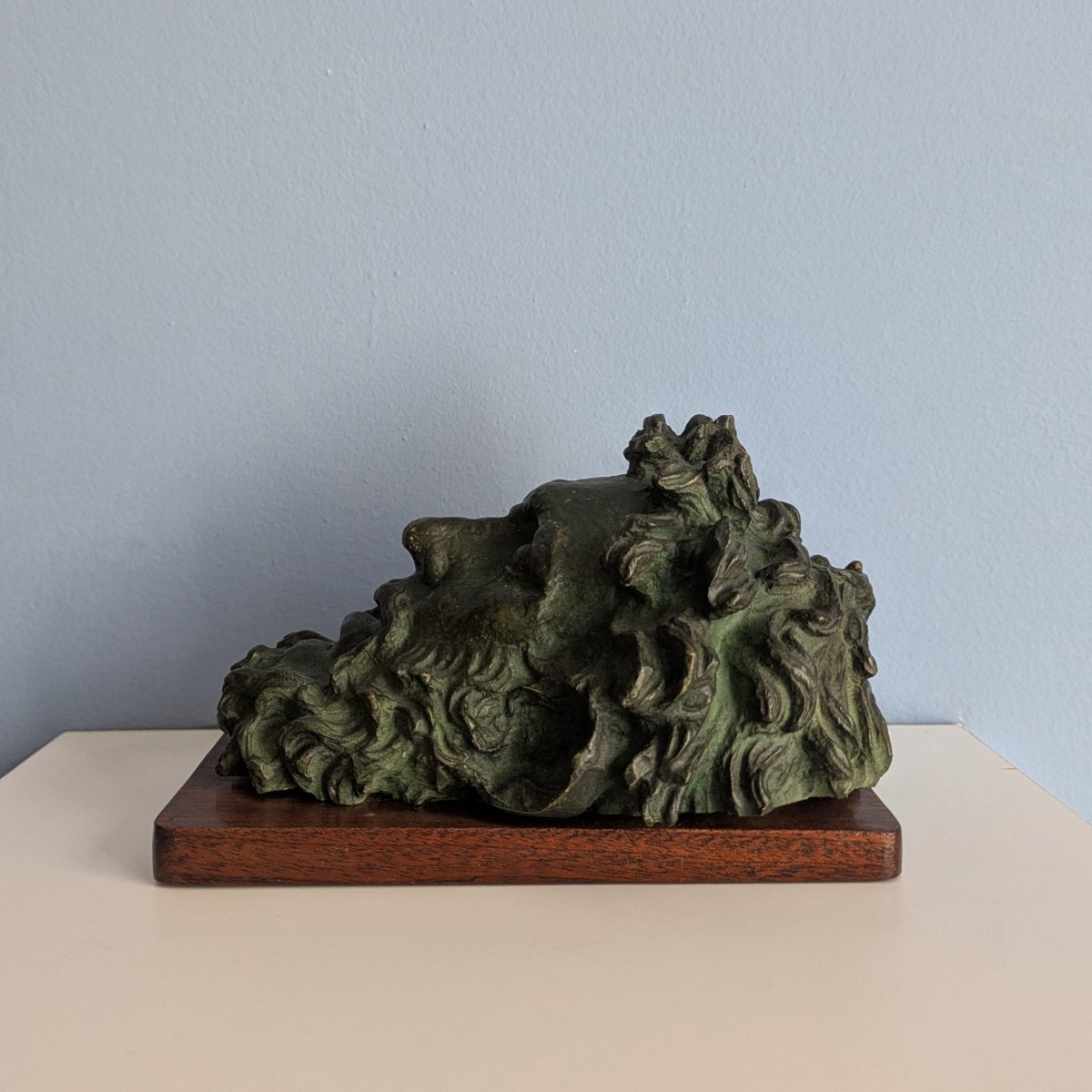
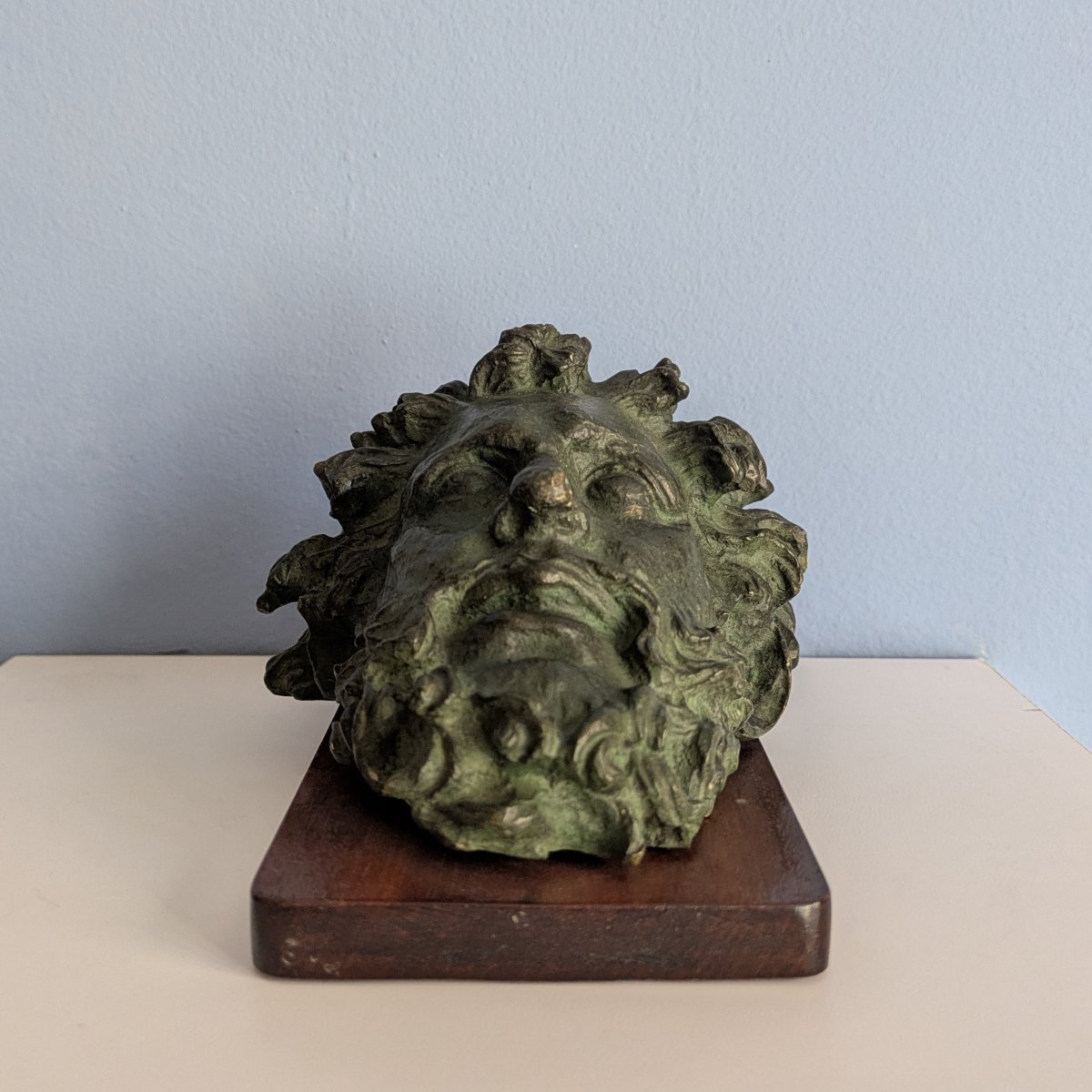
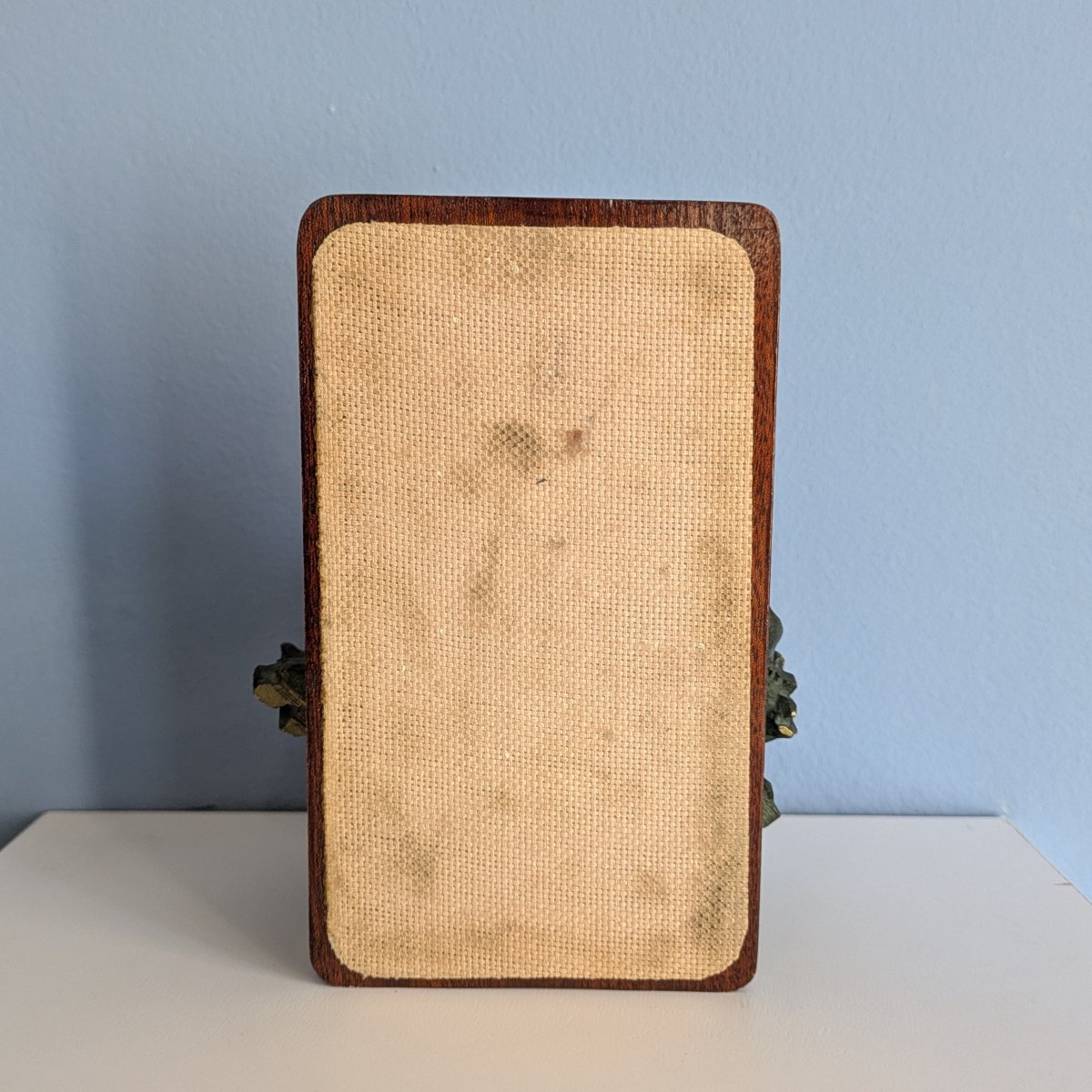


Souvenir From The Grand Tour—bronze Head Of Laocoön, Based On The Ancient Original—circa 1900
Head modeled after an ancient original
Bronze with a greenish patina
Dimensions: H. (with base) 14,5 (cm.)
Circa 1900
The Laocoön
A famous ancient sculpture discovered in Rome in 1506, near the ancient Baths of Trajan, it was quickly acquired by Pope Julius II and installed in the Vatican. Upon its discovery, it was identified as the work described by Pliny the Elder, attributed to the Rhodian sculptors Agesander, Polydorus, and Athenodorus.
The work, found incomplete, was restored in the 16th century by Montorsoli, who notably reconstructed Laocoon’s arm. In 1905, the original arm was discovered by archaeologist Ludwig Pollak and reinstalled during a restoration between 1957 and 1960. The sculpture was also housed at the Louvre between 1798 and 1815 following Bonaparte’s seizures during the Italian campaign, before returning to the Vatican.
The group depicts Laocoon and his two sons being attacked by snakes, in a moment of intense suffering, with powerful bodies, tormented faces, and a composition that emphasizes the inevitability of their fate. This work is considered one of the masterpieces of Hellenistic sculpture.
The Laocoön profoundly influenced European artists and thinkers, notably Winckelmann, Lessing, Goethe, and Schopenhauer, becoming a major reference point in aesthetic theory.
It is now generally accepted that this is a 1st-century CE Roman copy of a Hellenistic original that has since been lost. Experts continue to debate its dating and its connection to Virgil’s account in the Aeneid.
Period: 19th century
Style: Rome and Antic Greece
Condition: Excellent condition
Material: Bronze
Reference (ID): 1799289
Availability: In stock