THIS OBJECT WAS SOLD
Vittorio Maria Bigari, Bologna, 1692–1776 — *sacra Conversazione*—ink On Paper
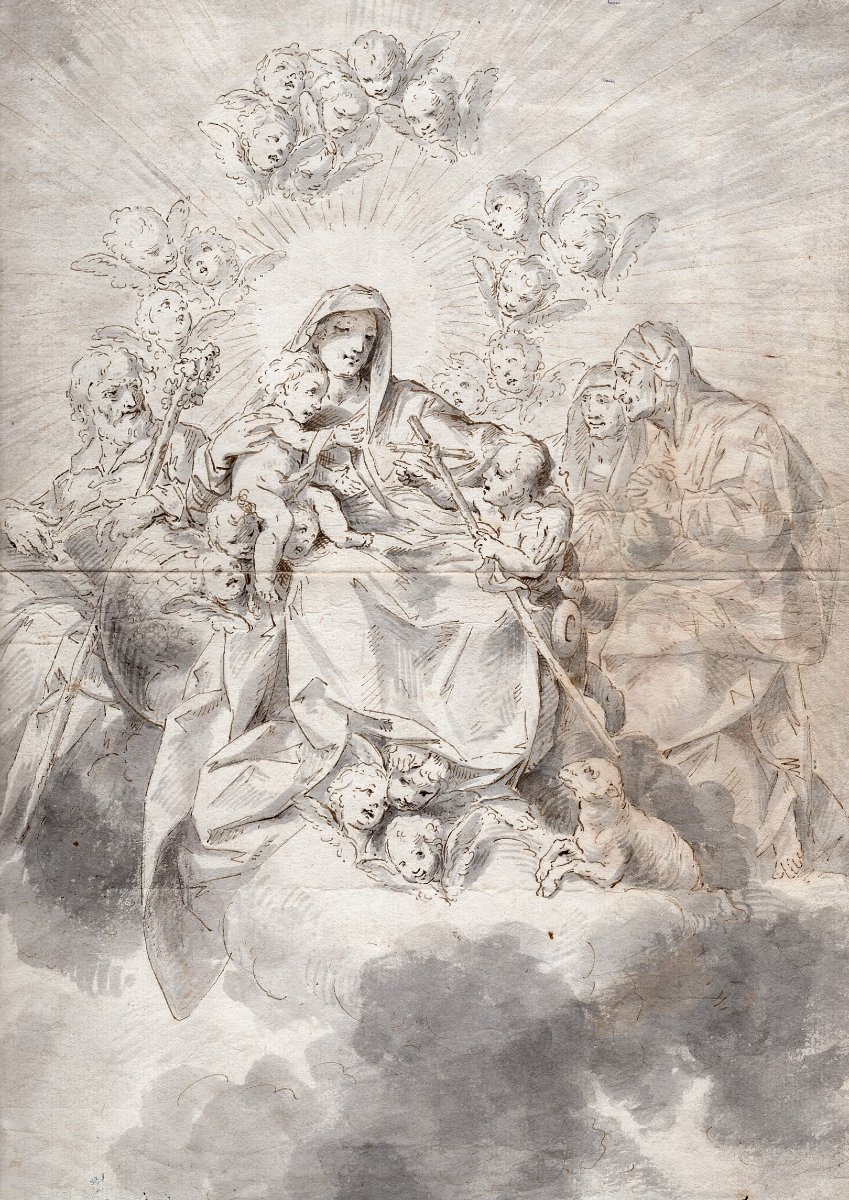
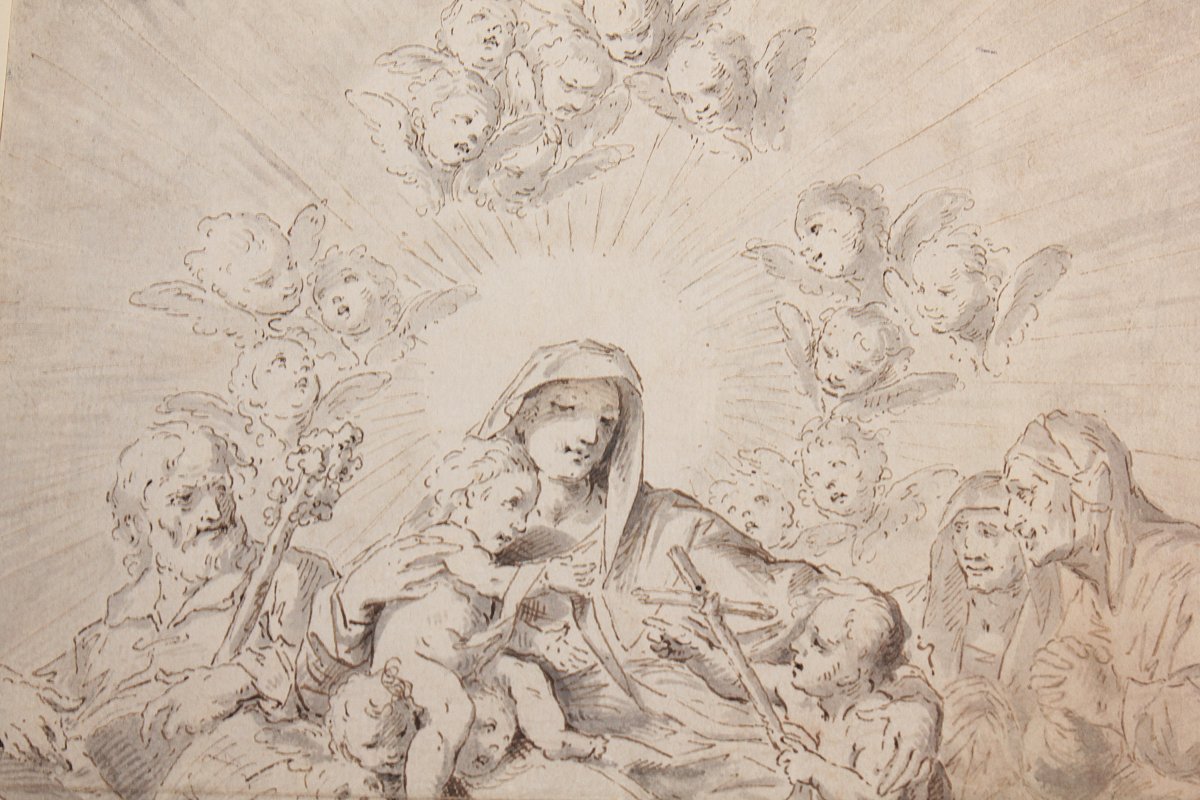
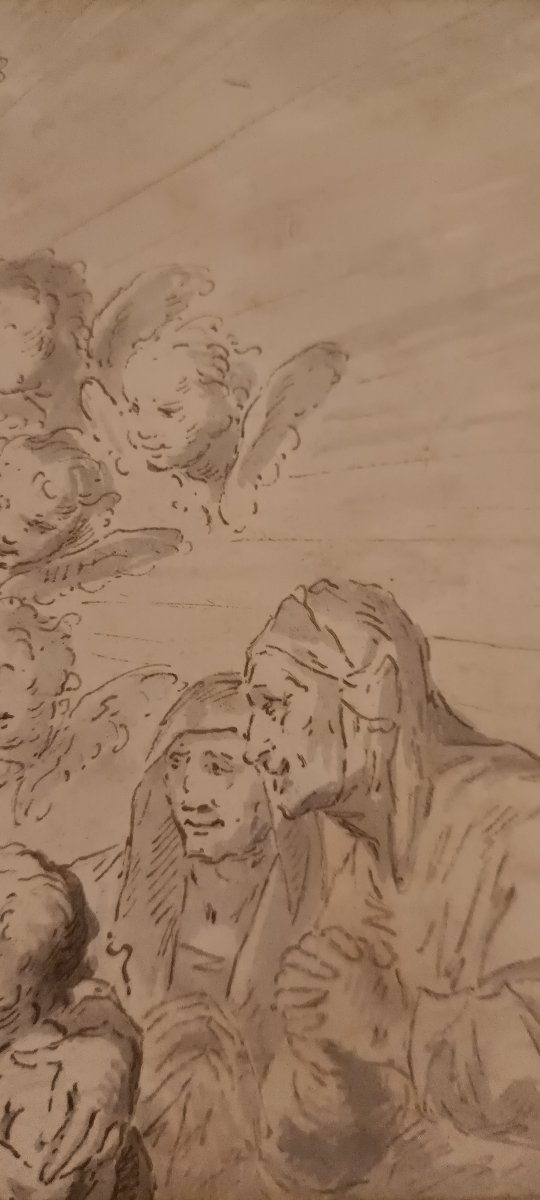
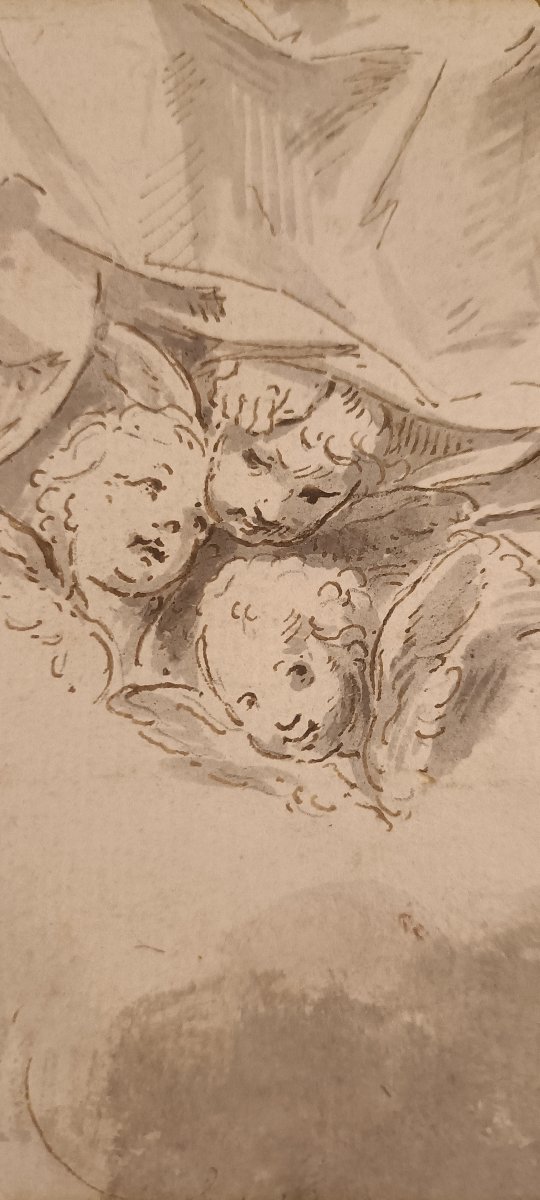
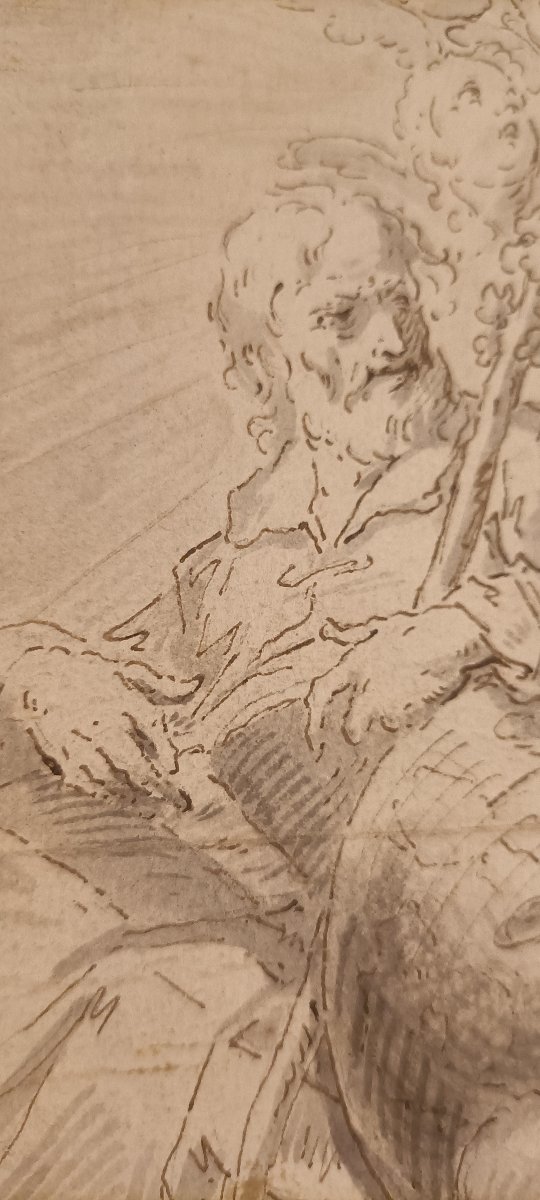
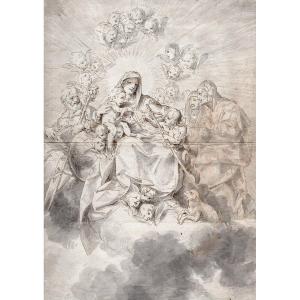


Pen and brown ink drawing, gray watercolor (lavis) on paper, 30 × 22 cm. Madonna and Child, Saint Joseph, the Young Saint John with a processional cross and the Lamb, Saint Anne, and Zechariah (?), crowned by a dense wreath of winged cherubs.
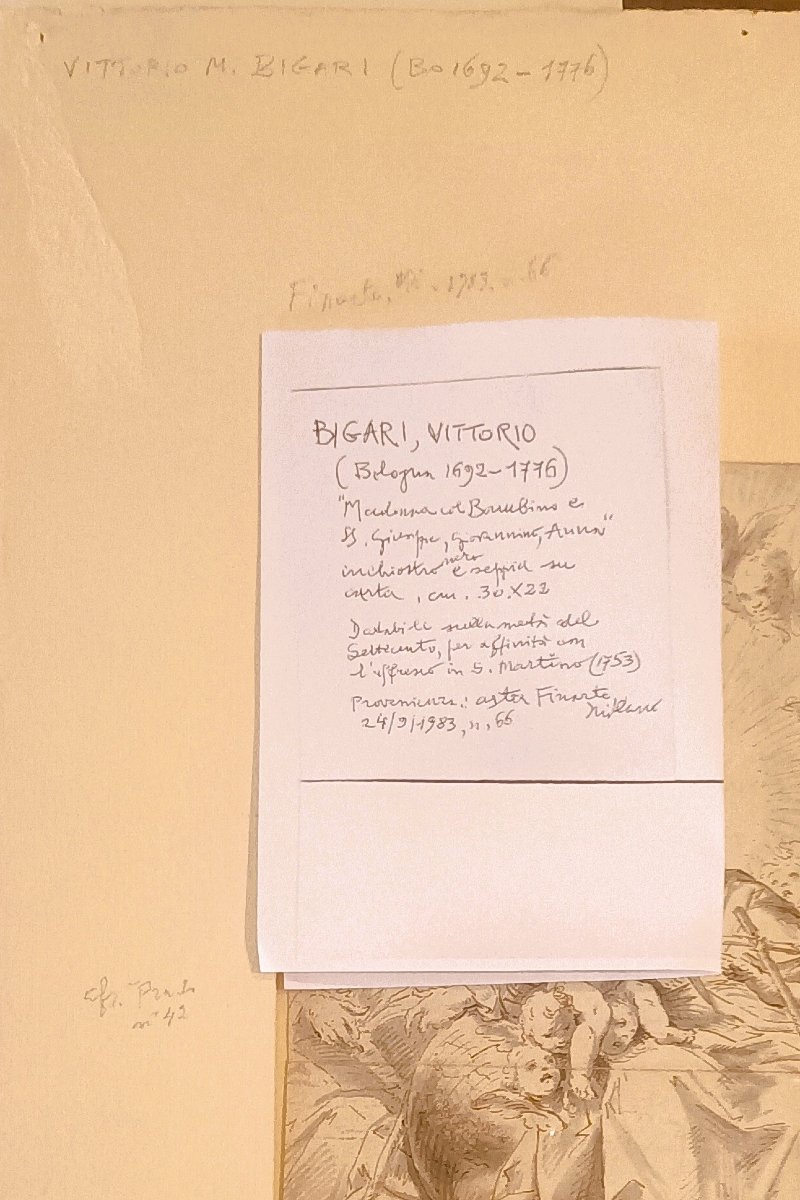
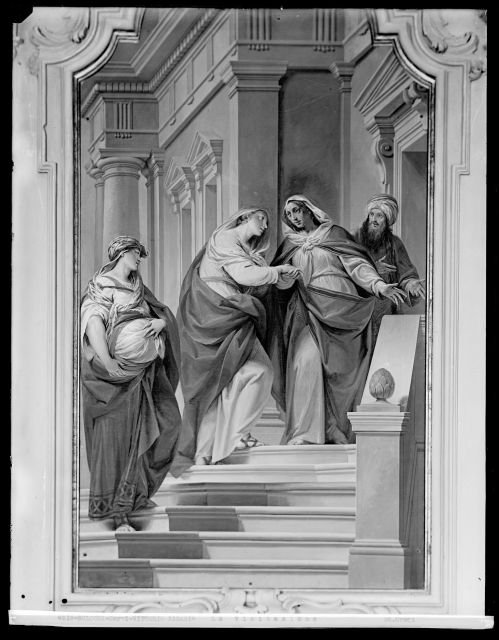
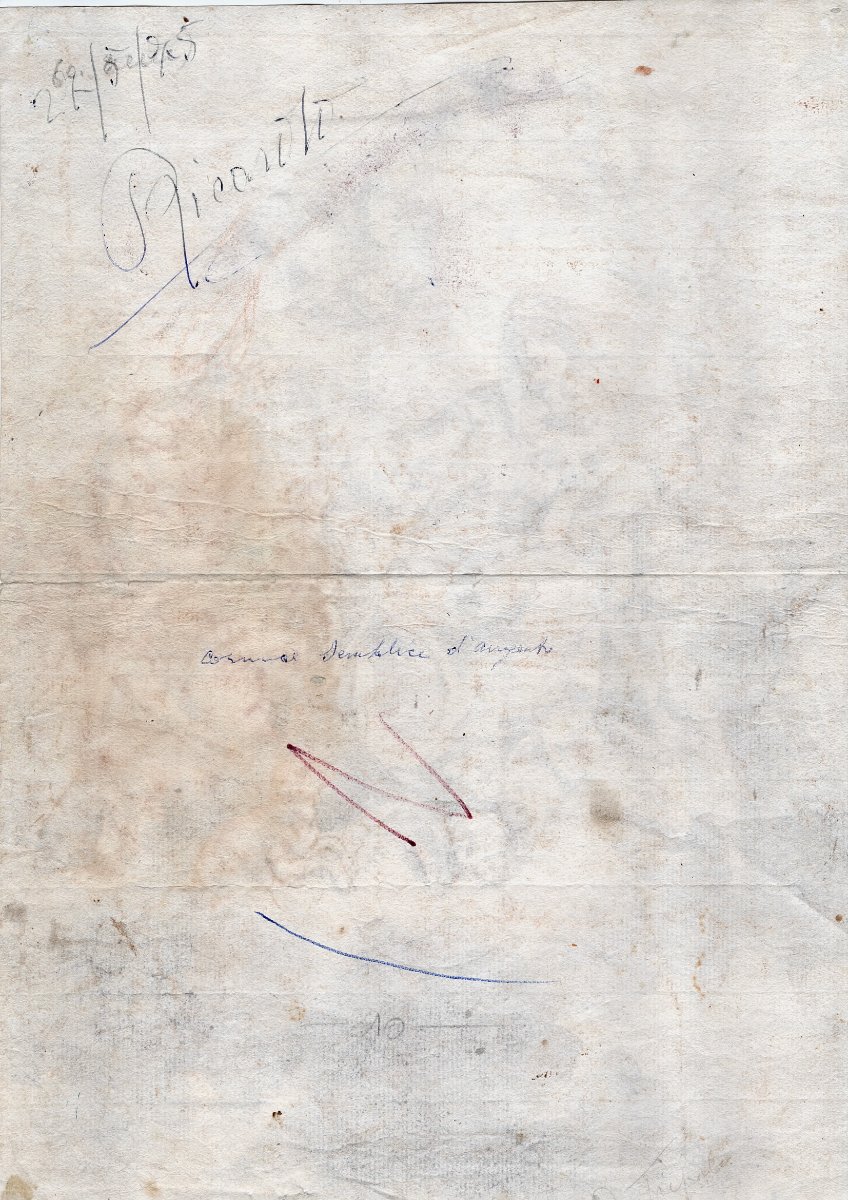
The sheet was part of the private collection of Renato Roli (Bologna), an art historian and leading specialist in 17th- and 18th-century Bolognese painting, and co-author—with G. Sestrieri and C. Casali—of *I disegni italiani del Settecento* (1981). The attribution to Vittorio Maria Bigari was made by Roli himself in a handwritten note drafted following the purchase of the sheet at the Finarte auction on September 24, 1983 (lot 66), confirming a direct assessment not mediated by third parties. In the same note, Roli places the drawing within a mature phase of Bigari’s career, following the mid-18th century. A comparison with the Visitation at Santa Maria dei Servi is useful; the dating also finds independent and precise corroboration in Bigari’s Visitation preserved in the sacristy of the Basilica of Santa Maria dei Servi in Bologna (tempera on canvas, 450×200 cm), dated by the Zeri Photo Library as 1750 post–1755 ante, part of the cycle featuring Stories of John the Baptist. The comparison between the two works is convincing not only chronologically but also in terms of composition: the same economy of line in rendering the elderly faces through short, parallel hatching without rigid outlines, and the same treatment of drapery—large masses of wash with few angular folds rendered in pen—typical of a drawing conceived with the overall painterly effect in mind rather than for autonomous detail.
The focal point of the entire drawing is the figure of the Virgin Mary, who occupies the apex of the pyramidal composition and serves as its true compositional and narrative linchpin. It is she, with the Child in her arms, who physically holds together the two family units depicted at the edges of the scene: on one side, to the left, Saint Joseph with his flowering staff, completing the Holy Family; on the other, to the right, Saint Anne—Mary’s mother and thus the generational link between the two lineages—in close dialogue with an elderly male figure, identifiable as Zechariah, father of John the Baptist. In the foreground, bringing the composition to a close toward the earthly plane of the clouds, the infant St. John with his processional cross and the lamb represents the integration of the family of John the Baptist into the scene, in a kinship with the Christ Child mediated precisely by the figure of St. Anne. The wreath of cherub heads occupying the upper register lightens the pyramidal structure and opens the scene upward, without detracting from the visual centrality of the Virgin Mary, who remains the sole fixed point around which the entire narrative of the two families revolves.
Condition: vertical crease down the center; localized yellowing along the right margin. Overall in good condition, consistent with the age of the sheet.
The sheet was part of the private collection of Renato Roli (Bologna), an art historian and leading specialist in 17th- and 18th-century Bolognese painting, and co-author—with G. Sestrieri and C. Casali—of *I disegni italiani del Settecento* (1981). The attribution to Vittorio Maria Bigari was made by Roli himself in a handwritten note drafted following the purchase of the sheet at the Finarte auction on September 24, 1983 (lot 66), confirming a direct assessment not mediated by third parties. In the same note, Roli places the drawing within a mature phase of Bigari’s career, following the mid-18th century. A comparison with the Visitation at Santa Maria dei Servi is useful; the dating also finds independent and precise corroboration in Bigari’s Visitation preserved in the sacristy of the Basilica of Santa Maria dei Servi in Bologna (tempera on canvas, 450×200 cm), dated by the Zeri Photo Library as 1750 post–1755 ante, part of the cycle featuring Stories of John the Baptist. The comparison between the two works is convincing not only chronologically but also in terms of composition: the same economy of line in rendering the elderly faces through short, parallel hatching without rigid outlines, and the same treatment of drapery—large masses of wash with few angular folds rendered in pen—typical of a drawing conceived with the overall painterly effect in mind rather than for autonomous detail.
The focal point of the entire drawing is the figure of the Virgin Mary, who occupies the apex of the pyramidal composition and serves as its true compositional and narrative linchpin. It is she, with the Child in her arms, who physically holds together the two family units depicted at the edges of the scene: on one side, to the left, Saint Joseph with his flowering staff, completing the Holy Family; on the other, to the right, Saint Anne—Mary’s mother and thus the generational link between the two lineages—in close dialogue with an elderly male figure, identifiable as Zechariah, father of John the Baptist. In the foreground, bringing the composition to a close toward the earthly plane of the clouds, the infant St. John with his processional cross and the lamb represents the integration of the family of John the Baptist into the scene, in a kinship with the Christ Child mediated precisely by the figure of St. Anne. The wreath of cherub heads occupying the upper register lightens the pyramidal structure and opens the scene upward, without detracting from the visual centrality of the Virgin Mary, who remains the sole fixed point around which the entire narrative of the two families revolves.
Condition: vertical crease down the center; localized yellowing along the right margin. Overall in good condition, consistent with the age of the sheet.
Explore similar pieces and discover your ideal find:
drawings