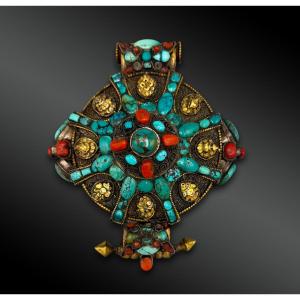


Relic Box Or Portable Altar Known As Ga’u - Tibet - 19th Century
RELIC BOX or PORTABLE ALTAR known as GA’U
Tibet
19th century
Low-grade silver, coral, turquoise
H.: 16.5; W.: 15.5 cm
(slight damage to the nose of a Kirtimukha)
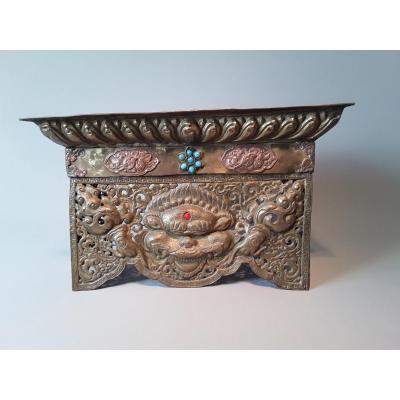
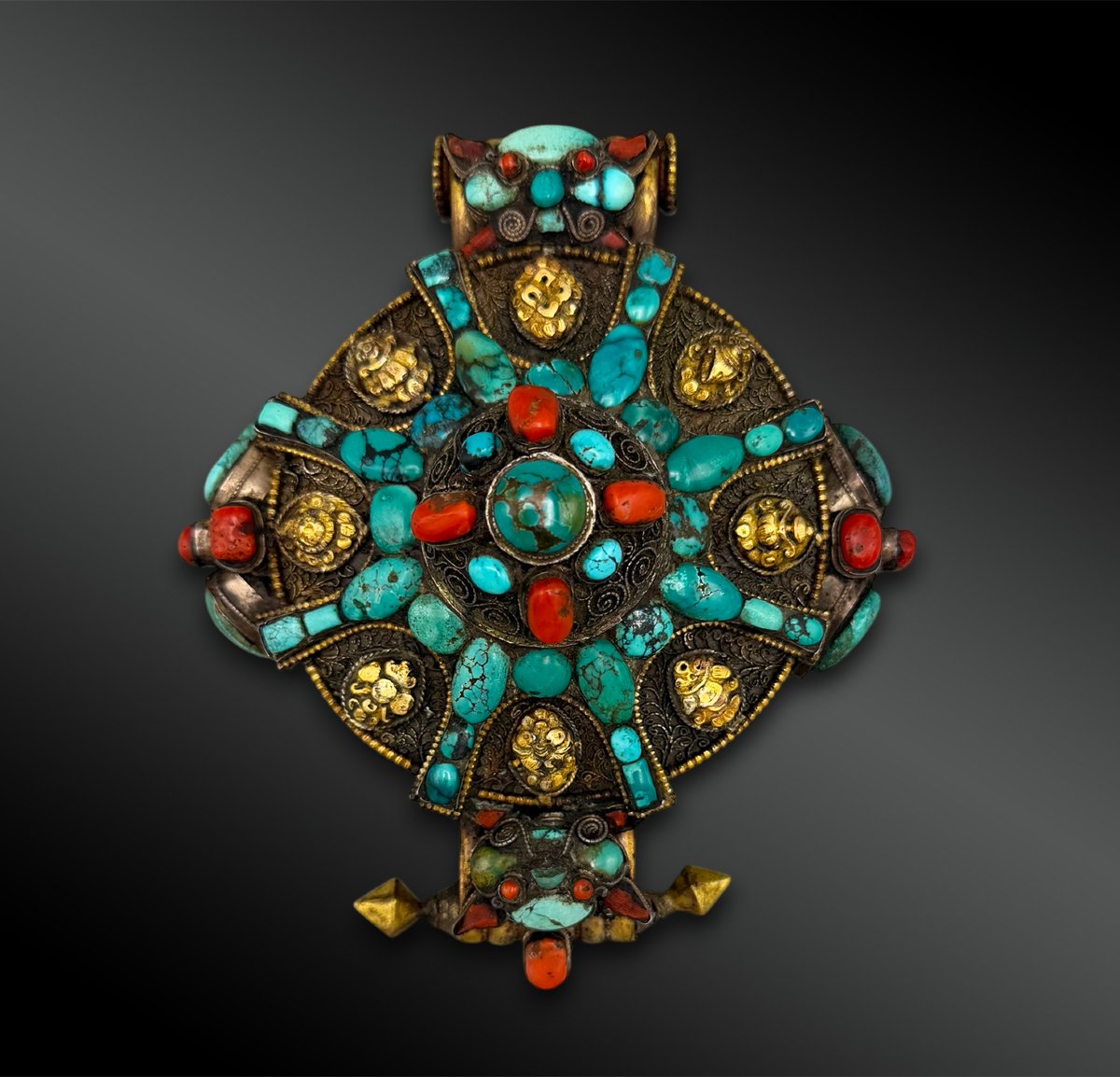
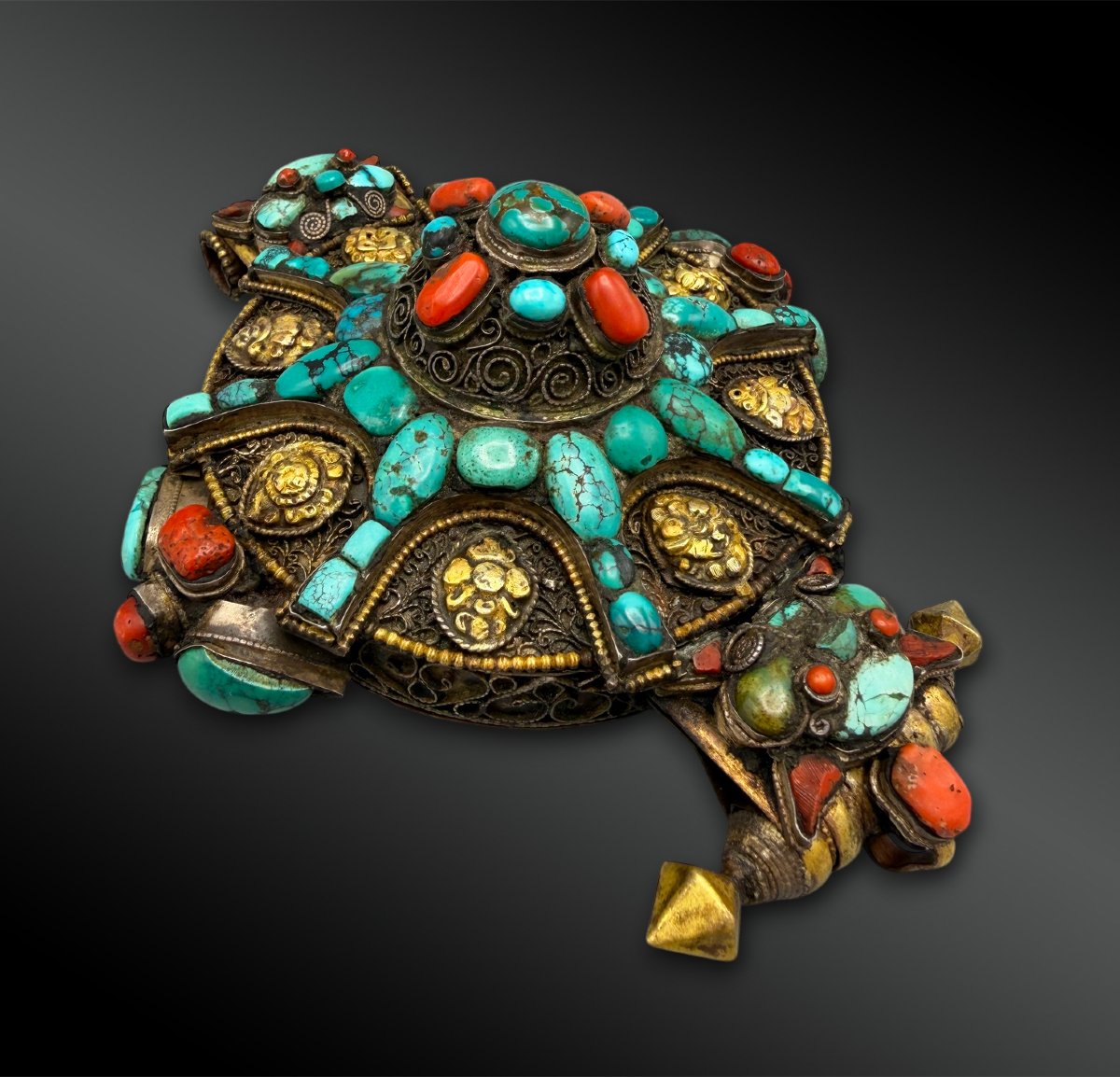
A reliquary with a central radiating motif entirely covered in turquoise cabochons and a protruding central medallion set with coral and turquoise cabochons. Between each of its rays are the eight auspicious symbols of Buddhism – Astamangala in Sanskrit and bkra-shis rtags-brgyad in Tibetan. Thus, the gilded medallions, set against a filigree background, feature respectively the conch shell, the parasol, the fish, the urn of wisdom, the wheel of the Dharma, the victory banner, the lotus flower and the endless knot.
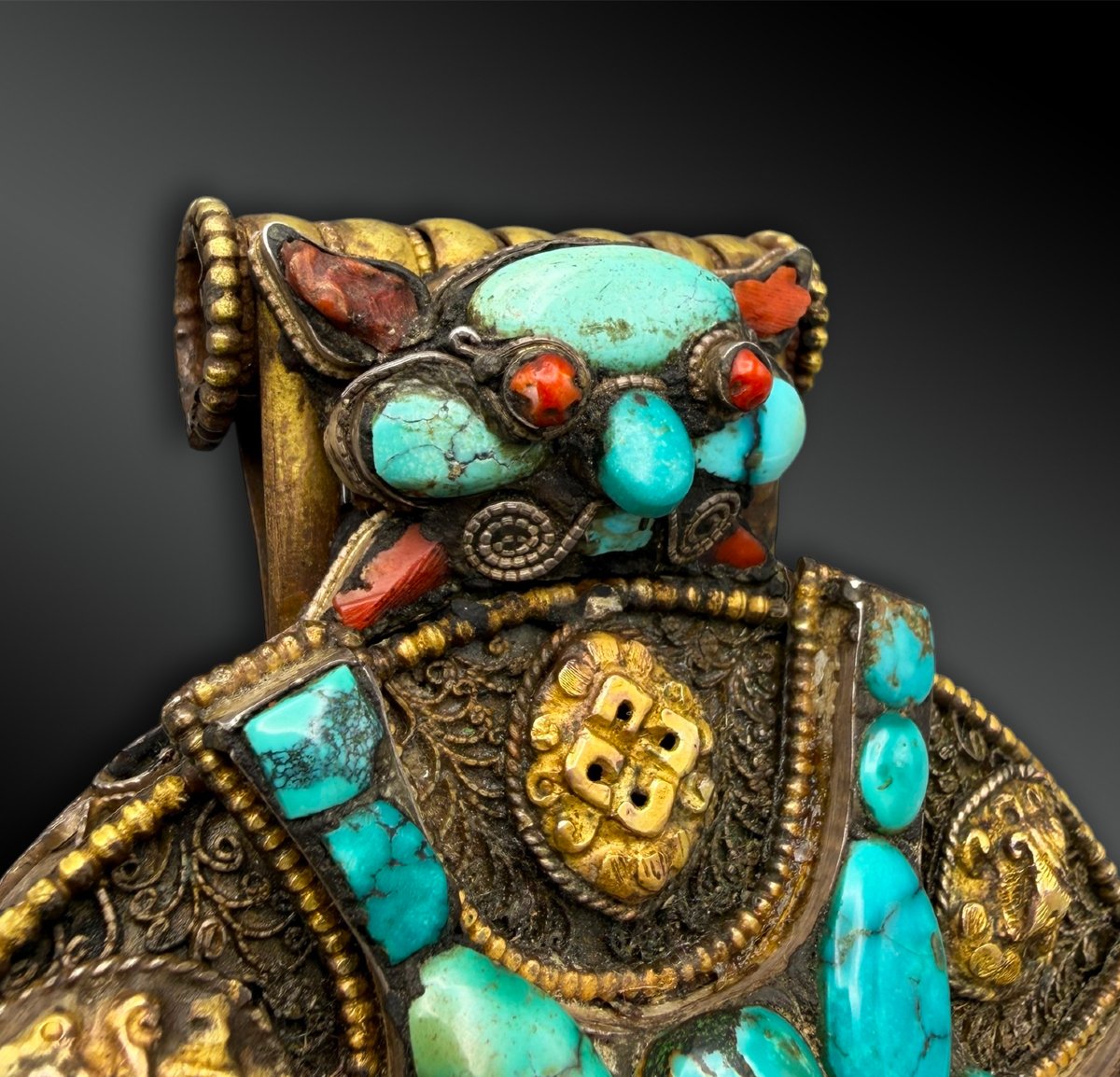
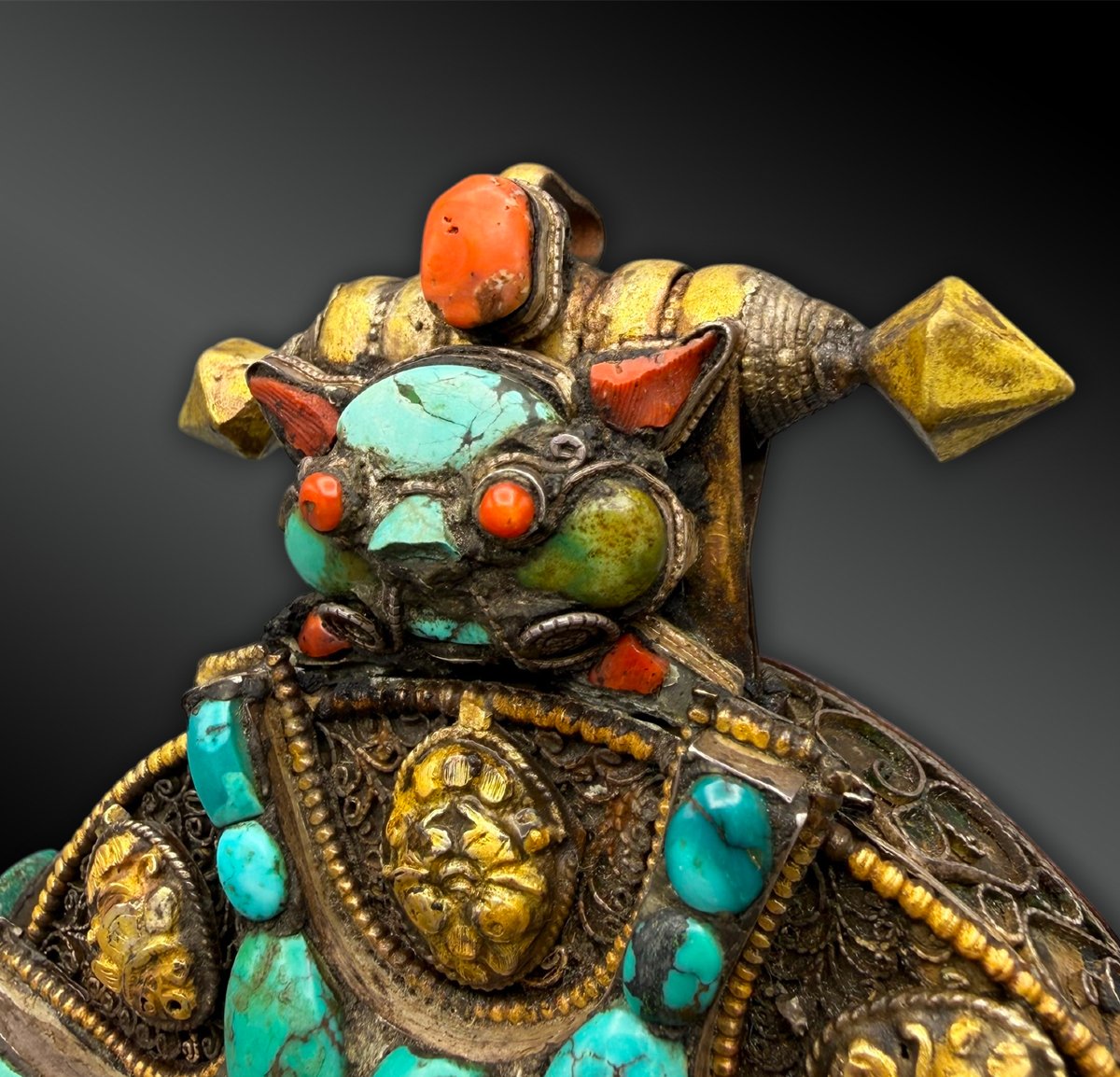
The sides feature two leafy flowers set as cabochons, whilst the two large suspension rings at the top and bottom are adorned with two heads of Kirtimukha, entirely composed of coral and mother-of-pearl cabochons, with whiskers made of coiled silver wire. Kirtimukha is a figure who protects against evil forces and guards sacred spaces.
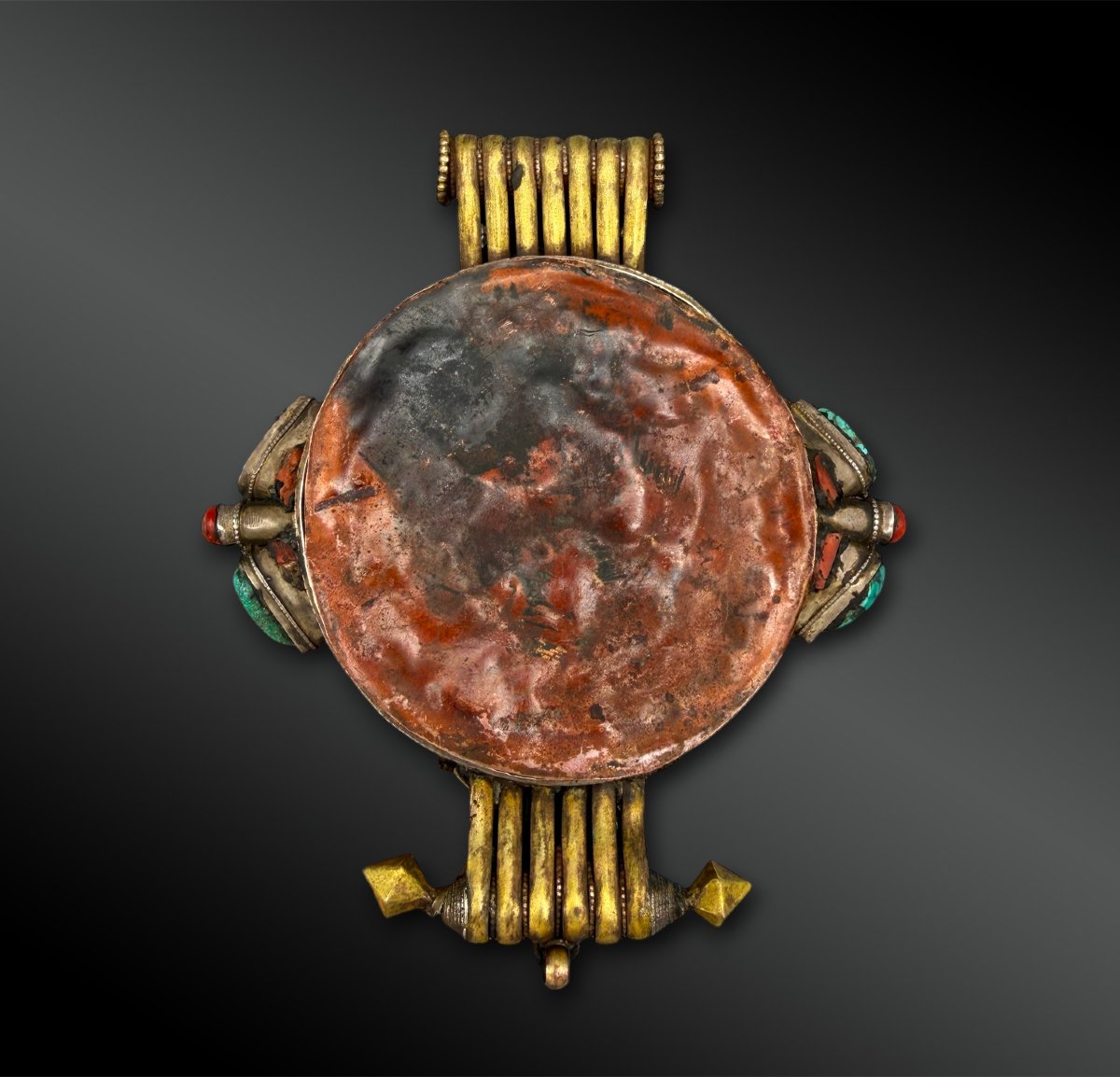
The box opens from the bottom by removing the removable copper disc.
Highly symbolic stones, turquoise represents the sky and protection, whilst coral symbolises blood: the life force. Each Ga’u (or Gau or Ghau) is unique, but all serve a specific purpose: to offer protection to the wearer.
Text and photos © FCP CORIDON
Tibet
19th century
Low-grade silver, coral, turquoise
H.: 16.5; W.: 15.5 cm
(slight damage to the nose of a Kirtimukha)
A reliquary with a central radiating motif entirely covered in turquoise cabochons and a protruding central medallion set with coral and turquoise cabochons. Between each of its rays are the eight auspicious symbols of Buddhism – Astamangala in Sanskrit and bkra-shis rtags-brgyad in Tibetan. Thus, the gilded medallions, set against a filigree background, feature respectively the conch shell, the parasol, the fish, the urn of wisdom, the wheel of the Dharma, the victory banner, the lotus flower and the endless knot.
The sides feature two leafy flowers set as cabochons, whilst the two large suspension rings at the top and bottom are adorned with two heads of Kirtimukha, entirely composed of coral and mother-of-pearl cabochons, with whiskers made of coiled silver wire. Kirtimukha is a figure who protects against evil forces and guards sacred spaces.
The box opens from the bottom by removing the removable copper disc.
Highly symbolic stones, turquoise represents the sky and protection, whilst coral symbolises blood: the life force. Each Ga’u (or Gau or Ghau) is unique, but all serve a specific purpose: to offer protection to the wearer.
Text and photos © FCP CORIDON
1 280 €
Period: 19th century
Style: Asian art
Condition: Excellent condition
Reference (ID): 1797009
Availability: In stock
Print