

Camille Chenou-levesque (1818–1886) Portrait Of A Man Leaning On His Elbow, Drawing
Artist: Camille Chenou-levesque (1818-1886)
Camille Chenou-Levesque (1818–1886)
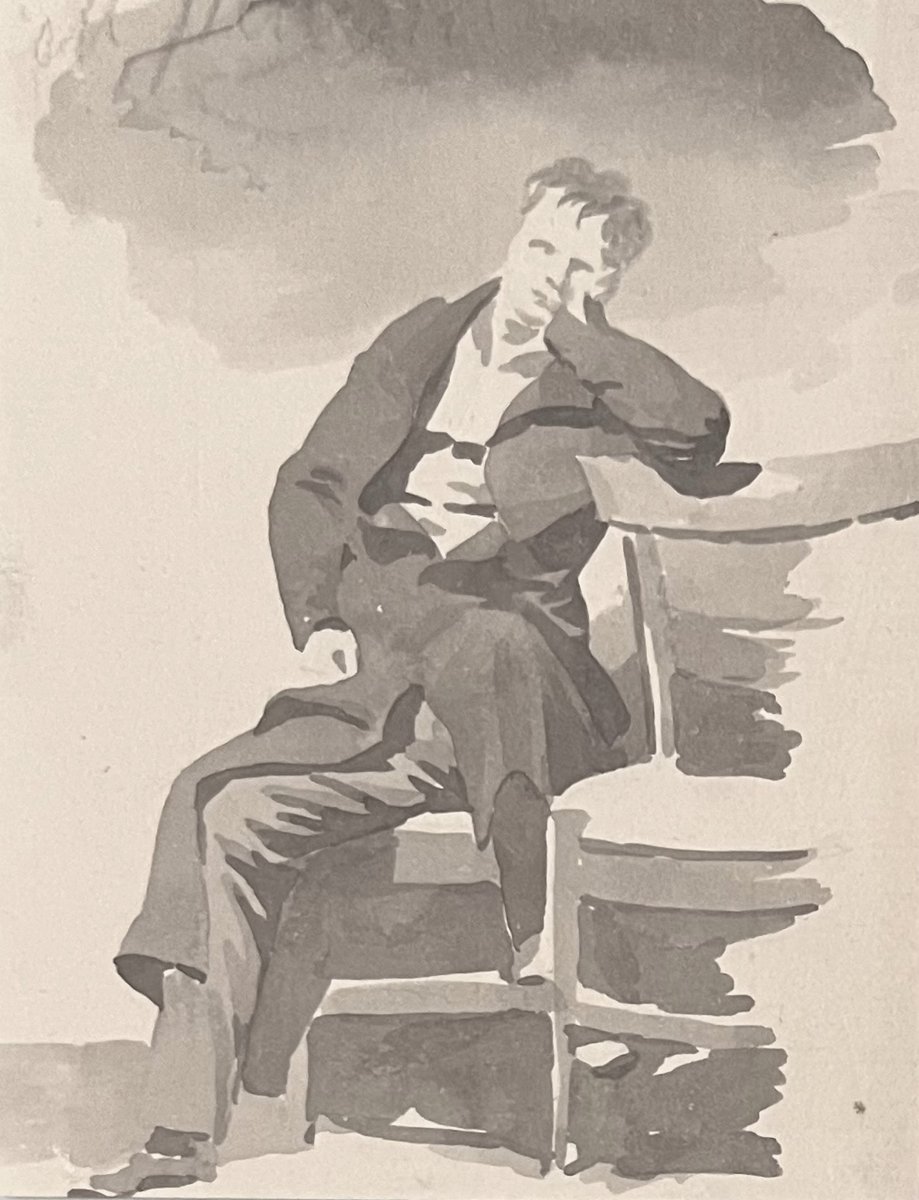
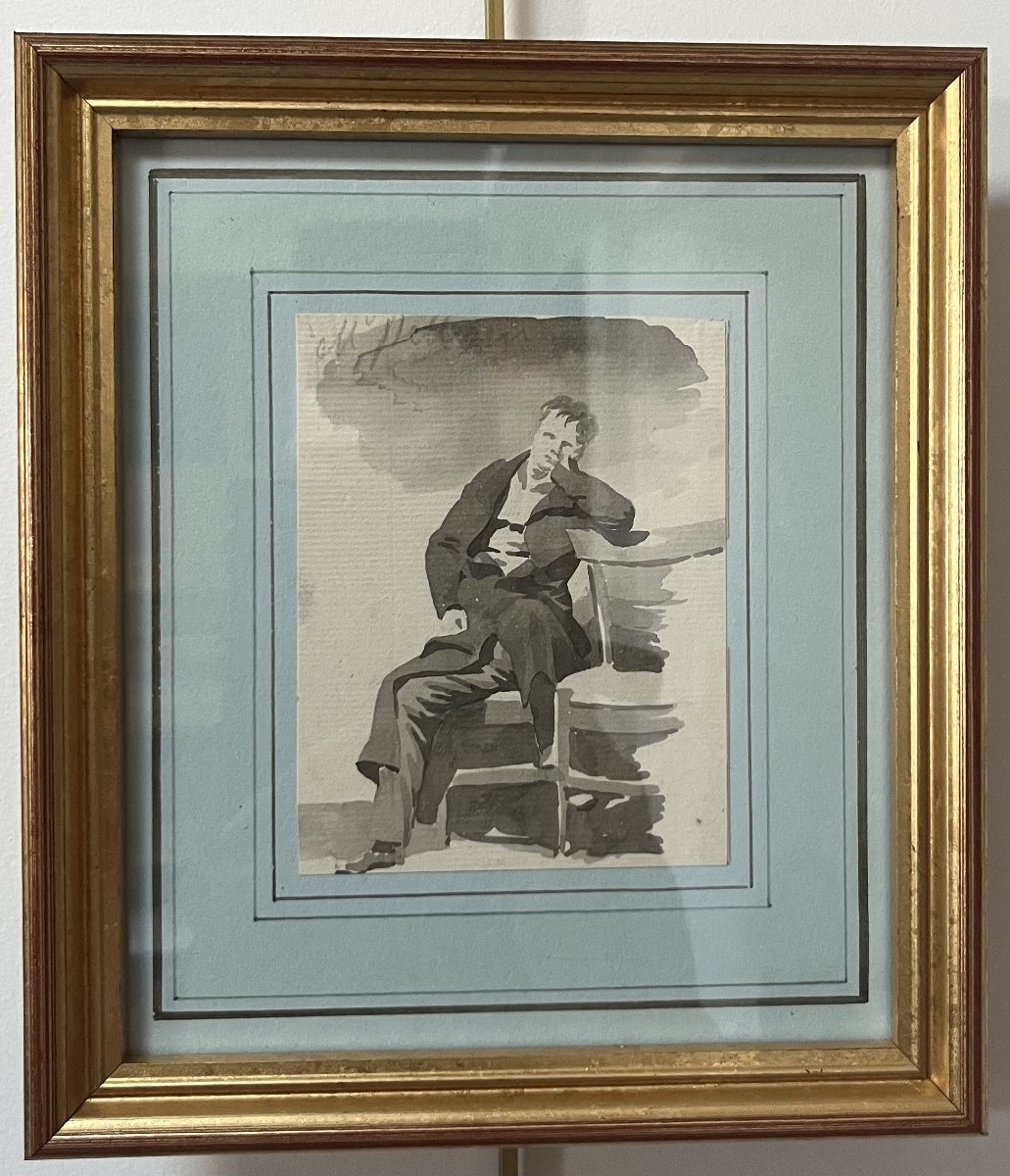
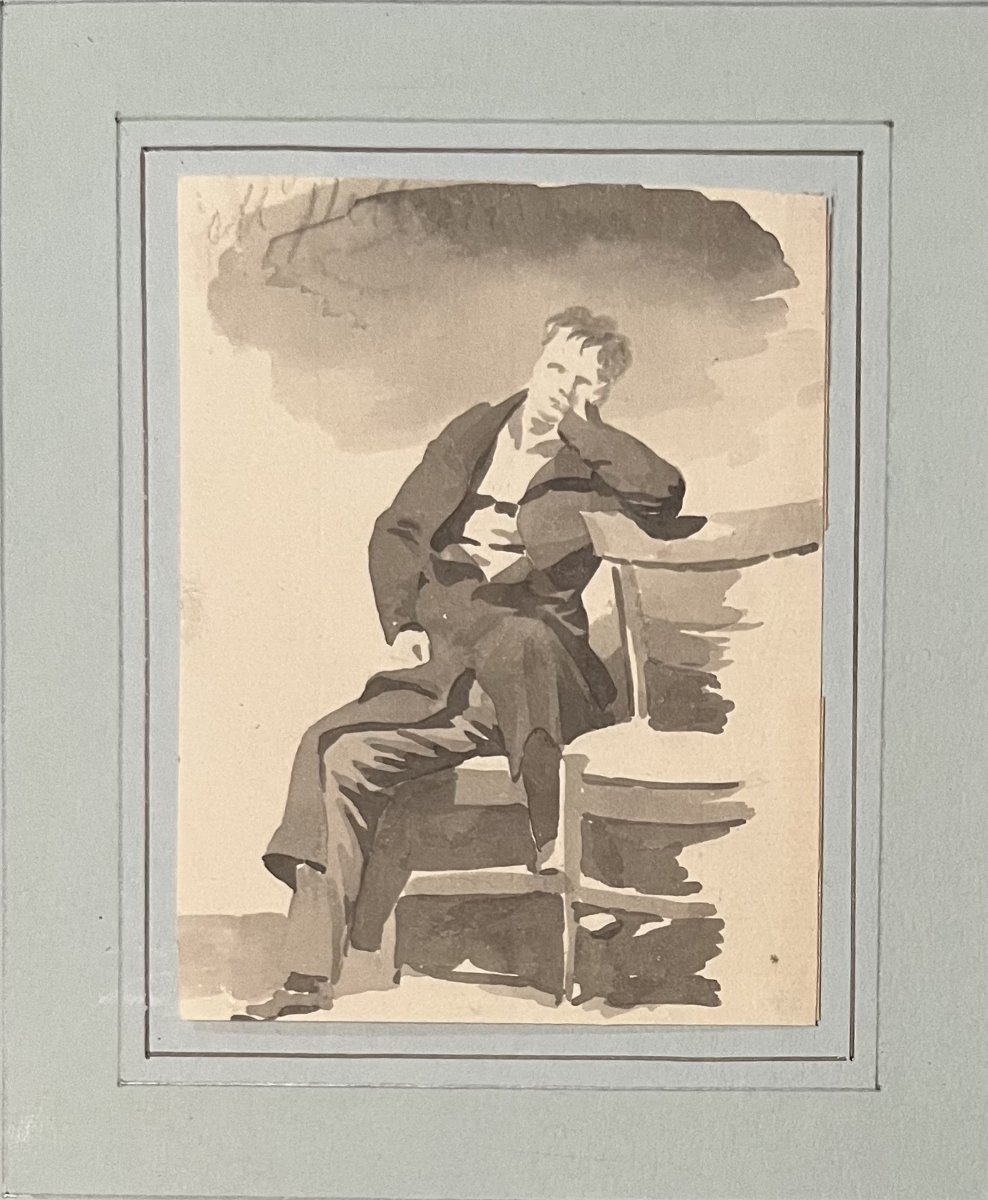
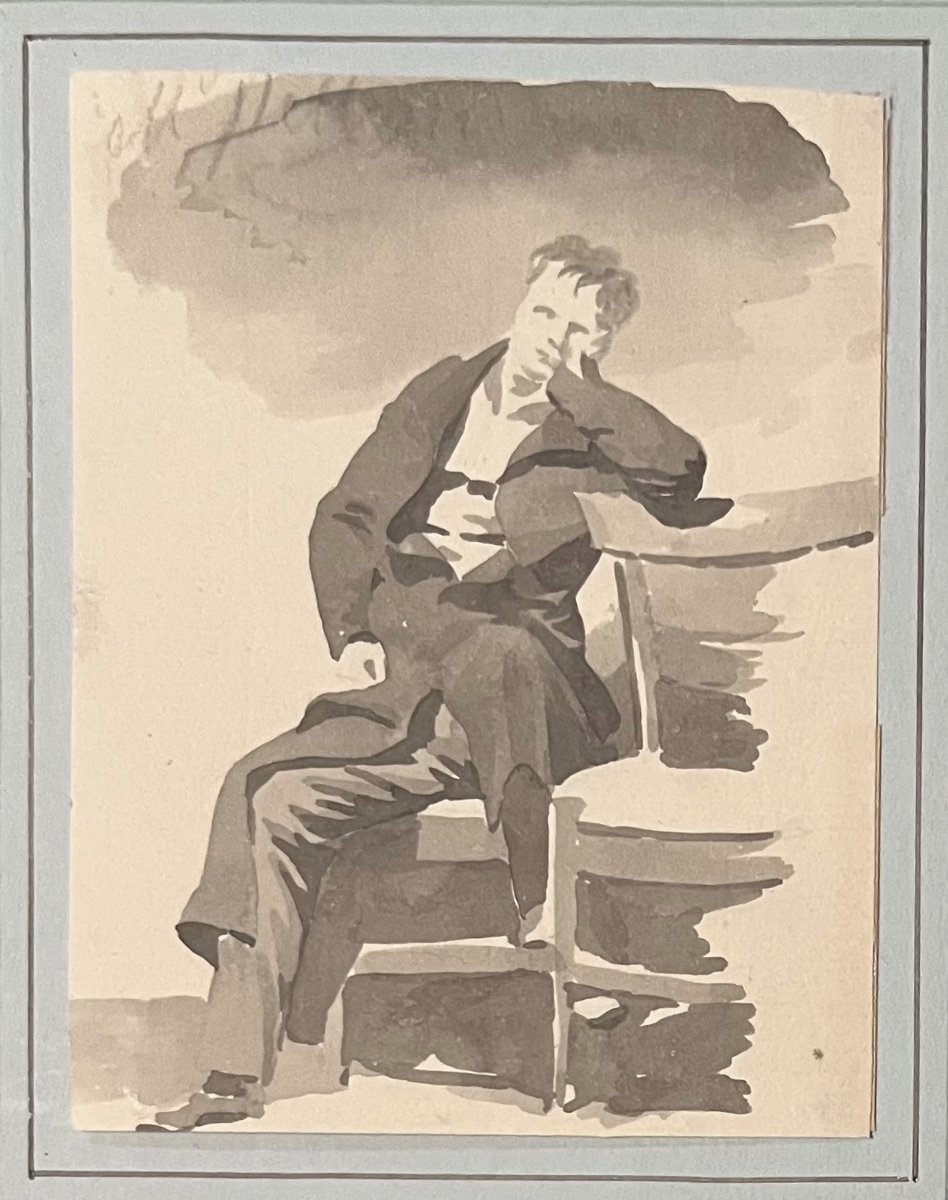
Portrait of a Man Leaning on His Elbow
black ink wash on paper
11.6 x 9 cm
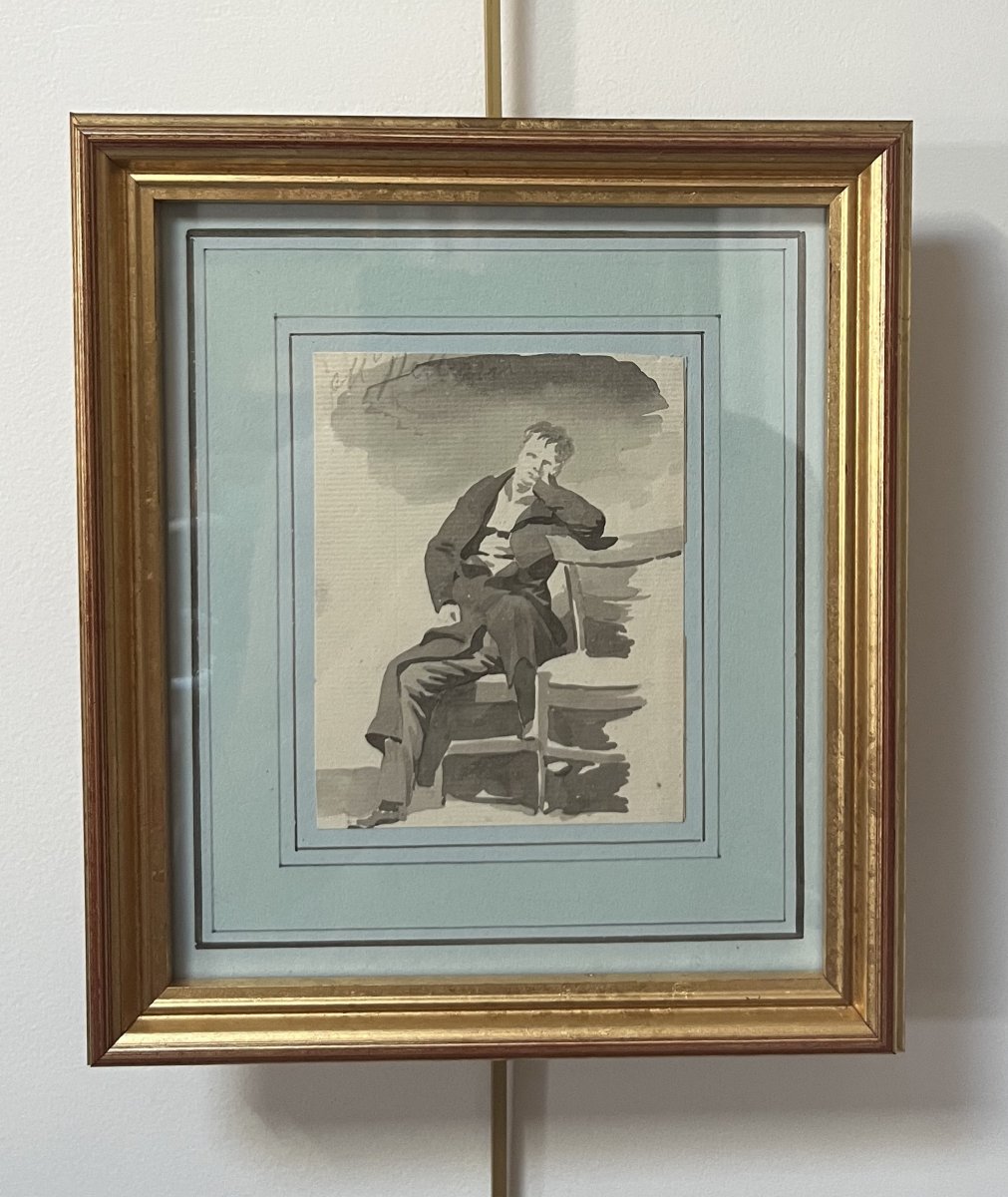
framed: 23 x 20 cm
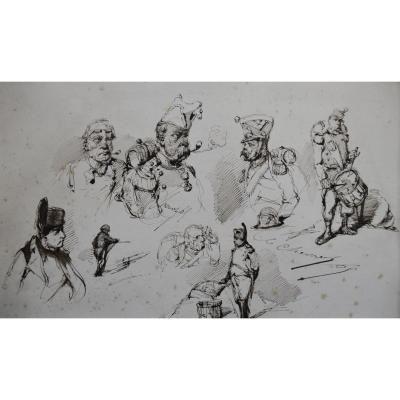
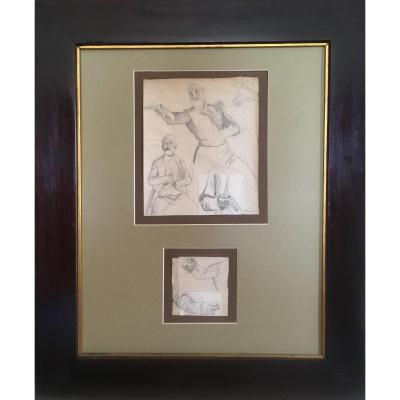
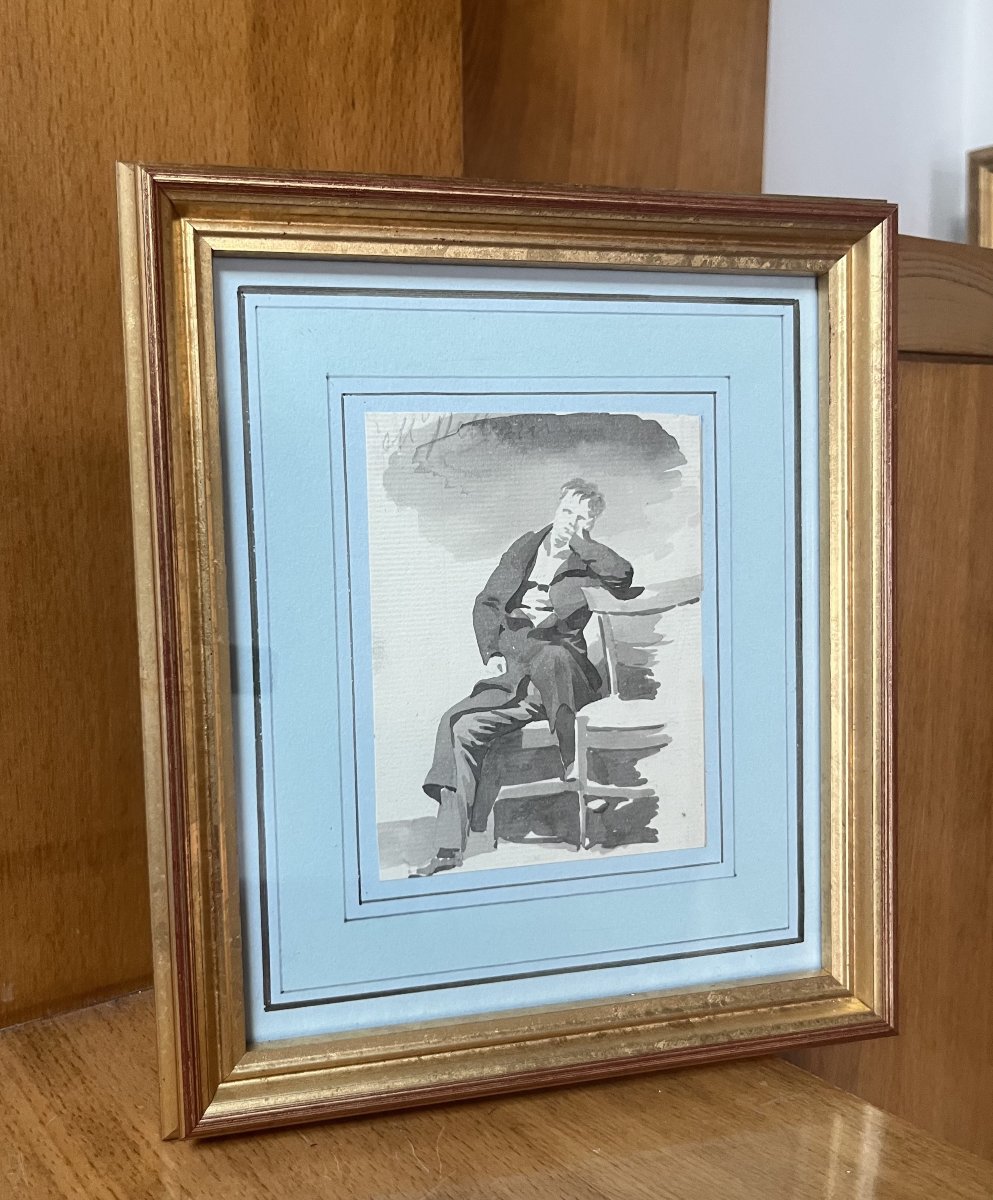
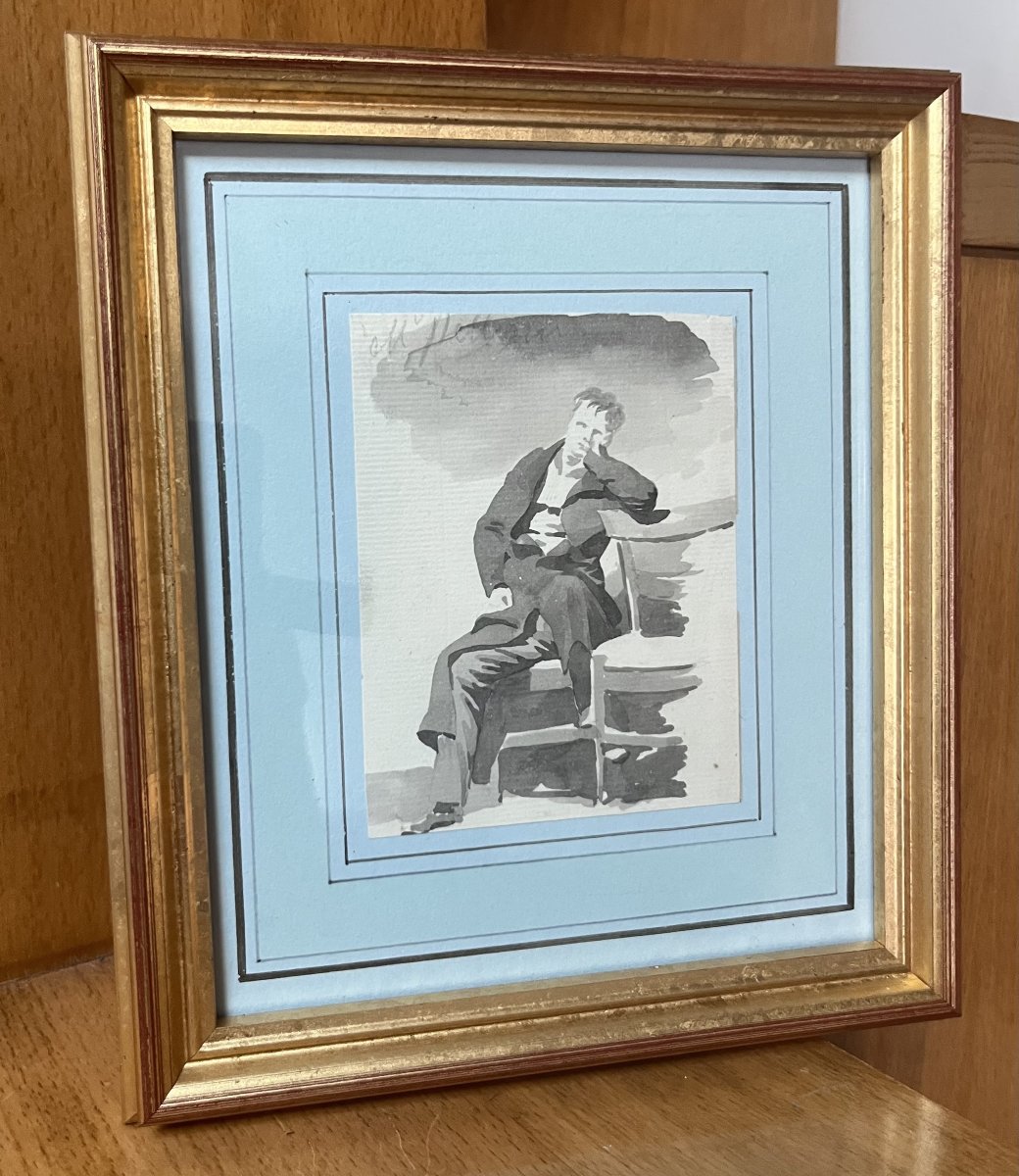
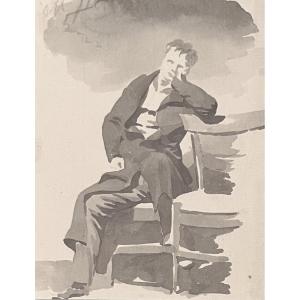
A draftswoman trained in the tradition of French Romanticism, Camille Chenou-Levesque demonstrates, in this small portrait, a confident mastery of black ink wash. The model’s pose—elbow propped up, gaze turned in a three-quarter profile—follows the tradition of the intimate salon portrait that flourished during the July Monarchy and at the beginning of the Second Empire. The nuanced modulation of blacks, ranging from silvery gray to dark brown, lends the face a sculptural depth closely linked to the lithographic effects cultivated by portraitists of the same generation
.Biography — Camille Chenou-Levesque (1818–1886)
Born in 1818, Camille Chenou married in 1837 the painter Félix Hullin de Boischevalier (1808–1869), a student of Paul Delaroche at the École des Beaux-Arts, who exhibited at the Salon from 1837 to 1853. This family environment, rooted in the heart of academic Romantic painting, provided the natural setting for her own training and artistic practice. Her drawings—primarily portraits in black ink or pencil—demonstrate confident technical mastery and a sensibility akin to that of the Salon portraitists of the 1830s–1850s: economy of means, psychological acuity, and mastery of tonal gradations in the black register. Works on paper by him are held in French public collections, notably at the Musée La Piscine in Roubaix and the Musée des Beaux-Arts in Orléans.
Portrait of a Man Leaning on His Elbow
black ink wash on paper
11.6 x 9 cm
framed: 23 x 20 cm
A draftswoman trained in the tradition of French Romanticism, Camille Chenou-Levesque demonstrates, in this small portrait, a confident mastery of black ink wash. The model’s pose—elbow propped up, gaze turned in a three-quarter profile—follows the tradition of the intimate salon portrait that flourished during the July Monarchy and at the beginning of the Second Empire. The nuanced modulation of blacks, ranging from silvery gray to dark brown, lends the face a sculptural depth closely linked to the lithographic effects cultivated by portraitists of the same generation
.Biography — Camille Chenou-Levesque (1818–1886)
Born in 1818, Camille Chenou married in 1837 the painter Félix Hullin de Boischevalier (1808–1869), a student of Paul Delaroche at the École des Beaux-Arts, who exhibited at the Salon from 1837 to 1853. This family environment, rooted in the heart of academic Romantic painting, provided the natural setting for her own training and artistic practice. Her drawings—primarily portraits in black ink or pencil—demonstrate confident technical mastery and a sensibility akin to that of the Salon portraitists of the 1830s–1850s: economy of means, psychological acuity, and mastery of tonal gradations in the black register. Works on paper by him are held in French public collections, notably at the Musée La Piscine in Roubaix and the Musée des Beaux-Arts in Orléans.
260 €
Period: 19th century
Style: Louis Philippe, Charles 10th
Condition: Good condition
Width: 9
Height: 11.6
Reference (ID): 1795057
Availability: In stock
Print