THIS OBJECT WAS SOLD
Pair Of Delft Apothecary Jars, “de Porceleyne Schotel,” Netherlands, 1764–1772
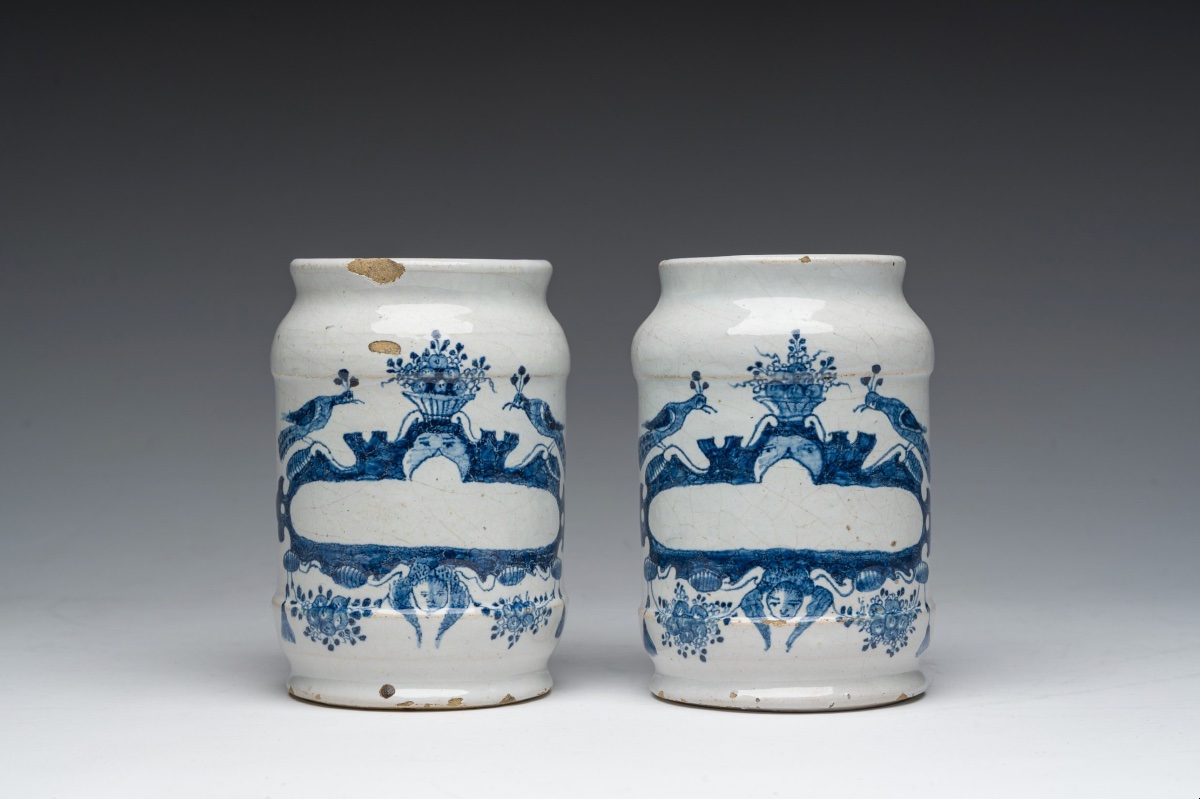
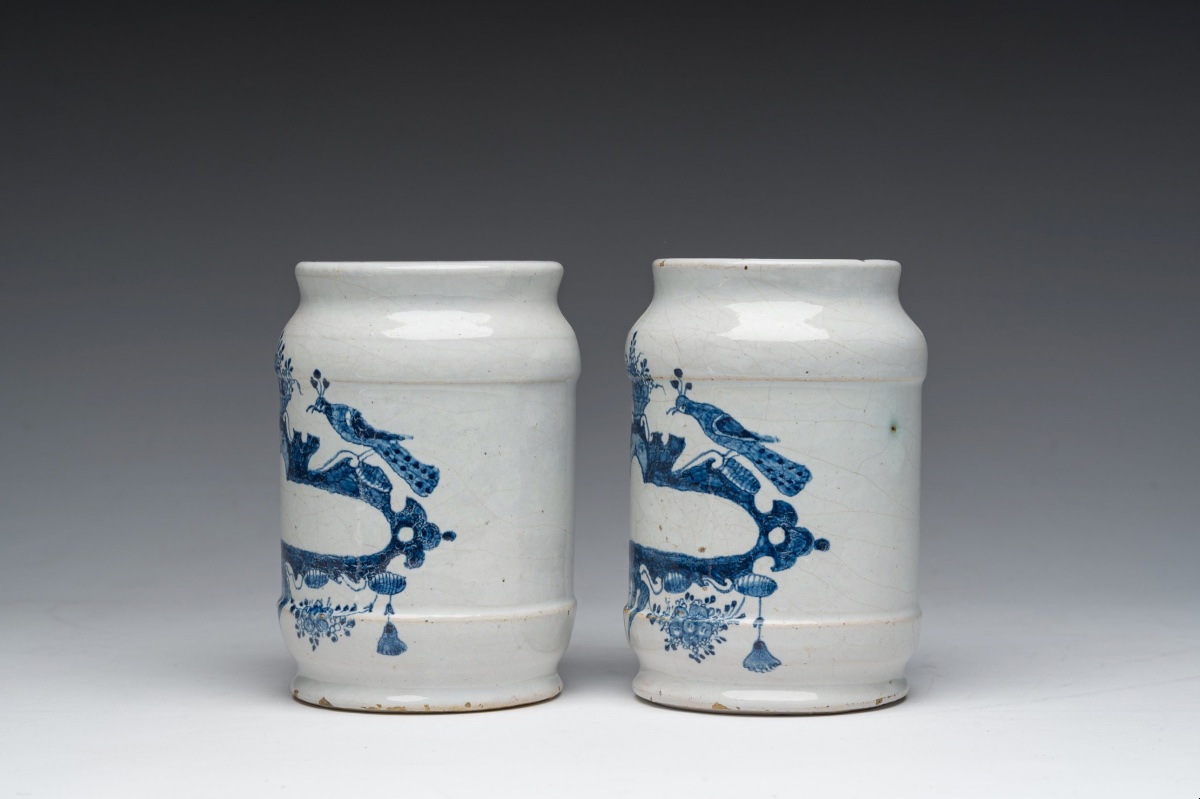
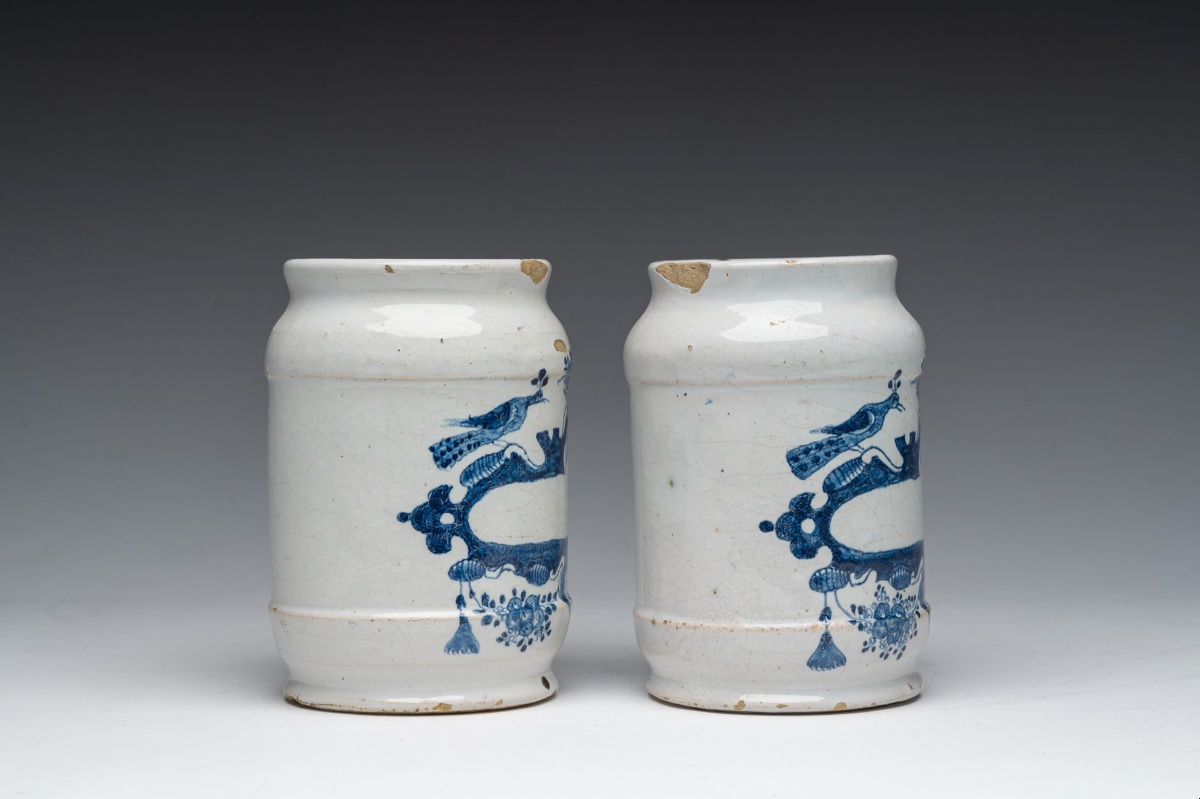
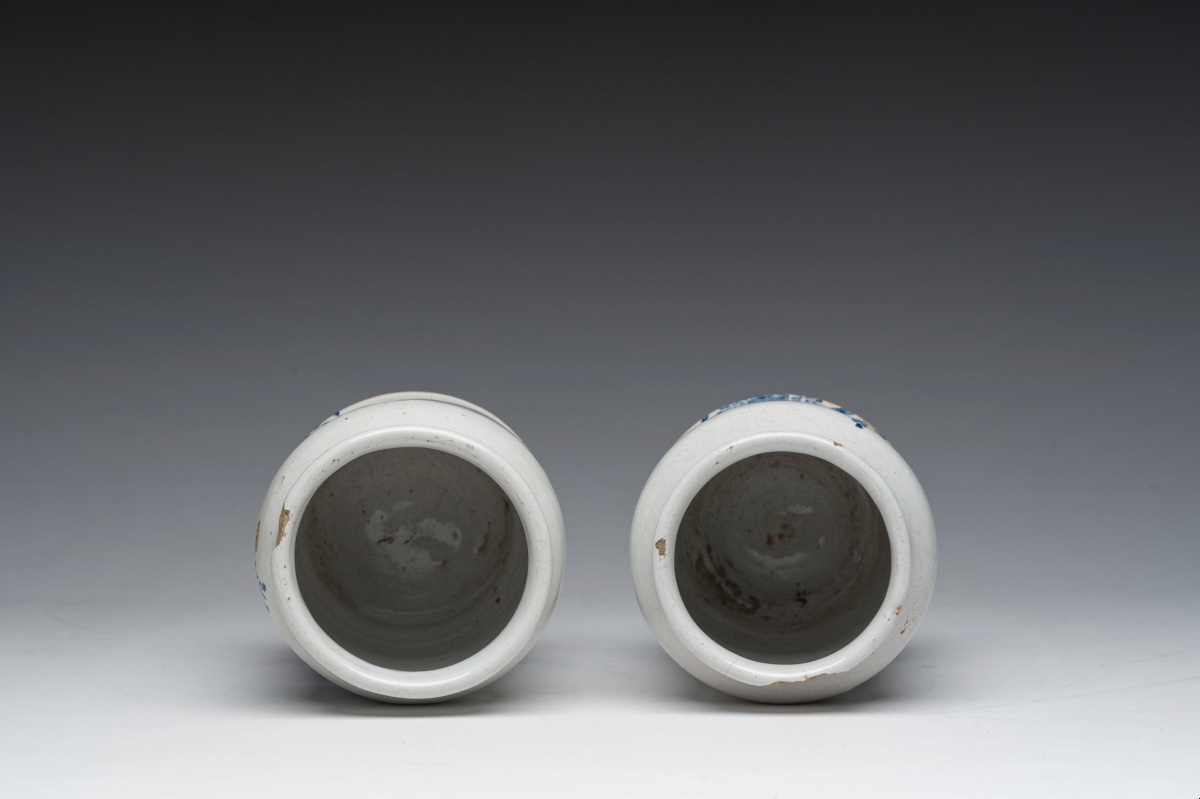
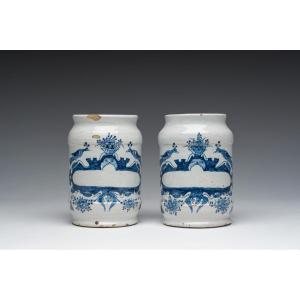


This magnificent pair of antique Delftware apothecary jars, dating from the late 18th century, is a superb example of Dutch blue-glazed earthenware. These cylindrical albarello-shaped jars are executed in the characteristic blue-and-white color scheme and feature a rich, symmetrical Baroque-style cartouche. The central coat of arms is flanked by stylized peacocks and baskets of flowers, while the lower portion is subtly decorated with cherubs and floral motifs.
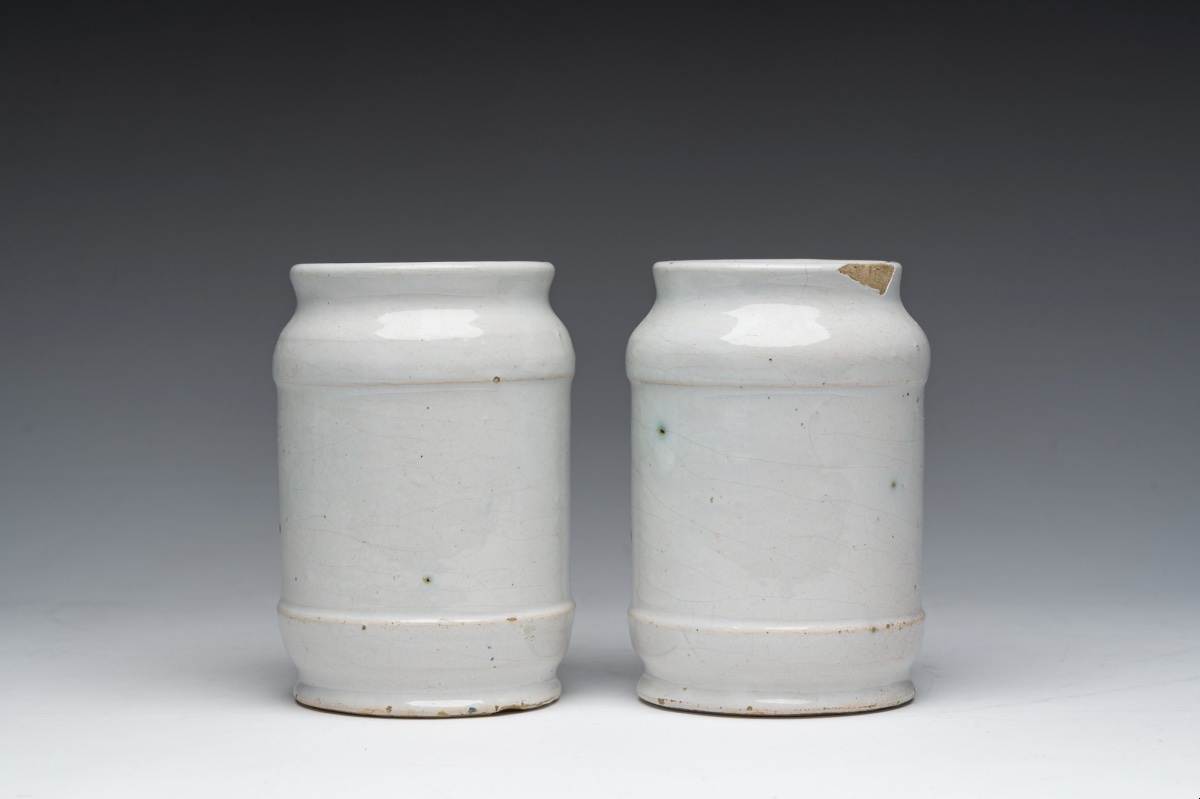
What makes this pair unique is the absence of any painted drug names. The central cartouche was deliberately left blank. In historical pharmacy practice, this allowed the pharmacist to indicate the variable contents himself using ink or a paper label. With their charming signs of aging and authentic appearance, these jars constitute a valuable and decorative set for collectors of classic Delftware.
About the manufacturer:
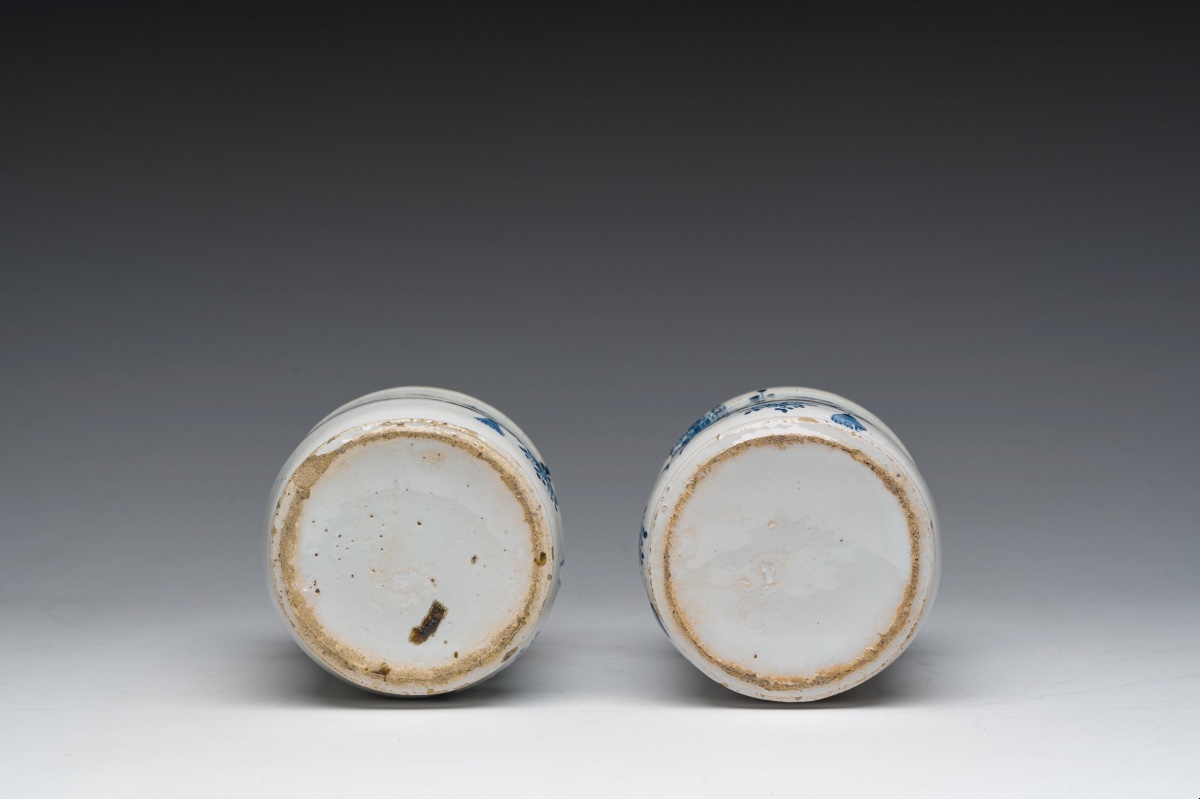
Although these apothecary jars bear no mark on the bottom, the De Porceleyne Schotel factory produced apothecary jars with an identical design between 1764 and 1772. Only a limited number of examples were marked at the time, but this allows them to be dated to the third quarter of the 18th century, when the manufactory was headed by Johannes van Duijn.
What makes this pair unique is the absence of any painted drug names. The central cartouche was deliberately left blank. In historical pharmacy practice, this allowed the pharmacist to indicate the variable contents himself using ink or a paper label. With their charming signs of aging and authentic appearance, these jars constitute a valuable and decorative set for collectors of classic Delftware.
About the manufacturer:
Although these apothecary jars bear no mark on the bottom, the De Porceleyne Schotel factory produced apothecary jars with an identical design between 1764 and 1772. Only a limited number of examples were marked at the time, but this allows them to be dated to the third quarter of the 18th century, when the manufactory was headed by Johannes van Duijn.
Explore similar pieces and discover your ideal find:
Faience Serveware