




12 Antique Miniature Porcelain Cups By Kuznetsov, Russia, With A Monogram And A Crown, 1890–1910
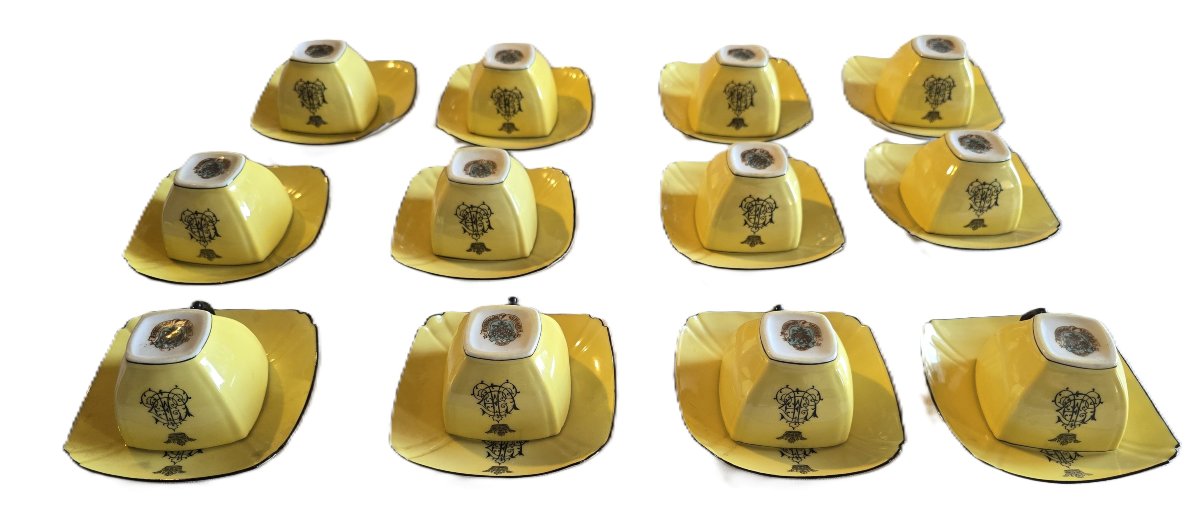
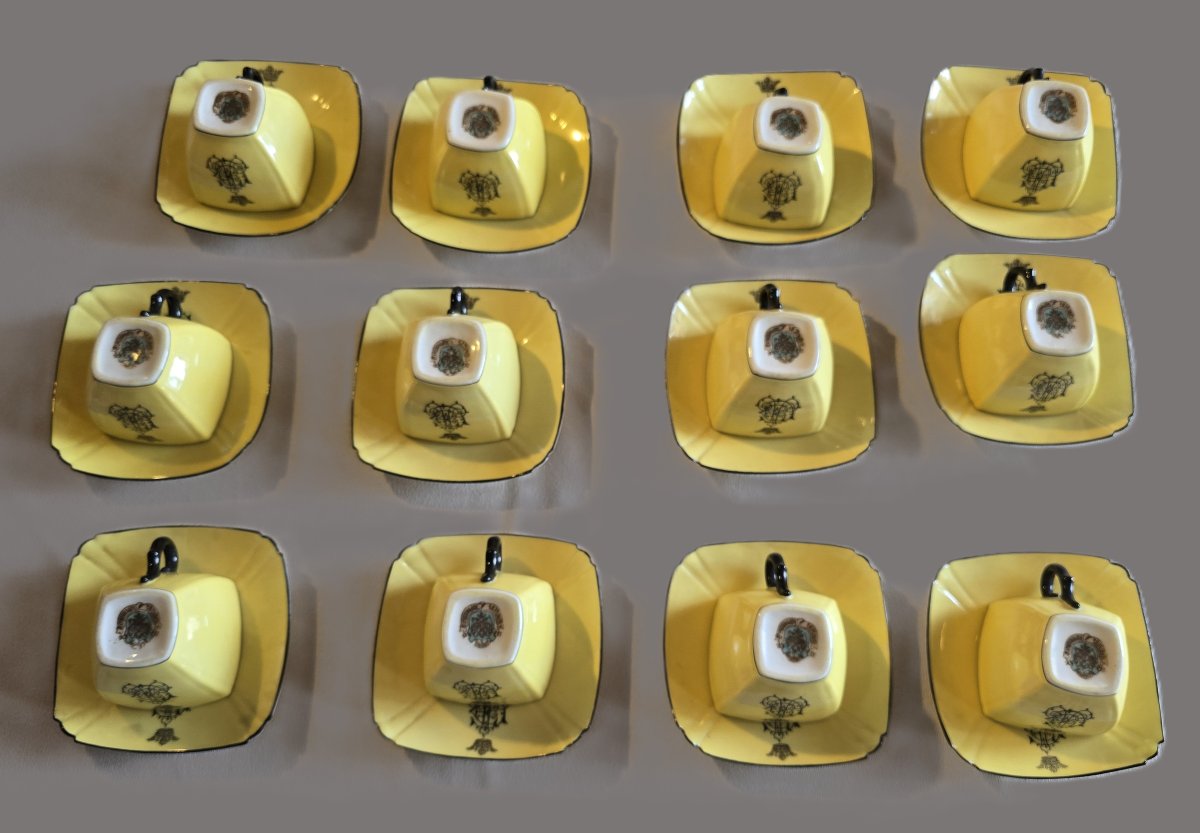
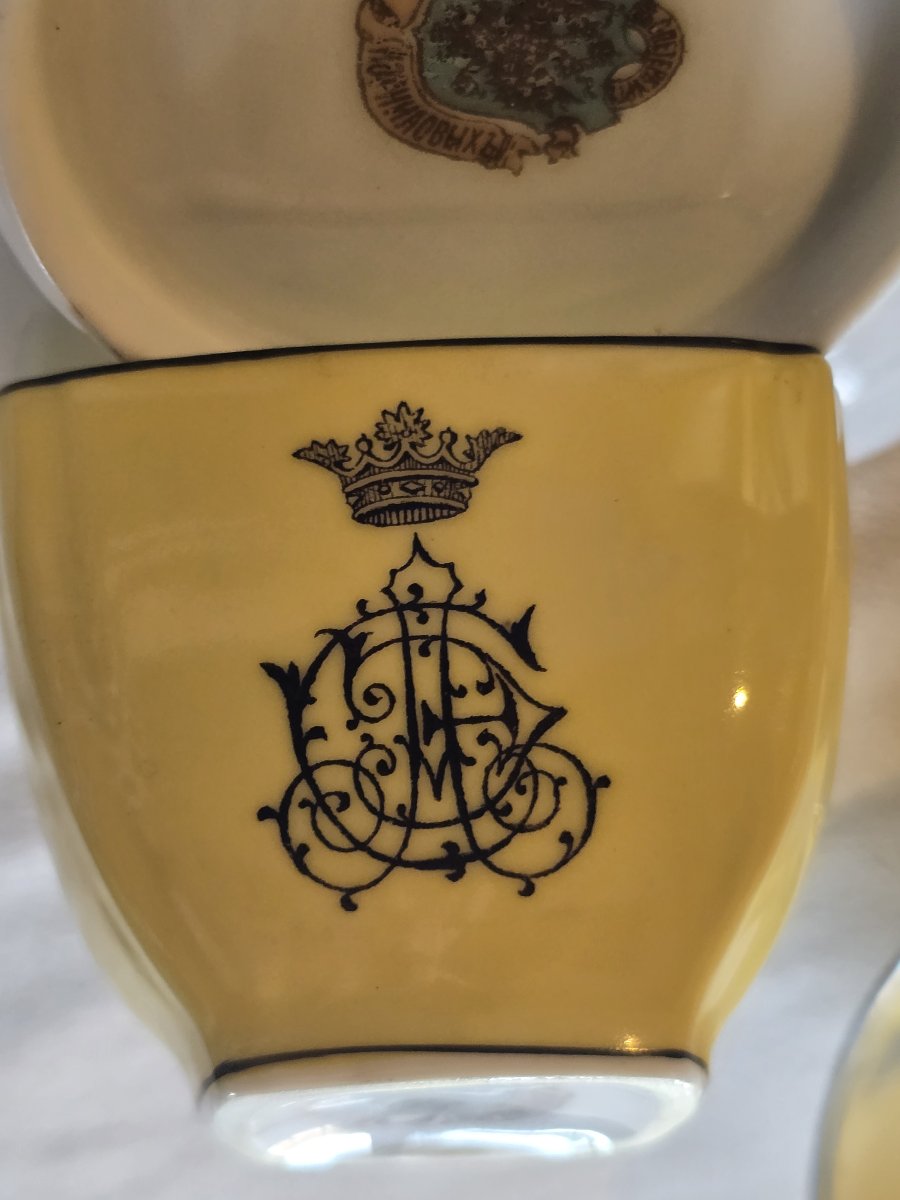
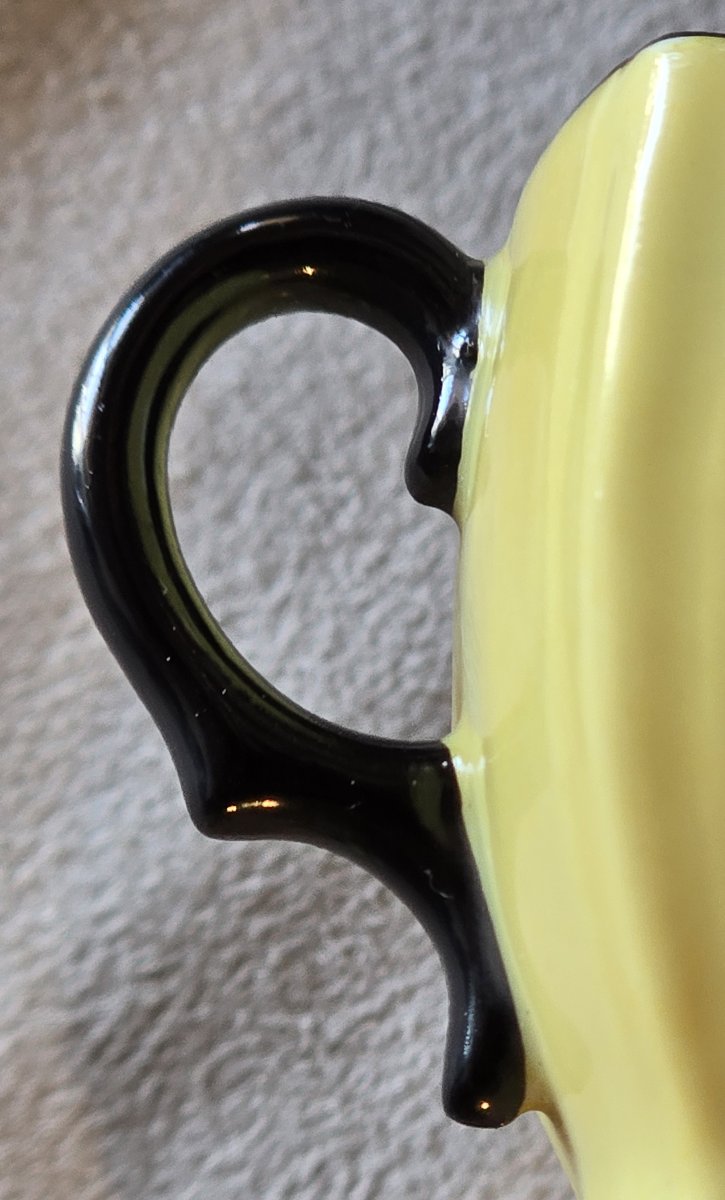
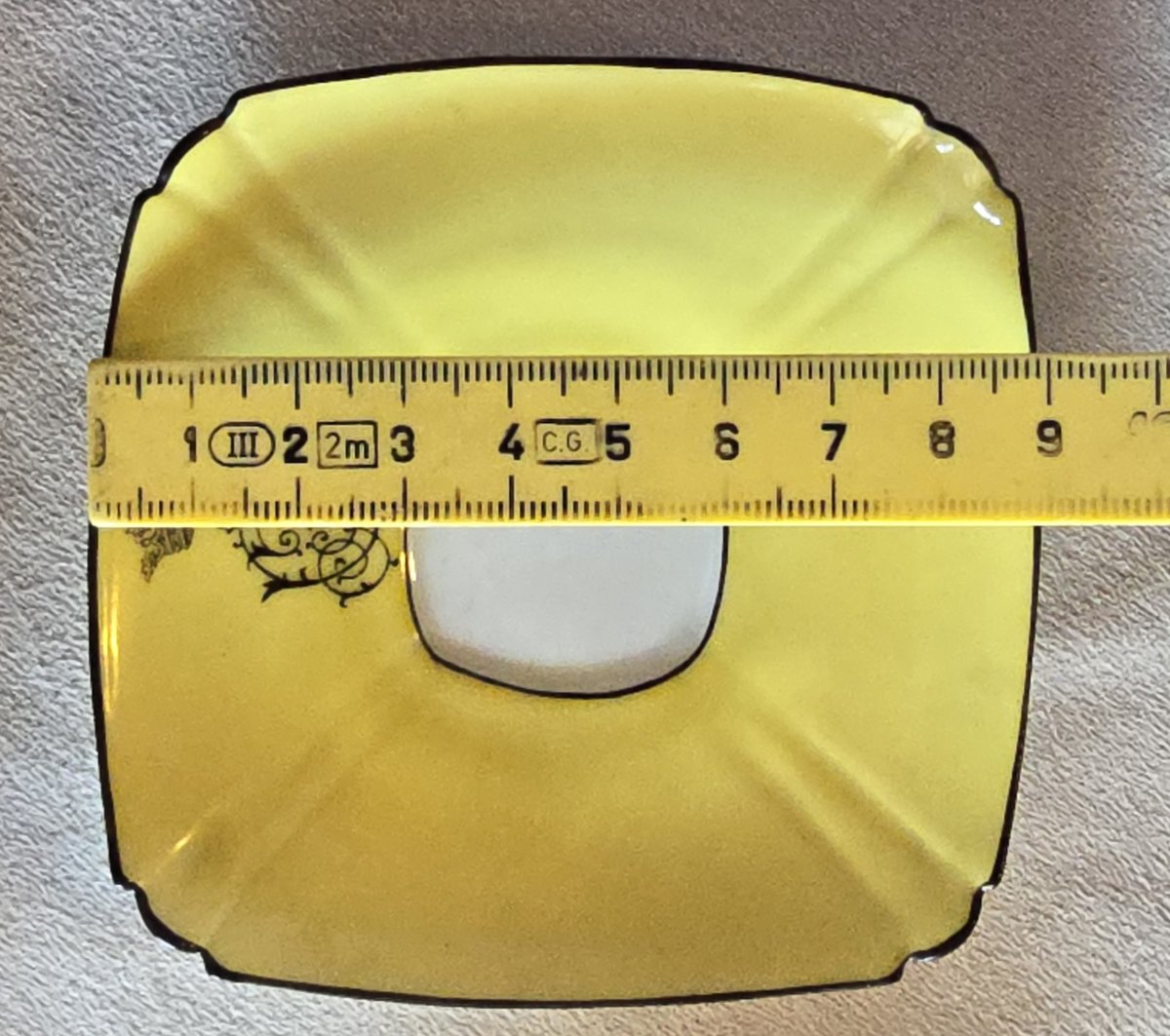
A set consisting of twelve tiny cups and twelve saucers made of the finest, translucent porcelain, with hand-painted black decoration on a lemon-yellow background, typical of the Kuznetsov manufactory’s productions at the end of the imperial era.
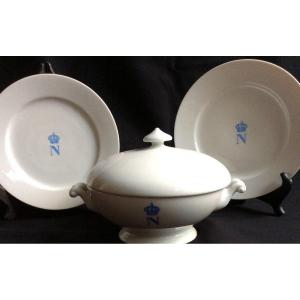
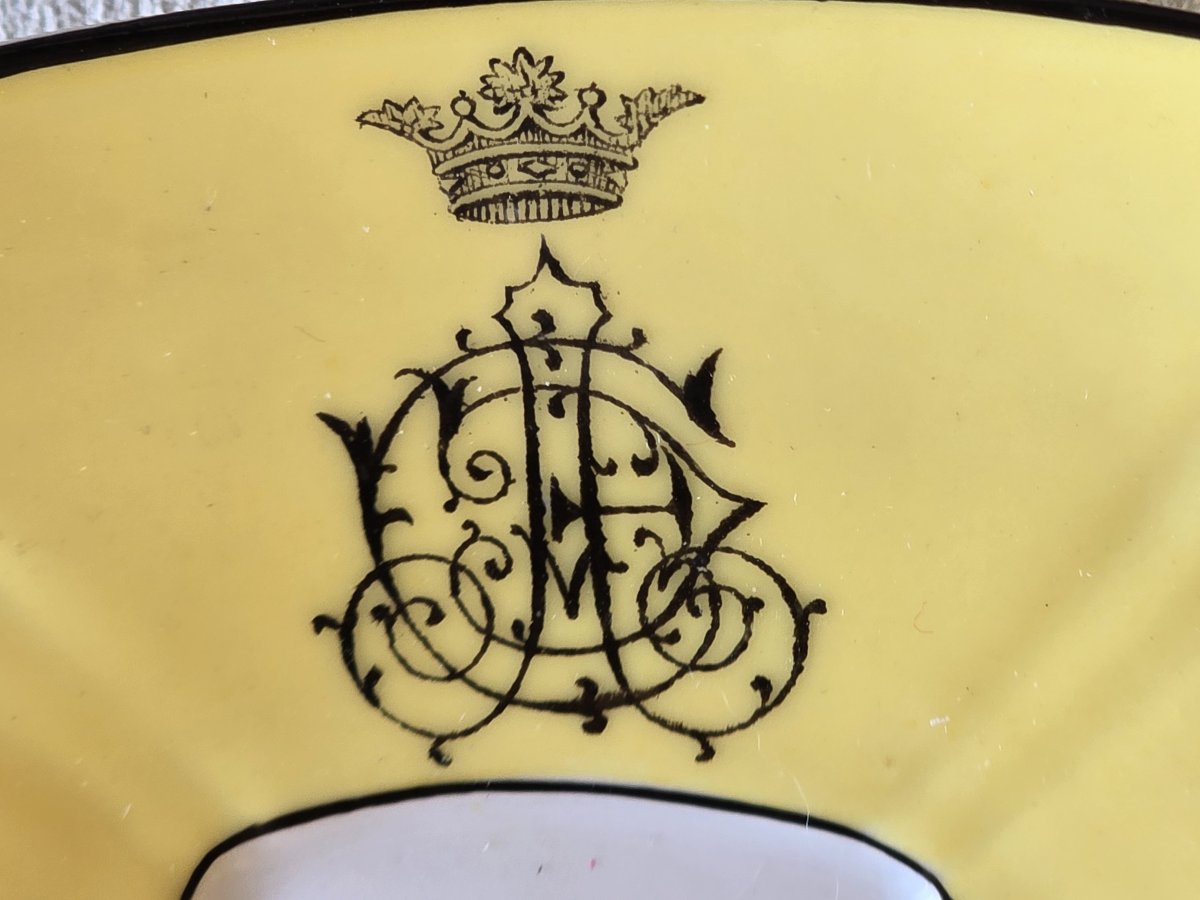
Each piece bears a finely intertwined A–M monogram, surmounted by a Russian nobleman’s crown (dvoryanstvo), indicating that it was a private commission for an aristocratic family in St. Petersburg.
In late 19th-century Imperial Russia, these miniature fine porcelain cups played a special role in the art of entertaining. Unlike large Western cups, they were intended for very concentrated beverages: strong tea served in small quantities, flavored liqueurs, or “zavarka,” the thick infusion that was later diluted in the samovar. Their tiny size reflected a refined aesthetic, inherited from aristocratic salons, where delicate, almost precious objects—to be handled with elegance—were favored.
These micro-cups are rare today, as they were produced in small batches and often on private commission, as evidenced by the noble monogram and the crown. Their inherent fragility—ultra-thin, sometimes translucent porcelain—explains why so few complete sets have survived. Owning a complete twelve-piece set in excellent condition is therefore a remarkable exception, highly sought after by collectors of pre-revolutionary Russian porcelain.
Manufacturer
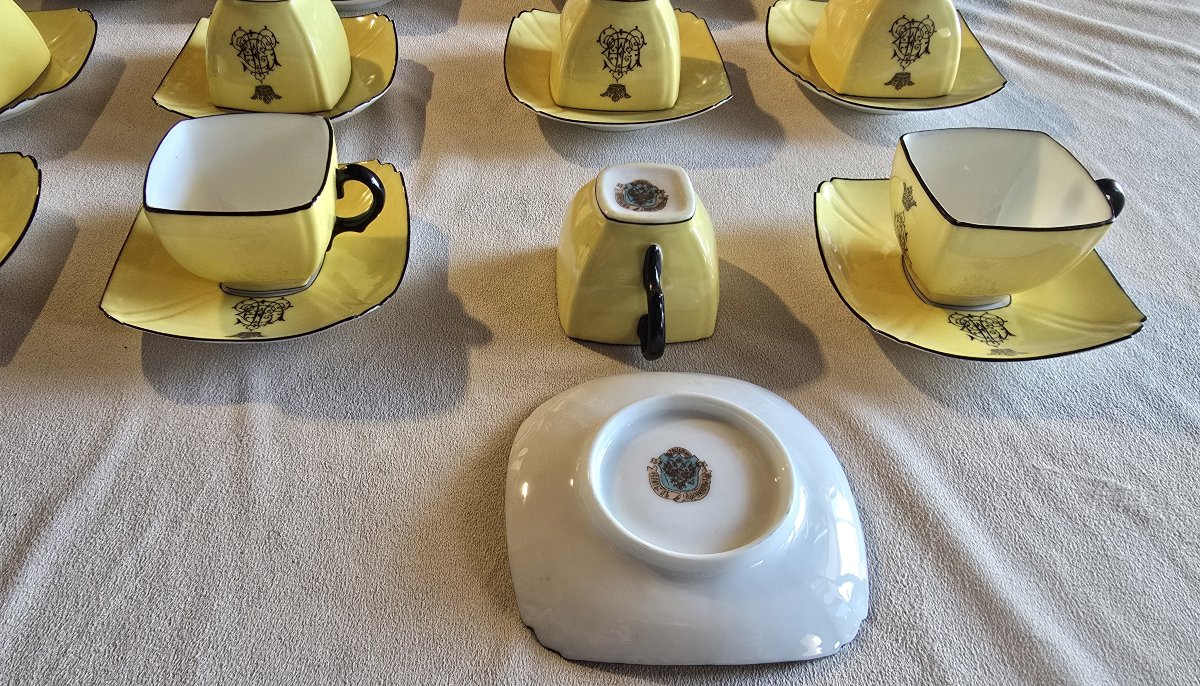
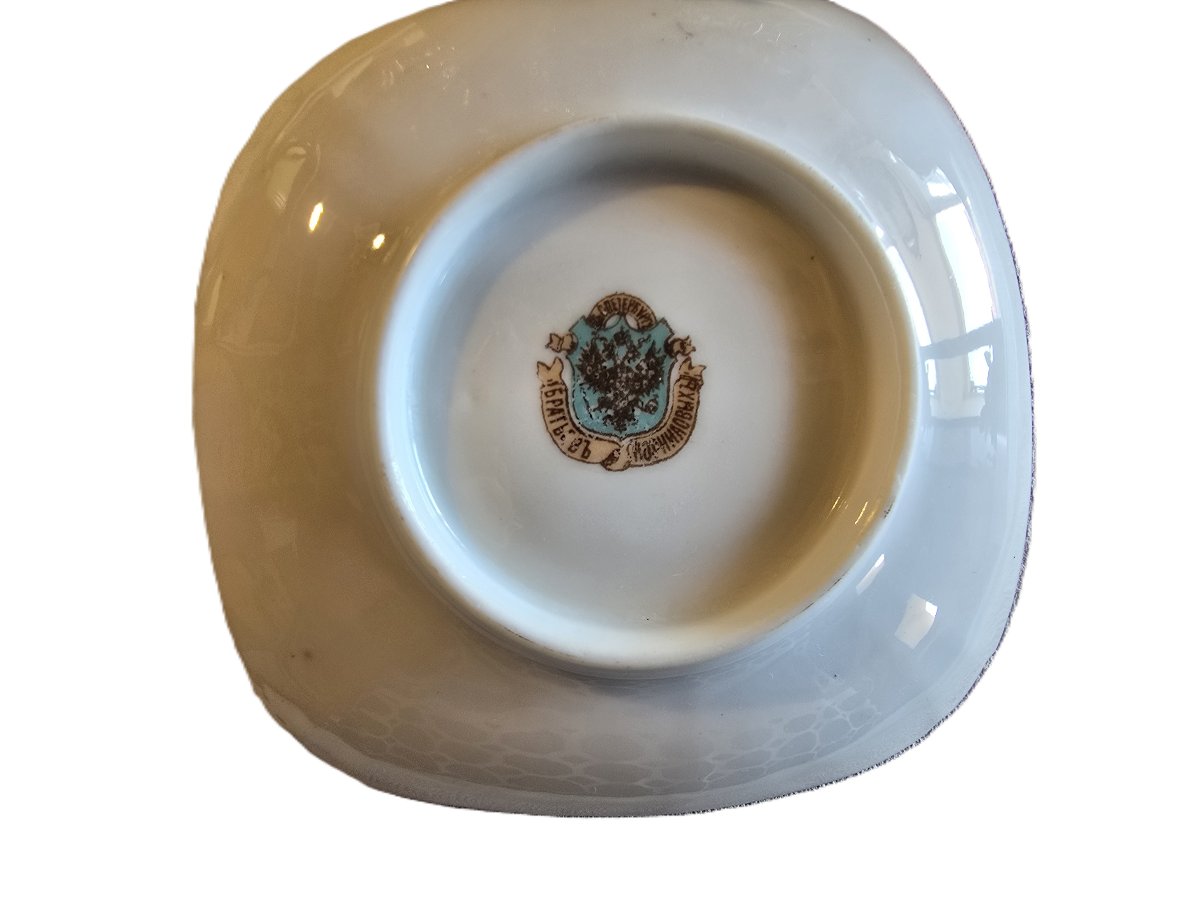
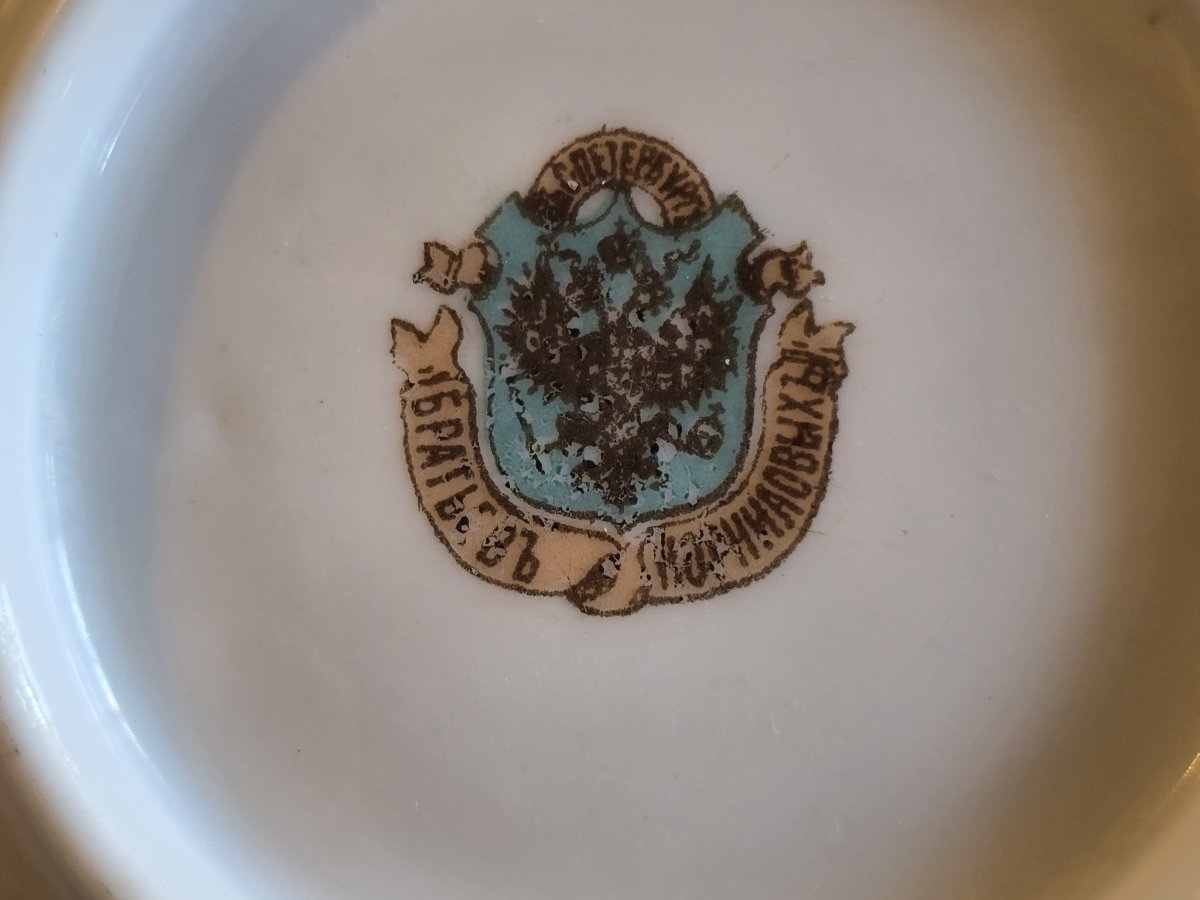
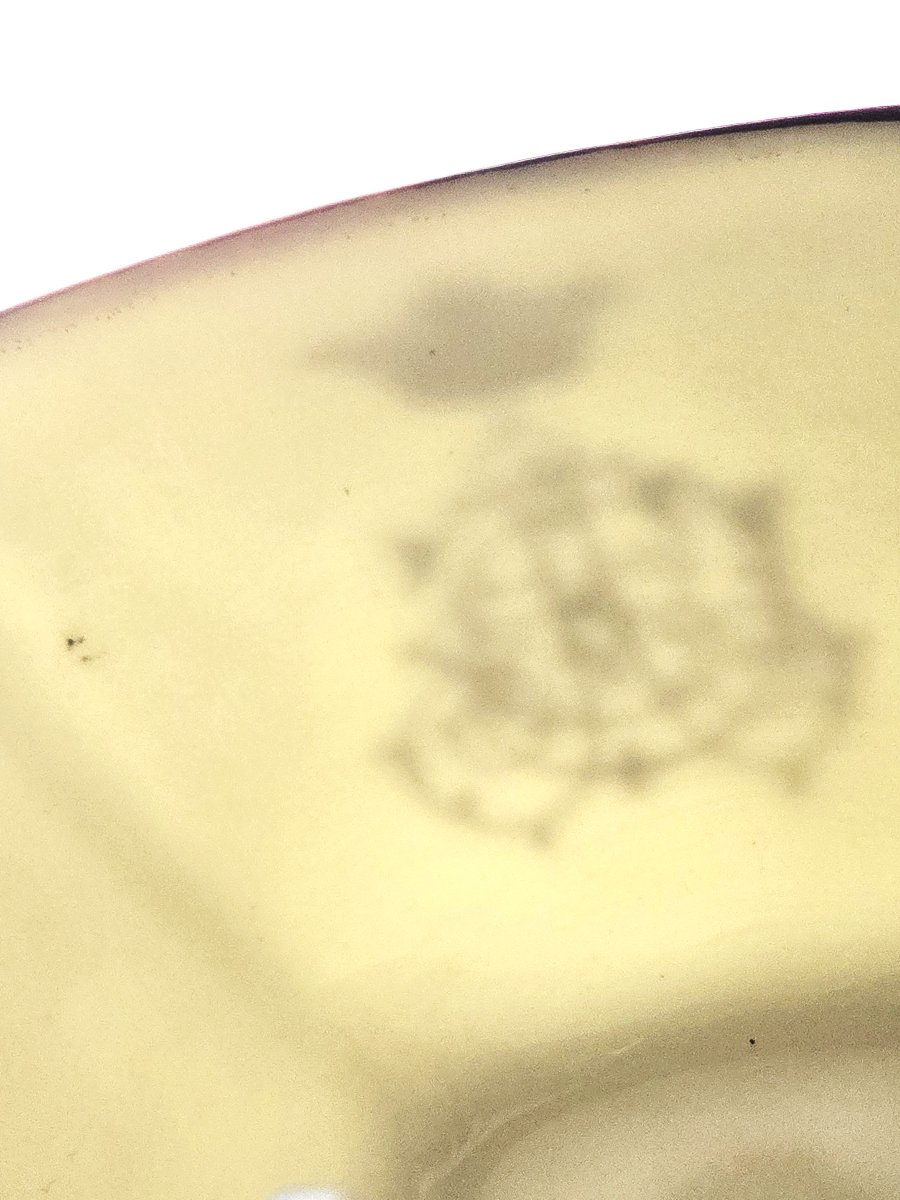
M. S. Kuznetsov, St. Petersburg Factory Mark stamped beneath the cup and on the back of the saucer:“ФАБРИКА М. С. КУЗНЕЦОВЪ – С. ПЕТЕРБУРГЪ.”
Founded in the 19th century by Matveï Sidorovitch Kuznetsov, heir to a long tradition of master potters, the company became, within a few decades, the largest and most influential ceramics manufacturer in the Russian Empire. Thanks to an ambitious expansion policy, the Kuznetsov family brought several regional factories under its own name, modernized production processes, and established a distinctive aesthetic.The St. Petersburg factory, opened at the end of the 19th century, played a strategic role: located in the heart of the imperial capital, it served a discerning clientele consisting of nobles, high-ranking officials, court officers, and affluent bourgeois families. It was in this workshop that the most refined tableware sets were crafted, often personalized with monograms, coats of arms, or noble crowns.The St. Petersburg production is distinguished by porcelain of great fineness, sometimes translucent, as in this set. After 1917, the factories were nationalized and integrated into state-run workshops, bringing an end to the era of aristocratic commissions that had made the Kuznetsov family famous.
Period
Late 19th – early 20th century (circa 1890–1910)
Provenance (probable)
Commissioned by for a Russian noble family with the initials A–M.The type of crown and the style of the monogram make it highly likely that the service can be attributed to the Markov or Makarov families, nobles of St. Petersburg.
Condition
Complete and uniform set, rare and in excellent condition; decoration is fresh, with no significant wear.Only one cup has a barely visible crack on the outside, invisible on the inside (see last photo).
Period: 19th century
Style: Napoleon 3rd
Condition: Excellent condition
Material: Porcelain
Reference (ID): 1790943
Availability: In stock