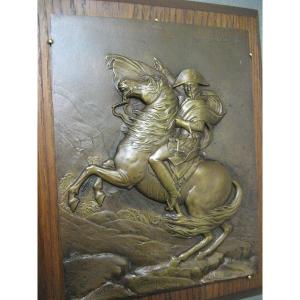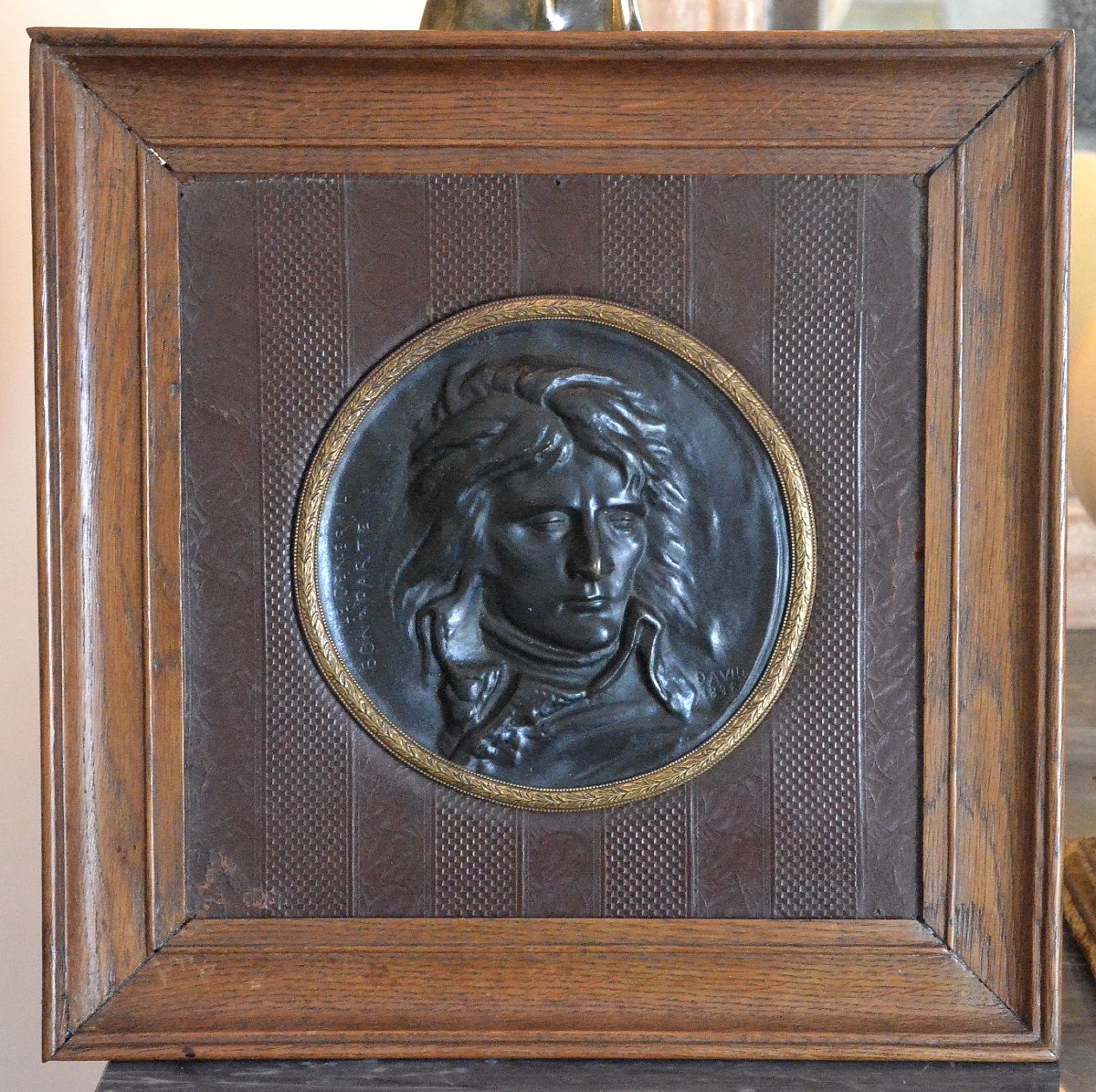
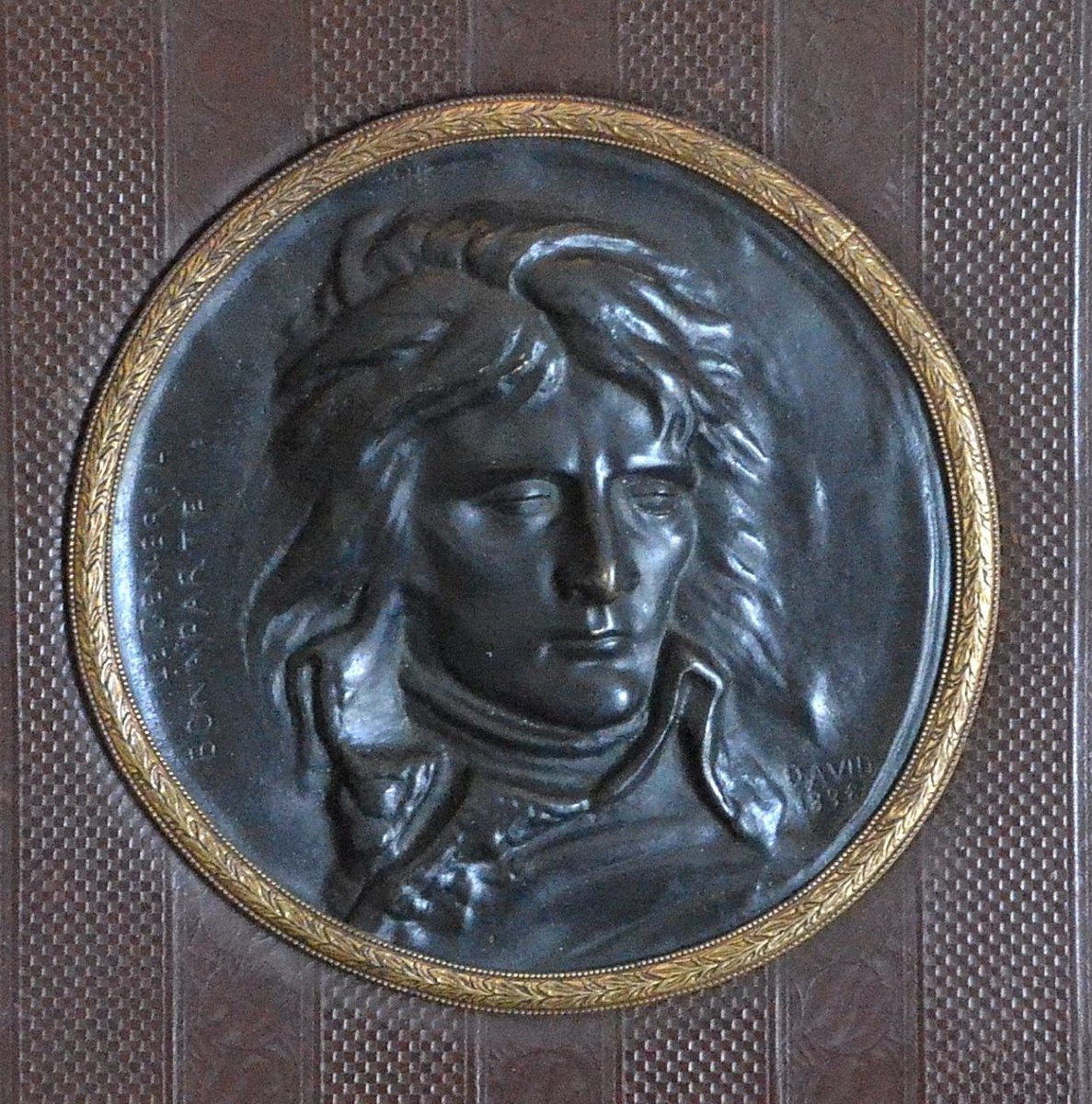
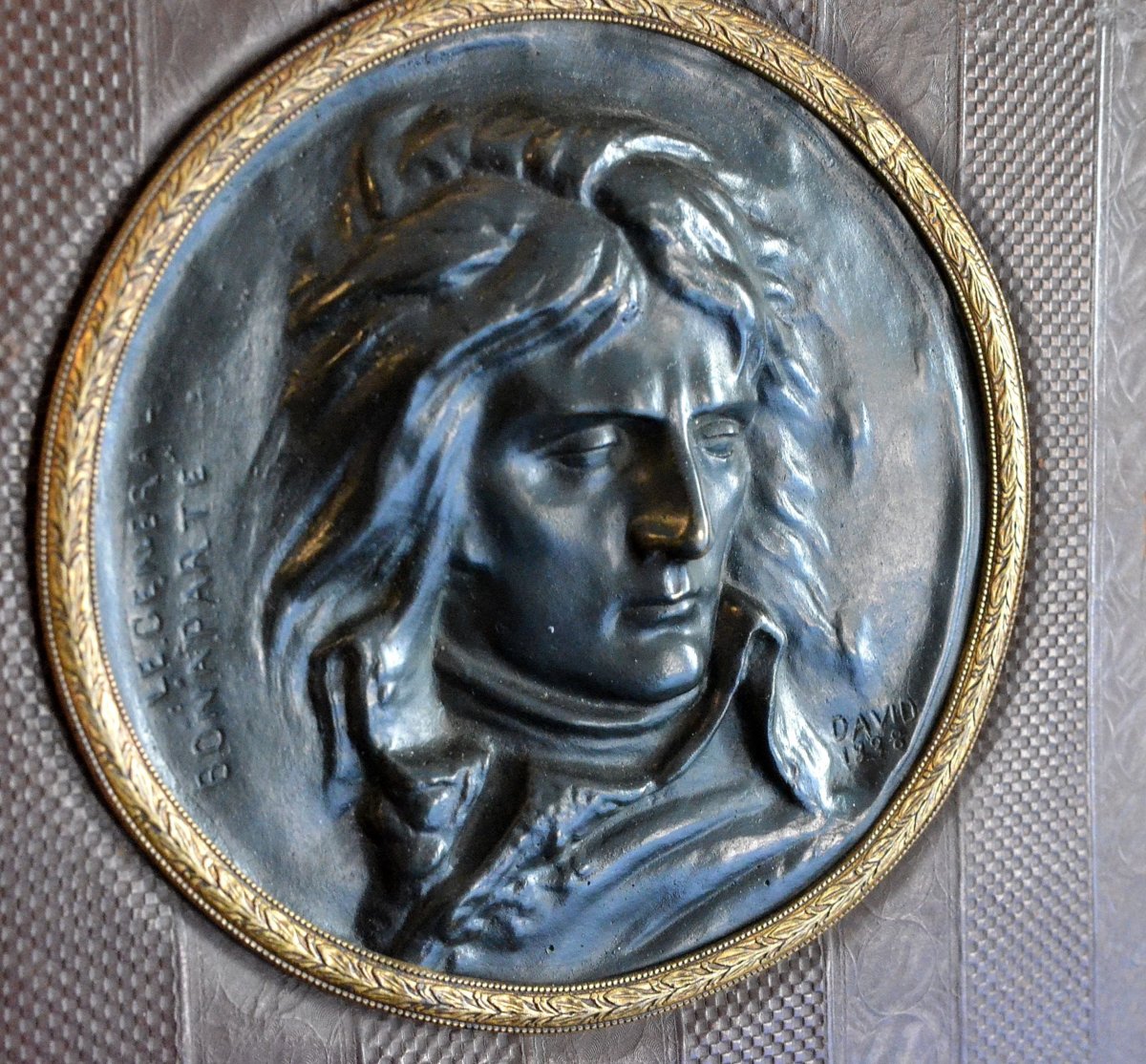


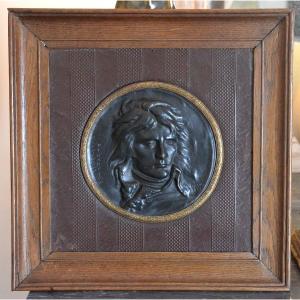


“general Bonaparte” By David D’angers (1788–1856)
Artist: David D'angers (1788 – 1856)
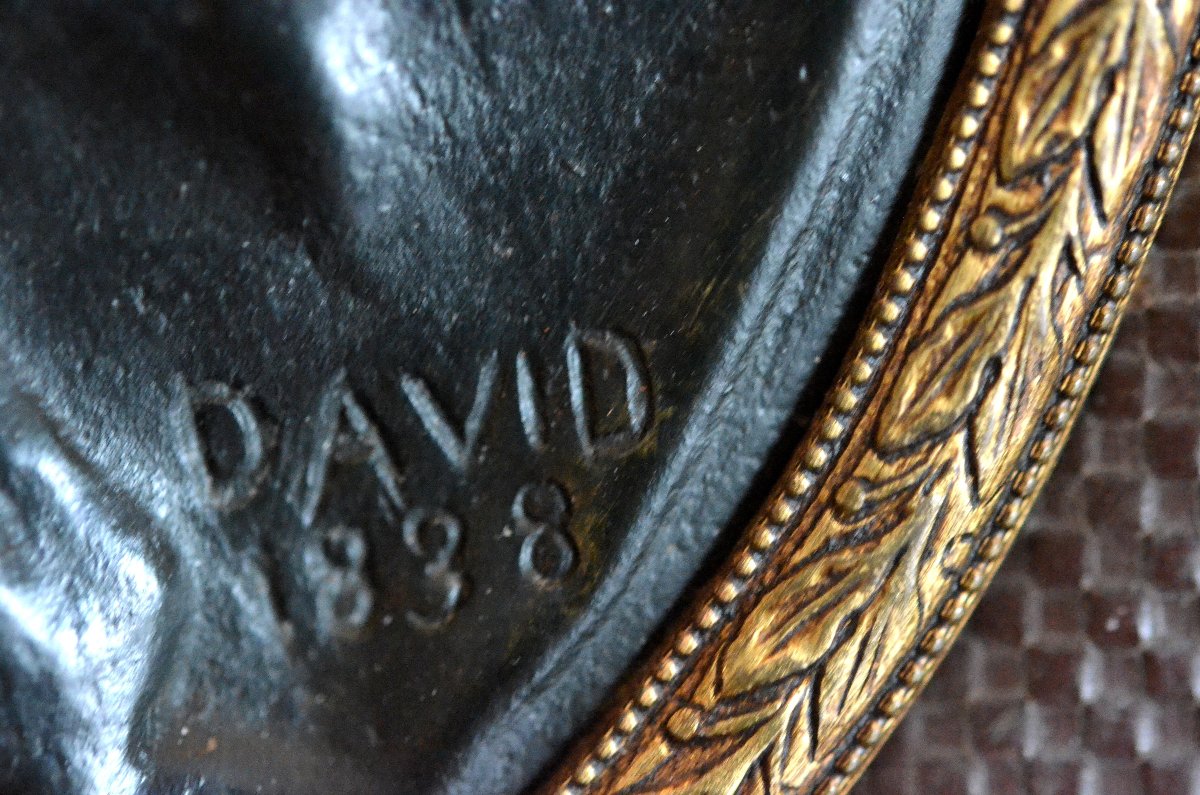
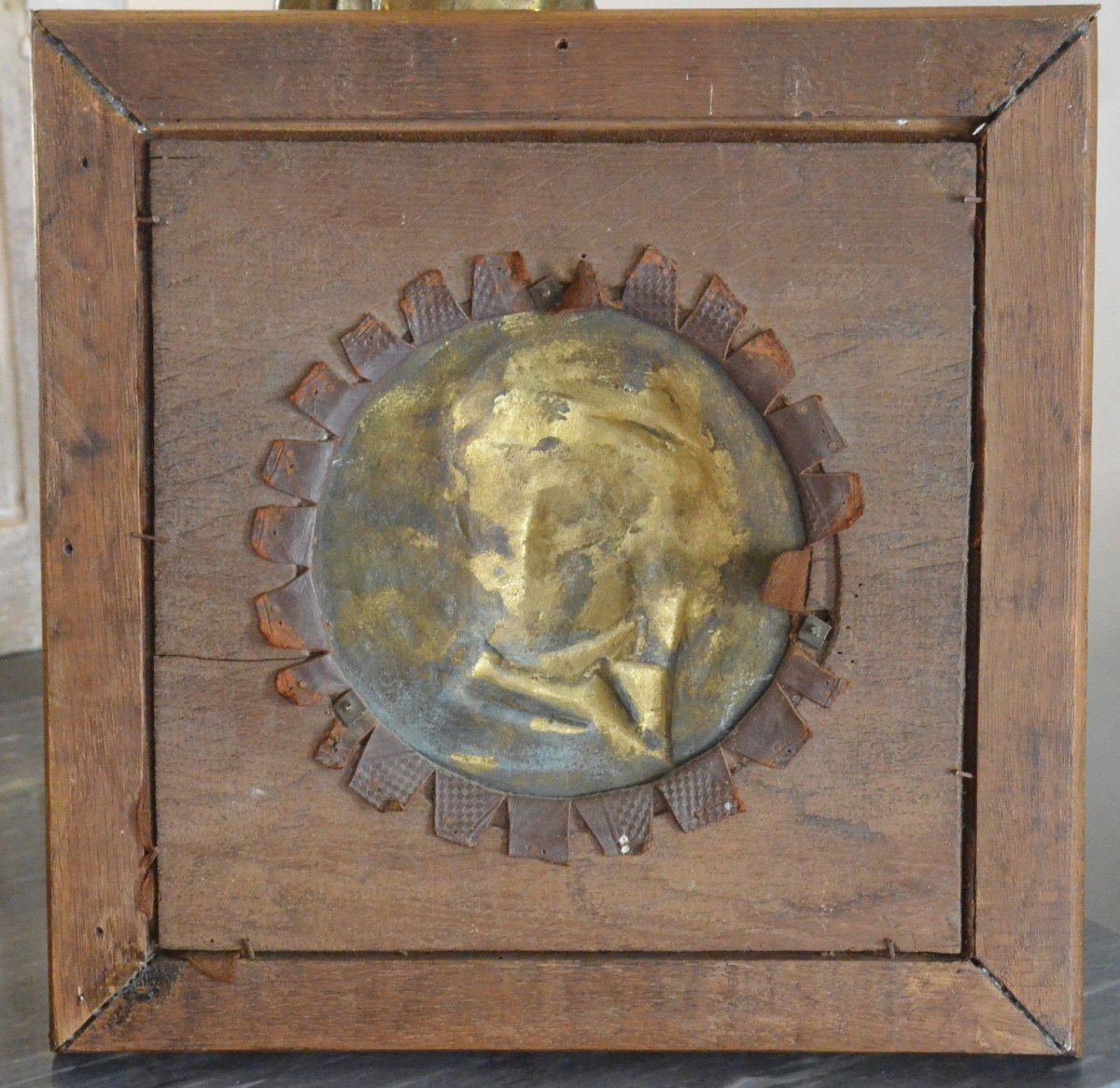
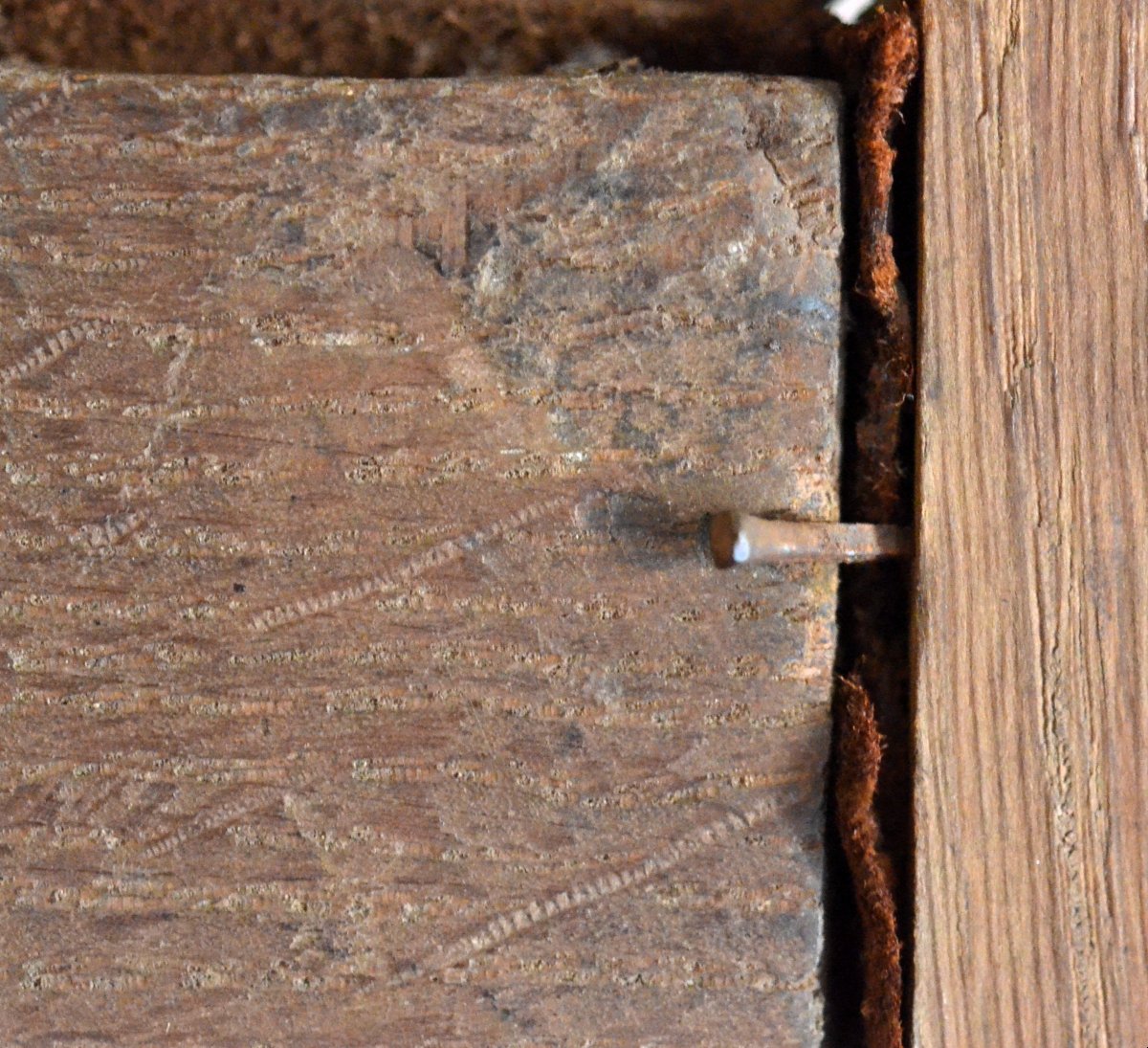
A “ronde-bosse” bronze sculpture by Pierre-Jean David, known as “David d’Angers” (1788–1856). Titled, signed, and dated “1838.” Set in its superb original oak frame, the bronze itself is encircled by gilded bronze within a marie-louise panel covered in embossed leather. Everything is period, including most of the nails securing the piece to the frame!
Dimensions including frame: 33 cm x 33 cm
Diameter of the bronze: 16 cm
The sculptor David (d’Angers) occupies a unique place in the history of 19th-century French art. He is best known to the public as the creator of some six hundred medallions depicting famous men and women—both French and, notably, European—most of whom were his contemporaries. David’s legacy has ensured that this collection is widely distributed among museums, libraries, and private collections. In Paris in 1808, David sculpted ornaments for the Arc de Triomphe du Carrousel under Besnier’s direction, then worked on a frieze at the Louvre Palace. In 1809, he won a medal from the Academy and was noticed by his namesake, the painter Jacques-Louis David, who took him under his wing and had him work in his studio. In 1810, he won second prize in sculpture, and in 1811, the Grand Prix de Rome with his bas-relief *The Death of Epaminondas*. He left for Rome as a resident of the Académie de France. The royal court commissioned him to create the Statue of the Grand Condé, which stands in the main courtyard of the Palace of Versailles. In 1826, he was elected a member of the Institut de France and appointed professor at the École des Beaux-Arts in Paris. He produced a large number of monuments, tombs, statues, busts, and bas-reliefs, including the famous pediment of the Panthéon in Paris in 1837. In the 1830s, he sculpted a major series of medallion portraits of contemporary figures. In 1852, following Napoleon III’s coup d’état, he was forced to leave France and went into exile in Greece. As his health declined, he returned to France, where he died on January 5, 1856.
Shipping: secure packaging and delivery via registered Colissimo with insurance; for metropolitan France: €25 – Europe: €35
Dimensions including frame: 33 cm x 33 cm
Diameter of the bronze: 16 cm
The sculptor David (d’Angers) occupies a unique place in the history of 19th-century French art. He is best known to the public as the creator of some six hundred medallions depicting famous men and women—both French and, notably, European—most of whom were his contemporaries. David’s legacy has ensured that this collection is widely distributed among museums, libraries, and private collections. In Paris in 1808, David sculpted ornaments for the Arc de Triomphe du Carrousel under Besnier’s direction, then worked on a frieze at the Louvre Palace. In 1809, he won a medal from the Academy and was noticed by his namesake, the painter Jacques-Louis David, who took him under his wing and had him work in his studio. In 1810, he won second prize in sculpture, and in 1811, the Grand Prix de Rome with his bas-relief *The Death of Epaminondas*. He left for Rome as a resident of the Académie de France. The royal court commissioned him to create the Statue of the Grand Condé, which stands in the main courtyard of the Palace of Versailles. In 1826, he was elected a member of the Institut de France and appointed professor at the École des Beaux-Arts in Paris. He produced a large number of monuments, tombs, statues, busts, and bas-reliefs, including the famous pediment of the Panthéon in Paris in 1837. In the 1830s, he sculpted a major series of medallion portraits of contemporary figures. In 1852, following Napoleon III’s coup d’état, he was forced to leave France and went into exile in Greece. As his health declined, he returned to France, where he died on January 5, 1856.
Shipping: secure packaging and delivery via registered Colissimo with insurance; for metropolitan France: €25 – Europe: €35
550 €
Period: 19th century
Style: Consulat, Empire
Condition: Good condition
Material: Bronze
Reference (ID): 1790468
Availability: In stock
Print