THIS OBJECT WAS SOLD
Portrait Of Marie De' Medici, By The Circle Of Charles Beaubrun, 17th Century
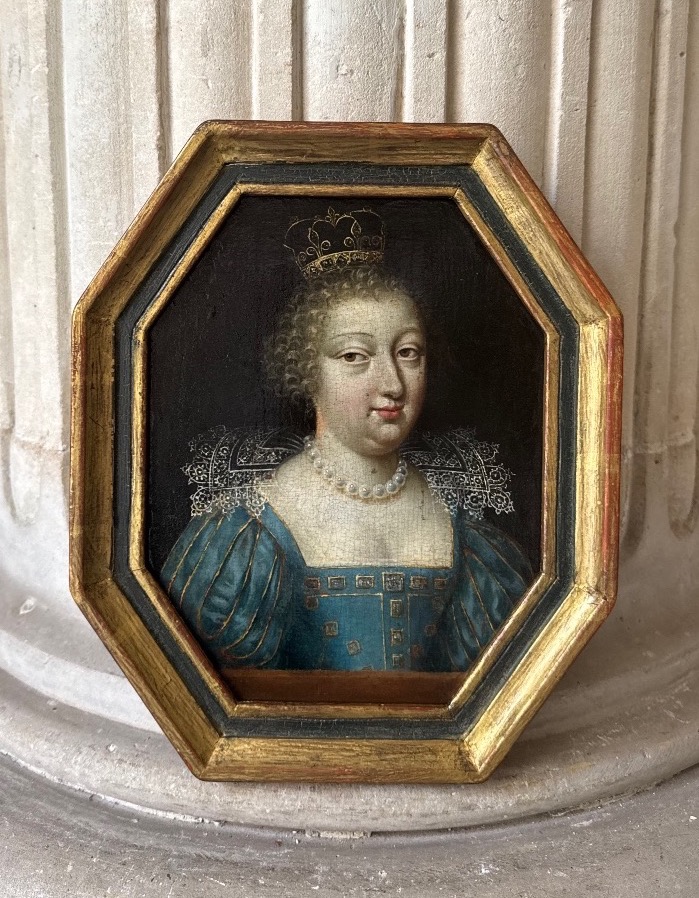
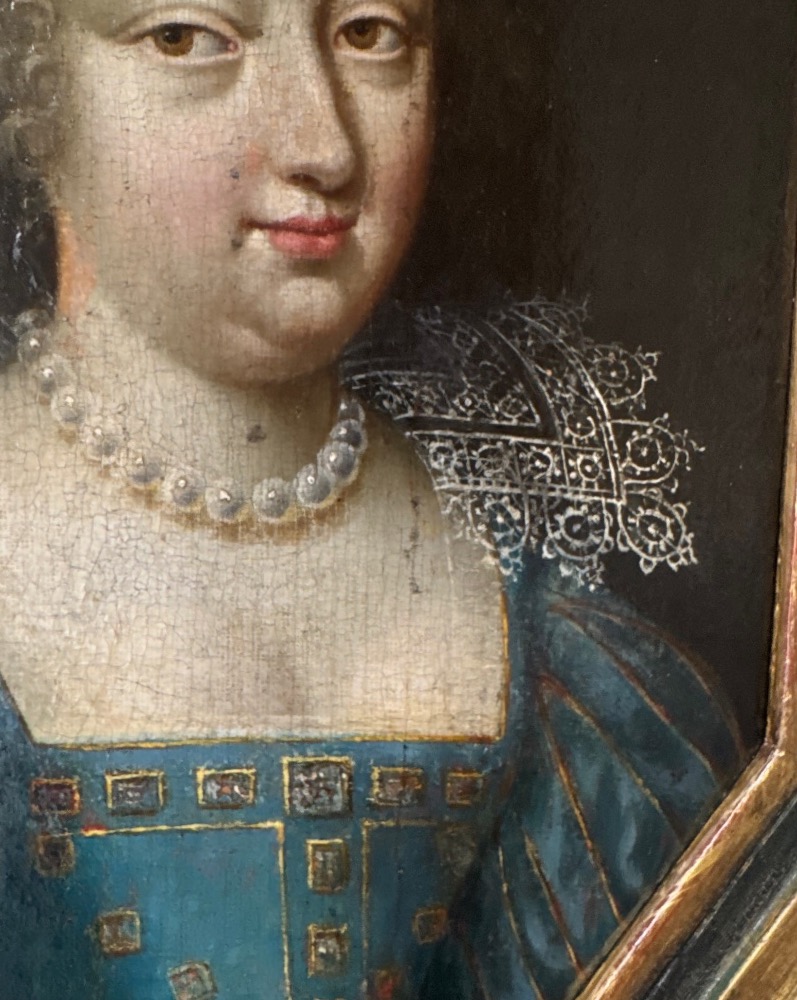
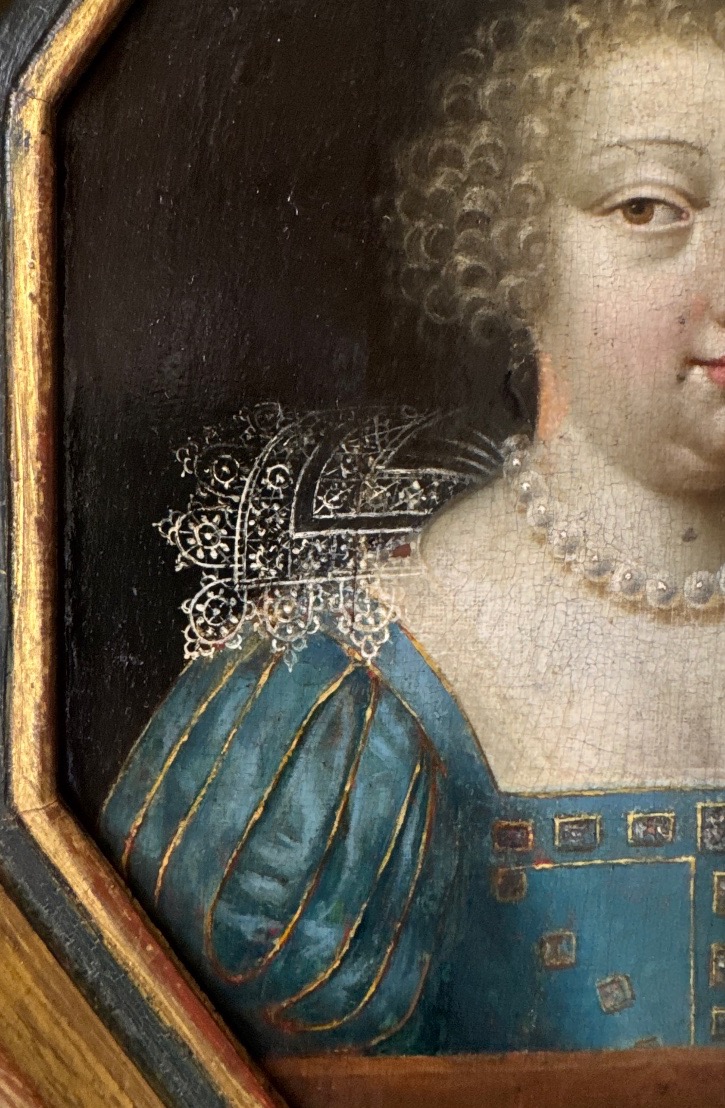
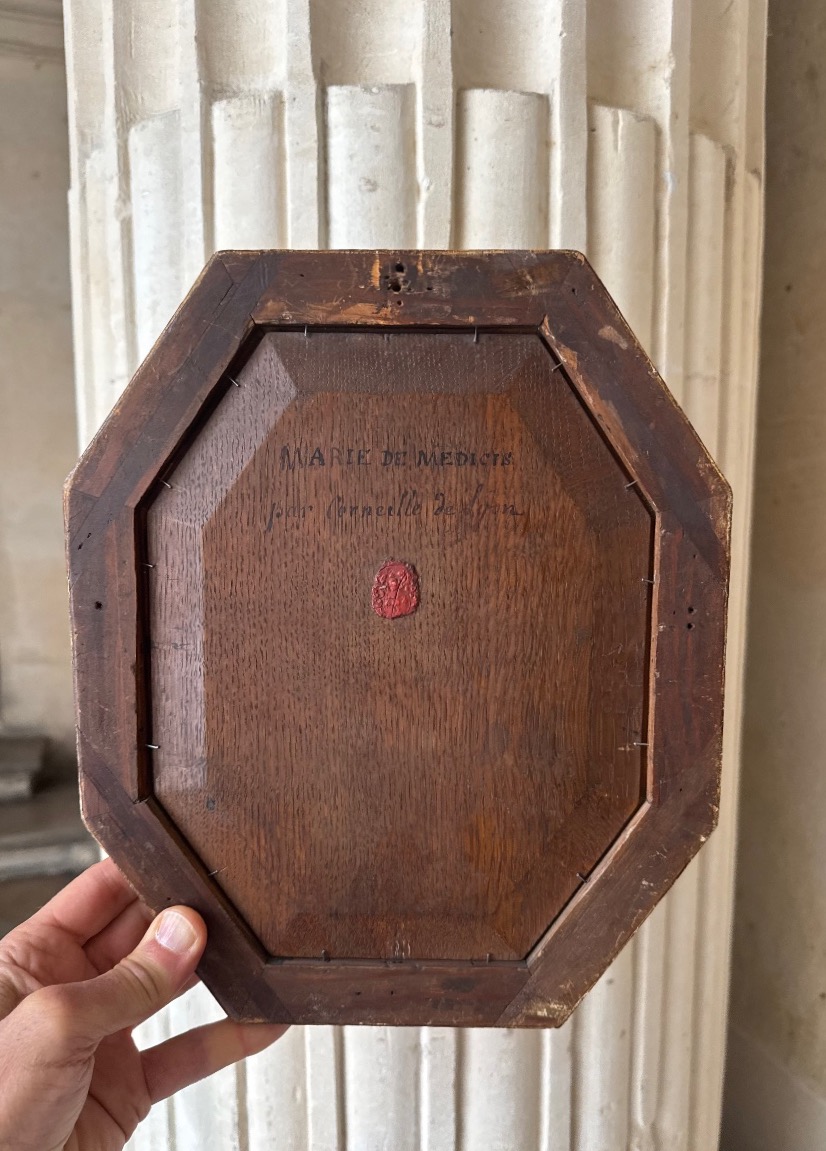
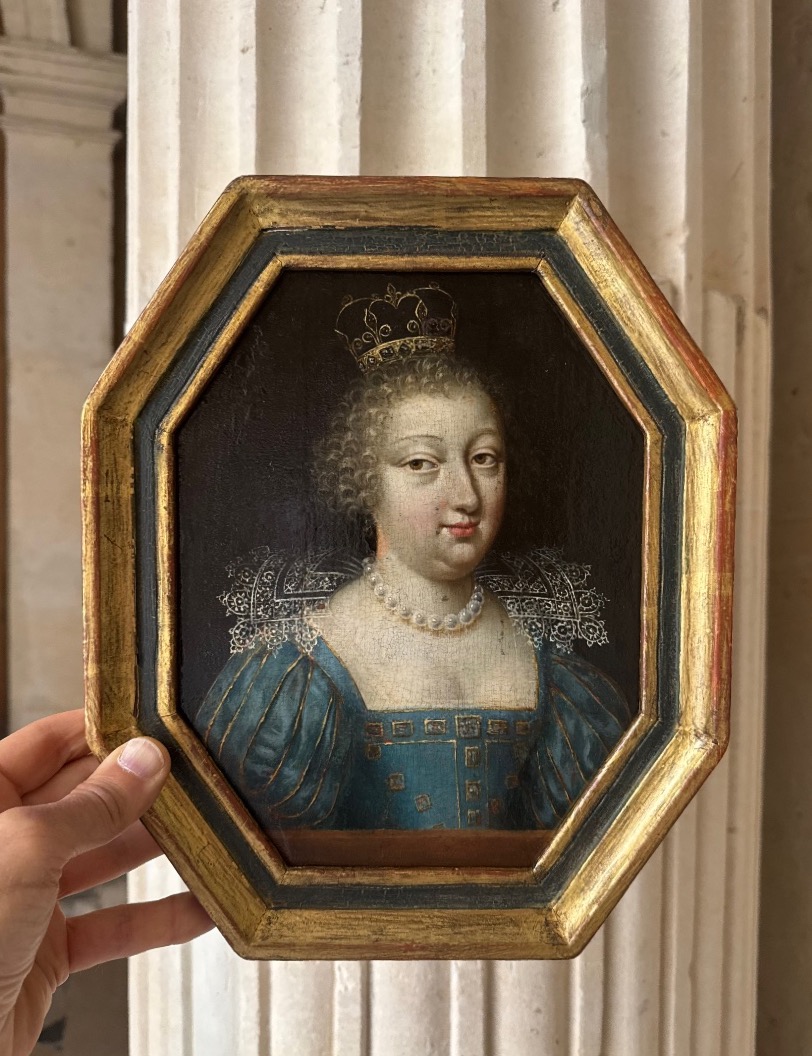
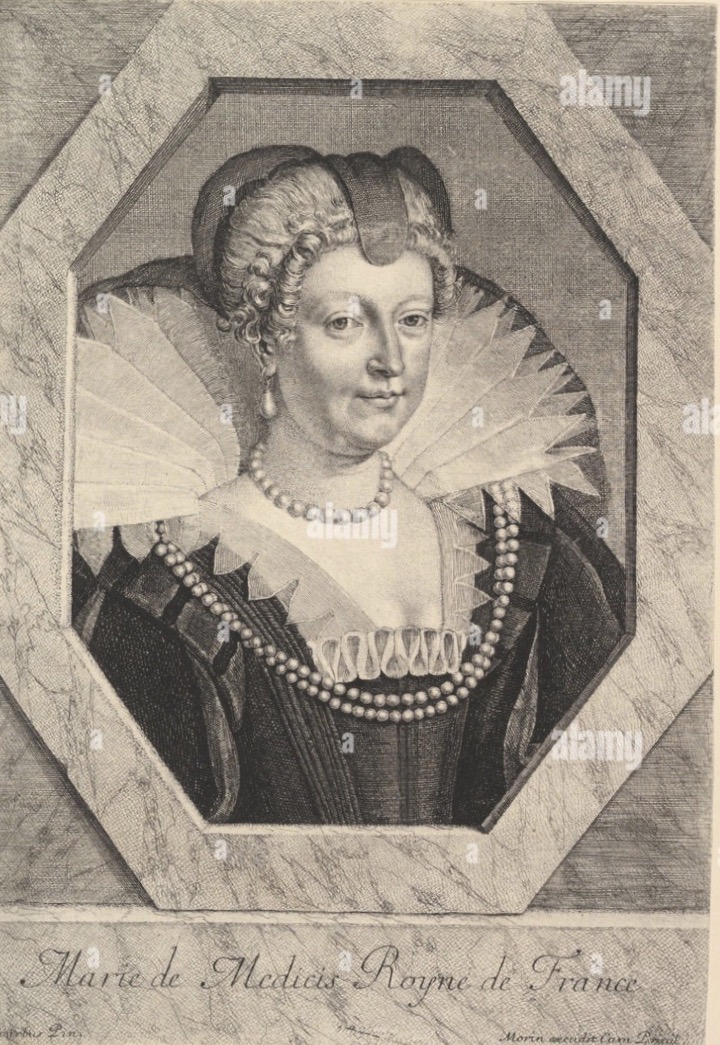
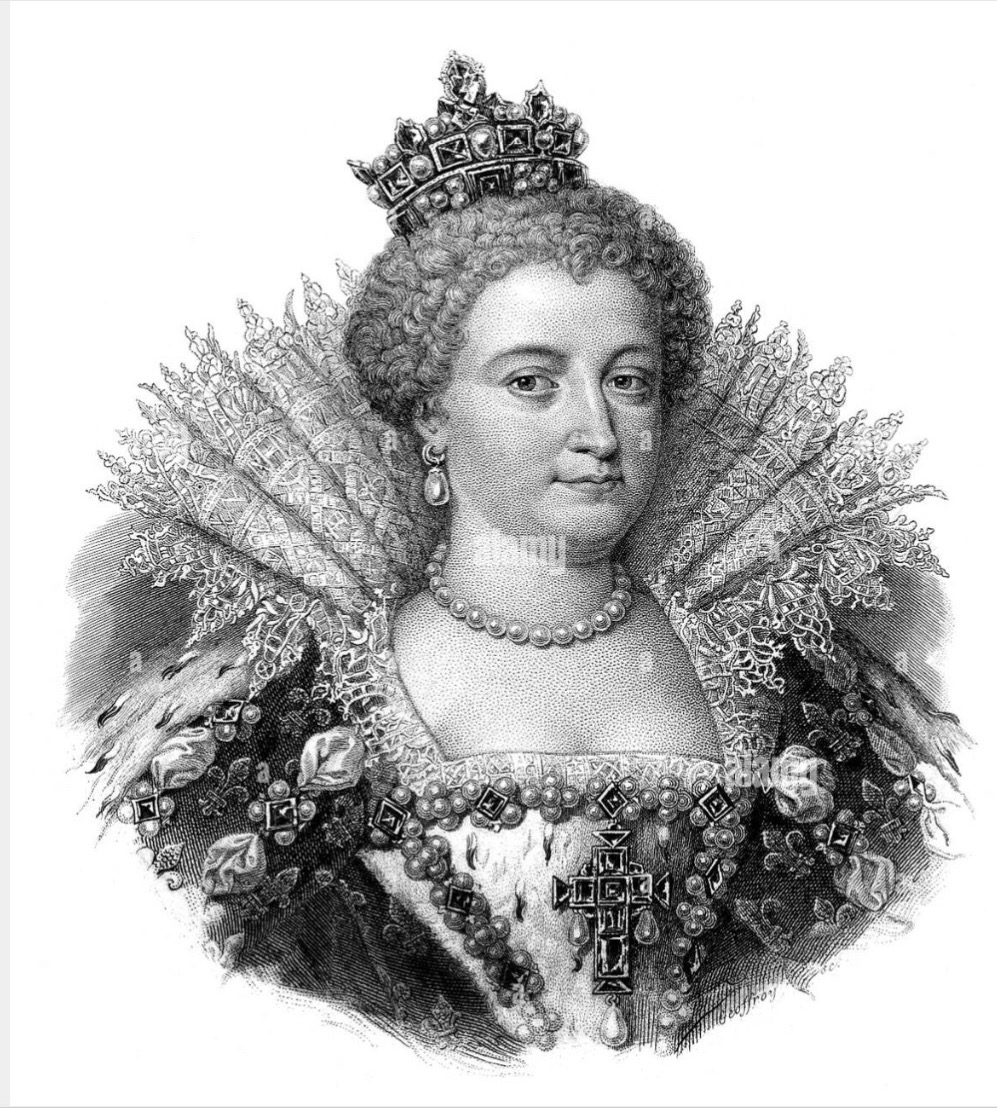


Presumed portrait of Marie de Médicis wearing a crown
Oil on wood from the second half of the 17th century or contemporary with the work of Charles Beaubrun,
in good overall condition, with minor historical restorations,
frame in the style of the 17th century, likely from the 20th century.
On the reverse, an inscription attributing the portrait to Corneille de Lyon
Dimensions with frame: 31x26 cm
This delicate portrait depicts Marie de Médicis, Queen of France, in a bust portrait, wearing an open crown symbolizing her royal dignity. She is dressed in an elegant blue satin gown adorned with gold braid and wears a pearl necklace as well as a remarkable, finely executed lace collar—features characteristic of 17th-century French court portraits. The dark background highlights the sovereign’s luminous face and accentuates the majestic simplicity of the composition.
In terms of its style, its refined rendering of skin tones, the precision of the drawing, and the delicacy of the details in the costume and lace, this work can be compared to portraits produced in the circle of Charles Beaubrun, court portraitist to Louis XIII and later to Louis XIV.
The daughter of Francis I de’ Medici, Grand Duke of Tuscany, Marie married Henry IV in 1600 and became Queen of France. After the king’s assassination in 1610, she served as regent during Louis XIII’s minority. Her reign was marked by a policy of rapprochement with the major Catholic powers, but also by numerous tensions with the nobility.
A great patron of the arts, Marie de’ Medici promoted the arts and architecture. She had the Luxembourg Palace built in Paris and commissioned Rubens to create the famous cycle of twenty-four paintings depicting her life, now housed in the Louvre Museum. Her political influence waned after Louis XIII effectively took power, leading to her permanent exile. She died in Cologne in 1642.
Charles Beaubrun belonged to a famous dynasty of French painters. Along with his cousin Henri Beaubrun, he became one of the official portraitists of the royal court under Louis XIII and later Louis XIV. The two artists created portraits of monarchs, queens, princes, and princesses intended for royal residences as well as foreign courts.
Their style is distinguished by great elegance, meticulous precision in the rendering of lace, jewelry, and precious fabrics, as well as a pursuit of idealization characteristic of official French portraiture during the Grand Siècle. Today, their works stand as a major testament to the image of the French monarchy in the 17th century.
Explore similar pieces and discover your ideal find:
Portraits