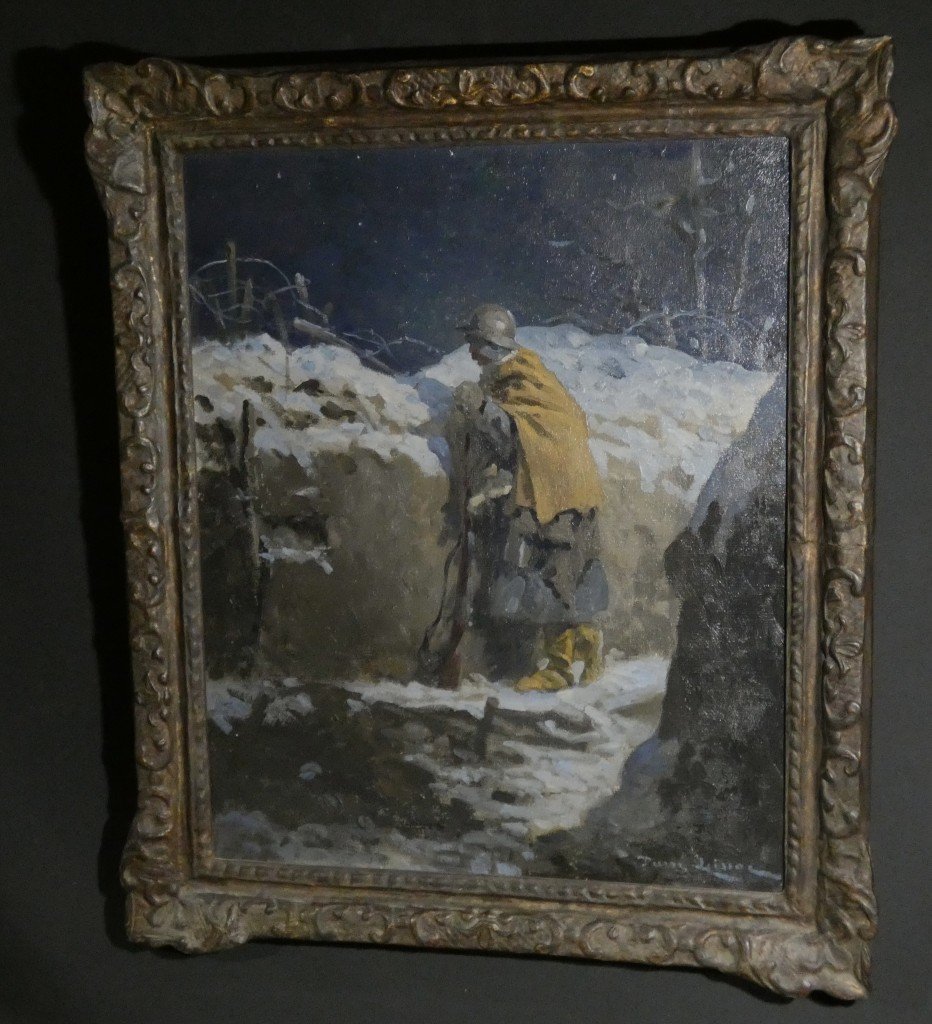
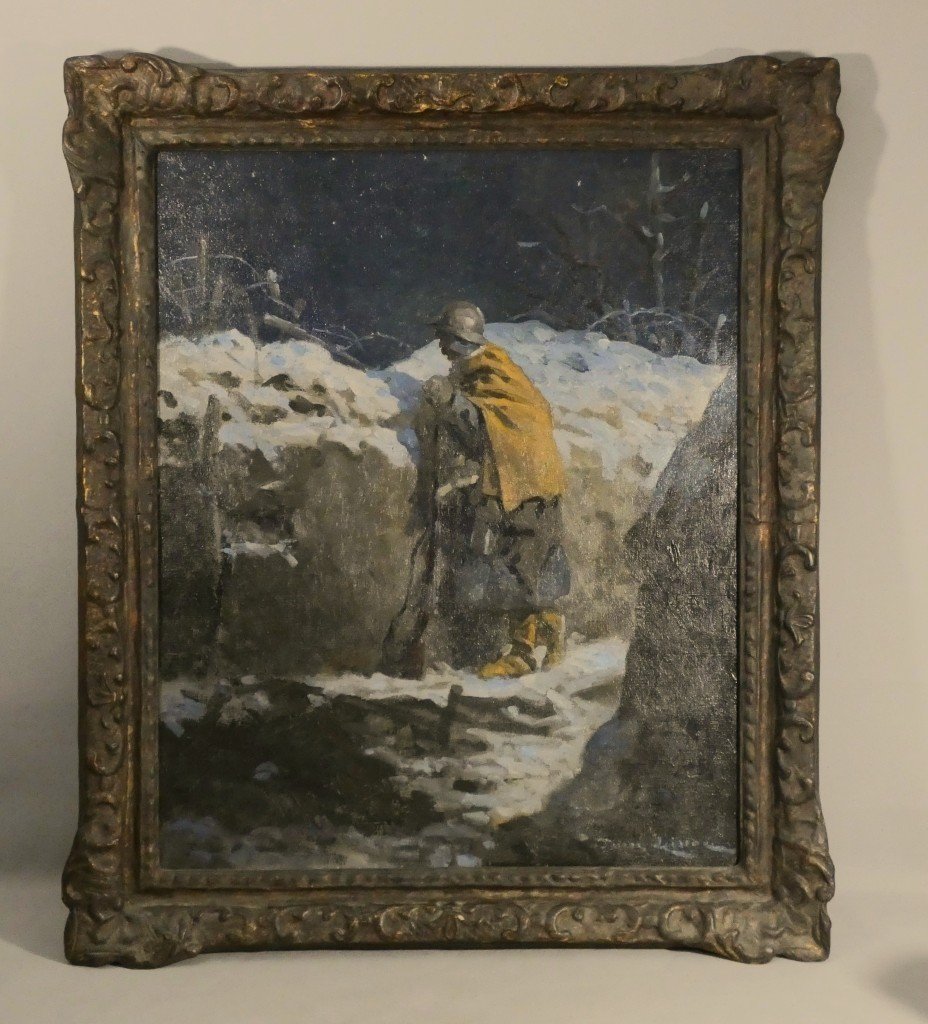
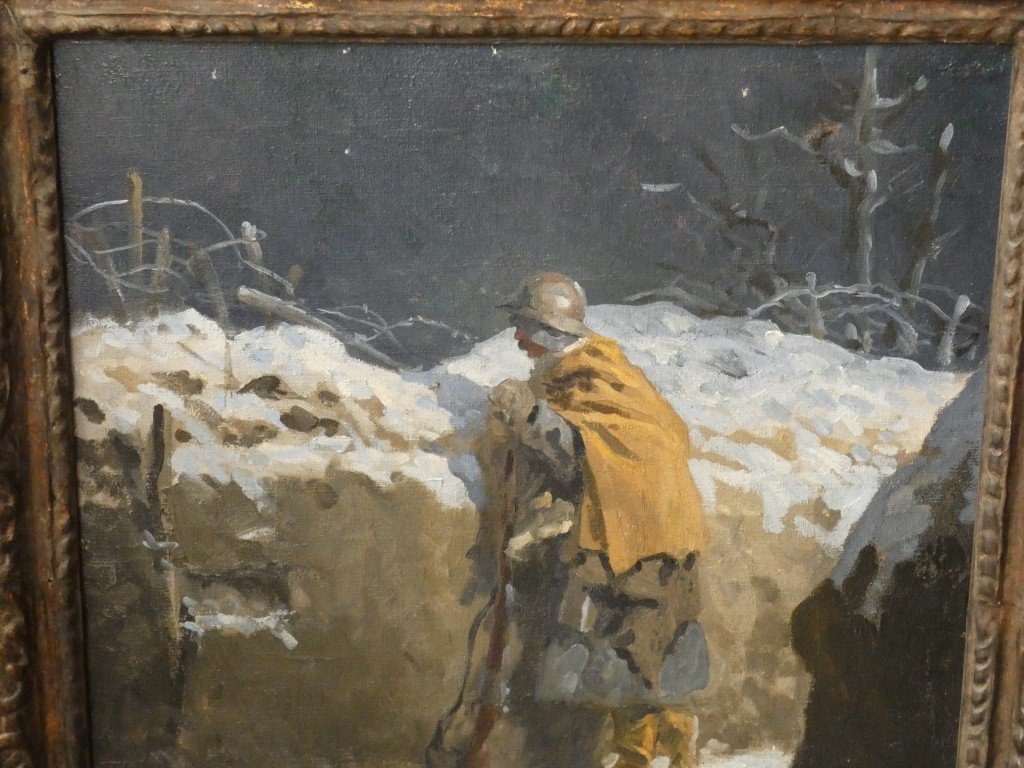


The Sentry In The Trench, The Poilu, World War I Painting By Pierre Lissac
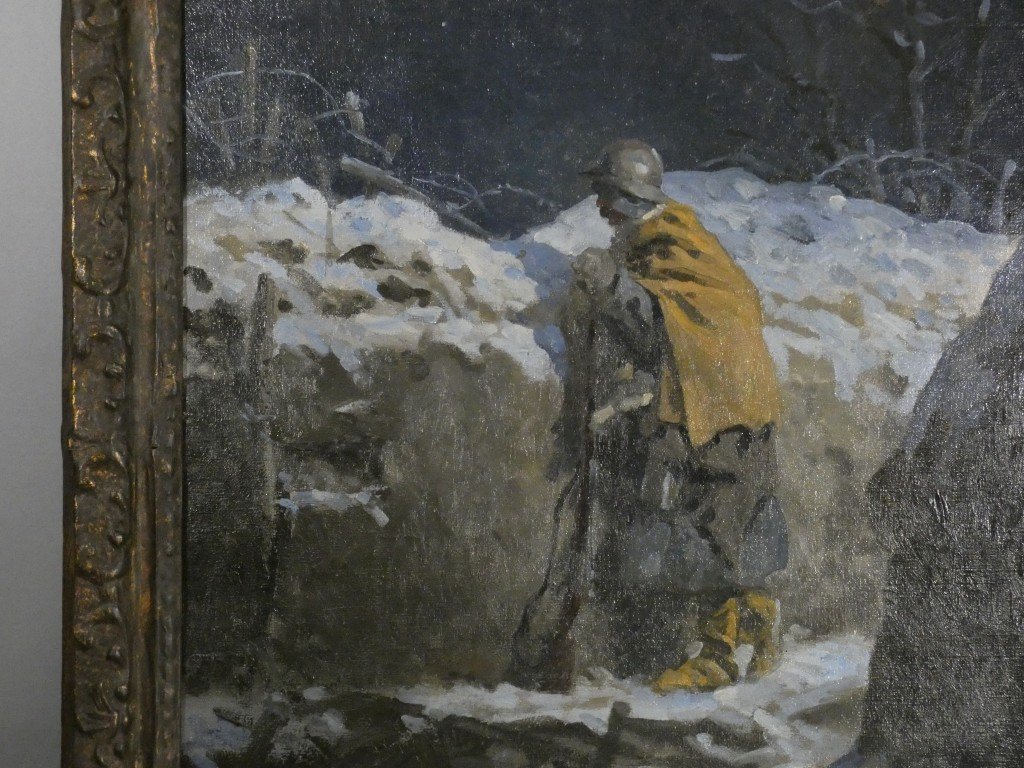
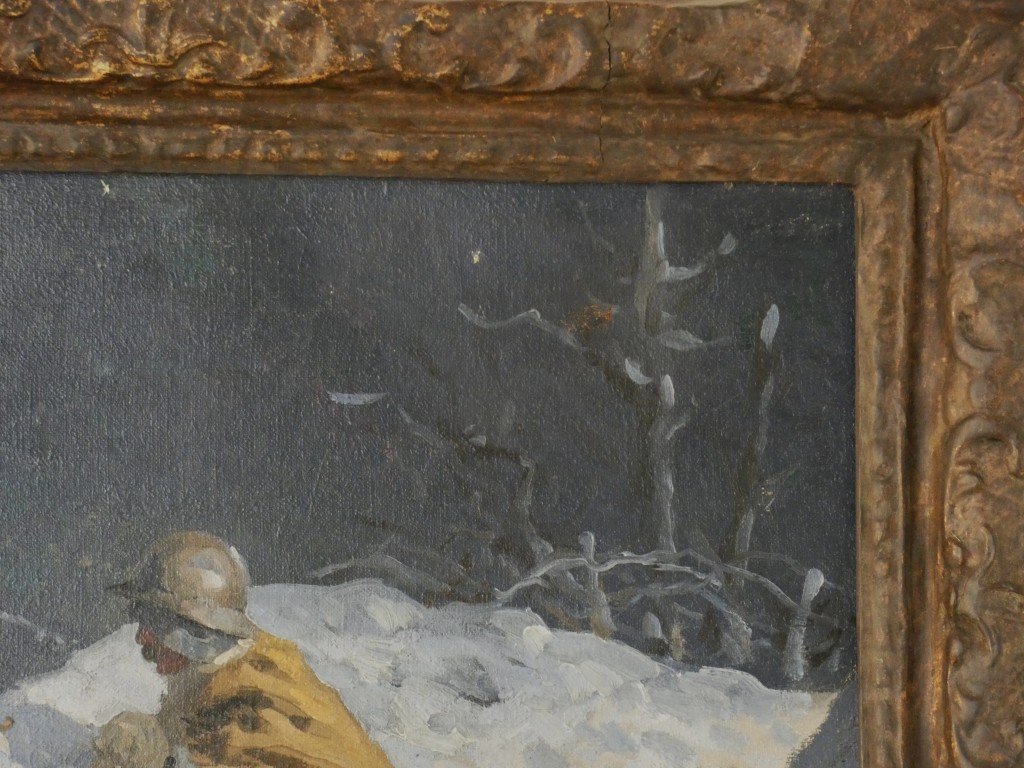
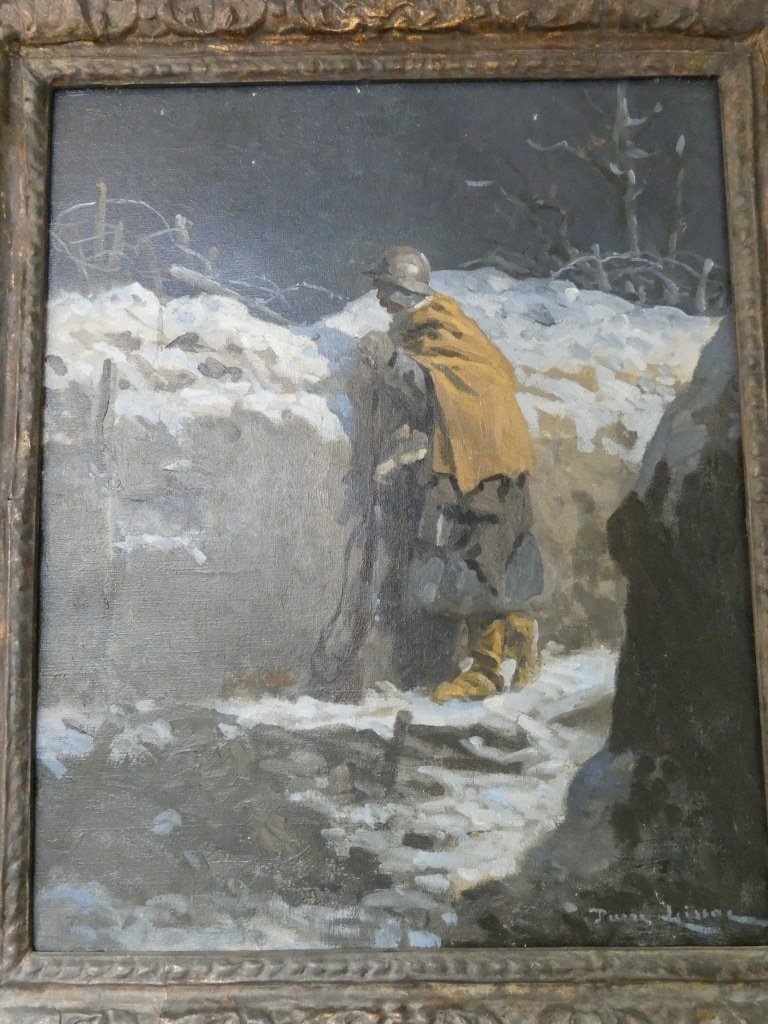
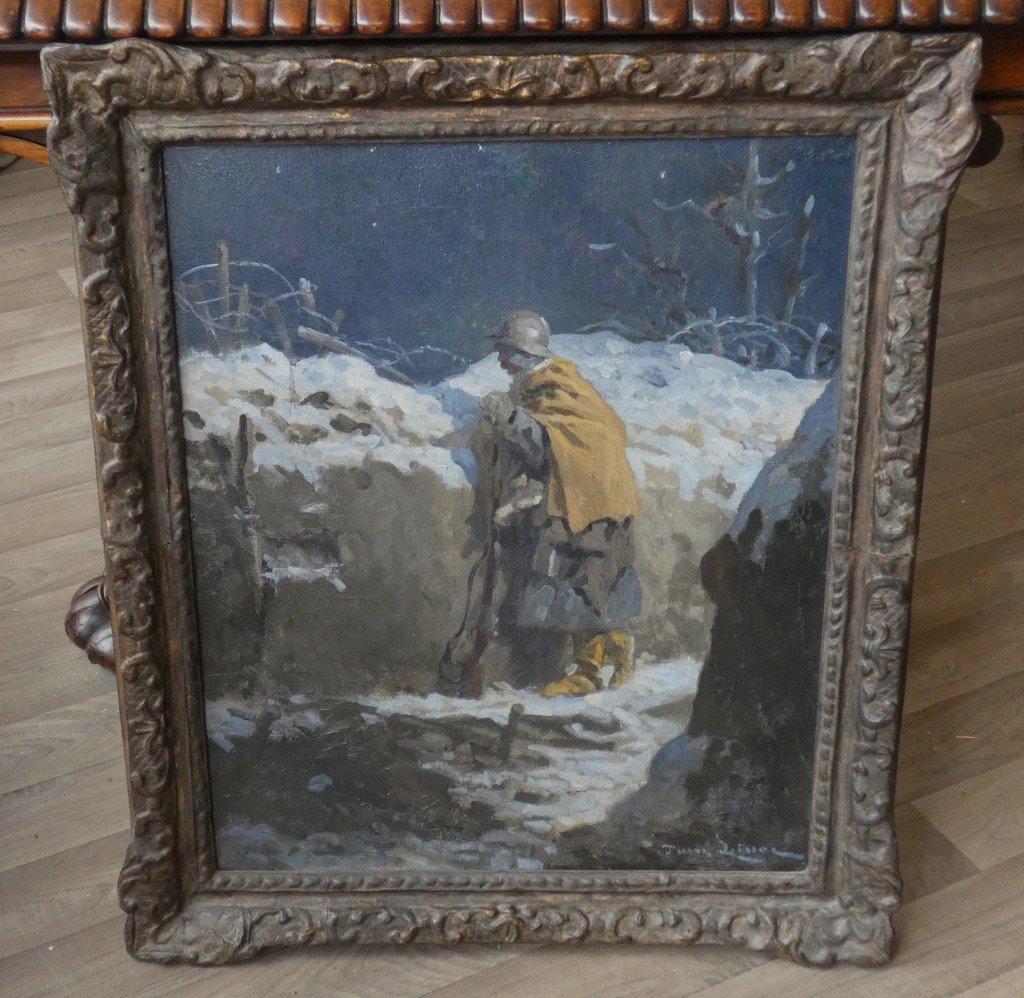
This work evokes, with great restraint, a winter war scene, likely set on the front lines of World War I. At the center of the composition, a soldier wearing an Adrian-style helmet stands out against the dim light of the trench. Wrapped in an ochre-colored cloak or blanket, he stands on guard, watching for the enemy.
The scene is built around a striking contrast between the bluish depths of the night and the vast expanses of snow illuminated by a cold moonlight. The moon, invisible but implied, illuminates the parapets, sandbags, barbed wire, and makeshift structures that define the trench. This silvery light lends the landscape a silent and dramatic atmosphere, accentuating the soldiers’ isolation in the face of the cold and the war.
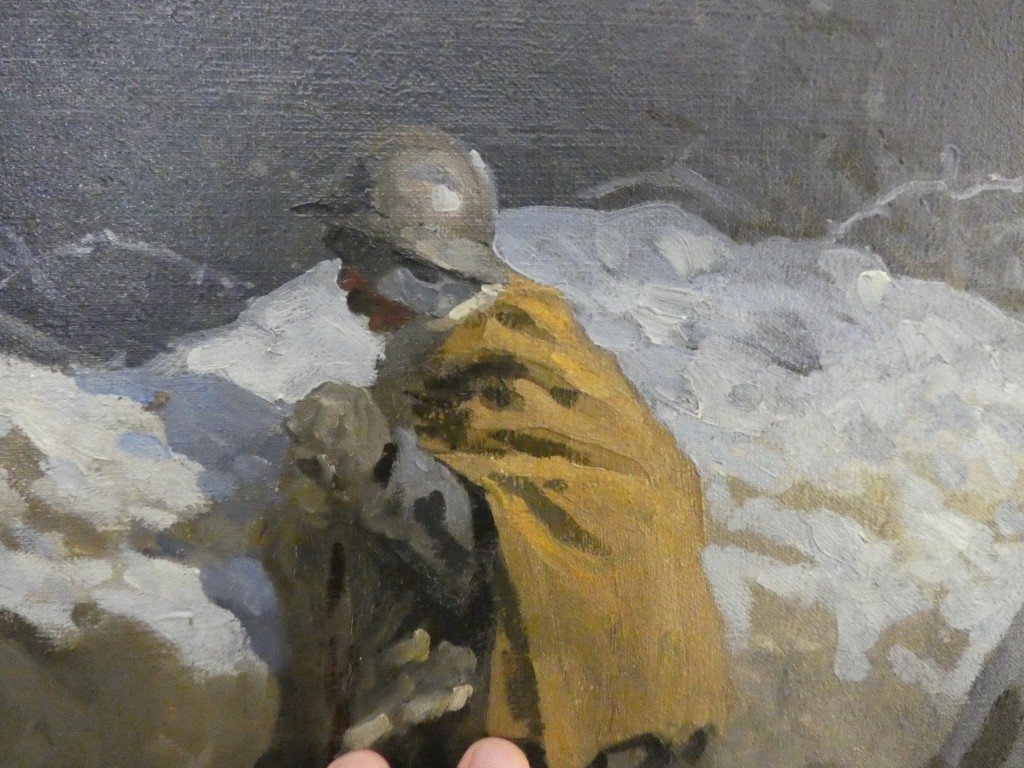
The brushwork is lively and expressive, rendered with impasto and broad brushstrokes, particularly in the whites, bluish grays, and brown-green tones of the terrain. The main character’s ochre-yellow coat serves as the luminous and human focal point of the composition, immediately drawing the eye amid this freezing night.
A painting that is both documentary and deeply evocative, powerfully capturing the tragic atmosphere of the winter battles of 1914–1918.
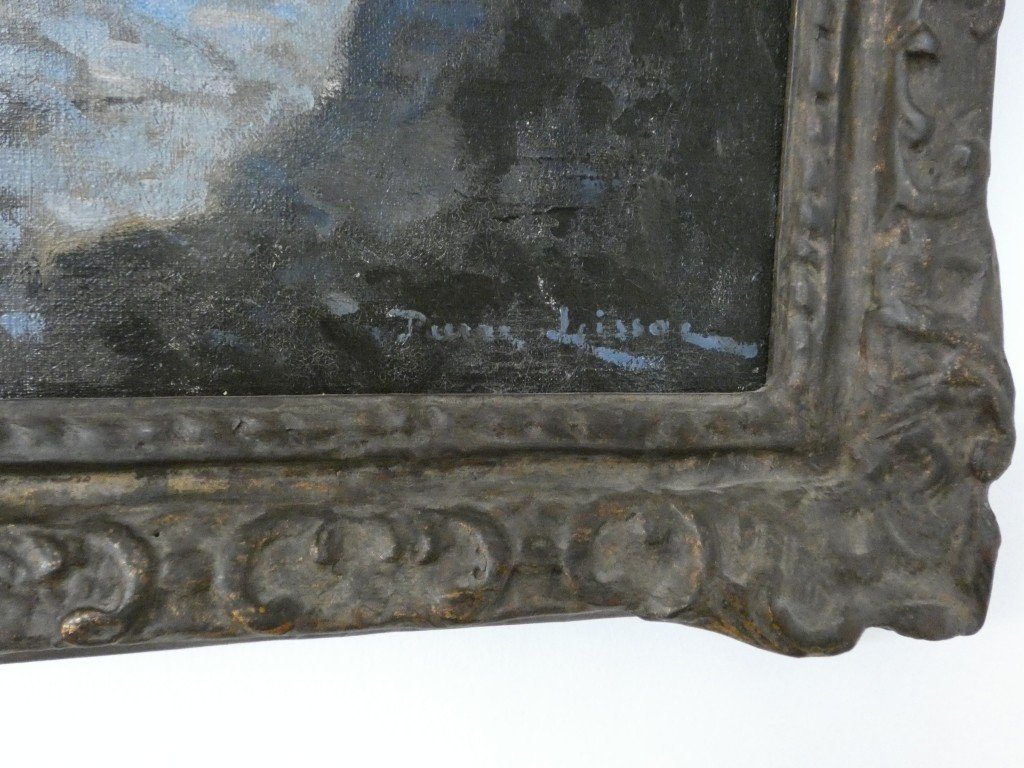
Work signed by Pierre Lissac (1878–1955)
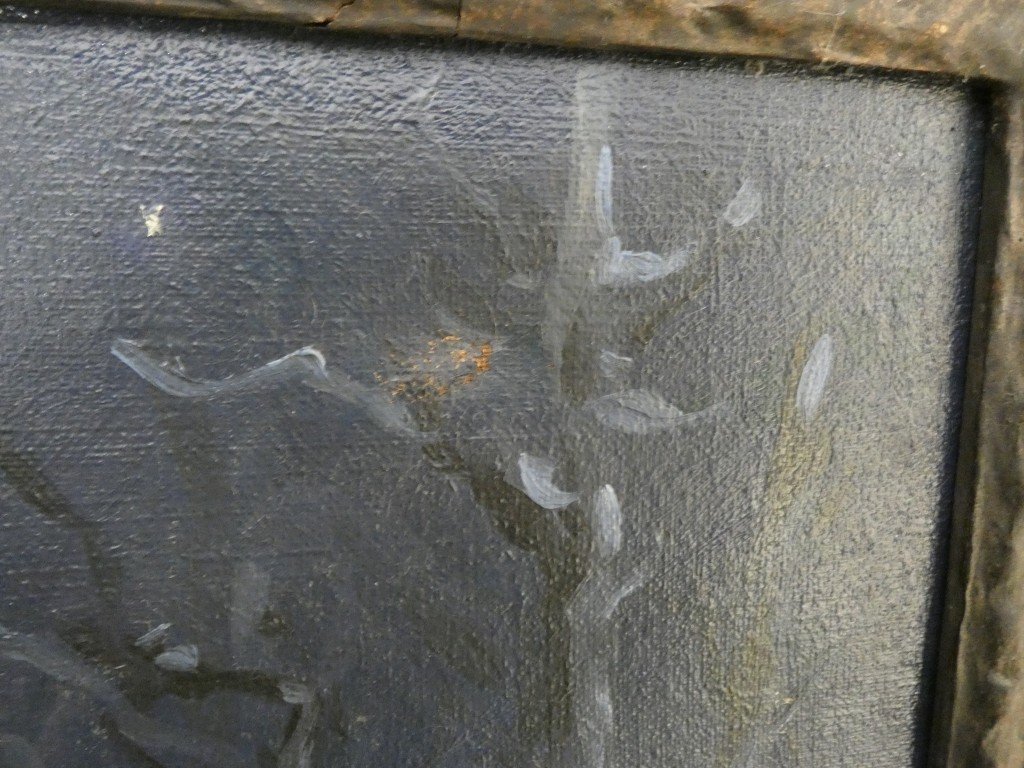
Good condition; a small dent in the upper portion with very slight loss of paint.
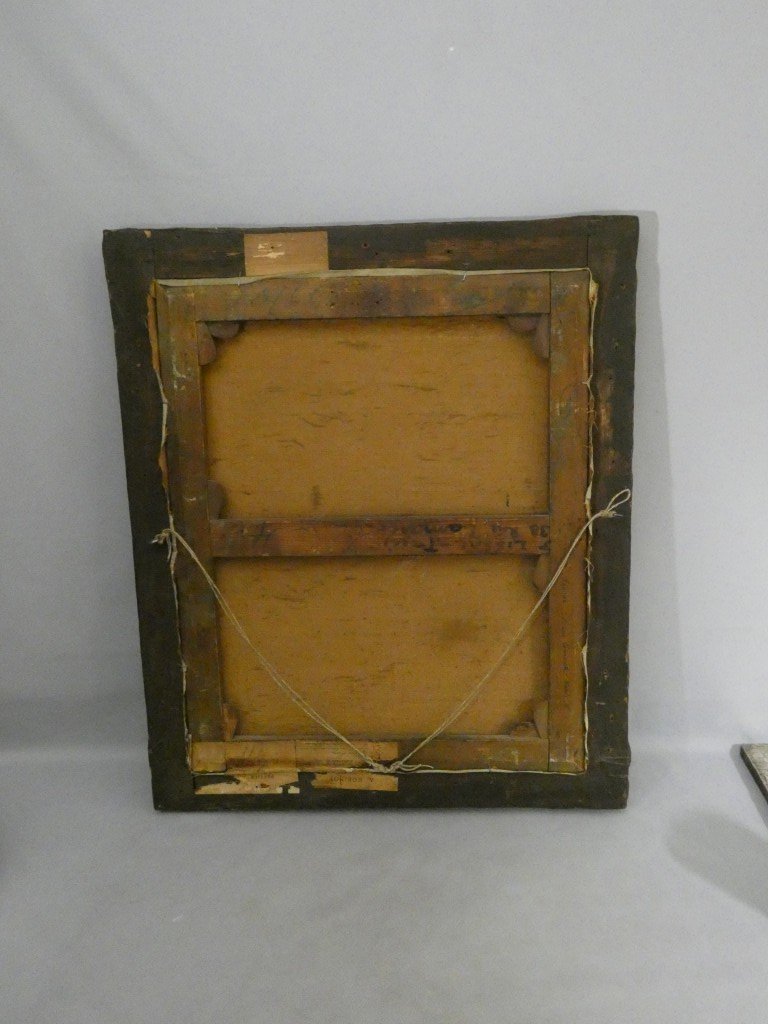
Carved wooden frame covered with a thin sheet of burnished brass.
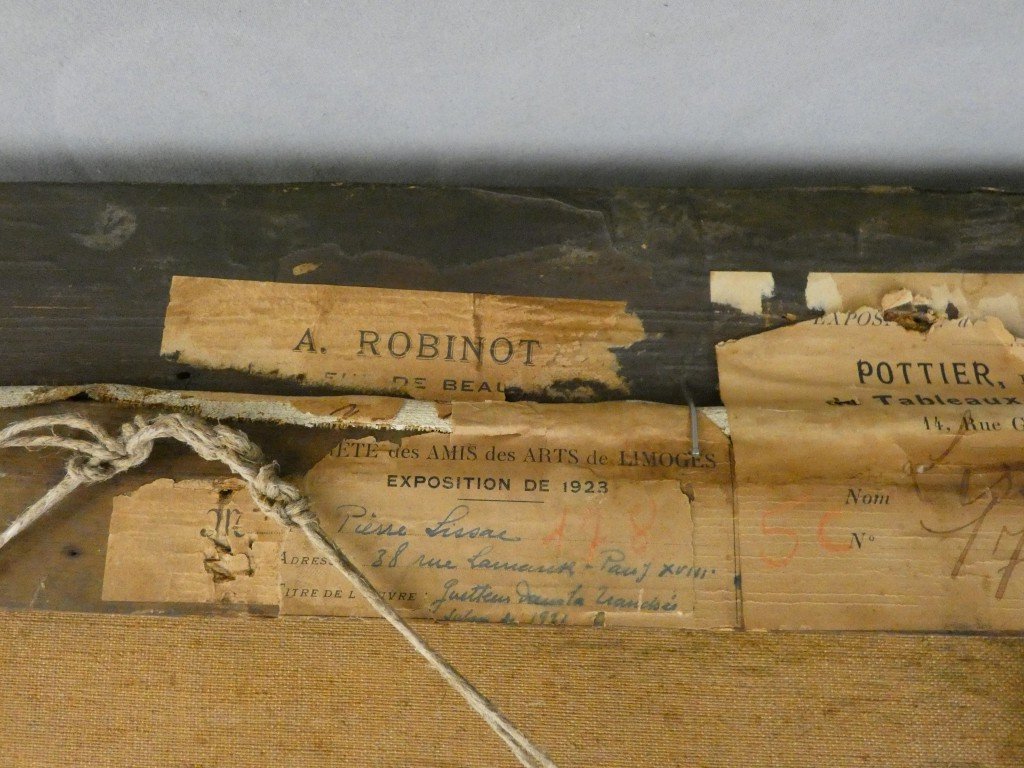
This painting has been featured in various exhibitions, including the 1920 Salon.
Shipped between two wooden panels via carrier: 80 euros within France, 150 euros within the EU, and 300 euros to the rest of the world.
Pierre Marie Joseph Lissac, born on March 19, 1878, in Limoges anddied on May 29, 1955, in Chevreuse, was a French painter, illustrator, andwood engraver. He was also known as a caricaturist under the pseudonyms“Pierlis” and “Kiss.”Pierre Lissac was admitted on July 13, 1897, to the École desBeaux-Arts in Paris on the recommendation of Jean-Paul Laurens and theBenjamin-Constant; he studied under Jules Lefebvre and, atthe Académie Julian, under Tony Robert-Fleury. Beginning in the 1910s, signing his work as Pierlis or Kiss, he contributed toa large number of illustrated humor magazines such as *L’Assiette aubeurre*[3], *Le Rire*, *La Vie parisienne*, *Fantasio*, *La Baïonnette* (1915–1918), *LesAnnales politiques et littéraires, as well as for regionalist orgenre scenes—sometimes engraved—which appeared in *La Revue limousine*,*L’Illustration*, *Demain*, and *Le Matin*. In 1924, at the height of his fame as a caricaturist,he revived the Société des dessinateurs humoristes. From 1920 to 1950, Lissacillustrated a large number of books: novels by contemporary authors(including François Mauriac), primarily using woodcuts; booksfor young readers (the Bibliothèque verte and Pourpre series, as well as picture booksby the Toulouse artist B. Sirven); and a few erotic publications sold bysubscription. Advertisements have also been documented (forNicolas, Hennessy Cognac, and L’Union insurance). Pierre Lissac pursued a career as a painter,an exhibiting member of the Société nationale des beaux-arts, and a participant in theSociété des artistes français, the Salon des Indépendants (1907, 1910), and the Salond’Automne, sometimes under the regionalist designation “member of the Limousinhive in Paris.” In 1937, he exhibited works at theParis World’s Fair. When World War II broke out, hemanaged to flee to Morocco, where he settled until 1945, opening a studio inRabat and producing Orientalist watercolors (landscapes, street scenes),which he exhibited as far away as Algeria. He returned regularly to Morocco between 1950 and195
Source: Wikipedia
Period: 20th century
Style: Other Style
Condition: Good condition
Material: Oil painting
Width: cadre 62 cm, toile 50 cm
Height: cadre 73 cm, toile 61 cm
Reference (ID): 1785694
Availability: In stock