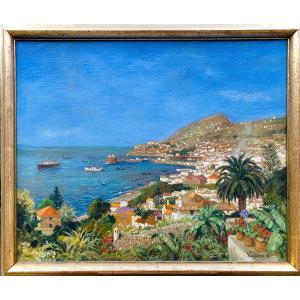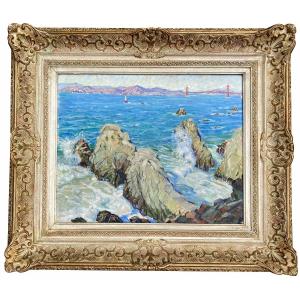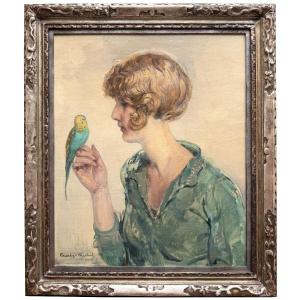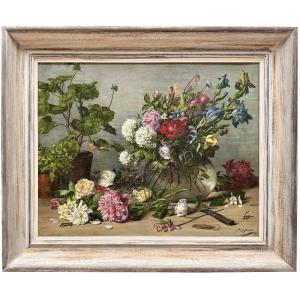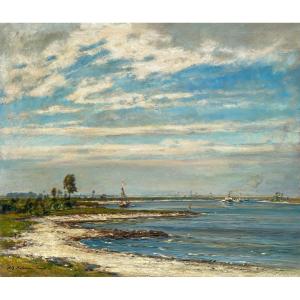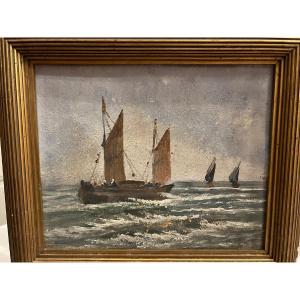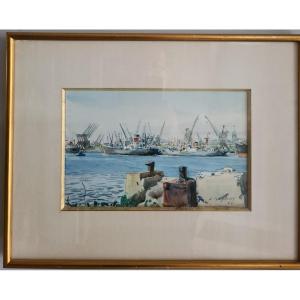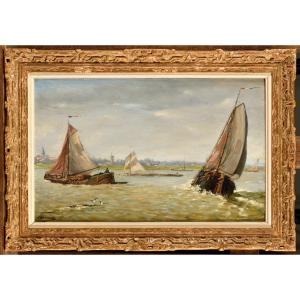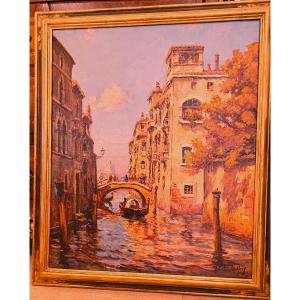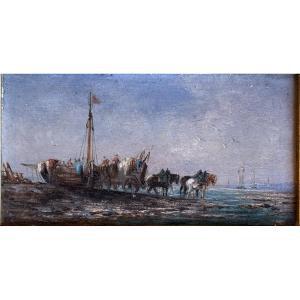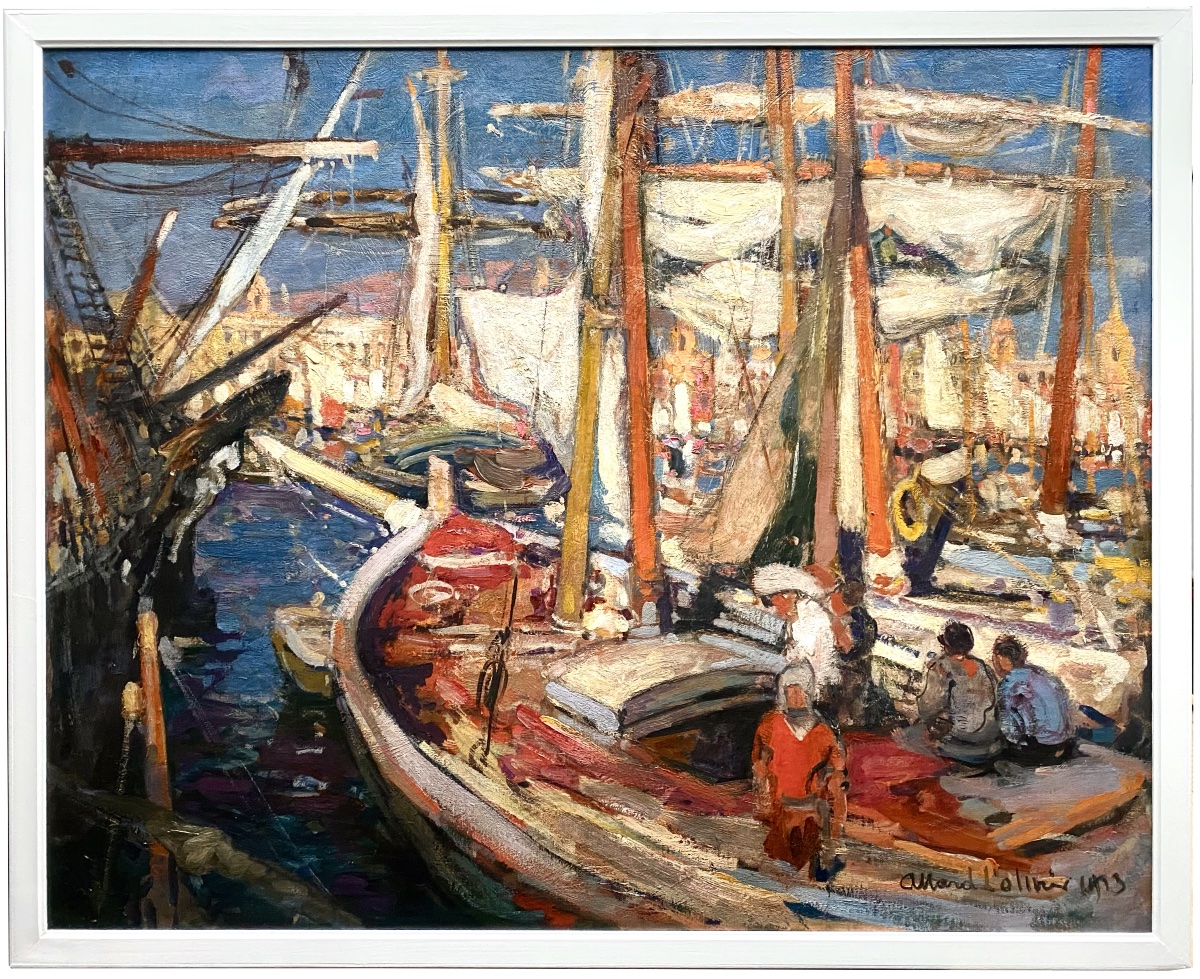

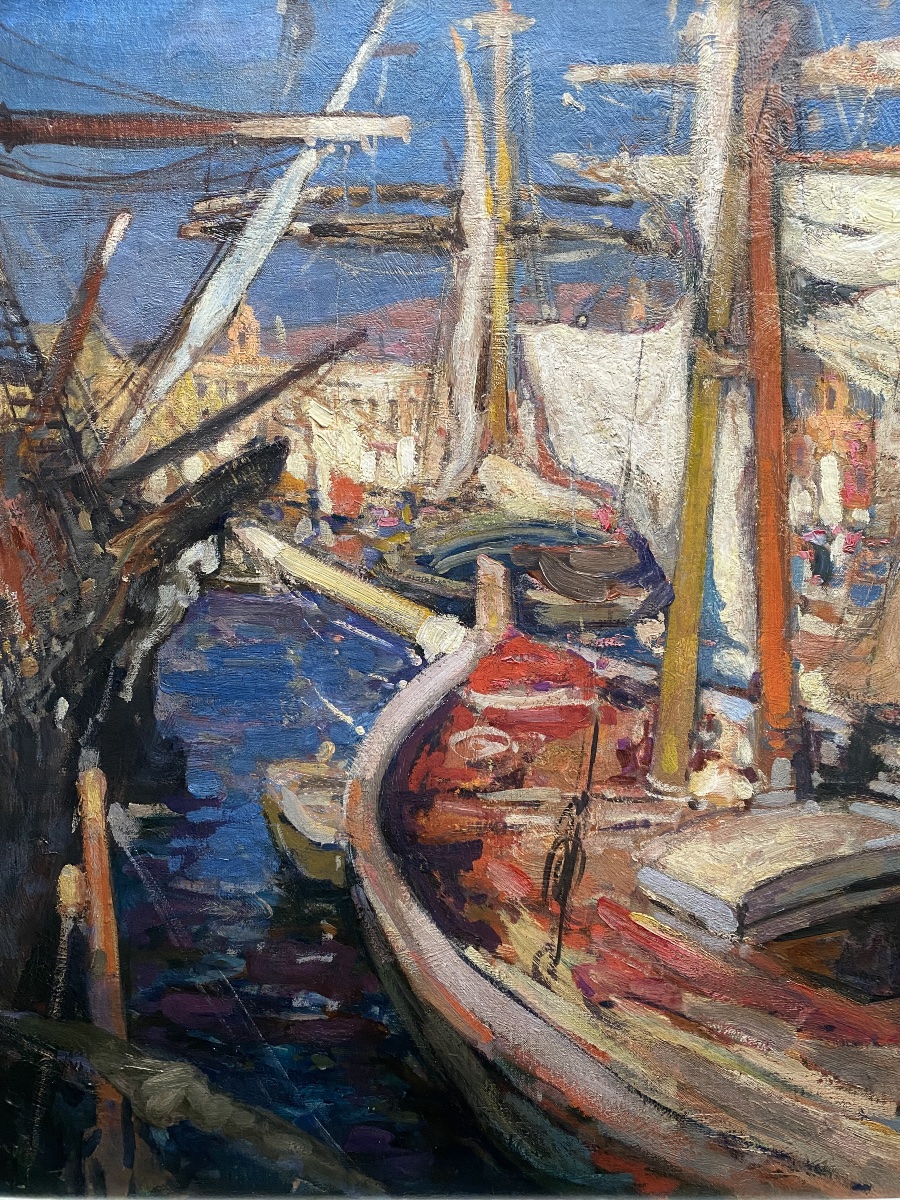
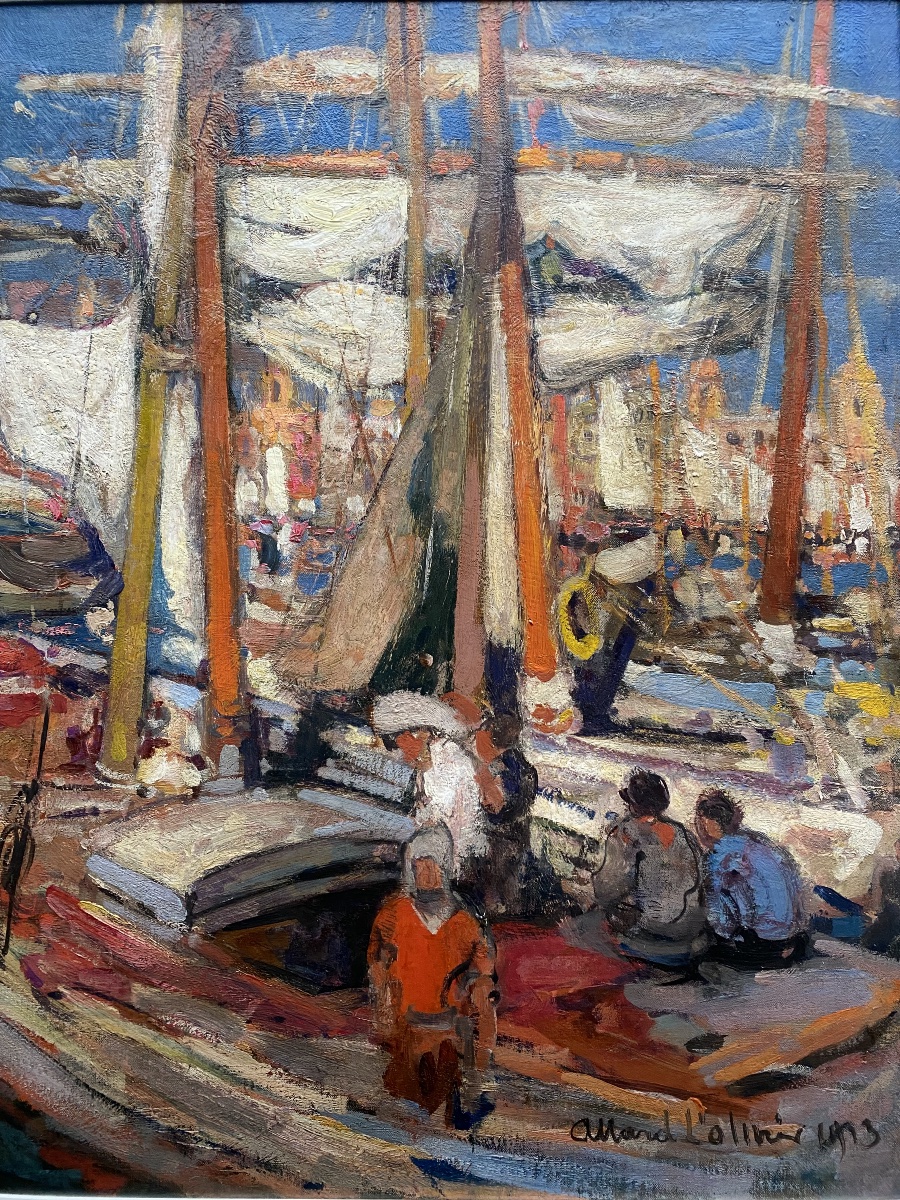

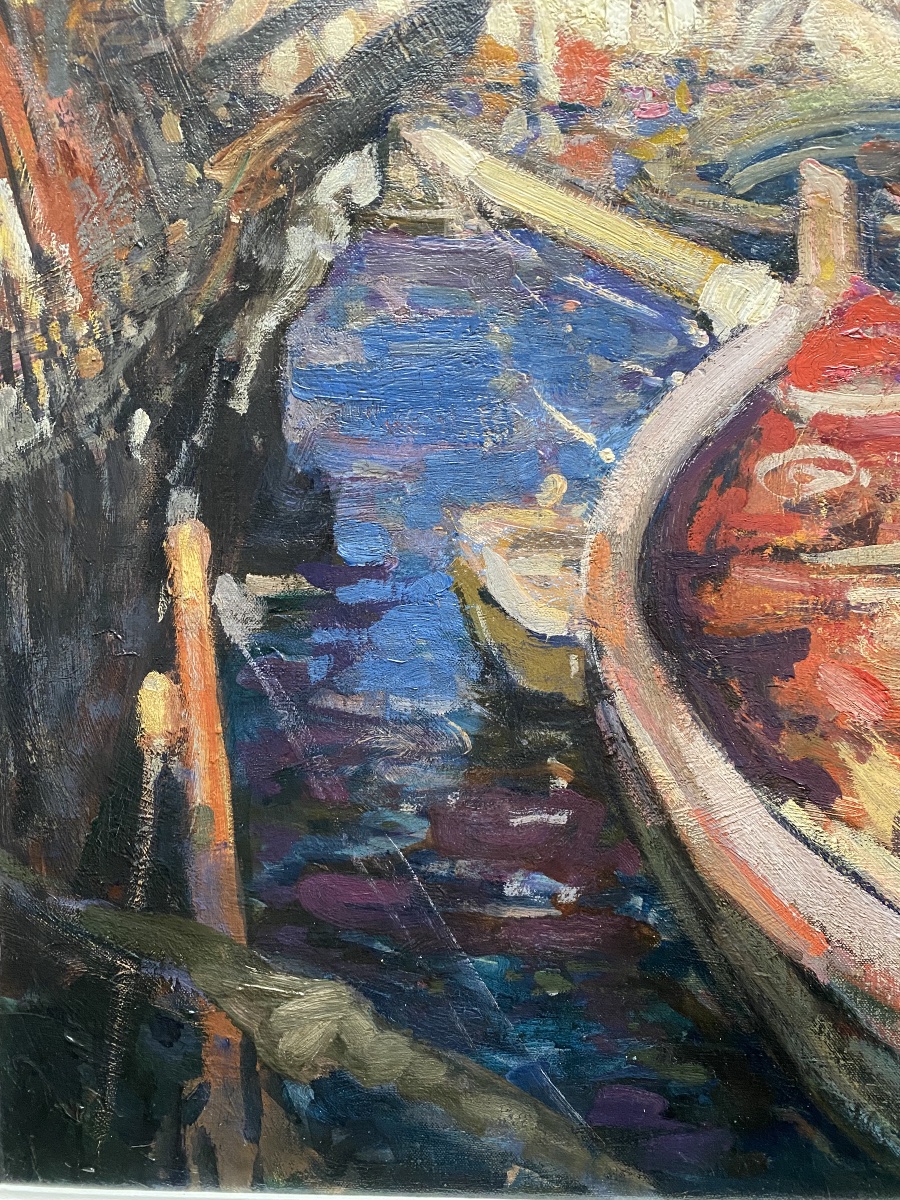


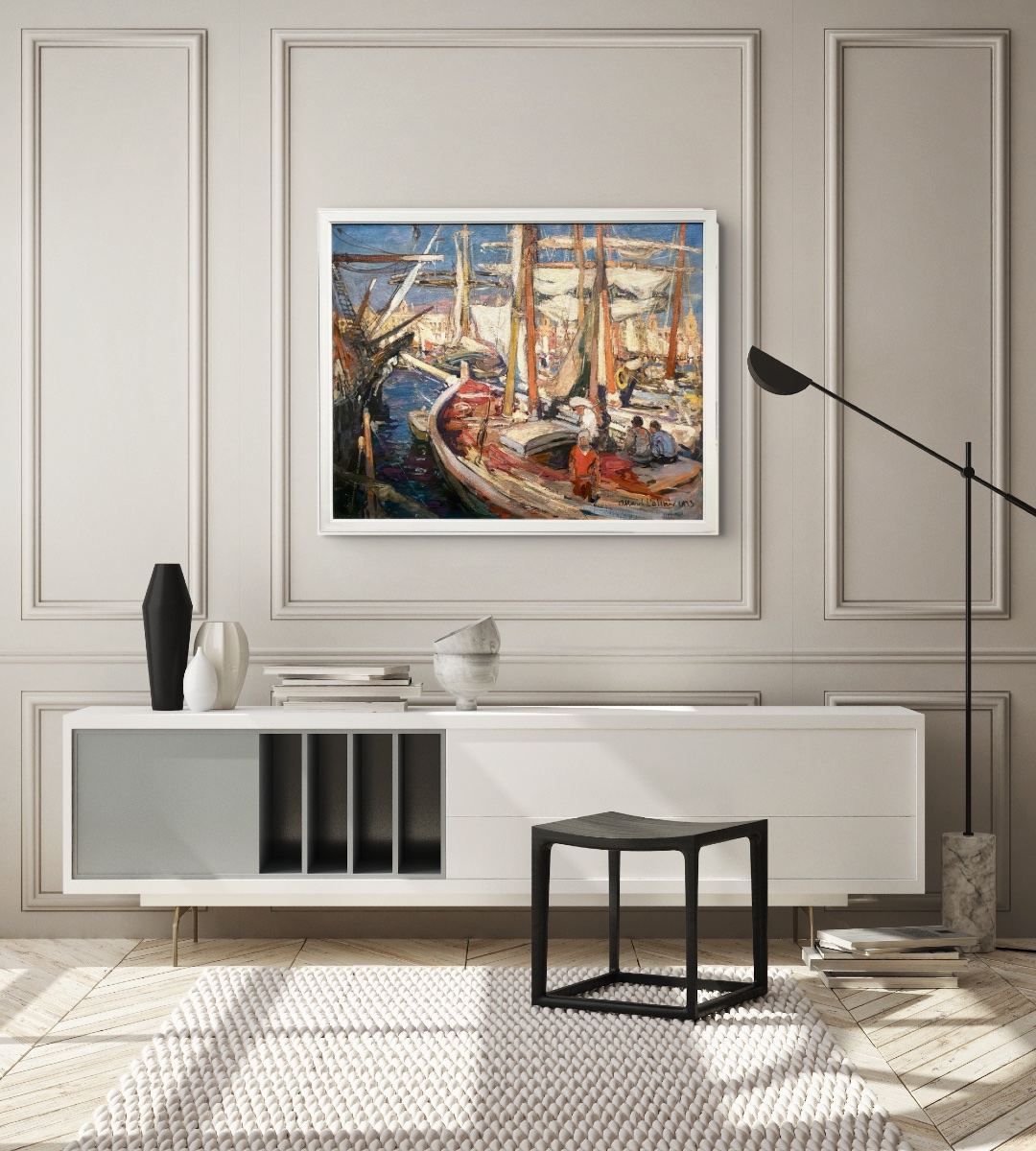
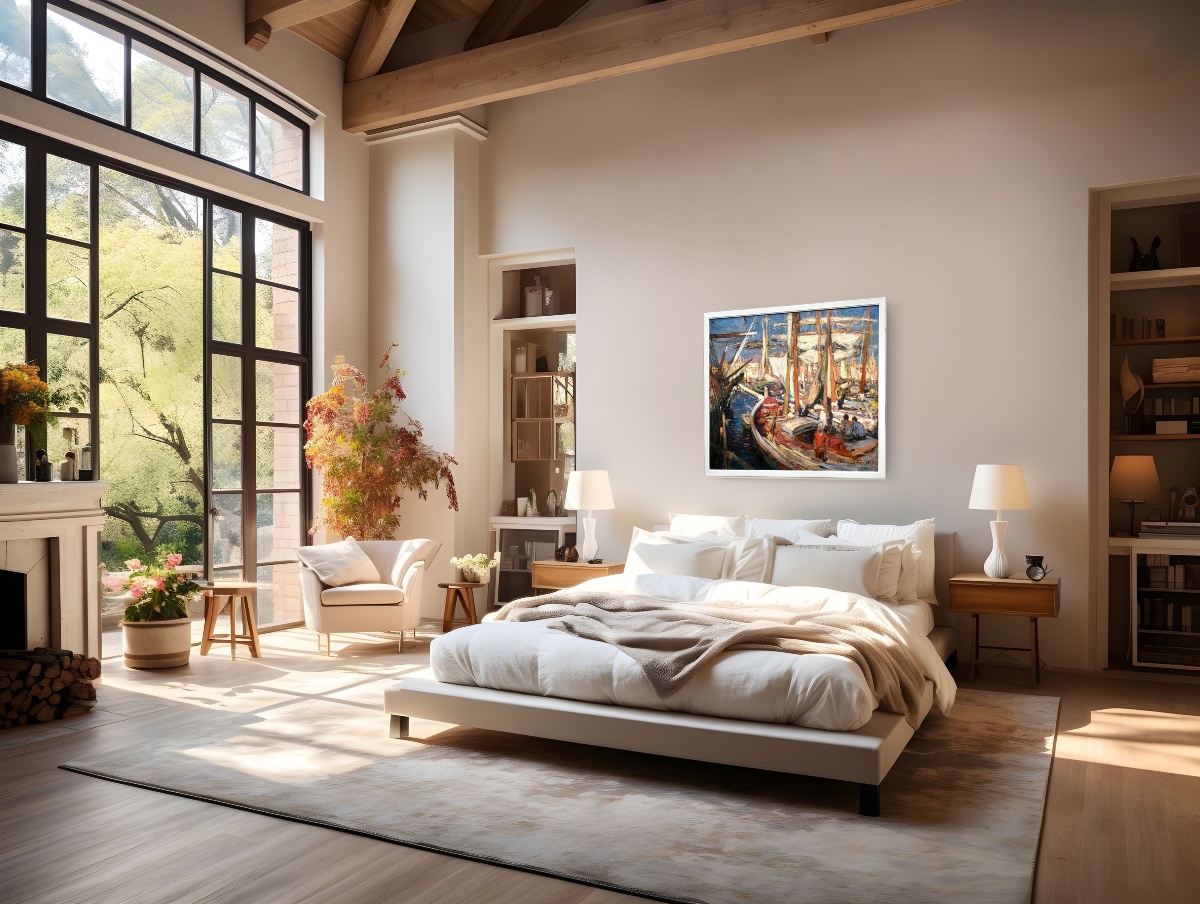
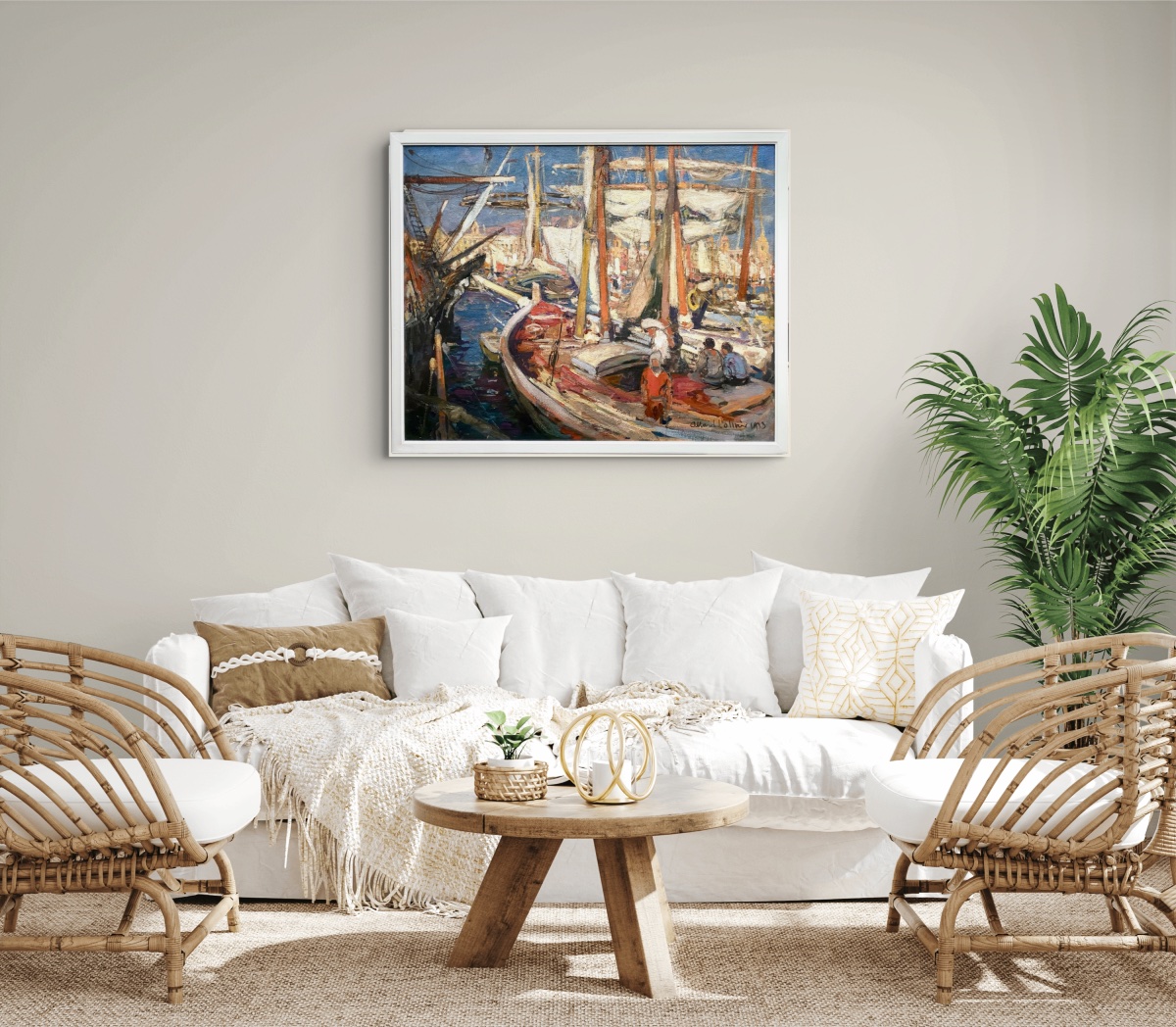


Fernand Allard L’olivier (1883–1933) – ' Harbor Scene – Port Of Palermo '
Fernand Allard l’Olivier
Tournai 1883 – 1933 Yanongé, near Kisangani
Belgian painter
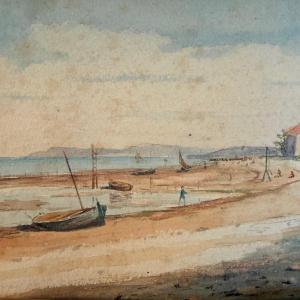
“Harbor Scene – Port of Palermo”
Signature: signed lower right and dated 1913 “Allard l’Olivier 1913 ”
Technique: oil on canvas
Dimensions: canvas dimensions 81.5 x 101 cm; dimensions with frame 86 x 105.5 cm
Biography: Fernand Allard l’Olivier was a Belgian painter and illustrator, celebrated for his evocative works in the Africanist style. Born in Tournai in 1883, he was the son of the artist Charles Allard, who ran a lithography studio and taught watercolor at the Academy of Fine Arts in Tournai. At the age of fourteen, Fernand began an apprenticeship at the Van Campenhout Printing House in Molenbeek, where he learned the art of lithography before devoting himself to painting, his true calling.
In 1901, he moved to Paris and studied at the Académie Julian under William Bouguereau and Jean-Paul Laurens. However, it was the realist painter Jules Adler who had the most profound influence on him, encouraging him to depict the lives of ordinary people rather than academic or historical subjects. He soon adopted the pseudonym L’Olivier, borrowed from his maternal grandmother, the novelist Pauline L’Olivier, and became known for his elegant nudes and portraits.
In 1912, he married Juliette Rossignol, the daughter of a Parisian bookseller. Their son, André Allard l’Olivier, born the following year, would later become a renowned poet. During this period, Fernand also worked as an art critic, while continuing to paint with a luminous palette influenced by Impressionism and Realism.
During World War I, Allard l’Olivier joined the Belgian Army’s Artistic Section in the field, the artistic division of the Belgian Army. From 1916 to 1918, he drew and painted scenes directly from the front lines at La Panne, capturing the drama and desolation of war. His postwar publication, Alphabet de guerre (1920), has become an important artistic testimony to the conflict.
In the 1920s, Allard l’Olivier traveled extensively, creating works in Tunisia (1923) and then in Poland (1926). His artistic curiosity and taste for adventure culminated in a decisive trip to the Belgian Congo in 1928. Funded by the Ministry of Colonies, he joined filmmaker Ernest Genval on an expedition to document the landscapes, cultures, and people of Africa. The resulting works were exhibited in Antwerp in 1929 and established Allard l’Olivier as one of Belgium’s leading painters specializing in African subjects.
A second expedition to Central Africa, in 1932–1933, took him along the Congo River and through the regions of Katanga, Lake Tanganyika, and Burundi. The letters he wrote during this journey reveal a deep fascination with the light and atmosphere of the continent, which imbue his canvases with a vibrant intensity.
Tragically, Fernand Allard l’Olivier died in 1933 in Yanongé, near Kisangani, under mysterious circumstances during his return journey. Despite his untimely death, his artistic legacy lives on through a body of work that bridges European Impressionism and African vitality.
Today, his paintings are featured in major public and private collections, notably at the Royal Museum of the Army and Military History, the Royal Museum for Central Africa (Tervuren), the Museum of Fine Arts in Tournai, the In Flanders Fields Museum, the Museum of Fine Arts in Pau, the Muzeum Sztuki in Łódź, and the Geneva Museums of Art and History.
Period: 20th century
Style: Other Style
Condition: Excellent condition
Material: Oil painting
Width: 105,5 cm
Height: 86 cm
Depth: 6 cm
Reference (ID): 1782267
Availability: In stock